Group 2 · pinschers, schnauzers, molossers · Denmark and Sweden (Scania region)
Danish-Swedish Farmdog (Gardhund)
A Scandinavian all-round farm dog with an energy "switch" — lively outdoors, calm at home: friendly, clever, level-headed and devoted. The Danish-Swedish Farmdog (gårdshund) is an old all-purpose breed of Danish and Swedish farms; it herded stock, caught vermin and guarded the yard, and today is a splendid family companion, good with children and the elderly alike.
The Danish-Swedish Farmdog (Gardhund) (Dansk-Svensk Gårdshund) is one of Scandinavia's oldest and most versatile breeds. For centuries, they've been invaluable helpers on the farm, performing an impressive range of tasks: from herding livestock and guarding the yard to hunting vermin and providing family companionship. These small but sturdy dogs have always been reliable assistants and devoted friends. The cheerful and kind nature of these farm dogs helps them get along with all family members, making them wonderful companions for both kids and seniors. Thanks to their balanced and calm temperament, Gardhunds, when properly trained, won't cause their owners much fuss. Read more about the features of this amazing breed further on Tvaryny.
Despite their physical resemblance to Terriers, the Danish-Swedish Farmdog has a different temperament - it is softer, more people-oriented, and has a distinct "off-switch" that allows it to be active outdoors and calm indoors. This makes it an excellent choice for active families looking for not just a pet, but a genuine partner.
The Danish-Swedish Farmdog (Gardhund): A Brief Breed Overview
The Danish-Swedish Farmdog (Gardhund): A Brief Breed Overview · 9
Origin
Denmark and Sweden (Scania region)
Year of Recognition
1987 (Denmark and Sweden); 2019 (full FCI recognition)
The True "Ratter": Its historical name in the Scania region is "Rottehund," which literally translates to "Rat Dog." This was their main job on the farm.
It's Not a Terrier! Despite the fact that its ancestors are considered Pinschers and Terriers, and it performed the job of a Terrier (hunting vermin), according to the FCI classification, it belongs to Group 2 (Pinscher and Schnauzer), not Group 3 (Terriers). This underscores its softer and more obedient nature.
The Dog with Three Tails: Gardhunds are one of the few breeds where the standard officially recognizes three tail variations from birth: long, semi-long (half-bob), and short (natural bobtail).
Late Maturation: This breed is known to mature quite late, especially mentally. They can remain "puppies at heart" until 2–3 years old.
Recent Recognition: Although the breed is hundreds of years old, it received full international FCI recognition only in 2019.
History and Origin of the Breed
Danish-Swedish Farmdogs are living history, a breed that existed on farms in southern Sweden (Scania province) and eastern Denmark for centuries, long before kennel clubs ever took an interest in them. They were valued not for their pedigree, but for their multi-functionality. They were the ideal "all-rounder" for the farmer: they barked to signal approaching strangers, kept the rat and mice population in check (earning the nickname "Rottehund" or "Rat Dog"), helped herd livestock into the enclosure, and, of course, were a faithful companion to the farm family.
And while the Fédération Cynologique Internationale (FCI) only recently turned its attention to them, Gardhunds have been an integral part of rural life since ancient times. Farmers greatly prized these dogs, thanks to whom crops were not spoiled by rodents; sometimes, they were even taken hunting for small game and fowl.
The origin of these dogs is not fully known, but it is assumed that their ancestors were a variety of European Pinschers and possibly white British hunting Terriers (from which Fox Terriers also descend). This explains their external similarity to Terriers, although they differ substantially in temperament.
With the modernization of agriculture in the 20th century, the need for "all-purpose" farm dogs began to diminish, and the breed found itself on the brink of extinction. Fortunately, enthusiasts in Denmark and Sweden joined forces to save these unique animals. In 1987, the breed was officially recognized in Denmark and Sweden under the joint name "Dansk-Svensk Gårdshund".
The path to international recognition was longer. The breed was classified not as a Terrier (Group 3), but was assigned to FCI Group 2 (Pinscher and Schnauzer), which underscores its unique origins. Only in 2019 did the Danish-Swedish Farmdog receive full and final FCI recognition. At present, these dogs are not yet as popular outside their homeland, however, every year more and more people worldwide are becoming owners of these wonderful, intelligent, and cheerful animals.
What the Danish-Swedish Farmdog Looks Like: Breed Standard
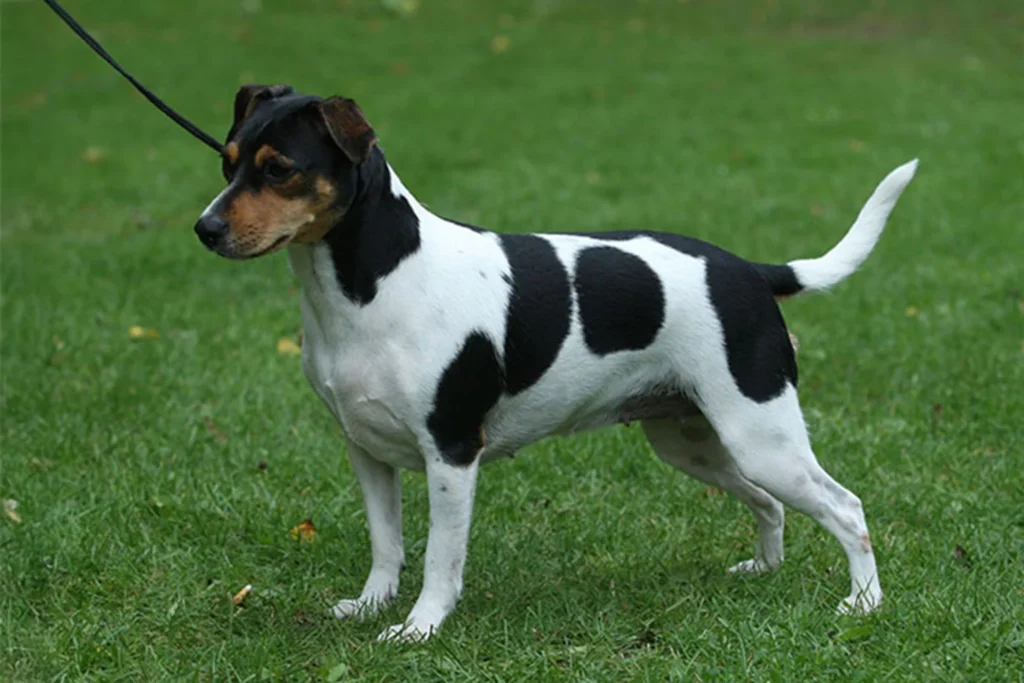
The Gardhund - is a small, compact, yet amazingly sturdy dog. He should be slightly rectangular in format (the ratio of height to length is approximately 9:10), which gives him agility. He should appear neither too refined nor too stocky.
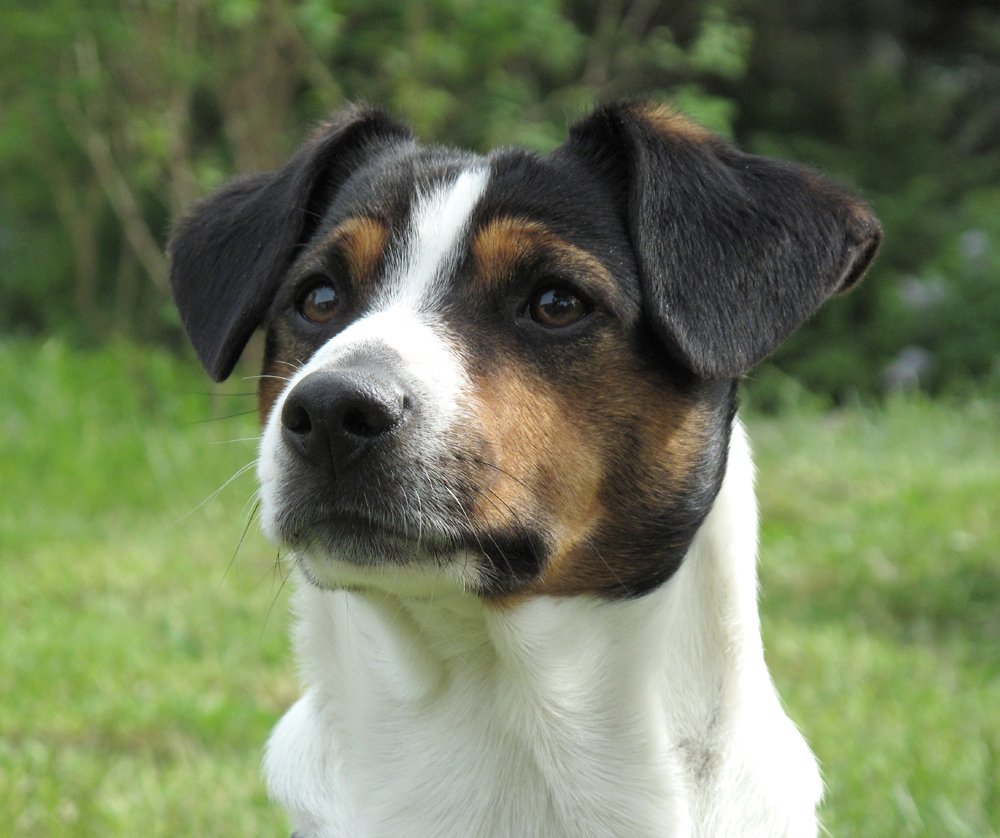
The head is relatively small and has a triangular shape. The skull is moderately broad and slightly rounded. The stop (transition from forehead to muzzle) is clearly defined. The muzzle is strong, slightly shorter than the cranial part. The lips are tight. The top of the nose is straight, the nose pad is - usually black (or matching the patches).
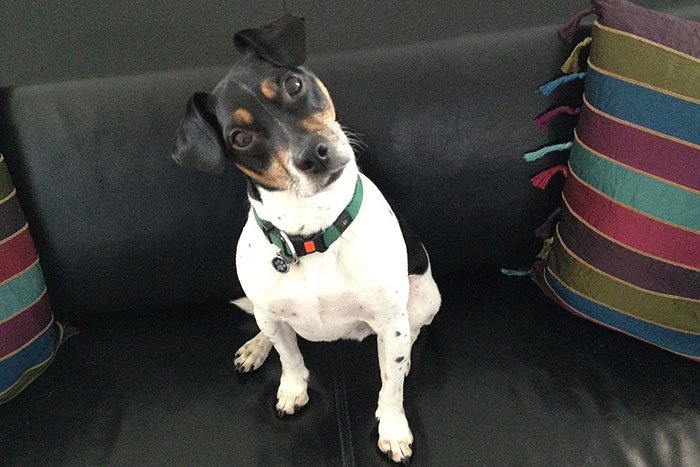
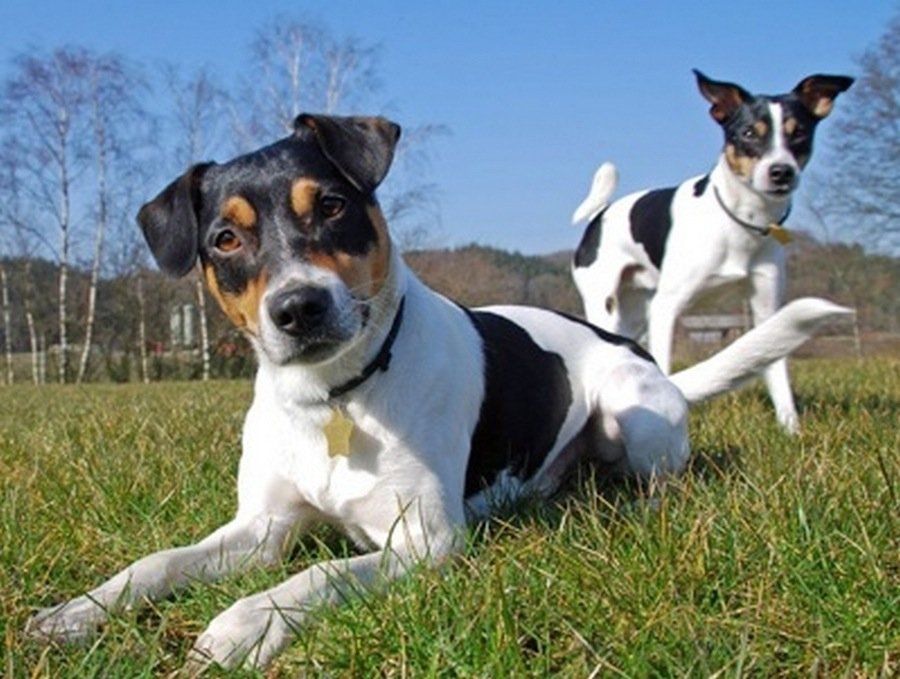
The eyes are medium-sized, slightly almond-shaped, of a dark color (from dark to light brown). They express alertness, intelligence, and friendliness. The ears are medium-sized, triangular. They can be of two types: "rose ear" (as in many Terriers) or "button ear" (hanging on cartilage, tightly pressed to the cheeks and directed forwards). In both cases, the tip of the ear should be level with or slightly above the line of the skull.
The body has a strong, slightly arched neck. The chest is deep and quite broad, with well-sprung ribs. The topline is straight, and the loins are short, broad, and slightly convex. The limbs are straight and parallel to each other, with well-developed, lean muscles. The paws are small, oval-shaped, with tightly gathered toes.
The tail - is one of the most interesting features of the breed. It is not docked. The Gardhund can be born with a tail of any length: long (which the dog carries straight, slightly curved, or in the shape of a sickle), semi-long (half-bob), or naturally short (natural bobtail / stumpy). All variations are absolutely permissible according to the standard.
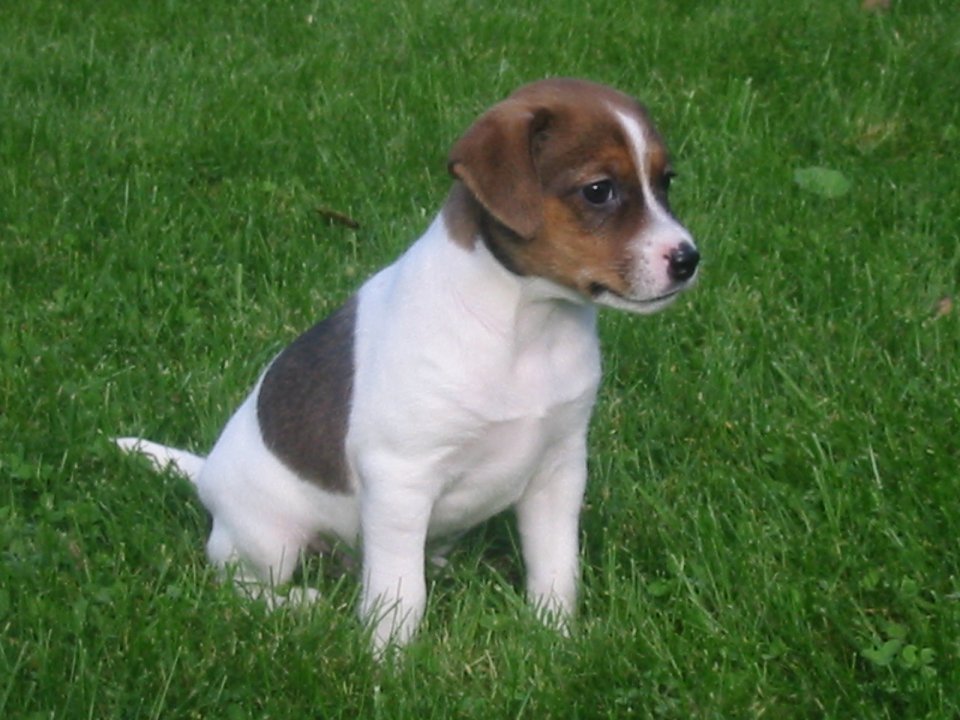
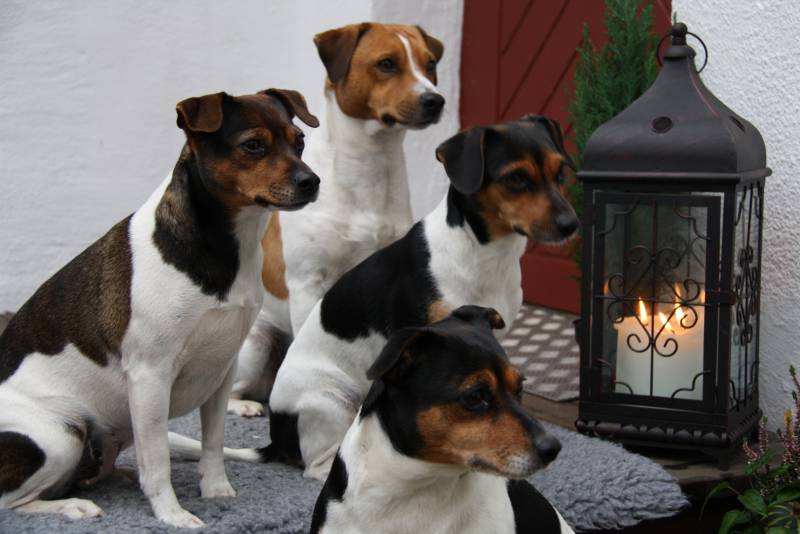
Their coat is short, smooth, harsh to the touch, and lies tightly against the body, with no undercoat or a very slight one. This makes its care minimal. The coloring must always have a predominance of white (the standard indicates that white must dominate). On the white background, there are patches of various colors (black, brown, red, fawn) and sizes. The presence of "ticking" - small dots-specks on the white areas - is allowed.
Medium, dark, slightly almond-shaped, alert and kind expression.
Ears
Medium, "rose" or "button" type (hanging on cartilage).
Build
Compact, slightly rectangular (body length slightly greater than height).
Chest
Deep and quite broad, oval.
Tail
Naturally long, half-bob, or short (bobtail). Not docked.
Coat
Short, smooth, harsh, tightly lying, without undercoat.
Coloring
White color dominates. Patches (black, brown, red, fawn) of various sizes. Ticking (specks) possible.
Character and Temperament: The Heart of the Farm Dog
Danish-Swedish Farmdogs make wonderful companions for the whole family. They have a lovely character, a cheerful and kind nature. They are intelligent, sensitive, and friendly. But the main trait of their character is an incredible focus on people. They become very attached to their owner, learn quickly, and genuinely strive to please them. Gardhunds literally "live" for their family.
Energy and the "Off-Switch"
This is a very energetic breed that needs a job. However, unlike many Terriers, Gardhunds have a fantastic "off-switch." They'll happily run, play, and engage in sports for hours, but once inside, they instantly turn into a calm couch dog that will gladly curl up on your lap. This balance of activity and calmness is one of their best traits.
Relationships with kids and other pets
Gardhunds will gladly keep your kids company, playing with them until the child is tired. They are patient and not prone to aggression. These dogs are perfectly suited for family life, being loyal and faithful. With proper socialization, they get along wonderfully with other dogs. However, it's worth remembering their past as ratters: they will most likely perceive small pets (hamsters, guinea pigs, rats) as prey. They can befriend cats if they grow up together from a young age.
Guard Dog and Hunter
As befits a farm dog, the Gardhund is an excellent guard. He's alert and will always warn you with a loud bark about approaching guests or strangers. At the same time, they are not prone to needless barking. They can be somewhat reserved with strangers but never aggressive - rather, they keep their distance until they are sure everything's okay. Their hunting instinct is very strong, especially towards rodents and birds. On a walk, this means the dog is best kept on a leash or in a secure, fenced area.
Distinction from Terriers
Many people confuse the Gardhund with Terriers, especially the Jack Russell Terrier, due to the similar coat pattern and size. However, this is a major mistake. While both breeds are energetic, the Gardhund is generally considered much softer in character, less "hysterical," and far more focused on obedience and working with the owner. They are less prone to the stubbornness and "independent decisions" typical of many Terriers.
Care: Grooming, Activity, and Upkeep
The Danish-Swedish Gardhund will make a wonderful pet that will gladly live in a warm and cozy apartment. However, the main condition for keeping him in the city is a sufficient level of activity.
Coat Care
Caring for Gardhunds is straightforward. Their short, harsh coat does not require close attention and hardly gets dirty. It's sufficient to brush it once a week with a rubber brush or glove to remove dead hairs. They shed, like most smooth-coated dogs, but regular brushing minimizes the amount of hair in the house.
These dogs love to roll around and dig holes, so don't expect immaculate cleanliness from them after a walk. Still, don't wash them too often to avoid stripping the protective layer of oil from the animal's skin. Bathing is only necessary in case of heavy soiling. In other cases, it's enough to wipe their paws and belly with a damp cloth.
Basic Hygiene Procedures
Don't forget the basic procedures:
- Ear Cleaning: Regularly inspect the ears, especially if they are hanging ("button"), as dirt can accumulate there.
- Eye Cleaning: Wipe the corners of the eyes as necessary.
- Dental Care: This is very important. Like many small breeds, they are prone to tartar buildup. Regular teeth brushing or using special dental treats is mandatory.
- Nail Trimming: Trim the nails approximately once every 3–4 weeks if they don't wear down naturally during walks on asphalt.
Physical and Mental Activity
This is a key aspect of their care. We must remember that these dogs are working animals. Simple walks around the house will be categorically insufficient for them. They require considerable physical and, even more importantly, mental exercise.
These wonderful farm dogs will happily engage in sports with you, including agility (where they show incredible speed and dexterity), flyball, rally-obedience, nosework (scent detection), barn hunt (rat hunting in safe conditions, their "element"), long hikes in the hills or woods, and morning runs with the owner.
The Gardhund is not a sofa ornament; it's a partner for an active life. Their versatility makes them similar to other active companion breeds, such as the Kromfohrlander, who also need close human contact and shared activities. If the Gardhund gets bored, he will find entertainment himself - and you will most likely not be pleased (chewed furniture, digging in the yard, excessive barking).
Training and Socialization
Dogs of this breed are extremely clever and alert, and they are easily trainable. They are food and praise motivated, which makes the learning process enjoyable and effective. They memorize commands quickly and genuinely strive to please their owner.
It happens that a Gardhund can show stubbornness, but usually, this isn't stubbornness for the sake of stubbornness (as in Terriers), but rather an indicator that the dog is bored or doesn't understand what you want from him. Tasty treats and positive reinforcement will correct the situation instantly. Never use harsh methods - this sensitive breed will "shut down" and lose trust.
Socialization
Early and proper socialization is critically important. Since they have an innate wariness of strangers (a sign of a good guard), the puppy needs to be introduced to various people, sounds, surfaces, and other dogs from a young age. This will help raise a confident and calm adult dog, not a timid or excessively "barky" one.
Managing the Hunting Instinct
Be attentive to your pets while out walking. The strong hunting instinct takes over, and the Gardhund might bolt after a cat, birds, or a squirrel. It's practically impossible to train this out of them, nor is it necessarily required - it's part of their nature. The main thing is to choose places for off-leash walks far from traffic and dedicate maximum attention to teaching the "Come!" command - it must be flawless.
For your puppy to fully realize all its talents and abilities, be sure to engage with him. There's no doubt that your dog will be the best participant in dog competitions; you will definitely be proud of him.
Pros and Cons of the Breed
Like any breed, the Gardhund has its advantages and challenges. It's important to assess these soberly before bringing a puppy into the home.
Pros and Cons of the Breed · 6
Pros (Advantages)
Cons (Challenges)
✅ High Intelligence and Trainability: Very clever, learn quickly, are eager to please.
❌ Very High Activity Requirements: Need daily intensive physical AND mental exercise.
✅ Excellent "Off-Switch": Active outdoors, but calm and affectionate indoors.
❌ Strong Hunting Instinct: Will chase cats, squirrels, rodents. Requires a reliable leash.
✅ Family-Oriented: Extremely loyal, love kids, get along well with other dogs (with socialization).
❌ Prone to Boredom: If bored, they become destructive (chewing furniture, digging in the yard, excessive barking).
✅ Minimal Grooming: Short coat does not require complex care, only weekly brushing.
❌ Barking: They are vigilant guard dogs, they will bark to warn of strangers or sounds. Require training.
✅ Generally Robust Health: A hardy breed with few serious problems (with responsible breeding).
❌ Reserved with Strangers: Require careful early socialization to prevent them from growing up timid.
✅ Versatility: Ideal partner for sports (agility, rally), hiking, and active recreation.
❌ Rare Breed: Outside Scandinavia, it can be hard to find a good breeeder and you may have to wait for a puppy.
Nutrition
Nutrition: Key Recommendations
Health and risks
Health: Typical Illnesses
Frequently Asked Questions about the Breed (FAQ) · 5
Does the Danish-Swedish Farmdog get along with kids?
Yes, they are considered one of the best dogs for families with children. They are patient, playful, and non-aggressive. Of course, as with any dog, interaction with very young children needs to be supervised to teach the child to respect the dog.
Do they shed a lot?
Yes, they do shed. Their short coat doesn't require clipping, but it does renew itself. Shedding is moderate, but regular brushing with a rubber brush (once a week) will help keep it under control. They are not hypoallergenic.
Can the Gardhund live in an apartment?
Yes, but only provided that the owner is prepared to dedicate 2–3 hours a day to active walks, games, and training. Their compact size makes them convenient for an apartment, but their energy needs are like those of a large dog. If they get enough exercise outside, they will be calm indoors.
What is the difference between a Gardhund and a Jack Russell Terrier?
The main difference is temperament. Both breeds are energetic and have a hunting instinct. But the Gardhund (which is a Pinscher, not a Terrier) is generally more obedient, owner-oriented, less stubborn, and has a better "off-switch" (calmer at home). The Jack Russell is often more independent, "fiery," and harder to reason with.
How noisy are they?
They are guard dogs, so they will bark to warn you of anything unusual (a knock at the door, strangers beyond the fence). This is not "causeless" barking. They can and should be taught the "Quiet" or "Enough" command to control this instinct.
Video about the Breed
FAQ
Is the Danish-Swedish Farmdog a terrier?
No, despite the outward resemblance. In temperament it is gentler, calmer and more people-oriented than terriers, with a clear "switch": active outdoors and relaxed at home.
Is the gårdshund good for a family?
Very — it is a friendly, level-headed dog that gets on splendidly with children, the elderly and other animals; an ideal choice for an active family.
How healthy is this breed?
No one has studied this small breed systematically, so no list of hereditary diseases exists for it — that is a gap in the data, not evidence of health.