Group 8 · retrievers, spaniels, water dogs · United Kingdom, Sussex County
Sussex Spaniel
A golden-liver phlegmatic with a hunter's heart — calm yet keen: gentle, level-headed, devoted and hard-working. The Sussex Spaniel is a short-legged British gundog spaniel bred to retrieve from dense cover; having inherited the Clumber's calm, somewhat phlegmatic temperament, it makes a gentle house companion while showing considerable drive at work.
Apartment · with caveatsKidsCats · with caveatsOther dogsBeginners
The Sussex Spaniel is a breed originally developed with a specific goal in mind: to help hunters retrieve game from dense brush and heavy undergrowth. While they remain skilled hunters today, Sussex Spaniels are most often found as cherished companions. They inherited a calm and somewhat laid-back demeanor from their ancestors, the Clumber Spaniels, but don't let that fool you - they show incredible energy and determination during work or play. A unique feature that adds to their charm is the distinctive golden-liver sheen of their thick, wavy coat. Find out more on Tvaryny.
Sussex Spaniel: Key Breed Characteristics
Sussex Spaniel: Key Breed Characteristics · 8
Origin
United Kingdom, Sussex County
First Mentioned
1790s, officially recognized in 1846
FCI Classification
Group 8 (Retrievers, Flushing Dogs, Water Dogs), Section 2 (Flushing Dogs)
Lifespan
11–15 years
Height at Withers
15–16 inches (38–41 cm)
Weight
40–44 lbs (18–20 kg)
Temperament
Calm, devoted, intelligent, occasionally stubborn
Usage
Companion dog, gun dog (retriever)
Interesting Facts About the Sussex Spaniel
The Sussex Spaniel was one of the first ten breeds officially recognized by the American Kennel Club (AKC) in 1884.
It is the rarest member of the spaniel family. Only a few dozen puppies are registered in the UK each year.
Unlike most spaniels that work silently, the Sussex "gives tongue" (barks) while hunting. This unique trait was specifically bred into them by the breed's founder.
Due to their massive build and unhurried gait, the Sussex Spaniel is sometimes jokingly refered to as the "tank" of the spaniel world.
Besides helping hunters, these dogs have been successfully used in police work to search for narcotics thanks to their excellent sense of smell.
History of the Breed
The history of the Sussex Spaniel is inextricably linked to the Rosehill estate in East Sussex, England. It was here in the late 18th century that landowner and avid sportsman Augustus Elliot Fuller began a focused breeding program. His ambitious goal was to create the perfect spaniel for hunting in the dense, difficult terrain typical of the area. Fuller needed a dog that was steady, built with stamina, and—most importantly—possessed the unique ability to "give tongue" (bark) while tracking game. This trait allowed hunters to keep track of the dog's location deep in the underbrush where it couldn't be seen.
To create this new breed, Fuller utilized various old English spaniels. These likely included Field Spaniels, English Springer Spaniels, and crucially, Clumber Spaniels, from which the Sussex inherited its substantial build and calm temperament. There are also mentions of the now-extinct Norfolk Spaniel. For nearly 50 years, Fuller refined the breed, locking in desirable traits, including that unique golden-liver color.
After Fuller passed away in 1847, the breed faced near extinction. It was saved by enthusiasts like Mr. Shriner, who maintained a few purebred lines. World War II dealt another devastating blow to the population - by that time, only a handful of these dogs remained globally. Thanks to the dedication of English breeder Joy Freer, the breed was brought back from the brink using just eight dogs. Today, the Sussex Spaniel remains one of the rarest breeds registered with the Kennel Club, making every individual a true treasure.
What the Sussex Spaniel Looks Like: Standard and Appearance
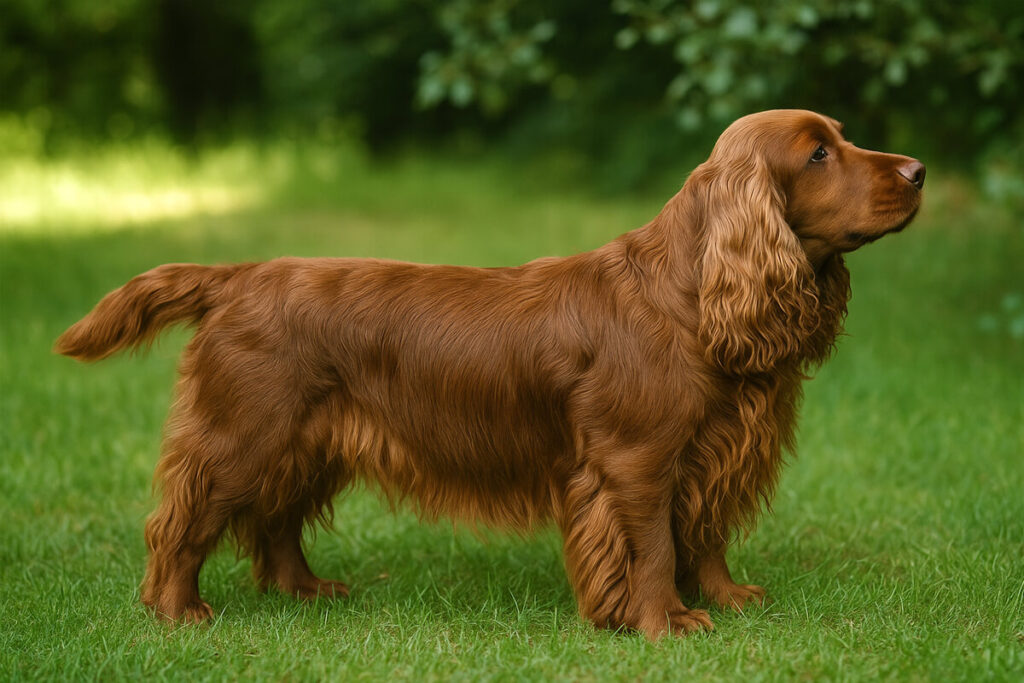
The Sussex Spaniel is a low-set, massive, yet energetic dog with a distinct look. Its appearance radiates strength and endurance, while its unique coat color makes it instantly recognizable.
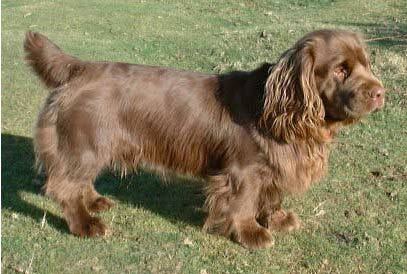
General Appearance: The dog has an elongated, rectangular format ("long and low"), with short but powerful legs and heavy boning. Movement is smooth and deliberate, with a characteristic rolling gait.
Head: The skull is wide with a pronounced stop (the transition from forehead to muzzle) and occiput. The muzzle is broad, deep, and square. The lips are somewhat pendulous.
Eyes: Hazel in color, fairly large, with a gentle and slightly melancholic expression. The eyelids fit tightly.
Ears: Large, set moderately low, just above eye level. They hang close to the head and are covered with soft, wavy hair. Unlike the rest of the body, there is almost no undercoat on the ears.
Coat: The breed's crowning glory. It is thick, flat or slightly wavy, with a dense weather-resistant undercoat that protects the dog from cold water and thorns. The chest, ears, and legs feature longer feathering.
Color: The only standard-accepted color is a rich golden liver. The tips of the hair have a gold tint, creating a unique shine in the sunlight. Black or any other color is considered a fault.
Tail: Traditionally docked to 5–7 inches (where laws permit). Set low and never carried above the level of the back.
Character: Temperament and Behavior
The Sussex Spaniel's personality is a unique blend of hunting drive and domestic tranquility. At home, this dog typically displays a laid-back temperament, but out on a walk or a hunt, they transform into energetic and determined workers. They aren't as frantic as some other spaniels, preferring a more measured pace of life.
Loyalty and Affection: Sussexes are incredibly family-oriented. They form deep emotional bonds and struggle with being left alone for long periods. This dog will shadow you around the house, though usually in an unobtrusive way. They get along famously with children, showing patience and gentleness, which makes them excellent family dogs. Their calm nature also makes them suitable candidates for therapy work. Unlike the more independent Thai Ridgeback, the Sussex prefers to be right by your side at all times.
Relationships with Other Animals: With proper early socialization, the Sussex Spaniel coexists well with other dogs and even cats. However, their hunting instincts might kick in around small animals (birds, rodents), so interactions should be supervised.
Guard Qualities: The Sussex Spaniel isn't a classic guard dog, but they will always alert their owner to strangers with a deep, booming bark. Their "talkative" nature is a key breed trait.
Training and Socialization
Training a Sussex Spaniel requires patience, consistency, and a positive approach. These are smart dogs, but their natural slow pace and a streak of stubbornness can make it seem like they are slow learners. In reality, they are just processing every command.
Key Training Principles:
Early Socialization: Introduce your puppy to different people, sounds, places, and other animals from a young age. This helps raise a confident and balanced dog.
Positive Reinforcement: Use treats, praise, and toys as rewards. Harsh methods or yelling won't work and can damage the trust between you and your dog.
Short and Fun Sessions: Because they can be a bit phlegmatic, Sussexes might lose interest quickly. Keep training sessions short (10–15 minutes) and make them as engaging as possible.
Consistency: All family members should stick to the same rules and commands to avoid confusing the dog.
Try to give your pet plenty of opportunities to burn off excess energy. Long walks and active games outdoors are always beneficial. In safe, permitted areas, letting this dog run off-leash is a great idea so they can freely explore the terrain. Much like other unique hunting breeds such as the Cirneco dell'Etna, the Sussex Spaniel needs mental stimulation to stay happy.
Pros and Cons of the Breed
Pros and Cons of the Breed · 6
Pros
Cons
✅ Calm and balanced character
❌ Prone to gaining excess weight
✅ Devoted to family and loves children
❌ Requires regular grooming of coat and ears
✅ Doesn't need excessive exercise
❌ Can be stubborn during training
✅ Rare, exclusive breed
❌ Predisposed to certain genetic diseases
✅ Excellent for apartment living
❌ Heavy shedder during seasonal changes
✅ "Talkative" nature, alerts to guests
❌ Handles loneliness poorly
Caring for a Sussex Spaniel
Caring for a Sussex Spaniel isn't overly complicated, but it does require consistency. The main focus should be on the coat, ears, eyes, and maintaining physical activity.
Coat Care
The thick, silky coat needs regular brushing (2–3 times a week) using a natural bristle brush and a metal comb. This helps prevent mats from forming, especially in areas with longer hair like the ears, chest, belly, and legs. During shedding seasons, you'll want to do this daily. Bathe the dog only as needed, using shampoos formulated for spaniels that won't dry out their skin. After walks in muddy weather, be sure to wash their paws and thoroughly clean between the pads.
Ear and Eye Care
The long, pendulous ears of spaniels are a vulnerable spot. Poor airflow to the ear canal creates a perfect enviroment for bacteria and yeast. Inspect ears regularly (once a week) for redness, debris, or bad odors. Clean them with a specialized solution. Eyes also need daily checks. Gently wipe away any discharge from the corners with a clean cloth dampened with warm water.
Physical Activity
Although this is a hunting dog, it doesn't require vast amounts of space. One or two long walks a day (totaling 1–1.5 hours) are sufficient. These shouldn't just be monotonous marches; include playtime, off-leash running (in safe areas), and retrieval games. Active walks are excellent for preventing obesity, which all spaniels are prone to.
Nutrition
Nutrition: Key Recommendations
Health and risks
Health: Common Issues and Prevention
Frequently Asked Questions (FAQ) · 5
Is a Sussex Spaniel suitable for a first-time owner? Yes, thanks to their calm nature, they can be a good first dog. However, the future owner must be ready for consistent training and regular grooming.
Do Sussex Spaniels shed a lot? Yes, they have a thick undercoat and are prone to shedding, which is especially intense in the spring and fall. Regular brushing will help control the amount of hair in the house.
Can this dog live in a city apartment? Yes, the Sussex Spaniel adapts well to apartment life provided they get enough daily walks and mental stimulation.
Are these dogs noisy? They aren't prone to barking without reason, but they have a deep, loud voice and will definitely warn you about guests or unusual sounds. Their "chatty" nature is a feature of the breed.
How much does a Sussex Spaniel puppy cost? Due to their rarity, puppies of this breed can be quite expensive. The price depends on pedigree, breeder reputation, and location. It's important to choose a responsible breeder who tests their dogs for genetic diseases.
Video About the Breed
FAQ
What is special about the Sussex Spaniel?
Its unique golden-liver sheen of dense, wavy coat and the calm, somewhat phlegmatic temperament inherited from Clumber Spaniels; a short-legged gundog for working in dense cover.
Is the Sussex Spaniel good for a family?
Very — a gentle, level-headed and devoted companion, good with children; it is calmer than many spaniels but needs moderate activity and weight control.
Is the Sussex Spaniel prone to weight gain?
Yes — it is food-motivated and not very active, so it gains weight easily; excess weight overloads the long back and joints, so a strict diet is needed.