

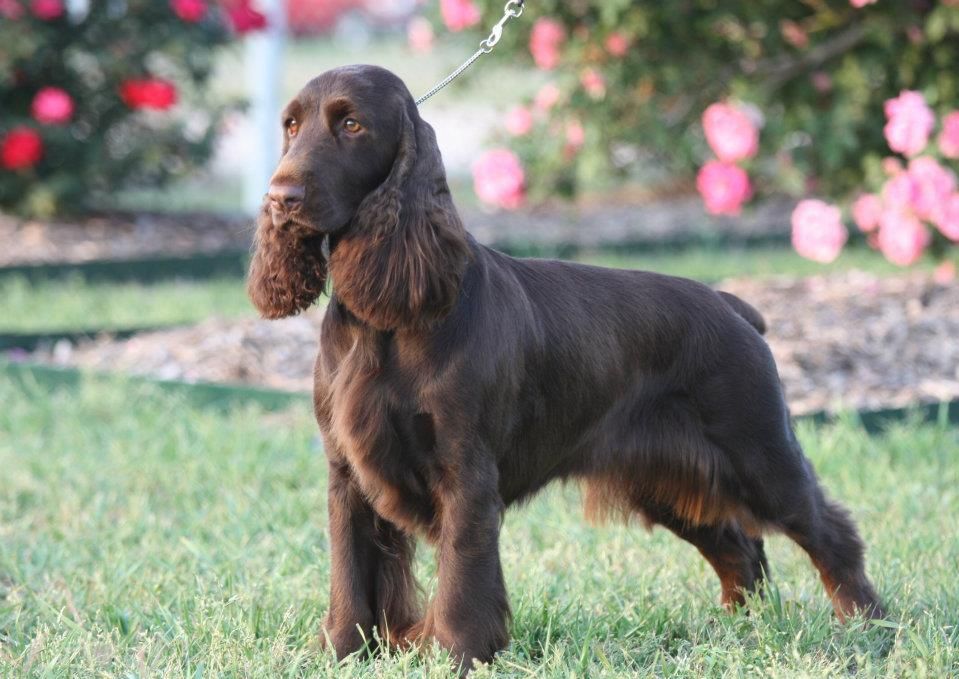
| Height | 43–46 cm |
| Weight | 16–25 kg |
| Lifespan | 12–13 years |
| FCI group | 8 · spaniels |
| Origin | United Kingdom |
Exact ratings
Common health issues
Nutrition
The Field Spaniel is a breed that’s hard to ignore. Elegant, intelligent, and incredibly loyal, this dog is the epitome of the classic gundog, yet perfectly adapted for life in a modern family. While the Field Spaniel isn’t as common as its close relatives, the Cockers or Springers, it boasts a unique set of qualities that make it a true treasure for those in the know.
The Field Spaniel is a rare, all-purpose hunting breed that combines the energy of a field dog with the gentleness of a family companion. Their numbers are modest worldwide (the breed ranked 160th in AKC popularity in 2024), but devoted fans value them for their balanced temperment, work ethic, and striking appearance. We’ll explore this more on Tvaryny.
Field Spaniel: Breed Profile at a Glance
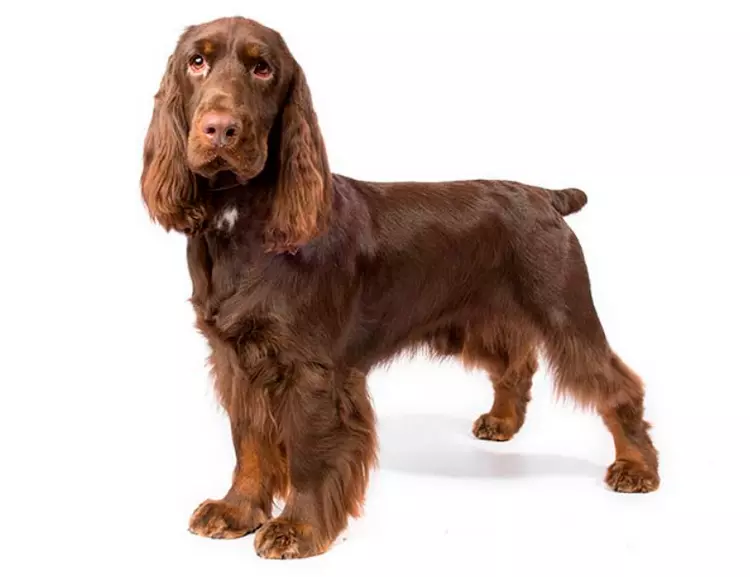
| Characteristic | Standard | Notes |
|---|---|---|
| Origin | Great Britain | Developed – late 19th century |
| FCI Classification | Group 8, Section 2 | Flushing Dogs |
| Height at withers | 17–18 inches (43–46 cm) | US standard (AKC) – 18 inches (males), 17 inches (females) |
| Weight | 40–55 lbs (18–25 kg) | Important to maintain working condition |
| Lifespan | 12–14 years | Average for the breed |
| Rarity | Very high | On the “Vulnerable Native Breeds” list in the UK |
History of the Breed
The Field Spaniel’s story began in Victorian England, when breeders set an ambitious goal: to create a solid-black spaniel purely for dog shows. This was a time when “dog fancying” was exploding in popularity, and appearance was often prioritized over working ability.
The breed’s foundation came from “Land Spaniels,” the ancestors of modern Cockers and Springers. Phineas Bullock is considered one of the breed’s founders, and he began breeding dogs that were heavier and lower to the ground than Cockers. To achieve the desired black color and heavy build, it’s rumored that… Basset Hound blood was introduced. This gave the dogs a long body and heavy bone, but it was disastrous for their working skills. The early Field Spaniels became so long, low, and heavy they could barely move through dense brush. They became a caricature, “the king of misfit spaniels” at shows.
Popularity came quickly, but it faded just as fast. By the early 20th century, the breed was on the brink of extinction. Hunters preferred the lighter, more agile Springers, and show breeders had moved on to the fashionable Cockers. The breed essentially had to be “re-invented.”
The revival began in the mid-20th century. Breed enthusiasts, particularly within the Field Spaniel Society (founded in 1892), undertook the difficult work of restoration. They abandoned the extreme “show” type and began introducing English Springer Spaniel and English Cocker Spaniel bloodlines to restore functionality, lighten the bone structure, and improve proportions. This move saved the Field Spaniel. The modern dog is a result of these efforts, blending elegance with performance.
Despite all this work, the Field Spaniel never became a mainstream breed. It remains rare even in its homeland, Great Britain, where The Kennel Club has listed it as a “Vulnerable Native Breed.” This means fewer than 300 puppies are registered each year. The breed is also scarce in the United States, making every Field Spaniel a truly exclusive companion.
What Does a Field Spaniel Look Like?
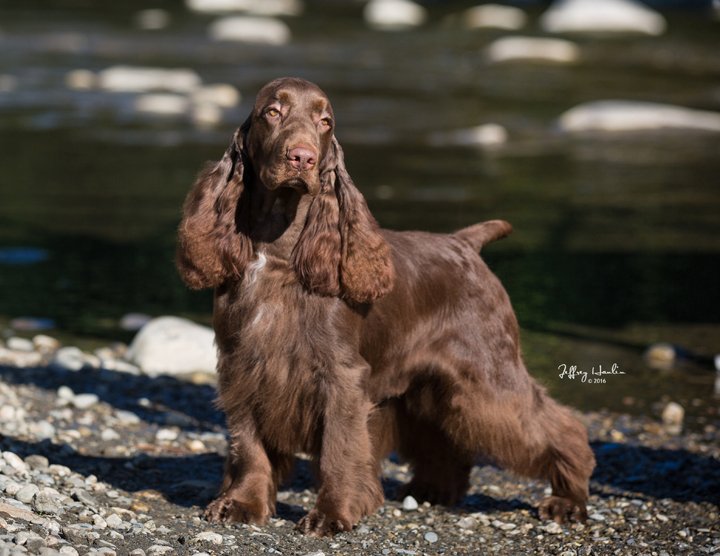
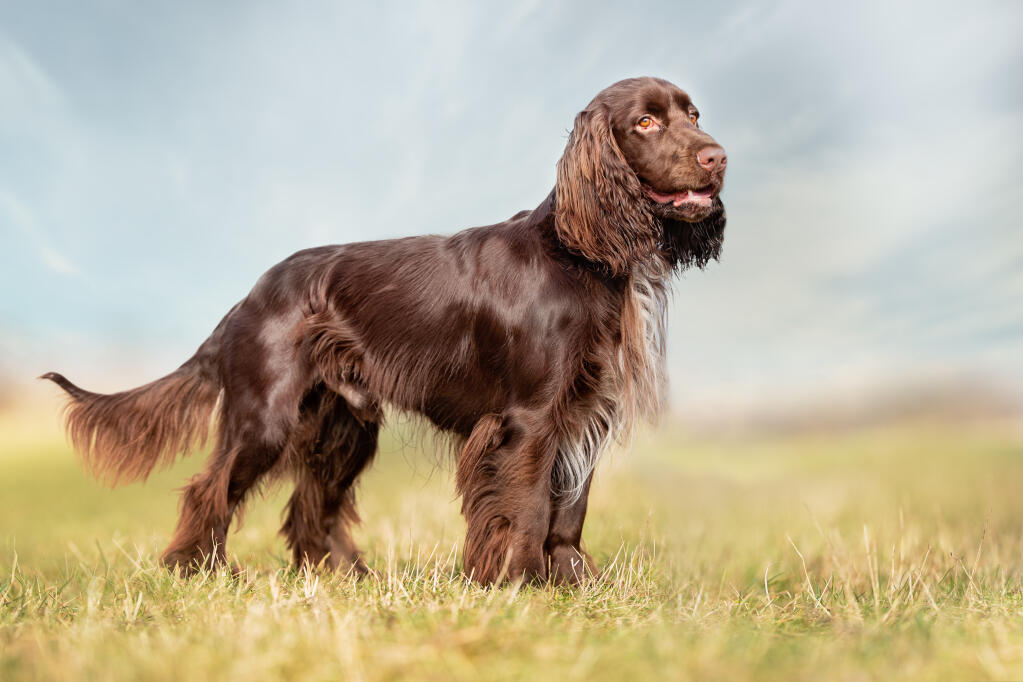
The Field is a dog of noble proportions, medium-sized, with a long body, but sturdy and functional. He is longer than he is tall, but should never appear low-slung or overdone. This is a balanced athlete.
The head is one of the breed’s distinguishing features. It’s long and lean, with clean lines, not wide in the skull. The “expression” is unique: it’s described as serious, gentle, and slightly melancholy or “grave.” The eyes are almond-shaped, dark brown or hazel, with an attentive gaze. The ears are set low (at or slightly below eye level), fairly long and wide, and covered in silky “feathering.”
The body is moderately long, with a deep chest that reaches the elbows and well-sprung ribs. The topline is straight and strong. The tail was traditionally docked by one-third, but today in most countries, it’s left its natural length. It’s set low, never carried above the back, and is in constant, merry motion when the dog is working.
The coat is another crowning glory. It’s long, smooth, silky, and glossy, without curls. A slight wave is permissible. There is abundant, but not excessive, feathering on the chest, under the body, on the back of the legs, and on the ears. The undercoat is moderate and protects from bad weather. The colors are much richer than what the first breeders planned: black, liver, or roan are common. Tan points are also possible on these colors. White markings are allowed on the chest and throat but should not dominate.
| Field Spaniel Color Variations | |
|---|---|
| Solid Colors | Black, Liver |
| With Tan Points | Black & Tan, Liver & Tan |
| Roan | Blue Roan, Liver Roan (can also have tan points) |
| Allowable Markings | White or roan markings on the chest, throat |
The Field Spaniel’s movement should be smooth and easy, with good front reach and strong rear drive. This is a tireless runner, capable of covering long distances.
Character and Behavior
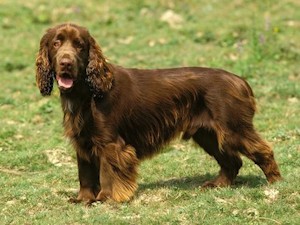
The hallmark of the Field Spaniel is a balance between gentleness and working passion. In the home, he’s quiet, affectionate, and unobtrusive-a true “Velcro dog.” In the field, he transforms-becoming active, driven, and an enthusiastic hunter.
This is a very sensitive breed. Fields react strongly to their owner’s mood, tone of voice, and any tension in the family. They absolutely cannot tolerate harsh training methods, yelling, or physical punishment. This causes the dog to “shut down,” becoming fearful and losing trust. They are known for their intelligence and ability to think independently, so training requires positive motivation, patience, and varied tasks to prevent boredom.
Fields bond very strongly with their family, often choosing one “main” person to follow around like a shadow. They are good with children, especially if raised together, but their sensitivity makes them better companions for older, calmer kids who understand how to behave around a dog. They are not suited for life in a kennel-they need constant human contact.
If you want a shadow dog to accompany you on hikes, runs, or bike rides-this is the Field. But left alone, he grieves deeply. This breed is prone to separation anxiety. They can display destructive behaviors (barking, howling, chewing) if left alone for long periods. They must be taught from a young age to handle short absences, providing them with a safe space (like a crate) and puzzle toys.
As a hunting spaniel, the Field has a strong “flushing” instinct-to push game birds “to the wing” for the hunter. In a city environment, this means they will enthusiastically chase birds in the park. They also have a superb nose and love to use it. Socialization with other animals, especially cats and small pets, must be done very early.
- Guarding Instincts: Low. They will bark to announce a guest, but are generally very friendly to strangers, though they might be a bit reserved at first.
- Energy Level: Medium-High. They need a minimum of 90 minutes of activity per day, which must include mental stimulation as well as physical exercise.
- Need for Attention: Very High. This is not a breed that can be left alone for 8 hours while you’re at work.
- Tendency to Bark: Low. They aren’t “yappy” for no reason, but may vocalize out of boredom or anxiety.
Pros and Cons of the Breed
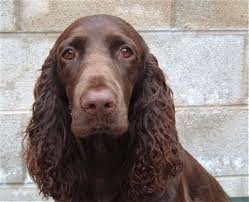
- Pros
- Extremely gentle and devoted nature.
- High intelligence and desire to please (with the right motivation).
- Versatile: excellent hunter, ideal companion, succesful in dog sports (agility, Nose Work, obedience).
- Moderate grooming needs – brushing 1-2 times a week is sufficient.
- Low tendency for aggression, gets along well with other dogs.
- Has a natural “off-switch”: active outdoors, but very calm and quiet indoors.
- Beautiful, noble appearance.
- Cons
- Very rare breed – difficult to find a puppy, long waiting lists, and high price.
- Strong tendency for separation anxiety (not for people who work long hours away from home).
- High need for daily activity and mental engagement.
- Prone to ear infections (otitis) due to hanging ears and hip dysplasia.
- Extremely sensitive – does not tolerate harsh training methods or yelling; can become timid without early socialization.
- High prey drive – may “hunt” cats or birds.
- Requires regular, though not complex, grooming.
Health and Common Conditions
Grooming and Hygiene
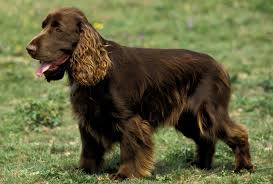
The Field Spaniel’s coat, while luxurious, is surprisingly easy to care for compared to other spaniels. It’s moderately long, lies flat, and has a water-repellent undercoat. Brushing 1-2 times a week is usually enough to prevent mats, especially in the feathered areas-behind the ears, under the elbows, and on the “pants.” During shedding season (spring/fall), you’ll need to brush more often, about 3-4 times a week.
Basic grooming tools:
- Slicker Brush: To remove dead undercoat.
- Metal Comb: To check for tangles, especially in the fine hair behind the ears.
- Bristle Brush or Pin Brush: For a finishing shine and to distribute natural oils.
Field Spaniels do not require the intensive trimming or clipping that Cockers do. Their coat should look natural. However, light “sanitary” grooming is recommended: neatly trimming the hair between the paw pads (to prevent dirt from collecting) and around the ear canal (for ventilation). Some owners also lightly thin the hair on the neck and shoulders to emphasize the dog’s elegant lines.
Ears – as mentioned, this is a weak spot. After bathing or swimming, always dry the ear canal thoroughly (you can use a special ear powder) and use a cleaning lotion once a week. Nails should be trimmed monthly if they don’t wear down naturally. Teeth – brush at least 2-3 times a week with veterinary toothpaste to prevent tartar buildup.
Exercise and Activity Needs
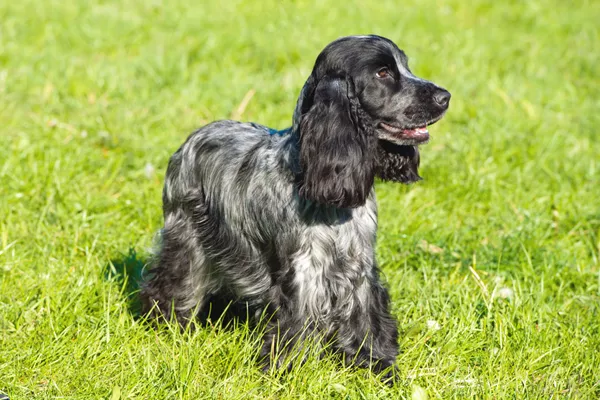
A Field needs 90-120 minutes of vigorous activity every day. This is not a dog that will be satisfied with a 15-minute walk around the block. A bored Field Spaniel is a destructive Field Spaniel. They need a job for their body and their mind.
The best activities include:
- Long walks or hikes: Especially over varied terrain where the dog can run freely (assuming a perfect recall) and use its nose.
- Swimming: Most Fields love water. It’s excellent, low-impact exercise for their joints.
- Dog Sports: They excel in agility, rally obedience, and especially “Nose Work” or spaniel hunt tests.
- Games of fetch: A classic game with a ball or frisbee.
- Running alongside a bike (bikejoring) or canicross: Only for adult dogs (after 1.5-2 years) once their joints are fully formed.
Mental stimulation is just as important. Field Spaniels are thinkers. They need to solve problems. Use interactive toys (KONGs, puzzle feeders), hide food in the house or yard for the dog to find by scent, and teach new tricks. 15 minutes of “nose work” can tire a dog out better than an hour-long run.
| Dog’s Age | Type of Activity | Duration, min/day |
|---|---|---|
| 3–6 mos. | Scent games, basic commands, short walks | 25–30 (in several sessions) |
| 6–12 mos. | Longer walks, swimming, starting basics (e.g., agility foundations) | 45–60 |
| >12-18 mos. | Full training, hunting, running | 90–120+ |
Feeding Your Field Spaniel
Training and Socialization
Positive reinforcement is the only path to success with a Field Spaniel. As mentioned, they are extremely sensitive. Yelling, leash jerks, or any “dominance-based” methods will only lead to fear and a loss of trust. They respond wonderfully to clicker training, food motivation (treats), and play-based rewards.
Early socialization is critically important. Because of their sensitivity, a Field Spaniel without proper socialization can grow up to be fearful or overly reserved. During the “socialization window” (up to 16 weeks), the puppy must be introduced to a maximum number of positive stimuli: different people (wearing hats, using canes), loud noises (traffic, fireworks – at a safe distance), different surfaces (grass, pavement, gravel), and other dogs (only vaccinated and calm ones).
Fields are smart, but that doesn’t mean they are “easy” to train. Their intelligence is combined with a certain “spaniel” stubbornness and independence. If they get bored, they will simply “check out” and go do their own thing (usually sniffing something). Training sessions must be short, fun, and varied. They are poor students for monotonous repetition. Proper training is the key to a happy life.
Recommended activities:
- Obedience Class: Essential for building a connection.
- Nose Work: An ideal sport that taps into their natural scenting instinct and is very mentally tiring.
- Recall Training: The most important command. Due to their hunting instincts, a recall must be 100% reliable before you ever let this dog off-leash.
- Trick Training: Stimulates their mind and strengthens the bond with their owner.
Interesting Facts About Field Spaniels
- The breed has been on the verge of extinction three times, most recently in the 1950s when only a few litters were registered in all of Great Britain.
- In 1909, a Field Spaniel named Dash belonged to British Prime Minister Herbert Asquith and often accompanied him to meetings with constituents.
- The Field Spaniel was one of the first breeds officially recognized by the American Kennel Club (AKC) in 1884.
- Unlike many other spaniels, Fields do not come in white with patches. Their colors are always dark-solid or roan.
- Fields are natural swimmers: they have slight webbing between their toes, similar to retrievers, which helps them in the water.
- In the show ring, they are often judged on their “natural” appearance. Excessive grooming or clipping that hides the dog’s silhouette is discouraged.
Frequently Asked Questions (FAQ)
How much does a Field Spaniel puppy cost?
Due to the breed’s extreme rarity, the price for a puppy from a responsible breeder (with all health tests for the parents) is very high. There are often long waiting lists for puppies. Expect a wait: established breeders have their litters spoken for well in advance.
Is a Field Spaniel suitable for an apartment?
Yes, absolutely. Despite their hunting background, they are very calm and quiet indoors. But this is only possible under one condition: you must be prepared to provide them with at least 1.5-2 hours of intense activity and mental stimulation every day. An under-exercised dog will be miserable and destructive in any home.
How is a Field Spaniel different from an English Cocker Spaniel?
The main differences are: size (the Field is significantly larger, heavier, and longer), head (the Field has a longer muzzle and a less-defined stop, with a “heavier” expression), temperament (the Field is generally more reserved, calm, and sensitive than hyperactive working Cockers), and color (Fields do not come in white with patches).
Do they shed a lot?
Moderately. They have seasonal sheds (spring and fall) when there will be more hair. But it’s nothing compared to, for example, a German Shepherd’s shedding. Regular brushing (1-2 times a week) keeps it under control.
How do they get along with other animals?
They usually get along wonderfully with other dogs. With early socialization, they can also live peacefully with cats, though they might try to “herd” them. However, small pets (hamsters, guinea pigs) and especially pet birds are a significant risk. Their hunting instinct may take over.
What are some alternative breeds to consider?
If you like the working spaniel type but can’t find a Field, look into: the Sussex Spaniel (also rare, but lower to the ground and more “vocal”), the Clumber Spaniel (significantly larger, more massive, and calmer), or the English Springer Spaniel (more common and energetic). Lovers of rare gundogs might also like the Deutscher Wachtelhund (German Spaniel) (very work-oriented) or the Kooikerhondje (a smaller, but also sensitive, spaniel type).
Video About the Breed
- Gentle, calm, devoted
- Calmer than the Cocker Spaniel
- Affectionate with its family
- Elegant, silky coat
- A very rare breed
- Reserved with strangers
- Coat and ear care
- Dislikes being alone
| English Cocker Spaniel | Clumber Spaniel | Sussex Spaniel | |
|---|---|---|---|
| Height | 38–43 cm | 43–51 cm | 33–41 cm |
| Energy | 4 | 2.5 | 3 |
| Apartment | 3 | 3 | 3 |
| Beginners | 3.5 | 3.5 | 3.5 |
How does the Field Spaniel differ from the Cocker Spaniel?
Is the Field Spaniel good for a family?
How rare is the Field Spaniel?
FCI Standard No. 123 · The Kennel Club
For apartments · For kids · For beginners · Active · Smartest · Hypoallergenic · All rankings →