

In brief: choosing a dog for an apartment
- What matters is temperament, not size: many big breeds (Labrador, Great Dane) are calm indoors, while small terriers can be hyperactive.
- The best fits are moderately active dogs that bark little and tolerate being alone: French Bulldog, Pug, Cavalier King Charles Spaniel, Shih Tzu, Greyhound.
- Factor in shedding, exercise needs and neighbors (barking). Test a puppy’s temperament (the Campbell test — below).
- For a child, choose patient, friendly breeds; avoid the very tiny and the very protective.
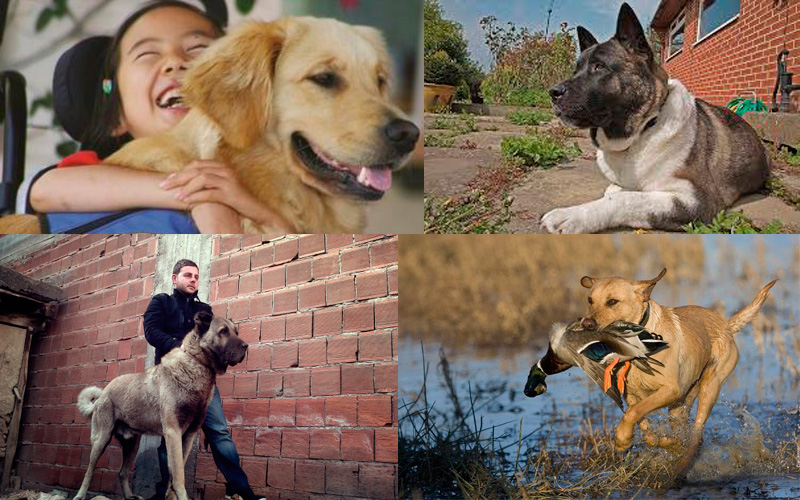
A dog is the one family member we actually choose ourselves. And that choice shapes the next 10–15 years: how comfortably you live together in a flat, whether you have time for walks and training, and how well the dog gets on with children and other pets. Below is a practical order of steps — how to pick a breed to suit your lifestyle, how to choose a healthy puppy, and how to assess its temperament before you ever bring it home.
Choosing a breed to suit your lifestyle
A breed determines not only looks but also an inborn character that is almost impossible to “re-train”. So first answer honestly: do you want a family pet, a companion or a guard dog? By purpose, dogs fall roughly into four types:
| Type of dog | Best for | Example breeds |
|---|---|---|
| Companion | Families, single owners, children | Labrador, golden retriever, poodle, pug, Cavalier King Charles Spaniel, Shih Tzu |
| Guard | Protecting the owner; experienced handler | German Shepherd, Rottweiler, Doberman, Great Dane |
| Watchdog | Alerting to strangers; territorial | Caucasian Shepherd, Bullmastiff, Giant Schnauzer (and even small, vocal dogs) |
| Hunting | Active owners, plenty of exercise | Retrievers, spaniels, terriers, hounds, huskies |
The easiest to keep in a apartment are companions: they are non-aggressive, attached to people and cope well with limited space. Guard and hunting breeds can live in a apartment too, but they need serious training and long exercise — otherwise boredom turns into chewed furniture.
Dog size and the space in your home
A common myth is that only small dogs belong in a apartment. In reality it isn’t height that matters but temperament and exercise needs:
- Small breeds (Chihuahua, Toy Terrier, Shih Tzu, Pekingese) don’t need much room — but “small” doesn’t mean “calm”: some terriers are very energetic and noisy.
- Medium breeds (spaniels, bulldogs, collies) handle limited space easily thanks to proper walks.
- Large and giant breeds (Great Danes, mastiffs, shepherds) are the hardest: even a calm giant needs long daily walks for life.
Honestly weigh up the two resources a dog will need every day for years: time and space. Time goes on grooming, training and companionship — decorative breeds need a lot of grooming, working breeds need training, and companions need attention. Some of it can be offset with money (grooming, a trainer, quality food from a breeder), but not all.
How to choose a healthy puppy
It’s best to take a puppy no earlier than 8 weeks — by then both physical condition and character are visible. Before you fall for those eyes, check the pup over:
- Bite — correct, with no obvious faults.
- Ears — clean, with no squelching or bad smell when you press near the base.
- Ribs and legs — no lumps (a sign of rickets), sturdy limbs, an even gait.
- General look — well-fed, good appetite, a tail with no kinks.
- Stools — formed; an upset tummy in even one pup of the litter is a warning sign.
A healthy puppy is often clear at a glance. To assess character, though, breeders use a special test.
The Campbell test: assessing a puppy’s character
William Campbell’s test is done with a puppy aged 6–8 weeks in a place unfamiliar to it, with no mother or littermates nearby. It consists of five short exercises; the pup’s reactions reveal its character type. Note the letter (A–E) for each exercise and write them in a row — that is the “code” of the future temperament.
Exercise 1. Sociability. Place the puppy in the middle of the room, step back a few paces, crouch down and call it with your hand.
| Reaction | What it means |
|---|---|
| A | Comes at once, tail up, nipping your hands |
| B | Comes without hesitation, tail up, barking |
| C | Comes without hesitation, tail down |
| D | Comes slowly, tail down |
| E | Doesn’t come at all |
Exercise 2. Following. Walk away from the puppy at a normal pace — the way it follows shows how independent it is.
| Reaction | What it means |
|---|---|
| A | Follows readily, grabs at your feet, tail held high |
| B | Follows readily, tail held high |
| C | Follows readily, tail held low |
| D | Follows slowly, tail held low |
| E | Doesn’t follow, moves away |
Exercise 3. Restraint. Gently lay the puppy on its side, holding it by the chest. A dominant pup resists actively; a calm one accepts the position. There is no letter key here.
Exercise 4. Social dominance. Stroke the puppy while leaning over it. Its reaction shows how it perceives human authority.
| Reaction | What it means |
|---|---|
| A | Jumps, paws, nips |
| B | Jumps, paws |
| C | Lets you stroke it, licks your hands |
| D | Rolls onto its back and licks your hands |
| E | Moves away and doesn’t return |
Exercise 5. Self-esteem. Lift the puppy for a few seconds, cradling it under the belly with crossed hands so it can’t see you, and watch how it behaves.
How to read the result
| Predominant letters | Character | Best suited to |
|---|---|---|
| Two A and two B | Prone to dominance, may bite; harsh methods are off-limits; will protect its owner | Not for children or the elderly |
| Three or more B | A leader, loyal, competitive | For an experienced owner |
| Three or more C | An ideal companion, well-balanced | Recommended for children and older people |
| Several D with E | Very submissive, needs patience to raise | Gets on easily with children |
| Two or more E (especially in Exercise 4) | Hard to engage, needs a special approach; may be prone to running away | Not for children or teenagers |
If A and B reactions are hard to tell apart, repeat the test in another room. Remember: the test is a guide, not a verdict — character is still shaped by upbringing.
Top 10 dog breeds for apartments
Sources vary a little, but they agree on the essentials: an “apartment” dog is small-to-medium, moderately active, quiet and good with the family. The breeds most often recommended are:
- French Bulldog — calm, barks little, needs no long runs.
- Pug — an affectionate companion that loves being near you.
- Cavalier King Charles Spaniel — friendly, wonderful with children.
- Yorkshire Terrier — tiny and barely sheds.
- Shih Tzu — a calm house pet.
- Maltese — gentle and owner-focused.
- Pekingese — independent, undemanding about space.
- Pomeranian — compact and cheerful (watch the barking).
- Dachshund — clever, moderately active.
- Poodle (Miniature/Toy) — clever, hypoallergenic, easy to train.
The Greyhound is a surprising fit too: despite its size, it is remarkably calm indoors.
Choosing a dog for a child
Remember: feeding, training and caring for the dog will fall to the adults — even a teenager can’t handle shedding, health care and, above all, training alone. If there are children at home, rule out fighting, working and many hunting breeds. On the other hand, very tiny toy breeds are too fragile — a child can injure them even in a loving hug.
The breeds that get on best with children are the golden retriever, Labrador, collie, beagle, poodle, Bichon Frisé and Cavalier King Charles Spaniel. The key is to teach the child respect and care, and to socialize the dog from an early age.
Frequently asked questions (FAQ)
Which dog is best for a small apartment?
Calm small-to-medium breeds with modest exercise needs: French Bulldog, Pug, Cavalier King Charles Spaniel, Bichon, Shih Tzu. The Greyhound is a surprising fit too — despite its size it is very calm at home.
Can I keep a large dog in an apartment?
Yes, if the breed is calm and low-energy (for example a Great Dane or Labrador, given walks). The key is daily exercise; large size itself isn’t the problem — surplus energy with no outlet is.
Which dogs bark the least?
The Basenji (almost barkless), Greyhound, bulldogs and the Cavalier. But barking depends heavily on training and stress levels, not just the breed.
A puppy or an adult dog for an apartment?
An adult means a known temperament and size, and is often calmer and house-trained. A puppy needs more attention and training but adapts faster to your routine. The Campbell test helps assess a puppy’s character.
How much exercise does an apartment dog need?
At least twice a day, 30–60 minutes in total, and more for active breeds. Living in an apartment doesn’t cancel walks — they make up for the lack of space and prevent destructive behavior.