

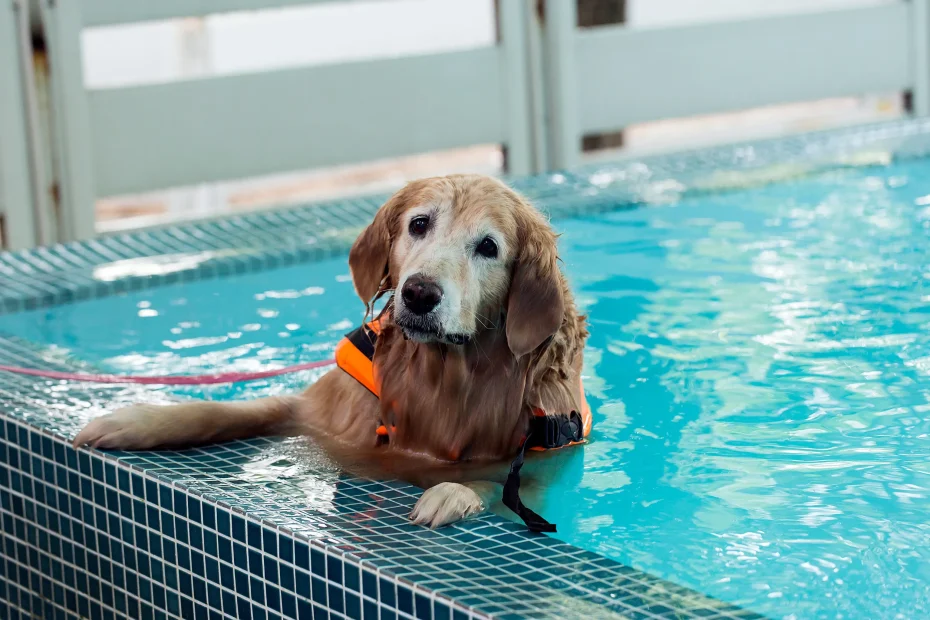
When our four-legged friend is suffering from joint pain, is slow to get up after a nap, or has lost their old joy for active play, it’s heartbreaking. We look for any way to ease their condition and bring back comfort and the happiness of movement. Modern veterinary medicine offers an amazing method that’s both effective and gentle—hydrotherapy. This isn’t just swimming; it’s an entire science that can work wonders for a dog’s health. We’ll talk in detail about how these healing water treatments work for dogs and in what cases they become a true lifeline, right here on Tvaryny.
In this article, we’ll dive into the world of hydrotherapy, breaking down its mechanisms, indications, and benefits. You’ll learn how a session works, how to choose the right specialist, and what you can expect from this rehabilitation method.
What is Canine Hydrotherapy?
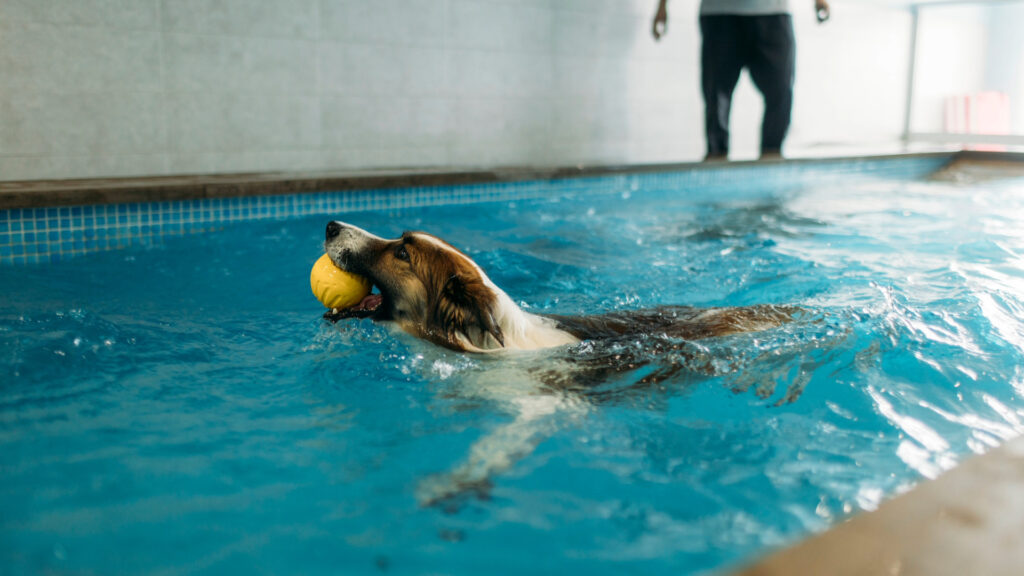
Canine hydrotherapy (from Greek “hydro” – water, “therapeia” – healing) is a form of physical therapy that uses the properties of water (buoyancy, resistance, temperature, and pressure) to treat various ailments, help with rehabilitation after injuries and surgeries, and improve a dog’s overall physical condition.
It’s important to understand that hydrotherapy isn’t the same as letting a dog swim in a lake. It’s a controlled process that happens under the supervision of a certified professional in a specially equipped pool or on an underwater treadmill. The water temperature, session length, and exercise intensity are chosen individually based on the dog’s diagnosis, age, breed, and physical shape.
How It Works: The Magic of Water in Action
The effectiveness of hydrotherapy is based on three fundamental physical properties of water. Understanding these principles will help you grasp why this method is so powerful.
- Buoyancy (Upward Force). Water supports the body, reducing the animal’s weight. For example, when a dog is submerged up to its shoulders, the stress on its joints and spine is reduced by about 60%. This allows the dog to move without pain, which is often impossible on land, especially with arthritis or after surgeries. The muscles get to work while the joints “rest.”
- Resistance. Water is roughly 12 times denser than air. Any movement in water requires significantly more effort. This resistance acts as a natural workout, allowing for effective muscle mass and endurance building without overstraining the skeletal system.
- Hydrostatic Pressure. The pressure of the water on the dog’s body acts like a gentle compression massage. This helps reduce swelling, improves blood and lymph circulation, and can also lower pain sensitivity.
- Temperature. Warm water (usually 82-90°F or 28-32°C) relaxes muscles, increases blood flow, and lessens pain. This creates a calming effect and makes the sessions more comfortable for the animal.
When Your Dog Needs Hydrotherapy: Key Indications
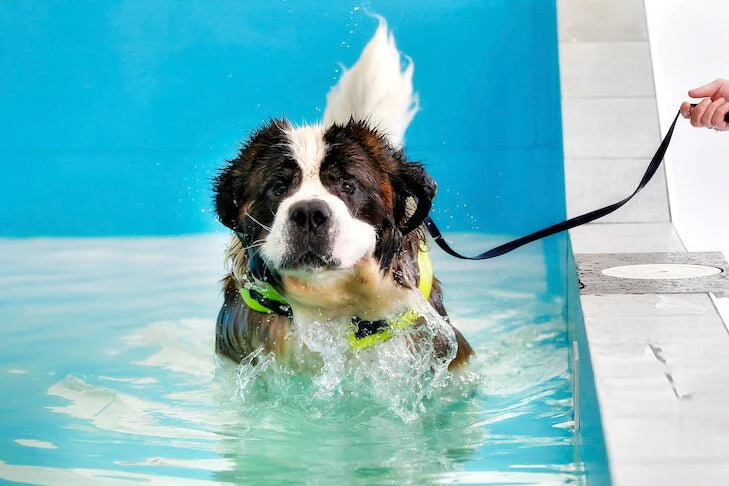
The range of applications for hydrotherapy is incredibly broad. This method is a key element in the process of canine water rehabilitation and the treatment of chronic conditions. Here are the main cases where a vet might recommend this type of therapy:
Orthopedic Conditions
This is probably the most common area of use. Hydrotherapy is essential for treating joint issues in dogs.
- Arthritis and Osteoarthritis: Reducing the load on joints allows a dog to move without pain, helping them maintain mobility and slowing the disease’s progression.
- Hip and Elbow Dysplasia: Helps strengthen the core muscles around the affected joints, which stabilizes them and reduces discomfort.
- Cranial Cruciate Ligament (CCL) Rupture: It’s the gold standard for rehabilitation both before and after surgery, allowing for the restoration of limb function.
Neurological Problems
Water provides support and stimulates nerve endings, which is critically important for dogs with neurological disorders.
- Intervertebral Disc Disease (IVDD): Helps restore coordination and motor functions after conservative treatment or surgery.
- Degenerative Myelopathy: Although this disease is incurable, hydrotherapy helps maintain muscle mass and a dog’s quality of life for as long as possible.
- Fibrocartilaginous Embolism: Promotes the restoration of nerve conduction and mobility.
Recovery After Injuries and Surgeries
The process of canine water rehabilitation allows recovery to begin much earlier than with traditional land-based exercises, speeding up healing and preventing muscle atrophy.
Weight Management and Improved Fitness
For overweight dogs, hydrotherapy is an ideal way to burn calories without putting stress on their joints. It’s also great for show or sporting dogs to improve their stamina and muscle tone.
Benefits of Hydrotherapy: More Than Just Exercise
When discussing the undeniable benefits of swimming for dogs, it’s worth noting that the therapeutic approach offers far more advantages:
- Reduced Pain and Inflammation: The warm water and hydrostatic pressure act as natural painkillers.
- Improved Range of Motion in Joints: Buoyancy lets the dog flex and extend its limbs to their full extent.
- Strengthened Cardiovascular System: It’s a superb cardio workout that boosts heart and lung function.
- Psychological Relief: For many dogs, sessions in the water become a fun game, reducing stress, improving mood, and providing mental stimulation.
- Improved Posture and Balance: The water forces the stabilizing muscles, which are responsible for coordination, to work harder.
Important: Before starting any hydrotherapy course, you must consult your veterinarian. They need to confirm that your dog’s condition allows for such exertion and provide a referral to a rehabilitation specialist.
What a Hydrotherapy Session is Like: A Step-by-Step Guide
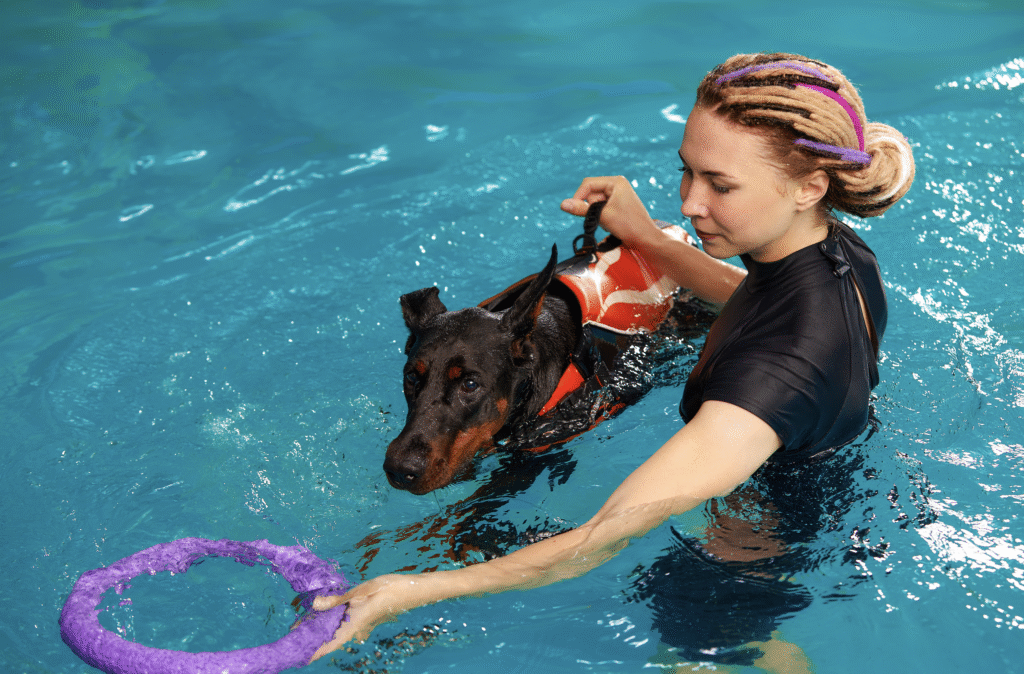
To ease any worries, let’s walk through what a typical first visit to a hydrotherapy center looks like.
- Consultation and Assessment. The rehabilitation specialist gets to know your dog, reviews their medical history, and checks the vet’s referral. They’ll do an exam, checking their gait, muscle tone, and range of motion.
- Preparation. The dog is washed under a shower before getting into the water (this is a hygiene requirement). They are fitted with a special life jacket or harness for support and control.
- Getting Used to the Water. The first session is always focused on adaptation. The dog is introduced to the water slowly and carefully, giving them time to get comfortable. The specialist uses toys and treats to create positive associations.
- Performing Exercises. Depending on the goal, this could be swimming in a pool or walking on an underwater treadmill. The therapist is in the water with the dog, supporting them, guiding their movements, and monitoring their condition. The first session is usually short, 5-10 minutes, and gradually increases.
- Finishing the Session. After the exercises, the dog is rinsed with clean water again and thoroughly dried with towels or a special hairdryer. This is vital to prevent chilling and skin problems.
How to Choose a Hydrotherapy Center: A Checklist for Owners
Choosing a qualified specialist and a properly equipped center is key to your pet’s success and safety. Here are a few questions you should ask before starting a course:
- ✅ What are the therapists’ qualifications? Look for certified animal rehabilitation specialists or veterinary physiotherapists.
- ✅ Do they require a vet’s referral? A professional center will always work closely with your treating vet.
- ✅ How is the water quality maintained? Ask about the filtration and disinfection system. The water must be clean and safe.
- ✅ Is the therapist in the water with the dog? This is a safety standard, especially for dogs with serious issues or those afraid of water.
- ✅ What equipment is used? The availability of non-slip ramps, life jackets of various sizes, and an underwater treadmill indicates a high-level center.
- ✅ Can you be present during the session? Your presence can reassure your dog, especially during the first sessions.
Frequently Asked Questions (FAQ)
Are there any contraindications for hydrotherapy?
Yes. Hydrotherapy is not recommended for open wounds, skin infections, acute inflammatory processes, certain heart and respiratory conditions, or urinary or fecal incontinence.
My dog is afraid of water. Is hydrotherapy suitable for them?
An experienced hydrotherapist knows how to work with such dogs. The adaptation process will be very slow and gentle, using toys and positive reinforcement. Many dogs that were initially afraid of water eventually start to enjoy the sessions.
How many sessions will my dog need?
The number and frequency of sessions depend on the diagnosis and individual progress. For post-operative rehabilitation, a course of 10-12 sessions, once or twice a week, may be needed. For dogs with chronic conditions like arthritis, hydrotherapy can become a lifelong maintenance procedure. A 30-minute session with a specialist in the U.S. typically costs between $50 and $100, depending on the clinic and the case’s complexity.
Can hydrotherapy replace medication?
No, hydrotherapy is part of a comprehensive approach. It wonderfully complements medical treatment but doesn’t replace it. Often, thanks to hydrotherapy, it’s possible to reduce the dose of painkillers, but this should only be done with a vet’s prescription.
Conclusion
Canine hydrotherapy is a powerful tool in modern veterinary medicine, offering a safe, gentle, and effective path to recovery and improved quality of life. It allows dogs with joint pain to feel the joy of movement again, helps them recover faster after injuries and surgeries, and is a great way to maintain physical fitness.
If you’ve noticed your pet has become less active or has diagnosed musculoskeletal problems, talk to your vet about the possibility of hydrotherapy. It could be the best gift you give for the health and happiness of your loyal friend.