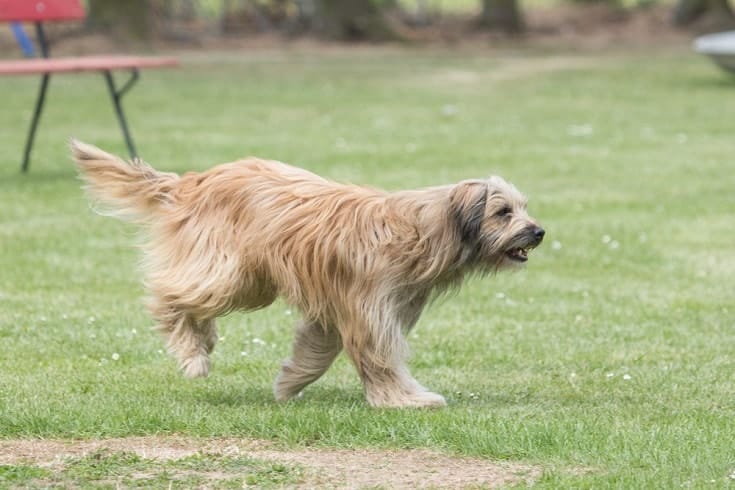
Group 1 · sheepdogs and cattle dogs · France (Pyrenees Mountains)
Pyrenean Sheepdog (Long-Haired)
A long-haired “fireball” of the Pyrenees — France's smallest sheepdog with boundless energy: lively, clever, devoted and watchful. The Pyrenean Sheepdog (long-haired) is France's smallest herding breed, with a characteristic “heightened shagginess”; inexhaustibly active, clever and attached, it makes a faithful friend and an excellent guard but needs exercise, work and mental tasks.
Apartment · with caveatsKidsCats · with caveatsOther dogsBeginners · with caveats
The Long-Haired Pyrenean Sheepdog, the smallest of all French herding breeds, is a whirlwind of energy, intelligence, and boundless loyalty. Outwardly, they're incredibly charming, with their distinctive "shaggy" coat adding a unique allure. If you're dreaming of a loyal companion who's always ready to lend a paw, someone kind, alert, yet active and resilient, then the long-haired Pyrenean Sheepdog might just be your perfect match. However, it's worth noting straight away that these energetic dogs will find apartment living cramped and uncomfortable. This breed belongs to that group of pastoral dogs who desperately need constant movement, active playtime, and ample space to burn off steam. You can find out more about this and other breeds further on Tvaryny.
Pyrenean Sheepdog (Long-Haired): A Brief Breed Overview
Pyrenean Sheepdog (Long-Haired): A Brief Breed Overview · 9
Characteristic
Description
Origin
France (Pyrenees Mountains)
Year of First Official Mention (Standard)
1926 (first standard), updated by FCI
Life Expectancy
12–15 years (some sources indicate up to 17–19 years with proper care)
Height at Withers
Males: 40–48 cm (up to 50 cm allowed for exceptional specimens) Females: 38–46 cm (up to 48 cm allowed for exceptional specimens)
Weight
7–15 kg (depending on height and sex)
Coat Type
Long or semi-long, dense, harsh or softer, may form cords or dreadlocks
Colour
Fawn (various shades), grey (various shades, including charcoal), harlequin (merle), black, brindle. White markings on chest and limbs possible.
Temperament
Energetic, intelligent, alert, loyal, wary of strangers, requires early socialisation
Use
Herding dog, companion, sports dog (agility, obedience)
Interesting Facts About the Breed
Ancient Origins: Although the breed was officially recognised relatively recently, its ancestors worked in the Pyrenees for centuries, making it one of France's oldest herding breeds.
War Heroes: During World War I and II, Pyrenean Sheepdogs were used by the French army as couriers, search and rescue dogs, and even for mine detection. Their bravery and stamina saved many lives.
Two Coat Types, One Breed: There are two officially recognised varieties of the Pyrenean Sheepdog – the long-haired (poil long) and the smooth-faced (face rase). They are often born in the same litter.
"Smiling" Expression: Thanks to the shape of their muzzle and the placement of the fur around it, many Pyrenean Sheepdogs have an expression that resembles a smile.
Agility Masters: Due to their agility, speed, and intelligence, Pyrenean Sheepdogs often achieve great success in agility competitions and other dog sports.
Natural Cords: In some long-haired Pyrenean Sheepdogs, the coat naturally twists into cords or dreadlocks, similar to a Komondor or Puli, but usually less pronounced. This is not considered a fault.
Not for Novices: Despite their appealing appearance, this breed is not recommended for inexperienced dog owners due to its high energy level, need for mental stimulation, and potential stubbornness.
History
The precise origins of the Pyrenean Sheepdog are lost in the mists of time. It's widely believed that this breed developed naturally from the herding dogs that lived and worked for centuries in the harsh, isolated valleys of the Pyrenees Mountains, stretching between France and Spain. These small but incredibly resilient and intelligent dogs were indispensable to shepherds, helping them manage flocks of sheep and goats on steep mountain slopes. Their size and agility allowed them to navigate challenging terrain with ease, while their thick coats provided reliable protection against cold, wind, and rain. This isolation helped preserve the breed's unique traits over many generations.
The first official mentions and attempts to standardise the breed date back to the early 20th century. Colonel Ballet, a French military officer and breed enthusiast, played a pivotal role in its recognition. After World War I, where these dogs proved themselves as brave messengers and rescuers, interest in them significantly increased. In 1921, the first club for Pyrenean Sheepdog enthusiasts (Réunion des Amateurs de Chiens Pyrénéens – RACP) was founded, and the first official breed standard was adopted in 1926. However, this standard underwent changes, and the Fédération Cynologique Internationale (FCI) finally approved an updated version much later. The current standard, still in use today, was published in 2009, clearly dividing the Pyrenean Sheepdog into two coat types: the long-haired and the smooth-faced Pyrenean Sheepdog. Although two varieties exist, the long-haired Pyrenean Sheepdog is more numerous and widely known.
What Does a Long-Haired Pyrenean Sheepdog Look Like? Appearance and Breed Standard
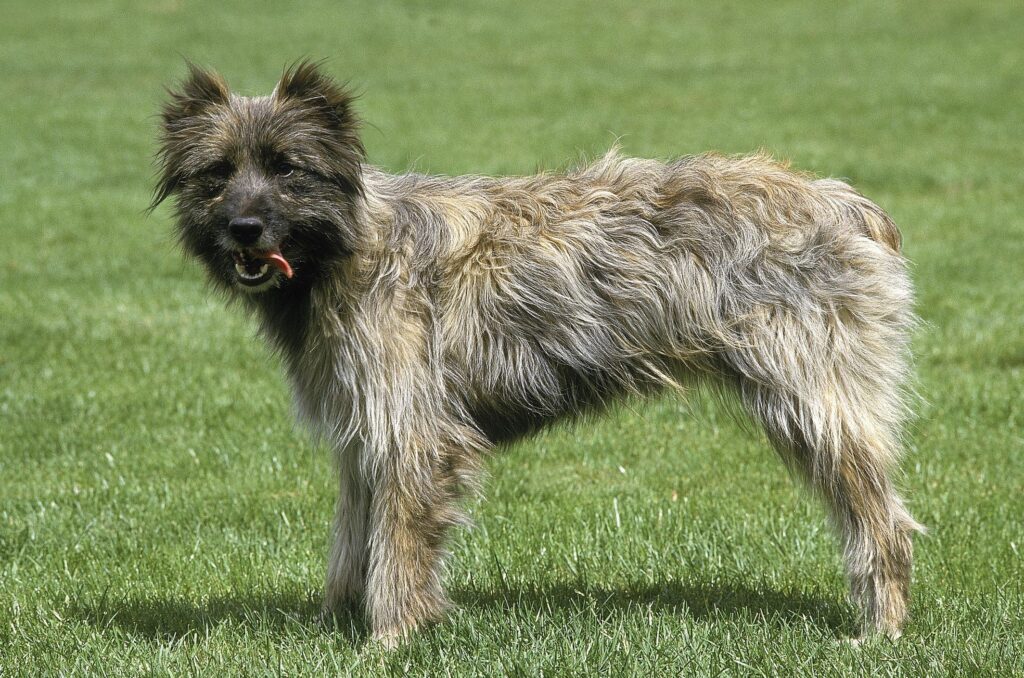
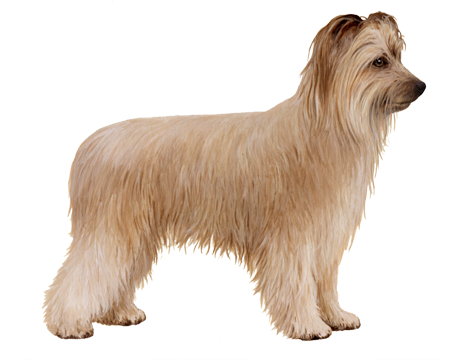
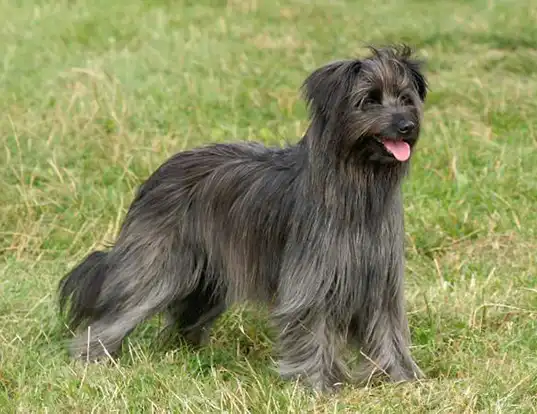
The Pyrenean Sheepdog (Long-Haired) is a small yet robust and athletic dog, with an expressive gaze and a distinctive "shaggy" coat. Its appearance reflects its working past: the dog must be agile, resilient, and ready for any weather conditions.
The breed's head is triangular, with a skull that is almost flat or slightly rounded, and a not-too-pronounced stop between the forehead and muzzle. The muzzle is wedge-shaped, slightly shorter than the skull. The nose is black. Eyes are very expressive, almond-shaped, usually dark brown. In harlequin (merle) or slate grey coloured dogs, multi-coloured eyes or eyes with blue flecks are permissible and not considered a fault. Their gaze is lively, intelligent, and alert. The ears of the long-haired Pyrenean Sheepdog are relatively short, triangular, and quite wide at the base. They can be erect, semi-erect (with tips dropping forward or to the side), or occasionally cropped in countries where permitted (in Ukraine, ear and tail cropping for cosmetic purposes is forbidden). Uncropped ears give the dog a more natural and softer look.
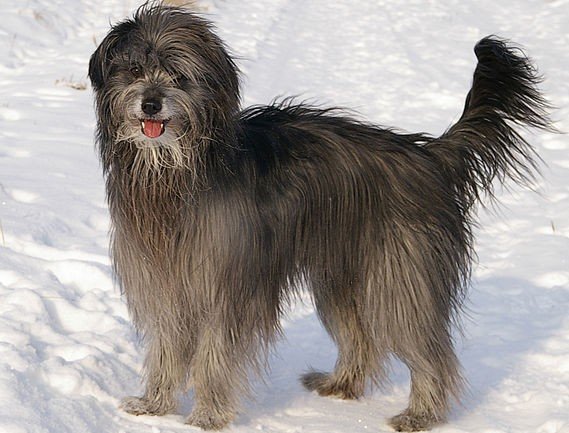
The body is strong and muscular but not heavy. The back is level, and the loin is short and powerful. The chest is moderately developed, extending down to the elbows. The limbs are lean and bony, with well-developed musculature that provides the dog with speed and agility. The paws are oval, compact, with dark pads and claws. The tail can be either long or naturally short (brachyury) or docked (where permitted). If long, it's usually set low, slightly hooked at the end (J-shaped), and well-furnished with hair. In motion, the tail may be carried higher but should not curl over the back.
The coat is one of the most distinctive features of the long-haired Pyrenean Sheepdog. It's long or semi-long, quite dense, and can be straight or slightly wavy. The texture of the coat can vary from harsh, "goat-like" (which is preferred for working dogs as it provides better protection against bad weather and dirt) to softer. On the muzzle, the coat forms characteristic "moustaches" and a "beard." On the body, especially on the rump and thighs, the coat may naturally form cords or dreadlocks, which is not a fault but rather a breed characteristic. The undercoat is usually not dense.
The coat colour can be varied: fawn (from light to rich, sometimes with black hairs intermingled), grey (various shades, from light grey to dark, almost black, slate grey), harlequin (merle or marbled – speckled grey-black or fawn-black), black (sometimes with white markings), and brindle. Small white markings on the chest and limbs are permissible. Solid white is not recognised by the standard.
FCI Standard No. 141 Parameter · 10
FCI Standard No. 141 Parameter
Description for the Long-Haired Pyrenean Sheepdog
General Appearance
A small dog, full of vivacity and energy, with a cunning and wary expression
Proportions
Body length slightly greater than height at withers. Muzzle slightly shorter than skull.
Head
Triangular in shape, skull almost flat.
Eyes
Dark brown, almond-shaped, expressive. Blue or multi-coloured eyes permitted in merle coloration.
Ears
Short, triangular, erect or semi-erect.
Neck
Fairly long, muscular, well-set.
Body
Strong back, short loin, moderately wide chest.
Tail
Can be long (with a hook at the end), naturally short, or docked (where permitted).
Coat
Long or semi-long, from harsh to softer, may form cords.
Colour
Fawn, grey, harlequin (merle), black, brindle. White markings possible.
Temperament and Character
The long-haired Pyrenean Sheepdog is a bundle of boundless energy, sharp intellect, and unwavering devotion to its owner and family. However, their character has certain traits that potential owners need to understand and consider. This isn't a dog for everyone; they require an active lifestyle, consistent training, and a lot of attention.
Loyalty and Affection: These dogs form incredibly strong bonds with their families, often choosing one "main" owner to whom they pay special attention. They're ready to follow them anywhere and participate in all family activities.
Energetic and Lively: This is one of the most energetic breeds. They need daily, prolonged physical exercise and mental stimulation to be happy and well-balanced. Without sufficient activity, they can become destructive or exhibit undesirable behaviours.
Intelligence and Cleverness: Pyrenean Sheepdogs are highly intelligent and quick learners. However, their intelligence is combined with a degree of independence and stubbornness, which can make training challenging for inexperienced owners.
Alertness and Watchdog Qualities: Like many other herding breeds, such as the Catalan Sheepdog, the Pyrenean Sheepdog has well-developed watchdog instincts. They are alert, attentive, and wary of strangers, announcing their presence with loud barking. This makes them excellent guardians but requires management of their barking, especially in urban environments.
Wariness of Strangers: This trait is characteristic of the breed. Early and proper socialisation is critically important to ensure the dog reacts appropriately to strangers and new situations.
Sensitivity: Despite their resilience, Pyrenean Sheepdogs can be quite sensitive to their owner's mood and training methods. They don't respond well to harshness or punishment; they learn best through positive reinforcement.
Tendency to Bark: As mentioned, these dogs are quite "talkative." Their bark is sharp and frequent if they aren't taught to control this habit.
The main characteristic of the breed is their incredible stamina and ability to adapt to any weather conditions. This is genetically ingrained in them, as they worked for centuries in the harsh Pyrenees. Stories about these animals being able to go without food for several days and still be perfectly fine, while having some basis in truth (the endurance of working dogs), should not be taken as the norm. A modern pet requires regular and balanced nutrition. They are always ready for any serious work you offer them, be it herding, sports competitions, or simply active games.
During World War I, these dogs were actively used as messengers and rescuers. Their small size, agility, courage, and incredibly developed sense of smell allowed them to navigate through shelling, find wounded soldiers, and deliver messages. These are extraordinary dogs who deserve respect and an understanding of their unique nature.
Socialisation and Raising
Early and thorough socialisation is absolutely essential for the long-haired Pyrenean Sheepdog. Due to their natural wariness of strangers and strong herding instincts, it's crucial to expose a puppy to various people, sounds, places, and other animals from a very young age. This will help raise a well-balanced and confident dog that won't show excessive shyness or aggression.
The training process should be consistent, patient, and based on positive reinforcement. These dogs are intelligent but can be stubborn. The owner must establish clear rules and boundaries from the first days the puppy arrives home. It's important to be a leader – calm, confident, and fair. Harshness, shouting, and physical punishment are unacceptable, as they can lead to a loss of trust, the development of fears, or defensive aggression. Praise, treats, and play are the best motivators for a Pyrenean Sheepdog.
It's important to teach the dog to control its barking. While this is a natural behaviour for them, constant, unwarranted barking can become a problem, especially for neighbours. Teaching commands like "Quiet!" or "Enough!" should begin at an early age.
Training
To successfully train a Pyrenean Sheepdog, you'll need not only experience but also an understanding of this breed's psychology. They can indeed be a challenge to train due to their independence and quick wit, which sometimes prompts them to "outsmart" their owner. However, with the right approach, these dogs are capable of remarkable results in various dog sports.
Positive Reinforcement: This is the foundation of successful training. Use treats, praise, and toys to encourage desired behaviour.
Short and Varied Sessions: Pyrenean Sheepdogs quickly get bored with monotony. It's better to conduct short (10–15 minute) training sessions several times a day than one long one. Constantly vary the exercises and tasks.
Consistency and Patience: Only an owner with strong willpower, immense patience, and unwavering consistency will be able to "tame" these independent and sometimes stubborn animals. Don't give up if something doesn't work right away.
Early Start: Begin teaching basic commands from the moment the puppy arrives home.
Involvement in Activities: Pyrenean Sheepdogs excel in sports such as agility, obedience, flyball, and herding (if possible). These activities not only provide the necessary physical and mental exercise but also strengthen the bond between dog and owner. Some character traits, such as a desire for dominance, can also be found in other active breeds like the Czechoslovakian Wolfdog, requiring firmness and consistency from the owner.
It's important to remember that the Pyrenean Sheepdog was bred for independent work, so they may question your commands if they don't see the point. Your task is to become an authoritative leader whom they will trust and respect.
Physical Exercise and Activity
The long-haired Pyrenean Sheepdog is a true powerhouse that needs significant daily physical exercise. Short, routine lead walks simply won't cut it for them. If the dog doesn't get opportunities to burn off its energy, it can become anxious, destructive, or excessively noisy.
Optimal activities for a Pyrenean Sheepdog:
Long Walks: A minimum of 1.5–2 hours of active walks per day, ideally with the opportunity to run off-leash in a safe area.
Running and Cycling: Adult, healthy dogs can accompany you on runs or bike rides.
Games: Active games with a ball, frisbee, or tug-of-war.
Dog Sports: Agility, flyball, obedience, trick training, herding (if opportunities exist). These provide not only physical but also crucial mental stimulation.
Hiking and Travel: Pyrenean Sheepdogs make excellent companions for hikes and active outdoor adventures.
It's vital to ensure both the quantity and quality of physical activity. The dog needs more than just monotonous movements; they require tasks that stimulate their mind. Remember that this breed is resilient, but avoid over-exercising young dogs whose bones and joints are still developing. Gradually increase the intensity of exercise as they mature.
Pros and Cons
Pros and Cons · 8
Pros
Cons
Incredible loyalty and affection towards family
High need for physical exercise and activity (not suitable for sedentary individuals)
High intelligence and cleverness, capable of learning
Can be stubborn and independent, requires an experienced owner
Excellent watchdog qualities, alertness
Tendency to frequent and loud barking (requires control)
Stamina and adaptability to various weather conditions
Wariness of strangers (requires thorough socialisation)
Energetic and playful, a good companion for active people
Coat requires regular care, prone to matting/cording
Small size, convenient for transport (compared to large sheepdogs)
Not suitable for apartment living without sufficient exercise
Generally robust health and longevity
Possible predisposition to certain genetic diseases (responsible breeder choice needed)
Unique and attractive appearance
May try to "herd" children or other animals
Caring for the Pyrenean Sheepdog (Long-Haired)
Caring for a long-haired Pyrenean Sheepdog has its specificities, mainly related to its dense and long coat. However, overall, it's a relatively undemanding breed if provided with proper living conditions and activity levels.
Coat Care for the Long-Haired Pyrenean Sheepdog
The coat of the long-haired Pyrenean Sheepdog requires regular, but not overly complicated, care. Daily brushing and weekly thorough combing will help prevent matting and ensure your furry friend has a beautiful, well-maintained coat. Special attention should be paid to areas where the fur is longest and densest – on the chest, "trousers," tail, and behind the ears. Cords or dreadlocks often form there, which is a characteristic feature of the breed, but if you don't plan to show the dog and these cords bother them or cause discomfort, they can be carefully separated or trimmed. During shedding periods (usually twice a year), you'll need to brush your dog more frequently.
There are two main coat types: the harsher "goat-like" and the softer. The "goat-like" coat is less prone to matting. The softer coat may require more frequent brushing. Some owners opt for professional grooming, especially if the dog's coat is prone to rapid tangling or forming dense cords.
Bathing
Only bathe your Pyrenean Sheepdog when absolutely necessary, using special shampoos for long-haired dogs. Frequent washing can strip the natural oils from the skin and coat, making it more vulnerable to weather and dirt. Typically, 1–2 baths per year are sufficient, or if the dog gets particularly dirty. After bathing, the coat must be thoroughly dried with a towel and hairdryer (on a low setting), while brushing it to prevent tangling.
Ear, Eye, Teeth, and Nail Care:
Ears: Regularly check their ears for dirt, redness, or unpleasant odour. Clean them as needed with a special ear cleaning solution. Because their ears can be pendulous or semi-erect, ventilation of the ear canal may be limited, increasing the risk of infections.
Eyes: Inspect their eyes daily. Small discharges in the corners of the eyes can be carefully removed with a damp cloth. If there's excessive discharge, redness, or cloudiness, consult a vet.
Teeth: To prevent plaque and tartar buildup, it's recommended to regularly brush your dog's teeth with a special toothbrush and paste, or provide dental chews and treats.
Nails: If their nails don't wear down naturally during walks on hard surfaces, they need to be trimmed 1–2 times a month with a special dog nail clipper. Overly long nails can cause discomfort and deform the paw.
Nutrition
Feeding the Long-Haired Pyrenean Sheepdog: What to Feed?
Health and risks
Health and Typical Diseases
Frequently Asked Questions · 7
Does the long-haired Pyrenean Sheepdog shed a lot?
Yes, long-haired Pyrenean Sheepdogs do shed, especially seasonally – in spring and autumn. Regular brushing (several times a week, and daily during shedding season) will help control the amount of hair in your home and prevent matting.
Is this breed suitable for a family with small children?
With proper socialisation and training, for both the dogs and the children, the Pyrenean Sheepdog can be a good companion. However, due to its energy and herding instincts (they might try to "herd" children by gently nipping at their heels), interactions with very young children should always be supervised.
How much activity does a Pyrenean Sheepdog need?
A lot! A minimum of 1.5–2 hours of intense physical exercise per day (running, active games, training), as well as mental stimulation. This is not a dog that will be content with short lead walks.
Is the Pyrenean Sheepdog easy to train?
They are intelligent and quick learners, but they can be independent and stubborn. Training requires patience, consistency, positive reinforcement, and experience. Novices may find it challenging.
Can Pyrenean Sheepdogs live in a flat?
Highly undesirable. They need space and the opportunity to move a lot. Living in a small flat without sufficient daily activity outside the home can lead to behavioural problems.
What is the life expectancy of a Pyrenean Sheepdog (Long-Haired)?
With good care and genetics, they can live quite long, averaging 12–15 years, and sometimes even longer.
Are these dogs noisy?
Yes, they have a tendency to bark. This is part of their guarding nature. It's important to teach them to control their barking from an early age.
Video About the breed
FAQ
How does the long-haired Pyrenean Sheepdog differ from the smooth-faced one?
The main difference is the coat: the long-haired one has a characteristic “heightened shagginess” over the whole body and face; the smooth-faced version has a smooth face. Both are extremely energetic and clever.
Is the Pyrenean Sheepdog suited to a novice?
Conditionally — a clever, sharp but very energetic herding dog; it needs plenty of exercise and mental activity, or it gets bored and destroys things.
How long does the Pyrenean Sheepdog live?
Very long — 15–17 years; one of the longest-lived breeds thanks to natural selection in the Pyrenees.