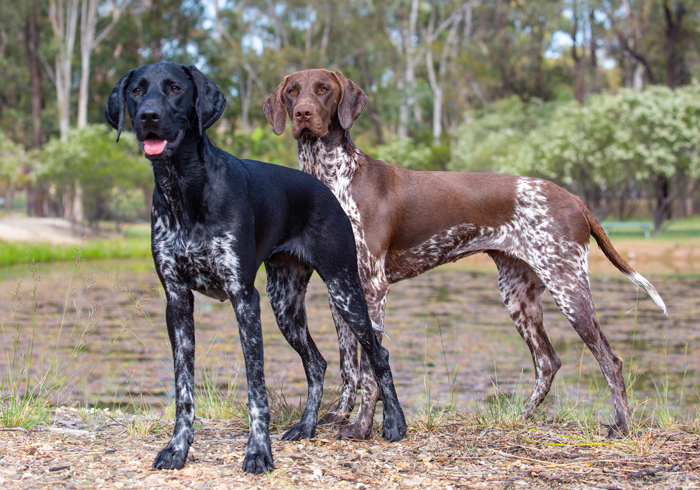
A versatile hunter-athlete: the German Shorthaired Pointer combines stamina, brains and devotion, equally good in field, water and home. It needs a great deal of exercise and work; for an active family it is a tireless partner, for the sofa a disaster.
Apartment · not suitableKidsCats · with caveatsOther dogsBeginners · with caveats
The German Shorthaired Pointer (Deutsch Kurzhaar) is far more than just a dog-it's a true all-rounder in the world of gundogs. Its intelligence, boundless energy, and deep loyalty make it not only an unparalleled hunting assistant but also a superb companion for an active family. This stunning pointing breed impresses with its grace, power, and ability to work on both land and water, cementing its place as one of the most popular sporting dogs globally. Their steady temperament, affection for children, and willingness to learn allow a German Shorthaired Pointer to become a fully integrated family member. This breed demands attention and plenty of activity, but in return, it offers endless love and unwavering devotion. You can read more on Tvaryny about what makes them such versatile workers.
German Shorthaired Pointer: Key Breed Information
German Shorthaired Pointer: Key Breed Information · 9
The German Shorthaired Pointer and Other Gundog Breeds
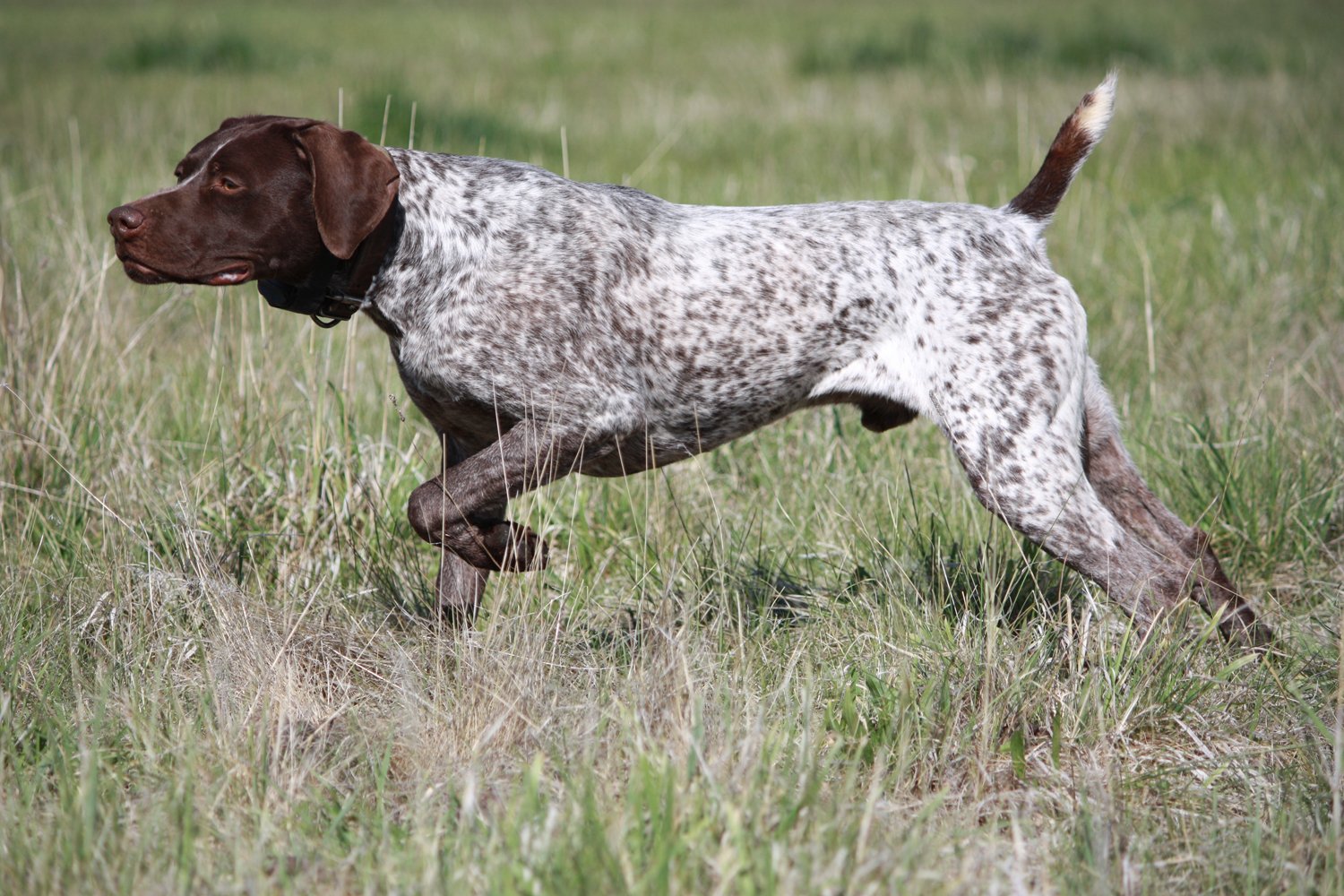
The German Shorthaired Pointer belongs to the Continental Pointing Dog group, prized for its exceptional versatility. Unlike the English Pointer, for example, which specialises in working game birds on open ground, the German Shorthaired Pointer can work in woodland and water, retrieve game, and track injured quarry via a blood trail. Its versatility is similar to the German Wirehaired Pointer (Deutsch Drahthaar), the key difference being the coat type-the Wirehaired Pointer's coat is hard and "wiry," offering superior protection in dense cover. Other wonderful hunting breeds, like the sleek Weimaraner and the distinctive Bracco Italiano, are also excellent working dogs, but the German Shorthaired Pointer is arguably the most balanced 'all-rounder' among them all.
Fascinating German Shorthaired Pointer Facts
Webbed Paws. German Shorthaired Pointers have webbed feet, which makes them exceptional swimmers and brilliant at retrieving from water.
'Velcro Dogs.' Due to their intense focus on humans, German Shorthaired Pointers are often nicknamed "Velcro dogs" because they constantly seek to be as close to their owner as possible.
Sporting Champions. Thanks to their athleticism and intelligence, German Shorthaired Pointers often excel in various canine sports, from field trials to agility.
The Constant Nose. Even during a regular stroll, the German Shorthaired Pointer's nose is constantly at work, analizing scents. This ability makes them ideal for search and rescue operations.
History and Origin of the German Shorthaired Pointer
The history of the German Shorthaired Pointer is deeply intertwined with the development of hunting across Europe. The driving force behind the breed’s creation was the demand for a truly versatile dog that could work on various types of game-from birds to small and large mammals. The earliest records of dogs resembling the modern German Shorthaired Pointer date back to the 17th and 18th centuries. The foundation stock included the old Spanish Pointers (Bracks) and indigenous German hunting dogs. Importantly, these early dogs were much heavier and slower than the athletic breed we know today.
The crucial phase of the breed’s development began in the 19th century. German breeders aimed to produce a dog with an elegant appearance, high speed, a keen nose, and the classic, staunch Pointer stance. To achieve this, English Pointer blood was introduced into the native stock, which significantly enhanced the breed's lightness, speed, and aristocratic look. Prince Albrecht zu Solms-Braunfels made a massive contribution to the breed's standardisation, defining the core characteristics and the rules for assessment at field trials. The first stud book, the "Zuchtbuch Deutsch-Kurzhaar," was published in 1897, marking the official beginning of the modern German Shorthaired Pointer's history.
What the German Shorthaired Pointer Looks Like: Standard and Appearance
The German Shorthaired Pointer is a dog of noble, athletic, and balanced composition. Its appearance embodies power, endurance, and speed, with no hint of clumsiness. Every movement the dog makes is fluid and energetic.
The head is clean-cut and expressive, neither too light nor too heavy, and proportionate to the body. The skull is sufficiently broad, with a slight stop (the transition from forehead to muzzle). The muzzle is long, wide, and powerful, allowing the dog to retrieve game easily. The nose is brown, with well-opened nostrils.
The eyes are medium-sized and dark brown. Their expression is intelligent, lively, and full of energy.
The ears are set high and wide, are pendulous, medium length, rounded at the tips, and lie flat against the head.
The body shows a smooth topline that slopes gently from the withers to the croup. The back is strong and muscular. The chest is deep but not overly wide, which ensures ample room for the heart and lungs without hindering free movement.
The tail is set high, thick at the base, and tapers towards the tip. In working dogs, it is often docked to about half its length (where permitted by law and usually only for working dogs). When moving, the dog carries its tail horizontally.
The coat is one of the breed's hallmarks. It is short, thick, coarse (or "hard") and dense to the touch. The hair on the head and ears is finer and shorter. This protective coat brilliantly shields the dog from bad weather and minor abrasions while hunting. The main colour variations are:
Solid Liver: without markings.
Liver and White: with small white or ticked markings, mainly on the chest and legs.
Dark Liver Ticked (Roan): with a liver head, liver patches, or ticking. The main background is a uniform mix of liver and white hairs.
Light Liver Ticked (Roan): with a predominence of white hairs.
White: with a liver head, liver patches, or ticking.
Temperament: The German Shorthaired Pointer's Character and Behaviour
The German Shorthaired Pointer's character is the perfect blend of keen hunting drive and devoted family loyalty. These are extremely intelligent, energetic, and people-oriented dogs. They have a vital need to be close to their "pack"; they cope poorly with solitude and are prone to separation anxiety, which often manifests as destructive behaviour.
The German Shorthaired Pointer is a 'Perpetual Motion Machine'. It requires substantial physical and mental exertion. A simple walk on a lead is barely a warm-up for this breed. These dogs need running, swimming, games, and training. Fail to provide an outlet for their energy, and they will certainly find their own occupation-one that is unlikely to please their owners! Conversely, with enough activity, a German Shorthaired Pointer transforms into a calm, gentle companion at home.
They get on brilliantly with children, especially if raised together. However, due to their sheer enthusiasm and size, they can accidentally knock over a small child, so their playtime should always be supervised. They usually get along well with other dogs, particularly with early socialisation. Yet, due to their potent hunting instinct, they may perceive small animals (such as cats, rodents, or birds) as prey. They treat strangers with some reserve but without aggression, making them excellent watchdogs who will always alert you to visitors with a loud bark.
Training and Socialisation
Training a German Shorthaired Pointer is an exciting yet demanding process. Thanks to their high intelligence, they grasp new commands very quickly. However, their mental drive and hunting independence demand consistency, patience, and strong leadership from the owner. German Shorthaired Pointers can be stubborn if training sessions seem boring or repetitive. Therefore, training must be kept short, varied, and engaging.
The positive reinforcement method works best: praise, treats, and toys. Harshness or physical punishment can lead to a loss of trust and a reluctance to cooperate. Early socialisation is critically important. From a young age, introduce your German Shorthaired Pointer puppy to different people, sounds, places, and other animals. This is essential for raising a confident and well-adjusted dog.
The German Shorthaired Pointer is a versatile hunter, and its training can encompass various disciplines: from the classic bird point to blood-trailing and retrieving from water. Even if you don't plan to hunt, engaging in scent work (Nosework) or canine sports like agility, coursing, or dock diving will help satisfy their innate needs.
Pros and Cons of the German Shorthaired Pointer
Advantages:
High Intelligence and Trainability: Quickly picks up commands and tricks.
Versatility: An excellent hunter, canine athlete, and family companion.
Family Devotion: Highly attached to owners and excellent with children.
Low Grooming Requirements: The coat is simple to care for.
Robust Health: A hardy and resilient dog.
Disadvantages:
Very High Energy Needs: Unsuitable for inactive people or apartment living without proper exercise.
Prone to Separation Anxiety: Does not cope well with being left alone.
Strong Hunting Instinct: May relentlessly pursue small animals.
Can be Stubborn: Requires consistent and patient training.
Needs Space: Thrives best in a house with a large, secured garden.
Grooming and Living with a German Shorthaired Pointer
Surprisingly, grooming this high-energy dog is quite straightforward. Its short coat doesn't require complicated procedures. Simply use a rubber brush or a grooming mitt once a week to remove dead hairs. During seasonal shedding (spring and autumn), this process should be done more frequently. You should only bathe your German Shorthaired Pointer as needed, as frequent washing can strip the skin’s natural protective oils.
Particular attention must be paid to their ears. Since they are pendulous (floppy), they create a favourable environment for bacteria and infections to flourish. Regularly inspect and clean the ear canals with a vet-approved lotion. Don't forget about routine nail clipping, if they aren't naturally worn down, and regular dental care.
The most critical requirement for keeping a German Shorthaired Pointer is space and activity. The ideal setting is a private house with a securely fenced garden where they can run freely. Apartment living is only feasible if the owner commits to daily, long (at least two hours), and intensive exercise sessions with the chance to run off-leash in a safe location. This dog is definitely not the best choice for couch potatoes or those with a sedentary lifestyle.
Nutrition
Nutrition: Key Recommendations for the German Shorthaired Pointer
Health and risks
Health: Typical Ailments and Prevention
Frequently Asked Questions (FAQ) · 4
Can a German Shorthaired Pointer live in a flat?
It is strongly discouraged. Theoretically, it is possible only if the owner is prepared to dedicate 2–3 hours a day to very intensive exercise and training. Otherwise, the dog will suffer and is likely to become destructive.
Do German Shorthaired Pointers shed much?
Yes, they do shed, especially seasonally in the spring and autumn. Their short, stiff hairs can embed themselves in furniture and clothing, so regular brushing is mandatory.
Is a German Shorthaired Pointer suitable as a first dog?
For an experienced, active, and responsible beginner-yes. However, for a person unprepared for the daily training, high energy demands, and commitment to rearing, this breed will likely prove too complex a challenge.
How much does a German Shorthaired Pointer puppy cost?
The price depends on the pedigree, the kennel’s reputation, and the parents' titles. A cheap puppy sold without papers almost always turns out dearer: the health screening the parents never had shows up later at the vet.
Video About the Breed
FAQ
How much exercise does the GSP need?
A great deal — at least 1.5–2 hours of intense activity a day; it is a working hunter.
Is the GSP suitable for a flat?
Hard — without serious exercise it grows bored and destructive.
Is the GSP good with children?
Yes — a devoted, playful and hardy partner for an active family.