

The dream of two fluffy pets peacefully snoozing in the same armchair or playfully chasing each other can quickly shatter against a harsh reality: hissing, growling, fights, and constant stress. The arrival of a new cat in your home is a huge event for your resident feline, who suddenly sees a stranger in their territory. But don’t despair! A properly organised introduction process can turn potential adversaries into the best of friends. We’ll tell you exactly how to do this in detail, right here on Tvaryny.
This guide isn’t just a collection of tips; it’s a strategy proven by animal behaviourists, built on understanding feline nature. Arm yourself with patience, as it will be your main ally in this important endeavour.
Why is it so hard? Understanding Feline Psychology
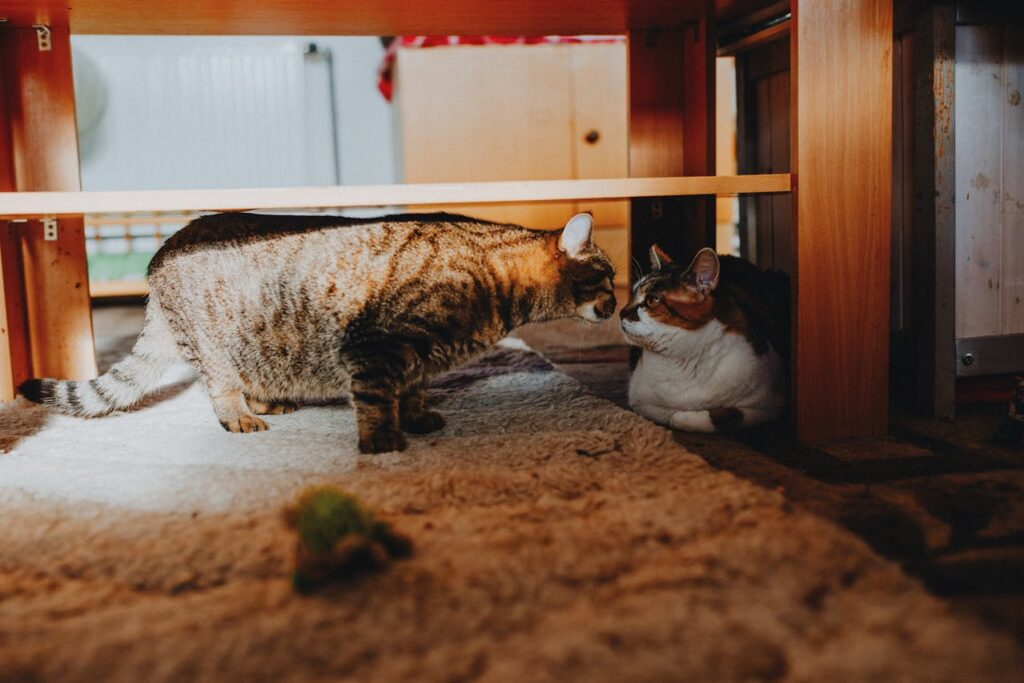
Before we dive into the practical steps, it’s crucial to understand what’s going on inside your cat’s head. Unlike dogs, who are pack animals, cats are naturally solitary and territorial predators. Their territory is their fortress, where everything is familiar, safe, and smells “theirs.”
- Territoriality: Your home isn’t just walls to your cat; it’s a clearly marked map of resources: sleeping spots, food, water, litter trays, and play areas. The appearance of a competitor for these resources is perceived as a threat to their very existence.
- Scent is their ‘passport’: For cats, scent is the primary identifier. A new cat brings a million unknown and potentially dangerous smells. Imagine if a stranger suddenly walked into your home and started touching everything – a bit unsettling, wouldn’t you say?
- Hierarchy: Even if cats eventually get along, they need time to establish a social hierarchy. This process is rarely instantaneous.
Our goal isn’t to force them to love each other overnight, but to create conditions where the new cat in the house isn’t perceived as a threat, but as something new and perhaps even interesting. We’ll proceed slowly, methodically, and with respect for the feelings of both animals.
Stage 0: Preparing for the Newcomer’s Arrival
The ideal introduction begins even before the new cat steps paw into your home. Proper preparation accounts for 50% of success.
Your Preparation Checklist:
- Create a ‘quarantine room’. This should be a separate space (bedroom, office, even a bathroom) that your resident cat cannot access. This room will serve as a temporary refuge for the newcomer for the first few days or weeks.
- Equip the newcomer’s room. It absolutely must have:
- A separate litter tray.
- Separate food and water bowls.
- A comfy sleeping spot (bed, box with soft bedding).
- A scratching post.
- A few toys.
- Check their health. Before introductions, ensure both cats are healthy, vaccinated, and treated for parasites. A vet visit for the newcomer is mandatory.
- Use pheromones. Adaptogen diffusers (like Feliway) can help reduce overall stress levels in the home. Plug one diffuser into the ‘quarantine room’ and another in your resident cat’s territory a few days before the newcomer arrives.
Step-by-Step Guide: How to Safely Introduce Cats
The golden rule is: don’t rush it. Each stage can last from a few days to several weeks. Only move on to the next step when you’re confident that both cats are comfortable at the current stage.
Stage 1: Full Isolation and Scent Introduction (2-7 days)
1. Bring the newcomer home and immediately take them to the prepared ‘quarantine room’. Do not let the cats see each other.
2. Allow the newcomer to settle in. They need to get used to the new place, its sounds, and smells. Spend time with them, play, and speak in a gentle voice.
3. Begin scent swapping. This is a crucial step. Take two clean socks or cloths. Gently rub one on your resident cat’s cheeks and neck (where ‘friendly’ pheromones are released), and the other on the new cat. Place the ‘resident cat’s sock’ in the newcomer’s room, and the ‘newcomer’s sock’ in the resident cat’s territory, for instance, near their food bowl.
4. Observe their reactions. A slight hiss or cautious sniff is normal. Bad signs include strong aggression, growling, or attempting to attack the ‘sock’. If the reaction is negative, continue scent swapping daily until the cats no longer react hostilely.
Stage 2: Doorway Introduction and Territory Exploration (3-10 days)
1. Feeding by the door. Start feeding both cats by the closed door separating them. Initially, place the bowls 1-2 metres away from the door. Gradually, with each feeding, move the bowls closer to the door. The goal is to create an association: “smell of the other cat = pleasant event (food)”.
2. Territory swapping. Once the cats are calmly eating by the door, you can arrange “excursions”. Close your resident cat in the newcomer’s room, and allow the newcomer to explore the rest of the house for 15-30 minutes. Then swap them back. This allows them to investigate each other’s scents throughout the house in a calm environment.
Stage 3: First Visual Contact (2-7 days)
1. Use a barrier. The best method is to install a baby gate in the doorway or simply crack the door open a few centimetres, blocking it with something heavy so the cats can see and smell each other but can’t reach out with a paw.
2. Create positive associations. During the first visual contacts, engage the cats with something pleasant. Play with each one’s favourite toy, give them treats. The first session should last no more than 5 minutes. If the cats hiss at each other but don’t attempt to attack, that’s within the normal range. Distract them with a toy and end the session on a positive note.
3. Gradually increase time. Once short meetings are calm, slowly increase their duration.
Stage 4: First Supervised Joint Meetings (individual duration)
This is the most crucial stage.
1. First meeting without a barrier. Remove the gate or fully open the door. It’s best to do this before feeding, when the cats are a little hungry and focused on food. Place bowls at different ends of the room.
2. Be present and calm. Your nervousness transfers to the animals. Speak to them calmly, but don’t try to stroke them or pick them up at this moment. Have a large towel or piece of cardboard handy to safely separate the cats in case of a fight.
3. Keep meetings short. The first meeting might last 10-15 minutes. End it before signs of tension appear. It’s better to finish early on a good note than to wait for a conflict.
4. Repeat and increase time. Repeat these controlled meetings several times a day, gradually increasing their duration. The process of how to make cats friends can take a considerable amount of time.
Something Gone Wrong? Troubleshooting Common Problems

Important: Never punish cats for hissing or growling! This is their way of communicating discomfort. Punishment will only heighten stress and negative associations.
Situation: The cats constantly hiss and growl at each other.
Solution: This means you’re moving too quickly. Return to the previous stage. If they’re hissing during visual contact, go back to the scent swapping and feeding through a closed door stage. Reduce the intensity and give them more time.
Situation: A fight broke out.
Solution: Immediately, but calmly, separate them. Clap loudly or throw a soft towel nearby to distract them. Never get in between them with bare hands – you could be seriously injured. After a fight, return the newcomer to their room and give both animals a ‘cool down’ period of at least 24-48 hours. The introduction process will have to be rolled back several stages, starting again with positive associations through a closed door.
Situation: The resident cat has started marking territory or ignoring the litter box.
Solution: This is a classic sign of stress and insecurity. Ensure your resident cat has enough resources (clean litter box, access to food/water, your attention). Increase positive reinforcement. Often, such changes are a signal that you need to slow down the integration. If you notice this or other problematic behaviour, it’s a cue to re-evaluate your space organisation and adaptation speed.
Professional Tips for Ideal Cat Adaptation
- Double up on resources. In a home with two cats, there should be at least three litter trays. There should also be several food and water bowls, placed in different locations. This reduces competition.
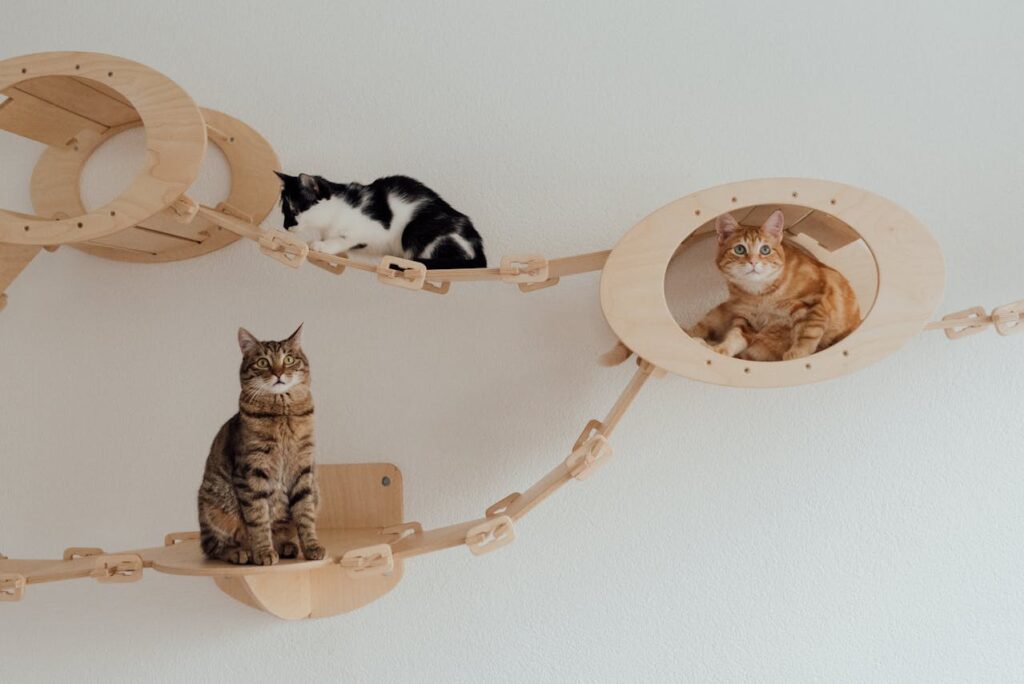
- Vertical space. Cats love to observe from high up. Shelves, tall cat trees, and climbing structures all expand their territory and allow cats to avoid conflict by simply moving to different ‘floors’. Effective environmental enrichment is key to reducing stress.
- Joint play. Once the cats are comfortable being in the same room, try playing with them simultaneously using two different ‘fishing rod’ toys. This creates positive emotions in each other’s presence.
- Stay calm. Your behaviour is an example for the animals. Be patient, consistent, and positive.
Conclusion: Patience and Love Work Wonders
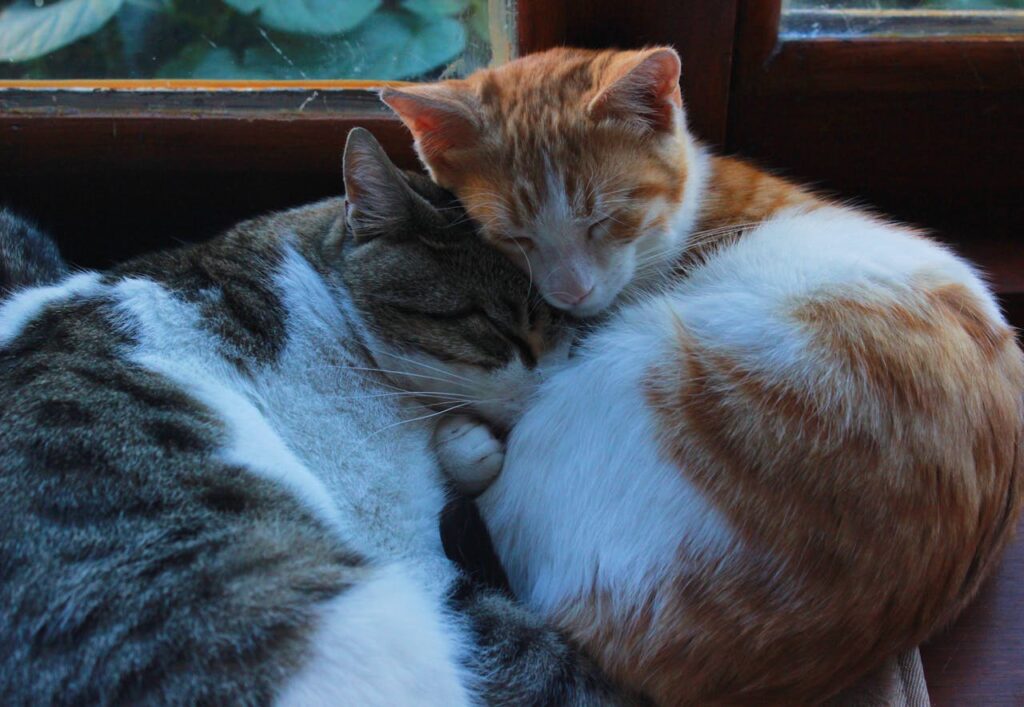
The process of introducing two cats is a marathon, not a sprint. In some cases, full cat adaptation and the establishment of a friendly relationship can take several months. Don’t lose heart if something doesn’t go to plan. Every pair of cats is unique. By following this guide, you’re giving your beloved pets the best chance at a peaceful and happy life together.