


You’re watching your cat calmly grooming itself at the other end of the room, and a sad thought crosses your mind: “It seems my cat doesn’t love me.” You see videos online of cats cuddling, sleeping in their owners’ arms, and purring loudly at every touch, and your heart sinks. Sound familiar? You’re not alone. This is one of the most common worries for cat owners, especially if their beloved pet has an independent streak or came to them from the street or a shelter. But don’t jump to conclusions. Often, what we perceive as a lack of affection is actually a language of caution, fear, or simply feline self-sufficiency. The good news is that almost any relationship can be improved if you understand its cause and act correctly. You can read more about this at Tvaryny.
In this article, we’ll delve into why your cat might be acting aloof, learn to read their true emotions, and put together a step-by-step plan on how to build a bridge of trust even with the most independent furball.
Does Your Cat Really “Not Love” You? Debunking the Main Myth
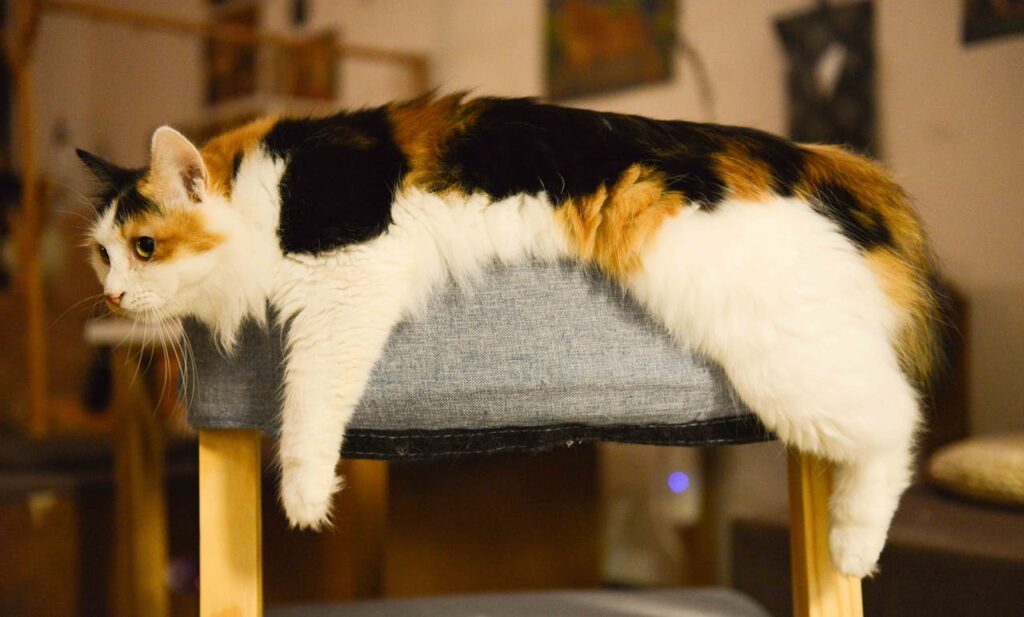
The first and most crucial thing to understand is that cats express their affection in a completely different way to humans or dogs. Human “love” involves hugs, kisses, and constant attention. Feline “love” is primarily about trust. If your cat:
- Eats calmly in your presence;
- Sleeps in the same room as you (even if at a distance);
- Uses their litter tray without hiding;
- Slowly blinks when looking at you;
- Walks past with their tail held high (often with a slight tremble at the tip).
…then they are already showing you the highest degree of feline affection — they trust you. They feel safe around you. And this is the foundation for any warm relationship. Our problem is that we expect canine devotion or human tenderness from them, forgetting that we’re dealing with a small, albeit domesticated, predator whose instincts have been finely tuned for millennia towards survival and caution.
Step 1: Detective Work. Why Is My Cat Aloof?
Before fixing anything, you need to understand the reason. Observe your pet and try to pinpoint what exactly is causing their behaviour.
Analysing Cat Body Language: A Quick Guide
Cat body language is the key to their thoughts. What should you pay attention to?
- Eyes: Wide-open pupils — fear, excitement. Constricted — aggression or bright light. Relaxed, almond-shaped eyes and slow blinking — a sign of comfort and trust.
- Ears: Pointed forward — interest. Swivelled sideways (“airplane ears”) — irritation, fear. Pinned flat against the head — intense fear or preparation to pounce.
- Tail: Held high — friendliness, confidence. Lowered — uncertainty, fear. Rapid twitching of the tip — irritation. Fluffed-up tail — extreme fright.
- Posture: Tense, hunched close to the ground — uncertainty. A cat trying to hide or run away — clear fear. Relaxed posture, lying on their side or back — absolute trust in the environment.
Main Reasons for Aloofness or Fear
After analysing their behaviour, try to find the root of the problem:
- Negative past experiences. If the cat lived on the streets or in a shelter, they might have encountered human cruelty. They need time to understand that you are a safe person.
- Lack of early socialisation. Kittens taken from their mother too early or who didn’t interact with humans between 2 and 7 weeks of age often grow up to be more timid.
- Personality and breed. Some cats are naturally more independent and self-sufficient. This doesn’t mean they don’t value you; they simply don’t need constant physical contact.
- Environmental stress. Loud noises, frequent visitors, the arrival of a new person or animal in the home, moving house — all these can make a cat hide and behave cautiously.
- Health problems. This is a very important point! A cat experiencing pain (for example, due to dental issues, joint problems, or internal organ issues) might avoid touch and become irritable. If their behaviour has changed suddenly, the first step should always be a visit to the vet.
Step 2: Action Plan. Building a Bridge of Trust with Your Cat
So, you’ve done your investigation. Now it’s time to move on to practical steps. Arm yourself with patience — this is a marathon, not a sprint.
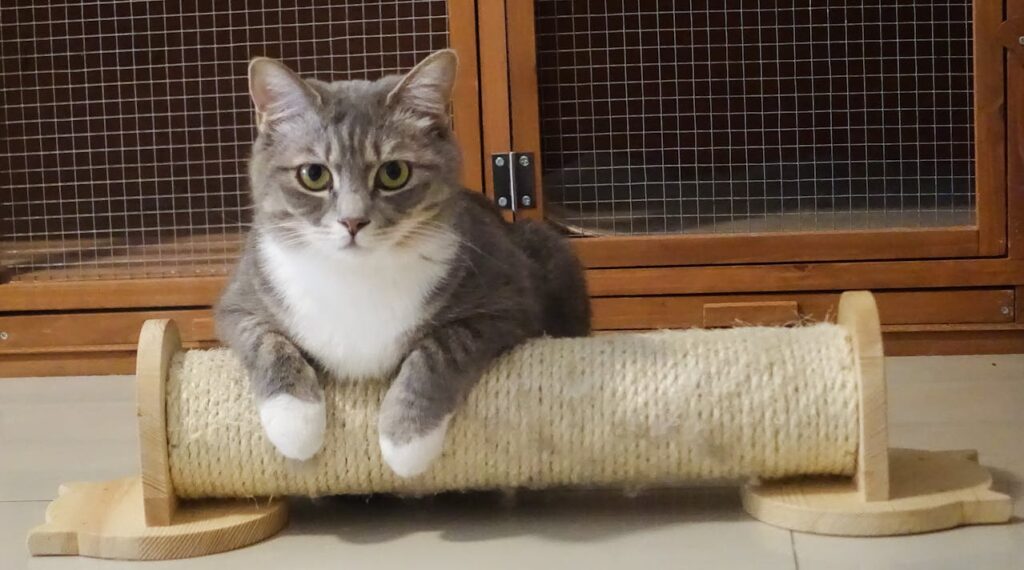
1. Create a Safe Space
Every cat needs a place where they will never be disturbed. This could be a cat house, a box, a spot under the bed, or on top of a wardrobe. Respect this sanctuary. Never forcefully remove your cat from it. Furthermore, environmental enrichment for cats is crucial. Vertical space (shelves, tall cat trees) gives a timid cat the opportunity to observe you from a safe height, which significantly boosts their confidence.
2. The Art of Positive Associations
Your goal is to make your presence associated with something pleasant for your cat.
- “Cat Kiss”: Try the slow blink technique. When your cat looks at you from a distance, look back, slowly close and open your eyes, then calmly look away. In cat language, this means: “I see you, I trust you, I pose no threat.”
- Treats without conditions: Several times a day, as you walk past your cat, without looking directly at them, drop a small piece of their favourite treat nearby. Don’t demand anything in return. The cat should learn: “This human = sudden joy.”
- Calm voice: Speak to your cat quietly, in a soft, calm tone. Call them by name, tell them what you’re doing. They won’t understand the words, but they’ll perfectly pick up on your intonation.
3. Let the Cat Make the First Move
This is the golden rule for building relationships with a cat. Don’t force your attention. Sit on the floor and occupy yourself – read a book, scroll through your phone. Ignore the cat. Often, it’s the lack of direct attention that sparks their curiosity. Sooner or later, they’ll come over to sniff you. Don’t make any sudden movements! Let them explore you. You can slowly extend a finger to them at their nose level. If they rub against it – that’s a huge success!
4. The Power of Shared Play
Play is a simulation of hunting. For a timid cat, it’s a chance to feel like a confident predator. Use wand toys with feathers or mice. This allows you to play at a safe distance for your cat. Lead the toy so it hides around a corner, rustles under the rug – mimic prey behaviour. End the game by letting the cat “catch” the toy. This incredibly strengthens their self-esteem and builds a strong bond with you as a hunting partner.
If you have multiple animals in your home, it’s important to ensure that stress isn’t arising from conflicts between them. Sometimes, it’s worth remembering how to properly introduce a new cat to an existing one, as tension between pets can project onto you.
What NOT to Do: The “Taboo” List

Sometimes, in an attempt to show our love, we only make things worse. Here’s what to avoid if you have a timid cat or an independent cat:
- ❌ Don’t grab your cat or hold them by force. This is the quickest way to destroy trust.
- ❌ Don’t stare intently and unmoving at your cat. In the animal world, this is a sign of aggression.
- ❌ Don’t punish them for being scared. You shouldn’t scold a cat for hiding or hissing. This will only amplify their fear.
- ❌ Don’t make sudden movements or loud noises near them.
- ❌ Don’t stroke their belly, even if the cat is lying on its back. For most cats, this is a vulnerable area, and such a touch can be perceived as a threat.
Your Superpower — Patience
The question of how to build a better relationship with your cat doesn’t have a quick fix. It can take weeks, months, and sometimes even years. Don’t despair if progress seems slow. Celebrate small victories: your cat stayed in the room when you entered; they sniffed your hand; they played with you for the first time; they slowly blinked back at you. Each of these steps is a huge achievement.
Your cat’s love might not be what you imagined. Perhaps they’ll never become a lap cat. But they can express their affection in other ways: meeting you at the door, quietly purring next to you on the sofa, simply choosing to be in the same room as you. Accept their personality, respect their boundaries, and you’ll gain so much more — genuine trust and a calm friendship based on mutual respect. And believe me, that’s worth all the effort.