not recognised by the FCI or the UKC (primitive type) · New Guinea
New Guinea Singing Dog
A small primitive dog from the mountains of New Guinea, known for its voice: instead of repetitive barking it draws out a howl with an abrupt shift of pitch. The captive population descends from seven or eight founders, so the data on the breed are thin and rest on small samples. A strong hunting drive, virtuoso escapes and reserve with strangers make it a dog for experienced owners rather than for a family or a beginner.
Agile and graceful — the standard says so in its own words
Minimal coat care, no trimming at all
Gentle and affectionate with the people it knows
Cons
Not for a beginner, nor for a family with small children
Extreme hunting drive, unreliable off the lead
An escape artist: it fits through any gap as wide as its head
Possible aggression towards dogs of the same sex
A very narrow gene pool and thin health data
Size
ToySmallMediumLargeGiant
Compatibility
Apartment · not suitableKids · not suitableCats · not suitableOther dogs · with caveatsBeginners · not suitable
The New Guinea Singing Dog is a small primitive dog from the mountains of New Guinea, known above all for its voice: instead of repetitive barking it draws out a long howl, changing pitch abruptly as it goes. A layer of vivid claims has grown up around the breed — "extinct in the wild", "a living copy of the first dog", "rediscovered in 2016". Some of it rests on research; some of it is a retelling of a retelling. Below we separate the two: first what the studies actually showed, then what they are said to have shown. More breed material on Tvaryny.
New Guinea Singing Dog: the breed in brief
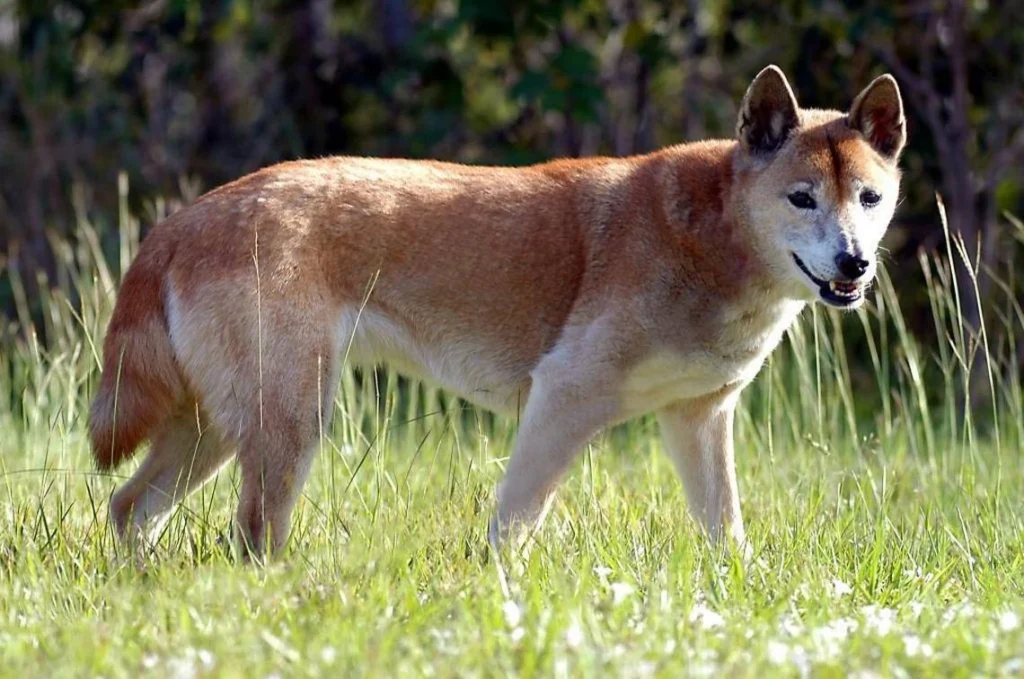
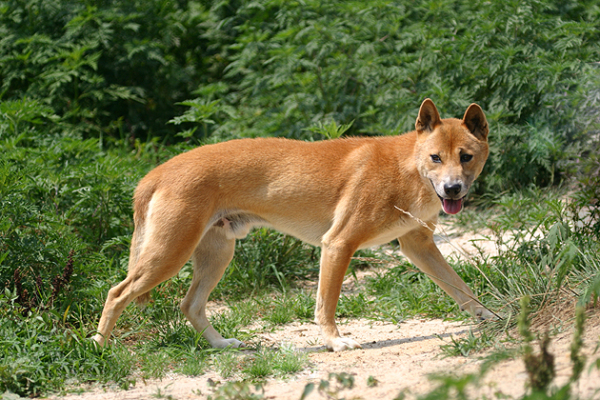
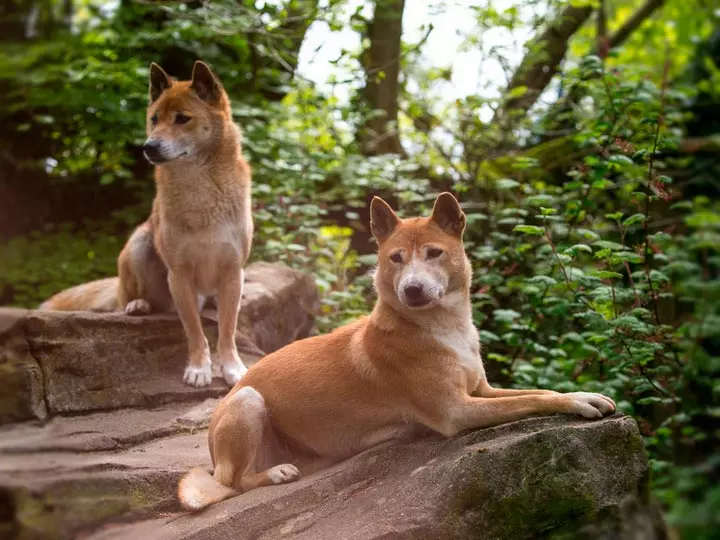
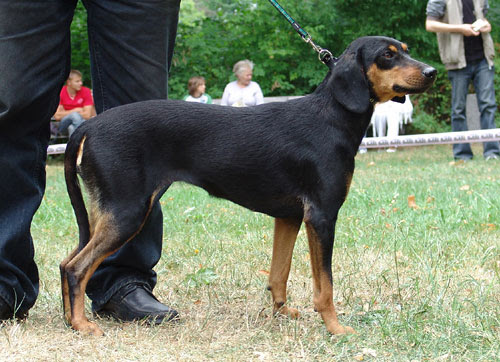
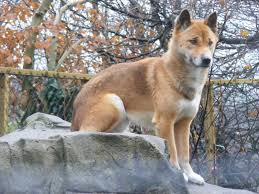
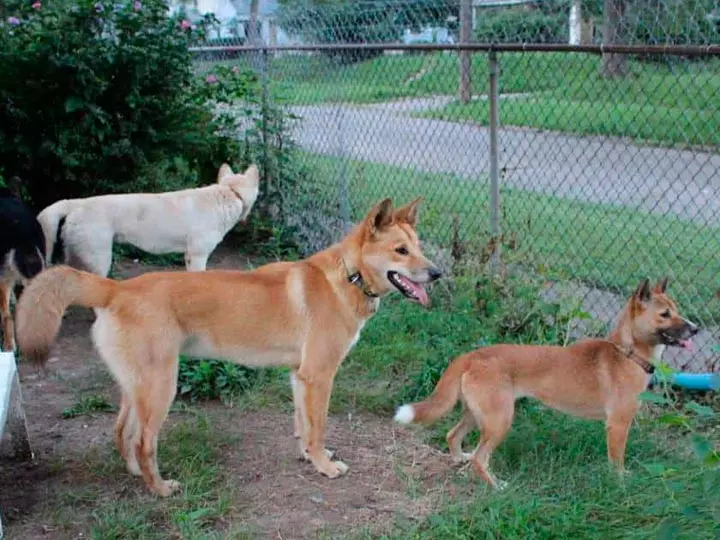
This is a small dog of primitive type: under the breed club's standard, males stand 14–18 inches (36–46 cm) at the withers and bitches 13–17 inches (33–43 cm), weighing 17–30 pounds (8–14 kg). The look is fox-like — a wedge-shaped head, pricked ears, a dense double coat in red, sable or black-and-tan.
The one thing worth knowing before you read on: almost everything we know about this breed rests on very small samples. The captive population descends from seven or eight founders. The nuclear genome of the wild highland dogs was read from three animals. The only quantitative comparison of the howl against other canids drew on two recording sources. That is not a reason to discard the material — it is a reason to read every figure together with its denominator.
How these dogs were found: the archive against the retelling
The usual retelling runs like this: in 1957 Sir Ellis Troughton described the first specimen of the breed, having brought a pair of dogs from the Lavani Valley to Taronga Zoo in Sydney. Almost every part of that sentence is wrong, and it was not the breed's critics who established it but the archival work of Peter Dwyer and Monica Minnegal, published in the Memoirs of the Queensland Museum in 2022.
The "Sir" is not Troughton. Ellis Troughton, a mammalogist at the Australian Museum, named the species Canis hallstromi in honour of Sir Edward Hallstrom, president of the Taronga Park Trust. In the retelling the title simply moved to the wrong man.
The first specimen is not from 1957. The Mount Scratchley dog was collected in 1897 at about 2,100 metres, and Charles de Vis described it in the Annals of the Queensland Museum in 1911. What Troughton described in 1957 were two living zoo animals, not the first specimen.
The dogs did not come from the Lavani Valley. Troughton wrote that the pair was obtained in 1956 by J. P. Sinclair and medical assistant Albert Speer "in the remote Lavani Valley". But Sinclair and Speer were in that valley twice — for two days, 26–28 June 1955, as part of a 62-day government patrol, and for about a month in November 1955. The dogs given to Hallstrom were born more than three months after their last visit.
So what does the correspondence the researchers unearthed actually say? On 31 May 1956 Speer wrote to Hallstrom from the Duna station: he has "one of the local native dogs", "a true type of the indigenous Papuan dog", a male pup about two months old. He then calls both dogs "Kanaka dogs" — that is, the kind kept by local people. He named his first dog "Duna", after the place and the language of his own station, not "Huri", the language spoken in the Lavani Valley.
The researchers put it carefully and precisely: the available correspondence does not reveal either the provenance of these two dogs or whether they were wild-living or village-living. But the available evidence makes it more likely that they were the progeny of bitches owned by people and living in hamlets near the government post at Duna.
The detail worth noticing
Both dogs reached Sydney by boat from Lae in March 1957. The female was already pregnant and, on the surviving records, whelped four pups about three weeks after arrival. That means the sire of the first captive litter stayed behind in New Guinea, and who he was is unknown. The detail is easy to miss, and it bears directly on how "pure" the founding line ever was.
…and what those studies are said to have shown
Now the gap between what was measured and what has been made of it.
"The 2016 study proved the dogs found were singing dogs." It did not. Mitochondrial DNA from 9 of 24 scat samples gave haplotype A29 — not A79, which is unique to singing dogs. A29 occurs in dingoes, in singing dogs, in some Asian and Arctic breeds and in village dogs. The PNAS authors say so plainly: the result is not specific to the breed and generalises to dogs of East Asia and Oceania as a whole.
"It is the same population, unchanged." The work showed kinship — and at the same time about 28–30% breed-dog admixture in the highland dogs themselves. An attempt to pin that admixture down more precisely through F4 ratios gave a spread from 15 to 50%, but the z-scores were insignificant in every combination. So the admixture exists; its exact size does not.
"The breed has been rediscovered." The authors mark the limit of their own conclusion in two sentences that usually vanish from the retellings: "Analyses in this work encompassed only three individuals", and the size and extent of the highland dog population "remains to be documented".
"Extinct in the wild." This was framed as a hypothesis, not an established status. The PNAS authors word it exactly that way: the breed's scarcity, combined with the fact that none has been captured or exported since the late 1970s, "supports the hypothesis" that it is extinct in the wild. Before 2016 the wild highland dogs had been photographed only twice — in 1989 and 2012.
"The oldest breed" and "the ancestor of all dogs." Neither follows from the genomic data. Bergström dates a lineage, not a breed; today's captive dogs are the end of a long road, not its beginning.
The most interesting part is that the paper's principal opponents accept its genetic conclusion. Dwyer and Minnegal, who criticise the idea of a discrete highland population most sharply, write in as many words that they accept Surbakti's conclusion: captive singers and wild highland dogs belong to a single genetic population, allied to dingoes and distinct from breed dogs. Their objection is different — they hold that this population was never confined to the highlands but took in the village dogs of the whole island before European colonisation.
And the field still has no single answer. A 2025 review in Evolution Letters calls the New Guinea Singing Dog the only canid group that significantly shares genetic variation with the dingo — and in the same paragraph notes that the domestication status of both remains unclear: some analyses make them a basal lineage relative to domestic dogs, others place the dingo inside the Asian and Arctic clade of domestic dogs. Similar in fate and isolation, but shaped on another continent, is the Carolina Dog, and the arguments around it have the same shape.
Seven or eight founders: where the captive population really came from
Every source gives almost the same number of founders — but they describe the origin of those founders in opposite terms, and that is the sharpest disagreement in the whole subject.
PNAS 2020: the captive dogs descend "from only eight partially related founders".
Koler-Matznick and colleagues, 2007: "the current captive singing dog population is descended from eight specimens not directly caught in the wild" — while adding that this does not mean they were village dogs.
Dwyer and Minnegal, 2022, after checking the archive: "The captive population of NGSDs is derived from seven or eight founding members. None was captured as a wild-living dog."
Then comes what is documented. In 1976 a group of dogs was taken from the Eipo region of what was then Irian Jaya to the Kiel institute in Germany; even their number differs between sources — four or five. Those dogs were village dogs. In 1987 a female called Olga, a descendant of them, was sent to the United States. Janice Koler-Matznick, founder of the breed's conservation society, wrote in 2018 that "today all Singers in the USA trace back to Olga on the female line".
The practical consequence for science is this: the maternal genome of the entire American population comes from a village dog of the Eipo region with no documented wild ancestors. That does not make her "not the real thing" — but it is worth holding in mind whenever you read a claim about a "wild gene pool in captivity".
What this means for inbreeding
In 2018 Cairns and colleagues calculated inbreeding coefficients for five singing dogs across 58,512 autosomal markers. Against the combined dingo-and-singer reference population they came to 0.457 · 0.671 · 0.594 · 0.620 · 0.461 — a mean of 0.561.
There is a subtlety here worth stating openly. The same five dogs, measured only against one another, come out near zero: −0.289, 0.218, 0.034, 0.096, −0.28. That is neither a contradiction nor an error. It is how the statistic behaves: inside a population that descends entirely from a handful of founders, the baseline has already shifted, and against that baseline no individual looks inbred. High inbreeding only becomes visible when you compare with a wider population.
The total captive population, on the PNAS 2020 estimate, is no more than 200–300 dogs worldwide. The breed club adds that fewer than a few dozen now remain in zoos and collections, and the majority of American singers, on that same club’s account, live as companion animals.
The song: what could actually be measured
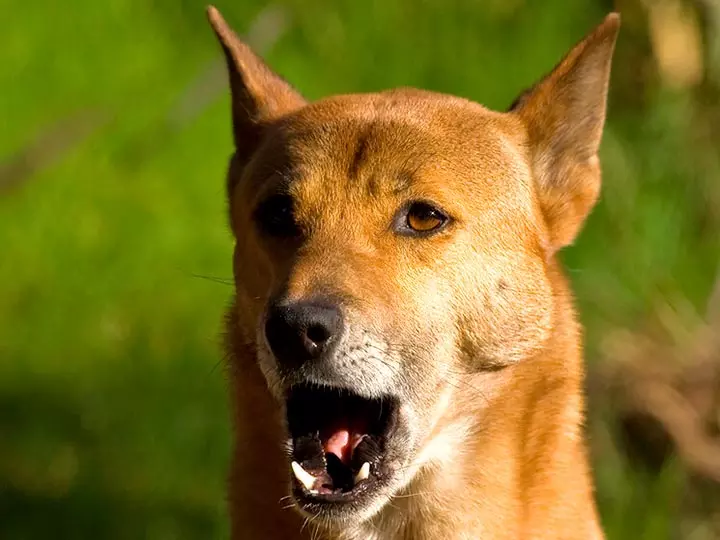
The breed's name is not a metaphor. The club standard describes its defining trait as a "dramatic ability to vary the pitch of their howl". The dog does not bark repetitively; instead it has a complex vocal repertoire of yelps, whines and single-note howls. When several animals howl at once, the voices lock together into what owners call a chorus.
And now the part that appears almost nowhere else. The claim that this howl is unlike that of any other canid population sits in the PNAS 2020 paper itself. But there is one quantitative cross-species comparison of howls that the breed took part in — Kershenbaum and colleagues, Behavioural Processes 2016. Here is what happened in it.
More than 2,000 howls from 13 canid species and subspecies were analysed; the pairwise distance matrix measured 2,005 × 2,005.
The New Guinea Singing Dog contributed 344 howls — but from only two recording sources.
In the test of within-species similarity of howl-type use, the breed scored p = 0.899, which is nothing at all. For comparison: coyote 0.019, red wolf 0.007, Arctic wolf 0.006, domestic dog 0.003, North African wolf less than 0.001.
In classification by howl-type-usage fingerprint, the breed was identified correctly in 0% of cases. The algorithm's commonest guesses were the domestic dog and the North African wolf.
How should this be read? Carefully, and in both directions. Two recording sources is very little, and the authors themselves write that they lack the data to take it further. So the result does not mean the song is ordinary. It means something else: the distinctiveness of this vocalisation has still not been shown quantitatively, even though it is repeated as an established fact. Tellingly, a co-author of that paper is Janice Koler-Matznick of the breed's conservation society — so the figure did not come from sceptics.
There is a second side to it. Chorus howling is documented in more than the highland dogs. Patrol officer James Taylor recorded in May 1939 how his carriers bought more than fifty puppies in a mountain settlement: at night "they did not bark, but now and again one would begin howling and the rest would join in". That is a description of village dogs, not wild ones. A comparison with other "barkless" breeds is useful too: the Basenji likewise does not bark in the ordinary sense, but its sound is closer to a yodel than to a sustained note that shifts in pitch.
Size: why the figures wander between references
The standard splits height by sex: males 14–18 inches at the withers, bitches 13–17 inches. In centimetres that is 36–46 and 33–43 respectively. Weight is given as a single range — 17–30 pounds, that is 8–14 kg.
That is where most of the disagreement between references comes from. The commonest mistake is to take the male range (36–46 cm) and present it as the breed's range, silently dropping the bitches. We did exactly that in this page's own card until we checked it against the standard; the card now carries both ranges.
There is also an independent measurement from a scientific source: in the 2026 comparative table, the mean adult mass of a captive dog of this breed is given as 11.7 kg, citing Corbett's review in the IUCN Canid Action Plan of 2004. That is a mean rather than a range, and it falls inside the standard's 8–14 kg.
Who recognises the breed — and what the law calls it
Interesting things about the New Guinea Singing Dog
The lowest European admixture among ancient breeds. In the comparative table of seven ancient breeds it stands at 0.3%, below the dingo, the chow chow, the basenji and the Tibetan mastiff.
The wild dogs were trapped using coyotes. On the 2018 expedition the animals were conditioned to enter cage traps using scent lures and recordings of North American coyote calls, played to elicit an answering howl.
A standard that admits its own defect. The line about acceptable unilateral cryptorchidism is a rare case of a breed standard writing down why it cannot ask for more.
A description from 1606. Diego de Prado, describing the coast of New Guinea, mentioned "small dumb dogs that neither bark nor howl" — while on another island the dogs howled all night, "which caused terror".
A kinked tail is normal. The standard calls a slight kink at mid-tail common in the breed and expressly forbids treating it as a structural fault.
A range above four kilometres. The observed altitude range of the wild highland dogs exceeds 4,000 metres above sea level.
What the singing dog looks like under the standard
The current description of the breed is maintained by a club — the New Guinea Singing Dog Club of America; on its own page the club states plainly that the standard is based on the original UKC text. Here is what it says.
Head. Wedge-shaped from both above and the side, with a pronounced stop. The back corners of the lips turn up slightly, giving the impression of a grin.
Eyes. Small, triangular and obliquely set, ranging from dark amber to very dark brown; the white often shows in the inner corners. The "almond-shaped" description that circulates in reference books is not in the standard.
Ears. Erect, small, triangular, set wide apart; when the dog is alert they tilt forward at roughly 60 degrees to the top of the skull.
Body. In side profile, from point of shoulder to point of rump, about 20% longer than the height at the withers. The nose is always solid black.
Coat. Short, dense and double; the longest hair lies on the shoulders, the centre of the back and the backs of the thighs, but should not exceed about one and a half inches. The breed is shown in completely natural condition with no trimming at all — not even the whiskers.
Colour. Red (from fawn to deep rust), sable and black-and-tan. White markings are common but must not make up more than a third of the total colour and are permitted only on the muzzle, face, neck, belly, legs, feet and tail tip.
Tail. Reaches at least to the hock; when the dog is alert it is carried over the back in a gentle curve like a question mark. A slight kink at mid-length is common in the breed, and the standard says explicitly that it is not a fault.
Two things in that text deserve separate attention. The first is the description of flexibility: the dog "can pass their bodies through any opening wide enough to admit their head". That is the sourced form of a claim that turned into "flexible collarbones" in the reference books; dogs have no functional clavicles at all, and the explanation lies in the build of the ribcage and the mobility of the shoulder blades.
The second is a line about cryptorchidism that is rare in any breed standard. Word for word: "Because of the high percentage of unilateral cryptorchids in the still small NGSD population, unilateral cryptorchidism is acceptable but not preferred." Bilateral cryptorchidism remains a disqualification. So the standard officially tolerates a developmental defect because the gene pool is too small to select against it — and it names the reason itself. Extreme viciousness or shyness and an unprovoked attack on a person are also disqualifying.
Temperament: the standard, the owners and one study
The standard describes the breed like this: active, lively and alert, constantly exploring the environment with every sense. Gentle and affectionate with people they know, but aloof with strangers. They can be aggressive towards other dogs, especially of the same sex. The hunting drive is intense and "may take over when prey is detected, despite any previous training".
The breed club adds practical observations that are more use than generalities: by two or three years of age most singers noticeably settle and start to prefer long naps to long walks; fear of strange people and dogs is common, particularly in dogs that came out of neglect cases; and off the lead they cannot be relied on. The club compares the temperament to that of the Shiba Inu and the basenji — that is, to primitive breeds rather than working ones.
There is also a study of owners — Sumridge and colleagues, Anthrozoös 2021. It compared 55 singing dogs living as companion animals with 1,101 dogs from five primitive FCI subgroups, using the C-BARQ behaviour questionnaire and the Lexington Attachment to Pets Scale. On the authors' own account of the results, the singers showed greater fear than dogs in some of the subgroups and were more likely than dogs in all subgroups to urinate on objects — which the authors offer as an explanation for why a higher share of them is housed outdoors. Their owners nonetheless scored their own attachment just as highly as owners of other primitive dogs.
The breed club also reads that same paper as showing that singers display markedly less stranger-directed aggression than other primitive breeds. We have not read the full text, so we give that part as the club's reading rather than as our own claim. What matters for an owner: fear and aggression are different states, and the club stresses that in these dogs fear usually does not turn into aggression.
What the brain study found
In 2025 the Journal of Neuroscience published a study comparing MRI scans of 85 dogs: 72 modern breed dogs and 13 "premodern" ones — ancient breeds, village dogs and New Guinea singing dogs. The modern breeds showed a wider cortex, and it was the cortex that predicted trainability scores. The premodern dogs showed a larger amygdala, and it was the amygdala that predicted fear scores.
Two caveats are obligatory. First, the singers are only part of those thirteen dogs, and the paper gives no separate figure for the breed, so this is a statement about the group, not about the breed. Second, the study's conclusion runs against what is usually said about domestication: the authors write plainly that their results contrast with the long-standing view that domestication consistently reduces brain size and cognitive capacity.
Training and socialisation
The breed club describes singers as intelligent and easily bored: without an occupation of their own they will find one, at the expense of your furniture, cabinets, houseplants and garden. The formats the club lists from practice are scent work, rally, obedience, barn hunt, tricks and puzzles. Some dogs of the breed work as therapy dogs.
Method matters. The club warns outright that compulsion and aversives will leave both of you miserable. Positive reinforcement works; mechanical pressure does not.
Socialisation starts as early as possible and continues for a long time. Fear of strange people and dogs is common in the breed, and the club notes particularly that dogs which have been through neglect or insufficient early socialisation struggle with it most. This is not the same thing as aggression, and it has to be worked with as fear.
And what not to expect from the breed: herding work. A dog of this breed will not gather a flock the way the Brazilian Shepherd Gaucho does. The standard describes a different program — detect the prey and run it down.
Pros and cons of the breed
Pros
A voice you will hear nowhere else. The ability to shift the pitch of the howl, smoothly and abruptly, is described in the standard as the breed's defining trait.
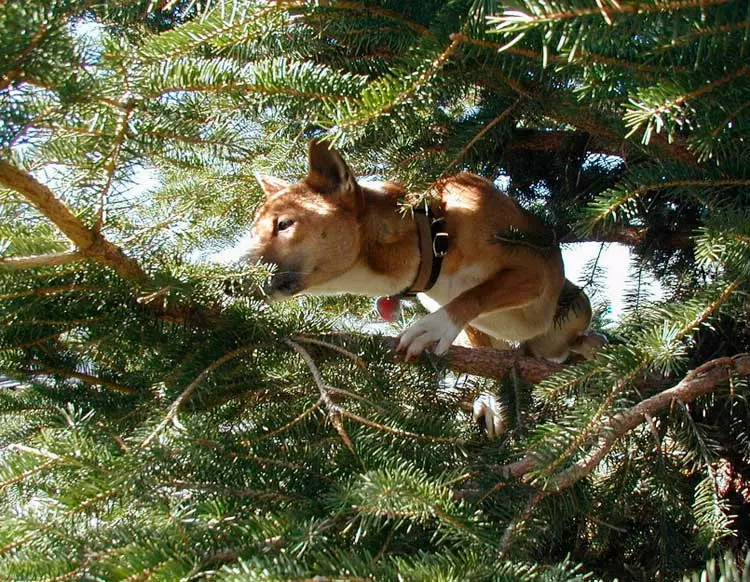
Athleticism and flexibility. The mobility the standard gives a paragraph of its own, and which lends the breed a gait that seems to float above the ground.
Minimal coat care. A short double coat and no trimming whatsoever.
A capacity for work that uses the mind. The club lists scent work, rally, obedience and tricks as formats the breed genuinely competes in.
Attachment to its own people. The standard describes the breed as gentle and affectionate with the people it knows.
Cons
Escapes. An opening the width of a head is already a door. The fence has to be an engineering decision, not a fence.
Hunting drive. The standard says outright that it may take over despite any previous training.
The voice as a neighbourhood problem. What makes the breed unique carries through a wall.
Conflict with same-sex dogs. Named plainly in the text of the standard.
A very narrow gene pool and thin health data. Seven or eight founders, four conditions named by the club, and not one large study of the breed's health.
Legal uncertainty. The breed is on neither the FCI nor the UKC list, and its classification in different countries may differ from that of an ordinary dog.
Keeping one: fencing, space and escape artists
The owner's main engineering problem is the fence. The standard supplies the criterion to design it against: the dog will go through any opening wide enough to admit its head. So the thing to measure is not whether the body will fit but the width of the narrowest gap at head height — and then add the ability to climb and to dig.
The fence must be solid, with no gaps at head height, protected against digging below and against climbing above.
Check gates and latches separately: the breed is credited with opening simple catches, and although we cite no verified source for that, an extra bolt will do no harm.
Walks on the lead only. The breed club calls singers unreliable off lead in as many words.
Small pets and a dog of this breed in the same space is a combination the standard treats unambiguously: the hunting drive may take over despite training.
The coat is undemanding: short and double, needing regular brushing during moults and nothing more elaborate. The breed is not trimmed at all — the standard requires it to be shown in completely natural condition.
If what you want is a dog that will guard a perimeter calmly rather than try to defeat it, this is not the breed: the steadier Panda Shepherd is far better suited to classic territorial guarding.
Nutrition
Feeding
Health and risks
What the genetic studies actually showed
The key paper is Surbakti and colleagues, PNAS 2020 (volume 117, pp. 24369–24376). Its findings are real and interesting, so here they are with the numbers attached.
2016. The expedition reported 15 highland wild dogs near the Grasberg mine in the western half of the island. Photographs and faecal samples were collected, but they were not sufficient for nuclear genome analysis.
2018. Over two weeks, 18 dogs were observed, 10 of them new. Two were captured alive and a third was found recently dead — apparently hit by a vehicle. Three samples in all. Two dogs were fitted with GPS collars and released.
Method. The Illumina CanineHD chip, 150,112 markers; 107,125 remained after pruning for linkage. The three highland dogs were compared with 1,346 dogs from 161 breeds, 25 dingoes, 16 captive singing dogs and 9 non-dog canids.
Result. The highland dogs formed a monophyletic clade with 100% bootstrap support alongside the captive singers and the dingoes. By genome share, 72% of them is closest to captive singers and dingoes, while 28% is closest to breed dogs. Independent methods returned the same magnitude: 28.8% by Treemix and 29.6% by qpAdm.
The contrast with village dogs. In New Guinea village dogs the ratio is reversed: 87% of the genome from breed dogs and only 13% Oceanic. In Vietnam it is 11%, in Namibia less than 1%.
Diversity. Observed heterozygosity in the highland dogs is significantly higher than in the captive singers and higher than in dingoes. But it is also significantly lower than in New Guinea village dogs.
The wider context comes from Bergström and colleagues in Science in 2020. There the New Guinea Singing Dog lineage is one of five ancestral dog lineages that must already have existed 10.9 thousand years ago — that is the radiocarbon date of the Karelian dog — and therefore, as the authors carefully put it, most likely before the Pleistocene–Holocene boundary about 11.6 thousand years ago. The authors call it an unadmixed East Asian dog ancestry. Note the wording: this dates an ancient lineage of dogs, not an ancestor of dogs and not a halfway stage from the wolf.
A further measurement comes from a 2026 comparative paper in the journal Genes. In its table of seven ancient breeds, the New Guinea Singing Dog carries the lowest share of modern European admixture — 0.3%, against 15.3% in the basenji, 13.1% in the chow chow, 7.0% in the dingo and 5.1% in the Tibetan mastiff. That is probably the single strongest figure in favour of the lineage's isolation, and it comes from genomic data rather than from stories about the breed.
Health: what is known, and how to read it
Lifespan: why we do not print a range
This is one of the rare cases where showing where a figure came from is more honest than showing the figure.
The only number the peer-reviewed literature assigns to this breed is 15 years, and it sits in the comparative table of that 2026 paper. But look at where it got there from. For 118 modern breeds, the same paper drew lifespans from the Finnish Kennel Club database: at least 80 recorded deaths per breed, birth cohorts of 1988–2002, with deaths from extrinsic causes removed. For the New Guinea Singing Dog it took the midpoint of a range from the breed page of a commercial DNA-testing company, which gives 12–18 years. The midpoint of that range is precisely the "15".
The breed club puts it differently and more cautiously: with careful management singers live well into their teens, and some owners report dogs as old as twenty. The foundation working with the wild population lists the study of longevity, mortality factors and mortality rates as a separate line in its research agenda — that is, the field itself treats the question as open.
So we do not print a range we would be willing to sign. The card carries a single figure — 15 years, the same one the peer-reviewed paper used; treat it as a marker rather than as a measured quantity.
Frequently asked questions about the breed (FAQ) · 5
Is this breed really extinct in the wild?
It was framed as a hypothesis rather than an established fact. The grounds were that none had been captured or exported since the late 1970s and that before 2016 the wild highland dogs had been photographed only twice. The 2020 work gave genetic grounds for thinking the ancestral population is alive — but from three animals, and the authors themselves write that the size and extent of that population remain to be documented.
Is it a dog or a wild animal?
There is no single answer, and that is not an evasion. In the literature the breed has been called a domestic dog, a feral dog, a village dog, a free-ranging dog, a wild-living dog and a wild dog — six different classifications, listed with citations by the breed club itself. The IUCN working group on Canis taxonomy concluded in 2019 that these are feral domestic dogs, Canis familiaris, and that they should therefore not be assessed for the Red List; veterinary references place them in the same category. In practice this means finding out the animal's legal status in your own country in advance: the American regulator, for one, has treated them as exotic animals rather than dogs since 2016.
Can they live with other dogs?
The standard names possible aggression towards other dogs, especially of the same sex. That is not a prohibition but a demand for planning: a mixed-sex pair with a gradual introduction carries less risk than two dogs of the same sex.
Are they suitable for families with children?
This is a breed for experienced owners, not a first dog. The main reasons are the strong hunting drive, which the standard describes as capable of taking over despite training, and the common fear of strangers. The club stresses that in these dogs fear usually does not turn into aggression. If there are small children or small animals in the house, weigh it honestly before you choose.
Why do they "sing"?
Instead of repetitive barking the breed uses a sustained howl with an abrupt shift of pitch; several dogs take it up from one another and a chorus results. The standard calls this ability the breed's defining trait. It is worth knowing that chorus howling is documented in New Guinea village dogs too — from at least 1939.
Video about the breed
FAQ
Is this breed really extinct in the wild?
It was framed as a hypothesis rather than an established fact: none had been captured since the late 1970s, and before 2016 the wild highland dogs had been photographed only twice. The 2020 work gave genetic grounds for thinking the ancestral population is alive — but from three animals, and the authors themselves write that the size and extent of that population remain to be documented.
Is it a dog or a wild animal?
There is no single answer. In the literature the breed has been called a domestic dog, a feral dog, a village dog, a free-ranging dog, a wild-living dog and a wild dog. The IUCN working group on Canis taxonomy concluded in 2019 that these are feral domestic dogs, and that they should therefore not be assessed for the Red List. Find out the legal status in your own country in advance.
Why do they "sing"?
Instead of repetitive barking the breed uses a sustained howl with an abrupt shift of pitch; several dogs take it up from one another and a chorus results. The standard calls this ability the breed's defining trait. It is worth knowing that chorus howling is documented in New Guinea village dogs too — from at least 1939.
Can they live with other dogs?
The standard names possible aggression towards other dogs, especially of the same sex. That is not a prohibition but a demand for planning: a mixed-sex pair with a gradual introduction carries less risk than two dogs of the same sex.
Are they suitable for families with children?
This is a breed for experienced owners. The main reasons are the strong hunting drive, which the standard describes as capable of taking over despite training, and the common fear of strangers. The breed club stresses that in these dogs fear usually does not turn into aggression, but with small children and small animals it is worth weighing honestly before you choose.