

| Height | 51–61 cm |
| Weight | 18–34 kg |
| Lifespan | 12–14 years |
| FCI group | 1 · sheepdogs |
| Origin | Scotland |
Exact ratings
- Medication sensitivity (MDR1 mutation)
- Collie eye anomaly (CEA)
- Progressive retinal atrophy (PRA)
- Hip dysplasia
- Dermatomyositis
Quality food, with weight control; the dense coat needs brushing. IMPORTANT: before prescribing medication — an MDR1 test (sensitivity to a number of drugs).
The Rough Collie, sometimes known as the Long-Haired Collie, is a breed that embodies elegance, intelligence, and boundless devotion. With its regal posture, well-proportioned build, graceful movements, and magnificent, thick coat, this dog invariably turns heads. It is one of the most beautiful and recognisable pastoral breeds in the world. Rough Collies have a wonderfully adaptable temperament – they can truly become the dog you want them to be, from an active athlete to a calm companion. The Collie is a dependable family friend, a dog that interacts beautifully with children, showing great patience and gentleness. They easily get along with people who lead an active lifestyle and enjoy sports. Historically, during wartime, Collies successfully served as messengers, medics, and even sappers. Today, a Collie can be an excellent rescue dog, a guide dog for the visually impaired, and a wonderful therapy dog. This detailed breed review has been prepared by the team at Tvaryny to help you get better acquainted with these remarkable aristocrats of the canine world.
The Rough Collie: A Breed Overview

| Characteristic | Description |
|---|---|
| Origin | Great Britain (Scotland) |
| FCI Recognition | Group 1 (Sheepdogs and Cattledogs), Section 1 (Sheepdogs). Standard No. 156. |
| Year of First Official Mention/Recognition | Circa 1860 (appearance at shows), standard developed in 1881. |
| Lifespan | 10-14 years (sometimes longer, up to 16 years) |
| Height at the withers | Dogs: 56-61 cm; Bitches: 51-56 cm |
| Weight | Dogs: 20.5-29.5 kg; Bitches: 18-25 kg |
| Temperament | Friendly, intelligent, active, devoted, sensitive, with no signs of nervousness or aggression. |
| Use | Companion, family dog, show dog, sports (agility, obedience), herding (less common today). |
| Coat Colours | Sable and White, Tricolour (black with tan markings and white patches), Blue Merle (silvery-blue with black spots/marbling and white patches, tan markings possible). |
History and Origins of the Rough Collie
The history of the Rough Collie is rooted in the picturesque and rugged lands of Scotland and Northern England. It is believed that the ancestors of modern Collies were working sheepdogs brought to the British Isles by the Roman conquerors. Over centuries, these dogs interbred with local pastoral breeds, adapting to the mountainous climate and the specific demands of working with flocks of sheep. The name “Collie” likely derives from the Anglo-Saxon word “col” or “coal,” meaning “black” – possibly due to the colour of the ‘Colley’ sheep they herded, or because of the initial predominance of dark coats in the dogs themselves.
Until the mid-19th century, little was known about the Collie outside of Scotland. They were primarily working dogs, valued for their herding abilities rather than their appearance. The situation changed dramatically thanks to Queen Victoria. During one of her trips to her Scottish estate, Balmoral, in the 1860s, the Queen was captivated by the beauty and intelligence of these dogs. She became an ardent admirer of the breed and brought several Collies to her royal kennels, which instantly made them hugely popular among the aristocracy and the general public. This royal patronage led to professional dog fanciers taking notice of the breed, and a focused selective breeding programme began, aimed at refining its appearance.
The first Collies appeared at dog shows in Birmingham in 1860 in a class for “Scotch Sheep-Dogs.” In 1881, the first Collie Club was established in England, which developed the breed standard. Legendary dogs such as Old Cockie (born in 1867) and his descendants played a vital role in shaping the modern Rough Collie. Over time, the breed diverged into two main types: the Rough Collie, which gained worldwide fame as an elegant show dog and companion, and the Smooth Collie, which retained more of its working dog characteristics, though it is also an excellent companion. The breed’s popularity soared in the 20th century, thanks to the books of Albert Payson Terhune and, of course, the world-famous character Lassie from films and television series.
What Does a Rough Collie Look Like? A Detailed Description of Appearance
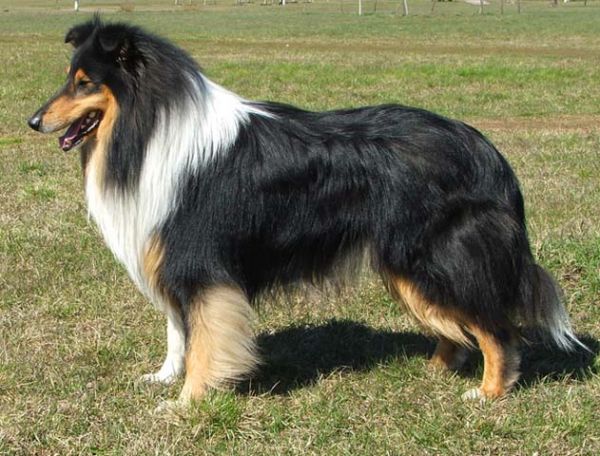
The Rough Collie is a dog of extraordinary beauty and harmony, radiating intelligence and activity. Its appearance is the result of a perfect balance and proportionality of all body parts, and its luxurious coat gives it a complete and noble look.
The head is one of the most important breed characteristics. It is shaped like a well-blunted, clean-cut wedge. The skull is flat, gradually tapering from the ears to the tip of the nose. The transition from the forehead to the muzzle (the stop) is slight but perceptible. The muzzle is well-rounded and not pointed. The nose is always black. The jaws are strong, with a perfect, regular and complete scissor bite.
The eyes are medium-sized, almond-shaped, and set somewhat obliquely. Their colour is usually dark brown, except in Blue Merles, where the eyes (one or both, or parts thereof) may be blue or blue-flecked. The expression is of utmost importance—it should be gentle, intelligent, alert, and kind.
The ears are small and set not too close together on top of the skull, nor too far apart. In repose, they are thrown back, but when alert, they are brought forward and carried semi-erect, with about two-thirds of the ear standing erect, and the top third tipping forward naturally, below the horizontal. This gives the Collie its characteristic alert yet soft expression. Fully pricked or low-set, hanging ears are considered faults.
The body is slightly long in proportion to the height, with a firm, level back and a slightly raised loin. The chest is deep and fairly broad behind the shoulders.
The neck is muscular, powerful, fairly long, and well-arched.
The tail is long, with the bone reaching at least to the hock joint. It is carried low when the dog is quiet, with a slight upward swirl at the tip. It may be carried gaily when the dog is excited, but never over the back.
The coat is the crowning glory of the Rough Collie. It is very dense, with a straight, harsh-textured outer coat that fits the contours of the dog’s body, and a soft, very thick undercoat that almost hides the skin. The hair on the face, ear-tips, and front of the legs is short and smooth. The neck and chest feature an abundant mane and frill. The hind legs are well-feathered, and the tail is profusely covered with hair. The length and density of the coat are particularly impressive in male dogs.
There are three recognised coat colours for the Rough Collie:
- Sable and White: Any shade from light gold to rich mahogany or shaded sable. Light straw or cream colours are highly undesirable. White markings are typically found on the collar (full or part), chest, legs, feet, and tail tip. A white blaze may be present on the muzzle and/or skull.
- Tricolour: Predominantly black with rich tan markings on the head and legs. White markings are the same as for the Sable and White. A rusty tinge in the black coat is highly undesirable.
- Blue Merle: Predominantly clear, silvery-blue, splashed and marbled with black. Rich tan markings are desired (as in Tricolours), but their absence is not penalised. Large black patches, a slate-coloured coat, or a rusty tinge to the top coat or undercoat are highly undesirable. White markings are the same as for the Sable and White.
All the above colours should carry the typical white Collie markings to a greater or lesser degree. An all-white or predominantly white coat is not recognised in the breed standard for the Rough Collie, although “white Collies” with colour-headed markings do exist as a result of specific genetic combinations, but they do not conform to the FCI standard for show purposes.
Rough Collie Character: Temperament and Behaviour
The Rough Collie possesses an exceptionally friendly, gentle, and intelligent character. They are known for their devotion to their family and their tender nature with children, making them superb family pets. Aggression or excessive nervousness is not in their nature; on the contrary, they strive for harmony and peace within the home.
Intelligence and Trainability: Collies are highly intelligent dogs that learn quickly and are eager to please their owner. They have an excellent understanding of vocal tones and respond best to positive reinforcement training methods based on praise, treats, and affection. Thanks to their intelligence, they excel in various dog sports such as obedience, agility, freestyle (heelwork to music), and even herding (though this is rare today).
Devotion and Sensitivity: These are incredibly loyal dogs that form a deep bond with their family. They are finely tuned to their owner’s mood and can be very sensitive to criticism or a tense atmosphere in the home. Harsh treatment can deeply offend a Collie and undermine its trust. There is the famous case of Bobbie the Wonder Dog, a Collie who miraculously travelled about 2,000 miles across America to return to his family, a testament to their incredible devotion.
Attitude Towards Children and Other Animals: Rough Collies are renowned for their patient and gentle nature with children. They often become true friends and caring “nannies” to them. Of course, it is essential to teach children how to behave correctly around a dog. With other pets, including cats, Collies generally get on well, especially if they have grown up together. Their natural friendliness extends to other dogs, although some males may show dominance towards other males.
Activity and Need for Company: Collies are quite energetic dogs that need regular walks and the opportunity to run. However, they are not hyperactive and can adapt to a calmer lifestyle, provided they are given enough attention. Above all, Collies cherish the company of their family and do not cope well with being left alone for long periods. If left alone, they can become bored, sad, and may even exhibit destructive behaviour or bark excessively. A similar need for social interaction is seen in breeds like the White Swiss Shepherd Dog.
Watchdog Qualities and Barking: While the Collie is not a classic guard dog, they are vigilant and will always warn of an approaching stranger with a loud bark. Their bark can be quite resonant. It is important to teach the dog to control its barking from a young age to prevent it from becoming a problem. They are not prone to aggression towards people but can be somewhat reserved with strangers until they are sure of their good intentions. In this, they are somewhat reminiscent of the smaller but equally vigilant Shetland Sheepdog, or ‘Sheltie’, which are also excellent companions.
Rough Collie Health: Common Conditions and Prevention
Rough Collies are generally a fairly healthy breed, and many live long, active lives. The British record for canine longevity is held by a Collie named Taffy, who lived for almost 28 years! However, like many other breeds, Collies are prone to certain hereditary conditions that prospective owners should be aware of.
- Collie Eye Anomaly (CEA): This is a hereditary condition that affects the development of the eyes. The severity can range from minor changes that do not affect vision to more serious problems like retinal detachment, which can lead to blindness. Responsible breeders test their dogs for CEA (through DNA tests and ophthalmic screening of puppies).
- Progressive Retinal Atrophy (PRA): Another hereditary eye disease that leads to the gradual degeneration of the retinal cells, eventually causing blindness. DNA tests are available to identify carriers of the PRA gene.
- Multi-Drug Resistance (MDR1 Gene Mutation): Many Collies (and other pastoral breeds) have a mutation in the MDR1 gene, making them extremely sensitive to certain drugs (e.g., Ivermectin, Loperamide, some anti-cancer drugs). Administering these drugs can cause severe neurological reactions and even death. A DNA test is available to determine a dog’s MDR1 status. It is crucial to inform your vet that you have a Collie before any medication is prescribed.
- Dermatomyositis (DMS): This is an inherited autoimmune disease that affects the skin and muscles. It manifests as skin lesions (hair loss, crusts, scars), especially on the face, ears, tail tip, and legs, and may be accompanied by muscle weakness. DNA tests are available to assess the risk of developing DMS.
- Hip Dysplasia: Although Collies are not as prone to hip dysplasia as some other large breeds, the problem does occur. It is an abnormal development of the hip joint that can lead to arthritis and lameness. X-raying parent dogs helps to reduce the risk.
- Bloat (Gastric Dilatation-Volvulus): Like many deep-chested dogs, Collies can be susceptible to this life-threatening condition. Prevention includes feeding smaller meals several times a day and avoiding strenuous exercise immediately after eating.
- Epilepsy: Idiopathic epilepsy, characterised by recurring seizures, can occur in some Collie lines.
- “Collie Nose” (Nasal Solar Dermatitis): Some Collies, particularly those with insufficient pigmentation on the nose, can develop a heightened sensitivity to sunlight, leading to inflammation and sores on the nose. In summer, such dogs may need sun protection (special sun creams, avoiding prolonged sun exposure during peak hours).
- Deafness: Congenital deafness can occur, especially in merle-coloured dogs resulting from a merle-to-merle mating (a “double merle”), which is also associated with other health problems. Responsible breeders avoid such pairings.
Preventive measures include choosing a puppy from a responsible breeder who health tests their breeding stock for conditions relevant to the breed. Regular veterinary check-ups, a balanced diet, proper care, and paying close attention to any changes in your pet’s behaviour or health will help ensure a long and happy life. At the first sign of illness, you should consult a qualified veterinary professional immediately.
| Condition | Main Symptoms / Risks | Prevention / Action |
|---|---|---|
| Collie Eye Anomaly (CEA) | Varying degrees of vision impairment, possible blindness | DNA test, ophthalmic screening of puppies, choose a responsible breeder |
| Progressive Retinal Atrophy (PRA) | Gradual loss of sight, blindness | DNA test, choose a responsible breeder |
| Multi-Drug Resistance (MDR1) | Neurological disorders when given certain drugs | DNA test, inform your vet about the breed |
| Dermatomyositis (DMS) | Skin lesions, muscle weakness | DNA test to assess risk, choose a responsible breeder |
| “Collie Nose” (Nasal Solar Dermatitis) | Inflammation, sores on the nose from the sun | Sun protection (creams, limiting sun exposure) |
| Bloat (Gastric Dilatation-Volvulus) | Restlessness, unproductive retching, swollen abdomen | Feed smaller meals, rest after eating, immediate veterinary attention |
Grooming a Rough Collie: The Secrets to a Luxurious Coat
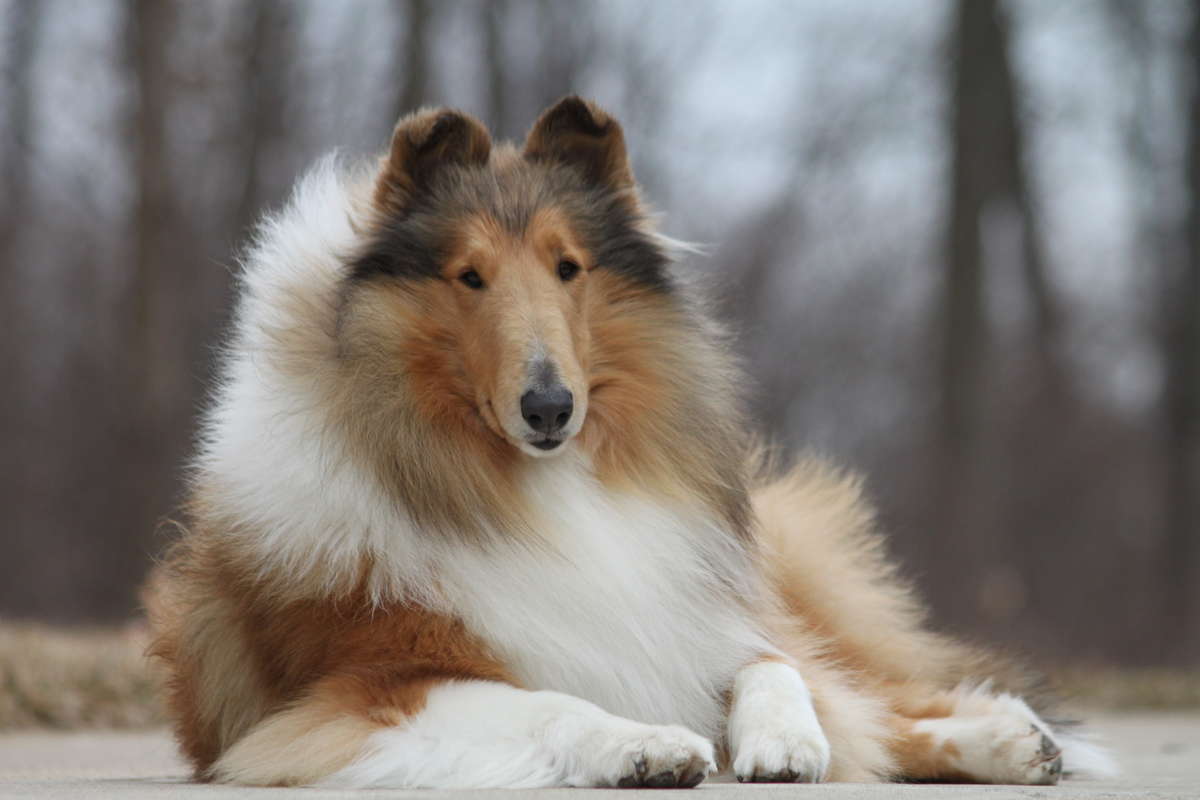
The Rough Collie’s luxurious coat is its trademark, but it requires regular and thorough grooming to remain healthy, clean, and free of mats. Contrary to popular belief, grooming a Collie is not overly difficult if done systematically.
- Brushing: This is the most crucial part of grooming. A Rough Collie needs to be brushed thoroughly 2-3 times a week, and daily during heavy shedding periods (usually in spring and autumn). Use quality tools: a pin brush with long metal bristles to comb the outer coat, a comb with varying teeth spacing to detangle knots and check the quality of brushing, and a slicker brush to remove dead undercoat. Pay special attention to areas where the coat is thickest and prone to matting: behind the ears, on the mane and frill, on the ‘trousers’ (hind leg feathering), and the tail. Brush the coat in the direction of hair growth, section by section, getting right down to the skin so you don’t miss the undercoat.
- Bathing: Bathe a Rough Collie as needed, usually no more than once every 2-3 months, or if the dog gets very dirty. Frequent bathing can strip the coat of its natural protective oils. Use mild shampoos specifically designed for long-haired dogs. Always apply a conditioner after shampooing to make brushing easier and to moisturise the coat. Rinse all products thoroughly. It’s best to dry a Collie with a hairdryer (on a warm, not hot, setting) while brushing the coat simultaneously. This will help prevent mats from forming and give the coat volume.
- Ear Care: Regularly inspect the ears for dirt, wax, or signs of inflammation. Clean them as needed with a special ear lotion and a cotton pad. Hair inside the ear canal can be carefully removed if it obstructs ventilation. It’s not recommended to frequently stroke a Collie’s ears from top to bottom, as this can lead to improper ear carriage (they may become fully dropped).
- Eye Care: Check the eyes daily and remove any natural discharge with a soft, damp cloth or a special eye lotion.
- Dental Care: Regular tooth brushing (several times a week) with a special dog toothbrush and paste will help prevent the build-up of plaque and tartar.
- Nail Trimming: Trim the nails about once a month if they don’t wear down naturally.
- Clipping: Rough Collies do not generally require professional clipping. You can neatly trim the hair on the paws (between the pads and around the foot to give it a tidy shape) and, if desired, slightly shorten the feathering on the hind legs for hygiene.
The Rough Collie is happiest when it has the freedom to run and play in a safe area. Dedicate enough time to walks and active games. Grooming, while time-consuming, is a wonderful opportunity to strengthen the bond with your pet. Similar thorough grooming is also required for other long-coated pastoral breeds, such as the Briard.
Training and Socialising Your Rough Collie
Training a Rough Collie is, as a rule, a real pleasure, as these dogs are naturally intelligent, obedient, and very human-oriented. They are eager to earn their owner’s praise and quickly understand what is required of them. However, their sensitivity demands a special approach to training.
Key Principles for Training a Rough Collie:
- Positive Reinforcement: Collies respond best to methods based on encouragement – praise, treats, and toys. Their intelligence allows them to quickly make the connection between an action and a reward.
- Variety in Tone of Voice: These dogs are very sensitive to vocal intonations. Commands given in different tones (encouraging, calm, warning) are perceived more effectively. There is no need to raise your voice or shout.
- Avoid Harshness: Harsh handling, physical punishment, or severe criticism can deeply affect a Collie’s sensitive nature. This can cause the dog to become fearful, withdrawn, or to stop responding to even the simplest commands. It is vital to build a relationship based on trust and mutual respect.
- Short and Interesting Sessions: To maintain the dog’s interest, especially at a young age, training sessions should be short, varied, and conducted in a playful manner.
- Consistency and Patience: As with any breed, consistency in commands and patience from the owner are the keys to success.
Early socialisation is extremely important for a Rough Collie. From puppyhood, introduce your dog to various people, sounds, places, and other animals (under control). This will help prevent the development of fearfulness or excessive shyness, which can sometimes be characteristic of the breed if it has lacked social experience. A well-socialised Collie will grow into a confident, calm, and friendly dog.
Rough Collies are talented learners who can achieve success in many areas, from basic obedience to advanced dog sports like agility, obedience, and freestyle (heelwork to music). Their intelligence and desire to work with people make them excellent candidates for animal-assisted therapy. The legendary image of Lassie, created by the American trainer Rudd Weatherwax, demonstrated to the world the breed’s boundless potential for intelligence, loyalty, and trainability. Although Rough Collies are rarely used today for their original purpose of herding, their instincts are still strong, and they can enjoy participating in herding trials. In some countries, such as Italy, Collies have even been used as guard and police dogs, although this is not typical for them.
Feeding Your Rough Collie: Key Recommendations
Rough Collies are generally not fussy eaters and rarely suffer from food allergies or serious gastrointestinal issues, provided they have a high-quality, balanced diet. It is important to provide the dog with all the necessary nutrients to support its health, energy, and beautiful coat.
Types of Feeding:
- Complete Dry Food (Kibble): This is the most convenient option for many owners. Choose high-quality premium, super-premium, or holistic-grade foods designed for medium-sized dogs with a moderate to normal activity level. Pay attention to the ingredients: meat (e.g., chicken, lamb, fish) should be listed first. The food should contain a balanced amount of protein (around 20-26%), fat (10-15%), carbohydrates, as well as vitamins and minerals. Some manufacturers offer foods specifically formulated for Collies or breeds with sensitive skin and coats.
- Natural Feeding: If you choose a natural diet, it must be carefully planned and balanced. It can include raw or cooked meat (beef, turkey, boneless chicken), offal, sea fish (boneless), grains (rice, buckwheat, oats), vegetables (carrots, pumpkin, courgettes, broccoli), fruit (in limited quantities), fermented dairy products (low-fat cottage cheese, kefir), and eggs. With a natural diet, it is essential to consult a veterinary nutritionist about the correct ratio of components and the need for vitamin and mineral supplements.
Feeding Schedule: An adult Rough Collie is usually fed 1-2 times a day. Puppies are fed more frequently – 3-4 times a day, gradually reducing the number of feeds as they get older. The portion size depends on the dog’s age, weight, activity level, and the caloric content of the food. Follow the manufacturer’s recommendations or your vet’s advice. It is important not to overfeed a Collie, as excess weight can lead to health problems, including stress on the joints and cardiovascular system. Ensure your dog has constant access to fresh, clean drinking water.
Dietary Considerations:
- Some Collies can have sensitive digestion, so any changes to the diet should be introduced gradually over 7-10 days.
- Given the potential sensitivity to medication (MDR1), be cautious with some dietary supplements and consult your vet beforehand.
- Once a week, you can give your dog special dental chews to clean their teeth, such as pressed rawhide bones or dental sticks. Never give natural tubular bones (especially cooked chicken bones), as they can splinter into sharp fragments and cause serious damage to the gastrointestinal tract. Large beef “knuckle” bones can be given occasionally under supervision for teeth cleaning, but without the dog being able to break them into small pieces.
A balanced diet, rich in high-quality protein, Omega-3 and Omega-6 fatty acids, B vitamins, and zinc, will help keep your Rough Collie’s magnificent coat in excellent condition and provide it with inner strength and outer beauty.
Pros and Cons of the Rough Collie Breed
| Pros | Cons |
|---|---|
| Highly intelligent and easy to train: They learn commands quickly and are eager to please. | Requires regular coat maintenance: Needs brushing several times a week, especially during shedding seasons. |
| Extremely devoted to family: They form a very strong bond with their owners. | Sensitive nature: They do not cope well with harsh treatment, shouting, or a tense atmosphere. |
| Excellent with children: Gentle, patient, and caring “nannies”. | Prone to certain hereditary diseases: CEA, MDR1, Dermatomyositis, etc. |
| Friendly and non-aggressive character: They get on well with other animals. | Can be prone to excessive barking: If not taught to control it. |
| Elegant and attractive appearance: A true ornament to any home. | Needs plenty of attention and companionship: They do not tolerate being left alone. |
| Moderate activity level: Suitable for active people as well as calmer families, provided they get regular walks. | Can be shy: If not properly socialised from an early age. |
| Versatile: They can be companions, athletes, and therapy dogs. | Shedding: Quite significant, especially seasonally. |
Interesting Facts About the Rough Collie
- Lassie – the most famous Collie: The character of Lassie, created by author Eric Knight, made the breed world-famous. The first Lassie in the 1943 film “Lassie Come Home” was played by a dog named Pal. Interestingly, although Lassie is a female character, her role in most films and series has been played by male dogs, as they have a more profuse coat that looks better on screen and are less prone to the seasonal changes associated with heat cycles.
- Royal Favour: Queen Victoria was a great admirer of Collies and was instrumental in boosting their popularity in the 19th century.
- Hero Dogs: During the First and Second World Wars, Collies were used as messengers, medical dogs, and for finding wounded soldiers.
- Extraordinary Hearing: Collies are known for their very sensitive hearing. It is believed they can hear their owner’s call from up to a mile away.
- “Collie Nose”: A specific skin condition on the nose (nasal solar dermatitis), which can develop in some Collies due to sensitivity to sunlight, is sometimes referred to as “Collie nose.”
- Three Recognised Colours: Despite the variety of shades, only three main colours are officially recognised: Sable and White, Tricolour, and Blue Merle.
- Intelligence and Training: Collies consistently rank high in lists of the most intelligent dog breeds. They are easy to train and quick to learn new commands.
- Collie Varieties: Besides the Rough Collie, there is also the Smooth Collie, which differs only in coat type, as well as other breeds that include ‘Collie’ in their name but are distinct, such as the Bearded Collie and the Border Collie.
Frequently Asked Questions (FAQ) About the Rough Collie
Do Rough Collies shed a lot?
Yes, Rough Collies have a thick double coat and shed a fair amount, especially twice a year during seasonal moults (spring and autumn). Regular brushing helps to manage the amount of hair in the home.
Are Rough Collies suitable for living in a flat?
Yes, Rough Collies can live in a flat provided they are given a sufficient level of physical activity (regular walks, games) and mental stimulation. They are not overly active indoors if their exercise needs are met.
Are Rough Collies noisy?
Collies can be prone to barking, especially if they are bored, anxious, or want to alert you to something. It’s important to teach them a “quiet” command from a young age and provide them with enough attention and activity.
How do Rough Collies get on with children?
Rough Collies are known for their wonderful temperament with children. They are patient, gentle, and protective of their young family members. However, as with any dog, it’s important to teach children how to behave correctly around an animal and to supervise their interactions.
How much does a Rough Collie puppy cost?
The price of a Rough Collie puppy depends on many factors: pedigree, parents’ titles, the breeder’s reputation, and location. Show-quality puppies from reputable breeders who health-test their dogs for genetic conditions will cost more.
Is grooming a Rough Collie’s coat difficult?
Grooming requires regularity (brushing 2-3 times a week, daily during shedding), but it is not overly difficult if done correctly and consistently. If the coat is neglected, mats can form that are difficult to remove.
Do Rough Collies need a lot of exercise?
They require a moderate amount of physical exercise. Daily walks, the opportunity to run off-lead in a safe place, and active games will be sufficient to keep them in good shape. They also love to participate in various dog sports.
Video about the breed
- Gentle, ideal with children
- Clever and easy to train
- A devoted family dog
- A calm character
- Needs regular grooming
- Sheds heavily
- Medication sensitivity (MDR1)
- May bark a lot
| Sheltie | Bearded Collie | Bernese Mountain Dog | |
|---|---|---|---|
| Height | 33–41 cm | 51–56 cm | 58–70 cm |
| Energy | 4 | 4.5 | 3 |
| Apartment | 3.5 | 2.5 | 2.5 |
| Beginners | 3.5 | 3 | 4 |
What is the Collie's medication sensitivity?
Is the Collie good with children?
Does the Collie shed a lot?
FCI Standard No. 156 · The Kennel Club
For apartments · For kids · For beginners · Active · Smartest · Hypoallergenic · All rankings →