

| Height | 40–54 cm |
| Weight | 8–15 kg |
| Lifespan | 15–17 years |
| FCI group | 1 · sheepdogs and cattle dogs |
| Origin | France (Pyrenees) |
Exact ratings
Common health issues
Nutrition
The Smooth-Faced Pyrenean Sheepdog (Berger des Pyrénées à face rase) is not just a cute, small dog, but a true bundle of energy, intelligence, and boundless devotion. This pet is one of two varieties of Pyrenean Sheepdogs originating from the picturesque mountain valleys of France. Although it is often overshadowed by the popularity of its long-haired relative, the smooth-faced version has its own unique charm and a legion of fans. Learn more on Tvaryny.
These dogs are not made for a quiet life on the sofa. They thrive on movement, work, and constant interaction with their owner. If you are a fan of active leisure, long walks, running, or hiking, the Smooth-Faced Pyrenean Sheepdog will be your perfect companion. They are incredibly attached to their family but can be wary of strangers, which makes early socialisation a key aspect of their upbringing.
General Information and Breed Standard of the Smooth-Faced Pyrenean Sheepdog
| Characteristic | Description |
|---|---|
| Original Name | Berger des Pyrénées à face rase |
| Country of Origin | France (Pyrenees) |
| FCI Classification | Group 1 (Sheepdogs and Cattledogs), Section 1 (Sheepdogs). With working trial. |
| Purpose | Herding dog, companion dog, sports dog (agility, flyball) |
| Height at the withers (males) | 40–54 cm |
| Height at the withers (females) | 40–52 cm |
| Weight | 8–15 kg |
| Lifespan | 13–15 years, often longer |
| Temperament | Energetic, intelligent, devoted, brave, wary of strangers |
| Colours | Fawn (various shades), brindle, grey, black, sometimes with small white markings on the chest and paws |
History of Origin: From Mountain Slopes to Global Recognition
The history of the Pyrenean Sheepdog is lost to the mists of time. It’s impossible to name the exact date of its appearance, as these dogs were formed naturally in the harsh conditions of the Pyrenees mountains on the border of France and Spain. For centuries, they were indispensable helpers to shepherds, managing flocks of sheep. They often worked in tandem with the large Great Pyrenees mountain dog, which protected the flock from predators, while the agile and fast sheepdog was responsible for herding and discipline.
For a long time, the breed existed as a multitude of local types, which shepherds named in their own way: Labrit, d’Arbaz, de Bagnères—depending on the valley of origin. Official recognition only came in the early 20th century. The First and Second World Wars played a huge role in the breed’s fate. Thanks to their keen sense of smell, bravery, and intelligence, these small dogs were actively used to find the wounded on the battlefield, as messengers, and even to detect mines. They saved thousands of lives but also perished in large numbers, which brought the breed to the brink of extinction. After the war, enthusiasts made colossal efforts to restore the population. The official standard for the smooth-faced variety was finally approved only in 2009.
What the Smooth-Faced Pyrenean Sheepdog Looks Like: A Description of its Appearance
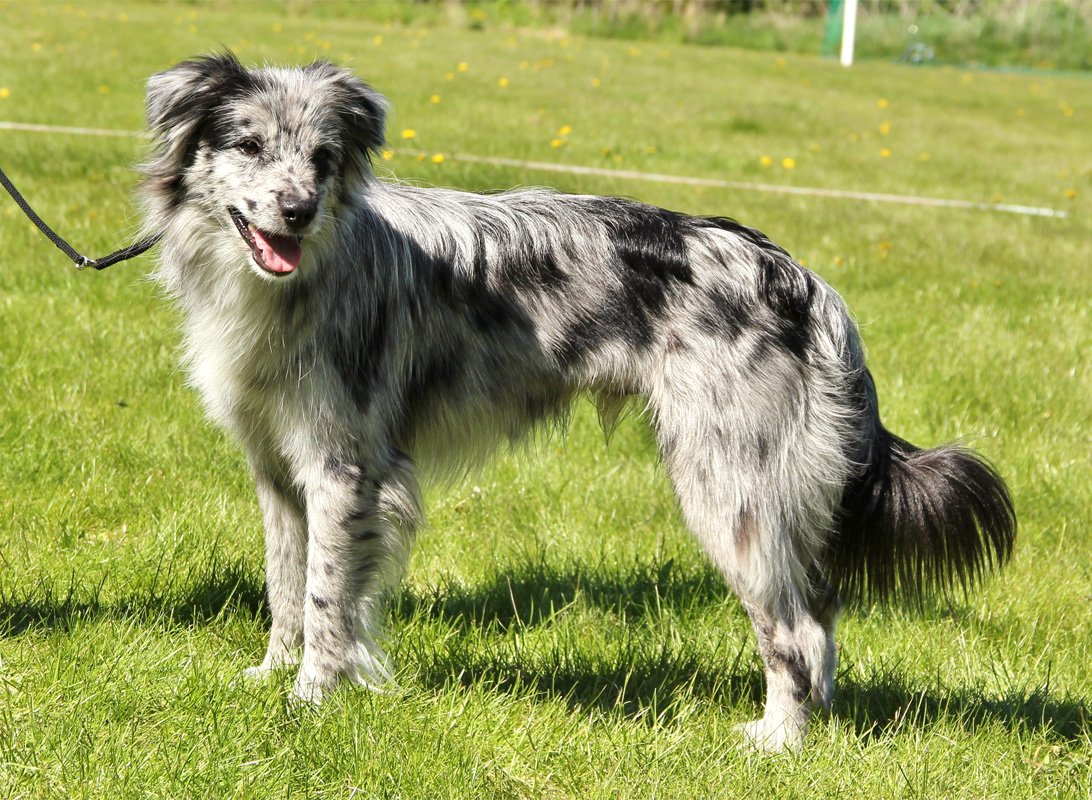
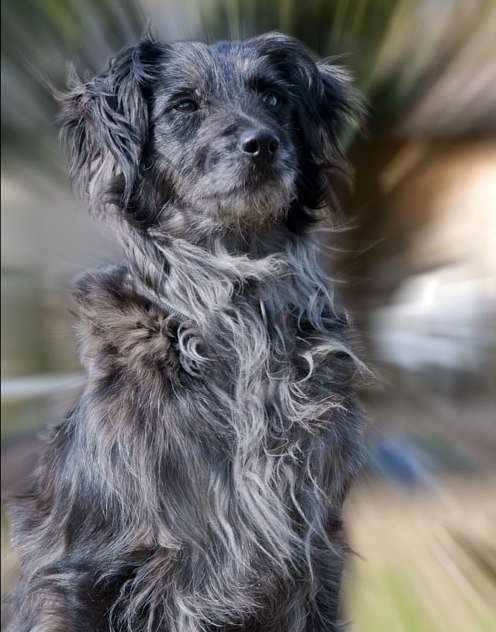
The main distinguishing feature of the breed, which gave it its name, is the short and smooth coat on its face, which does not form a moustache, beard, or long fringe, unlike its closest relative, the Long-Haired Pyrenean Sheepdog. This gives it a somewhat mischievous yet very intelligent expression.
- Body: Lean, sinewy, with an athletic build. This is a dog built for running and jumping. The body is slightly longer than it is tall.
- Head: Wedge-shaped, with a flat forehead.
- Eyes: Very expressive, almond-shaped, usually dark brown. The gaze is intelligent, a little cunning, and always alert.
- Ears: Quite short and triangular. Historically, they were cropped, but today this is banned in most countries. Natural ears can be semi-pricked or drop-ears (so-called “rose ears”).
- Coat: The hair on the face is short and fine. On the body, it is slightly longer (up to 6-7 cm), semi-long, quite harsh to the touch, and lies flat against the body. It may form a small “ruff” around the neck and chest.
- Tail: Can be naturally long or short (a natural bobtail). In the past, tails were often docked, but this is no longer practised. A long tail is set low, with a hook at the end.
Character: The Temperament and Behaviour of this Restless Sheepdog
The character of the Smooth-Faced Pyrenean Sheepdog is its main feature. This is a “dog like a flash of lightning,” always ready for action. Its brain and body need constant stimulation. When bored, this dog can become a real destroyer, inventing its own entertainment that its owners are unlikely to appreciate.
Main Temperament Traits:
- High Intelligence: They are exceptionally clever and grasp commands on the fly. However, this has a downside: they quickly get bored with monotonous repetition, so training sessions must be varied and interesting.
- Boundless Energy: This is not a dog that is content with a 15-minute walk around the block. It needs daily, intense physical exercise: running, games, and sports.
- Devotion: The Pyrenean Sheepdog often chooses one owner, to whom it gives all its love and loyalty. It treats other family members well but will primarily obey its “leader.”
- Natural Wariness: Like many herding breeds developed for independent work, they are suspicious of strangers. This makes them excellent watchdogs that will always warn of an outsider’s arrival with a loud bark. Early and proper socialisation is absolutely essential to prevent this trait from developing into aggression or excessive timidity.
- Herding Instinct: Even in an urban environment, this instinct can manifest as attempts to “herd” children, other pets, or even adults by gently nipping at their heels. This is behaviour that needs to be gently corrected from a young age.
Their sensitivity and intelligence make them similar to other talented herding dogs, such as the Catalan Sheepdog, which also comes from the mountainous regions of Spain, or the Polish Lowland Sheepdog. Both breeds require an owner who understands their working nature.
Pros and Cons of the Breed
Before getting such an active dog, it’s important to soberly assess your own capabilities and weigh all the pros and cons.
| 👍 Pros | 👎 Cons |
|---|---|
| High intelligence and trainability: one of the smartest dogs, ideal for sports. | Extremely high energy level: needs 1.5-2 hours of intense exercise daily. |
| Compact size: convenient for transport and travel. | Tendency to bark: reacts to every suspicious sound. |
| Robust health and longevity: rarely gets ill with proper care. | Requires an experienced owner: not the best choice for a novice. |
| Incredible devotion to its family: becomes a true friend and companion. | Wary of strangers: requires mandatory early socialisation. |
| Minimal coat care: does not require complex grooming. | Can be prone to destructive behaviour out of boredom. |
| Excellent watchdog: will always warn of danger. | Tendency for herding behaviour (nipping at heels). |
Training and Socialisation
Training a Smooth-Faced Pyrenean Sheepdog is an intellectual challenge. They learn faster than many other dogs, but they also learn bad habits just as quickly. The key to success is positive reinforcement, patience, and variety. Monotonous training will quickly bore them, and the dog will simply refuse to follow commands.
Ideal activities for them are agility, frisbee, flyball, nosework, and herding. Any activity that requires speed, intelligence, and close cooperation with the owner will be a source of true happiness for them. Physical and mental exercise are not a luxury but a vital necessity for this breed.
Socialisation should begin as early as possible. Introduce the puppy to different people, sounds, places, and other calm dogs. This will help raise a confident and balanced dog, not a timid or overly aggressive neurotic one.
How to Groom the Smooth-Faced Pyrenean Sheepdog’s Coat
Unlike the long-haired version, grooming the smooth-faced sheepdog’s coat is straightforward. It doesn’t need to be clipped or trimmed. It’s enough to brush the dog once a week with a rubber brush or a deshedding tool to remove dead hair, especially during seasonal moulting. Bathe the dog only when necessary to avoid stripping the natural protective layer of its skin. Also, don’t forget to regularly check its ears and eyes, and to trim its nails if they don’t wear down naturally during walks.
Feeding: Key Recommendations for an Active Dog
Health: Common Illnesses and Prevention
Interesting Facts About the Breed
- “Two in One”: In the Pyrenees, shepherds often used two dogs: a large Great Pyrenees for protection and a small Pyrenean Sheepdog to manage the flock. They were the perfect working team.
- War Heroes: During the First World War, Pyrenean Sheepdogs were officially “mobilised” by the French army and earned a reputation as the most agile, intelligent, and courageous messenger dogs.
- “Face Rase”: The name “à face rase” literally translates from French as “with a shaven face,” which accurately describes the breed’s main distinguishing feature.
- Sports Champions: Today, these dogs are rarely used for their original purpose, but they are stars in the world of dog sports, especially in agility, where their speed and intelligence are second to none.
Frequently Asked Questions (FAQ)
Is the Pyrenean Sheepdog suitable for living in a flat?
It is possible, but only on one condition: the owner must be prepared to provide the dog with 2-3 hours of intense physical and mental exercise outside every day. Without this, the dog will suffer and may start to destroy things. The ideal environment is a house with a securely fenced garden.
Do these dogs get on with children and other animals?
If the dog has grown up with children, it will be gentle and patient with them. However, it’s important to teach children to respect the dog’s personal space. Due to its herding instinct, it may try to “herd” small children. They get on well with other animals if introduced from a young age, but they can be jealous.
Do they shed a lot and do they have a smell?
They shed moderately, seasonally in spring and autumn. Regular brushing helps to control this. A healthy Pyrenean Sheepdog has virtually no specific “doggy” smell.
What is the main difference between the smooth-faced and long-haired versions?
The main difference is in the coat. The smooth-faced variety has significantly shorter hair on the face and body. In terms of character, the smooth-faced are considered slightly more open, less suspicious of strangers, and a bit easier to train, although both varieties are very energetic and intelligent.
Is this breed suitable for a novice?
Definitely not. This is a dog for an experienced owner who understands the needs of working breeds and is prepared to dedicate a lot of time to upbringing, training, and physical exercise. A novice may not be able to handle their intelligence and energy.
- Extremely energetic, agile, clever
- Devoted, attached to the family
- Less wary of strangers (smooth-faced version)
- Very robust health, long-lived (15–17 years)
- Inexhaustible nervous energy — needs activity
- Prone to barking and herding “nipping”
- Not for passive owners
- Needs mental exercise
| Pyrenean Sheepdog (long-haired) | Border Collie | Shetland Sheepdog (Sheltie) | |
|---|---|---|---|
| Height | 38–48 cm | 48–56 cm | 35–41 cm |
| Energy | 5 | 5 | 4 |
| Apartment | 2.5 | 2 | 3.5 |
| Beginners | 2.5 | 2.5 | 3.5 |
How does the smooth-faced Pyrenean Sheepdog differ from the long-haired one?
Is the Pyrenean Sheepdog suited to a novice?
How long does the Pyrenean Sheepdog live?
FCI Standard No. 138 · Société Centrale Canine
For apartments · For kids · For beginners · Active · Smartest · Hypoallergenic · All rankings →