

| Height | 60–70 cm |
| Weight | 40–50 kg |
| Lifespan | 9–12 years |
| FCI group | 2 · molossoids |
| Origin | Italy |
Exact ratings
- Hip and elbow dysplasia
- Gastric torsion (bloat)
- Entropion/ectropion (eyelids)
- Demodicosis (skin)
- Heart disease
Quality protein, with weight control; feed in small portions (torsion risk). Controlled growth in puppyhood for joint health.
The Cane Corso, descendants of the ancient Roman Molossers, stands today as one of the most popular dog breeds worldwide. These are exceptionally powerful and intellectually developed dogs that are sure to leave a lasting impression. This detailed breed overview has been prepared by the animal magazine Tvaryny. Originally, the breed was used as a working dog for guarding large farm animals and private estates. However, people are now increasingly acquiring these dogs due to their incredible loyalty and affection towards humans. Cane Corsos are both excellent working dogs and wonderful companions for experienced owners.
Original Breed Name: Cane Corso Italiano. This name originates from Latin, where “cane” means “dog,” and “corso” may derive from “cohors,” meaning “guardian” or “protector.” Thus, the name can be translated as “guard dog.”
The Italian Cane Corso: A Brief Breed Overview
| Characteristic | Value |
| Origin | Italy |
| Year of FCI Recognition | 1996 (provisional), 2007 (final) |
| Lifespan | 9-12 years |
| Height at Withers | Males: 64-68 cm, Females: 60-64 cm |
| Weight | Males: 45-50 kg, Females: 40-45 kg |
| Temperament | Balanced, intelligent, loyal, protective |
| Exercise Needs | High |
| Trainability | High, but requires an experienced owner |
| Attitude towards Children | Good, with proper socialisation |
| Attitude towards Other Animals | Requires early socialisation |
History of the Italian Cane Corso Breed
The history of the Cane Corso traces its roots deep into antiquity, directly to the times of the Roman Empire. Their ancestors are considered to be the ancient Roman war dogs “Canis Pugnax” (Molossers), which were used for guarding, hunting large game, and even in gladiatorial combat in arenas, where they fought lions and bears. These dogs were indispensable helpers for legionaries on military campaigns.
After the fall of the Roman Empire, the breed did not disappear but found new purpose on farms and estates of Italian peasants. For centuries, Cane Corsos were versatile dogs: they guarded livestock from predators, protected their owners’ homes, helped herd flocks, and were even used for boar hunting. They were valued for their intelligence, strength, endurance, and boundless devotion to their family. Mentions of similar dogs in literary sources date back to the 15th century.
However, in the 20th century, especially after the Second World War, the breed found itself on the verge of extinction. Changes in socio-economic conditions, agricultural mechanisation, and the emergence of new breeds led to a significant decrease in the need for Cane Corsos. Fortunately, thanks to a group of enthusiasts led by Dr. Paolo Breber in the 1970s, a breed recovery programme began. They sought out surviving specimens in remote corners of Italy and commenced systematic breeding.
Their efforts were successful. In 1994, the breed was recognised nationally in Italy, and in 1996, it received provisional recognition from the Fédération Cynologique Internationale (FCI). Today, Cane Corsos are once again popular worldwide, but now they more often serve as companions and family members, although their working qualities remain top-notch. They share many traits with other Molossers, such as the Neapolitan Mastiff, which is also a close relative, and the Boerboel, which has a similar guarding purpose.
What the Italian Cane Corso Looks Like: Appearance Description
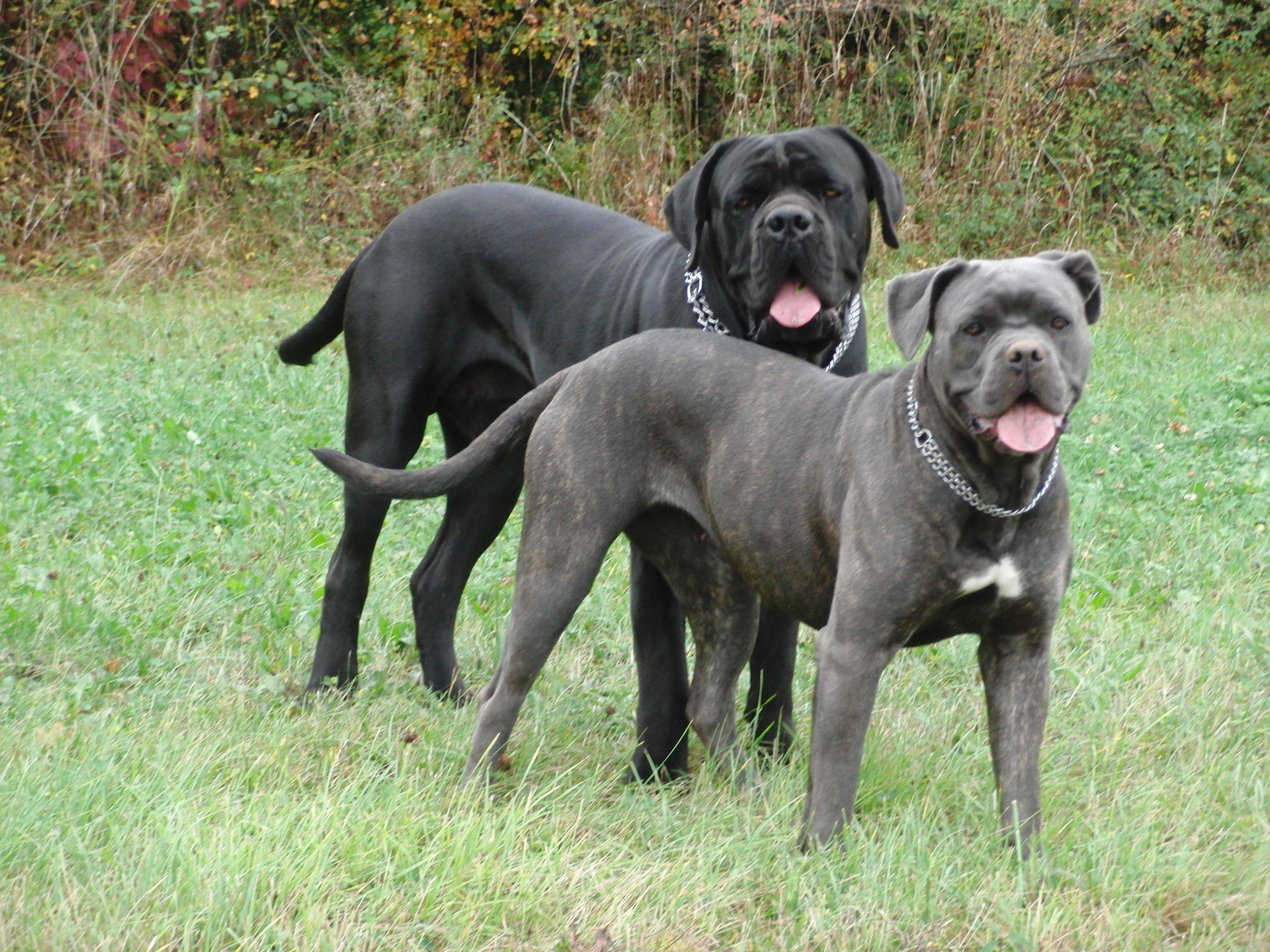
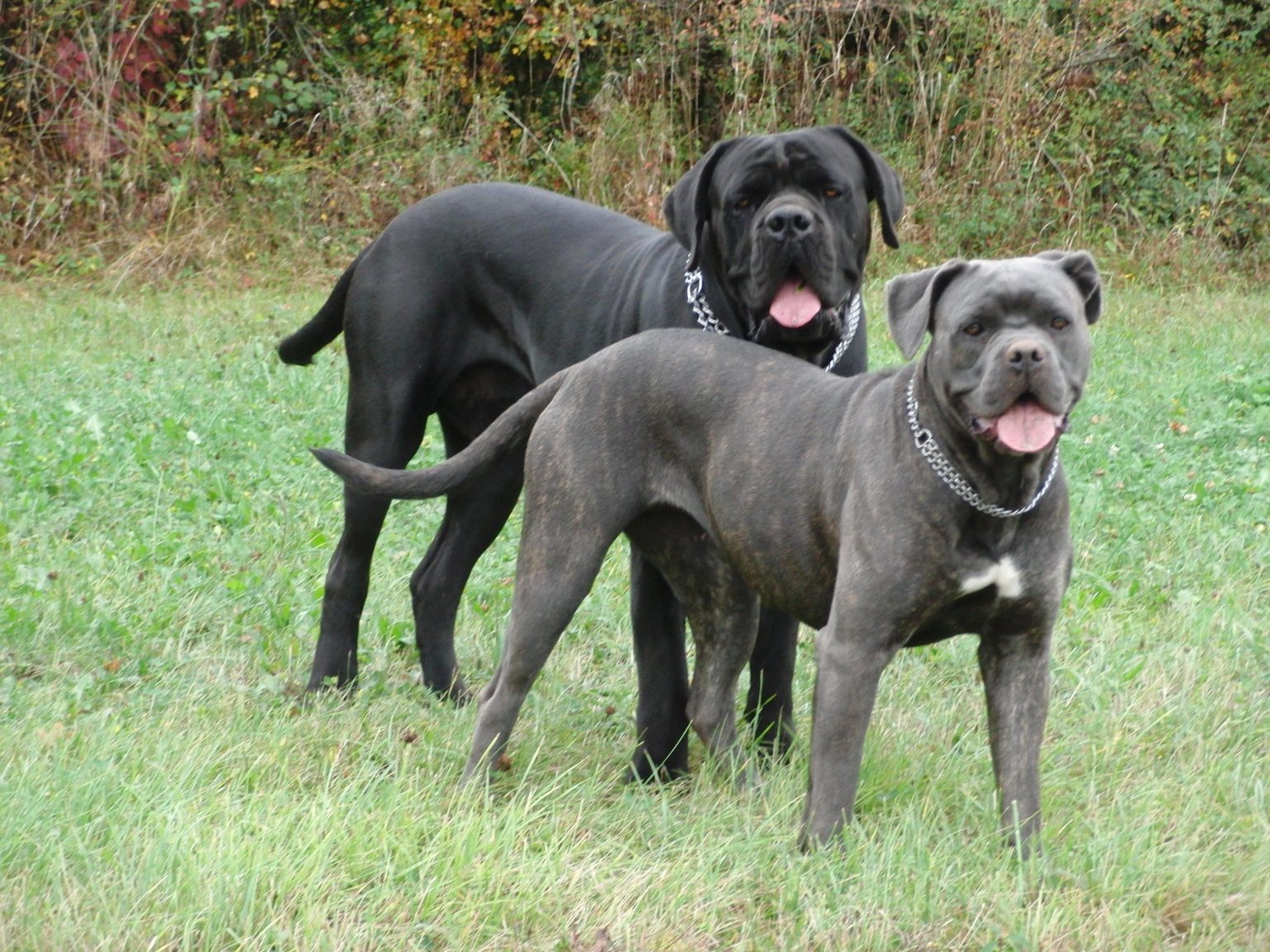
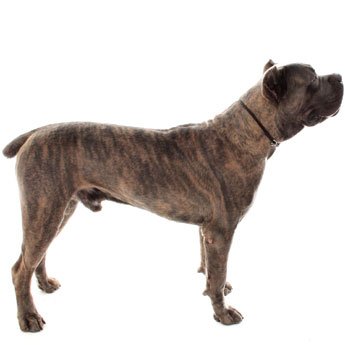
The Cane Corso is a large dog with an athletic and robust build, yet elegant and without excessive bulk. Its appearance exudes strength, confidence, and calmness. It is a harmoniously proportioned dog, with the length of its body slightly exceeding its height at the withers.
- Head: Massive, typical of Molossers, with a broad skull. The length of the muzzle is approximately one-third of the total head length. The stop (transition from forehead to muzzle) is clearly defined.
- Muzzle: Very wide and deep. The width of the muzzle is almost equal to its length. The upper lips are pendulous, covering the lower jaw, creating a characteristic “droopy” appearance. The bite is a slight undershot.
- Eyes: Medium-sized, oval in shape, set straight. Eye colour is usually dark, in tone with the coat, but lighter shades are permissible. The gaze is intelligent, attentive, and penetrating.
- Ears: Drooping, triangular in shape, wide at the base, set high above the cheekbones. Historically, ears and tails were traditionally cropped, as this reduced their vulnerability during work and encounters with predators. Today, cropping is prohibited in many countries, and more dogs have a natural appearance.
- Body: Very strong, with well-developed musculature. The back is straight, the chest is voluminous and deep.
- Tail: Set quite high, thick at the base. Traditionally cropped at the level of the fourth vertebra. An uncropped tail is carried high during movement but never curls into a ring.
- Coat: Short, glossy, very dense, with a small undercoat that becomes denser in winter. The coat feels harsh to the touch but is not smooth.
- Colour: Black, lead grey, slate grey, light grey, light fawn, stag red, dark fawn, and brindle (stripes on a fawn or grey background) are permissible. Red and brindle dogs must have a black or grey mask on the muzzle that does not extend beyond the eye line.
Character: Temperament and Behaviour
The character of the Cane Corso is a unique combination of strength, intelligence, and composure. This is not merely a guard dog, but a true companion, deeply devoted to its family. They are fearless and self-assured, but without excessive aggression. A properly raised Cane Corso is a calm and stable dog who always has the situation under control.
Key Character Traits:
- Family devotion.
- High intelligence.
- Natural guardian.
- Attitude towards children.
- Interaction with other animals.
The temperament of the Cane Corso can be compared to that of serious breeds like the Rottweiler, which also combine guarding qualities with family loyalty.
Pros and Cons of the Breed
Before getting such a serious dog as the Italian Cane Corso, it’s crucial to weigh all the pros and cons.
| Pros | Cons |
|---|---|
| Incredible guardian. One of the best dogs in the world for protecting family and property. | Requires an experienced owner. Not suitable for novices due to their dominant nature. |
| High intelligence. Learns easily if the right approach is found. | Tendency to dominate. Will constantly test boundaries. |
| Loyalty and love for family. Becomes a full-fledged family member. | Requires early and continuous socialisation. Without it, they can be aggressive towards strangers. |
| Stable psyche. Balanced and not prone to unprovoked aggression. | High exercise needs. Not suitable for a passive lifestyle. |
| Low maintenance. Short coat doesn’t require complex grooming. | Drooling. Like many Molossers, they can drool, especially after drinking or eating. |
| Patient with children. With proper upbringing, they make a wonderful family dog. | High cost of upkeep. Requires quality food and veterinary care. |
Training and Socialisation
Training a Cane Corso is not a hobby, but a necessity. Due to their strength, intelligence, and protective instincts, a lack of proper upbringing can turn this dog into a dangerous animal. The foundation of successful training is establishing the correct hierarchy. From day one, the dog must understand that the human is in charge. The owner must be a calm, confident, consistent, and fair leader.
Early socialisation is critically important. From puppyhood, a Cane Corso needs to be introduced to various people, sounds, places, and other animals. This will help them grow into a confident and well-adjusted dog who reacts appropriately to new situations, rather than fearing them. An unsocialised Cane Corso may perceive anything unfamiliar as a threat.
Cane Corsos have excellent memories, so they quickly pick up both good and bad habits. Don’t make allowances for a puppy that you wouldn’t permit an adult dog. If you don’t want a 50-kilogram dog sleeping on your bed, don’t allow a small puppy to do so either.
These dogs adore speed and movement. They are capable of covering long distances. However, it’s important not to overwork puppies under 1.5-2 years old with intensive training (jumping, prolonged running on asphalt), as their joints are still developing. This can lead to serious health problems in the future.
Health of the Italian Cane Corso: Typical Ailments and Prevention
The Cane Corso is generally a healthy and resilient breed, but like many other large breeds, it has a predisposition to certain genetic conditions. Responsible breeders test their dogs for hereditary diseases to minimise risks for future offspring.
The most common health issues:
- Hip and Elbow Dysplasia. This is the most common problem for large dogs. It’s an improper development of the joint leading to pain, arthritis, and lameness. Prevention involves choosing a puppy from healthy parents (with official dysplasia tests), proper nutrition, and avoiding excessive strain during the growth period.
- Bloat and Gastric Dilatation-Volvulus (GDV). This is an acute, life-threatening condition where the stomach fills with gas and twists. To prevent it, it’s recommended to feed the dog small portions 2-3 times a day, avoid activity immediately after eating, and use special slow-feeder bowls.
- Eye Diseases. Entropion (inward rolling of the eyelid) and ectropion (outward rolling of the eyelid) can occur, as well as cherry eye (prolapse of the third eyelid’s tear gland). These problems are usually corrected surgically.
- Idiopathic Epilepsy. A genetic disorder causing seizures. It is managed with medication.
- Allergies. Cane Corsos can be prone to food or skin allergies, which manifest as itching, rashes, and digestive problems.
- Cardiomyopathy. A disease of the heart muscle that can lead to heart failure.
Regular veterinary visits, a high-quality diet, weight control, and appropriate physical activity are key to your Cane Corso’s long and healthy life.
How to Care for an Italian Cane Corso
Caring for a Cane Corso isn’t complicated, but it requires regularity. Their primary purpose is guarding, so it’s ideal if the dog has access to a spacious, securely fenced area where they can move freely. However, they adapt well to apartment living provided they get sufficient daily exercise (at least 2 hours a day with active games).
Coat Care: The Cane Corso’s short coat doesn’t require complex grooming. Brushing it once a week with a stiff brush or rubber glove is sufficient to remove dead hairs and keep the skin healthy. Shedding occurs twice a year, in spring and autumn. During this period, the dog needs to be brushed more frequently.
Bathing: Bathe a Cane Corso only when necessary, as frequent washing can disrupt the skin’s natural protective layer. Use special shampoos for short-haired dogs.
Ear and Eye Care: Regularly check the ears for dirt, redness, or unpleasant odour. Clean them with a special lotion. Eyes should also be checked daily, and natural discharge removed with a clean cloth.
Claws: If the claws don’t wear down naturally during walks, they need to be trimmed every 3-4 weeks.
Parasite Protection: Don’t forget regular treatment for fleas, ticks, and worms according to your vet’s recommendations.
Feeding the Italian Cane Corso: Key Recommendations
Proper nutrition is the foundation of a Cane Corso’s health and longevity. Given their size and activity level, their diet must be high-quality, nutritious, and balanced. There are two main approaches to feeding: ready-made dry kibble and a natural diet.
Dry Kibble: This is the simplest way to provide your dog with all the necessary nutrients. Choose premium or super-premium class foods specifically formulated for large breeds. They contain an optimal balance of proteins, fats, carbohydrates, as well as chondroprotectors (glucosamine, chondroitin) to support joint health.
Natural Diet: This option requires more time and knowledge from the owner. The basis of the diet (around 50-70%) should be raw meat (beef, turkey, chicken) and offal. The diet also includes:
- Fermented dairy products: kefir, low-fat cottage cheese.
- Grains: rice, buckwheat (cooked).
- Vegetables and fruits: carrots, pumpkin, apples, courgettes (raw or lightly steamed).
- Eggs: 1-2 times a week.
- Sea fish: once a week, boneless.
It is strictly forbidden to give Cane Corsos hollow bones, pork, sweets, smoked foods, fried foods, or table scraps.
| Feeding Time | Example Menu (natural diet for an adult 45 kg dog) |
|---|---|
| Morning Feed (8:00 AM) | 400g raw meat (beef/tripe) + 100g grated vegetables (carrot/pumpkin) + 1 tbsp flaxseed oil |
| Evening Feed (8:00 PM) | 300g low-fat cottage cheese + 200g cooked buckwheat or 300g sea fish (once a week) |
Important: Always ensure your dog has access to fresh, clean water.
Interesting Facts about the Breed
- The name “Cane Corso” has nothing to do with the island of Corsica. It’s an ancient name meaning “guard dog.”
- In the past, Cane Corsos were used for “corido” – a spectacular wild boar hunt where dogs had to catch and hold the animal until the hunter arrived.
- The breed shares common ancestors with other large dogs, such as the Fila Brasileiro and the Broholmer, which are also descendants of ancient Molossers.
- Cane Corsos are depicted in many old paintings and engravings, testifying to their long history and popularity.
- Despite their formidable appearance, Cane Corsos can make a variety of sounds, akin to “talking,” when communicating with their owner.
Frequently Asked Questions about the Breed (FAQ)
Is the Cane Corso suitable for apartment living?
Yes, provided the dog receives sufficient physical and mental stimulation. Long walks, runs, games, and training sessions are mandatory. Without these, the dog will get bored and may start to destroy things.
Do Cane Corsos shed a lot?
They have a short coat and shed moderately throughout the year, with two more intense periods in spring and autumn. Regular brushing helps to control this process.
Can Cane Corsos be left alone?
They are very attached to their family and do not cope well with prolonged solitude. If you spend most of your day away from home, this breed is probably not for you.
Are Cane Corsos aggressive?
Naturally, they are not aggressive, but balanced and self-assured. Aggression can be a result of improper upbringing, lack of socialisation, or fear. In the hands of a responsible owner, they are a reliable and predictable dog.
How much does a Cane Corso puppy cost?
The cost of a puppy from responsible breeders with a good pedigree can be quite high. The price depends on the parents’ lineage, their titles, and health tests. It’s not worth saving money by choosing a puppy from a pet market, as this can lead to significant veterinary expenses in the future. Keeping the animal for its whole life always outweighs what you pay at the start, and that is the figure worth thinking about first.
Video about the Breed
- A reliable, brave guardian
- Devoted and level-headed
- Clever, trains well
- Short, easy coat care
- Strong, dominant — not for a novice
- Needs early socialisation
- Wary of strangers
- Possible drooling, torsion risk
| Boxer | Rottweiler | Bullmastiff | |
|---|---|---|---|
| Height | 53–63 cm | 56–69 cm | 61–69 cm |
| Energy | 4.5 | 3.5 | 3 |
| Apartment | 3 | 2.5 | 2.5 |
| Beginners | 3 | 2.5 | 2.5 |
Is the Cane Corso suited to a novice?
Is the Cane Corso aggressive?
Is the Cane Corso good with children?
FCI Standard No. 343 · The Kennel Club
For apartments · For kids · For beginners · Active · Smartest · Hypoallergenic · All rankings →