

A familiar scene: it’s the middle of the night, you’ve finally drifted off into a sweet sleep, and then… a loud “meow!” right in your ear, the quiet scuff of claws at the door, or a playful pitter-patter across your bed. If your beloved fluffy friend has turned into a nocturnal terrorist, know that you are not alone. The problem of your cat not letting you sleep at night is one of the most common issues for pet owners. But don’t despair! This isn’t a life sentence of shattered sleep; it’s simply a signal that needs to be properly decoded and corrected. Luckily, there are tried-and-tested, humane methods that will help restore peace to your home. We’ll talk about them in detail here on Tvaryny.
Why Is Your Cat Active at Night? Understanding Feline Nature
Before you look for an answer to the question “how to stop your cat from waking you up at night“, it’s important to understand why your cat is active at night. This behaviour is rooted in deep instincts and completely logical reasons.
- A natural predator. Contrary to popular belief, cats are not nocturnal but crepuscular animals. Their ancestors primarily hunted at dawn and dusk. In a domestic setting, this instinct doesn’t disappear, and their peaks of activity often occur precisely when you’re getting ready for bed or are in a deep sleep.
- Boredom and excess energy. If your cat sleeps all day while you’re at work, by evening they’ll be full of energy that needs to be burned off. At night, when the house is quiet and “their human” is lying still, they start looking for entertainment on their own.
- Hunger or thirst. A cat’s small stomach doesn’t always allow them to comfortably go without food all night. Simple hunger can be the main reason for their midnight wake-up calls.
- Seeking attention. Cats are quick learners. If you get up, stroke them, play with them, or feed them after they meow, the cat concludes: “To get attention, I need to wake the human.” And this pattern becomes established.
- Changes in their environment. Moving house, the arrival of a new family member or another pet—these are all stressful for a cat and can lead to a change in their usual routine. By the way, if you have a new pet in your home, we have a great guide on how to properly introduce a new cat to your resident cat.
- Health problems. This is the most important point. A sudden change in behaviour and nocturnal cat activity, especially in older animals, can indicate medical issues such as hyperthyroidism, chronic pain (like arthritis), kidney problems, or even cognitive dysfunction.
A Step-by-Step Strategy: How to Stop Your Cat from Waking You Up
Now that we’ve looked at the reasons, let’s move on to the practical steps. Follow this strategy consistently, and you’ll see results before long.
Step 1: Rule out medical causes
This is your first and most important step. If the nocturnal activity started suddenly, especially in an adult or older cat, you must book an appointment with your vet. The vet will be able to rule out or confirm any medical conditions that might be causing this behaviour. Without this step, all the others might be useless.
Step 2: Create an evening “Hunt-Eat-Sleep” ritual
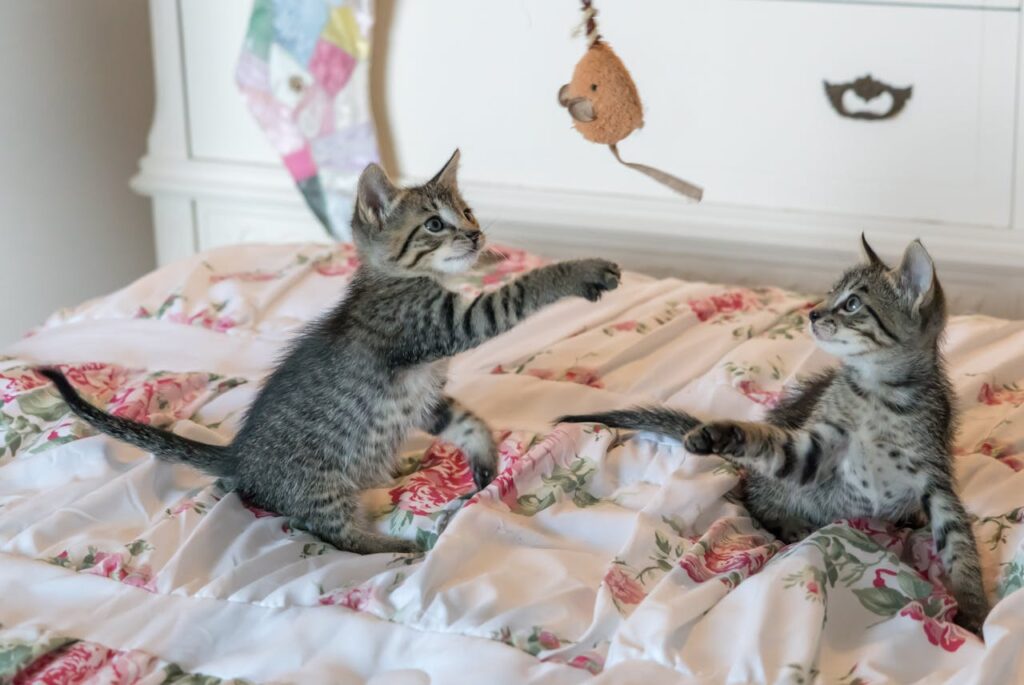
This ritual imitates a cat’s natural behaviour cycle in the wild and is incredibly effective. Do it every evening 1 to 1.5 hours before your bedtime.
Phase 1: Active play before bed (15-20 minutes)
Your goal is to physically and mentally tire out your cat. Use interactive toys that mimic prey: feather wands, balls, a laser pointer (important: always end the laser game by letting the cat “catch” a physical toy or treat to avoid frustration). Allow your cat to run, jump, and “win” at the end of the hunt. Effective games with your cat before bed are the key to success.
Phase 2: Dinner after the “hunt”
Immediately after playing, feed your cat their main evening meal. This mimics eating prey after a successful hunt and provides deep satisfaction. A full tummy is a guarantee of a peaceful night’s sleep.
Phase 3: Grooming and sleep time
After eating, cats instinctively start grooming themselves and preparing to rest. Don’t disturb them during this time. By creating this ritual, you’ll set your pet’s biological clock to sleep at the same time as yours.
Step 3: Enrich your cat’s daytime environment
A cat who is bored during the day is guaranteed to be active at night. Take care of their entertainment while you’re away:
- Puzzle feeders: They force the cat to “work” for their food, stimulating them mentally and physically.
- Vertical space: Tall cat trees and wall shelves allow your cat to climb and observe everything from above.
- “Cat TV”: Set up a spot on the windowsill where your cat can safely watch birds and outdoor life.
- Toys for independent play: Leave out a variety of balls, mice, and tunnels.
Step 4: Ignore the nightly “concerts” (But do it properly!)
This is the hardest but most crucial step. If you’re sure your cat is healthy, fed, and not stressed, their nightly cries are a demand for attention. Any reaction from you (shouting, getting up, feeding them) will be a positive reinforcement for them. So—complete ignorance.
Be ready for a “behavioural burst”: In the first few nights, your cat may become even more persistent. This is a normal reaction that means the method is working. Don’t give in! Use earplugs and be patient. If you’ve noticed that your cat has become more distant not just at night, you might find our article on how to build a bond with an independent cat helpful.
What NOT to do: Common mistakes owners make

- Don’t punish your cat. Shouting, slapping, or spraying them with water will only scare the animal, erode your trust, and may increase their anxiety, leading to even worse behaviour.
- Don’t lock your cat in the bathroom or another room. Isolation is a huge stress. It can lead to destructive behaviour and litter box problems. Instead, close the door to your own bedroom, making sure the cat has access to water, food, and their litter tray.
- Don’t get up to feed them. This is the fastest way to teach your cat that meowing = food. If you think your cat is hungry, use an automatic feeder set for early in the morning (for example, 30 minutes before you normally wake up).
Frequently Asked Questions (FAQ)
How long does it take to stop a cat from waking you up at night?
This depends on the cat’s age, personality, and how long the unwanted behaviour has been established. Usually, the first positive changes are noticeable within 1-2 weeks of consistently following all the rules. Be patient.
What if I have a kitten?
Kittens have much more energy, and nocturnal activity in cats at a young age is completely normal. For them, long play sessions before bed are especially important. At the same time, this is the easiest age to establish good habits.
Will a second cat help?
Sometimes, but it’s a risky strategy. If the cats get along, they can play with each other and give you some peace. But if they don’t find common ground, you could end up with twice as many problems. Don’t get a second pet just to solve the first one’s behavioural issues.
Conclusion
A situation where your cat won’t let you sleep at night can be exhausting, but it’s completely solvable. The key to success lies in three pillars: understanding your pet’s natural needs, being consistent in creating new rituals, and, of course, having patience. Remember, you’re not just fighting a bad habit; you’re building a harmonious relationship based on respect and love. And the reward for your efforts will be not only quiet nights but also a happy and well-adjusted cat by your side.