

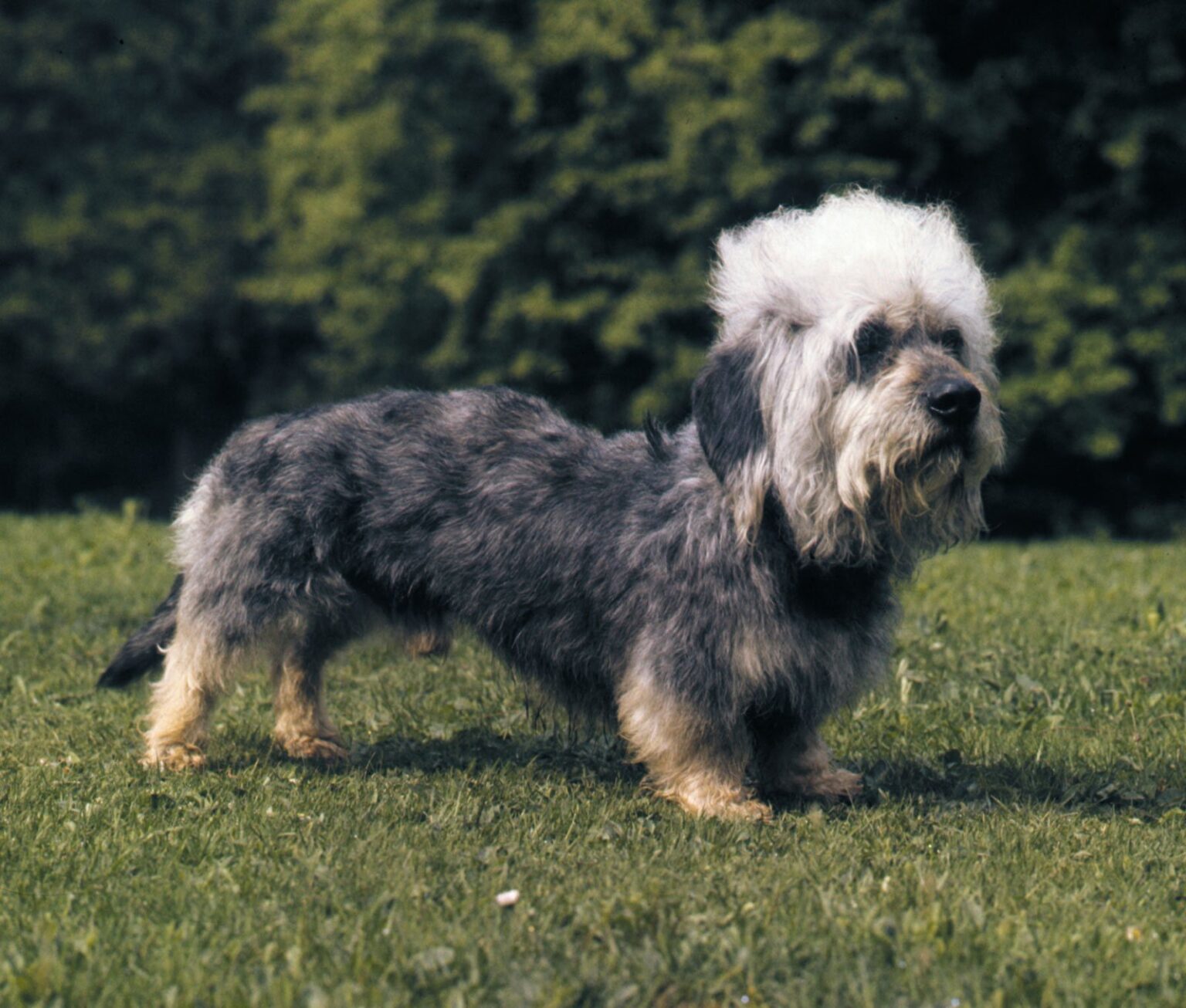
| Height | 20–28 cm |
| Weight | 8–11 kg |
| Lifespan | 12–14 years |
| FCI group | 3 · terriers |
| Origin | United Kingdom |
Exact ratings
- Intervertebral disc disease (IVDD)
- Glaucoma (late onset)
- Cushing's disease
- Hip dysplasia
- Hypothyroidism
Quality food, strict weight control (excess weight harms the long back). Protect the spine from jumping; strip the coat regularly.
If you’re dreaming of a dog with a unique look and a rich history, the Dandie Dinmont Terrier is a breed that will certainly capture your attention. Its appearance is guaranteed to make you smile: a long body on short legs, expressive eyes, and, of course, that signature “topknot” of soft hair on its head. This isn’t just a dog; it’s a true character with a philosophical outlook on life. What’s more, it’s the only breed in history named after a character from a classic novel, which gives it a special charm. The Dandie Dinmont’s personality is not simple; he has his own opinion on everything, loves to contemplate, and makes his own decisions. However, once you learn to understand his unique nature, you’ll find the best friend and companion you could ask for. You can find out more about this amazing breed on Tvaryny.
Dandie Dinmont Terrier: Key Breed Characteristics
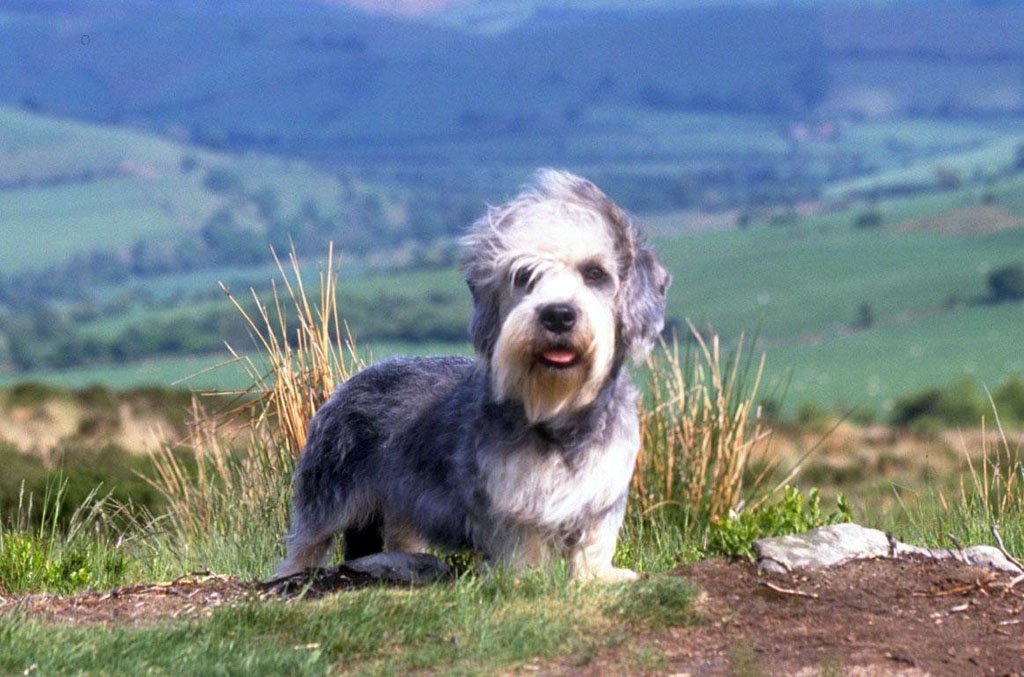
| Origin | Great Britain (border territories of England and Scotland) |
| First Mentioned | Approximately 1700s (as a type), official name — 1814 |
| Lifespan | 12-15 years |
| Height at the Withers | 20-28 cm |
| Weight | 8-11 kg |
| Temperament | Independent, intelligent, calm, decisive, loyal |
| Grooming | Medium difficulty (requires regular brushing and hand-stripping) |
| Activity | Moderate |
| Attitude to Children | Good if raised together; needs respect for its personal space |
| Attitude to Other Animals | May be tense with other dogs (especially of the same sex) and small animals due to hunting instincts |
History of the Dandie Dinmont Terrier: From Farm Hand to Literary Star
The history of the Dandie Dinmont Terrier is one of the most interesting and romantic in the world of dog breeds. The exact origin is shrouded in mystery, but it’s believed these dogs existed in the borderlands between England and Scotland since the 17th century. They were valued by local farmers and Gypsies for their exceptional hunting skills. These low-slung yet courageous dogs were indispensable helpers in hunting otters, badgers, and foxes, as they could get into the deepest burrows.
It’s thought that their bloodline contains Old Scottish Terriers, which no longer exist today, as well as other breeds from that region. Some cynologists suggest an admixture of blood from breeds like the Bedlington Terrier, the Skye Terrier, and even the Otterhound, which would explain their unique appearance. However, there are no reliable records of their early breeding.
True fame came to the breed in 1814 with the publication of Sir Walter Scott’s novel “Guy Mannering.” In one of the book’s chapters, a character named Dandie Dinmont appears, a border farmer who owned a pack of fearless terriers with “pepper” and “mustard” coats. He called them all Pepper or Mustard, depending on their fur colour. The prototype for this character was a real man, a farmer named James Davidson, who actually bred such dogs and was known to the author. After the novel was released, the breed instantly became popular, and the name “Dandie Dinmont Terrier” was cemented.
The first breed club was founded in 1875, making it one of the oldest breed clubs in the world. The breed standard was adopted shortly after. Despite its initial popularity, the Dandie Dinmont Terrier is now one of the rarest breeds, listed as a “Vulnerable Native Breed” by the British Kennel Club. This means a very small number of puppies are registered each year, and the breed is at risk of extinction.
What a Dandie Dinmont Terrier Looks Like: A Detailed Description
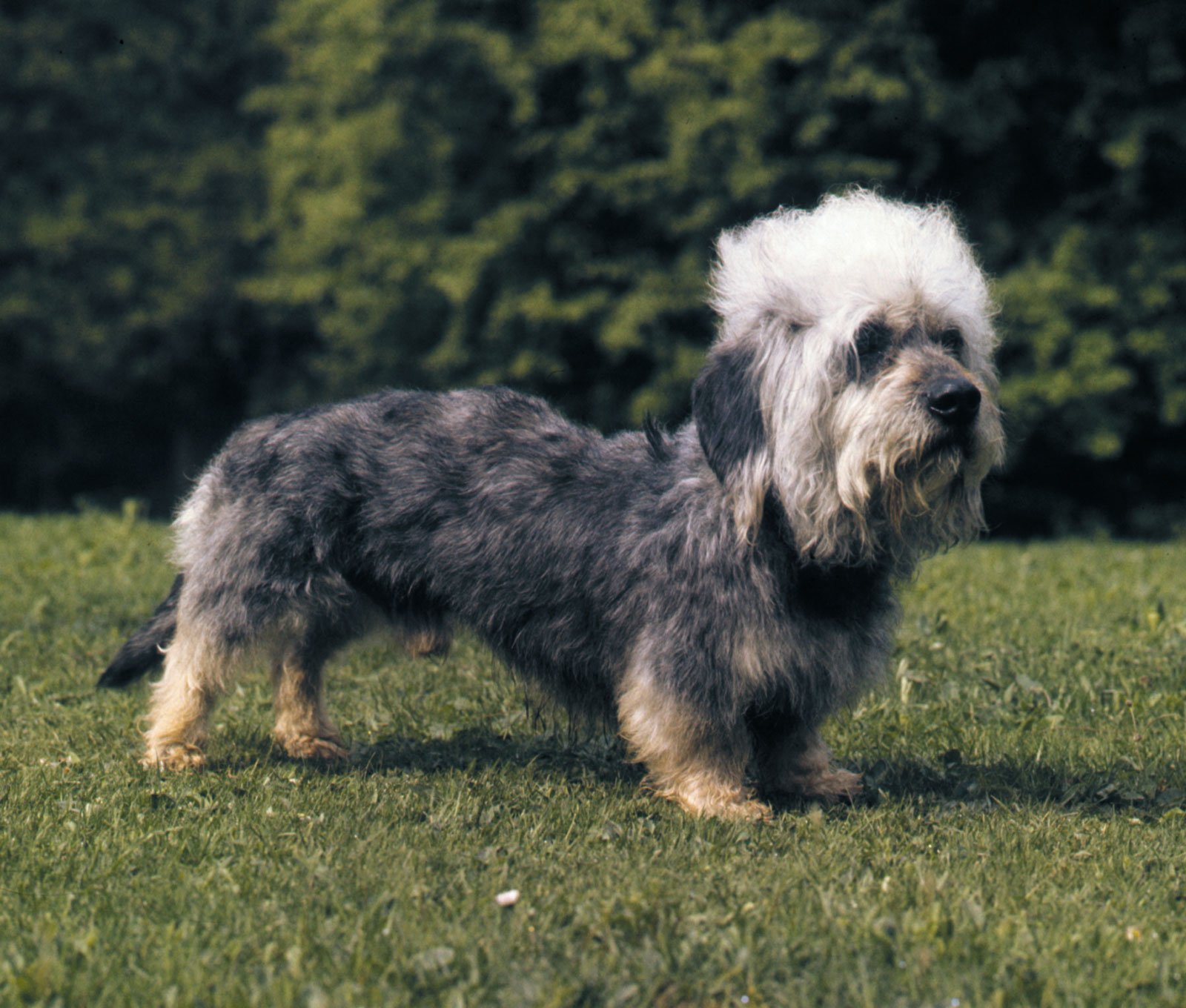
The Dandie Dinmont Terrier’s appearance is unmistakable. It’s a low-slung, long-bodied dog with a long topline and short, strong legs. Its look combines the determination of a hunter with the dignity of an aristocrat.
- Head: Large but proportionate to the body. The skull is broad, tapering towards the eyes. The forehead is convex. The most expressive feature is the large “topknot” of soft, silky, light-coloured hair. The muzzle is deep and strong, its length is approximately 3/5 of the skull’s length.
- Eyes: Large, round, and set wide apart. The colour is a rich dark hazel. The gaze is very expressive, intelligent, and calm.
- Ears: Drooping, set low and far back, lying close to the cheeks. They are covered with soft, short hair with characteristic fringes at the tips.
- Body: Long, sturdy, and flexible. The neck is muscular. The back is slightly arched over the loin. The chest is well-developed and deep.
- Limbs: The forelegs are short, strong, and muscular, and may be slightly turned outwards. The hind legs are slightly longer than the front ones, which gives the dog its characteristic stance.
- Tail: Quite short (20-25 cm), thick at the base, tapering towards the end. It is scimitar-shaped and carried slightly above the topline.
- Coat: A unique double coat. The outer coat is crisp and wiry to the touch but not harsh. The undercoat is soft and waterproof. The hair on the head is very soft and silky.
Dandie Dinmont Terrier Colours
The breed standard recognises two unique colours:
- Pepper: The colour varies from dark bluish-black to light silvery-grey. The “topknot” on the head and leg fringes are silvery-white or light fawn.
- Mustard: The colour varies from reddish-brown to a pale fawn. The “topknot” and fringes are creamy-white.
Puppies are born almost black (pepper) or dark brown (mustard) and only acquire their final colouring at 1-2 years of age.
Dandie Dinmont Terrier Personality: Philosopher at Heart, Warrior by Nature
The Dandie Dinmont Terrier is a dog with a great sense of self-worth. Unlike many other terriers, such as the high-energy West Highland White Terrier, the Dandie is not a restless or overly noisy dog. He’s more of a calm observer who prefers to think before acting. This makes him an excellent companion for people who value peace and intelligence.
Key Personality Traits:
- Independence and Stubbornness: Like all terriers, the Dandie has his own mind. He won’t blindly follow commands if he doesn’t see a point to them. Training requires patience, consistency, and a creative approach.
- Devotion to Family: A Dandie Dinmont forms a deep bond with his family and becomes a faithful friend. He may be somewhat reserved with strangers but is not aggressive. His deep, loud bark makes him a fantastic watchdog.
- Bravery: Despite his small size, he is a very courageous dog. He will not hesitate to defend his owner if he senses a threat.
- Calm at Home: Indoors, Dandie Dinmonts are quite placid, loving comfort and relaxing on a soft sofa. Outdoors, however, their hunting instincts awaken, and they’ll happily explore the territory.
- Relationships with Other Animals: Early socialisation is key. Due to their strong hunting instinct, they may chase cats and other small animals. They can also get into conflicts with other dogs, especially those of the same sex.
Pros and Cons of the Dandie Dinmont Terrier
| Pros | Cons |
|---|---|
| Unique and rare appearance that always attracts attention. | Stubbornness and independence in training, requires an experienced owner. |
| Deep loyalty to their family. | Requires specific grooming (hand-stripping). |
| Moderate exercise needs, suitable for apartment living. | Strong hunting instinct, dangerous to small animals. |
| Good watchdog due to a loud bark and wariness of strangers. | Can be conflict-prone with other dogs, especially of the same sex. |
| Not prone to restlessness, calm at home. | Rare breed, it’s difficult to find a puppy from a responsible breeder. |
| Virtually non-shedding with proper coat care. | Prone to certain health problems (back, eyes). |
Dandie Dinmont Terrier Health: Typical Diseases and Prevention
Dandie Dinmont Terriers are generally a healthy breed with a lifespan of 12-15 years. However, like many other breeds, they are prone to certain genetic diseases. It’s crucial to choose a puppy from a responsible breeder who tests their dogs for hereditary conditions.
The most common health issues:
- Intervertebral Disc Disease (IVDD): Due to their long body and short legs, Dandie Dinmonts are at risk. It’s important not to let the dog jump from high surfaces (sofas, beds) and to maintain a healthy weight to reduce the load on the spine.
- Glaucoma: This is a serious eye disease that can lead to blindness. It’s recommended to have their eye pressure checked regularly by a veterinary ophthalmologist, especially for dogs over 5 years old.
- Epilepsy: Cases of idiopathic epilepsy occur in some bloodlines.
- Hypothyroidism: An underactive thyroid gland, which can lead to weight gain, skin problems, and lethargy.
- Lymphoma: Like many other terriers, Dandie Dinmonts have an increased risk of developing this type of cancer.
Regular vet check-ups, proper nutrition, weight control, and timely vaccinations are the key to a long and healthy life for your pet.
How to Care for a Dandie Dinmont Terrier’s Coat
Caring for a Dandie Dinmont’s coat requires some effort, but it’s not overly complicated. Their unique coat is virtually non-shedding, which makes them easy to keep in a flat or house.
Main Procedures:
- Brushing: The coat should be thoroughly brushed 2-3 times a week with a metal comb and brush to prevent matting. Special attention should be paid to the “topknot” on the head and the hair on the belly and legs.
- Hand-stripping: This is the most important part of grooming! A Dandie Dinmont’s coat should not be clipped with clippers, as this ruins its wiry texture and colour. Instead, the dead outer coat is manually hand-stripped (plucked) 2-4 times a year. This procedure can be done yourself or entrusted to a professional groomer who is familiar with the breed’s specifics.
- Hygiene: Regularly check and clean their ears to prevent infections. Trim their claws once a month. You should also trim the hair between their paw pads.
- Bathing: Bathe the dog only when necessary, using a special shampoo for wiry coats to avoid softening its protective properties.
Training and Socialisation of the Dandie Dinmont Terrier
Training a Dandie Dinmont is a true test of patience and ingenuity. These dogs are very intelligent, but their independence often borders on stubbornness. They won’t work “for free” and demand respect for their personality. Unlike the obedient Norwich Terrier, a Dandie may simply refuse to perform a command if he considers it boring or pointless.
Key principles for successful training:
- Positive Reinforcement: Use treats, praise, and toys. Any harsh methods or punishment will only cause the dog to retreat into himself and stop trusting you.
- Short and Interesting Sessions: Monotonous repetitions will quickly bore a Dandie. Make training feel like a game.
- Early Socialisation: This is extremely important. From an early age, introduce your puppy to different people, sounds, places, and other animals (under supervision). This will help raise a confident and well-adjusted dog.
- Persistence and Consistency: Establish clear rules and stick to them. If a Dandie Dinmont senses a weakness, he will definitely try to take on the role of the leader.
Feeding a Dandie Dinmont Terrier: Key Recommendations
Proper nutrition is the foundation of a Dandie Dinmont’s health, especially given their tendency for back problems. Weight control is Priority #1. Extra pounds create a dangerous load on the spine.
You can choose one of two feeding types:
- High-Quality Dry Food: Choose a super-premium or holistic food for small or medium breeds. It should contain a high percentage of animal protein (meat, fish), not by-products or soy. Avoid foods with artificial colours and preservatives.
- Natural Diet: The diet should consist of lean meat (beef, turkey, chicken), sea fish, a small amount of grains (rice, buckwheat), vegetables, and fermented milk products. With this type of feeding, it is essential to consult with a veterinary nutritionist to balance the diet and add the necessary vitamin and mineral supplements.
An adult dog should be fed twice a day, strictly adhering to the norm indicated on the food packaging or calculated by a vet. Always provide access to fresh, clean water.
Interesting Facts About the Dandie Dinmont Terrier
- A Literary Name: It’s the only dog breed named after a fictional character.
- Royal Favourites: French King Louis Philippe I was a great admirer of Dandie Dinmonts.
- A Rare Breed: The Dandie Dinmont Terrier is one of the rarest native breeds in the UK, at risk of extinction.
- Similarities to Others: Despite its uniqueness, the Dandie Dinmont is sometimes confused with other rare breeds, such as the Sealyham Terrier, due to its similar body structure.
- The Duke of Buccleuch: One of the most famous early breeders of the breed, who made a significant contribution to its development.
Frequently Asked Questions About the Breed (FAQ)
Do Dandie Dinmont Terriers Bark a Lot?
They are not “yappy” dogs, but they have a very loud, deep, and bassy bark that is untypical for a dog of this size. They will definitely make their presence known if they hear something suspicious, which makes them excellent watchdogs.
Are Dandie Dinmonts Suitable for Families with Children?
Yes, they can be good companions for children, especially if they grow up together. However, it’s important to teach the child to respect the dog’s personal space. Dandies won’t tolerate rough handling and may snap if they are disturbed while sleeping or eating.
How Much Exercise Do They Need?
Dandie Dinmonts don’t need marathon runs. 1-2 daily walks with a total duration of 40-60 minutes are enough. They like to leisurely explore their surroundings, so a walk on a lead is the ideal option. It’s important not to over-exert them due to the risk of back injuries.
Can You Keep a Dandie Dinmont in a Flat?
Absolutely. Thanks to their calm temperament at home and moderate activity needs, they are perfectly happy in a city flat, provided they get sufficient daily walks.
Video about the Breed
- Calmer than other terriers
- Dignified, charming, devoted
- Compact, for a flat
- Unique, recognisable appearance
- Long back — risk of disc disease
- Can be stubborn
- Wiry coat needs stripping
- Hunting instinct
| Skye Terrier | Cairn Terrier | West Highland Terrier | |
|---|---|---|---|
| Height | 25–26 cm | 28–31 cm | 25–28 cm |
| Energy | 3.5 | 3.5 | 3.5 |
| Apartment | 3 | 4 | 4 |
| Beginners | 3 | 3.5 | 3.5 |
Why is the Dandie Dinmont called the “gentleman of terriers”?
Is the Dandie Dinmont prone to back problems?
Does the coat need much care?
FCI Standard No. 168 · The Kennel Club
For apartments · For kids · For beginners · Active · Smartest · Hypoallergenic · All rankings →