

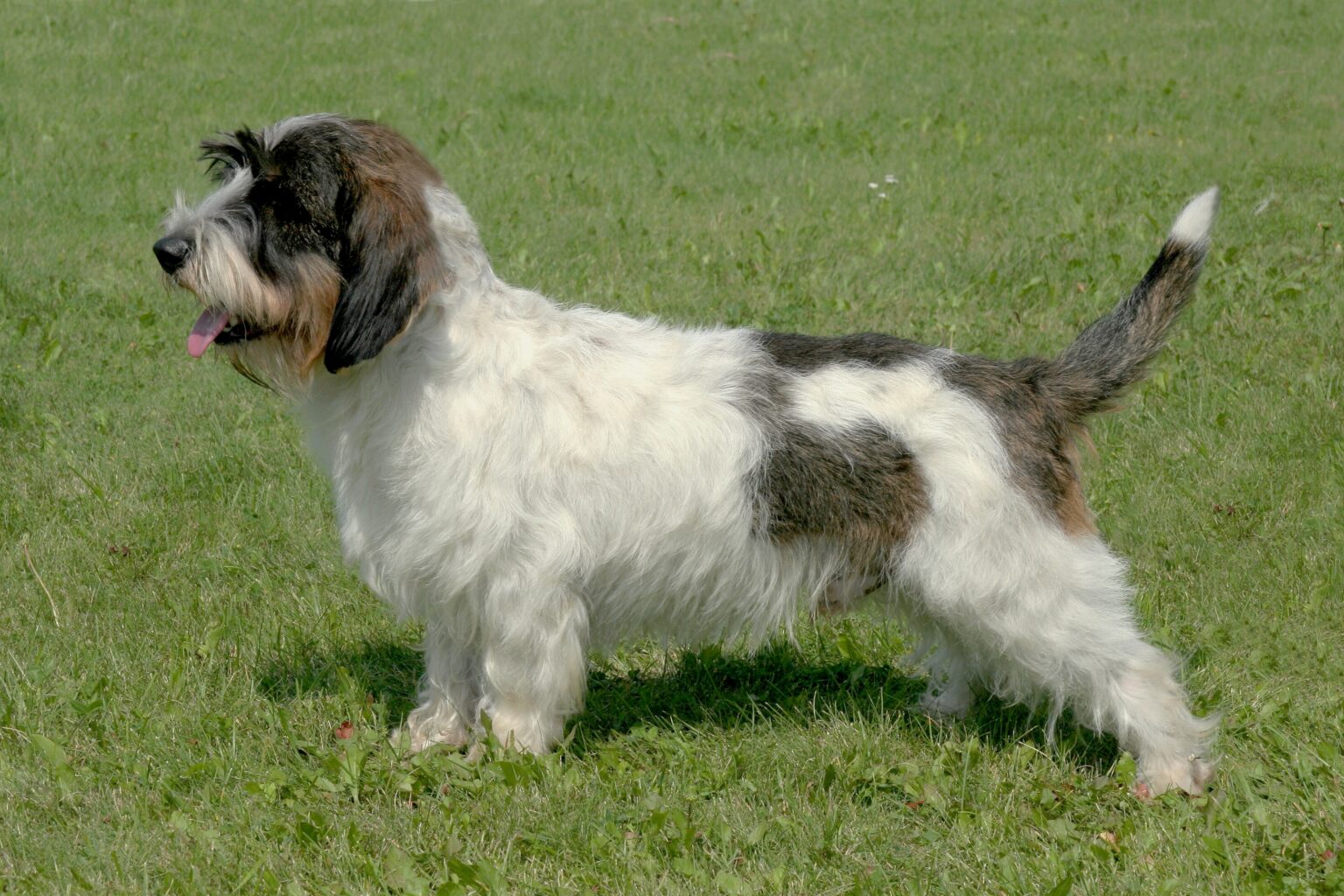
| Height | 34–38 cm |
| Weight | 11–20 kg |
| Lifespan | 12–15 years |
| FCI group | 6 · scenthounds |
| Origin | France |
Exact ratings
Common health issues
Nutrition
The Petit Basset Griffon Vendéen (PBGV) is not just a dog—it’s a living bundle of energy, cheerfulness, and hunting passion, all embodied in a compact and rather comical body. A descendant of the Grand Basset Griffon Vendéen, this breed is recommended for active and experienced owners. Besides their impeccable hound functions, these dogs can also serve as wonderful companions, provided you can find the right approach to this little hound with its strong hunting instinct and fiercely independent nature. This happy, short-legged Griffon from the French region of Vendée will gladly please its owner, but will just as easily abandon them in pursuit of a neighbour’s cat or the scent of a wild rabbit. We’ll tell you more about all the nuances of this unique breed’s character, care, and history on Tvaryny.
General Description and Breed Standard
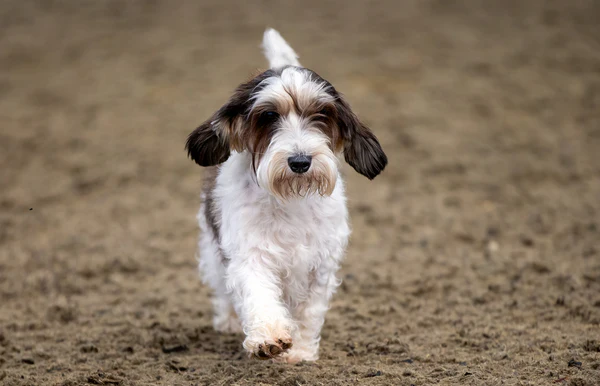
The Petit Basset Griffon Vendéen is a sturdy dog with a proud stance, a wiry coat, and a friendly, inquisitive expression. Its appearance perfectly reflects its purpose: to be a tireless hunter in dense thickets. Despite its short legs, it is very agile and enduring. It’s often described as a “big dog in a little body,” which perfectly captures its bold and confident character.
| Characteristic | Value |
| Origin | France, Vendée region |
| FCI Classification | Group 6 (Scent Hounds and Related Breeds), Section 1.3 (Small Hounds) |
| FCI Recognition Year | 1950 (final split from the Grand Basset Griffon Vendéen) |
| Life Expectancy | 12-15 years |
| Height at Withers | 34-38 cm (with a tolerance of +/- 1 cm) |
| Weight | 14-18 kg |
| Temperament | Energetic, happy, independent, stubborn, social, vocal |
| Use | Hunting small game (rabbit, hare), companion dog |
History of the Breed
The history of the Petit Basset Griffon Vendéen is inextricably linked to the rugged and picturesque landscapes of the Vendée, a coastal region in western France. This area, rich in thorny thickets, dense forests, and rocky outcrops, demanded a special type of hunting dog—one that was short to easily navigate the undergrowth, yet robust, enduring, and with a coarse coat to protect against branches and bad weather. It was here that the Griffons, the “wire-haired” dogs, first emerged.
The ancestors of the PBGV are the larger Griffons, from which individuals with shorter legs (bassets) were selectively bred. For a long time, the Petit and Grand Basset Griffon Vendéen were considered a single breed, and both larger and smaller puppies could be born in the same litter. It was only at the end of the 19th century that a focused effort began to separate them. A key role in shaping the modern type of the Petit Basset Griffon was played by the breeder Paul Dezamy. In the 1950s, he successfully achieved the official separation of the breeds and the creation of a separate standard for the PBGV. He aimed to create not just a smaller copy of the Grand Basset, but a harmoniously built, functional dog with its own unique proportions. The first breed club was founded as early as 1907. The main quarry for these tireless hunters has always been rabbits and hares, which they would eagerly flush from their hiding places with their loud, ringing bark.
What a Petit Basset Griffon Vendéen Looks Like: A Description
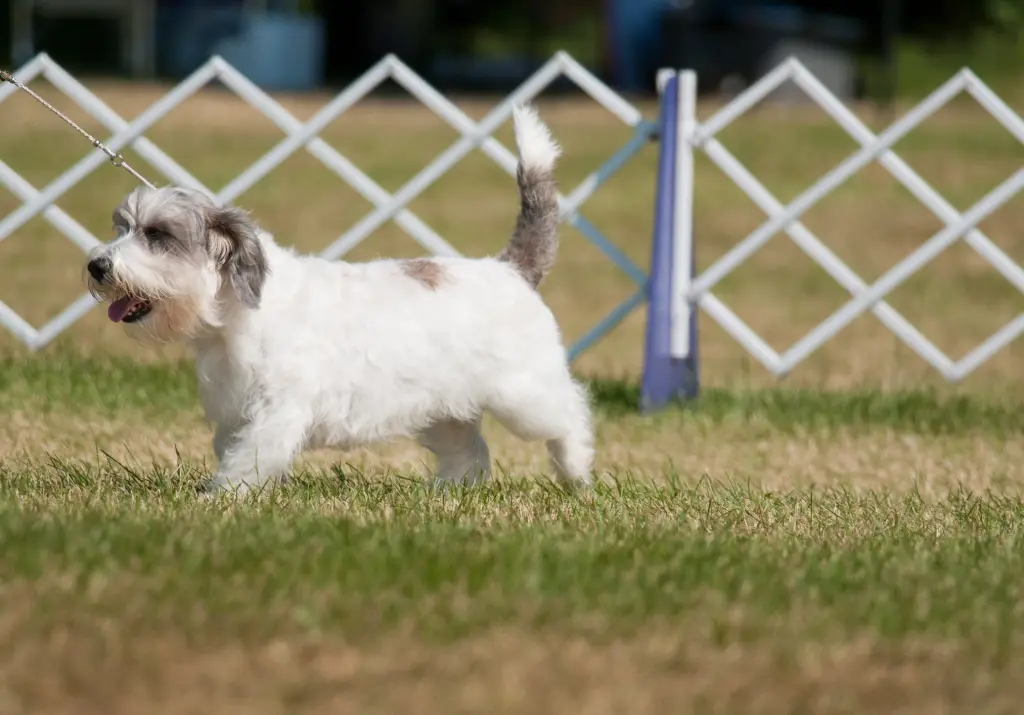
The PBGV’s appearance is a blend of working qualities and undeniable charm. It is a strong, lean dog with slightly crooked short limbs and a high-set, saber-like tail held proudly aloft. Its look exudes confidence and readiness for adventure.
- Head: Fairly long, but not too wide. The skull is domed, with a distinct occipital protuberance. The transition from the forehead to the muzzle (stop) is clearly defined. The muzzle is square and longer than the skull.
- Eyes: Large, dark, with a lively and intelligent expression. The whites of the eyes should not be visible. The thick hair forms “eyebrows” that give the gaze more character.
- Ears: Set low, below the eye line. They are flexible, narrow, covered with long hair, and curl inwards, ending in an oval. The length of the ears is such that, when pulled forward, they reach the tip of the nose.
- Nose: Black, wide, with well-opened nostrils, indicating an excellent sense of smell.
- Body: The back is straight and strong. The chest is deep but not too wide, ensuring endurance. The loin is muscular. The body is slightly longer than the height at the withers.
- Limbs: The front legs are short, massive, and can be slightly bowed, but not so much that it hinders movement. The hindquarters are strong, with well-developed muscles.
- Tail: Medium length, thick at the base and tapering towards the end. It is set high and the dog carries it proudly, like a saber.
- Coat: Harsh, dense, not too long, with a thick undercoat. On the muzzle, it forms a characteristic moustache and beard. This coat provides excellent protection from the weather and injuries during hunting.
- Colour: Various options are allowed: white with orange, fawn, grey (wolf), or black patches; bicolour or tricolour.
Character: The Temperament and Behaviour of the “Happy Breed”
PBGVs are often called the “happy breed,” and this nickname is fully justified. They are the extroverts of the canine world—always in a good mood, ready for interaction and new discoveries. These four-legged hunters and companions have an exceptionally active, cheerful nature.
The Petit Basset Griffon Vendéen is friendly towards people, including strangers, so it makes for a poor guard dog. It loves to be the centre of attention and participate in all family activities. It gets on well with children, especially if they grow up together. However, due to its hunting past, relationships with other pets can be complicated. A strong prey drive will not leave your hamster, budgie, or even cat in peace. Early socialisation can help, but complete trust in this matter is not advisable. In the company of other dogs, especially unneutered males, they may seek dominance and provoke conflicts. This is due to their pack nature, where establishing a hierarchy is normal. This trait is common in many Basset breeds, such as the Blue Gascony Basset or their French counterpart, the Basset Fauve de Bretagne.
A distinctive trait of this hound’s behaviour is its uncontrollable vocalisations. They love to “talk” with barks, howls, and murmurs. This is their way of expressing emotions: joy, boredom, anxiety, or excitement. Prospective owners should be prepared for this sonic accompaniment.
Pros and Cons of the Petit Basset Griffon Vendéen
Before getting such an energetic and independent dog, it’s worth soberly assessing all its advantages and disadvantages.
| Pros | Cons |
|---|---|
| Cheerful and friendly character: Always in a good mood, loves people and is an excellent companion. | Extreme stubbornness and independence: Difficult to train, prone to making its own decisions. |
| Compact size: Convenient for keeping in a house, but not in a small flat without adequate exercise. | Very high energy level: Requires long and active walks every day. |
| Good with children: A patient and playful partner for children’s games. | Strong hunting instinct: Cannot be let off the lead in unfenced areas, as they will chase small animals. |
| Uncomplicated with food: Usually has a good appetite. | Tendency to bark and howl: A very “vocal” breed, which may not be popular with neighbours. |
| Bright and charismatic appearance: Always attracts attention with its comical look. | Requires regular grooming: The wiry coat needs to be brushed and hand-stripped. |
| Robust health: With proper care, they rarely get ill. | Prone to escaping and digging: Requires a reliable, high fence. |
Care and Maintenance
Grooming: Caring for the Wiry Coat
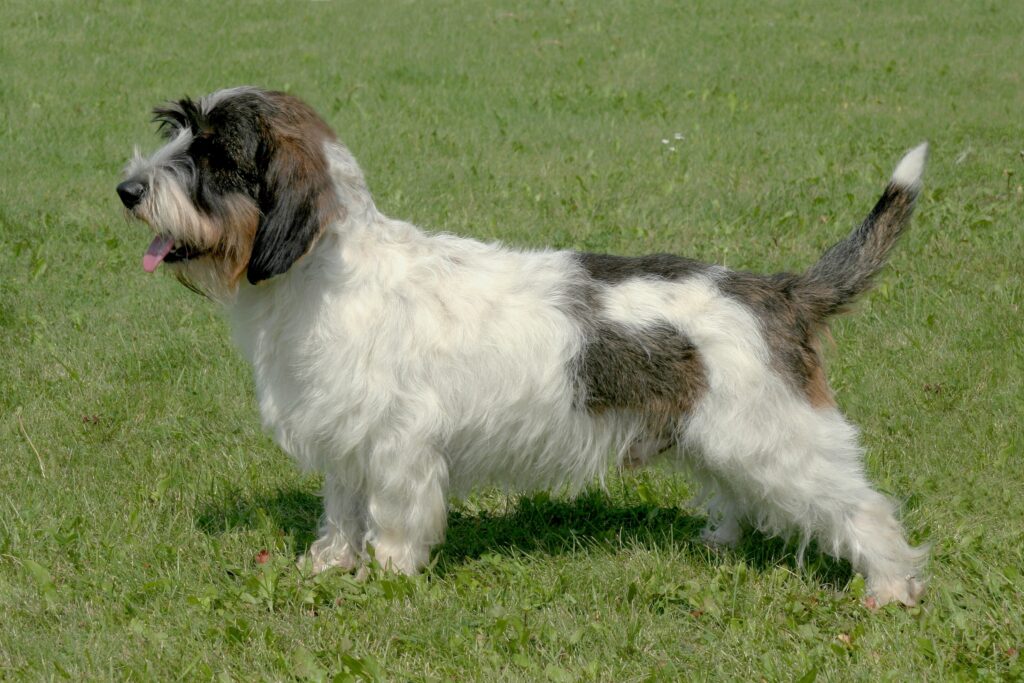
The coarse, bristly coat of this four-legged hunter is not difficult to care for, but it does require regular attention. Weekly brushing with a metal comb or a grooming mitt will help remove dead hair and dirt, and prevent matting. After outdoor walks, the coat should be thoroughly checked for ticks, thorns, and burrs. The dog should be bathed only when necessary, using specialised shampoos for wiry coats.
A vital aspect of grooming is hand-stripping. It is not recommended to clip a PBGV with clippers, as this ruins the coat’s structure, making it soft, dull, and unable to perform its protective functions. The correct method is manual stripping (plucking out dead hairs) 2-3 times a year. This allows the coat to maintain its correct texture and colour. It’s also necessary to regularly trim the claws, clean the ears to prevent otitis, and monitor dental hygiene.
Requirements for Physical Exercise
The Petit Basset Griffon Vendéen is not a lap dog. It was bred for long runs over rough terrain, and this need for movement is genetically ingrained. It needs a minimum of 1-1.5 hours of active walks per day. This can be brisk walking, jogging alongside the owner (after reaching maturity), playing games, or hiking in the woods. The ideal option is a securely fenced area where it can run freely and explore scents. Due to its incredibly strong hunting instinct, PBGVs must never be let off the lead in unfenced areas—upon catching an interesting scent, it will instantly disappear from sight, ignoring all commands.
Training and Socialisation
The process of training a Petit Basset Griffon is a long and challenging marathon that requires patience, consistency, and a sense of humour from the owner. The natural independence, high intelligence, and stubbornness typical of this breed do not make them obedient. They are smart and learn quickly, but they always ask the question: “What’s in it for me?” Therefore, positive reinforcement works best: praise, play, and tasty treats.
Training sessions should be short, varied, and engaging. Monotonous repetition of commands will quickly bore the Griffon, and it will simply refuse to cooperate. The biggest challenge is the “Come!” command. Even a well-trained Griffon will perform it selectively, and if it’s on a scent, the chances of it returning are close to zero. Early socialisation is key. A puppy needs to be introduced to different people, sounds, places, and other dogs so that it grows into a confident and well-adjusted adult. If the Griffon gets bored with its training or feels it’s not enough, its behaviour and even its appearance can worsen: it may become destructive, anxious, and disobedient.
Feeding Your Petit Basset Griffon Vendéen: Key Recommendations
Health: Common Ailments and Prevention
Comparison with the Grand Basset Griffon Vendéen
Although these two breeds are close relatives and descend from a common ancestor, they have significant differences not only in size but also in proportions and temperament.
| Characteristic | Petit Basset Griffon Vendéen (PBGV) | Grand Basset Griffon Vendéen (GBGV) |
|---|---|---|
| Height | 34-38 cm | 40-44 cm |
| Proportions | More compact, the “basset” (short legs relative to the body) is more pronounced. The body is slightly longer than it is tall. | More leggy and proportional. Does not give the impression of being so low to the ground. |
| Movement | Quick, energetic, somewhat bustling. | More sweeping and calm. |
| Temperament | More active, “bubbly,” stubborn, and independent. | Generally a little calmer and more composed. |
| Purpose | Hunting small game (rabbit, hare). | Hunting larger game (wild boar, roe deer), but also hare. |
Interesting Facts about the Petit Basset Griffon Vendéen
- The breed’s name is its full description: Petit (small), Basset (low, short-legged), Griffon (wiry-haired), Vendéen (from the Vendée region).
- Due to their love of “conversation,” they are sometimes called the “kings of sound effects” in the dog world.
- In 2011, a representative of the breed named Jilly won the prestigious Crufts show in the UK in the Hound group.
- Despite their short legs, they can reach surprising speeds and have incredible stamina, capable of hunting for hours without tiring.
- Their tail, which they carry high, serves as a kind of “beacon” for the hunter in dense thickets, allowing them to track the dog’s location.
Frequently Asked Questions about the Breed (FAQ)
Do Petit Basset Griffon Vendéens shed a lot?
They shed moderately. The wiry coat does not fall out as intensely as in smooth-coated breeds. Regular brushing and periodic hand-stripping help keep shedding under control.
Is this breed suitable for flat living?
Conditionally. They can live in a flat provided they get enough long and active walks every day. However, their tendency to bark can cause problems with neighbours. The ideal place for them is a house with a securely fenced garden.
Is the Petit Basset Griffon Vendéen suitable for a novice?
No, this breed is not recommended for inexperienced owners. Their stubbornness, high intelligence, and need for constant activity require experience, patience, and consistency in training. A novice might not be able to cope with their independent nature.
How much does a Petit Basset Griffon Vendéen puppy cost?
It’s a relatively rare breed. The price of a puppy from professional breeders can be quite high, depending on its lineage, the titles of its parents, and the reputation of the kennel.
Video about the Breed
- Cheerful, sociable, good with children
- Compact, adaptable
- Hardy, athletic
- A charmingly shaggy look
- An independent nose — follows the scent
- Inclined to bark
- Needs plenty of exercise
- The harsh coat needs stripping
| Grand Basset Griffon Vendéen | Beagle | Cairn Terrier | |
|---|---|---|---|
| Height | 39–44 cm | 33–40 cm | 28–31 cm |
| Energy | 4.5 | 4 | 3.5 |
| Apartment | 3 | 3 | 4 |
| Beginners | 3 | 3 | 3.5 |
Is the Petit Basset Griffon Vendéen good for a family?
Does it need plenty of exercise?
What is PBGV pain syndrome?
FCI Standard No. 67 · The Kennel Club
For apartments · For kids · For beginners · Active · Smartest · Hypoallergenic · All rankings →