

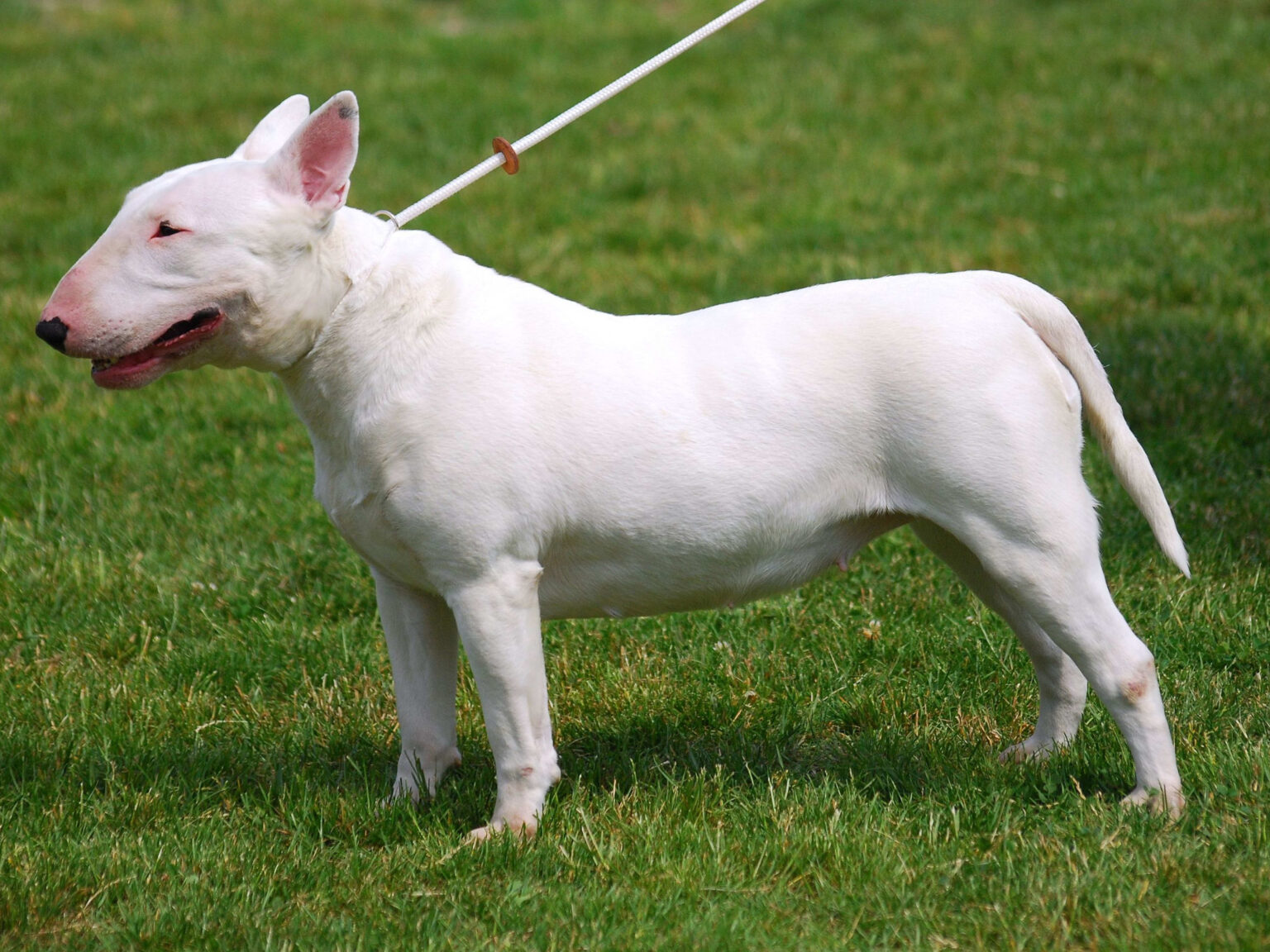
| Height | 45–55 cm |
| Weight | 22–38 kg |
| Lifespan | 11–14 years |
| FCI group | 3 · terriers |
| Origin | Great Britain |
Exact ratings
- Hereditary nephritis (kidneys)
- Deafness (more often in white dogs)
- Heart disease
- Acral lick dermatitis
- Luxating patella
A quality food, with weight control; because of the risk of hereditary nephritis the kidneys should be monitored. The short coat dislikes cold.
The Bull Terrier is not just a dog; it’s a full-fledged personality. Breeders and owners of this breed unanimously praise their amazing sense of humour and their ability to be real clowns, so life with them is never dull. These dogs are wonderful companions, sensitive, and deeply devoted to their families. They love to be the centre of attention, participate in all family activities, and shower their loved ones with affection. Bull Terriers are renowned for their love of children and their endless patience when playing with them. However, their energy and strength demand respect and proper training. You can read more about the unique characteristics of this breed at Tvaryny.
At the same time, their strong character and hunting instincts, inherited from their terrier lineage, require early and consistent socialisation. Bull Terriers can be stubborn and independent, so their owner must be a confident leader and partner. They may show dominance towards other dogs, especially those of the same sex, which is why early socialisation is key to harmonious coexistence. These dogs are self-assured, strong, and proud. If you’re ready to invest time, love, and respect in them, you will find the most loyal and faithful friend for yourself and your entire family.
Bull Terrier: A Brief Breed Overview
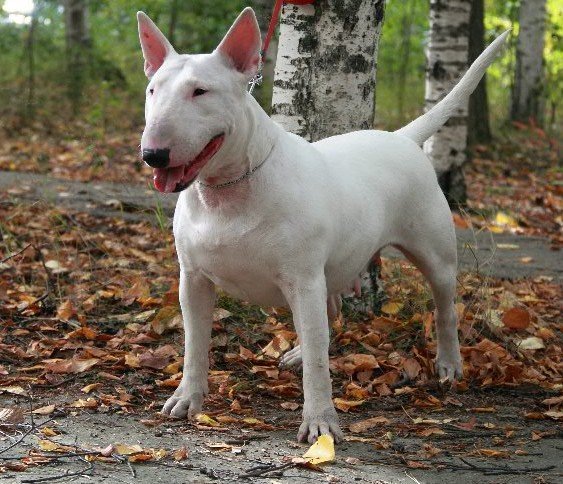
| Breed Name | Bull Terrier |
| Origin | Great Britain |
| Date of Origin | 19th century (circa 1860s) |
| FCI Recognition | Standard No. 11, Group 3 (Terriers), Section 3 (Bull-type Terriers) |
| Lifespan | 11–14 years |
| Height at Withers | Standard: 53-56 cm (no specific height limit, harmony is key) |
| Weight | 20–36 kg (should be proportionate to height) |
| Temperament | Brave, playful, stubborn, loyal, cheerful, “clown” |
| Activity Needs | High (requires daily long walks and exercise) |
| Trainability | Medium (intelligent but can be stubborn) |
| Relationship with Children | Excellent, patient and playful |
| Relationship with Other Animals | Requires early socialisation, can be dominant towards dogs |
| Coat Care | Minimal |
| Shedding | Moderate, seasonal (spring-autumn) |
| Health | Prone to deafness (in white dogs), skin allergies, kidney and heart problems |
The History of the Bull Terrier: From Gladiator to Gentleman
The history of the Bull Terrier is a journey from a fearless fighter to a loving companion and show dog. Breed enthusiasts owe a debt of gratitude to the English breeder James Hinks from Birmingham, who in the mid-19th century set out to create a “White Cavalier” — a dog that combined the strength and bravery of fighting breeds with the elegance and nobility of a gentleman.
The foundation of the new breed was the “Bull and Terriers” of the time—crosses obtained by mating Old English Bulldogs and various terriers. These dogs were popular participants in bloody sports like bull-baiting and dog fighting. They were strong and resilient, but their appearance was far from refined. Hinks decided to change this. He crossed the “Bull and Terrier” with the now-extinct White English Terrier to give the dog more elegant lines and a pure white coat. There is also a theory that Dalmatian blood was added to this mix to lengthen the legs and improve overall harmony, as well as Border Collie to increase intelligence. Thanks to this selective breeding, the dogs lost the loose lips and dewlaps characteristic of bulldogs and gained a more elongated head. Breeds with similar temperaments, such as the Miniature Bull Terrier and the Staffordshire Bull Terrier, share similar origins. Even the English Bulldog is closely related.
The result of Hinks’s work was presented at an exhibition in 1862. His snow-white Bull Terrier, named Puss, caused a sensation with her unusual appearance and aristocratic demeanour. This was the beginning of the breed’s triumphant march. Soon, the Bull Terrier Club was established, and in 1888, Bull Terriers received official recognition from The Kennel Club. Initially, the standard only recognised the white coat, and such dogs became a symbol of status and prestige. However, it was discovered that the gene responsible for the white coat was linked to congenital deafness. Therefore, from the beginning of the 20th century, thanks to the efforts of Ted Lyon, coloured coats were permitted by crossing with representatives of the Staffordshire Bull Terrier breed. This significantly improved the health of the population.
What a Bull Terrier Looks Like: Appearance and Breed Standard
The Bull Terrier’s calling card is its unique head. It has an egg-shaped (ovoid) form, without any dips or curves, with a smooth profile line descending from the top of the skull to the tip of the nose. The transition from the forehead to the muzzle (stop) is practically absent. This creates an impression of solidity and power. The Bull Terrier is the gladiator of the dog world: a strong, muscular dog with a proportionate build, full of energy and determination.
| Body Part | Description according to FCI Standard No. 11 |
|---|---|
| Head | Long, strong, and deep to the end of the muzzle, but not coarse. Egg-shaped. The top of the skull is almost flat. The profile slopes smoothly downwards from the top of the skull to the nose. |
| Eyes | Narrow, obliquely set, triangular in shape. Deep-set. Should be as dark as possible, almost black, with a piercing glint. |
| Ears | Small, thin, set close together. The dog should hold them vertically. |
| Jaws and Teeth | The lower jaw is strong and powerful. Teeth are healthy, clean, strong, and of the correct size. Scissor bite. |
| Neck | Very muscular, long, arched, tapering from the shoulders to the head, with no loose skin. |
| Body | Round, with a well-developed depth and width of chest. The back is short and strong. The topline behind the withers is level, slightly arched over the loin. |
| Tail | Short, set low, held horizontally. Thick at the base, tapering to a point. |
| Limbs | Very bony and muscular. The front legs are parallel. The hindquarters have well-developed thighs and good angulation. Paws are round, compact, and “cat-like”. |
| Coat | Short, smooth, close-fitting, with a good sheen. A soft undercoat may appear in winter. |
| Colour | For white dogs: pure white. Skin pigmentation and spots on the head are not a fault. For coloured dogs: any colour except white, or any colour with white markings. Brindle is preferred. Blue and liver colours are highly undesirable. |
There is also a variety of the breed—the Miniature Bull Terrier, which is an exact copy of the standard, but smaller in size (the height at the withers should not exceed 35.5 cm).
Bull Terrier Character: Temperament and Behaviour
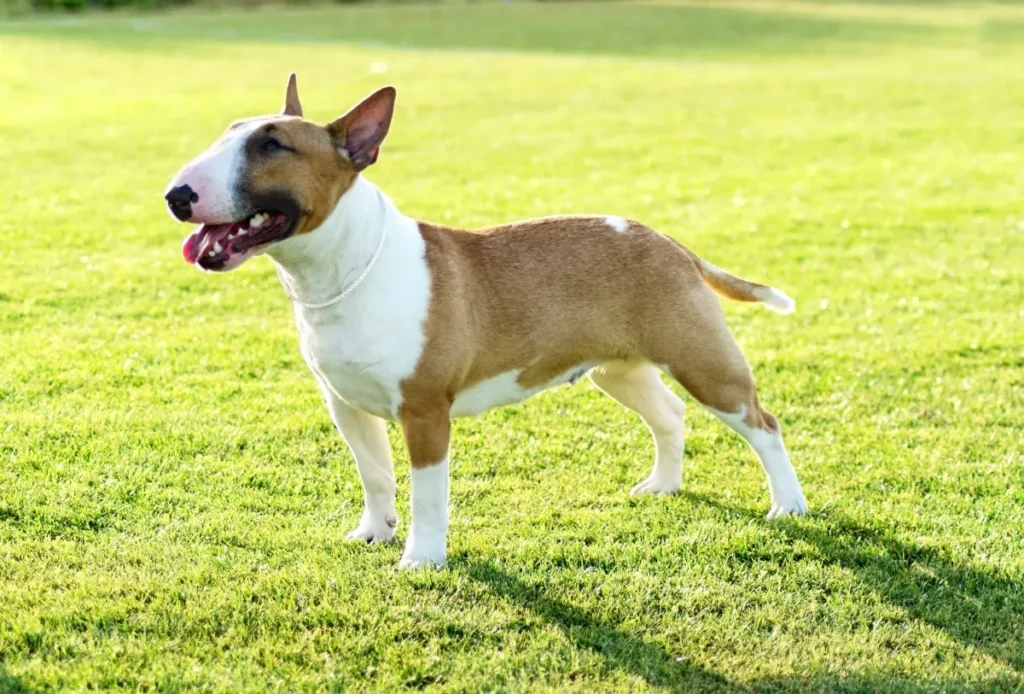
Bull Terriers are dogs with huge hearts and an inexhaustible supply of energy. They are incredibly intelligent and clever but can also be extremely stubborn. This combination of intellect and independence makes them interesting but also demanding to train. They are kind, loving, and gentle towards their owner and the family they live with. The Bull Terrier forms a deep bond with “its” people and struggles with loneliness. If left alone for long periods, it can suffer from separation anxiety, which manifests as destructive behaviour.
They can be very jealous, so it’s important that all family members give them attention. Otherwise, they may “choose” one owner and become possessive of them. Special caution should be exercised when a newborn arrives in the home. The Bull Terrier must get used to and understand that the baby is a new, full-fledged member of the family. Thanks to their playful and energetic nature, Bull Terriers make excellent companions for active individuals and families.
Bull Terriers and Children
With proper training and socialisation, Bull Terriers are famous for their patient and loving attitude towards children. They are willing to participate in active games for hours. Their high pain threshold allows them to remain calm during children’s antics that another dog might not tolerate. However, due to their strength and energy, small children should not be left alone with the dog unsupervised. A Bull Terrier, in the heat of play, might accidentally knock a child over. It’s important to teach children to respect the dog’s personal space and not to bother it while it’s sleeping or eating.
Bull Terriers and Other Animals
The Bull Terrier’s attitude towards other animals depends on its socialisation. Historically, they were bred for fighting, so the instinct to dominate, especially other dogs, is present. Early and consistent socialisation is absolutely essential. A puppy needs to be introduced to different dogs, people, and situations. Bull Terriers usually get along better with dogs of the opposite sex. As for cats and other small animals, if a Bull Terrier grows up with them from a young age, it can see them as members of its “pack.” However, its strong hunting instinct can kick in for unfamiliar cats or rodents on the street.
Pros and Cons of the Bull Terrier Breed
| ✅ Pros | ❌ Cons |
|---|---|
| A Devoted Companion: Forms a very strong bond with the family and becomes a full member. | Stubbornness: Can be independent in their decision-making, which complicates training. |
| Love for Children: Known for their patience and playfulness with children. | Not for Beginners: Requires an experienced owner with a firm but fair character. |
| Cheerful and Playful Character: A true “clown” with whom you’re never bored. | Dominance Tendency: Can be aggressive towards other dogs without proper socialisation. |
| High Intelligence: They learn quickly if you find the right approach. | Requires a Lot of Attention: Struggles with loneliness and can develop destructive behaviour. |
| Minimal Coat Care: Does not require complex grooming. | High Activity Needs: Requires long walks and physical exercise. |
| Good Watchdog: Will always alert you to danger and protect its family. | Health Problems: Prone to certain genetic diseases (deafness, kidney, heart diseases, skin allergies). |
| Unique Appearance: A dog that always attracts attention. | Strong Hunting Instinct: May chase small animals. |
Bull Terrier Training and Socialisation
Training a Bull Terrier is a challenge that requires patience, consistency, and an understanding of the breed’s psychology. This is not a dog that will blindly follow commands. They are intelligent and capable of learning quickly, but their inherent stubbornness means they will first consider whether it’s worth doing. The owner of a Bull Terrier must become their undisputed leader and partner, earning their respect. Breeds with a similar temperament, such as the American Staffordshire Terrier, also require a serious approach to training. The same can be said for the English Toy Terrier.
The main principles of successful training:
- Early Start: Socialisation and training should begin from the very first day the puppy arrives home. Introduce it to new people, sounds, places, and other animals (after vaccination).
- Positive Reinforcement: Harshness and physical punishment are completely unacceptable. This can lead to a complete loss of trust and even to aggression in response. The best helpers are praise, toys, and dog treats.
- Consistency: All family members must adhere to the same rules. If something is forbidden, it must always be forbidden.
- Short and Engaging Sessions: Bull Terriers quickly lose interest in monotonous repetition of commands. Sessions should be short, dynamic, and in the form of a game.
- A Partnership: The dog must understand why it should perform a particular command. Try to find a benefit for them. Training should be built on mutual respect and trust.
Some owners believe that a Bull Terrier doesn’t need to be trained because it understands its owner anyway. This is a dangerous mistake. An untamed Bull Terrier, with its strength and stubbornness, can become a problem for those around it.
Bull Terrier Health: Common Diseases and Prevention
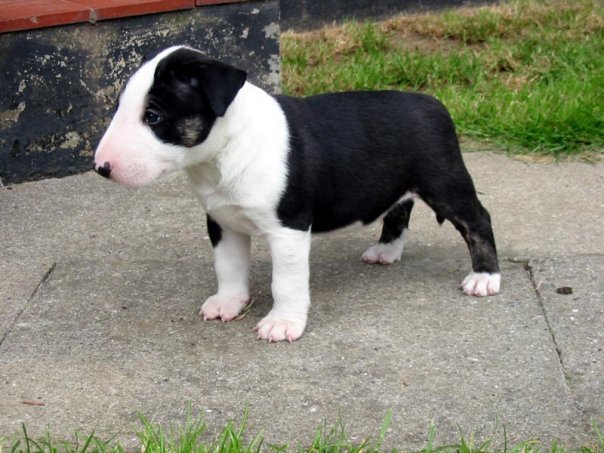
Bull Terriers are generally healthy and robust dogs, but like many other breeds, they are prone to certain hereditary diseases. Responsible breeders test their dogs for genetic conditions, so when choosing a puppy, it’s important to carefully study its lineage and the parents’ medical documents.
The most common health problems in Bull Terriers:
- Congenital Deafness: This is the most well-known problem of the breed, closely linked to the white coat gene. Deafness can be unilateral or complete. Puppies are checked using a special BAER test. Coloured Bull Terriers suffer from this much less frequently.
- Kidney Diseases: Hereditary nephritis and polycystic kidney disease are serious problems that can lead to an early death. Regular urine tests are recommended.
- Heart Diseases: Aortic stenosis and mitral valve dysplasia are common heart pathologies. They are diagnosed with a cardiac ultrasound (Doppler).
- Skin Conditions: Bull Terriers are prone to allergies (atopic dermatitis), which manifest as itching, redness, and rashes. Demodicosis and interdigital dermatitis also occur. The short coat provides little protection for the skin, so there’s a risk of sunburn in the summer.
- Patella Luxation: Occurs more often in Miniature Bull Terriers but is also found in standard ones.
- Eye Problems: Inward and outward turning of the eyelids (entropion and ectropion) are corrected surgically.
Regular visits to the vet, proper nutrition, sufficient physical activity, and a watchful eye for any changes in your pet’s behaviour or condition will help keep it healthy for many years.
How to Care for a Bull Terrier
Caring for a Bull Terrier is straightforward but requires regularity. Their short coat provides little protection from the cold, so these dogs are meant to live exclusively indoors or in a flat, not in a kennel. Unlike long-haired breeds, they don’t need professional grooming services.
Coat Care
A Bull Terrier’s coat is short and smooth. Brushing it once a week with a rubber brush or glove is enough to remove dead hair and massage the skin. Shedding occurs twice a year, in spring and autumn. During this period, you should brush the dog more often, 3-4 times a week. It’s not recommended to bathe a Bull Terrier too frequently, so as not to disrupt the skin’s natural protective layer. If the coat gets dirty, you can wipe it with a damp towel or use a dry shampoo.
Hygiene
Don’t forget to regularly check and clean your pet’s ears and eyes to prevent infections. Claws should be clipped about once a month if they don’t wear down naturally during walks on hard surfaces. It’s also important to monitor the condition of their teeth and get the dog used to brushing with a special toothpaste.
Physical Activity
The Bull Terrier is an energetic breed that requires daily exercise. Walks should be long (at least 1-1.5 hours per day) and active. This can include running, playing with a ball, or frisbee. They also excel in dog sports like agility or coursing. Insufficient physical activity can lead to weight gain and behavioural problems.
Bull Terrier Nutrition: Key Recommendations

Proper nutrition is the key to your Bull Terrier’s health and longevity. Before you bring a puppy home, be sure to ask the breeder what they were feeding the dogs. The transition to a new diet should be gradual, over 7-10 days. There are two main types of feeding: natural foods or ready-made dry food.
The basis of a Bull Terrier’s diet should be animal protein. This includes lean meat (beef, turkey, chicken), sea fish (boneless), fermented dairy products (cottage cheese, kefir), and eggs. It’s also important to add vegetables (carrots, pumpkin, courgette), fruits, and greens to the diet as a source of fibre and vitamins. Porridges (rice, buckwheat) should make up a small part of the diet. It is strictly forbidden to give the dog sweets, smoked foods, fatty foods, tubular bones, and table scraps.
If you choose dry food, it should be a high-quality product from the premium or super-premium class, designed for active medium-sized dogs. Bull Terriers are prone to food allergies, so a hypoallergenic food, for example with lamb or fish, may be needed. They are also prone to gaining excess weight, so it is important to strictly adhere to the feeding norms indicated on the package and not to overfeed the dog.
The feeding frequency depends on age:
- Up to 2 months — 6 times a day
- Up to 5 months — 4-5 times a day
- Up to 9 months — 3 times a day
- From 10 months — 2 times a day (morning and evening)
Interesting Facts About the Bull Terrier
- The Gladiator Dog: Due to its muscular build and fearlessness, the Bull Terrier is often called the “gladiator of the dog world.”
- Egg-Shaped Head: The Bull Terrier is the only dog breed in the world with such a unique head shape without a distinct “stop”.
- “White Cavalier”: This nickname was given to the breed in the 19th century when white Bull Terriers were a symbol of the aristocracy.
- Not to Be Confused with a Pitbull: Despite the similarity in name and shared ancestors, the Bull Terrier and the American Pit Bull Terrier are two completely different breeds.
- Screen Stars: Bull Terriers often appear in films and commercials. The most famous representatives are a dog named Spuds MacKenzie, the mascot for Bud Light beer in the 1980s, and Bullseye, the mascot for the Target retail chain.
- They Rarely Bark: Bull Terriers are not prone to barking without reason; they only make noise when it’s truly necessary.
Frequently Asked Questions About the Breed (FAQ)
Are Bull Terriers aggressive?
With proper training, early socialisation, and responsible breeding, Bull Terriers are no more aggressive than any other breed. Their reputation as a “fighting dog” is linked to their history and improper training by some owners. They are loyal and loving family dogs. However, their strength and tendency towards dominance require control.
Is a Bull Terrier suitable for living in a flat?
Yes, Bull Terriers do well in a flat, provided they get sufficient daily walks and physical exercise. They don’t need a lot of space but do require activity and attention. Some similar breeds, for instance, the English Toy Terrier, also adapt well to flat living.
Do Bull Terriers shed a lot?
Shedding in Bull Terriers is moderate. It increases seasonally, in the spring and autumn. Their short coat does not require complex care, but the white hairs can be very noticeable on dark clothes and furniture.
How much does a Bull Terrier puppy cost?
The price for a Bull Terrier puppy from a responsible breeder can vary significantly. It depends on the lineage, the titles of the parents, the colour, and the reputation of the kennel. It is important to choose based on the health and temperament of the puppy and its parents, not on the price. Budget for the running costs rather than the one-off sum: food, routine check-ups, parasite treatment, equipment and training classes.
Can I leave a Bull Terrier alone at home?
Bull Terriers handle loneliness poorly and can suffer from separation anxiety. This breed is not recommended for people who spend most of the day away from home. If the dog is left alone for long periods, it may start chewing on furniture and destroying things out of boredom and stress.
Video About the Breed
- A playful "clown," devoted
- Muscular and hardy
- Short coat care
- Attached to its person
- Stubborn — difficult training
- Possible dog aggression
- Compulsive behaviour from boredom
- A strong character — not for a novice
| Miniature Bull Terrier | Staffordshire Bull Terrier | Am Staff | |
|---|---|---|---|
| Height | 25–35 cm | 36–41 cm | 43–48 cm |
| Energy | 4 | 4 | 4 |
| Apartment | 4 | 3.5 | 3 |
| Beginners | 3 | 3 | 2.5 |
Why does the Bull Terrier have such an unusual head?
Is the Bull Terrier aggressive?
Is the Bull Terrier suitable for a novice?
FCI Standard No. 11 · The Kennel Club
For apartments · For kids · For beginners · Active · Smartest · Hypoallergenic · All rankings →