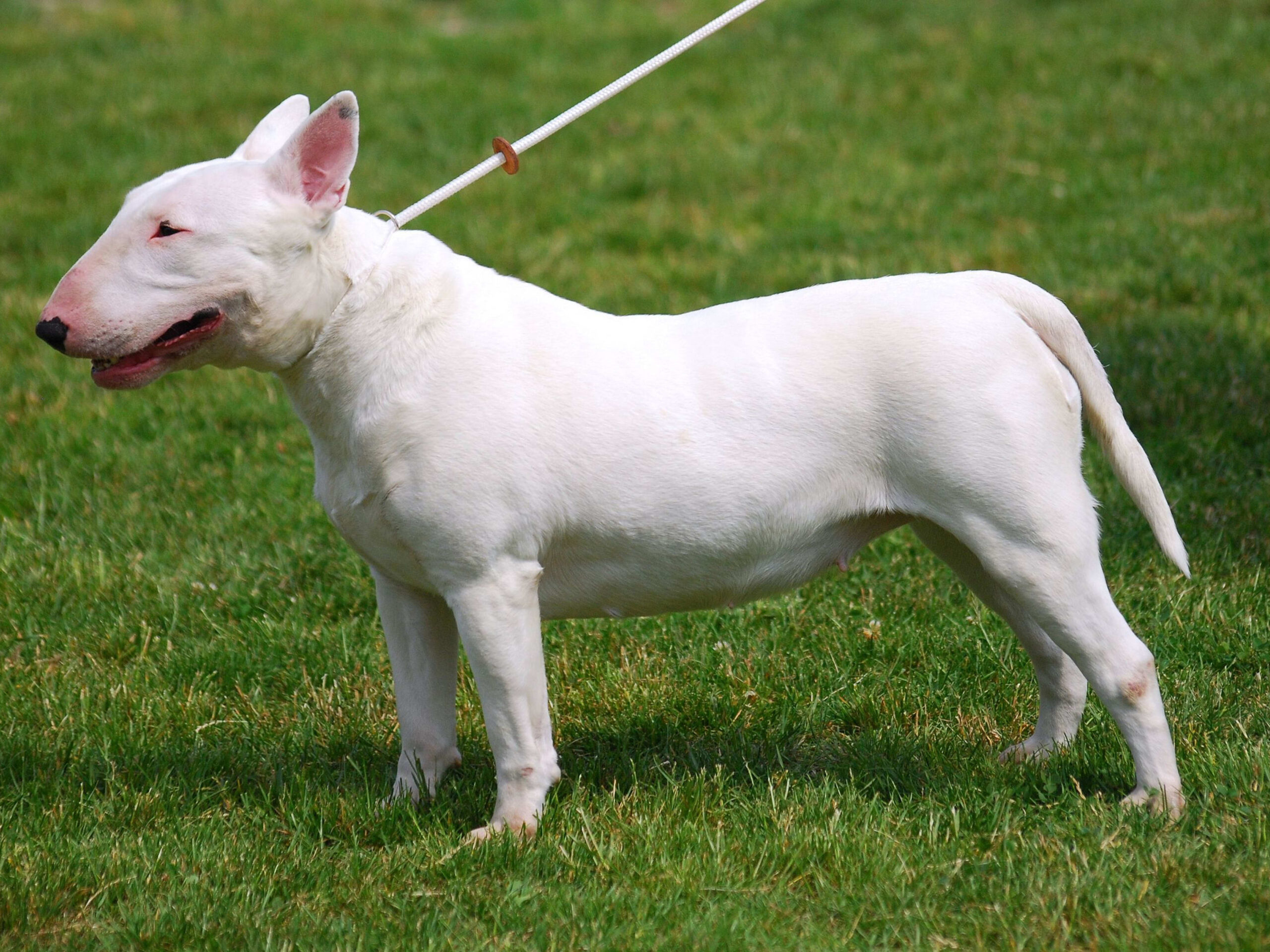
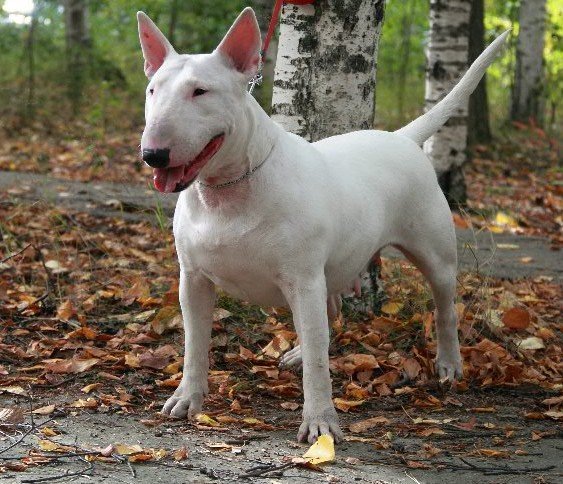
A clown with an "egg-shaped" head and a sunny character: muscular, playful, devoted, boundlessly attached to its person. The Bull Terrier is a stubborn original that needs training and company; it copes poorly with boredom.
Apartment · with caveatsKids · with caveatsCats · not suitableOther dogs · with caveatsBeginners · not suitable
The Bull Terrier isn't just a dog; it's a personality. Breeders and owners of this unique breed consistently highlight their amazing sense of humor and their knack for being true clowns, ensuring there's never a dull moment. These dogs are wonderful companions—sensitive and deeply devoted to their families. They absolutely love being the center of attention, participating in all family activities, and showering their people with affection. Bull Terriers are particularly known for their patience and love for kids. However, their energy and strength demand respect and proper training. Read more about this one-of-a-kind breed at Tvaryny.
At the same time, their strong will and inherited terrier hunting instincts require early and consistent socialization. Bull Terriers can be stubborn and independent, so an owner must be a confident leader and a partner. When it comes to other dogs, especially those of the same sex, they can be dominant, which is why early socialization is key to a harmonious life. These dogs are self-assured, strong, and proud. If you are ready to invest your time, love, and respect, you will find the most loyal and faithful friend for yourself and your entire family.
Bull Terrier: A Quick Breed Overview
Bull Terrier: A Quick Breed Overview · 15
Breed Name
Bull Terrier
Origin
Great Britain
Date of Origin
19th century (circa 1860s)
FCI Recognition
Standard № 11, Group 3 (Terriers), Section 3 (Bull-type Terriers)
Lifespan
11–14 years
Height at Withers
Standard: 21–22 inches (no height limits, harmony is key)
Requires early socialization, can be dominant toward other dogs
Coat Care
Minimal
Shedding
Moderate, seasonal (spring and fall)
Health
Prone to deafness (in white dogs), skin allergies, kidney and heart issues
Interesting Facts About the Bull Terrier
The Gladiator Dog: Thanks to its muscular build and fearlessness, the Bull Terrier is often called the "gladiator of the dog world."
Egg-shaped Head: The Bull Terrier is the only dog breed in the world with such a unique egg-shaped head and no defined stop.
"The White Cavalier": The breed earned this nickname in the 19th century when white Bull Terriers were a symbol of aristocracy.
Not to be Confused with Pit Bulls: Despite the similarity in names and shared ancestors (English Bulldog), the Bull Terrier and the American Pit Bull Terrier are two completely different breeds.
Screen Stars: Bull Terriers frequently appear in movies and commercials. The most famous is a dog named Spuds MacKenzie, the mascot for Bud Light beer in the 1980s, and Bullseye, the mascot for the Target chain of stores.
Rarely Bark: Bull Terriers are not prone to barking without reason; they only vocalize when it's truly necessary.
The Bull Terrier's History: From Gladiator to Gentleman
The history of the Bull Terrier is a journey from a fearless fighter to a beloved companion and show dog. Breed enthusiasts owe a debt of gratitude to English breeder James Hinks of Birmingham, who in the mid-19th century set out to create the "white cavalier"—a dog that would combine the strength and courage of fighting breeds with the elegance and dignity of a gentleman.
The foundation for the new breed was the "bull and terrier"—a mix of Old English Bulldogs and various terriers. These dogs were popular participants in bloody sports like bull-baiting and dog fighting. They were strong and resilient, but their appearance was far from refined. Hinks decided to change that. He crossed the "bull and terrier" with the now-extinct White English Terrier to give the dog more elegant lines and a clean, white coat. There's also a theory that Dalmatian blood was added to lengthen their legs and improve their overall proportions, along with Border Collie to increase intelligence. Thanks to this selective breeding, the dogs lost the loose lips and throat dewlap characteristic of bulldogs and developed a more elongated head.
The result of Hinks' work was showcased at a dog show in 1862. His pure white Bull Terrier named Puss created a sensation with her unusual look and aristocratic bearing. This marked the beginning of the breed's triumphant rise. The English Bull Terrier Club was soon founded, and in 1888, the breed received official recognition from the Kennel Club. Initially, the standard only accepted the white coat, and these dogs became a symbol of status and prestige. However, it was discovered that the gene responsible for the white coat was linked to congenital deafness. Therefore, starting in the early 20th century, thanks to the efforts of Ted Lyon, colored coats were allowed by crossing with Staffordshire Bull Terriers. This significantly improved the health of the breed's gene pool.
What a Bull Terrier Looks Like: Appearance and Breed Standard
The Bull Terrier's calling card is its unique head. It has an egg-shaped (ovoid) form, without any depressions or curves, with a smooth profile line that slopes from the top of the skull to the tip of the nose. The transition from the forehead to the muzzle (the stop) is virtually non-existent. This creates an impression of solidity and power. The Bull Terrier is the gladiator of the dog world: a strong, muscular dog with a well-proportioned build, full of energy and determination.
What a Bull Terrier Looks Like: Appearance and Breed Standard · 10
Body Part
Description According to FCI Standard №11
Head
Long, strong, and deep to the end of the muzzle, but not coarse. Egg-shaped. The top of the skull is nearly flat. The profile curves smoothly downward from the crown to the nose.
Eyes
Narrow, set obliquely, and triangular in shape. Set deeply. They should be as dark as possible, almost black, with a piercing glint.
Ears
Small, thin, and set close together. The dog should hold them vertically.
Jaws and Teeth
Lower jaw is strong and powerful. Teeth are healthy, clean, strong, and of correct size. A scissor bite is required.
Neck
Very muscular, long, arched, tapering from the shoulders to the head, with no dewlap.
Body
Round with well-defined depth and width of chest. The back is short and strong. The topline behind the withers is level, slightly arched over the loin.
Tail
Short, set low, and held horizontally. Thick at the base, tapering to a point.
Limbs
Very well-boned and muscular. The front limbs are parallel. The hind limbs have well-developed thighs and angulation. The feet are round, compact, and "cat-like."
Coat
Short, smooth, lying flat to the body, with a good sheen. A soft undercoat may appear in winter.
Color
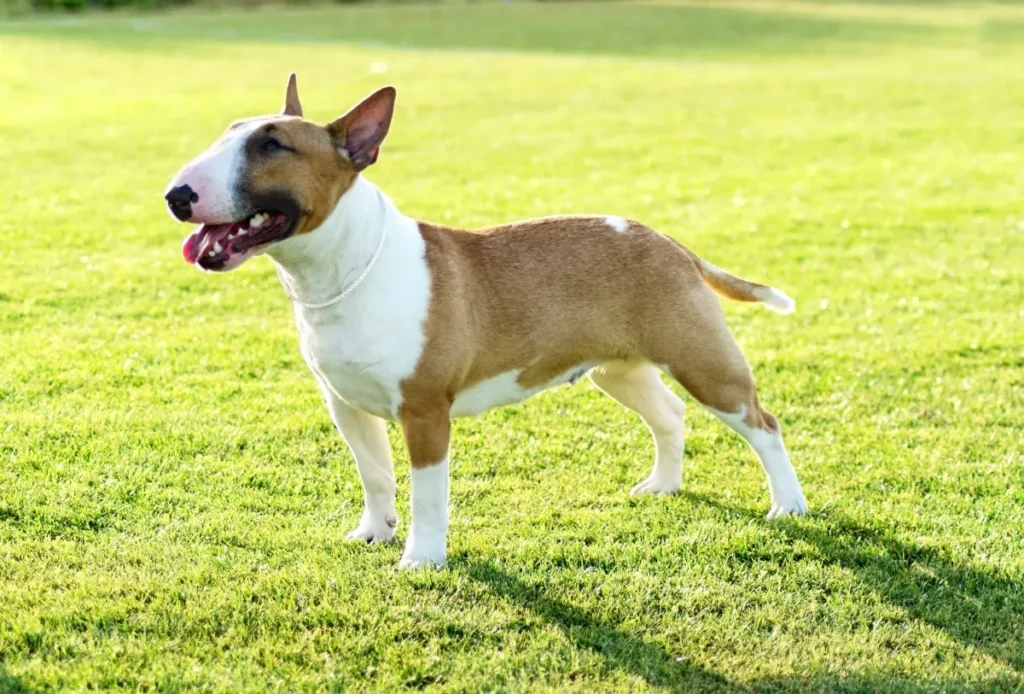
For whites: Pure white. Skin pigmentation and spots on the head are not considered faults. For colored dogs: Any color other than white, or any color with white markings. Brindle is preferred. Blue and liver colors are highly undesirable.
There is also a variety of the breed—the Miniature Bull Terrier, which is an exact replica of the standard, but smaller in size (height at the withers should not exceed 14 inches).
The Bull Terrier's Character: Temperament and Behavior
Bull Terriers are dogs with huge hearts and an inexhaustible supply of energy. They are incredibly smart and clever, but at the same time, they can be extremely stubborn. This combination of intelligence and independence makes them interesting, yet challenging to train. They are kind, loving, and gentle toward their owner and the family they live with. A Bull Terrier forms a deep bond with "its" people and struggles with loneliness. If left alone for long periods, they can suffer from separation anxiety, which may manifest as destructive behavior.
They are very possessive, so it's important that all family members give them attention. Otherwise, they might "choose" one owner and become jealous of everyone else. You should be especially careful when a newborn arrives. A Bull Terrier must get used to the idea and understand that the baby is a new, full-fledged family member. Thanks to their playful and energetic nature, Bull Terriers make great companions for active people and families.
Bull Terriers and Children
With proper training and socialization, Bull Terriers are famous for their patient and loving attitude toward children. They are ready to participate in active games for hours on end. Their high pain tolerance allows them to stay calm during roughhousing that another dog might not endure. However, due to their strength and energy, it's never a good idea to leave young children alone with a dog without supervision. In the heat of play, a Bull Terrier might accidentally knock a child over. It's important to teach children to respect the dog's personal space and not to bother them while they are sleeping or eating.
Bull Terriers and Other Animals
A Bull Terrier's relationship with other animals depends on its socialization. Historically, they were bred for fighting, so the instinct to dominate, especially toward other dogs, is present. Early and constant socialization is absolutely essential. A puppy needs to be introduced to different dogs, people, and situations (after vaccination). Bull Terriers generally get along better with dogs of the opposite sex. As for cats and other small animals, if a Bull Terrier is raised with them from a young age, it may accept them as part of its "pack." However, its strong prey drive can kick in when it sees strange cats or small critters outdoors.
Pros and Cons of the Bull Terrier Breed
Pros and Cons of the Bull Terrier Breed · 7
✅ Pros
❌ Cons
Devoted Companion: Forms a very strong bond with its family and becomes a full member.
Stubbornness: Can be independent in decision-making, which makes training challenging.
Loves Children: Known for their patience and playfulness with kids.
Not for Novices: Requires an experienced owner with a firm but fair character.
Fun-loving and Playful: A true "clown" that keeps things interesting.
Prone to Dominance: Can be aggressive toward other dogs without proper socialization.
High Intelligence: Learns quickly if you find the right approach.
Requires a Lot of Attention: Struggles with loneliness and can develop destructive behavior.
High Activity Needs: Requires long walks and physical exercise.
Good Guardian: Will always alert you to danger and protect its family.
Health Issues: Prone to certain genetic diseases (deafness, kidney, heart, and skin allergies).
Unique Appearance: A dog that always attracts attention.
Strong Prey Drive: May chase small animals.
Bull Terrier Training and Socialization
Training a Bull Terrier is a challenge that requires patience, consistency, and an understanding of the breed's psychology. This is not a dog that will blindly follow every command. They are smart and can learn quickly, but their innate stubbornness means they will first decide if it's worth their time. A Bull Terrier owner must become their undisputed leader and partner, earning their respect.
Key principles of successful training:
Start Early: Socialization and training should begin the moment the puppy comes home. Introduce them to new people, sounds, places, and other animals (after vaccination).
Positive Reinforcement: Harshness and physical punishment are absolutely unacceptable. They can lead to a complete loss of trust and even aggression. The best tools are praise, toys, and dog treats.
Consistency: All family members must follow the same rules. If something is forbidden, it's forbidden always.
Short and Fun Sessions: Bull Terriers quickly lose interest in monotonous repetition of commands. Training sessions should be short, dynamic, and feel like a game.
Partner Relationship: The dog must understand why it should obey a certain command. Try to find a benefit for them. Training should be built on mutual respect and trust.
Some owners believe that Bull Terriers don't need training because they already understand their owner. This is a dangerous mistake. An untrained Bull Terrier, with its strength and stubbornness, can become a problem for others. Breeds with a similar temperament, such as the American Staffordshire Terrier, also require a serious approach to training.
How to Care for a Bull Terrier
Caring for a Bull Terrier isn't complicated, but it does require regularity. Their short coat doesn't protect them from the cold, so these dogs are meant to live exclusively indoors in a house or apartment, not in a kennel. Unlike long-haired breeds, they don't need professional grooming services.
Coat Care
A Bull Terrier's coat is short and smooth. Brushing it once a week with a rubber brush or grooming mitt is enough to remove dead hair and massage the skin. They shed twice a year, in the spring and fall. During these periods, you should brush them more frequently, 3–4 times a week. It's not recommended to bathe a Bull Terrier too often, as it can strip the skin's natural protective oils. If their coat gets dirty, you can wipe it down with a damp towel or use a dry shampoo.
Hygiene
Don't forget to regularly check and clean your pet's ears and eyes to prevent infections. Their nails should be trimmed approximately once a month if they don't wear down naturally from walking on hard surfaces. It's also important to monitor the condition of their teeth and get them used to having them brushed with a special dog toothpaste.
Physical Activity
The Bull Terrier is an energetic breed that needs daily exercise. Walks should be long (at least 1–1.5 hours a day) and active. This can include running, playing with a ball, or frisbee. They also excel at dog sports like agility or coursing. Insufficient physical activity can lead to weight gain and behavioral problems.
Nutrition
Bull Terrier Nutrition: Key Recommendations
Health and risks
Bull Terrier Health: Common Ailments and Prevention
Frequently Asked Questions About the Breed (FAQ) · 5
Are Bull Terriers aggressive? With proper training, early socialization, and responsible breeding, Bull Terriers are no more aggressive than any other breed. Their reputation as a "fighting dog" is tied to their history and improper upbringing by some owners. They are devoted and loving family dogs. However, their strength and tendency to dominate require an experienced hand.
Is a Bull Terrier a good apartment dog? Yes, Bull Terriers do well in apartments as long as they get enough daily walks and physical exercise. They don't need a huge amount of space but do require plenty of activity and attention. Some similar breeds, like the English Toy Terrier, also adapt well to apartment life.
Do Bull Terriers shed a lot? Bull Terriers have a moderate shed. It increases seasonally, in the spring and fall. Their short coat doesn't require complex care, but their white hairs can be very noticeable on dark clothing and furniture.
How much does a Bull Terrier puppy cost? The price for a Bull Terrier puppy from a responsible breeder can vary significantly. It depends on the lineage, the parents' titles, color, and the kennel's reputation. The most important thing is to choose for health and temperament, not just price. Budget for the recurring costs rather than the one-time sum: food, wellness exams, parasite prevention, gear, and training classes.
Can you leave a Bull Terrier home alone? Bull Terriers handle loneliness poorly and can suffer from separation anxiety. It's not recommended to get this breed if you spend most of the day away from home. If the dog is left alone for too long, it may start chewing on furniture and destroying things out of boredom and stress.
Video About the Breed
FAQ
Why does the Bull Terrier have such an unusual head?
The "egg-shaped" form without a stop is a breed trait produced by selection. It is only appearance, not a pathology.
Is the Bull Terrier aggressive?
Toward people, with proper training, no — it is a playful, devoted dog; dog aggression is possible, so socialization is needed.
Is the Bull Terrier suitable for a novice?
Rather not — the stubborn, strong character and a tendency to compulsive behavior call for experience.