

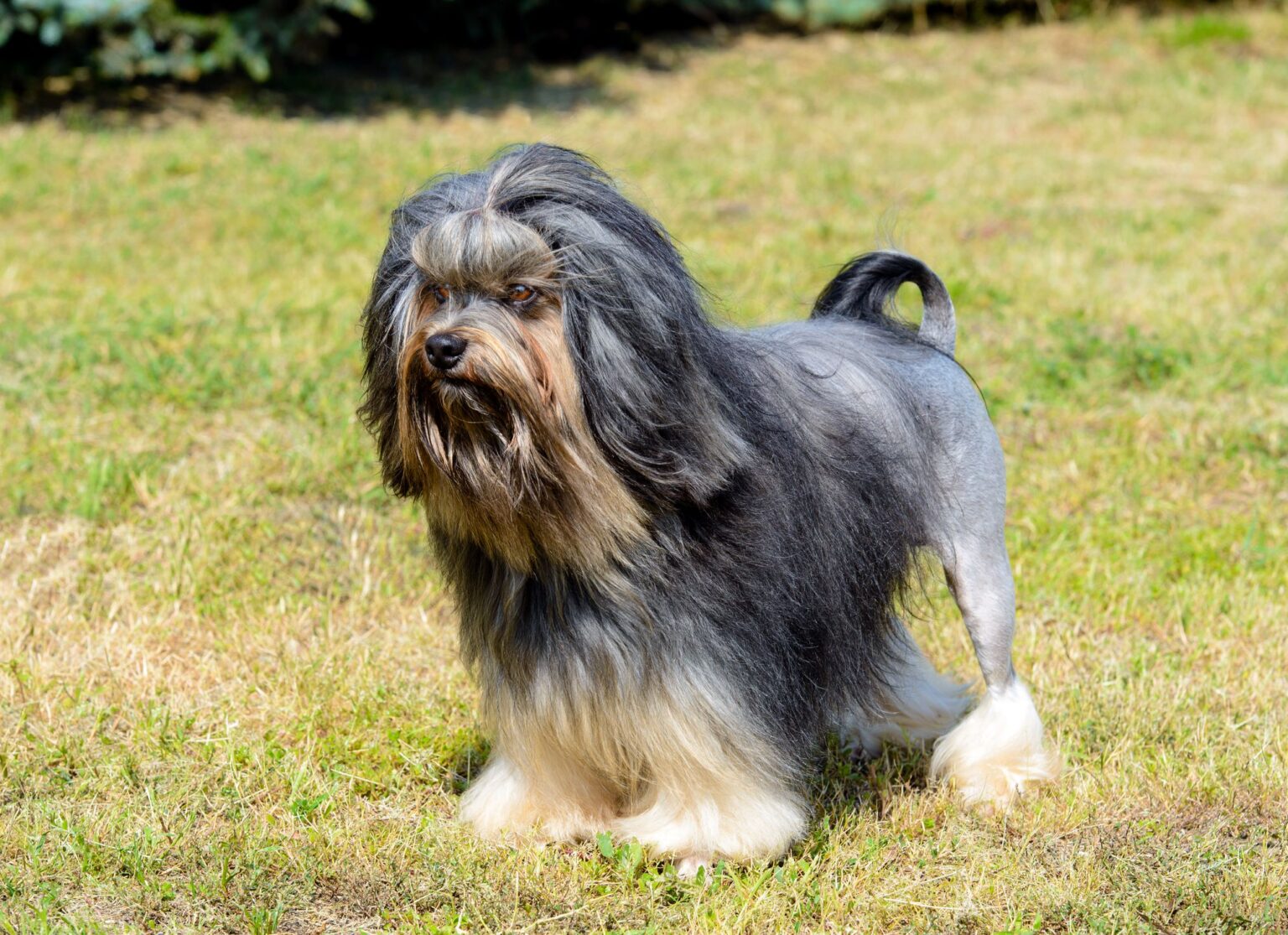
| Height | 26–32 cm |
| Weight | 4–8 kg |
| Lifespan | 13–15 years |
| FCI group | 9 · companion and toy dogs |
| Origin | France / Germany |
Exact ratings
Common health issues
Nutrition
The Little Lion Dog, or Löwchen, is a rare toy breed with shared roots in the Bichon family. Historically, they were sometimes even referred to as Maltese. The key difference between the Löwchen and many other white, fluffy dogs is the wide variety of colours and, of course, its signature traditional ‘lion clip’. This cheerful, incredibly devoted, and obedient pet is wonderful with children and values the company of its family above all else. It is one of the world’s oldest companion breeds, with a history full of ups and downs. Read more on this at Tvaryny.
The Little Lion Dog is the epitome of charm and cheerfulness. They are intelligent and adapt easily to flat living, but they also require a great deal of attention and interaction. Their name comes not from their character, but solely from the appearance given by their traditional clip.
Löwchen: Key Breed Characteristics
| Characteristic | Value |
| Origin | France (though Germany and Spain also lay claim) |
| FCI Recognition | 1961 (official recognition) |
| Lifespan | 13 – 15 years |
| Height at withers | 26 – 32 cm (a deviation of +/- 1 cm is allowed) |
| Weight | Approximately 6 kg (the standard doesn’t specify a strict weight, but it must be proportional) |
| FCI Group | Group 9 (Companion and Toy Dogs), Section 1.3 (Bichons and related breeds) |
| Temperament | Affectionate, playful, intelligent, devoted, alert |
| Grooming Needs | High |
| Activity Needs | Moderate |
| Tendency to bark | Moderate (a good watchdog) |
History and Origin of the Breed
The history of the Little Lion Dog traces its roots back to the Middle Ages, possibly as far back as the 14th century. The breed’s centre of origin is considered to be the Mediterranean, particularly France and Spain, though Germany also lays claim to it. These dogs were favourites of the aristocracy and wealthy ladies for many centuries.
They can often be seen in old paintings, tapestries, and literary works. For example, depictions of dogs that look very similar to Löwchen in a lion clip can be found in the works of Albrecht Dürer (16th century) and Goya. Their main role was always the same – to be a companion. They kept their owners warm (earning them the name ‘hot water bottles’) and simply brought joy.
It is thought that Löwchen are part of the large Bichon family and were possibly developed by crossing early Poodles, small Barbet-type dogs, and other local companion breeds. Their link to breeds like the Maltese, Havanese, and Phalène is clear.
However, despite their long history, by the early 20th century the breed found itself on the brink of complete extinction. Changing fashions, social upheavals, and two world wars almost wiped out these charming dogs. In the 1960s, the Little Lion Dog was entered into the Guinness Book of Records as the rarest breed in the world. At that time, only a few dozen individuals remained worldwide.
The breed’s revival is thanks to a few dedicated enthusiasts, notably Madame Madeleine Bennert of Brussels, Belgium. She dedicated her life to saving the Löwchen. Thanks to her efforts and those of other breeders, the population began to slowly but surely recover. In 1961, the breed was officially recognised by the Fédération Cynologique Internationale (FCI). Today, the Löwchen is still a rare breed, but it is no longer facing extinction.
What Does a Löwchen Look Like: Standard and Appearance
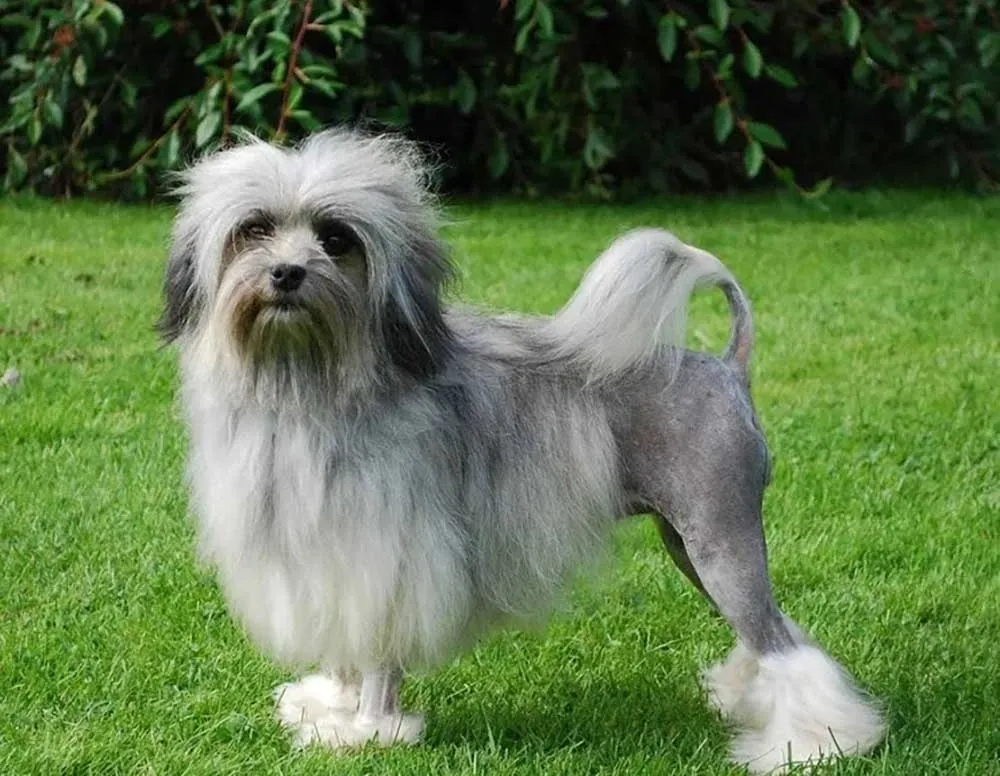
The Löwchen is a small but sturdy and well-balanced dog. It radiates elegance and liveliness. Its body is slightly longer than its height at the withers, giving it a rectangular outline.
Head, Eyes, and Ears
The Löwchen’s head is relatively short and quite broad across the top of the skull. The stop (transition from forehead to muzzle) is well-defined. The muzzle is short, but not flat. The nose is always black (except for brown-coloured dogs, where it may be dark brown).
- Eyes: Large, round, and dark in colour. They are set facing forward. The gaze is very expressive, intelligent, and lively.
- Ears: Set low, at eye level. They are hanging, of medium length, and well-covered with long, wavy hair that resembles fringe.
- Bite: Always a scissor bite.
Body, Tail, and Limbs
The Little Lion Dog has a sturdy build for its size. The neck is slightly arched, the back is straight and firm. The chest is well-developed. The tail is set slightly below the backline, but most importantly, it is carried elegantly in a graceful arc over the back, where the tip may touch the back, but the tail itself should not lie flat on it.
The limbs are straight, parallel, and well-muscled. The paws are small and round (‘cat feet’) with arched toes and dark pads.
Coat, Colour, and Signature Clip
The coat is one of the breed’s most defining features. It is long, silky, slightly wavy, but never curly. A very important feature is the complete lack of an undercoat. This makes their coat similar to human hair and is one reason why the breed is often recommended for people with allergies (they shed very little).
Colour: The FCI standard for the Löwchen allows absolutely all colours and combinations. They can be solid (black, white, fawn) or particoloured (e.g., black and white, red and white). The only exception is liver (brown) colour and its derivatives, which are not desirable but are permitted.
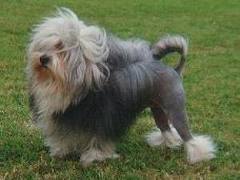
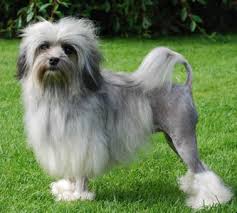
The traditional ‘lion clip’: This clip is what gave the breed its name. The dog is clipped, leaving a long ‘mane’ on the front part of the body (from the head to the last ribs), on the front legs (leaving ‘cuffs’), on the lower part of the hind legs, and the tip of the tail (forming a ‘plume’). The rear part of the body, the upper part of the hind legs, and the base of the tail are clipped very short, almost to the skin. This clip is mandatory for dog shows and is an integral part of the breed’s image.
Character: Temperament and Behaviour of the Little Lion Dog
The Little Lion Dog is the quintessential companion dog. Its character is a collection of positive qualities. They are exceptionally affectionate, gentle, and human-oriented. This dog literally lives to be near its owner. They will follow you from room to room, lie on your lap for hours, and take part in all family activities.
This is a very cheerful and playful breed. They retain a puppy-like spontaneity and love for games well into old age. A Löwchen will happily join in any fun, whether it’s fetching a ball or playing hide-and-seek with children. By the way, they get on wonderfully with children, provided the children are taught to handle a small dog gently.
They also co-habit well with other pets, including cats and other dogs, especially if they grew up with them. Aggression is completely alien to them.
Despite their cute and dainty appearance, Löwchen are very intelligent and bright. They learn quickly and are eager to please their owner. Furthermore, they have another surprising trait – they are alert and make excellent watchdogs. They will always warn you with a loud bark about guests arriving or any unusual noise. However, they are not prone to nuisance barking.
Unlike more independent and work-oriented breeds, such as the German Pinscher or the active Danish-Swedish Farmdog, the Little Lion Dog lives for human companionship. This has a downside: they absolutely cannot tolerate loneliness. If left alone for long periods, they can suffer from seperation anxiety, which may manifest as destructive behaviour or non-stop barking.
Pros and Cons of the Breed
Like any breed, the Löwchen has its advantages and disadvantages. It’s important to assess them objectively before getting such a dog.
| Pros (Advantages) | Cons (Disadvantages) |
|---|---|
| Incredible devotion and family-orientation: the ideal companion. | Prone to separation anxiety: does not like to be left alone. |
| Low shedding: considered hypoallergenic due to no undercoat. | Very high grooming requirements: needs daily brushing and regular professional clipping. |
| High intelligence: learns quickly and is eager to please. | High cost and rarity: finding and buying a puppy is difficult and expensive. |
| Ideal size for a flat: feels great in urban environments. | Stubbornness: despite being smart, can be stubborn if training isn’t interesting. |
| A good watchdog: will always warn of danger with a bark. | Tendency to bark: can bark excessively if not trained. |
| Gets on well with children and other animals. | Potential health problems: like many small breeds, is prone to certain conditions. |
| Long-lived: often lives 13-15 years or more. | Fragility: like any small dog, requires careful handling. |
Health: Typical Illnesses and Prevention
Care and Maintenance
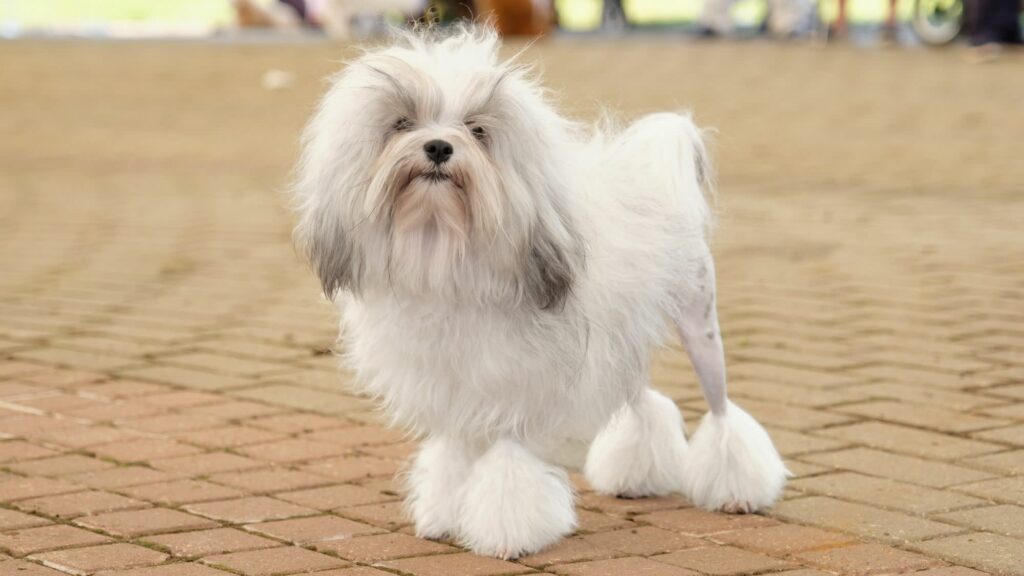
The Little Lion Dog is perfectly suited for flat life. They don’t need a lot of space but do require a lot of attention for their coat and plenty of mental and physical stimulation.
Grooming: The Main Challenge
This is probably the most demanding aspect of keeping a Löwchen. Their long, silky coat with no undercoat is very prone to matting. They must be brushed daily, paying special attention to the areas behind the ears, under the legs, and on the belly. If this isn’t done, mats will quickly become so dense that they can only be clipped out.
Clipping: The traditional lion clip isn’t just for aesthetics; it’s also practical to some extent (less coat to care for on the rear). This clip needs to be redone every 4-8 weeks. This requires either grooming skills from the owner or regular visits to a professional groomer, which is a significant expense. Some owners who don’t show their dogs opt for a simpler ‘puppy cut’ (uniformly short all over), but this still needs regular upkeep.
Bathing a Löwchen should be done as needed, usually every 3-4 weeks, using a high-quality shampoo and conditioner for long coats.
Exercise and Activity
Although the Löwchen is a happy ‘lap dog’, it is also quite energetic and needs regular activity. It doesn’t need marathons but will be happy with daily walks (one or two) and intense play sessions at home or in the garden. They love playing with toys and learning new tricks.
Thanks to their intelligence and desire to please, Little Lion Dogs excel in dog sports such as agility, obedience, and rally obedience. This is a great way to channel their energy and stimulate their minds.
Training and Socialisation
Training a Löwchen is a pleasure, but with nuances. There’s a misconception that they are difficult to train. In reality, they are very intelligent and pick up new commands quickly. The problem lies elsewhere: they can be a bit stubborn and, more importantly, very sensitive.
They absolutely cannot tolerate harsh methods, shouting, or punishment. This will only cause the dog to ‘shut down’ and refuse to cooperate. The best approach is exclusively positive reinforcement: praise, treats, and games. Training sessions should be fun and short to keep the dog from getting bored.
Early socialisation is critically important. As they are naturally alert watchdogs, they need to be introduced to various people, sounds, places, and other dogs from a young age. This will help them grow into confident, calm, and well-balanced adult dogs, rather than nervous and noisy ones.
Don’t forget about ‘small dog syndrome’. Because of their cute size, owners often spoil them and fail to set clear rules. This is a mistake. A Löwchen is still a dog, and it needs consistent rules and boundaries, or it will quickly learn to manipulate you.
Comparison with Other Bichon Group Breeds
The Löwchen belongs to the same group as the Bichon Frise and Havanese but has its differences.
| Breed | Coat | Grooming | Temperament | Colour |
|---|---|---|---|---|
| Löwchen (Little Lion Dog) | Long, wavy, silky, no undercoat. | Very High (daily brushing + ‘lion clip’). | Devoted, alert, playful, sensitive. | All colours. |
| Bichon Frise | Curly, spiral, soft, with an undercoat. | Very High (daily brushing + regular clipping). | Cheerful, playful, independent, outgoing. | White only. |
| Havanese | Long, soft, can be wavy or straight, has an undercoat (but light). | High (daily brushing, but not usually clipped). | Affectionate, ‘velcro’ dog, clownish, smart. | All colours. |
Feeding: Key Recommendations
Interesting Facts About the Breed
- Rarest breed: As mentioned, in 1973 the Löwchen was listed in the Guinness Book of Records as the rarest breed in the world.
- ‘Hot-water bottle’ dog: During the Renaissance, aristocratic ladies often used these dogs as living bed warmers. It was thought the lion clip (naked rear) allowed the dog to better transfer heat to the owner’s feet, while the mane kept the dog itself warm.
- Artist’s model: Löwchen can be seen on many paintings from the 15th-18th centuries, proving their enduring popularity among the nobility.
- Not a lion by nature: Their name ‘little lion’ comes purely from the clip. By character, it’s a gentle and affectionate companion, not a fearsome predator.
- High price: Due to their rarity, Löwchen puppies are among the most expensive in the world. Only a few hundred new puppies are registered worldwide each year.
Frequently Asked Questions (FAQ)
Does the Löwchen shed a lot?
No, they shed very little. They don’t have a seasonal moult as they lack an undercoat. They lose hair much like people do – individual hairs. This makes them a good choice for people with allergies, although no dog is 100% hypoallergenic.
Is the Löwchen suitable for flat living?
Absolutely. It’s the ideal flat dog. They don’t need a lot of space and will be happy as long as they are with their owner. The main thing is to provide them with enough mental stimulation and daily walks.
Can a Löwchen be left alone for long periods?
It’s highly discouraged. This is a breed that bonds deeply with its family and suffers from loneliness. They are prone to separation anxiety. This breed isn’t suitable for people who are at work all day and cannot take their dog with them.
Is the Löwchen difficult to care for?
Yes, in terms of grooming – very. Their coat requires daily brushing to avoid mats and regular professional clips every 4-8 weeks. This requires a significant investment of time and money.
How much does a Löwchen puppy cost?
It is one of the most expensive breeds in the world due to its rarity. Be prepared not only for a high price but also for a long waiting list. More to the point, the purchase is the smallest part of it — food, veterinary care, grooming and insurance across the dog’s life weigh far heavier.
Video About the Breed
- Cheerful, affectionate, devoted to the family
- Brave and alert beyond its size
- Ideal for a flat and a novice
- Generally very robust health, long-lived
- Cannot bear being alone, needs contact
- The coat needs regular grooming
- May bark shrilly at strangers
- Very rare — hard to find
| Bichon Frise | Havanese | Maltese | |
|---|---|---|---|
| Height | 23–30 cm | 21–29 cm | 20–25 cm |
| Energy | 3.5 | 3 | 3 |
| Apartment | 4.5 | 5 | 4.5 |
| Beginners | 4 | 4.5 | 4 |
Why is the Löwchen called the "lion dog"?
How old is this breed?
Is the Löwchen good for a family with children?
FCI Standard No. 233 · Société Centrale Canine
For apartments · For kids · For beginners · Active · Smartest · Hypoallergenic · All rankings →