

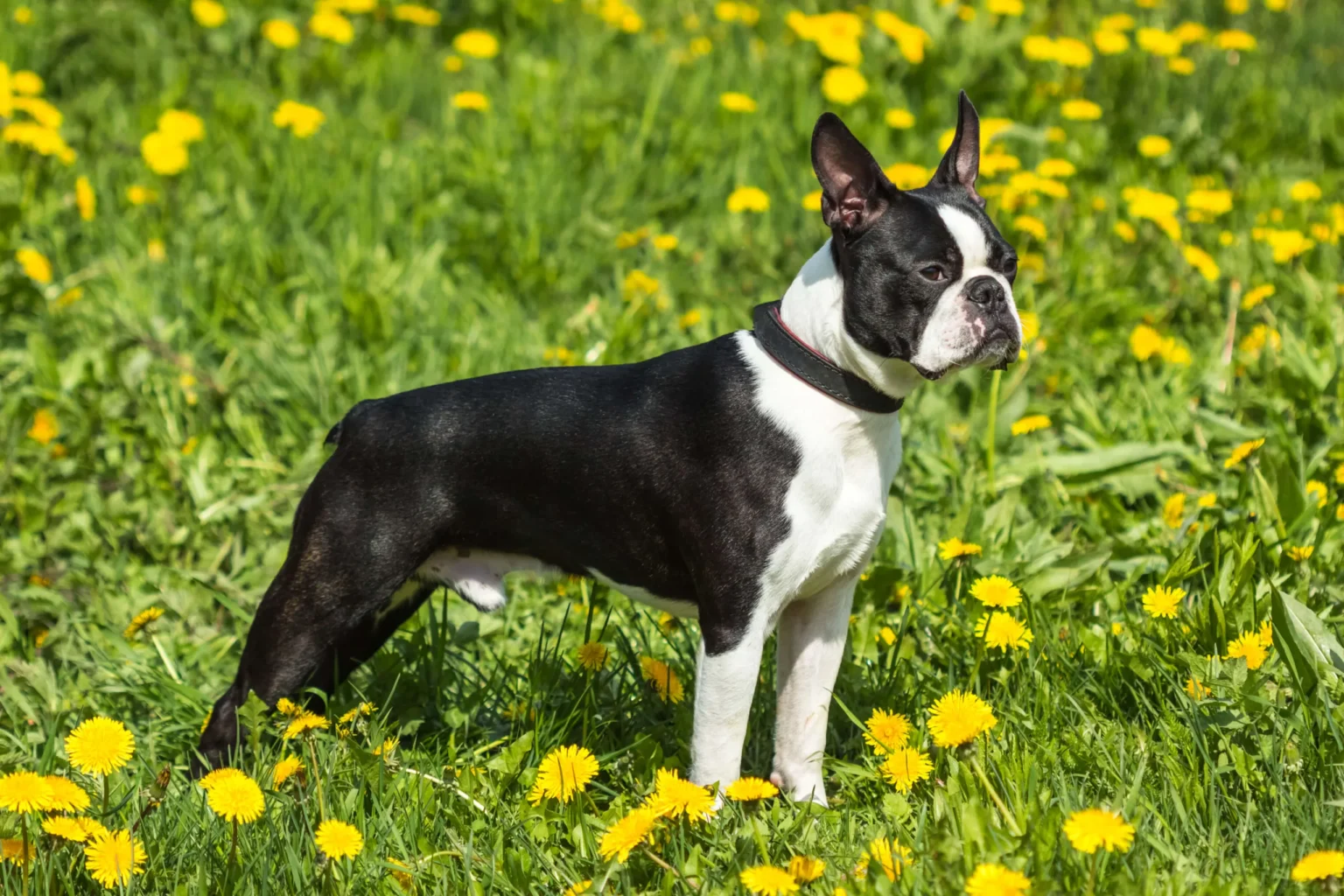
| Height | 38–43 cm |
| Weight | 5–11 kg |
| Lifespan | 11–14 years |
| FCI group | 9 · companion dogs |
| Origin | USA |
Exact ratings
Common health issues
Nutrition
The Boston Terrier is the true “American Gentleman” of the canine world. This dog breed combines refined manners, a sharp wit, and incredible loyalty to its family. It is the first American breed that is perfectly suited even for novice owners with varying demands for a pet. The not-overly-active Boston Terrier can be a wonderful companion for an elderly person, whilst its playful nature will come in handy for children’s games. Read more about this on Tvaryny.
This four-legged youngster with a unique appearance is easy to train, yet constantly requires communication and attention from its owners. If you deny him affection and your time, the trusting Bostonian will become glum, as his life’s purpose is to be close to a human.
The Boston Terrier: A Brief Overview and Breed Characteristics
| Parameter | Characteristic |
| Country of Origin | USA (Boston, Massachusetts) |
| Year of Official Recognition | 1893 (AKC), though development began earlier |
| Lifespan | 11-15 years (sometimes up to 18 with ideal care) |
| Height at Withers | 38-43 cm |
| Weight | Divided into 3 classes: under 6.8 kg; 6.8-9 kg; 9-11.3 kg |
| Coat Type | Short, smooth, shiny, without undercoat |
| Purpose | Companion dog |
History of the Boston Terrier Breed
The history of this breed is a classic example of the American Dream in the dog world. The Boston Terrier was bred over a hundred years ago in America, in the city of Boston (hence the name). It is believed that the breed originated around 1870, when Robert C. Hooper purchased a dog named Judge. Judge was the offspring of a crossbreed involving the English Bulldog and the now-extinct White English Terrier. It was this dog that became the patriarch of the modern breed.
Initially, these dogs were called “Round Heads” or “Bull-and-Terriers”. However, enthusiasts of Bull Terriers and Bulldogs objected to this name due to the confusion it caused. In 1891, the American Boston Terrier Club was formed, and the breed received its modern name in honour of the city where it was so popular. The unique combination of the massive strength of its ancestors and the lighter constitution of the terrier resulted in a high-quality dog whose appearance strikes one with its particular style.
Interestingly, at the dawn of their existence, the ancestors of Bostonians were used for dog fighting. It is hard to believe, looking at the modern good-natured dog, but the blood of fighters flows in his veins. However, breeders worked for decades to remove aggression and leave only courage and loyalty. The result exceeded expectations: from fierce fighters, they transformed into ideal companions.
Appearance: What Does the Ideal Boston Terrier Look Like?
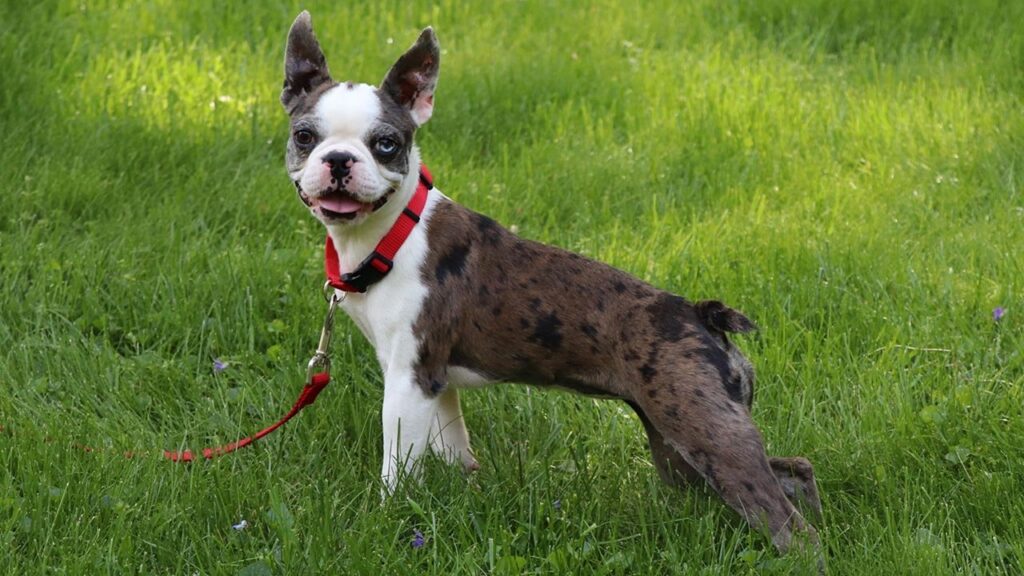
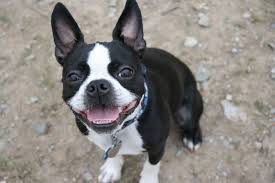
Visually, the Boston Terrier is the embodiment of harmony and balance. He combines the head of a Molosser (Bulldog) and the more compact, gathered body of a terrier. This is a dog that looks determined, strong, and active, despite his small size. He should look neither too refined nor too coarse.
Head and Muzzle
The Boston’s head is square, flat on top, without wrinkles (unlike Pugs or Bulldogs, where wrinkles are a breed trait). The muzzle is short, square, wide, and deep. An important nuance is the bite – it can be straight or with a slight undershot, which gives the muzzle its characteristic square look.
- Eyes: Wide-set, large, round, and dark. Their expression radiates intelligence and friendliness. The eyes are often called the breed’s “calling card”.
- Ears: Small, erect, positioned as close as possible to the edges of the skull. They give the dog a constantly alert and interested look.
- Nose: Strictly black, wide, with a clear groove between the nostrils.
Body and Limbs
The Boston Terrier’s body is short and sturdily built. The back is quite short, giving the dog a compact appearance. The chest is broad. The limbs are straight, muscular, ensuring free and graceful movement. The tail is a seperate topic. It is low-set, short, thin, and tapers towards the end. It can be straight or screw-shaped, but must never rise above the line of the back (tail docking is prohibited by the standard for this breed).
“Tuxedo” Coat Colour
The breed received its nickname “American Gentleman” precisely because of its colouring, which resembles a tailcoat or tuxedo. The standard recognises:
- Black with white markings (classic).
- “Seal” – looks black, but has a reddish cast in the sun.
- Brindle – light stripes on a dark background.
Mandatory white markings: A band around the muzzle, a white blaze between the eyes, and a white chest. It is also desirable to have a white collar, white forelegs (partially or fully), and white hind legs below the hocks.
Character: Temperament and Family Behaviour
A Boston Terrier puppy is an excellent choice for those looking for the golden mean between acitvity and calmness. This dog possesses a balanced temperament and a high level of emotional intelligence. They are incredibly sensitive to the owner’s mood. If you are ready to play, the Boston will support any antic; if you want to rest, he will curl up next to you (and likely start snoring cutely).
- Relations with children: Bostons adore children. They are sturdy enough to withstand clumsy hugs (within reason) and playful enough to be the best friends in pranks.
- Relations with other animals: Thanks to a low level of innate aggression, they generally get on well with cats and other dogs. However, males can sometimes show dominant behaviour towards other dogs if they feel a threat to their territory.
- Watchdog qualities: Despite the small size, the Boston Terrier is a decent “doorbell”. He barks infrequently, only when necessary, so if your Boston has raised his voice, it is worth checking what has happened. However, he will not suit the role of a true guard dog due to his excessive love for people.
The natural sociability and curiosity of the pet allow him to easily follow a stranger. This must be taken into account during walks. An important need of the Boston Terrier is to be close to a human and participate in all family affairs, from cooking dinner to watching the television.
Differences from Similar Breeds
Boston Terriers are often confused with other brachycephalic breeds. To help you navigate better, we have prepared a comparison with their closest “relatives” in terms of appearance.
| Breed | Key Differences from the Boston Terrier |
| French Bulldog | Frenchies are more massive, bonier, with a broader chest. The ears of the “Frenchie” are rounded at the tips (“bat ears”), whereas the Boston’s are pointed. The characteristics of the Boston are longer legs and elegance; the Frenchie is a squat “tank”. |
| Pug | The Pug has drooping ears, a tail curled into a tight donut, and a muzzle with many deep folds. Pugs are usually less active than Bostons and have a different coat type (undercoat that sheds heavily). |
Health: Weak Points and Prevention
Care Features for the Boston Terrier
Caring for this breed does not require professional grooming skills, but it does require regularity. One could say that Boston Terriers demand more attention outdoors (temperature control) than complex procedures at home.
- Coat: They have no undercoat, so shedding is not catastrophic. It is sufficient to go over them once a week with a rubber glove or soft brush to remove dead hairs. Frequent bathing is not necessary, only when dirty, as this can dry out the skin.
- Eyes and folds: Check the eyes daily for redness. The facial folds on Bostons are not as deep as on Bulldogs, but they are still worth wiping with a damp wipe or a cotton pad with chlorhexidine to avoid nappy rash.
- Claws: Bostons are light dogs, so their claws do not always wear down naturally on asphalt. They need to be trimmed 1-2 times a month.
- Temperature regime: This is an indoor dog. In winter, they need clothes (a jumpsuit or jumper), as they freeze quickly. In summer, avoid walks under the scorching sun from 11:00 to 17:00 to avoid heatstroke.
Training and Upbringing
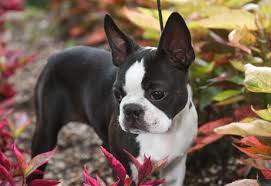
Boston Terriers are very clever, but sometimes a “terrier” stubbornness wakes up in them. The key to success is positive reinforcement. Harsh methods and shouting do not work with this breed; the dog will simply withdraw into himself or refuse to cooperate. Thanks to the Boston Terrier’s natural trustfulness and desire to please the owner, training is fun.
What to look out for when raising a Boston:
- Socialisation: Start introducing the puppy to other dogs and people as early as possible. This will cement his natural friendliness.
- Toilet training: Sometimes this is a weak point of the breed. Be patient, use puppy pads, and walk them frequently. Praise for every “business” done outside.
- Canine sports: Bostons perform excellently in agility (obstacle courses) and obedience. This helps to burn off energy and strengthen the bond with the owner.
Nutrition: How to Avoid Problems?
Pros and Cons of the Breed
To help you finally decide if this breed is right for you, we have compiled an honest list of advantages and disadvantages.
| PROS (+) | CONS (-) |
| Compact size, ideal for a flat | Propensity for snoring and “grunting” |
| Almost never barks without reason | Poor thermoregulation (afraid of heat and cold) |
| Minimal coat care | Propensity for flatulence (passing gas) |
| High intelligence and learning ability | Possible hereditary eye problems |
| Very human-oriented, affectionate | Does not tolerate prolonged loneliness |
Interesting Facts About Boston Terriers
This breed has plenty to surprise even experienced cynologists:
- The Boston Terrier has been the official symbol of the state of Massachusetts since 1979.
- Sergeant Stubby – the most famous war dog of the First World War, who received the rank of sergeant – is often described as an ancestor or close relative of early Boston Terriers (although his exact breed is debatable, the appearance type is very similar).
- These dogs are often born via Caesarean section due to the puppies’ large heads and the mothers’ narrow pelvises.
Frequently Asked Questions About the Breed (FAQ)
Do Boston Terriers shed heavily?
No, their shedding is moderate. They do not have a fluffy undercoat that flies all over the flat. Short hairs are easily cleaned up.
Can a Boston be left alone at home?
They cope poorly with loneliness. If you work 10-12 hours and there is no one at home, this breed will suffer. This may result in damaged belongings or depression.
Is this breed suitable for allergy sufferers?
The Boston Terrier is not a hypoallergenic breed. Although there is little hair, allergies are often caused by dander or saliva, of which this dog has plenty.
Video About the Breed
- Compact, ideal for a flat
- Cheerful and affectionate
- Excellent with children
- Low-maintenance coat
- A flat face — care with heat
- A tendency to eye conditions
- Possible snoring and wind
- Sensitive to cold and heat
| French Bulldog | Pug | Miniature Schnauzer | |
|---|---|---|---|
| Height | 27–35 cm | 25–33 cm | 30–36 cm |
| Energy | 2.5 | 2.5 | 3.5 |
| Apartment | 4 | 4 | 4 |
| Beginners | 3.5 | 3.5 | 4 |
Is the Boston Terrier suitable for a flat?
Does the Boston Terrier breathe heavily?
Is the Boston good with children?
FCI Standard No. 140 · The Kennel Club
For apartments · For kids · For beginners · Active · Smartest · Hypoallergenic · All rankings →