

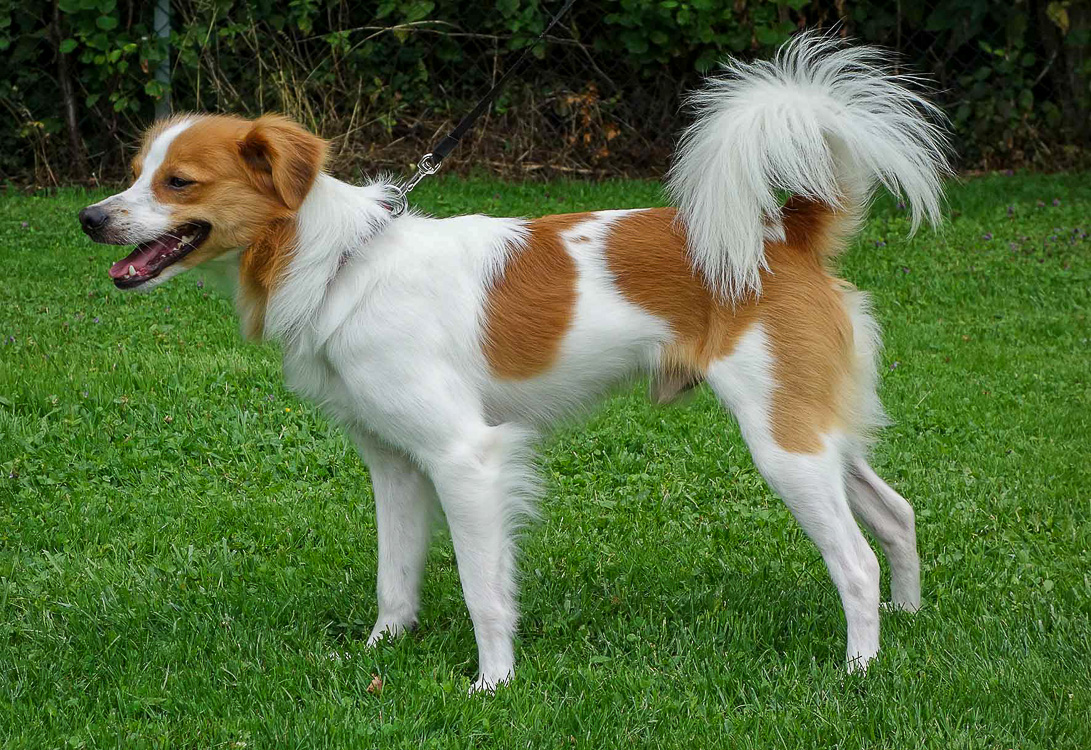
| Height | 38–46 cm |
| Weight | 9–16 kg |
| Lifespan | 12–15 years |
| FCI group | 9 · companion and toy dogs |
| Origin | Germany (Westphalia) |
Exact ratings
Common health issues
Nutrition
The Kromfohrländer is arguably one of the most underrated dog breeds in the canine world. A relatively new European companion dog, its name is a derivation of the folkloric ‘Kromfohr’ from the Krumme Furche mountain range in the Westphalia region of Germany. These medium-sized companions boast robust heallth and don’t demand complex professional grooming. However, they possess certain character nuances that few people know about. Just remember that the Kromfohrländer is a sporty, intellectually driven dog, so a life spent solely between the sofa and the food bowl simply won’t do for him. He’s reserved with strangers but incredibly affectionate and obedient towards the people he considers ‘his own.’ You can find out more about this later on Tvaryny.
Kromfohrländer: A Detailed Overview and Characteristics
| Characteristic | Breed Parameter Description |
|---|---|
| Country of Origin | Germany |
| FCI Classification | Group 9 (Companion Dogs), Section 10 (Kromfohrländer) |
| Year of Recognition | 1955 (FCI) |
| Lifespan | 12-15 years (some live up to 17) |
| Height at Withers | 38-46 cm (15-18 inches) |
| Weight | Dogs: 11-16 kg (24-35 lbs); Bitches: 9-14 kg (20-31 lbs) |
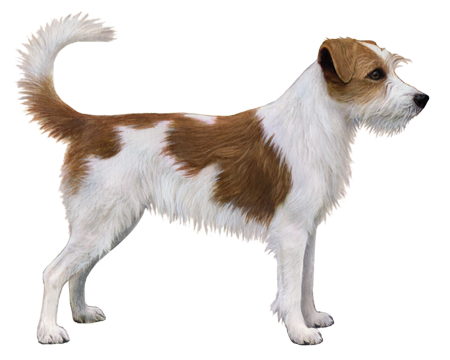
| Coat Type | Wire-Haired (Rauhaar) or Smooth-Haired (Glatthaar) |
A Breed’s History: The Accident That Became a Legend
The history of this relatively young breed is truly unique. It wasn’t developed over centuries of folk selection; instead, it sprang into being thanks to a lucky accident and the sheer determination of one woman. The story is indirectly linked to the military events of the mid-20th century. In 1945, as the Second World War drew to a close, American soldiers were passing through the Siegen region near the Krumme Furche mountains in Westphalia.
The troops had a shaggy, fawn-coloured mascot dog named ‘Peter’. One account suggests he got lost; another claims the soldiers gave him to a local resident, Ilse Schleifenbaum. Experts now believe Peter was a cross between a Grand Basset Griffon Vendéen and another breed, which would explain his distinctive appearance and coat texture.
At the time, Mrs. Schleifenbaum owned a non-pedigree bitch named ‘Fifi’, who phenotypically resembled a classic Wire Fox Terrier. The romantic union of Peter and Fifi resulted in a litter of puppies that were surprisingly uniform, healthy, and charming. They showed a softer temperament than terriers but retained their sharp intelligence. Enchanted by these dogs, Ilse Schleifenbaum resolved to establish this new type as a breed. Her efforts paid off incredibly quickly – the breed was officially recognised by the Fédération Cynologique Internationale (FCI) as early as 1955.
Genetic Lines and Coat Varieties
Many people mistake the Kromfohrländer for a simple crossbreed due to their natural, ‘rustic’ appearance, but this is a genetically stable purebred dog. A crucial distinguishing feature is the split into two types based on coat texture. This isn’t just aesthetic; it has a significant impact on grooming and care.
- Wire-Haired Type (Rauhaar): The most common type. The coat is dense, wiry to the touch, with a well-developed undercoat. The presence of a ‘beard’ on the muzzle is a mandatory characteristic. Body hair should not exceed 7 cm, nor be shorter than 3 cm.
- Smooth-Haired Type (Glatthaar): Less common. The coat is soft, lies close to the body, and lacks a beard. Interestingly, smooth-haired dogs often have longer hair (known as ‘fringing’ or ‘feathering’) on their ears, tail, and the backs of their legs.
What Does a Kromfohrländer Look Like?
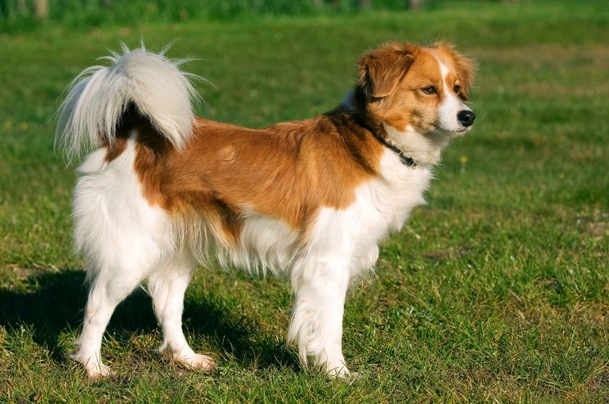
This is a sturdy dog with a proportional build. Its body is rectangular, meaning the length of the torso is slightly greater than the height at the withers. The wire-haired Kromfohrländers are particularly prized as they most closely resemble the breed’s ancestor, Peter. In all cases, the dog’s coat pattern consists of a white background with patches of various reddish shades (ranging from light brown to very dark) on the head and back.
Head: This companion’s elongated head and drop ears have a wedge-shaped finish. A critical breed marker is the ‘mask’– symmetrical patches on the head that cover the eyes and ears, separated by a white blaze running from the forehead to the nose.
Body and Limbs: The back is straight and strong. The chest is moderately broad and deep. The paws are a standout feature: they must be compact, the so-called ‘cat paws’, which allow the dog to be extremely agile and nimble. The tail is of medium length, carried low when relaxed, and raised in a sickle shape over the back when excited.
Temperament: The Unique ‘Personaliser’
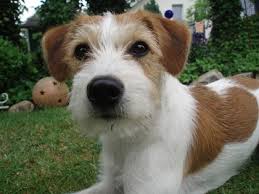
Kromfohrländers are often acquired as companion dogs and vigilant ‘doorbell dogs’, but their temperament has a very specific trait. They are typically a ‘one-person’ or ‘one-faimly’ dog. The depth of their bond with their owner borders on fanaticism. They don’t just love you; they want to be physically present for every moment of your life.
Unlike more independent breeds, the Kromi finds being left alone extremely difficult, often suffering from separation anxiety. This loyal companion is devoted to its owners and, with the right upbringing, will behave obediently. However, be aware that young adults during their adolescence may test boundaries and try to establish their own rules.
Key Behavioural Traits:
- Reserved Nature: The Kromfohrländer won’t rush to greet every person it meets with a wagging tail. It approaches strangers with suspicion but without unprovoked aggression. It needs time to accept a new person.
- Lack of Hunting Instinct: This is a massive advantage for urban living. The near-loss of a hunting instinct means they get along well with other pets, be they cats or rabbits. They won’t bolt after a fox trail in the woods, allowing for safer off-lead walking once trained.
- Intelligence and Cunning: They learn quickly but may use their smarts to manipulate their owner into giving them treats or a prime spot on the sofa.
If you’re looking for a dog that will love the whole world, like a happy-go-lucky Boston Terrier, or is as phlegmatic as a French Bulldog, the Kromfohrländer might seem too sensitive and selective in its contacts. It demands a higher level of emotional engagement from its owner.
Pros and Cons of the Breed
| Kromfohrländer Advantages | Difficulties and Drawbacks |
|---|---|
| Virtually no hunting instinct (safe to walk off-leash in nature after training) | Prone to separation anxiety (difficult to leave alone at home) |
| Medium size, convenient for apartment living and travel | Picky eating habits (fussy) |
| Minimal shedding (especially in wire-haired dogs with proper hand-stripping) | Wary of strangers, requiring early and thorough socialisation |
| High intelligence and owner-oriented nature | Limited gene pool (risk of hereditary diseases) |
| Long lifespan for a medium-sized dog | Rarity of the breed (difficult to find a puppy) |
Health: Typical Illnesses and Specifics
Coat Care and Hygiene
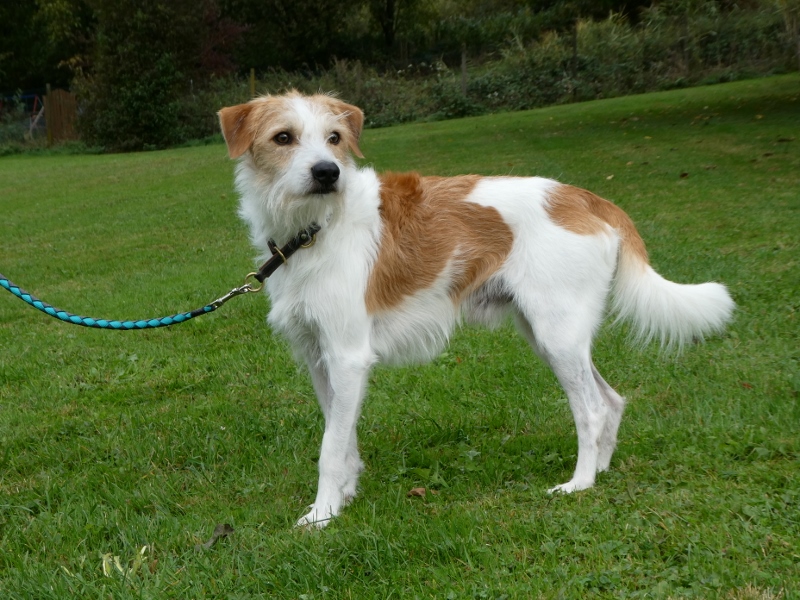
You can certainly keep this active dog in an apartment, but coat care will entirely depend on its type. A happy, healthy companion is a result of a combination of good diet and hygiene.
Wire-Haired Type Care
The wiry coat does not shed heavily on its own. It requires hand-stripping (plucking the dead hair) 2-4 times a year. Never clip a wire-haired Kromfohrländer with an electric shaver! Doing so will ruin the hair structure, making it soft, fluffy, vulnerable to dirt and moisture, and the colour will become dull. Weekly brushing will help prevent mats around the beard and under the armpits.
Smooth-Haired Type Care
Care for this type is simpler, but seasonal shedding will be more noticeable. Looking after a smooth-haired Kromi is straightforward – its coat should be cleaned with a special rubber brush or grooming mitt twice a week to remove dead hair. Pay particular attention to the cleanliness of the ears, as they hang close to the head and are poorly ventilated.
Training and Socialisation: The Low-Pressure Approach
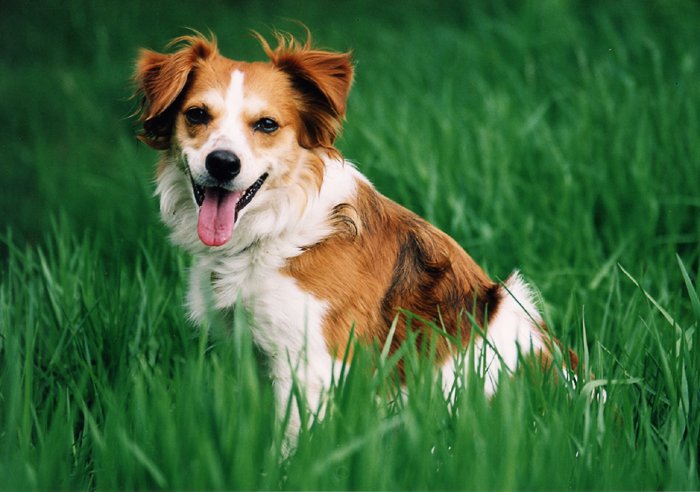
The bright Kromfohrländer enjoys learning new things and responds well to training, but it will not tolerate strict discipline or ‘drill-like’ instruction. Harsh methods, shouting, or physical punishment will only cause the dog to retreat into itself and refuse to work. This is an extremely sensitive breed.
Your encouraging words and high-value treats will be the most important stimulus for success in training. The natural activity level of these hardy dogs means they require physical exercise, so dog sports – agility, flyball, or scent work – are highly recommended. Don’t worry about them running off during walks: Kromfohrländers typically stick close to their owner; their comfort radius is the area where they can keep you in sight.
Nutrition: A Menu for a Sensitive Stomach
Interesting Breed Facts
- The Kromi Smile: Many owners claim that Kromfohrländers can ‘smile’, baring their front teeth when they are happy to see their owner. This is not aggression but a unique facial expression of joy.
- Exclusivity: The breed remains rare, even in its homeland of Germany. The waiting list for a puppy can stretch to a year or more.
- The ProKromfohrländer Project: Due to concerns over inbreeding, a group of enthusiasts launched the ‘Outcrossing Project’ (Einkreuzprojekt), where Kromfohrländers are carefully crossed with Danish-Swedish Farmdogs to broaden the gene pool and improve the health of the population.
Frequently Asked Questions (FAQ)
Do Kromfohrländers Bark a Lot?
Yes, they are vigilant watchdogs and will alert you to the arrival of guests with barking. However, they are not prone to incessant, pointless barking if properly trained.
Are They Suitable for Families with Small Children?
Kromfohrländers adore their family, but they may not tolerate rough handling. For families with very small children who don’t yet understand how to treat a pet, a more phlegmatic breed might be a better choice. For school-age children, the Kromi will make a fantastic, loyal friend.
Where can I buy a puppy in the UK?
The largest number of registered breeders are located in Germany (RZV club), Switzerland, and Finland. As the breed is extremely rare in the UK, you will most likely have to join a long waiting list or look into importing a puppy from a reputable European breeder.
Video About the Breed
- Friendly, devoted, excellent with children
- Almost no hunting instinct or aggression
- Clever and easy to train
- Needs no complicated grooming
- Wary of strangers until it gets used to them
- Needs exercise and mental activity
- Cannot bear long solitude
- Rare outside Europe
| Jack Russell Terrier | Wire Fox Terrier | Poodle (Medium) | |
|---|---|---|---|
| Height | 25–30 cm | 36–39 cm | 35–45 cm |
| Energy | 4.5 | 4.5 | 4 |
| Apartment | 3.5 | 3 | 4 |
| Beginners | 3 | 2.5 | 4 |
Where does the Kromfohrländer come from?
Does the Kromfohrländer hunt?
Is the Kromfohrländer good for a family?
FCI Standard No. 192 · Rassezuchtverein für Kromfohrländer
For apartments · For kids · For beginners · Active · Smartest · Hypoallergenic · All rankings →