

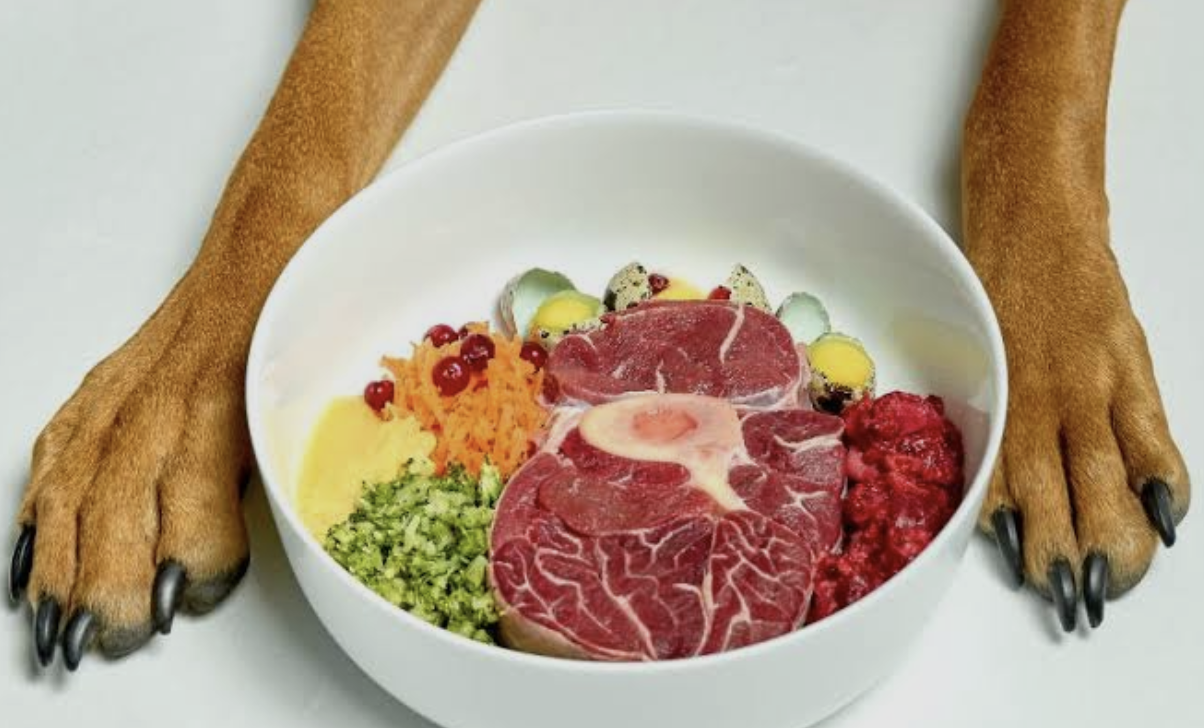
Hey, pack! Lace up your sneakers tight. Check your gear and grab those leashes. Today we are hitting a very slippery and highly debated trail. We are talking about a topic that makes sparks fly in the dog world faster than my Border Collie crushing a weave pole sequence. Here at tvaryny.com, we break down different approaches to care and training every single day. But the concept of raw feeding stands apart as an unshakable monolith. It has literally split the community right down the middle. One half of dog owners foam at the mouth, shouting this is the only ticket to iron-clad health and steel muscles. The other half nervously clutches their pearls. They terrify everyone around them with tales of salmonella, cracked fangs, and horrific gastrointestinal punctures. Let’s turn off the unneccesary emotion. Let’s switch on our cold sports analytics and break this bowl of raw meat down to its macronutrients. It is time to uncover the truth.
Decoding BARF: Bones, raw meat, and zero compromises
The acronym BARF stands for Biologically Appropriate Raw Food or Bones And Raw Food. In plain terms – it is biologically suitable raw grub. The creators and hardcore fans of this concept suggest we hit the factory reset button on our dogs. They want us to look at them strictly as predators. Not as plush couch toys in pink onesies. We need to see the descendant of the wild wolf. Their jaw and stomach anatomy was designed by nature to tear flesh and crush cartilage. Today, the pet supply industry offers us a million options. Many novice owners rack their brains over ingredients. They constantly wonder if grain-free dog food is brilliant marketing or a real benefit, trying to cut down on empty carbs in their partner’s diet. BARF cuts right to the chase and leaves no room for half measures. No grains and no thermal processing. No preservatives or flavor enhancers. Just hardcore, natural raw product, exactly as Mother Nature intended.
Anatomy of the perfect bowl: The 70-10-10-10 formula
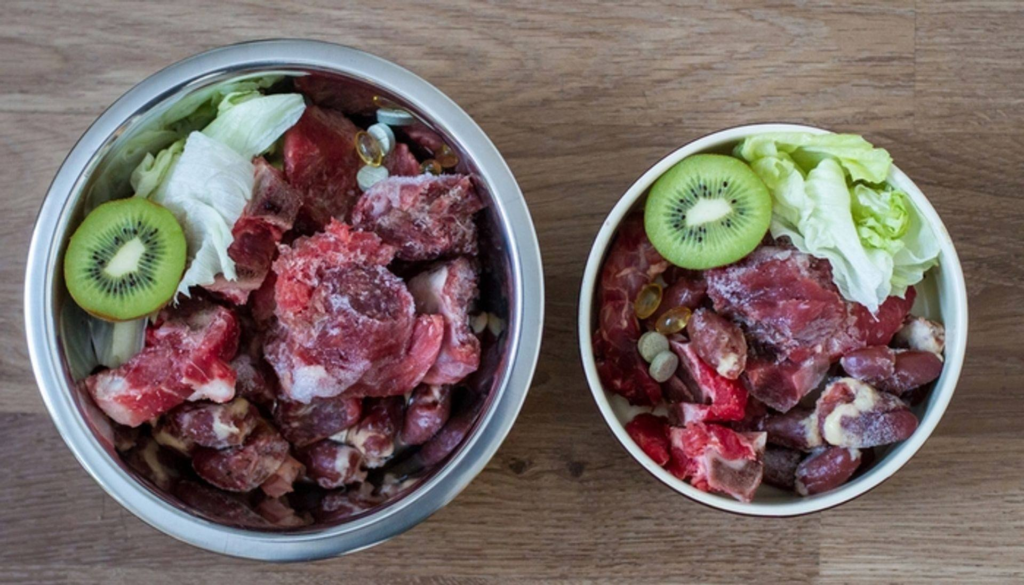
True BARF isn’t just tossing your dog a chunk of chicken breast from the dinner table. It involves strict math. It is a precise balance built on a very clear framework. If you want to raise an endurance athlete, their bowl must consist of the following components:
- Muscle meat (around 70%): This is the absolute foundation. Beef, turkey, duck, rabbit, and heart (yes, the heart is a muscle). This is your source of pure, high-octane protein. It provides explosive energy on the agility course.
- Raw meaty bones (10-15%): Chicken necks, backs, and turkey wings. Never feed bare bones! And ABSOLUTELY never feed cooked bones! This acts as natural calcium and the world’s best toothbrush. It scrapes tartar down to zero.
- Organs and offal (10%): Liver, kidneys, spleen, and brains. Pay close attention here. Liver should never exceed 5% of the total diet. Otherwise, you are guaranteed to trigger an upset stomach. Think of this as nature’s multivitamin complex.
- Vegetables, fruits, and greens (5-10%): Carrots, zucchini, broccoli, and spinach. You need to run these through a blender until they form a puree. Otherwise, the predator’s short digestive tract simply cannot break down the cellulose to extract the vitamins.
Evolutionary standard: Why wolves don’t need a gastroenterologist
Have you ever looked inside your dog’s mouth during a game of tug-of-war? You won’t find flat teeth designed for grinding grains. Their fangs are built to slice, tear, and rip off chunks. And what about the inside? From an internal anatomy perspective, a healthy dog’s stomach is a literal acid reactor. The pH level in a dog that regularly eats raw meat drops to extreme values of 1 or 2. In such a highly aggressive acidic environment, raw bones dissolve as easily as chalk in vinegar. Moreover, the vast majority of pathogenic bacteria simply die at the entrance. They don’t even get a chance to multiply. That is exactly why wild canines can safely bury a chunk of meat in the dirt. They can dig it up a week later smelling awful and devour it with zero health consequences. Their digestive system is hardwired to obliterate threats.
A dog is not a human wearing a fuzzy fur coat. Their gastric juice has such high acidity that it can completely digest raw bones. But this only works provided the system hasn’t been “broken” by years of eating thermally processed, carb-heavy kibble.
From the field notes of sports veterinary nutritionists
Unjustified risk: The dark side of raw meat
Let’s take off the rose-colored glasses for a second. If everything were this magical and cloudless, vet clinics would be completely empty. Transitioning to natural raw feeding is a delicate, jewelry-level job for both the trainer and the owner. Here, the smallest mistake can cost your tailed partner their health. If you aren’t ready to study, crunch proportions on a calculator, and buy a kitchen scale, just step away. Finding verified farmer-suppliers is mandatory. If you cant commit to this, don’t even step up to the starting line.
Major dangers that influencers keep quiet about:
- Bacterial strike: Salmonella, campylobacter, and E. coli. For an adult raw-fed dog with normal stomach acidity, these are practically harmless. But they are dangerous for YOU when you thaw that meat in your kitchen. They are also a risk for kids who later kiss the dog on its wet nose.
- Total nutrient imbalance: Feeding a dog nothing but chicken breast or beef tenderloin for years is a crime. It is a direct path to rickets, brittle bones, and severe joint issues. A dog vitally needs calcium from bones and essential vitamins from organs.
- GI tract and dental trauma: Let me repeat this one more time. Cooked bones are STRICTLY forbidden! They do not digest. They turn into sharp shards of glass and pierce the intestinal walls. But even raw “bare” tubular bones from large animals (like cows or pigs) can easily snap a dog’s canine tooth. That will lead to a very expensive dental bill.
- Pancreatic blowout: If your dog has been eating commercial dry kibble for years, its enzyme system has grown lazy. The stomach acidity has plummeted. A sudden switch to fatty raw meat or tripe guarantees you a fun, sleepless night filled with acute diarrhea. It could even trigger a bout of pancreatitis.
Genetics decide: Who thrives on BARF and whose stomach will crash?
We must face one harsh reality here. A modern French Bulldog, Maltipoo, or Yorkshire Terrier is very far removed from a gray wolf. Millennia of aggressive artificial selection have changed more than just muzzle shapes and leg lengths. Internal processes have mutated as well. In some toy breeds, the digestive process differs drastically from that of sturdy aboriginal dogs or Huskies. Instead of jumping straight into extreme dietary shifts, it is sometimes better to engage their instincts in other ways. For instance, utilizing scent games for dogs to develop your dog’s sense of smell at home is a fantastic, risk-free alternative to stimulate their predator mind. Before you dramatically overhaul the bowl contents and start experimenting with raw diets, gather maximum intel on your dog’s heritage. Genetic testing can literally save their life. For example, you can preemptively spot genetic mutations that make it impossible to absorb certain protein types. Do not blindly follow trends. Follow the science!
Dry kibble vs. BARF: Comparative analytics
| Evaluation parameter | Dry kibble (Super-premium/Holistic) | BARF diet (Raw feeding) |
|---|---|---|
| Energy during training | Steady, stable throughout the day | Explosive, high concentration and drive |
| Tooth and gum condition | Yellow plaque and tartar often build up | White, naturally cleaned against bones, strong gums |
| Stool volume (outside) | Large (lots of plant-based fillers) | Minimal (almost all meat is absorbed by the body) |
| Body hydration | Requires drinking plenty of separate water | Gets the lion’s share of moisture from the raw meat |
| Prep time per portion | Exactly 1 minute (pour from the bag) | 15 minutes to an hour (chopping, portioning) |
| Owner error risk | Minimal (everything is factory balanced) | High (requires basic dietetics knowledge) |
A quick briefing before stepping up to the starting line: honestly evaluate your resources.
Training plan: How to transition your dog to BARF without crashing
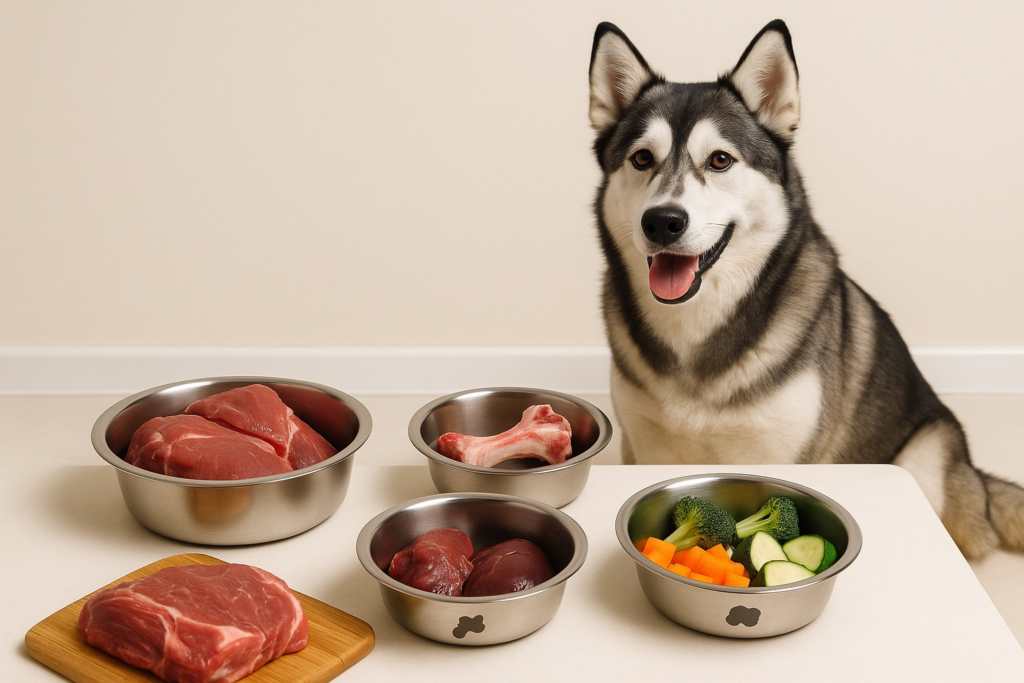
If you have weighed all the pros and cons, checked your freezer for space, and are ready for action, here is my coaching transition plan. The golden rule is no sudden movements! Switching to a new fuel is an endurance marathon, not a hundred-meter sprint. Your primary mission is to smoothly “rev up” that stomach acidity.
- Stage 1: The fasting pause. The stomach needs time to clear its old settings. A 12-24 hour fast for a healthy adult dog (never for puppies!) is the perfect start. Provide only clean water.
- Stage 2: Single-protein launch. We begin exclusively with one type of lean meat. Turkey or rabbit will work perfectly. Feed only the muscle portion. Skip the organs and bones entirely. Monitor the body’s reaction for 3-5 days.
- Stage 3: Adding the bone component. If the stool is normal, we introduce soft, raw bones. Smashed chicken necks are ideal. They will help firm up the stool, which can become slightly too loose from a pure meat diet.
- Stage 4: Introducing organs. Only during the second or third week do we start adding liver, heart, or raw beef tripe drop by drop. Watch the reaction closely. Tripe is heavy artillery for those digestive enzymes.
The home stretch: My coaching verdict
So what exactly is BARF in the end? It is definitely not just another fleeting social media trend. It is a powerful, evolutionarily justified tool. It can transform your pup into a literal terminator with a gleaming coat, fresh breath, and an inexhaustible energy reserve for the toughest trails and mountain hikes. But remember the main rule. This tool is exclusively for highly responsible and disciplined owners.
If you are constantly traveling, working late nights, or frequently forget to thaw a portion the night before, just don’t do it. Pick a high-quality holistic dry kibble instead. Don’t torture yourself or your dog with constant guilt.
But if you are willing to invest time into your partner, the results will blow your mind. Read the literature, geek out over meal prep, and hunt down the best local farm products. You will see an entirely different predator in your home, ready for any challenge. Take responsibility into your own hands. Closely monitor your fluffy athlete’s reactions and never rest on your laurels. And now – log off your screens immediately! Grab the leash, the favorite toy, and march outside to drill those commands! See you on the training field!