not recognized by the FCI (hybrid, developing) · USA
American Tundra Shepherd
A wolf's gaze and a shepherd's heart — a powerful northern hybrid on the edge of wild and domestic: intelligent, devoted to one master, wary and independent. The American Tundra Shepherd is a rare wolfdog developed in the USA from the German Shepherd and the tundra wolf; a complex, demanding animal for very experienced owners, not an ordinary family dog.
Apartment · not suitableKids · with caveatsCats · not suitableOther dogs · with caveatsBeginners · not suitable
The American Tundra Shepherd is a dog that walks the fine line between the wild and civilization. This breed is little known outside its homeland, and you're unlikely to bump into one on ordinary city streets during a morning jog. To an outsider, this encounter might not promise anything special, aside from perhaps a shiver down the spine from its piercing gaze. Direct descendants of wolves, representatives of this breed are wary of strangers, retaining the instincts of their wild ancestors. However, for a wise, experienced, and self-assured owner, they can become a universal companion. Read more on Tvaryny.
American Tundra Shepherd: Brief Breed Overview and Characteristics
This breed is a striking example of so-called "wolfdogs" or wolf-dog hybrids. Official cynology views them with caution, as the genetic lottery makes every individual unique in terms of temperament.
Origin: United States of America (developed by the military and private enthusiasts).
Year first mentioned: 1967 (start of the active experiment phase).
Lifespan: 10–12 years (in rare cases up to 14 with ideal care).
Height at withers: 25–31 inches (63–78 cm) (males are usually significantly larger and more massive than females).
Weight: 85–110 lbs (38–49 kg) (depends on the percentage of wolf blood and body type).
Group: Not recognized by the FCI (hybrid breed).
Comparison with Other Wolfdogs
It's important to understand that the American Tundra Shepherd is not the only experiment of this kind. The world knows other attempts to tame wolf blood. For instance, if you are looking for a dog with a more stable psyche and recognized status, it is worth paying attention to the Saarloos Wolfdog, which was bred in the Netherlands. Also well-known is the Czechoslovakian Wolfdog, which, unlike its American cousin, has received official recognition and is actively used in service.
Interesting Facts About the Tundra Shepherd
Doesn't bark, but "talks": Like wolves, these dogs rarely bark. They communicate through a wide range of sounds: howling, growling, whining, and specific "muttering."
Late maturity: Psychologically, these dogs remain "teenagers" longer than ordinary shepherds. Full character formation is completed only by 3–4 years.
Ability to open locks: Thanks to high intellect and nimble paws, they often learn to open simple latches on doors and gates by watching humans.
Absence of "doggy" smell: The coat of wolfdogs is less prone to accumulating that specific dog odor, even when it gets wet.
Breed History: From Secret Labs to Private Backyards
The history of this breed is shrouded in myths and semi-secret reports. The idea of crossing a dog with a wolf belonged to the American military, who in the mid-20th century sought to breed a canine "super-soldier" - a strong, enduring, and, crucially, tough breed for special operations work. The US government was looking for the ideal service animal that would possess the nose and survival skills of a wolf, but the obedience of a shepherd.
The best German Shepherds, serving as the standard for service dogs, and Tundra Wolves were used in the breeding program. Frank Kuykendall, who dedicated his life to studying wolf hybrids, is often cited as the program's curator. However, the result didn't meet the hopes of the military strategists: combining the guardian of the flock with its eternal enemy gave the world a dog with an extremely complex and unpredictable character.
Instead of unquestioning execution of orders, the American Tundra Shepherd demonstrated excessive caution (neophobia), typical of wild animals, or uncontrolled aggression in stressful situations. The animals often refused to work under pressure, which is unacceptable for army conditions. The military project was closed due to being cost-prohibitive and the difficulties in mass training.
Instead, enthusiasts took up the development of the breed, seeing different potential in these animals. They realized that with proper socialization, these dogs could be unique companions. To this day, the breed is not recognized by any major international kennel club (FCI, AKC), remaining in the status of an "experimental" or "developing breed."
What the American Tundra Shepherd Looks Like: Detailed Exterior Description
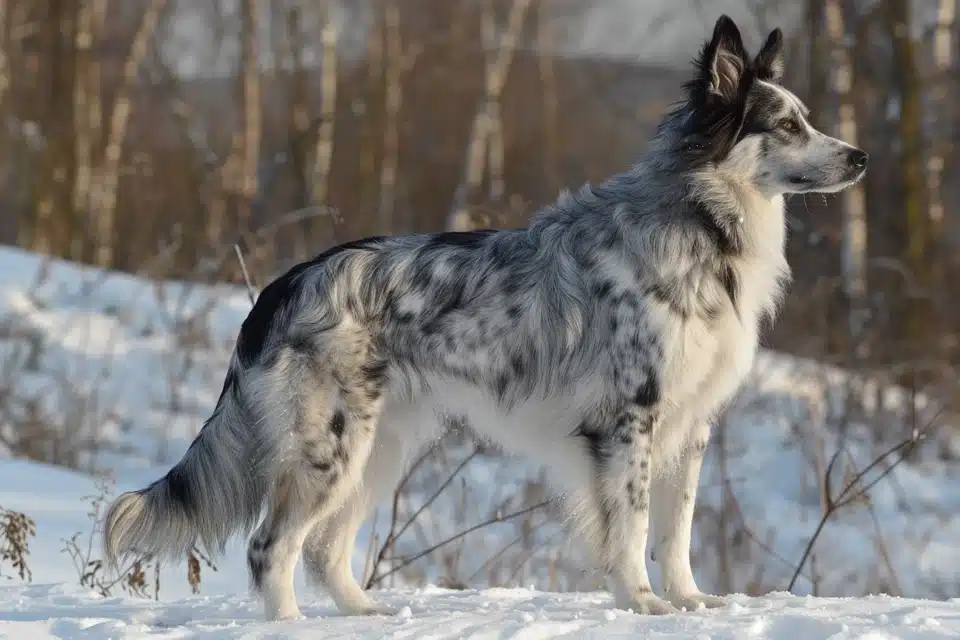
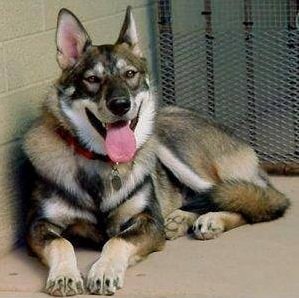
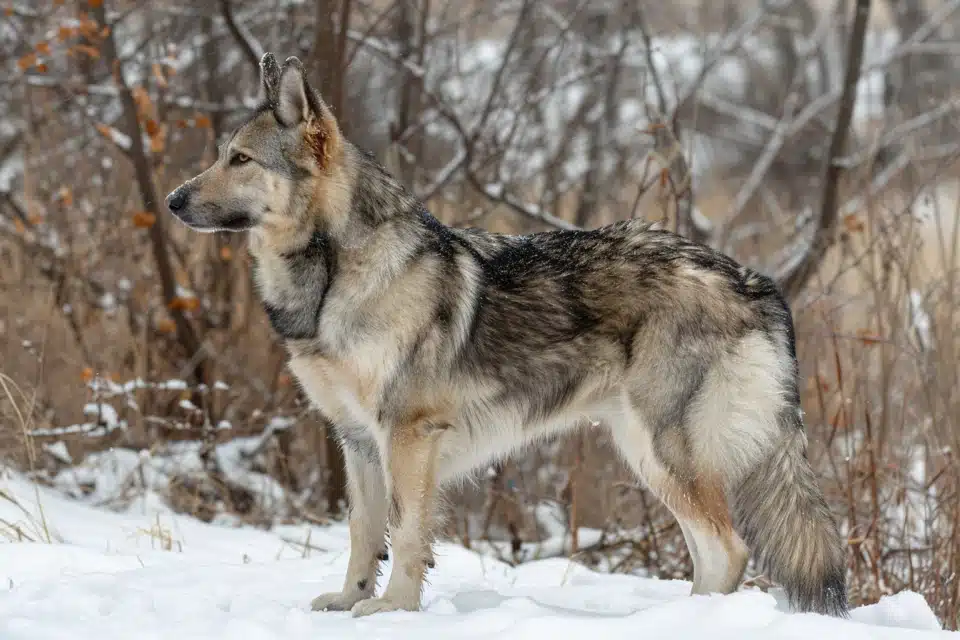
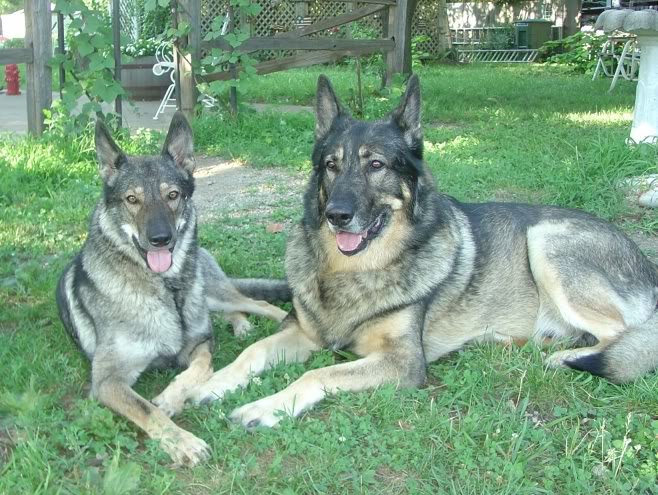
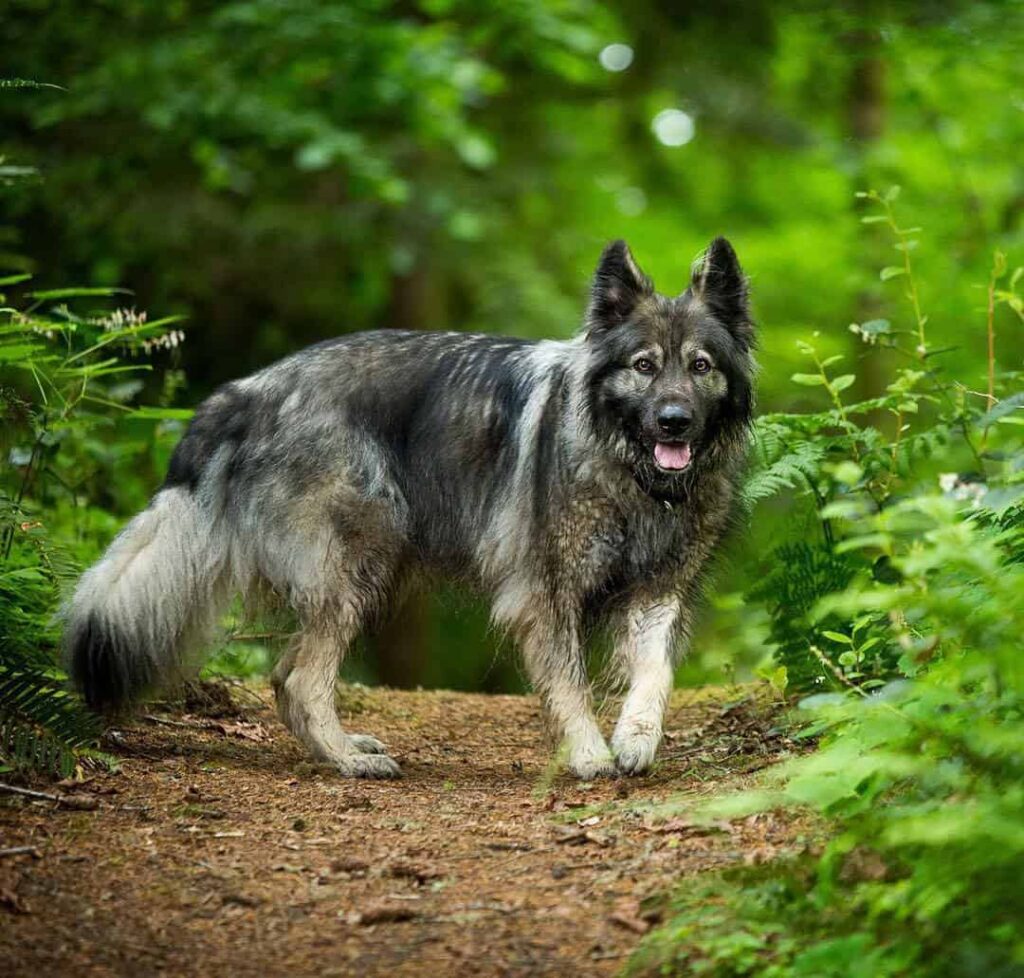
This is a sturdy and massive dog, whose appearance harmoniously (and sometimes chaotically) combines the legs and body of a German Shepherd with the coloring and grace of a Tundra Wolf. The American Tundra Shepherd gives the impression of an athlete ready for prolonged exertion.
Head and Muzzle
The head has a wedge-shaped form, characteristic of the lupoid type. The skull is broad, with a smooth transition to the muzzle. The jaws are extremely powerful - the bite force of these dogs significantly exceeds that of the average shepherd. The ears are large, triangular, set high, and always erect, like radar dishes scanning the area.
Eyes - Mirrors of a Wild Soul
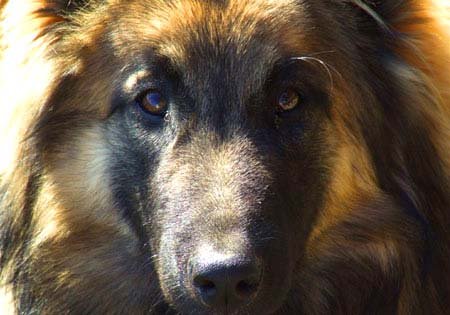
The eyes are usually almond-shaped or slightly round, set somewhat obliquely. Eye color often varies from amber to yellow, which is a direct legacy from wolves. The gaze is attentive, piercing, and "drilling." They never look subserviently, as many domestic breeds do.
Coat and Coloring
This is an animal capable of adapting to extreme temperature regimes. A dense double undercoat provides excellent thermal insulation: in winter, it protects against freezing, and in summer, after shedding, it becomes much thinner, allowing the skin to breathe. The semi-long guard hair is coarse to the touch.
The coloring most often resembles a wolf ("agouti"), but variations occur:
Charcoal black;
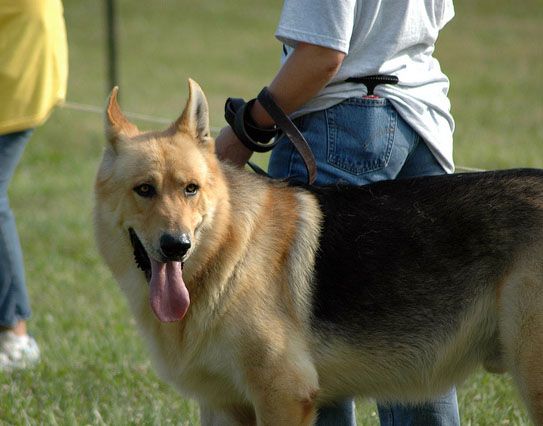
Black and tan (like a classic German Shepherd);
Various shades of gray (from silver to dark graphite);
Reddish-brown.
If you like the "wild" look, but the size of the Tundra Shepherd intimidates you, you might be interested to learn about the Alaskan Klee Kai (Mini Husky), which looks like a miniature version of the northern wolf but is purely a domestic pet, or the American Indian Dog, which has similiar roots but a softer character.
Character and Behavior: Wolf Temperament in a Home Setting
Such a domestic pet retains distinct wolf personality traits, and this isn't just a pretty metaphor. The American Tundra Shepherd may show heightened aggression towards strangers, although more often this manifests as extreme mistrust and a desire to avoid contact. This quality is used for guarding purposes on secured properties.
Pack Hierarchy
The dog is leery of strangers and recognizes as master only a spiritually strong "leader." This doesn't mean the owner should use physical force. On the contrary, a true alpha represents calm, confidence, and predictability. If the dog senses weakness, it will undoubtedly try to take the leadership position, which with such a large animal can end tragically.
Provided there is persistent and correct upbringing, it will be devoted to a human until its last breath. However, the wild part of its nature will never completely leave its sturdy body. They may "hunt" small animals, so living alongside cats or rabbits is extremely risky.
Training and Socialization: A Battle of Wits
The only chance to overcome the wolf nature of the American Tundra Shepherd is to put maximum effort into early socialization. The puppy needs to be introduced to people, city sounds, cars, and other dogs as early as possible (from 2 months old).
The trainer must have a firm hand and steady authority in the eyes of the pet. And also endless patience, as this breed is difficult to train in the classic sense of "obedience." They are intelligent, even too much so. They won't fetch a ball 20 times in a row because they see no point in it. The stubbornness of the wolf dog cannot be defeated by physical force and punishment—only by long-term work as a pair and positive reinforcement of correct behavior.
Important: Never try to "break" the Tundra Shepherd's psyche with force. This will lead only to aggression in response or to the animal withdrawing into itself.
Pros and Cons of the Breed
Advantages (+)
Disadvantages (-)
Exclusivity: Owning a rare animal.
Complex character: Not suitable for novices.
Guarding qualities: Innate instinct to protect territory.
Need for space: Apartment life is impossible.
Health: Endurance and strong immunity.
Aggression/Mistrust: Risk to strangers and other animals.
Intellect: Ability to make independent decisions.
Howling: They howl more often than they bark, especially at night.
Appearance: Impressive wolf beauty.
Shedding: Very heavy seasonal hair loss.
Care and Maintenance: Why Apartments Are a No-Go
It's clear that a dog with wolf blood in its veins cannot feel happy in the conditions of a cramped city apartment. This is truly a large animal that needs space, the opportunity to dig holes, and long walks in the fresh air (a minimum of 3–4 hours of active movement per day).
Enclosure Requirements
A secure enclosure should be built for the American Tundra Shepherd. An ordinary fence won't cut it. These dogs are escape artists. They can jump over a 6-foot fence or dig a tunnel in a matter of minutes. Therefore, the fence must be buried in the ground at least 20–30 inches, and it is desireable to have a protective overhang (anti-climb) at the top.
Hygiene
Hygienic care is not too complicated:
Twice a month, clean the dog's ears (they are open and dirt gets in).
Trim claws if they don't wear down naturally while running.
Twice a year—during seasonal shedding—comb out the fallen hair in time. Be prepared for a lot of fluff; you could comb enough wool from one dog for several pairs of warm socks.
Bathing the dog often is not recommended, so as not to wash away the protective fatty layer that allows them to endure bad weather.
Nutrition
Nutrition: Features of a Predator's Diet
Health and risks
Health and Typical Diseases
Frequently Asked Questions (FAQ) · 3
Is this breed safe for children?
We do not recommend bringing an American Tundra Shepherd into a family with small children. Although a properly raised dog may tolerate its "own" children, its size and reactivity can lead to accidental injuries. Sudden movements and screams from a child may be perceived as prey or a threat.
Is it legal to keep such a dog?
In most European countries and US states, there are strict restrictions or a total ban on keeping first-generation wolf hybrids. In Ukraine, this issue is less regulated by legislation, but the owner bears full criminal liability for the actions of their animal.
How do they cope with loneliness?
Very poorly. The wolf is a pack animal. Left alone for a long time in an enclosure, the Tundra Shepherd can fall into depression or begin destroying everything around it out of boredom and anxiety.
FAQ
Is the American Tundra Shepherd a dog or a wolf?
It is a wolfdog: a hybrid of the German Shepherd and the tundra wolf. Despite the wolf blood, modern lines are closer to the shepherd in behavior, but the temperament remains complex and demanding.
Is the breed suitable for a novice?
Absolutely not. It is a powerful, independent animal with elements of wild behavior; it needs an experienced owner, space, work and very early, consistent socialization.
Why was this breed created?
Originally as a mid-20th-century military project: the aim was to combine the wolf's stamina and nose with the shepherd's obedience. The army was not satisfied with the result, and enthusiasts developed the breed further.