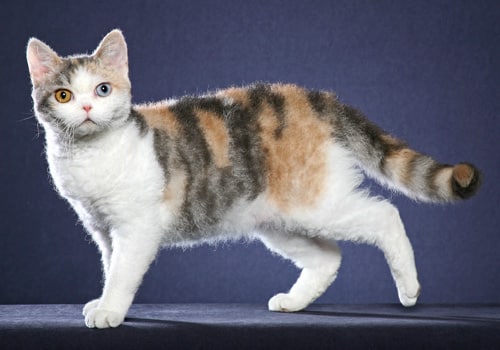
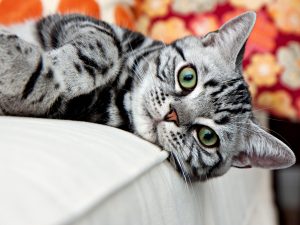
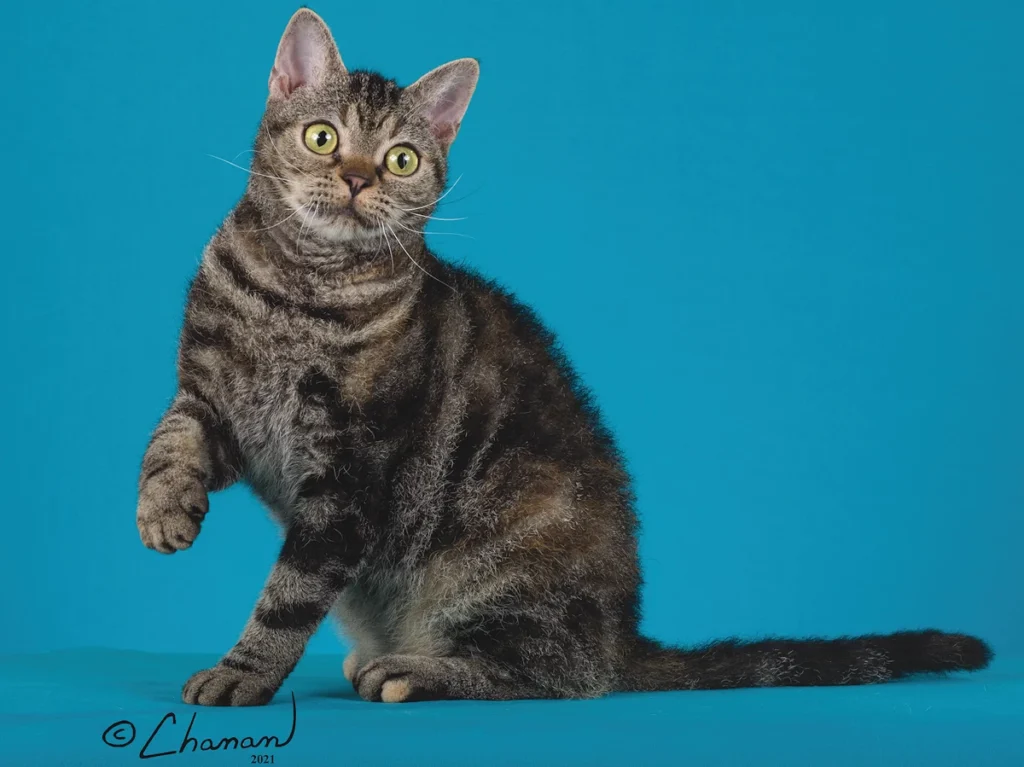
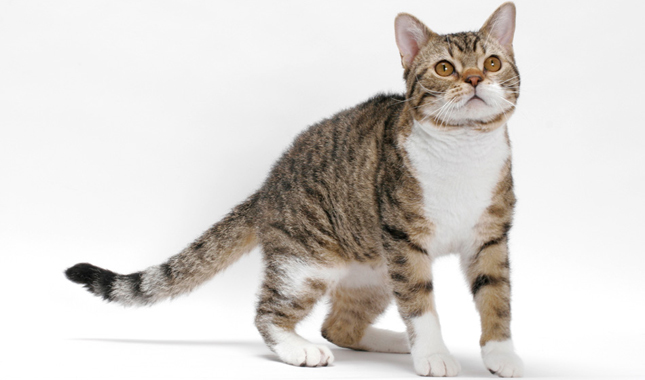
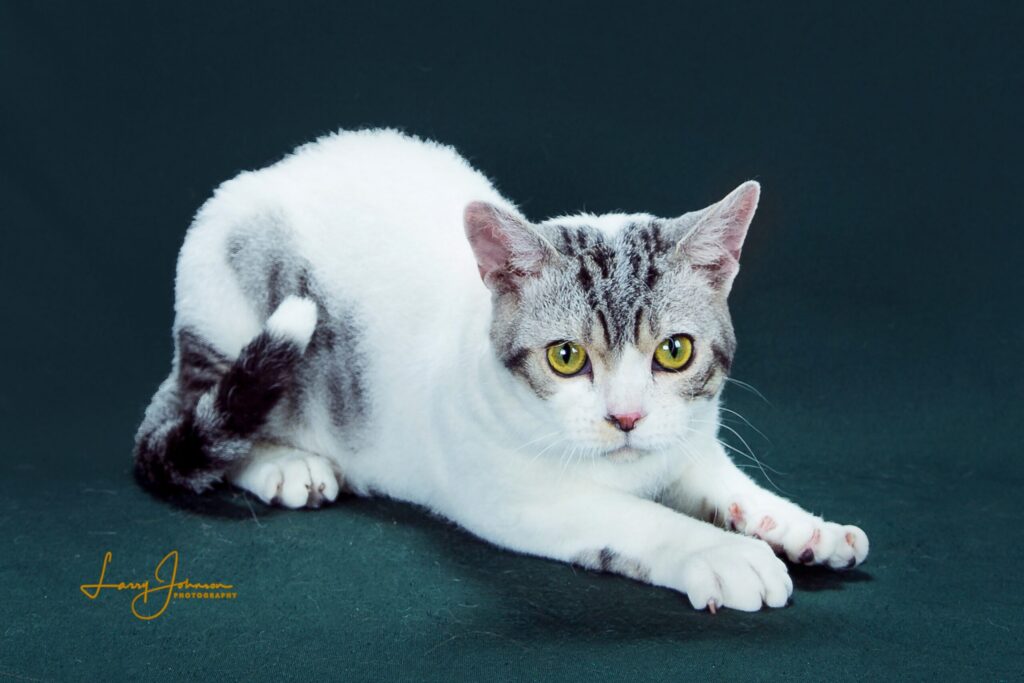
A cat with a unique springy, wiry “astrakhan” coat — calm and dependable: even-tempered, affectionate, sociable and undemanding. The American Wirehair is a rare breed that arose in the USA from a spontaneous mutation of the American Shorthair: every hair is bent into a hook, so the coat feels hard and springy like astrakhan. In character it is an affectionate, even-tempered and devoted cat, ideal for a beginner and a family with children.
KidsDogsOther catsBeginnersTime alone · with caveats
The American Wirehair is a truly unique breed, originating from a natural genetic mutation in the United States. Closely related to the American Shorthair, they were long evaluated under a shared breed standard. The most distinctive feature of the American Wirehair is its unusual coat—harsh, resilient, and curly, often compared to the texture of steel wool or lamb's fleece. Cats with characteristically curled whiskers are especially prized.
If you're seeking a devoted yet independent companion who can comfortably handle your absence, the American Wirehair could be the perfect choice. These cats are well-balanced, playful, and affectionate, known for getting along wonderfully with children and other pets. Learn more on Tvaryny.
American Wirehair: A Breed Overview
Origin: United States (New York State)
Year of Origin: 1966
Life Expectancy: 14–18 years (average 15 years)
Size: Medium to large
Weight: Males: 11–15 lbs; Females: 7.5–11 lbs
Coat Type: Harsh, resilient, short to medium length
Unique Mutation: The gene responsible for the wirehair coat (Wh gene) is dominant and unique. It is not found in other cat breeds. Even in outwardly similar curly-coated breeds, like the Selkirk Rex or Cornish Rex, the genes responsible for the curls are different.
Descended from One Kitten: The entire breed traces back to a single kitten named Adam, born on a farm in New York State in 1966.
Curled Whiskers: One of the most interesting traits of the breed, besides the harsh coat, is its curled or crimped whiskers. This is also a result of the Wh gene.
Varying Degrees of "Wire": The coat can range from very harsh and curly to barely wavy. Even in a single litter, kittens may have different coat textures.
American Exclusive: The breed remains relatively rare and little-known outside North America.
Similarity to its Shorthair Sibling: With the exception of its coat, the American Wirehair breed standard largely aligns with that of the American Shorthair cat.
Not Hypoallergenic: Despite its unusual coat, this breed is not hypoallergenic and can still cause reactions in sensitive individuals.
History of the American Wirehair Cat
The history of the American Wirehair is quite unique and began entirely by chance. In 1966, on a farm in Verona, New York, an unusual kitten was born in a litter of ordinary American Shorthairs. This kitten had rare red-and-white fur that was noticeably harsher and curlier than its siblings'. This kitten, named Adam (Council Rock Farm Adam of Hi-Fi), became the progenitor of the new breed.
Adam was bred with a local cat who also carried the wirehair gene (though she didn't express it). Their kittens inherited their father's unique coat.
To broaden the gene pool and solidify desired traits, American Wirehairs were selectively bred with American Shorthairs. This practice helped maintain the sturdy build and good temperament of their Shorthair ancestors while introducing the distinctive coat texture.
In 1967, the breed was recognized by the Cat Fanciers' Association (CFA) for registration, and in 1978, it gained championship status with the CFA. Although the American Wirehair has gained popularity in the US and Canada, it remains quite rare outside North America. Its unique coat, a result of a spontaneous dominant mutation, makes it a true treasure in the world of feline breeds.
What Does an American Wirehair Look Like: Breed Standard
The American Wirehair is a medium to large-sized cat, robust and muscular yet flexible. Its appearance largely mirrors that of the American Shorthair, save for its distinctive coat texture.
What Does an American Wirehair Look Like: Breed Standard · 10
Characteristic
Description
General Appearance
A medium to large-sized cat, strong, muscular, with a well-developed chest. Not overly compact, flexible.
Head
Large, slightly longer than wide. Full cheeks. Square muzzle with a strong chin. Medium-length nose. Smoothly curved forehead.
Ears
Medium-sized, set wide apart, with rounded tips. Should not be too open at the base.
Eyes
Large, round, set wide apart, slightly slanted. Eye color is bright and clear, complementing the coat color (most often gold, but can be green, blue, copper).
Body
Strong, muscular, with a well-developed chest and heavy boning. Back is broad, strong, and straight.
Legs
Medium length, strong, with firm muscles.
Paws
Rounded, large, compact. Paw pads match the coat color.
Tail
Medium length, thick at the base, tapering to a rounded tip. Proportional to the body.
Coat
The most characteristic feature. Harsh, resilient, dense, wavy, or curly. Each hair is bent or hooked. To the touch, it resembles wire or lamb's fleece. Most pronounced on the head, back, sides, and thighs. Even the whiskers are often curled. Density can vary.
Coloration
Almost all colors and patterns typical of domestic cats are accepted (solids, tabbies, bi-colors, colorpoints, etc.). Most common are tabbies (especially silver with black markings), white, black, red, and cream.
It's important to note that the degree of "wire" and curliness of the coat can vary from cat to cat. Kittens may have softer fur that becomes harsher with age.
American Wirehair Temperament: Character and Behavior
The American Wirehair inherited the best personality traits from its Shorthair ancestors. These are well-balanced, gentle, and friendly animals, making them an excellent fit for family life.
Calm and Independent: These are not cats that demand constant attention. They are quite self-sufficient and can comfortably spend time alone while their owners are at work. At the same time, they value human companionship and will happily greet you at the door.
Playful and Active: Despite their calm demeanor, American Wirehairs maintain their playfulness throughout their lives. They love interactive toys, chasing a laser dot, or batting a ball. Moderate activity helps them stay in good physical shape.
Intelligent and Clever: These cats learn quickly and adapt easily to new environments. They can be taught simple tricks, especially when positive reinforcement in the form of treats is used.
Friendly to Everyone: American Wirehairs generally get along well with children of all ages, showing patience. They also coexist peacefully with other cats and dogs, especially if introductions occur at an early age.
Quiet Voice: These cats are not "talkative." They vocalize rarely and softly, usually only to draw attention to their needs (e.g., reminding you about mealtime).
Loyal Companion: They form strong bonds with their owners and enjoy being nearby, observing household activities, or simply napping on a lap. They are an ideal cat companion for people of all ages.
While they possess a degree of independence, they shouldn't be left without attention for too long. They need interaction and affection. This breed is an ideal choice for those seeking a calm yet interesting and devoted friend.
Training and Socialization of the American Wirehair Cat
American Wirehair cats are intelligent and clever animals, which makes them relatively easy to train and socialize. While cats are generally more independent than dogs, purposeful upbringing from an early age will help shape desired behaviors.
Socialization:
Early socialization is key to raising a well-balanced and friendly cat. Introduce your kitten to various people, sounds, environments, and other animals (if they exist or are planned) in a safe and controlled manner.
Meeting People: Invite guests over, allow them to gently pet the kitten, and offer treats. This will help your cat not fear strangers in the future.
Meeting Children: Teach children how to interact properly with the cat—no pulling tails, no yelling, no disturbing during sleep or eating.
Meeting Other Animals: Conduct introductions gradually, under supervision, in a neutral territory.
Getting Used to Procedures: From a young age, accustom your kitten to ear, paw, and teeth examinations, as well as brushing. This will significantly ease grooming in adulthood.
Training:
You can train an American Wirehair cat using positive reinforcement methods. Yelling and punishment are ineffective and can only scare the animal.
Litter Box Training: Kittens usually quickly understand where their litter box is. Show the kitten the litter box after sleeping and eating. Keep the litter box clean.
Scratching Post Training: To prevent your cat from damaging furniture, offer several types of scratching posts (vertical, horizontal) in different locations. Praise and encourage them when they use the scratching post.
Command Training: American Wirehairs can be taught simple commands, such as "come" or "sit" (though this will require patience). Use treats and praise as rewards. Training sessions should be short (5–10 minutes) and regular.
Correcting Undesirable Behavior: If your cat does something undesirable (e.g., jumping on the table), redirect their attention to a toy or scratching post. Use a clear "No" or "Don't" without yelling.
Remember that the key to successful upbringing is patience, consistency, and love. Establishing a trusting relationship with your American Wirehair cat is the foundation for successful training and harmonious coexistence.
Pros and Cons of the American Wirehair Breed
Like any breed, the American Wirehair has its advantages and disadvantages. It's important to consider them before getting such a pet.
Pros of the Breed:
Unique Appearance: The harsh, curly coat makes these cats distinctive and appealing.
Friendly and Affectionate Nature: They get along wonderfully with all family members, including children and other animals.
Balanced Temperament: These are calm yet playful cats who don't create much noise or fuss.
Independence: They handle being alone well, making them suitable for busy individuals.
Good Health: the absence of described hereditary disease is not the absence of risk — breeding animals are screened all the same.
Low-Maintenance Coat Care: They don't require frequent brushing.
Intelligent and Clever: Easy to train and adapt.
Cons of the Breed:
Rarity and High Price: Finding an American Wirehair kitten can be challenging, especially outside the US and Canada, and their price is usually high.
Prone to Obesity: They have good appetites and require dietary control and sufficient physical activity.
Potential Skin Problems: Some individuals may have a predisposition to oily seborrhea or skin allergies due to coat peculiarities.
Not Suitable for People with Cat Allergies: Despite their harsh coat, they are not hypoallergenic and can still cause reactions in sensitive individuals.
Requires Specific Coat Care: Although care is not difficult, it requires caution to avoid damaging the coat texture.
Weighing all the pros and cons will help you make an informed decision on whether this unique and charming breed is right for you.
How to Care for the American Wirehair's Coat?
The unique coat of the American Wirehair requires a slightly different approach to grooming than most other breeds. The main rule is not to over-brush, so as not to damage the characteristic texture of the hairs.
Brushing: Unlike long-haired breeds, Wirehairs are not recommended for frequent brushing. Weekly light brushing with a soft-bristled brush or a special wide-toothed comb will be sufficient to remove dead hairs and distribute skin oils. Excessive or overly vigorous brushing can straighten or break the curled hairs. During shedding season (usually spring and fall), you can brush slightly more often—2–3 times a week.
Bathing: Bathe your American Wirehair only when necessary, if the cat is truly dirty. Frequent bathing can strip the coat of natural oils, making it more brittle and less "wiry." Use only special cat shampoos. After bathing, gently pat the coat dry with a towel and allow it to air dry naturally. Do not use a hairdryer, as hot air can damage the coat structure.
Oily Coat: Some Wirehair cats may be prone to increased coat oiliness, especially in warmer weather. In such cases, slightly more frequent bathing or the use of dry shampoo may be necessary. Consult with a veterinarian or professional groomer for the best care.
Other Procedures: Don't forget about regular nail care (trimming every 2–3 weeks), eye care (wiping corners with a damp cloth as needed), and ear care (checking and cleaning with special lotions if there's dirt). Oral hygiene, including teeth brushing, is also important.
Procedure
Frequency
Notes
Brushing
Once a week (outside shedding season), 2–3 times a week (during shedding)
Use a soft brush or wide-toothed comb. Do not brush too vigorously.
Bathing
As needed (rarely)
Use special shampoo. Do not use a hairdryer.
Nail Trimming
Every 2–3 weeks
Use specialized cat nail clippers.
Ear Inspection/Cleaning
Weekly (inspection), clean as needed
Use special lotion and cotton pads.
Teeth Brushing
Several times a week (ideally daily)
Use cat toothpaste and brush.
Remember that proper care will help preserve your pet's unique coat texture and overall health.
Nutrition
American Wirehair Nutrition: Key Recommendations
Health and risks
American Wirehair Health: Common Ailments and Prevention
Frequently Asked Questions About the Breed (FAQ) · 6
Do American Wirehair cats shed a lot? They shed moderately, like most short-haired cats. Major shedding occurs in spring and fall. Regular (but not overly frequent) brushing will help control the amount of hair in your home.
Are they suitable for apartment living? Yes, they are perfectly suited. They don't require much space, are calm, and not overly noisy. The main thing is to provide them with enough toys, resting spots, and opportunities for activity (e.g., a cat tree).
Do American Wirehairs need frequent bathing? No, quite the opposite. Bathe them only when absolutely necessary, as frequent washing can damage the unique structure of the coat and strip the skin of its natural protective layer.
Do they get along with dogs? Usually yes, especially if introductions occur at an early age and the dog also has a friendly disposition. It's important to introduce them gradually and under supervision.
How much does an American Wirehair kitten cost? Due to the breed's rarity, the price for kittens can be quite high. Judge transparency instead of the sum: a written contract, registration papers, documented screening for the hereditary conditions of the breed, a health guarantee, and a visit with the queen and her litter. That is what separates a responsible breeder from a broker.
Can they be let outside? As with most purebred cats, free outdoor access is not recommended due to risks (injuries, infections, theft, poisoning). If you want to provide your cat with fresh air, it's best to set up a safe enclosure or walk them on a harness.
How does the American Wirehair differ from the American Curl? These are entirely different breeds. The main distinction of the American Wirehair is its unique harsh, curly coat. The American Curl is known for its characteristic ears that curl backward, while its coat can be either short or long, but it is soft and silky, not wiry.
Video About the Breed
FAQ
What is the American Wirehair?
It is a rare American breed that arose in 1966 from a spontaneous mutation of the American Shorthair: every hair is bent into a hook, so the whole coat — guard hair, undercoat and even the whiskers — is hard, springy and curled like astrakhan.
Is the American Wirehair's coat hard to care for?
No, quite the opposite — the unique “wiry” coat is barely touched: frequent brushing or bathing spoils and dries out the curl, so an occasional light stroke by hand is enough.
What is the American Wirehair's character?
Very calm and dependable: an even-tempered, affectionate and sociable cat, good with children and animals, undemanding and adaptable — one of the best options for a beginner.