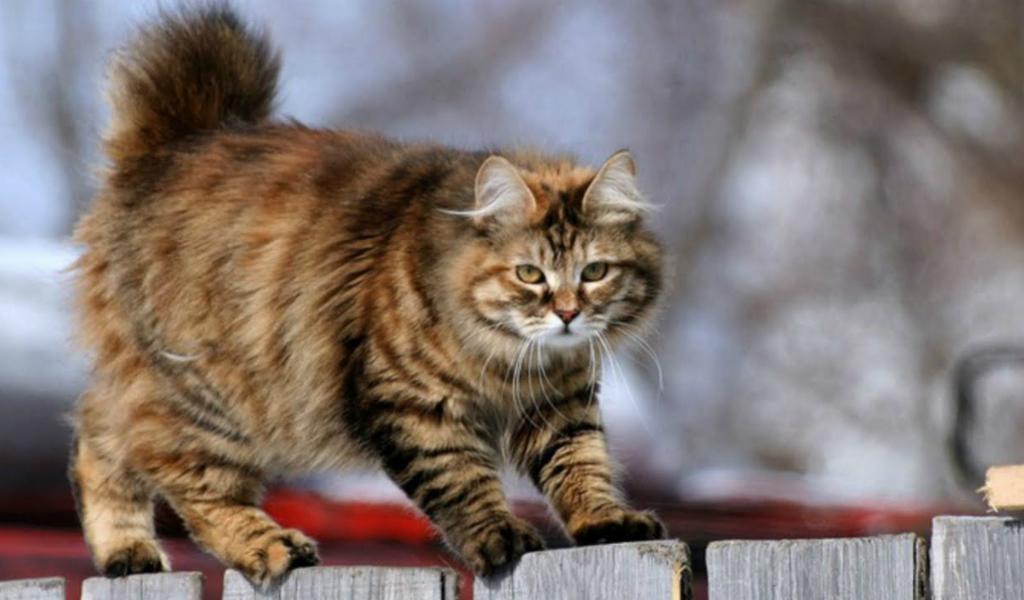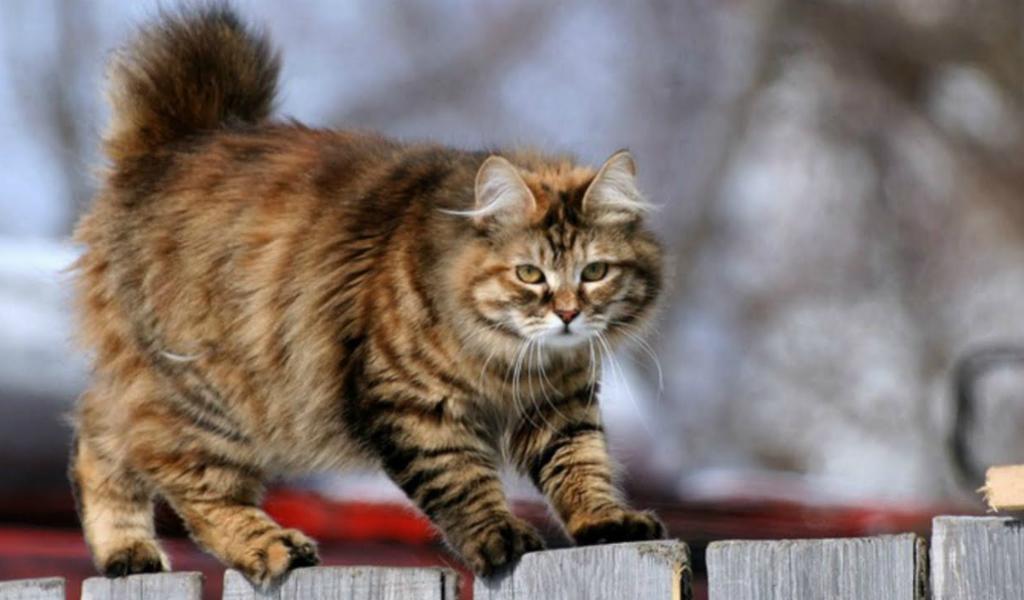
The Kurilian Bobtail Longhair is a unique, naturally developed cat breed hailing from the Kuril Islands. These animals are impressive for their physical strength, resilience, and excellent natural health. Key physical traits include a strong, muscular body, noticeably longer hind legs, and of course, a distinctive short, “pom-pom” tail that they typically hold upright. However, Kurilian Bobtails are valued for more than just their exotic appearance. A special aspect of their personality is their incredible loyalty and devotion to people, often compared to that of a dog. They are smart, highly trainable, and wonderfully gentle with children. While these cats have an independent streak and are brave hunters, it doesn’t stop them from being affectionate and friendly companions. However, their hunting instinct is so powerful that small pets like hamsters or birds are unlikely to feel safe around them. You can find more about this and other breeds on Tvaryny.
Kurilian Bobtail Longhair: Breed Overview

| Parameter | Characteristic |
| Origin | Kuril Islands (Russian Federation, Japan – disputed territory) |
| Time of Breed Recognition | 1991 (SFF, Russia), 1994 (WCF), 2002 (FIFe), 2012 (TICA) |
| Lifespan | 14-20 years (average 15-17) |
| Size | Medium to large |
| Weight | Males: 11-16.5 lbs, Females: 7.5-11 lbs |
| Height at the Withers | Approximately 12-14 inches |
| Coat Type | Semi-long (Longhair/LKH) |
| Coloring | Various, with the exception of colorpoint, lilac, chocolate, and their variations with white. Most popular are tabby (striped, spotted, marbled) with or without white. |
| Tail | Short (1.5 to 8 cm without fur), with kinks and bends, a “pom-pom” or “spiral” shape. Unique to each individual. |
| Temperament | Active, intelligent, curious, loyal, sociable, playful, balanced. |
| Grooming Needs | Moderate (brushing 1-2 times a week) |
| Activity Level | High |
| Compatibility with Children | High |
| Compatibility with Other Animals | Gets along well with cats and dogs. Dangerous for rodents and birds. |
History of the Kurilian Bobtail
The history of the Kurilian Bobtail is an example of a breed that naturally developed in the isolated conditions of the Kuril Islands, a volcanic archipelago located between Russia’s Kamchatka Peninsula and Japan’s Hokkaido Island. It’s believed that these cats have lived on the islands (primarily Kunashir and Iturup) for at least 150-200 years, and possibly longer. Their ancestors were likely cats brought to the islands by sailors or settlers.
One theory suggests that the Japanese Bobtail played a role in the breed’s development, as Japanese fishermen or merchants may have brought them to the islands. Indeed, both breeds share a characteristic short tail, but Kurilian Bobtails are significantly more massive, have a stronger bone structure, and a different coat type, which suggests an adaptation to the Kurils’ harsher climate. It’s also possible that native Siberian cats contributed to their appearance, although there is no direct proof of this crossbreeding.
The harsh natural conditions—a cold climate, windy weather, and the need to hunt for food on their own (fish, small rodents)—helped shape these cats into strong, resilient, and intelligent animals with excellent hunting skills. Their physical strength, disease resistance, and dense coat are all a result of natural selection.
Kurilian Bobtails began to make their way to the mainland in the mid-20th century, thanks to military personnel and scientists returning from assignments on the Kuril Islands. These unusual cats with short tails and a friendly disposition quickly gained attention. Systematic work on the breed only began in the late 1980s, driven by enthusiastic Russian cat fanciers.
The first breed standard was developed and adopted by the Soviet Feline Federation (SFF) in 1991. International recognition followed: the World Cat Federation (WCF) recognized the breed (both coat variations—the shorthair KSB and longhair KBL) in 1994. The breed was later recognized by FIFe (Fédération Internationale Féline) in 2002 and TICA (The International Cat Association) in 2012. Today, Kurilian Bobtails, both longhair and shorthair, are a recognized and popular breed in many countries worldwide.
What the Kurilian Bobtail Longhair Looks Like: Breed Standard
The Kurilian Bobtail Longhair is a medium to large cat with a strong, muscular body and a distinctive appearance that sets it apart from other breeds.
- Body: Compact and powerful, with well-developed muscles. The back has a characteristic arched line from the shoulder blades to the rump. The hindquarters are slightly elevated because the hind legs are noticeably longer than the front ones. The chest is broad.
- Head: A large trapezoid shape with rounded contours. The profile has a gentle curve at the level of the lower eye rim. Cheekbones are high, and cheeks are full. The muzzle is medium in length, quite broad, and smoothly contoured. The chin is well-developed.
- Ears: Medium-sized, wide at the base, slightly tilted forward, with rounded tips. Set high and wide apart. Tufts of hair on the tips of the ears and inner ear tufts are desirable, adding to their lynx-like appearance, especially in longhaired individuals.
- Eyes: Large, rounded or almond-shaped, set slightly slanted and wide apart. Eye color should harmonize with the coat color. Shades of yellow, gold, and green are most common. Cats with a white coat or a lot of white fur may have blue eyes or heterochromia (odd-colored eyes).
- Limbs: Strong, medium in length, with well-developed muscles. The hind legs are noticeably longer than the front ones, giving the cat a specific stance and contributing to its jumping ability. Paws are rounded and compact.
- Tail: The main distinguishing feature of the breed. It is very short (the visible length without fur is from 0.6 to 3 inches), composed of one or more kinks, bends, and knots. It can be rigid or mobile. Due to its thick fur, it looks like a “pom-pom” or a “brush.” Each tail is unique, like a fingerprint. It should be held upright.
- Coat (longhair variation – KBL): Semi-long, silky to the touch, with a moderately developed undercoat. A distinct “ruff” forms around the neck, and “britches” on the hind legs. The tail is very well-furred, which creates the pom-pom effect. The coat’s texture is such that it is less prone to matting and requires minimal grooming compared to other longhaired breeds like the Persian cat or the Exotic Longhair.
- Coloring: Almost all traditional colors are allowed, both solid and patterned (tabby – marbled, tiger-striped, spotted), bi-colors (a combination of a main color with white), and tortoiseshell. Colorpoint variations, as well as chocolate, lilac, cinnamon, fawn, and their combinations with white, are not permitted (according to WCF, FIFe standards).
It’s important to note that the Kurilian Bobtail Longhair has pronounced sexual dimorphism: males are significantly larger and more massive than females.

Kurilian Bobtail Temperament: Personality and Behavior
The Kurilian Bobtail Longhair has a unique personality often described as a mix of cat-like independence and dog-like devotion. They are intelligent, curious, and very active cats.
- Loyalty: One of their most striking traits is their attachment to their owner and family. They often choose one person as “their own,” following them everywhere, but are friendly to all family members. They love being the center of attention and participating in all household activities.
- Intelligence and Curiosity: Kurilians are exceptionally smart cats. They easily learn to open doors, cabinets, and fetch toys. Their curiosity knows no bounds, so it’s important to provide a safe environment for their explorations.
- Activity and Playfulness: These are very energetic cats who love to play. They need regular physical exercise and interactive games to burn off energy. Thanks to their strong hind legs, they are excellent jumpers and love climbing to high places. Kurilians play with enthusiasm at any age.
- Hunting Instinct: As descendants of native cats who survived by hunting, Kurilian Bobtails have a very strong hunting instinct. They are tireless hunters of rodents and insects. This is why keeping them with small pets (hamsters, rats, parrots, small fish) is extremely risky. Even a well-behaved cat can be overcome by instinct.
- Attitude to Water: Unlike many other cats, Kurilian Bobtails often aren’t afraid of water, and some even enjoy swimming or playing with a running faucet. This is attributed to their island origin and the need to catch fish.
- Sociability: Kurilians generally get along well with other cats and dogs, especially if they grew up together. They may even take on leadership roles in a “mixed” pack. They can be initially wary of strangers but quickly warm up if they see a friendly attitude.
- Voice: Kurilian Bobtails are not very “talkative.” Their meow is quite quiet, and they sometimes make specific sounds similar to chirps or short trills.
- Affection and Gentleness: Despite their high energy and hunting instincts, Kurilians are very affectionate cats. They love cuddles, petting, and lounging with their owner. They are patient and gentle with children, which makes them excellent family pets.
The Kurilian Bobtail’s temperament makes it a great companion for active people and families who are ready to give them attention and provide the necessary conditions for play and development.
Health of the Kurilian Bobtail Longhair: Common Ailments and Prevention
Kurilian Bobtails are a breed that developed through natural selection, thanks to which they inherited robust health and a strong immune system. This is one of the healthiest cat breeds, and with proper care, they can live long and active lives, often reaching 15-20 years.
However, like all living creatures, they are not immune to certain health issues. While specific genetic diseases unique to this breed have not yet been identified due to their high genetic diversity, some general cat problems may occur:
- Digestive Problems: Some Kurilians may have sensitive digestion. It’s important to choose a high-quality food and avoid overfeeding.
- Urinary Tract Disease (UTD): Like many cats, especially neutered/spayed ones, there is a risk of developing UTD. Prevention involves proper nutrition (balanced food, sufficient water intake), weight control, and regular veterinary check-ups.
- Dental Problems: Tartar buildup and gingivitis can occur with age. Regular oral examinations and teeth cleaning (with special pastes or foods) help prevent these issues.
- Injuries: Due to their high activity and love of jumping, Kurilians may be prone to injuries (bruises, sprains, fractures). It’s important to create a safe environment, especially if the cat lives in an apartment (window screens are a must).
Prevention is key to health:
- Regular Vet Visits: Annual visits to the vet for check-ups and vaccinations are mandatory. For cats older than 7-8 years, twice-yearly check-ups are recommended.
- Vaccinations: Timely vaccinations against core feline infectious diseases (panleukopenia, calicivirus, rhinotracheitis, rabies).
- Parasite Control: Regular treatment for fleas, ticks, and worms, even if the cat doesn’t go outside.
- Balanced Diet: Use high-quality foods (super-premium or holistic class) or a well-balanced raw diet.
- Weight Management: Obesity can lead to many health problems (diabetes, joint issues, heart disease).
- Sufficient Physical Activity: Provide opportunities for play and movement.
Overall, the Kurilian Bobtail Longhair is a resilient breed with excellent health. Following simple care and prevention guidelines will help your pet stay healthy and active for many years.

How to Groom the Longhaired Kurilian Bobtail’s Coat
Despite the Kurilian Bobtail Longhair’s luxurious semi-long coat, grooming it is not as difficult as it might seem. Their fur has a special structure: it’s silky, with a moderate undercoat, and because of this, it is less prone to matting compared to many other longhaired breeds. You can read about the Persian Cat and the Exotic Longhair for comparison.
Key Grooming Recommendations:
- Brushing: It’s recommended to brush your cat 1-2 times a week. This helps remove dead hair, prevents hairballs from forming in the cat’s stomach, and keeps the coat in good condition. Use a metal comb with both wide and fine teeth or a slicker brush.
- Shedding Season: Kurilian Bobtails shed seasonally, usually in the spring and fall. During this time, you should brush them more often—3-4 times a week or even daily—to help remove excess undercoat and reduce the amount of hair in your home.
- Bathing: You only need to bathe a Kurilian Bobtail when necessary (for example, if the cat gets very dirty or before a show). Their coat has a natural protective layer, and frequent washing can disrupt it. Use special shampoos for longhaired cats. Some Kurilians are fine with water, which makes the process easier.
- Mats: Although mats are rare, they can appear in areas of high friction—under the armpits, behind the ears, on their “britches.” If a mat forms, try to gently work it out with your fingers or a mat breaker. Do not try to cut out mats with scissors, as you can easily injure the cat’s skin.
Other Grooming Aspects:
- Claws: Trim their claws about once every 2-4 weeks with special cat nail clippers. Only trim the clear tip, avoiding the pink part (the quick), where blood vessels and nerves are located. A scratching post in the home is a must.
- Ears: Check their ears regularly (once every one to two weeks). Clean them as needed with a cotton pad moistened with a special ear-cleaning solution. Do not use cotton swabs for deep cleaning.
- Eyes: Generally, Kurilian Bobtails’ eyes don’t require special care. If there are small secretions in the corners of the eyes, you can carefully remove them with a clean tissue or cotton pad moistened with warm water or a special eye solution.
Regular but not overly burdensome grooming will help maintain your longhaired Kurilian Bobtail’s luxurious appearance and promote their health.
Training and Socialization of the Kurilian Bobtail
Kurilian Bobtails are among the few cat breeds that are easily trainable and often exhibit dog-like behavior. Their high intelligence, curiosity, and strong attachment to their owner make the training process interesting and effective.
Training Features:
- Methods: The best method is positive reinforcement. Use treats, praise, and games as rewards for correct behavior or a completed command. Punishment and yelling are ineffective and can destroy the trust between you and your cat.
- Commands: Kurilians can learn basic commands such as “come,” “sit,” and “give paw.” They are especially easy to teach fetching—bringing back thrown toys or balls.
- Learning Tricks: Thanks to their agility and love of games, you can teach them various tricks, such as jumping through a hoop or overcoming small obstacles.
- Leash and Harness Training: Many Kurilian Bobtails adapt well to a harness and leash, which allows for safe outdoor walks. It’s best to start training from an early age.
- Session Length: Training sessions should be short (5-10 minutes) and regular so the cat doesn’t lose interest. Always end a session on a positive note.
- Using Interactive Toys: Puzzle toys where they have to get treats out stimulate a Kurilian’s mental activity and satisfy their need for intellectual challenges.
Socialization:
Early and proper socialization is important for developing a balanced Kurilian Bobtail personality.
- Meeting People: From a young age, get the kitten used to contact with different people (family members, guests). This will help them grow into a sociable and not fearful cat.
- Meeting Other Animals: If you have other pets, introduce the kitten to them gradually and under supervision. Kurilians usually get along well with other cats and dogs, especially if the introduction happens when they are young. Remember their strong hunting instinct towards small animals!
- Getting Used to Procedures: From a young age, get the cat used to having their ears, eyes, and teeth checked, as well as brushing and claw trimming. This will make future care much easier.
- New Sounds and Environments: Gradually introduce the kitten to different sounds (vacuum cleaner, hairdryer) and situations (car rides in a carrier) so they don’t become afraid of them as an adult.
Thanks to their cleverness and desire to interact with people, the Kurilian Bobtail Longhair can become not just a pet, but a true companion capable of surprising you with their abilities and loyalty.

Diet for the Kurilian Bobtail Longhair: Key Recommendations
Proper nutrition is the foundation of health and longevity for any cat, and the Kurilian Bobtail Longhair is no exception. Although this breed developed in harsh conditions and isn’t considered picky about food, it’s important to provide them with a balanced and high-quality diet that meets their needs as an active predator.
Main Feeding Principles:
- High Protein Content: Like all cats, Kurilians are obligate carnivores, so their diet must be based on animal protein (meat, poultry, fish). Choose foods where meat ingredients are at the top of the ingredient list.
- Food Quality: It’s recommended to use ready-made foods from the super-premium or holistic class. They have a balanced composition, contain high-quality ingredients, and the necessary vitamins and minerals. Cheap economy-class foods often contain a lot of grains, artificial additives, and low-quality protein, which can negatively affect a cat’s health.
- Combining Dry and Wet Food: Many veterinarians recommend a mix of dry and wet food. Dry food helps clean teeth of plaque, while wet food provides additional hydration, which is important for preventing urinary tract disease.
- Raw Feeding (BARF/RAW): If you choose a raw diet, it must be carefully balanced by a veterinary nutritionist. It should include raw or frozen meat (beef, chicken, turkey), organ meats (heart, liver – in small amounts), bone content (e.g., chicken necks), a small amount of vegetables, and vitamin-mineral supplements. You should absolutely not feed your cat human table scraps!
- Fish in the Diet: Given the natural preferences of “fishermen” Kurilians, you can periodically (once or twice a week) give them high-quality marine fish (boiled, without bones). Fish should not be the basis of their diet, as this can lead to a vitamin B1 deficiency and an excess of phosphorus.
- Fresh Water: Your cat should always have access to clean, fresh water. This is especially important when feeding dry food.
- Portion Control: Follow the recommended feeding guidelines on the food packaging or those calculated by a veterinarian. Do not overfeed your cat to avoid obesity. Kittens are fed more often (3-4 times a day), while adult cats are fed twice a day.
- Fresh Greens: You can offer your cat special cat grass (sprouted oats, wheat). It helps with passing hairballs and is a source of vitamins.
Table: Example of a Daily Ration (combined feeding for an adult cat weighing 11 lbs)
| Meal | Food Type | Approximate Amount |
|---|---|---|
| Morning | Wet food (pouch or can) | ~1.4-1.8 oz |
| Evening | Dry food (super-premium/holistic) | ~1.4-2.1 oz (depending on calorie count and activity level) |
| Throughout the day | Access to fresh water | Constantly |
This is just an example; exact portions depend on the specific food, your cat’s age, weight, and activity level.
Remember that an individual cat’s needs may differ. Observe your pet’s weight and overall condition and adjust their diet as needed, in consultation with a veterinarian.
Pros and Cons of the Kurilian Bobtail Longhair Breed
Like any breed, the Kurilian Bobtail Longhair has its advantages and disadvantages. It’s important for potential owners to weigh all the pros and cons before getting such a cat.
| Pros (+) | Cons (-) |
|---|---|
| Exotic Appearance: The unique short “pom-pom” tail, strong build, and lynx-like resemblance (especially with ear tufts) make them very attractive. | Very Strong Hunting Instinct: Not suitable for households with small pets (rodents, birds, fish). Can even hunt large insects. |
| Loyal and Companionable Nature: They form strong bonds with their owner, love being close, and participate in family life. They often act like “cat-dogs.” | Needs Attention and Interaction: Not the best choice for people who spend all day away from home and can’t give the cat enough attention. They can get bored and lonely. |
| High Intelligence and Trainability: They easily learn commands and tricks and can be leash-trained. They are fun to interact with. | High Activity Level: They need a lot of exercise, games, and space for activity. They can be destructive if they are bored or lack physical stimulation. They need cat trees and high perches for climbing. |
| Robust Health: As a native breed, they have a strong immune system and rarely suffer from genetic diseases. They are long-lived. | Possible Wariness of Strangers: Some individuals may be shy or distrustful of guests and need time to adjust. |
| Gets Along Well with Kids and Other Animals: They are patient and gentle with children. They usually live peacefully with other cats and dogs (with proper socialization). | Grooming Needs (Though Moderate): While their fur isn’t very prone to matting, it needs to be brushed regularly (1-2 times a week), especially during shedding season. |
| Relatively Low-Maintenance: They don’t require complex grooming or special living conditions (other than space for activity). | Curiosity Can Lead to Trouble: They love to explore every corner, may climb where they shouldn’t, open cabinets, or knock things over. They need a safe environment. |
| Love of Water (in many individuals): They are not afraid of water, which can make bathing easier (if needed). Some enjoy playing with water. |
Interesting Facts About the Kurilian Bobtail
- Unique Tail: No two Kurilian Bobtails have the exact same tail. The structure of the kinks and bends, as well as the length of the tail (within the standard), is unique to each individual.
- Natural Fishermen: In their homeland, the Kuril Islands, these cats are known for their ability to catch fish. Their love of water and hunting skills allowed them to get food from rivers and coastal waters.
- “Cat-Dog”: Because of their loyalty, trainability (including fetching), and love of human interaction, Kurilian Bobtails are often called “cat-dogs.”
- Silent Hunters: Despite their strong build, Kurilians move very quietly and gracefully, which makes them excellent hunters. Their hind legs, which are longer than their front ones, provide a powerful jump.
- Not Just Longhaired: There is also a shorthair variation of the breed (Kurilian Bobtail Shorthair, KBT), which is recognized by all major cat associations alongside the longhair (KBL).
- Hardly Shed (Outside of Season): The fur of longhaired Kurilians, although dense, has a structure that is not prone to heavy shedding outside of seasonal changes. They are considered a breed with a moderate shedding level.
- Late Maturation: Kurilian Bobtails grow and develop quite slowly, reaching full physical maturity and size around 3 years of age, and sometimes even up to 5 years.
- Group Behavior: In natural conditions, Kurilian Bobtails can live in small groups (prides) with their own hierarchy, communal hunting, and care for kittens.
- Lynx-like Resemblance: The dense fur, strong build, ear tufts (desirable according to the standard), and short tail give Kurilian Bobtails some resemblance to a wild lynx.
- Russian and Japanese Roots: Although the breed was officially registered in Russia, its origin is tied to the Kuril Islands, a territory historically disputed between Russia and Japan. It is believed that cats from both countries may have played a part in the breed’s formation, including the Japanese Bobtail. A resemblance to Siberian cats is also noted, especially in the longhair variation, which may indicate a possible contribution of Siberians to the gene pool.
Frequently Asked Questions About the Kurilian Bobtail Longhair (FAQ)
Do Kurilian Bobtail Longhairs shed a lot?
They shed seasonally (in the spring and fall), and during this time, there can be a fair amount of hair. However, outside of the shedding season, their fur loss is moderate, significantly less than in some other longhaired breeds. Regular brushing helps to control this process.
Are Kurilian Bobtails suitable for apartment living?
Yes, they can live in an apartment, provided they are given enough space for activity, toys, cat trees, and high perches for climbing. They need regular physical and mental stimulation to avoid boredom and destructive behavior.
Do Kurilian Bobtails cause allergies?
There is no such thing as a completely hypoallergenic cat breed. Allergies are caused by the protein Fel d 1, which is found in a cat’s saliva, skin, and sebaceous glands. Kurilian Bobtails produce this protein, just like other cats. However, some people with mild allergies may tolerate this breed better. Before getting a cat, people with allergies are recommended to spend time with representatives of the breed to test their reaction.
Are Kurilian Bobtails noisy?
No, they are usually quite quiet cats. They rarely meow loudly or persistently. Their voice is often described as quiet, and they sometimes make short sounds similar to chirps or trills.
Can you leave a Kurilian Bobtail alone for a long time?
These cats are very people-oriented and do not tolerate long periods of loneliness well. If you spend a lot of time away from home, a Kurilian Bobtail might get bored and stressed. In that case, it’s better to get two cats so they can keep each other company, or choose a different, more independent breed.
Is it true that they don’t have a tail?
No, that’s not entirely true. They have a tail, but it is very short (0.6 to 3 inches without fur) and looks like a pom-pom due to the many kinks and bends in the vertebrae. A lack of a tail or an excessively long tail are considered faults according to the breed standard.
How long do Kurilian Bobtails live?
This is a long-lived breed. Thanks to their robust health and good genetics, the average lifespan of a Kurilian Bobtail is 14-17 years, and many live to be 18-20 years or even longer with proper care.