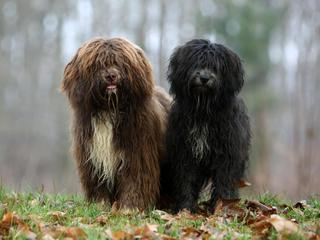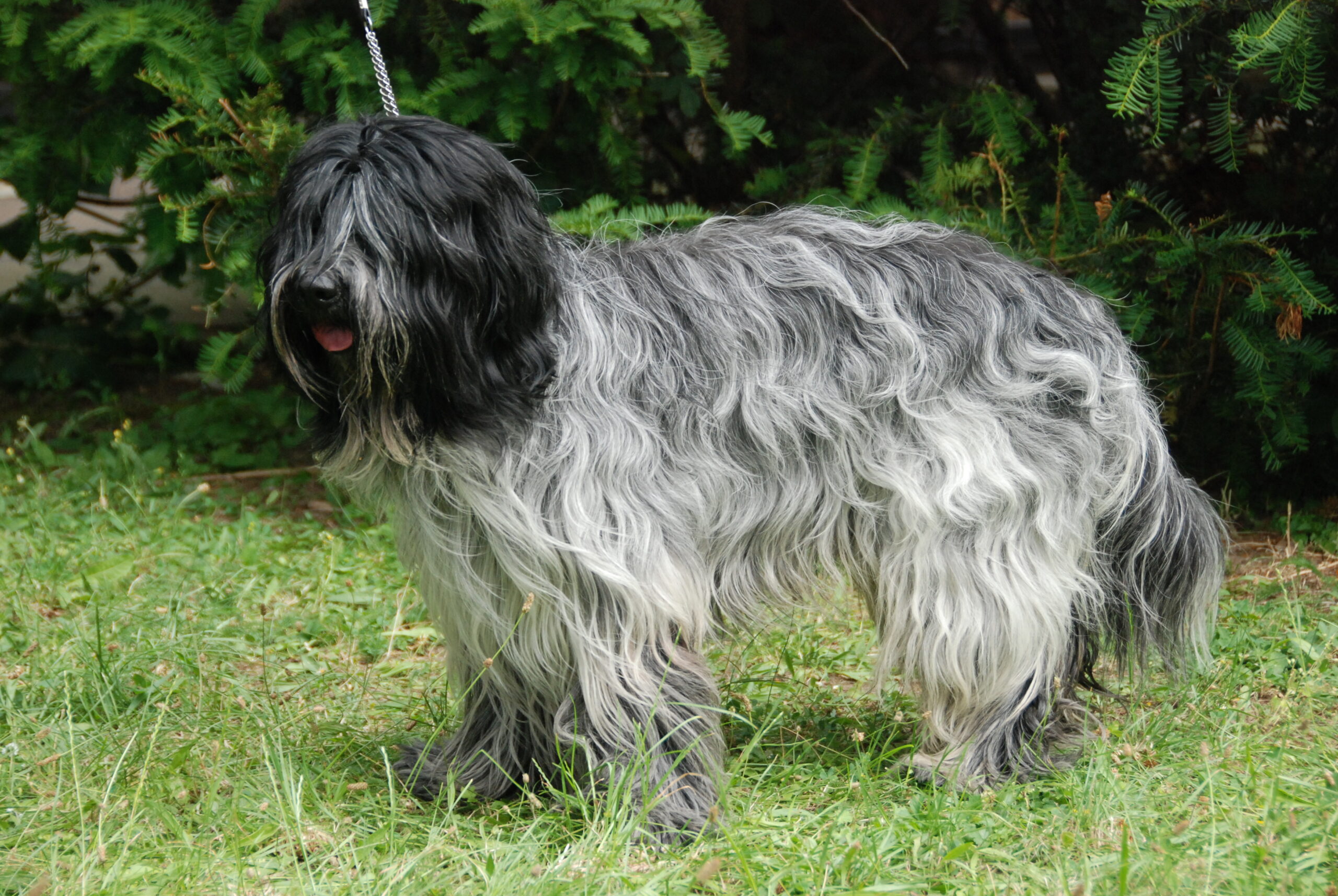
If you lead an active lifestyle and love the great outdoors, the Schapendoes will be your loyal friend, a soulful companion, and, when needed, a gentle herder and vigilant guardian. Members of this breed are often used as sniffers and rescue dogs. They possess a friendly disposition and form strong bonds with their owners, showing almost equal affection to all family members.
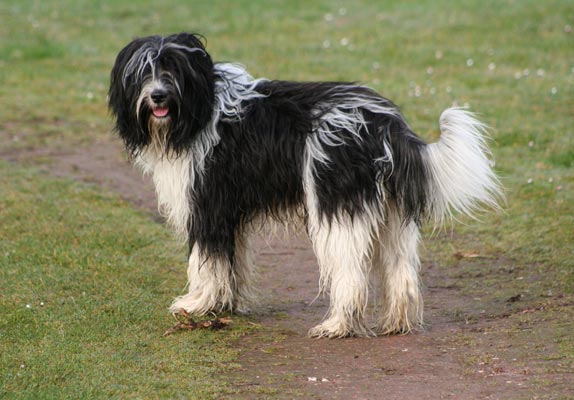
The Dutch name for the breed – Schapendus – subtly reveals the appearance of this cheerful, playful dog. An attentive gaze from intelligent eyes, a "shaggy" head that appears broad and large due to its prominent mustache, beard, and eyebrows, combined with light movements and exceptional endurance, are distinguishing traits of the breed. This rare blend of advanced intelligence and an agreeable nature makes the Schapendoes easy to train and care for. Your furry friend will readily get along with other pets, befriend and play for hours with children, and eagerly join you on a morning jog. And if there’s a herd to manage, they'll be an excellent sheepdog. Curious to learn more? Stay tuned to Tvaryny!
Schapendoes: A Quick Breed Overview
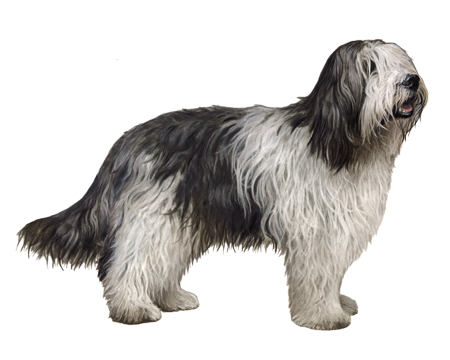
- Origin: Netherlands
- First Mention: 1953 (systematic breeding began 1940–1945)
- Purpose: Herding dog, companion dog, sport dog
- Lifespan: 12–15 years
- Height at Withers: 16.5–19.7 inches (42–50 cm) for males, 15.7–18.5 inches (40–47 cm) for females
- Weight: 28.7–44.1 lbs (13–20 kg) (proportional to height)
- Color: Any, with a preference for blue-gray with a black tint
The Schapendoes as a Family Dog
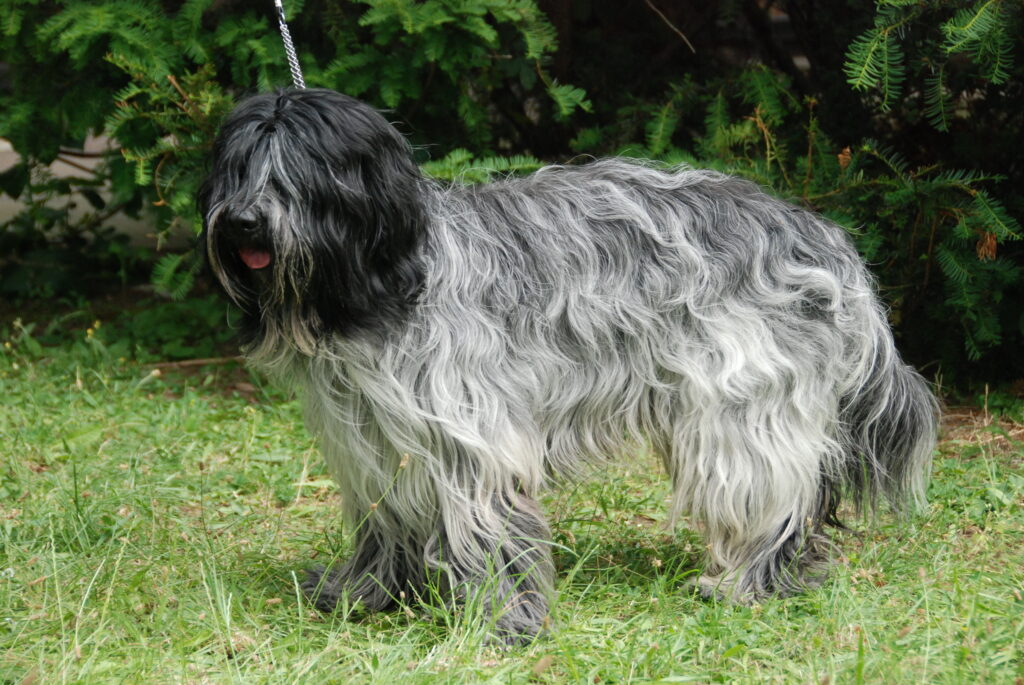
The Schapendoes is not just a working dog; it's a wonderful family companion for active individuals. Thanks to its friendly disposition, playfulness, and exceptional devotion to its owners, it fits wonderfully into family life. As mentioned, they get along excellently with children, becoming patient and cheerful playmates. Their energy matches that of children, and they will gladly participate in any activity.
This breed is very people-oriented and craves constant interaction. A Schapendoes wants to be near its family, participate in household activities, and relax at its owner's feet in the evening. It forms strong bonds with all family members, not just one person, making it an ideal choice for a large family.
However, it's worth remembering that the Schapendoes is not a "couch potato" dog. It needs an active lifestyle and sufficient physical and mental stimulation. A family considering a Schapendoes must be prepared to dedicate significant time to walks, games, training, and shared activities. For less active individuals or those who spend a lot of time away from home, a Schapendoes might not be the right fit.
With proper socialization, the Schapendoes readily accepts guests and can coexist with other household pets. Its natural vigilance makes it a good "doorbell," announcing the arrival of strangers, but it is not prone to unprovoked aggression.
Working Abilities: Herder and Beyond
While most Schapendoes today live as companion dogs, their herding past has left a deep mark on their character and abilities. They were bred to work with large flocks of sheep in open spaces, which demanded independence, initiative, endurance, and the ability to react quickly to changing situations. Unlike some other herding breeds that primarily work with their gaze ("eye dogs"), the Schapendoes uses its movement and voice to control the flock.
Even in a home environment, herding instincts may manifest in a tendency to "gather" family members or other pets. These instincts can be successfully channeled into canine sports such as Herding. Engaging in herding activities allows the dog to fulfill its natural predispositions, get physical and mental exercise, and helps the owner better understand their beloved pet's behavior.
Beyond herding, Schapendoes have proven themselves as excellent dogs for agility. Their speed, agility, jumping ability, and desire to work as a team with their owner make them some of the best athletes in this sport. They also successfully participate in obedience competitions, flyball, and engage in search-and-rescue activities thanks to their well-developed sense of smell and endurance.
Providing a Schapendoes with opportunities to utilize its working abilities, even if it's not classic sheep herding, is an important condition for its happy and fulfilling life. This can include regular obedience training, sports, or simply intellectual games that mimic working tasks.
Interesting Facts About the Schapendoes
- The name "Schapendoes" comes from the Dutch word "schapendoes," which literally means "sheepdog" or "shaggy sheepdog."
- After World War II, the breed was so rare that its population had to be rebuilt almost from scratch. Mr. Pieter Toepoel played a key role in this process.
- Schapendoes are known for their "jumping" abilities. They can jump quite high, especially when working with a flock or participating in agility.
- The Schapendoes' gaze is considered one of the breed's hallmarks – large, round, dark brown eyes radiate intelligence, kindness, and sincerity.
- Despite their long coat, its care is not overly complicated; regularity is key. The coat should remain natural.
- The Schapendoes is one of the lesser-known Dutch herding breeds outside of the Netherlands, compared to the more popular Dutch Shepherds (Nederlandse Herdershond) of various coat types.
- This breed is very popular in Scandinavian countries, where it is actively used in canine sports.