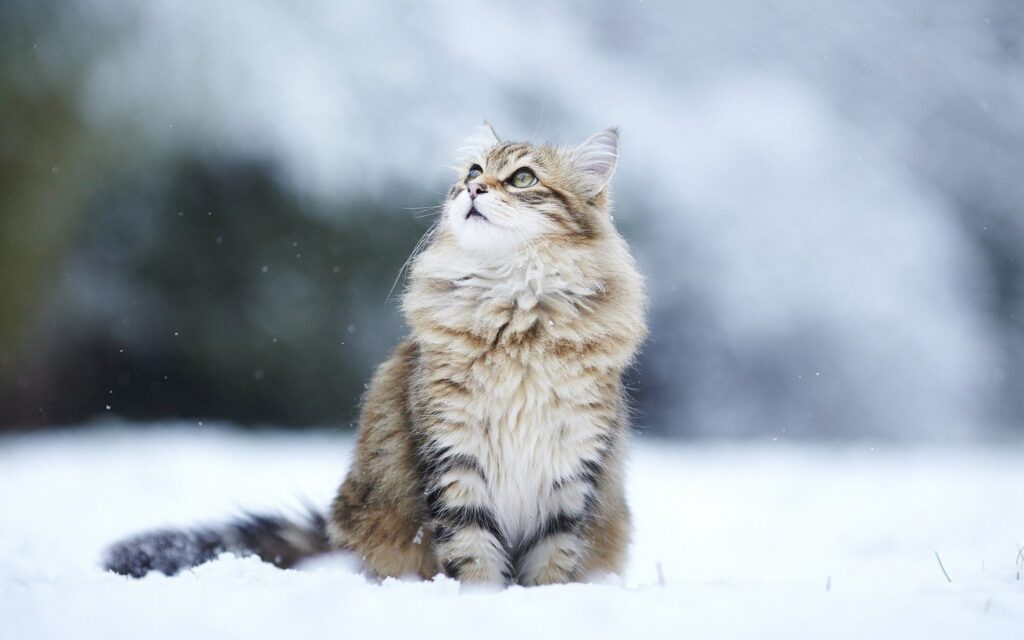
A muscular Siberian beauty with a water-repellent coat — strong and balanced: devoted, clever, playful and hardy. The Siberian cat is an aboriginal breed of large cats from the harsh regions of Siberia; powerful and undemanding, it combines a balanced character with a hunting talent, gets on well with people and animals.
KidsDogsOther catsBeginnersTime alone · with caveats
The Siberian is an embodiment of natural power and beauty, an aboriginal breed of large, muscular cats originating from the harsh, cold regions of Siberia. Their luxurious, dense, and water-repellent coat, powerful build, and balanced yet playful personality make them unique and cherished companions. They're not just beloved pets; they're also skilled hunters with amazing resilience. Siberian cats are known for their loyalty, intelligence, and ability to get along with people and other animals, including dogs. They are patient with children but are also independent and not overly demanding. While their thick fur requires regular grooming, Siberians are generally distinguished by their robust health and long lifespan, maintaining a playful spirit well into their senior years. You can find out more about these fantastic felines on Tvaryny.
Very diverse traditional colors (except chocolate, lilac, cinnamon, fawn, and pointed). The colorpoint variant is recognized as a separate breed – the Neva Masquerade.
Eyes
Large, slightly oval, widely set; colors from green to gold/copper. Blue or odd-colored eyes are possible in white and bicolor cats.
Temperament
Calm, balanced, playful, intelligent, loyal, independent, good hunter
Activity Level
Moderate to high, loves to climb and play
Need for Attention
Moderate (enjoys company but can entertain themselves)
Shedding
Heavy, especially seasonally (spring, fall)
Grooming
Regular brushing (2–3 times a week, daily during shedding)
Compatibility with Kids
High
Compatibility with Other Pets
High (with proper introduction)
Hypoallergenic?
No — there is no such thing as a hypoallergenic cat: every cat produces Fel d 1
Siberian Cat in Your Home: Compatibility and Living Considerations
The Siberian cat can be an excellent companion for various types of families, as long as their needs are met.
Apartment Living: Siberians can adapt to apartment life, provided they have enough space for play, vertical climbing space (tall cat trees, shelves), and regular physical and mental stimulation.
House with a Yard: This is ideal if there's an option for safe outdoor access in a catio or on a leash, where the cat can exercise their hunting instincts and love for nature. Free-roaming is not recommended due to risks (cars, dogs, infections, theft).
Compatibility with Kids: Thanks to their patience and calm temperament, Siberians get along well with children who treat them with respect.
Compatibility with Other Pets: They usually coexist well with other cats and dogs, especially if the introduction is done properly.
Need for Activity: Despite their calm appearance, they need regular playtime to maintain physical fitness and satisfy their hunting instincts.
Comparison with Other "Forest" Cats: Siberians are often compared to Norwegian Forest Cats and Maine Coons. While all are large and fluffy, there are differences in head shape (Norwegians have a more triangular shape, Maine Coons a "boxy" muzzle), profile (Norwegians have a straight one), and coat texture. Siberians have more rounded contours and a unique triple coat.
Interesting Facts About Siberian Cats
The Siberian cat is considered the national cat of Russia.
It's one of the few aboriginal (natural) breeds that developed without significant human intervention.
Their unique triple coat (guard, awn, and undercoat) provides excellent protection from cold and moisture.
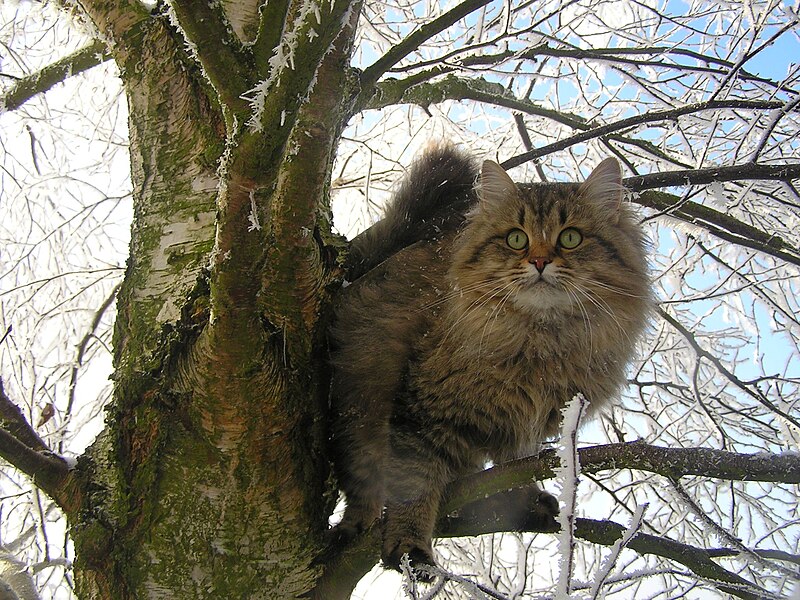
Siberian cats are known for their powerful jumps and agility; they are excellent climbers.
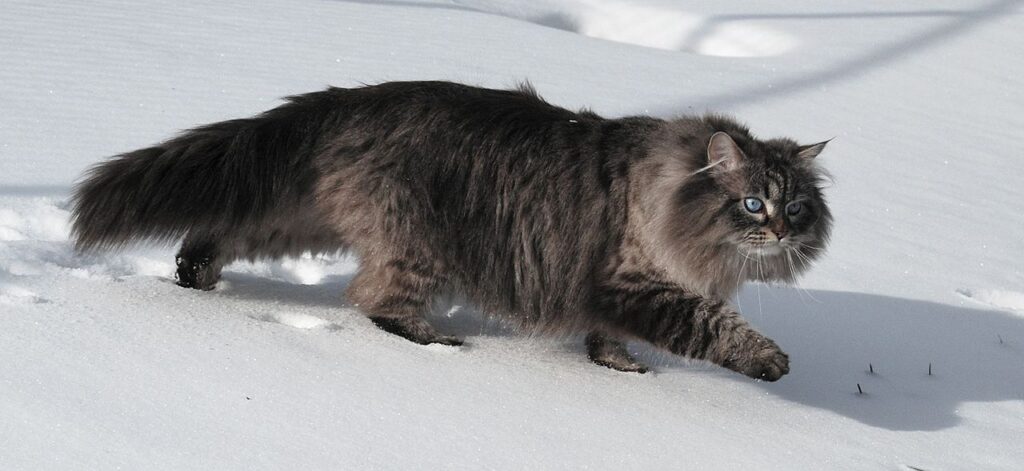
Many Siberians have tufts of fur between their toes, known as "snowshoes," which helped them walk on snow.
The breed’s “hypoallergenic” reputation is a stubborn myth: every cat produces Fel d 1, and the gap between two individual cats is wider than the gap between two breeds.
The colorpoint variant of the Siberian cat with blue eyes is recognized as a separate breed, the Neva Masquerade.
Siberians mature slowly, reaching full physical development only at 3–5 years of age.
The History of the Siberian Cat
The Siberian cat is a natural, aboriginal breed that developed in Russia, particularly in the harsh climate of Siberia, over centuries without targeted human intervention. Their ancestors were local wild forest cats and domestic cats brought in by settlers. The severe climate and the need to survive and hunt led to natural selection, resulting in large, strong animals with a dense, water-repellent coat that provided excellent protection from the cold.
For a long time, these cats were simply a part of Russian life, known as "Siberian" or "Bukhara" cats (as they may have arrived in Siberia via trade routes from Asia). They were valued for their hunting skills and resilience. Although mentions of large, fluffy cats in Russia go back a long way, the formal history of the breed began much later.
With the development of the cat fancy movement in the USSR in the late 1980s, enthusiasts took notice of these unique animals. In 1986–1987, targeted efforts to recognize and standardize the breed began in Moscow and Leningrad (now St. Petersburg). One of the first clubs to register Siberians was the "Kotofey" club in St. Petersburg in 1987. The first breed standard was adopted by the Soviet Feline Federation (SFF) in 1989. Soon after, international organizations recognized the breed: WCF (World Cat Federation) in 1992, FIFe (Fédération Internationale Féline) in 1997, TICA (The International Cat Association) in 1990 (with full championship status from 1996), and CFA (Cat Fanciers' Association) in 2000 (full championship status from 2006).
Interestingly, the first Siberian cats were brought to the U.S. back in 1990, even before official recognition by some organizations, thanks to Elizabeth Terrell, who imported three cats from St. Petersburg. Today, the Siberian breed is popular worldwide due to its beauty, robust health, and wonderful personality.
What a Siberian Cat Looks Like: Appearance and Standard
The Siberian cat gives the impression of strength, power, and harmony. It’s a medium to large-sized cat with a sturdy bone structure, well-developed muscles, and a distinct "wild" look. Siberians develop slowly, reaching full maturity at around 5 years old.
Body: Strong, muscular, and heavy, with a characteristic "barrel-shaped" torso (round in cross-section). The back is slightly longer than average, strong, with a slight arch that makes the hindquarters slightly higher than the front. The chest is broad.
Head: Shaped like a modified wedge with soft, rounded contours. The size is proportional to the body. The forehead is wide and slightly rounded. The profile has a gentle curve from the forehead to the nose, without a harsh stop. The muzzle is short, wide, and rounded. Cheekbones are low and wide. The chin is well-developed but not protruding, forming a smooth line with the upper lip.
Ears: Medium-sized, wide at the base, with rounded tips. They are set fairly wide apart and tilted slightly forward. Thick tufts of hair inside the ears and lynx tips are desired, though the latter are not mandatory.
Eyes: Large, expressive, and slightly oval (almost round), set wide apart and slightly slanted. Eye color in traditional coats can be any shade of green or yellow/gold/copper. Cats with a white coat or a lot of white (bicolors, vans) can have blue or odd-colored eyes (one blue, one green/yellow).
Legs and Paws: Legs are medium length, strong, with a powerful bone structure. The hind legs are slightly longer than the front. Paws are large, round, with mandatory thick tufts of fur between the toes ("snowshoes") that helped them walk on snow.
Tail: Medium length, thick and strong at the base, tapering slightly to a blunt, rounded tip. It's very well-furnished with fur on all sides, without long hanging strands, resembling a raccoon's tail.
Coat: The Siberian's main pride is its luxurious triple-layered coat, perfectly adapted to the cold climate. It consists of:
Long, coarse, and shiny guard hairs (the top layer), which are water-repellent.
Finer awn hairs.
A very dense, soft, and thick undercoat, which is most developed in winter and significantly thins out in summer.
The coat is medium-long or long and lies close to the body. They have a lavish "ruff" around the neck, dense "britches" on the hind legs, and a very fluffy tail. In summer, the coat is noticeably shorter and less dense than in winter (the ruff, britches, and tail remain well-furnished).
Siberian Cat Coat Colors
The Siberian breed standard allows for an enormous variety of colors. Almost all traditional colors and patterns are recognized:
Solid: Black, blue, red, cream, white.
Tortoiseshell: Black tortie, blue-cream tortie.
Smoke: Black smoke, blue smoke, red smoke, cream smoke, tortoiseshell smoke.
Silver and Golden: Shaded and chinchilla.
Tabby of all types:
Mackerel: Vertical stripes.
Classic/Blotched: Broad swirls, a "butterfly" pattern on the shoulders.
Spotted: Separate spots on the body.
The tabby pattern can be on a black, blue, red, cream, tortoiseshell, silver, or golden background.
With White: Any of the above colors can be combined with varying amounts of white (bicolors, harlequins, vans).
Important: The standard for the traditional Siberian cat does not permit colors that suggest hybridization with other breeds, specifically: chocolate, lilac, cinnamon, fawn, and their variations, as well as colorpoint colors.
Cats with colorpoint coloration (light body, darker face, ears, paws, and tail, with blue eyes) that otherwise fully meet the Siberian type are considered a separate breed (or a sub-breed of the Siberian)—the Neva Masquerade.
Siberian Cat Personality: Temperament and Behavior
The Siberian cat is a wonderful combination of a "wild" look and a balanced, friendly personality. They are intelligent, clever, and very observant.
Balance and Independence: Siberians have a sense of dignity. They aren't overly demanding and can handle periods of solitude well, finding ways to entertain themselves. While they love their owner's attention, they won't constantly demand it.
Loyalty and Affection: Despite their independence, Siberian cats become very attached to their families. They often choose one "favorite" person to whom they show special affection and loyalty, while still being friendly to all family members.
Playfulness: These cats remain playful throughout their lives, even into old age. They love interactive games, chasing "prey" (toys), and climbing to high places. Their hunting instincts are very strong.
Intelligence and Cleverness: Siberians are quick learners; they quickly understand household rules and can learn to open doors or fetch toys. Their minds need stimulation, so it's important to provide them with puzzle toys and various activities.
Hunting Instincts: As descendants of natural hunters, Siberians have well-developed instincts. They may hunt rodents (if they live in a house with a yard) or enthusiastically "hunt" toys.
Temperament with Kids and Pets: Siberian cats are usually very patient and gentle with children, calmly tolerating their activity. They also get along well with other cats and dogs, especially if they grew up together or were properly introduced.
Voice: Siberians are not overly "talkative," but they have a wide range of sounds—from a gentle purr and quiet "chirping" to a fairly loud meow when they want something.
Love for Heights: Like their forest ancestors, Siberians adore climbing and observing everything from above. Be sure to give them access to high shelves, tops of cabinets, or set up a tall cat tree. For other big, fluffy cats with a love for high places, check out the Norwegian Forest Cat.
Training and Socializing a Siberian Cat
Siberian cats are very intelligent and clever animals, which makes them highly trainable. Their natural curiosity and playfulness can be used in the training process.
Learning Commands: Siberians easily remember their name and can learn to respond to various commands ("come," "sit"). Some owners successfully train them to fetch toys or walk on a leash. Use positive reinforcement methods (praise, treats).
Litter and Scratching Post Training: This usually goes smoothly, as Siberians are naturally clean and smart. It's important to provide a comfortable litter box and an attractive scratching post from the very beginning.
Intellectual Stimulation: Due to their high intelligence, Siberians need both physical and mental stimulation. Puzzle toys, interactive games, and treat-finding activities will help satisfy their need for brain activity.
Socialization: Early socialization is crucial for a kitten to grow into a confident and sociable adult. Introduce them to different people, sounds, and other animals (under supervision). Thanks to their balanced temperament, Siberians usually socialize well.
Using Hunting Instincts: Satisfy their need to "hunt" with games involving teaser wands, laser pointers (always end the game with them catching a physical toy), and balls.
Need for Vertical Space: Siberians are excellent climbers. Provide them with opportunities to climb: tall cat trees, shelves, or safe access to the tops of cabinets.
Pros and Cons of the Siberian Cat Breed
Pros and Cons of the Siberian Cat Breed · 7
Pros
Cons
✅ Robust health and longevity (an aboriginal breed)
❌ Requires regular grooming, especially during heavy seasonal shedding
✅ Balanced, calm, but playful personality
❌ Sheds heavily twice a year
❗ Not hypoallergenic — there is no such thing as a hypoallergenic cat: every cat produces Fel d 1
❌ Needs space and climbing opportunities (vertical space)
✅ Highly intelligent, easy to train
❌ Can be independent and not always affectionate "on demand"
✅ Beautiful "wild" appearance, luxurious coat
❌ May have strong hunting instincts
✅ Loyal to its family
✅ Not very demanding in terms of care
How to Groom a Siberian Cat's Coat and Other Grooming Aspects
The luxurious triple coat of the Siberian cat requires regular but not overly complicated care. While it's water-repellent and less prone to matting than a Persian's, the dense undercoat still needs attention, especially during seasonal shedding.
Brushing: This is the main procedure. Under normal circumstances, brushing a Siberian 2–3 times a week is enough. During intense seasonal shedding (spring and fall), when the cat sheds its thick winter undercoat, you should brush them daily to prevent mats and reduce the amount of fur in your home. Use tools suitable for dense, semi-long hair:
Comb with both wide and fine teeth: For detangling and checking for mats.
Slicker brush: Good for removing dead undercoat. Choose one with coated tips to avoid scratching the skin.
Furminator (or similar tool): Very effective for removing undercoat during shedding, but use carefully to avoid damaging the guard hairs. No more than once a week during shedding season.
Mat cutter: For carefully removing any mats that do form.
Pay special attention to the "ruff," "britches," belly, and the area behind the ears.
Bathing: Siberians don't need frequent baths. Their coat has a natural protective oily layer. Bathing is only necessary if they get very dirty or before a show (usually 1–3 times a year). Use a special cat shampoo. Surprisingly, some Siberians love water, which can make the process easier.
Eye and Ear Care: Regularly check their eyes and ears. If needed, wipe the corners of their eyes with a damp cloth. Clean their ears with a special lotion only if visible dirt is present, and never use cotton swabs.
Nail Trimming: Trim their nails every 2–4 weeks with special cat clippers, cutting only the clear tip.
Dental Care: Regularly check their mouth. It's recommended to brush their teeth with a special brush and toothpaste for cats or use other products to prevent dental calculus.
Nutrition
Siberian Cat Diet: Key Recommendations
Health and risks
Siberian Cat Health: Typical Ailments and Prevention
Common Questions About the Siberian Cat Breed (FAQ)
Do Siberian cats shed a lot? Yes, they shed quite a bit, especially during seasonal shedding in the spring and fall when they lose their thick undercoat. During this period, daily brushing is a must. At other times, shedding is moderate, but regular brushing (2–3 times a week) is still necessary.
Is it true that Siberian cats are hypoallergenic? There is no such thing as a hypoallergenic cat. The main cat allergen, Fel d 1, is produced by every cat without exception: it is made in the salivary and sebaceous glands, so it is present in saliva, on the skin and in the coat. How much allergen a cat produces varies far more from one individual animal to another than from breed to breed. If you have an allergy, spend time with the particular cat you are taking home and make the decision together with an allergist — the breed guarantees nothing.
How long do Siberian cats live? This is a long-lived breed. The average lifespan is 12–18 years, but many Siberians with good care live to be 20 years or older.
Are Siberian cats suitable for apartment living? Yes, they can live in an apartment, but they need enough space for activity and a mandatory vertical space for climbing (tall cat trees, shelves). It's important to provide them with regular games and mental stimulation.
How do Siberian cats get along with kids and other pets? They usually get along very well. They are patient and calm with children (provided the child is gentle with them) and can coexist peacefully with other cats and dogs, especially with a proper introduction.
Does a Siberian cat's coat require difficult grooming? Grooming is not overly difficult but is regular. The main thing is brushing them a few times a week, and daily during shedding season, to prevent mats and reduce the amount of fur in the home. They rarely need bathing.
Are Siberian cats noisy? They are not considered very noisy. Their voice is usually quiet and melodic, and they use a variety of sounds for communication, including a quiet "chirp."
The Siberian cat is a true treasure for those who appreciate natural beauty, intelligence, and loyalty combined with a balanced temperament. This fluffy giant with a gentle heart can become a wonderful friend and companion for many years, bringing warmth, joy, and a unique atmosphere of the wild into your home.
FAQ
Is the Siberian cat really hypoallergenic?
There is no such thing as a hypoallergenic cat. The main cat allergen, Fel d 1, is produced by every cat without exception: it is made in the salivary and sebaceous glands, so it is present in saliva, on the skin and in the coat. How much allergen a cat produces varies far more from one individual animal to another than from breed to breed. If you have an allergy, spend time with the particular cat you are taking home and make the decision together with an allergist — the breed guarantees nothing.
Is the Siberian cat good for a family?
Very — a balanced, devoted and clever cat that gets on with both people and other animals, good with children and dogs; it has kept its hunting talent, so it loves active play.
Is the Siberian cat hard to care for?
Care is moderate: the dense water-repellent coat is brushed 2–3 times a week, and more often during the seasonal molt; otherwise it is an undemanding, hardy breed.