Group 1 · sheepdogs and cattle dogs · USA, Canada, Switzerland (Standardization)
White Swiss Shepherd
A dazzlingly white Swiss brain with a gentle heart — elegant and devoted: friendly, sensitive, confident and wonderful with children. The White Swiss Shepherd is the white relative of the German Shepherd with a softer, less suspicious character; active, clever and boundlessly devoted, it becomes a child's best friend and a reliable companion for an active family.
Apartment · with caveatsKidsCats · with caveatsOther dogsBeginners · with caveats
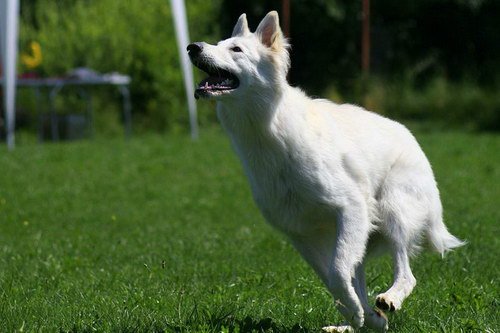
The White Swiss Shepherd (Berger Blanc Suisse) is the epitome of elegance, strength, and intelligence, all wrapped in a dazzling white coat. These active, agile, and incredibly confident dogs are more than just pets; they become true family members, the best friends for children, and loyal companions for adults. Smart, friendly, and endlessly devoted, these snowy beauties will never let their owners down. Their physical power and loyalty can win over anyone's heart, as few can resist the charm of this majestic snow-white creature. Read more about it on Tvaryny.
Companion, Family Dog, Sport, Search and Rescue, Therapy
Coat Color
Pure White
Coat Types
Shorthair (straight, dense, with undercoat); Longhair (straight, long, with undercoat)
Interesting Facts About the White Swiss Shepherd
Not Albinos: Despite their snow-white coat, WSS are not albinos. They have dark skin pigmentation, nose, lips, and eyes (from brown to dark brown). Albinism is characterized by a lack of pigment and red or very light eyes.
"Hollywood" Career: White Shepherds often appeared in films and TV series even before their official breed recognition, thanks to their attractive appearance.
Different Names: Before their official standardization as Berger Blanc Suisse, they were called American-Canadian White Shepherds or White German Shepherds.
Popularity Revival: After being excluded from German Shepherd breeding in Germany, the breed was essentially saved and preserved by enthusiasts in North America.
Two Coat Types: WSS come in both shorthair and longhair varieties. Both types are recognized by the standard and have their own admirers.
Excellent Therapists: Thanks to their calm, friendly nature and high intelligence, WSS are often used as therapy dogs, helping people in hospitals, nursing homes, and rehabilitation centers.
"Snow Nose": In some WSS, the nose pigmentation may lighten in the winter and darken again in the summer. This phenomenon is called a "snow nose" and is not considered a serious fault, although a solid black nose is preferred.
History of the White Swiss Shepherd
The history of the White Swiss Shepherd (WSS) is closely intertwined with that of the German Shepherd Dog. In the late 19th and early 20th centuries, when Max von Stephanitz was laying the foundation for the German Shepherd breed, the white coat was a color variant, though not the most common. The first registered German Shepherd, "Horand von Grafrath," even had a white-coated grandfather. However, in the 1930s, the white coat began to be considered a fault in Germany, as it was mistakenly associated with various health issues. As a result, dogs of this color were excluded from breeding programs. Some sources claim the reason was an attempt to "perfect" the breed, while others suggest the white color was wrongly linked to albinism, a genetic anomaly, even though WSS are not albinos (they have dark eyes and nose/lip pigmentation).
Fortunately, white shepherds were preserved in the USA and Canada, where they had been imported earlier. It was here, in North America, that they continued to be bred as "White German Shepherds" and enjoyed significant popularity. They were valued for their work ethic, intelligence, and a softer temperament compared to some German Shepherd lines. In the early 1970s, the first white shepherds were imported to Switzerland. An American male named Lobo, born on March 5, 1966, is considered one of the founders of the breed in Europe. His descendants, along with other imported dogs, formed the basis for the targeted breeding of white shepherds as a separate breed. It was Switzerland that took on the responsibility of standardizing and promoting the breed internationally, which led to its modern name.
In June 1991, the breed was registered in the Swiss Canine Stud Book (SHSB) as the Berger Blanc Suisse (White Swiss Shepherd). The breed gradually gained recognition in other European countries. The Fédération Cynologique Internationale (FCI) provisionally recognized the breed in 2002, with full recognition following in 2011. In the US, White Swiss Shepherds have been gaining popularity, competing with other well-known herding breeds like the Australian Shepherd. The longhaired variant of the German Shepherd is also gaining prominence, but the WSS stands out with its unique appeal.
Appearance of the White Swiss Shepherd: A Detailed Description
The White Swiss Shepherd is a strong, muscular, medium-sized dog with elegant and harmonious body contours. It closely resembles the classic German Shepherd but is always exclusively white. The dog gives the impression of being lively, attentive, and well-balanced.
The head is proportional to the body, wedge-shaped, lean, and cleanly defined. The skull is slightly rounded with a slight central furrow. The stop (the transition from the forehead to the muzzle) is smooth but noticeable. The muzzle is of medium length, powerful, and gradually tapers toward the nose. The bridge of the nose is straight.
The nose is medium-sized and preferably black. A lighter "snow nose" (seasonal lightening of pigment) is acceptable, but a black nose is preferred.
The lips are dry, tight-fitting, and black.
The bite is scissor-like and strong, with a full set of 42 teeth according to the dental formula.
The eyes are medium-sized, almond-shaped, and set slightly obliquely. Eye color ranges from dark brown to brown. The eyelids are tight-fitting with black rims. The expression is lively, intelligent, and alert. Blue or very light eyes are a disqualifying fault.
The ears are erect, set high, and point forward, parallel to each other. They are shaped like an elongated triangle with slightly rounded tips. When moving or at rest, the dog may lay its ears back.
The neck is of medium length, muscular, without a dewlap, and flows smoothly into the withers.
The body is robust, slightly elongated (the ratio of body length to height at the withers is approximately 10:8.5).
The withers are well-defined.
The back is straight and strong.
The loin is strong and muscular.
The croup is long, of medium width, and slopes slightly toward the base of the tail. Unlike some show lines of German Shepherds, the WSS croup should not be excessively sloped.
The chest is oval, deep (reaching the elbows), but not too wide. The forechest is well-developed.
The abdomen is moderately tucked up.
The tail is saber-shaped, bushy, set low, and reaches at least the hock joint. When at rest, it hangs straight or is slightly curved. When moving or excited, it lifts higher but not above the topline.
The limbs are strong, muscular, with solid bone structure. The front legs are straight and parallel when viewed from the front. The hind legs are straight and parallel when viewed from the rear, and well-angulated when viewed from the side. The paws are oval, compact, with tightly closed toes. The pads are firm and black. The claws are dark, preferably black.
The coat comes in two types:
Shorthair (Stockhaar): a dense, straight, close-lying outer coat with a profuse undercoat. The length of the outer coat is medium.
Longhair (Langstockhaar): a long, straight outer coat with a profuse undercoat. The hair on the ears, muzzle, and front of the legs is shorter. A distinct "mane" forms around the neck, and "trousers" on the back of the hind legs. The tail is very bushy. A slight wave is acceptable.
The color is exclusively pure white. The skin is dark, which is clearly visible under the white coat, especially on the abdomen and inner thighs.
The gait of the WSS is rhythmic and ground-covering, with a strong rear drive and a free forward reach. It is a light, fluid trot.
White Swiss Shepherd's Character: Temperament and Behavior
The White Swiss Shepherd is a dog with an exceptionally balanced and friendly character. It combines liveliness, alertness, and high intelligence with a wonderful gentleness and devotion to its family. This is not an aggressive, timid, or nervous dog. It is attentive to its owner, learns easily, and always seeks to please.
Intelligence and Trainability: WSS are very smart dogs that quickly grasp new commands and are easy to train. They love working with people and enthusiastically perform tasks. Their cleverness makes them successful in various dog sports, such as obedience, agility, frisbee, and in service roles like search and rescue or therapy work.
Loyalty and Family Attachment: These are true family dogs that form deep bonds with all members of their "pack." They adore being in the company of people, actively participate in all household activities, and struggle with prolonged solitude. Their devotion is boundless, and they are willing to do anything for their loved ones. WSS are often called "shadow dogs" because of their desire to be constantly by their owner's side.
Relationships with Children and Other Animals: White Swiss Shepherds generally get along wonderfully with children, showing patience, gentleness, and playfulness. They become faithful friends and reliable protectors for kids. However, as with any dog, interactions with small children should be supervised. With proper socialization, WSS coexist well with other pets, including cats and other dogs. They are not prone to dominance and are typically peace-loving.
Guarding Qualities: Although the WSS is not an aggressive breed, it has a well-developed instinct to guard its territory and family. It is alert and will always warn its owner of approaching strangers with a loud bark. At the same time, it does not show unprovoked aggression but rather demonstrates restraint and caution. It treats strangers with some reserve but quickly relaxes once it sees there is no threat. This makes it a good watchdog, but you shouldn't expect the fierce aggression characteristic of some other guardian breeds, such as some lines of Briards, which are also excellent herding and guarding dogs.
Energy and Need for Activity: White Swiss Shepherds are active and energetic dogs that require regular physical exercise and mental stimulation. They need long walks, opportunities to run freely, and active games. A bored WSS might find its own entertainment, and owners might not always like the result (for example, chewing on furniture or excessive barking).
Socialization: Early and proper socialization is extremely important for the WSS. Introducing the puppy to various people (adults, children, the elderly), other dogs (vaccinated and friendly), cats (if cohabitation is planned), different sounds (city noise, traffic), and places (parks, streets, pet stores) from a young age will help it grow into a confident, calm, and friendly dog that reacts appropriately to any situation.
Training and Socialization of the White Swiss Shepherd
The White Swiss Shepherd is an extremely smart and trainable dog, which makes the training process pleasant and effective. They are eager to please their owner and quickly learn new commands. However, to achieve the best results, it's important to follow certain principles.
Key Principles of WSS Training:
Start Early: Begin training and socialization from the first days a puppy enters your home. Even simple commands and house rules can be learned at a young age.
Positive Reinforcement: WSS respond best to positive reinforcement methods—praise, treats, and toys. Avoid harshness, yelling, or physical punishment, as this can break the dog's trust and make it timid or, conversely, stubborn.
Consistency and Persistence: Be consistent in your demands and commands. All family members should follow the same rules. Regular but not overly long sessions (especially for puppies) will yield better results than infrequent and lengthy training sessions.
Patience and Perseverance: Although WSS are smart, they can sometimes be a bit independent. Be patient and persistent, but always remain a fair leader.
Variety: To keep your dog from getting bored, make training sessions varied and interesting. Include games and change training locations.
Socialization is a key aspect of raising a WSS. From a young age, introduce your puppy to different people (adults, children, seniors), other dogs (vaccinated and friendly), cats (if cohabitation is planned), various sounds (city noise, traffic), and places (parks, streets, pet stores). A well-socialized WSS will grow into a confident, calm, and friendly dog that reacts appropriately to any situation.
White Swiss Shepherds excel in various dog sports: obedience, agility, frisbee, search and rescue, tracking, and canitherapy. Engaging in sports not only provides the necessary physical and mental stimulation but also strengthens the bond between dog and owner. If you're unsure of your abilities or want to achieve high results, consult a professional dog trainer or attend group classes at a specialized school. Don't forget about play: a ball, stick, or frisbee are great tools for active recreation and strengthening your connection with your pet.
Pros and Cons of the White Swiss Shepherd
Pros and Cons of the White Swiss Shepherd · 7
Pros
Cons
High Intelligence and Easy to Train: Quickly learn commands and love to learn.
Requires Significant Physical Exercise: Not suitable for inactive people.
Loyal and Strongly Attached to Family: An excellent companion.
May Struggle with Solitude: Prone to separation anxiety if not trained.
Friendly and Balanced Temperament: Not aggressive, gets along well with children.
Needs Regular Grooming: Especially during shedding season.
Great Companion for Active People and Families.
Can be Wary of Strangers: Requires early and thorough socialization.
Striking Appearance: Always attracts attention with its beauty.
Prone to Certain Hereditary Diseases: Important to choose a puppy from responsible breeders.
Versatile: Suitable for various sports and services.
Shedding: Quite intense, especially seasonally.
Gets along well with other animals (with proper socialization).
May Show Herding Instincts: For example, may try to "herd" children or small animals.
How to Groom the White Swiss Shepherd's Coat
The dazzling white coat of the White Swiss Shepherd is one of its most attractive features, but it requires regular grooming to stay clean and healthy. Although it may seem that a white coat gets dirty easily, it actually has a self-cleaning property, and dirt often simply dries and falls off. However, this doesn't excuse owners from the need for regular care.
Brushing: This is the main procedure. WSS shed, especially seasonally (spring and fall). During shedding periods, you need to brush your dog daily to remove dead undercoat and prevent matting. At other times, brushing 2–3 times a week is sufficient. For shorthair WSS, a rubber grooming glove or a furminator (used carefully to avoid damaging the outer coat) will work. For longhairs, you'll need a comb with wide-set teeth for detangling, a slicker brush for removing the undercoat, and a natural bristle brush to add shine.
Bathing: Frequent bathing is not recommended for WSS, as it can strip the natural oils from the skin and coat, leading to dryness and irritation. Bathe your dog only when necessary, such as when it's genuinely dirty, or approximately every 2–3 months. Use a special shampoo for white dogs that helps maintain the brightness of the color and doesn't cause allergies. Rinse the shampoo thoroughly and use a conditioner to make brushing easier (especially for longhairs). Dry the coat well with a towel or a hairdryer (on a cool setting).
Nail Care: Trim the nails regularly (every 3–4 weeks) if they don't wear down naturally during walks. Overly long nails can cause discomfort and deform the paw.
Ear Care: Check the ears weekly for any redness, dirt, or unpleasant odor. Clean the ears with a special dog ear cleaner using a cotton ball. Do not use cotton swabs, as they can damage the ear canal.
Dental Care: Regular teeth brushing (2–3 times a week) with a special toothbrush and dog toothpaste will help prevent plaque and tartar buildup and gum disease. You can also use dental treats and toys.
Despite the white color, grooming the WSS coat is not as complicated as it might seem. The key is regularity and using the right tools and products. This breed doesn't require special living conditions and adapts well to life in a house with a yard or a city apartment, provided they get enough physical exercise.
Nutrition
White Swiss Shepherd Nutrition: Key Recommendations
Health and risks
White Swiss Shepherd Health: Typical Issues and Prevention
Frequently Asked Questions About the White Swiss Shepherd (FAQ) · 7
Do White Swiss Shepherds shed a lot? Yes, WSS shed, especially intensely twice a year during seasonal shedding (spring and fall). Regular brushing will help reduce the amount of hair in the house and keep the dog's coat in good condition.
Are WSS suitable for apartment living? Yes, WSS can live in an apartment as long as they are provided with enough physical exercise (long walks, active games) and mental stimulation. Without this, they may become bored and exhibit destructive behavior.
Are White Swiss Shepherds aggressive? No, the breed standard describes the WSS as a non-aggressive dog. They may be wary of strangers, which is a normal trait for a shepherd, but should not show unprovoked aggression or timidity. Early socialization is crucial for developing a balanced character.
Do WSS get along well with children and other animals? WSS usually get along wonderfully with children, being patient and playful companions. With proper socialization, they also coexist well with other pets. However, it's always important to supervise a dog's interaction with small children.
How much does a White Swiss Shepherd puppy cost? The price of a WSS puppy can vary depending on the pedigree, the kennel's reputation, the parents' titles, and the region. Puppies from responsible breeders who test their dogs for genetic diseases usually cost more. Budget for the recurring costs rather than the one-time sum: food, wellness exams, parasite prevention, gear, and training classes.
Are White Swiss Shepherds easy to train? Yes, WSS are considered an easy-to-train breed due to their high intelligence and desire to please their owner. They respond best to positive training methods. Consistency and patience are key.
Which coat type is better: shorthair or longhair? This is a matter of personal preference. Both coat types require grooming, although the longhaired variety may need a bit more attention to prevent tangles. There is no significant difference in character or working abilities between the two.
Video About the White Swiss Shepherd
FAQ
Is it just a white German Shepherd?
It is a related but separate breed: the White Swiss Shepherd descends from white German Shepherds but has its own standard and a slightly softer, friendlier and less suspicious character toward strangers.
Is the White Swiss Shepherd good for children?
Very — one of its main strengths: friendly, gentle and devoted, it becomes a child's best friend; the keys are exercise and early socialization.
Is the White Swiss Shepherd easy to train?
Yes — it is clever and eager to please, but sensitive, so it needs a gentle, positive approach without harshness.