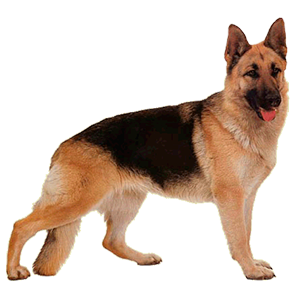
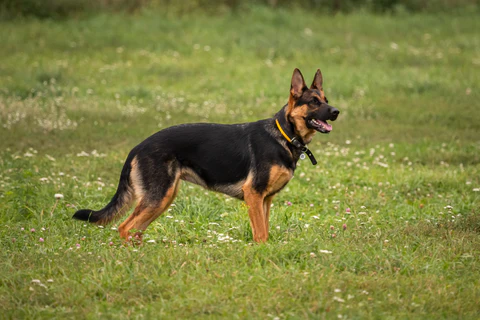
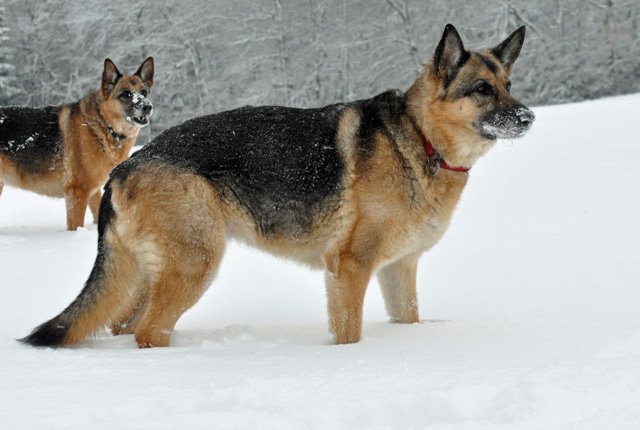
The classic short-haired German Shepherd — a symbol of devotion and versatility: clever, level-headed, fearless and boundlessly devoted. The short-haired German Shepherd is the standard variety of the world's most famous service breed; from herder to police, army and rescue services, it combines outstanding intelligence and working qualities with the role of a reliable protector and family companion.
Apartment · with caveatsKidsCats · with caveatsOther dogsBeginners · with caveats
The Short-Haired German Shepherd (Deutscher Schäferhund Stockhaar) is one of the most famous and popular dog breeds in the world. They are a symbol of loyalty, intelligence, and versatility. Originally bred as a herding dog, the German Shepherd quickly earned a reputation for its outstanding work ethic, becoming an invaluable partner for police, the military, and search-and-rescue teams, as well as a devoted companion and protector for millions of families. Their balanced temperament, athletic physique, and incredible intelligence make them a truly dream dog. This detailed guide, prepared by the team at Tvaryny, will help you gain a deeper understanding of all aspects of this incredible breed.
In a ranking of the most intelligent dog breeds compiled by Professor Stanley Coren, the German Shepherd confidently holds the third-place spot, surpassed only by the Border Collie and the Poodle. This high level of intelligence is matched by their noble appearance, athletic build, and a remarkable ability to learn. Their proportional build, with clean lines from head to body, showcases their inner strength, agility, and endurance. It's no wonder people say the German Shepherd is "everything you could ever want in a four-legged friend." Their popularity is no accident; they are the embodiment of the ideal working dog and loyal companion.
The German Shepherd: General Overview and Key Characteristics
The German Shepherd is a medium-sized dog with a sturdy, muscular, and slightly elongated build. They exude confidence, dignity, and a readiness for action. Below is a table with the main characteristics of the breed:
The German Shepherd: General Overview and Key Characteristics · 13
Characteristic
Description
Official Name
Deutscher Schäferhund Stockhaar (German Shepherd Dog with a straight, harsh coat)
Origin
Germany
Year of Breed Recognition
Late 19th Century (1899 – Club Foundation)
Founder of the Breed
Max von Stephanitz
Lifespan
9–13 years (on average)
Height at the Withers (FCI Standard No. 166)
Males: 24–26 inches; Females: 22–24 inches
Weight (FCI Standard No. 166)
Males: 66–88 lbs; Females: 48–70 lbs
Coat Type
Short, straight, harsh, dense, and close-lying with a thick undercoat (Stockhaar)
Primary Colors
Saddleback (black saddle with tan markings ranging from fawn to reddish-brown), solid black, sable gray, sable red.
Temperament
Balanced, self-assured, courageous, alert, loyal, highly trainable, with a strong protective instinct.
Use
Service dog (police, military, security, search and rescue), herding dog, guide dog, sport dog (Schutzhund/IPO, agility, obedience), companion dog.
Activity Level
High (requires regular and intense physical and mental exercise)
Trainability
Very High
Fun Facts About the German Shepherd
War Heroes: German Shepherds played a significant role during World War I and II. They served as messenger dogs, medics (finding the wounded), scouts, guards, and even for carrying small loads. Many were awarded for their bravery.
The First Guide Dog: While dogs had helped the blind before, the German Shepherd was one of the first breeds systematically trained as a guide dog for veterans who lost their sight during World War I. This happened thanks to an initiative in Germany.
Movie Stars: German Shepherds have repeatedly become movie stars. The most famous are probably Rin Tin Tin and Strongheart, who were genuine Hollywood celebrities in the 1920s and greatly contributed to the breed's popularity in the U.S.
Different Names: In different countries, the German Shepherd is called by various names. In addition to the official German name "Deutscher Schäferhund," they are often called "Alsatian" in Great Britain and some other countries (especially after the world wars to avoid German associations), GSD (German Shepherd Dog) in English-speaking countries, or simply "Shepherd."
Masterful Scent Work: Thanks to their exceptional sense of smell, German Shepherds are used for detecting drugs, explosives, and weapons, as well as for finding missing people (both by following a trail and in rubble).
Symbol of Police and Military: The image of a German Shepherd is often used as a symbol for police and military canine units in many countries worldwide.
Different Breeding Lines: There are significant differences between working-line German Shepherds (focused on service qualities) and show-line dogs (focused on show-ring appearance standards). This applies to both appearance (e.g., the slope of the back) and temperament.
Devotion to One Person?: While the German Shepherd is devoted to its entire family, it often chooses one family member as its "primary" owner, to whom it shows special affection.
A Breed with Its Own Sport: Schutzhund (now IPO or IGP) is a dog sport developed specifically to test and train the working abilities of German Shepherds, which includes tracking, obedience, and protection.
Color Changes with Age: Some German Shepherd puppies, especially sable or saddleback colored ones, are born much darker, and their final color and tan markings develop gradually over the first few months or even up to two years.
A Detailed History of the German Shepherd
The history of the German Shepherd is inextricably linked with Captain Max von Stephanitz, who is rightly considered the "father" of the breed. In the late 19th century, many types of local herding dogs existed in Germany, differing in appearance and working abilities. Von Stephanitz, a cavalry officer and student at the Berlin Veterinary College, dreamed of creating a versatile German working dog that would combine intelligence, strength, endurance, and loyalty.
In 1899, at a dog show in Karlsruhe, von Stephanitz saw a dog named Hector von Linksrhein (later renamed Horand von Grafrath). This dog's qualities so impressed him that von Stephanitz purchased him. Horand von Grafrath became the first officially registered German Shepherd and the foundation sire of the breed. That same year, on April 22, Max von Stephanitz, along with his friend Arthur Meyer and a few other enthusiasts, founded the German Shepherd Dog Club (Verein für Deutsche Schäferhunde, or SV). They developed the first breed standard, with its main criterion being functionality: "The breeding of the German Shepherd must be the breeding of working dogs. This must always be the starting point, otherwise, we will cease to breed German Shepherds."
Selection was based on the principle of a dog's best physical and mental suitability for herding and service work. It's believed that various German herding dogs contributed to the breed's formation, and some sources even mention the possible infusion of Indian wolf blood, although this claim is disputed and lacks scientific proof. The primary focus was on intelligence, obedience, endurance, and physical strength.
At the beginning of the 20th century, with the decline in the need for herding dogs, German Shepherds began to be actively used by police and the military. Their exceptional trainability, sense of smell, and courage made them ideal for service tasks. During World War I, German Shepherds served as messengers, medics, scouts, and guards. Their effectiveness was so high that after the war, the breed began to be actively bred in other countries, including Great Britain and the United States.
In the mid-20th century, German Shepherds found even wider use in military operations, search and rescue, as guide dogs for the blind, and in many other fields. It's important to note that the breed standard allowed for two coat types: the short, harsh coat (Stockhaar) and the long-haired coat (Langstockhaar). For a certain period, long-haired German Shepherds were not recognized by the FCI for breeding, but since 2010, they have regained full recognition as a separate variety within the breed, which you can read about in more detail in our article on the long-haired German Shepherd. The short-haired variation has always remained the classic and most widespread.
Appearance and Standard of the Short-haired German Shepherd
The short-haired German Shepherd is a dog with a harmonious, well-balanced physique that combines strength, agility, and endurance. Its appearance corresponds to its functional purpose—to be a capable and resilient working dog. The FCI Standard No. 166 meticulously describes all aspects of its appearance.
General Appearance: A medium-sized dog, slightly elongated, strong, and well-muscled, with a lean bone structure and a sturdy overall build. Important proportions: height at the withers is 24–26 inches for males and 22–24 inches for females. Body length exceeds height at the withers by approximately 10–17%.
Head: Wedge-shaped, proportional to the body (length is approximately 40% of the height at the withers), neither coarse nor too light. The skull and muzzle are of equal length. Skull width is approximately equal to its length. The skull is slightly arched when viewed from above and the front, with a barely noticeable or absent central furrow. The stop is smooth, not sharply defined. The muzzle is wedge-shaped and strong; the bridge of the nose is straight. The lips are dry, close-fitting, and dark in color.
Nose: The nose must be black.
Bite: Powerful, well-developed, with a scissor bite (the upper incisors tightly overlap the lower ones). A level bite, undershot, or overshot bite are considered faults. The dental formula is complete—42 teeth.
Eyes: Medium-sized, almond-shaped, slightly slanted, not protruding. The eye color should be as dark as possible. Light, piercing eyes are undesirable as they spoil the dog's expression.
Ears: Medium-sized, erect, set vertically and parallel (not splayed), pointed, with the ear canals facing forward. Semi-erect or hanging ears are a fault. Ears laid back during movement or at rest are not a flaw.
Neck: Strong, muscular, without a dewlap. Set at an angle of approximately 45° to the horizontal.
Body: The topline runs from the base of the neck through a high, long wither and a straight back to a slightly sloping croup without visible interruptions. The back is moderately long, strong, powerful, and well-muscled. The loin is wide, short, strongly developed, and well-muscled. The croup is long, slightly sloped (approximately 23° to the horizontal), and smoothly transitions into the base of the tail.
Chest: Moderately wide, with the breastbone as long and prominent as possible. The depth of the chest is approximately 45–48% of the height at the withers. The ribs are moderately sprung.
Tail: Reaches at least to the hock, but not lower than the middle of the pastern. It is covered with thicker hair on the underside. At rest, it hangs in a gentle curve. When excited or in motion, it is raised higher, but not above the topline.
Limbs:Forequarters: Straight when viewed from all sides, and perfectly parallel when viewed from the front. The shoulder blades are long, set at an angle (approximately 45°), and lie close to the body. The upper arm is strong and well-muscled. The forearms are straight, lean, and muscular. The pasterns are strong, with an angle of approximately 20–22°. The feet are rounded, tightly gathered, and arched; the pads are firm but not brittle. The nails are strong and dark in color.
Hindquarters: Set slightly back, and parallel when viewed from the rear. The thighs are broad and muscular. The shanks are long and strong. The hocks are strong with well-defined angles. The metatarsals are strong and vertical. The feet are gathered and slightly arched; the pads are firm and dark. The nails are strong, curved, and dark in color.
Movement: The German Shepherd is a trotting dog. The limbs must be coordinated in length and angulation so the dog can move the hindquarters over a distance equal to the body length and the forequarters over the same distance, without significant changes to the topline. The gait is far-reaching and fluid, indicating endurance.
Skin: The skin is tight and free of wrinkles.
Coat (Stockhaar): The short-haired German Shepherd has a double coat with an undercoat. The outer coat should be as dense as possible, straight, harsh, and close-lying. The hair on the head, inside the ears, front of the legs, feet, and toes is short. The coat on the neck is slightly longer and denser. On the back of the legs, the hair lengthens to the pastern or hock, forming moderate "trousers" on the back of the thighs. The length of the outer coat varies, but it is always straight and harsh.
Colors: The most common and recognized colors are:
Saddleback (Black and Tan): With tan markings ranging from reddish-brown, brown, yellow, to light gray. A black saddle (mantle) covers the back. The mask on the muzzle is black.
Solid Black: A completely black coat.
Sable Gray (Wolf Gray) or Sable Red: With darker hair tips. Also with a black mask.
Small white markings on the chest or very light areas on the inner surfaces are permissible but not desirable. The nose is always black. Dogs lacking a mask, with light eyes, light or white markings on the chest and inner surfaces, light nails, and a reddish tail tip are evaluated as dogs with insufficient pigmentation. The undercoat is always light gray, except for black dogs, whose undercoat can also be black.
German Shepherd Temperament and Character
The German Shepherd's character is one of its most outstanding traits, making the breed so popular and sought-after worldwide. An ideal German Shepherd has a balanced, stable temperament; they are self-assured and brave, but not aggressive without cause.
Intelligence and Trainability: These are incredibly smart dogs who quickly grasp new commands and tasks. They are eager to please their owners and enjoy work and training. Their intelligence requires constant stimulation through training, games, and various tasks. Without proper mental engagement, they can become bored and exhibit destructive behavior.
Loyalty and Devotion: German Shepherds are deeply devoted to their family and owner. They form a strong bond and are ready to protect their loved ones under any circumstances. This loyalty makes them wonderful companions but also means they do not tolerate being alone for long periods.
Courage and Confidence: A true German Shepherd should not be shy or nervous. They should be confident, calm in unfamiliar situations, and brave in the face of a threat. This trait is key for service dogs.
Protective Instinct: German Shepherds have a strong instinct to guard their territory and protect their "pack" (family). They are vigilant and alert, always ready to warn of approaching strangers. With proper training and socialization, this instinct is controlled, without unnecessary aggression.
Work Ethic and Energy: This is an active breed that needs significant physical exercise and regular work. They are not built to lie on the couch all day. They require long walks, runs, games, and, ideally, participation in a dog sport or service training. Their work ethic makes them similar to tireless workers like the Mudi, albeit with a different set of specific skills.
Balance: The breed standard requires a balanced nervous system. The dog should not be overly excitable or, conversely, lethargic. They should react appropriately to stimuli and calm down quickly.
Temperament with Children and Other Animals: With proper socialization from an early age, German Shepherds typically get along well with their family's children, showing patience and care. However, due to their size and strength, playtime with small children should always be supervised. They can coexist with other pets (cats, other dogs), especially if they were raised together. But their prey and territorial instincts can sometimes surface, so introductions and cohabitation require supervision and a correct approach.
It's important to understand that despite all their positive qualities, a German Shepherd's temperament is not suited for a role as a purely indoor pet, without activity and tasks. This intelligent dog was created to serve or perform specific work, and without it, they will feel restless. A lack of proper training, socialization, and exercise can lead to the development of behavioral problems such as excessive aggression, shyness, destructive behavior, or uncontrollable barking. When compared to other large herding breeds, like the Maremma Sheepdog, which is more independent, the German Shepherd is more focused on human interaction and teamwork.
There are some differences in temperament between working-line and show-line dogs. Working-line dogs generally have a more pronounced work drive, higher energy levels, and stronger protective instincts. They require a very experienced owner and serious exercise. Show-line dogs are often calmer and more suited for companion life, although they still retain the breed's core traits and require activity and training. When choosing a puppy, it's important to consider these differences and select a dog whose temperament matches your lifestyle and experience.
Training, Raising, and Socializing the Short-haired German Shepherd
The German Shepherd is one of the most trainable breeds. Their high intelligence, desire to please their owner, and natural inclination for work make the training process relatively easy, but they also require the owner to have knowledge, consistency, and a responsible approach. Training and socialization should begin from a very young age.
Key Aspects of Training and Raising:
Early Start: Begin training and teaching basic commands from the moment the puppy arrives in your home (usually at 8–10 weeks of age). The earlier the dog learns the rules of behavior and the basics of obedience, the easier it will be in the future.
Positive Reinforcement: German Shepherds respond best to training methods based on positive reinforcement—praise, treats, toys, and play-based motivation. Avoid harsh methods, shouting, and physical punishment, as this can lead to a loss of trust, the development of fears, aggression, or stubbornness. While the breed needs firmness and clear boundaries, it must be combined with fairness and respect for the dog.
Consistency and Clarity: Be consistent in your demands and commands. All family members should follow the same rules. Commands must be clear and unambiguous.
Short and Regular Sessions: Puppies and young dogs have a limited attention span. It's better to hold short (10–15 minute) training sessions several times a day than one long and exhausting one. Regularity is more important than duration.
Variety: Make sessions interesting and varied so the dog doesn't get bored. Alternate commands, introduce new elements, and use game-based methods.
Socialization:Early and comprehensive socialization is critically important for the German Shepherd. From puppyhood, introduce the dog to various people (adults, children of different ages), other dogs (friendly and vaccinated ones), different sounds (city noise, traffic), places (parks, streets, dog-friendly stores), and situations. A properly socialized German Shepherd will be confident, calm, and react appropriately to new stimuli. Insufficient socialization can lead to shyness, aggression, or excessive suspicion. Puppy classes ("puppy school") can be very helpful.
Establishing Leadership: A German Shepherd needs an owner who will be a calm, confident, and consistent leader. This does not mean dominance through force, but rather setting clear rules and boundaries, providing fair guidance, and earning the dog's respect.
Mental Stimulation: In addition to physical activity, German Shepherds need significant mental stimulation. This can be learning new commands and tricks, playing search games, using interactive toys, or participating in sports like obedience, agility, or even specialized training (Schutzhund/IPO, search and rescue). A bored German Shepherd, with all their intelligence and energy, might find "work" for themselves, and owners may not like the results (for example, chewing on things, excessive barking, or digging holes).
Common Commands and Skills: "Sit," "Down," "Stay," "Come," "Heel," "Place," "Leave It" (or "No"), "Fetch." It's also important to get the dog used to wearing a muzzle (especially for visiting public places), calmly reacting to being handled (for example, at the vet), and walking on a leash without pulling. The German Shepherd tends to mirror their owner's emotions towards strangers, so it's important for the owner to demonstrate calm and confident behavior. Training is absolutely necessary for this intelligent dog; otherwise, they may direct their intellect and strength toward damaging your property or developing undesirable behavioral traits. Breeds like the Belgian Malinois are also known for their high intelligence and need for work, making them similar to the German Shepherd in this aspect.
Pros and Cons of the German Shepherd Breed
The short-haired German Shepherd is an outstanding breed with many advantages, but like any other, it has its peculiarities that can be drawbacks for certain people or living conditions. It's important to objectively evaluate all aspects before getting such a dog.
Pros and Cons of the German Shepherd Breed · 8
Pros
Cons
High Intelligence and Trainability: Among the smartest dogs, they learn commands easily and love to learn and work.
High Need for Physical and Mental Exercise: They require daily, long walks, active games, and mental stimulation. Without this, they can get bored and become destructive.
Devotion and Loyalty: Very attached to their family, ready to protect them under any circumstances. Excellent companions.
Prone to Certain Genetic Diseases: Joint dysplasia, degenerative myelopathy, stomach issues. Requires careful breeder selection and attention to health.
Versatility: A fantastic service dog, guard dog, athlete, and companion. Can perform a wide variety of tasks.
Require an Experienced Owner: Due to their intelligence, strength, and working qualities, they need firm but fair and consistent training. Not the best choice for a novice.
Protective Qualities: A natural guardian, vigilant and brave. Provides a sense of security.
Can be overly suspicious of strangers: Require early and thorough socialization to avoid aggression or shyness.
Get along well with children (with proper training and socialization): Patient and caring with their family's children.
Heavy Shedding: Short-haired Shepherds shed heavily year-round, especially seasonally. Requires regular brushing.
High Energy and Playfulness: Always ready for activities and games, making them great partners for active people.
Can be noisy: Prone to barking, especially if bored, they see something suspicious, or are not trained to control barking.
Impressive Appearance: A dignified, strong, and well-balanced look.
Not suitable for apartment living without sufficient exercise: Require space and the opportunity for active movement.
Can successfully compete in various dog sports.
High cost of a puppy from a responsible breeder and expenses for upkeep (quality food, veterinary care).
Grooming the Short-haired German Shepherd
Caring for a short-haired German Shepherd is not overly complicated but requires consistency and attention to specific aspects, especially their dense double coat.
Coat Care:
Brushing: Short-haired German Shepherds have a dense undercoat and shed year-round, with two main periods of heavy shedding (usually in the spring and fall). It's recommended to brush the dog 2–3 times a week with a specialized brush (a furminator, a metal comb with fine teeth, or a rubber grooming mitt) to remove dead hair, prevent matting (although rare in short-haired dogs), and stimulate skin circulation. During seasonal shedding, you will need to brush daily. Pay special attention to the hair on the belly, "trousers," and around the neck, where the coat is thicker.
Bathing: German Shepherds should not be bathed too often to avoid stripping the natural protective oils from their skin and coat, which can lead to dryness and irritation. It is usually sufficient to bathe your dog 2–4 times a year or when they get very dirty. Use a high-quality dog shampoo designed for a double coat. Rinse the shampoo thoroughly to prevent skin irritation.
Drying: After bathing, thoroughly dry the coat with a towel. You can use a hairdryer on a low or medium setting, held at a safe distance to avoid overheating the skin.
General Care:
Ears: Regularly (once a week) check the ears for dirt, redness, unpleasant odor, or signs of infection. Clean the ears with a cotton ball moistened with a special dog ear-cleaning solution. Do not use cotton swabs to avoid damaging the ear canal.
Eyes: Check the eyes daily. Normal discharge can be gently wiped away with a clean, damp cloth or wipe. If you notice excessive tearing, redness, cloudiness, or pus-like discharge, contact your veterinarian.
Teeth: To prevent plaque, tartar, and gum disease, it is recommended to brush your dog's teeth 2–3 times a week with a special toothbrush and toothpaste for dogs. You can also give them dental treats and toys. Regular oral check-ups with a vet are also important.
Nails: Trim the nails approximately once every 3–4 weeks or as needed if they do not wear down naturally during walks on hard surfaces. Use a special large-dog nail clipper. If you're not sure how to do this correctly, consult a groomer or veterinarian. Overly long nails can cause discomfort, pain, and problems with gait.
Paws: After walks, especially in winter (due to road salts) or after walking in muddy areas, check and wash your dog's paws. Check the pads for cracks, cuts, or foreign objects. In winter, you can use a protective paw wax.
Living Conditions:
The German Shepherd is a large and active dog that requires plenty of space to move around freely. Ideally, they should live in a house with a large, securely fenced yard. Living in an apartment is possible, but only if the owner can provide daily long (at least 2–3 hours a day), intense walks with the opportunity to run off-leash in a safe area, as well as regular mental stimulation. Without enough activity and space, a German Shepherd can become unhappy, exhibit destructive behavior, or develop health problems. They handle various weather conditions well thanks to their dense coat but require protection from extreme heat and cold (for example, an insulated doghouse or access to an indoor space in winter).
Nutrition
German Shepherd Diet: Key Recommendations
Health and risks
Health and Genetic Diseases of the German Shepherd
Frequently Asked Questions About the Short-haired German Shepherd (FAQ)
Is a German Shepherd suitable for apartment living?
A German Shepherd can live in an apartment, but it is far from ideal conditions for such a large and energetic breed. If you are considering this option, be prepared to provide the dog with at least 2–3 hours of active walks every day, including running, games, and training. Regular mental stimulation is also crucial. Without this, the dog will get bored and may become destructive (chewing furniture, ruining things) or noisy. A house with a large, securely fenced yard is a much better option.
What is the lifespan of a German Shepherd?
The average lifespan of a German Shepherd is 9–13 years. With proper care, a good diet, regular veterinary check-ups, and sufficient physical activity, some dogs can live even longer.
Do short-haired German Shepherds shed a lot?
Yes, a great deal. Despite the "short-haired" in their name, they have a dense double coat and shed year-round, with two particularly intense periods of seasonal shedding (spring and fall). Be prepared for regular (ideally daily during shedding season) brushing and for having hair in your home.
Is it easy to train a German Shepherd?
German Shepherds are considered one of the most trainable dogs due to their high intelligence and desire to work with people. However, they require a consistent, patient, and knowledgeable approach. They learn quickly but can just as easily learn undesirable behaviors if the training is incorrect. It's recommended to seek a professional dog trainer, especially if you have little experience.
Are German Shepherds aggressive?
With proper training, early socialization, and from responsible breeders, a German Shepherd should not be aggressive without cause. They should be confident and have a pronounced protective instinct, but unprovoked aggression is a fault. Insufficient socialization, poor treatment, or a genetic predisposition can lead to aggression problems.
How do German Shepherds get along with children?
Typically, well-socialized German Shepherds are very patient and caring with their family's children. They can become wonderful companions and protectors for kids. However, it's important to teach children how to behave correctly around the dog, to respect its personal space, and to always supervise their joint play, especially with small children, due to the dog's size and strength.
Do German Shepherds get along with other pets?
They can get along with other dogs and cats, especially if they were raised together. However, German Shepherds have a fairly strong prey and territorial instinct, so introductions to new animals should be gradual, cautious, and strictly supervised. Some individuals may not tolerate other dogs of the same sex or small animals.
What is the difference between a short-haired and a long-haired German Shepherd?
The main difference is the coat type. The short-haired (Stockhaar) has a short, harsh, close-lying outer coat with a dense undercoat. The long-haired German Shepherd (Langstockhaar) has a longer, softer outer coat, often with prominent "feathers" on the ears, limbs, and tail. Long hair was once considered a fault, but is now recognized by the FCI as a separate variety. The character and working qualities of both varieties should be the same, although some believe that long-haired dogs may be a bit softer in temperament.
What alternatives to the German Shepherd could I consider if I want a similar dog?
If you like the German Shepherd type but are looking for alternatives, you could consider breeds such as the White Swiss Shepherd Dog (often considered to have a softer character), the Belgian Malinois (very energetic, requires even more exercise and experience), or the Long-haired German Shepherd, which is recognized as a different variant of the breed.
Video about the Breed
FAQ
How does the short-haired German Shepherd differ from the long-haired one?
Only in coat type: the short-haired (Stockhaar) has a dense medium-length coat with a thick undercoat; the long-haired is longer with an extended “mane”. In character and working qualities they are the same.
Is the German Shepherd good for a family?
Very — a devoted, level-headed and reliable protector, good with children; but it needs exercise and mental work, so it is best for an active family.
What are the main health problems?
Above all joint dysplasia and degenerative myelopathy (DM); gastric torsion and pancreatic insufficiency (EPI) also occur, so choosing a breeder who tests the parents matters.