

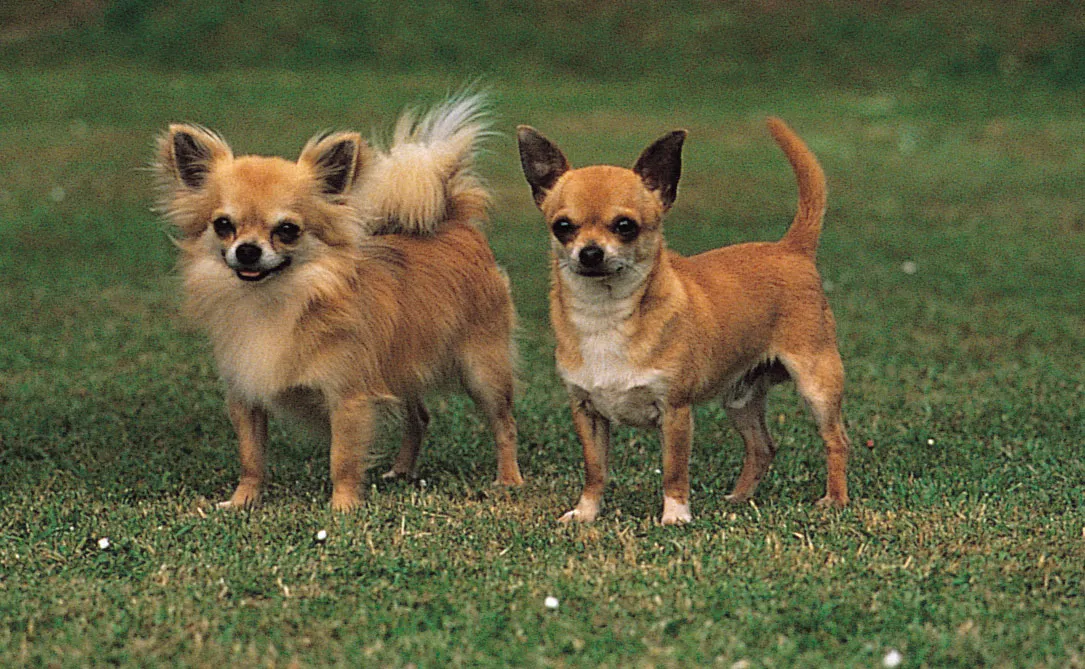
| Height | 15–23 cm |
| Weight | 1.5–3 kg |
| Lifespan | 14–18 years |
| FCI group | 9 · toy dogs |
| Origin | Mexico |
Exact ratings
Common health issues
Nutrition
The Chihuahua isn’t just the smallest dog breed in the world; it’s a true phenomenon in the canine world. Named after the Mexican state of Chihuahua, where it was “discovered” by the Western world around 1850, this tiny creature has managed to capture the hearts of millions – from ancient Aztec rulers to modern Hollywood stars. But is this dog really just an “accessory,” or is there something more hiding behind its fragile appearance? Find out more on Tvaryny.
Chihuahua: A Brief Breed Overview and Stats
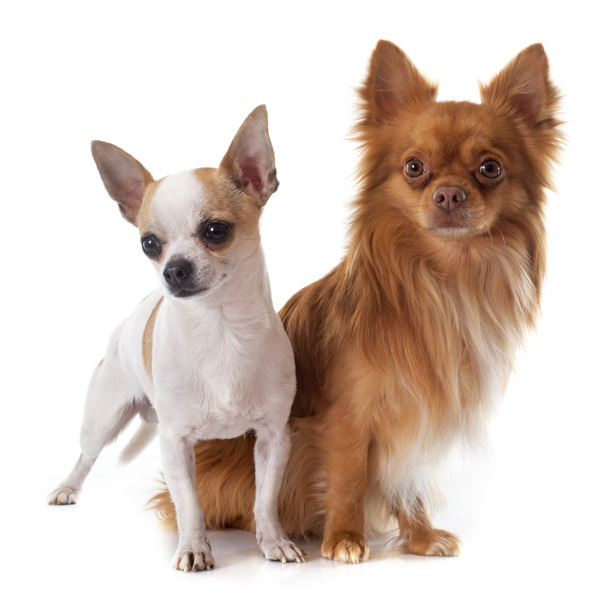
| Characteristic | Parameter Description |
|---|---|
| Original Name | Chihuahua |
| Country of Origin | Mexico |
| FCI Classification | Group 9 (Companion and Toy Dogs), Section 6 (Chihuahueño) |
| First Mentioned | Around 1850 (as a modern breed), ancestors date back to the pre-Columbian era |
| Lifespan | 12-20 years (one of the longest-living dog breeds) |
| Height at Withers | 6-9 inches (standard doesn’t strictly define height; weight is more important) |
| Weight | Ideal: 3.3 – 6.6 lbs. Permissible: 1 – 3.3 lbs |
Breed History: From the Mayans to Modern Times
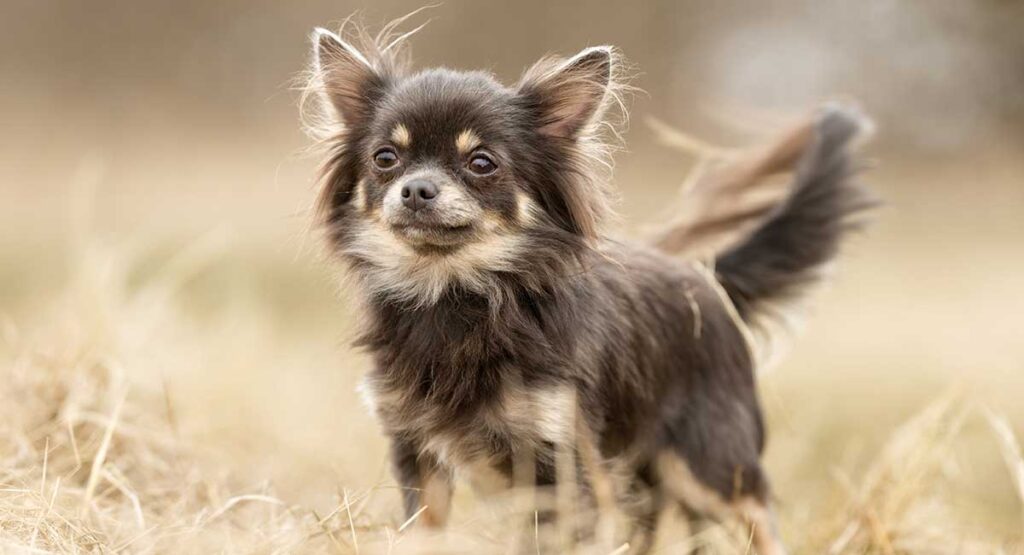
The history of the Chihuahua reads like a gripping detective novel, where facts are intertwined with legends. Most experts agree that the roots of this breed go back to ancient times, making it the oldest breed on the American continent.
The most common scientific theory connects the Chihuahua’s origin to Techichi dogs. These were small, mute (they didn’t bark) dogs bred by the Toltecs as early as the 9th century in the territory of modern Mexico. The Techichi were slightly larger than modern Chihuahuas and had longer hair. Their images can be found on the stones of the Cholula pyramids and in ancient manuscripts.
After the Aztecs conquered the Toltecs, Techichis became sacred animals. The Aztec nobility beleived that these dogs were guides for the souls of the deceased into the afterlife, “Mictlán.” Unfortunately, this belief often cost the dogs their lives – they were buried alongside their owners. There is also a theory that Techichi blood mixed with Chinese Crested dogs, which might have been brought over by conquistadors or traders, leading to a reduction in size and the appearance of short-haired variations.
“Modern” Chihuahuas were only discovered by American tourists in 1850 in old ruins near Casa Grande in the Mexican state of Chihuahua. Local merchants sold these pocket-sized dogs as living souvenirs. The state borders Texas, Arizona, and New Mexico, from where the breed began its triumphant march around the world. The American Kennel Club (AKC) officially registered the breed in 1904, and the first registered representative was a dog named Midget.
What a Chihuahua Looks Like: Standards and Appearance
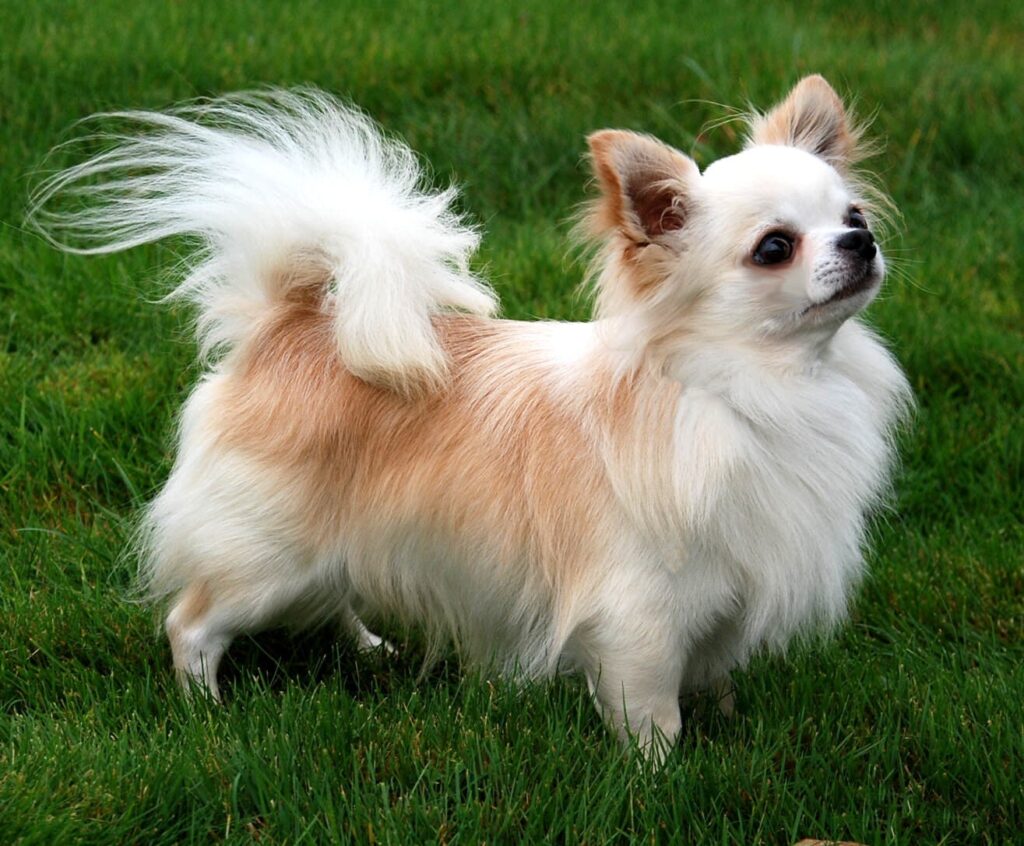
This is a compact dog with a square body format, although a slightly longer body is permissible in females for reproductive functions. The breed’s main calling card is its head.
- Head: Has a characteristic apple shape (Apple head). This is the only breed for which an open fontanelle (molera) was historically considered the norm, although modern standards strive for its absence for the animal’s safety.
- Muzzle: Short, broad at the base, tapering towards the nose, but should not be pointed like a “fox.” The stop (transition from forehead to muzzle) is very deep and pronounced, almost 90 degrees.
- Eyes: Large, round, very expressive, but should not be excessively protruding (bug-eyed). The color is predominantly dark.
- Ears: Erect, large, broad at the base, tapering slightly and rounded at the tips. At rest, they may flare to the sides at a 45-degree angle.
- Tail: Set high, flat, of moderate length. An important breed trait is how the dog holds it: raised in a sickle shape or curved, with the tip of the tail pointed strictly along the spine (semicircle).
Coat Types and Colors
The FCI standard clearly separates two varieties:
- Smooth-coat Chihuahua: The coat is short, lies close to the body, is shiny and soft to the touch. It may be slightly longer on the neck and tail. This type is often called the “royal miniature.”
- Long-haired Chihuahua: These dogs are often called “solar” because of their luxurious appearance. The coat is fine, silky, straight or slightly wavy. A characteristic feature is the presence of fringing on the ears, a “ruff” on the neck, “pants” on the legs, and a magnificent plume on the tail.
Regarding colors, the Chihuahua is a true artist’s palette. All colors and their shades are permissible, except for the merle pattern, which is banned by many kennel federations due to genetic problems. Variations of blue, chocolate, lilac, and Isabella are considered rare and valuable.
Temperament: A “Napoleon” in the Dog World
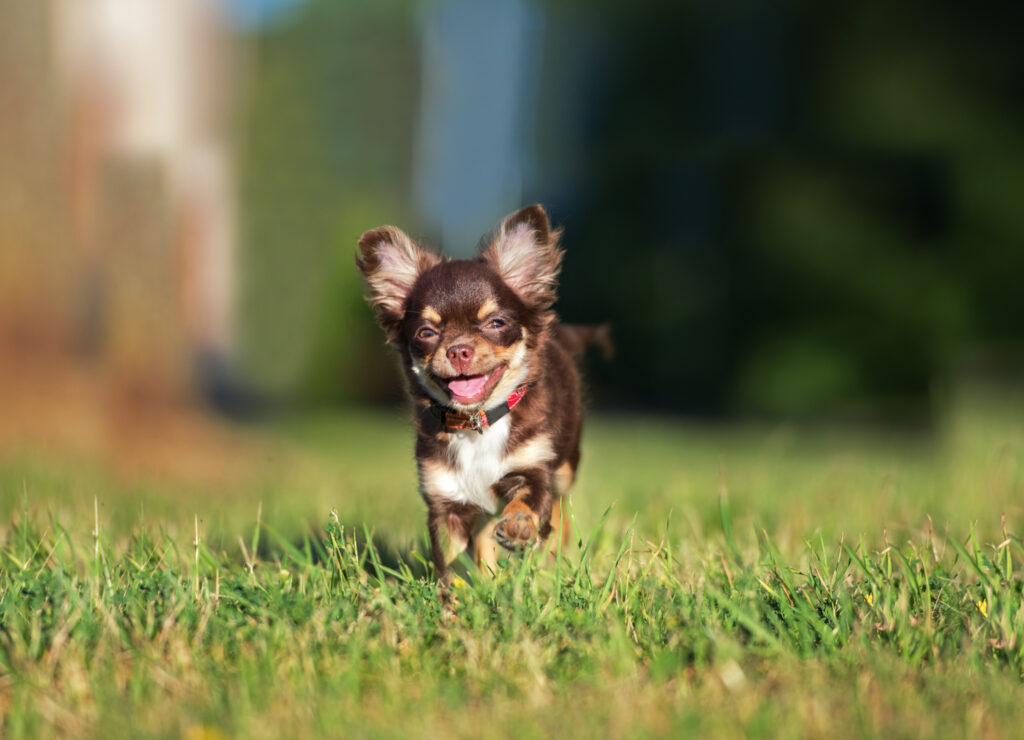
Don’t let the size fool you – inside this dog lives the spirit of a lion. The Chihuahua’s psyche is considered one of the most stable among toy breeds. Hysteria or cowardice is a fault, not the norm, as some people mistakenly believe.
Owners often note the following character traits:
- Devotion to one owner: Chihuahuas tend to choose “their” person, to whom they will be infinitely loyal. They can be jealous, trying to push other family members or animals away from their master.
- Bravery: This dog is unaware of its size. It will not hesitate to rush to defend its territory even against a huge dog. This requires vigilance from the owner during walks. Unlike sled dogs such as the Siberian Husky, which are usually friendly to strangers, or hunters like the Podenco Campanero, the Chihuahua is primarily a watchman and guardian of its microworld.
- Intellect and Empathy: They sense the owner’s mood perfectly. If you are upset, the Chihuahua will simply sit nearby and stay quiet, pressing its warm side against you.
- “Shivering”: You can often see a Chihuahua trembling. This is not always from the cold. This is how their high metabolism, excitement, joy, or alertness manifests itself.
Care and Hygiene: What Owners Need to Know
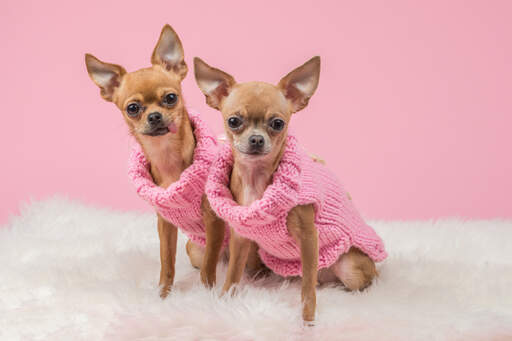
Caring for a Chihuahua is not a burdensome duty, but it must be regular.
Coat and Bathing
It is not recommended to wash a Chihuahua too often, as this washes away the protective oil layer from the skin, which can lead to dandruff. The optimal frequency is once every three to four months, using hypoallergenic shampoos. Long-haired dogs must be dried with a blow dryer (warm, not hot air) after a “bath” to avoid colds and matting.
For smooth-coated dogs, wiping with a damp cloth or brushing with a rubber mitt is sufficient. Long-haired ones need to be brushed 2-3 times a week with a metal comb, paying attention to the area behind the ears and under the legs, where tangles can form.
Manicure and Ears
A Chihuahua owner needs to carefully monitor the condition of the claws. Due to the dog’s light weight, claws do not wear down naturally on pavement. Excessively long claws deform the paw and ruin the gait. They need to be trimmed every 10-14 days. Light claws are easier to cut – the pink blood vessel (quick) is visible through them. With dark ones, you have to be more careful and trim millimeter by millimeter.
Clothing is a Necessity
In cold weather, especially in winter and during a rainy autumn, a Chihuahua must be dressed. This is not a fashion whim, but a matter of survival. Due to their small body volume, they lose heat instantly. The wardrobe should include: a raincoat, a warm sweater, and a winter jumpsuit.
Training and Socialization
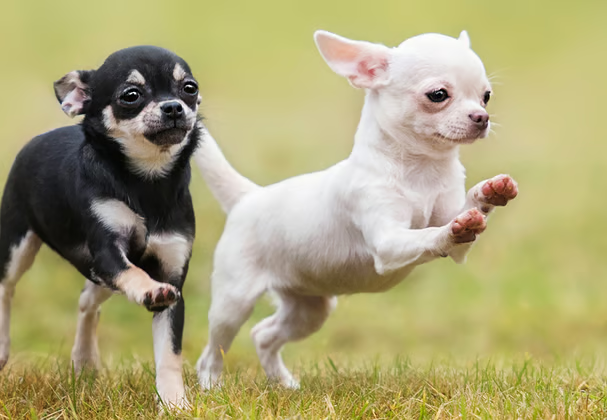
Many owners make the fatal mistake of thinking that a “pocket” dog does not need to be raised. As a result, they get a “domestic tyrant.” The Chihuahua is excellent at being trained, and it needs this for its mental health.
Key points of upbringing:
- Potty Training: Chihuahuas are easily trained to use pads or a litter box, which is very convenient in bad weather. But this does not cancel the need for walks.
- Socialization: Carry the puppy in your arms into crowded places, introduce it to other (safe) dogs. An isolated Chihuahua becomes aggressive and barky.
- Barking Control: The breed is prone to “alerting” for any reason. The “Quiet” command needs to be taught from the first days.
If you are choosing between small breeds, pay attention to the Russian Toy (which is leggier and has a different temperament) or the Miniature Pinscher (which is more active and working by nature). Another popular competitor is the Pomeranian, which requires significantly more coat care.
Health and Genetic Features
Nutrition: How Not to Harm the Little One
Pros and Cons of the Breed
| Advantages (+) | Disadvantages (-) |
|---|---|
| Compactness (can be taken on planes, to hotels, on transport). | Fragility (risk of injury from falling off a sofa or human carelessness). |
| Longevity (live 15+ years). | Tendency to bark excessively. |
| Eat little (saving on food). | Need clothing and protection from the cold. |
| Devotion and high intellect. | Can be aggressive to strangers and jealous. |
| Possibility of litter box training. | Dental problems requiring treatment. |
Interesting Facts About the Breed
- Chihuahuas have the largest brain relative to body size among all dog breeds.
- In the past, it was thought that these dogs could take on the owner’s illnesses (specifically asthma). Science does not confirm this, but the therapeutic effect of interacting with them is undeniable.
- Marilyn Monroe was a fan of the breed and had a Chihuahua named Choo-Choo.
- A pack of Chihuahuas can act very organized and even attack significantly larger dogs, working as a single organism.
Frequently Asked Questions (FAQ)
Do Chihuahuas get along with children?
This is not the best breed for families with very small children (under 6-7 years old). A child can accidentally injure the fragile dog, and the dog may bite in response for self-defense. For older children, it is a wonderful friend.
Is it true that you don’t have to walk them?
No, that is a myth. Although they can go to the bathroom at home, walks are needed for new impressions, physical fitness, and socialization. Without the outdoors, the dog becomes fearful or vicious.
How much do they sleep?
Chihuahuas love comfort and can sleep for many hours in a row, burrowing under a blanket. They are true “burrowers” in apartment conditions.
Video About the Breed
- The most compact — always with you
- Long-lived (14–18 years)
- Barely sheds (smooth-coated)
- Devoted and brave
- Fragile — easily injured
- Wary of strangers, yappy
- Feels the cold — needs clothing
- Not for families with small children
| Russian Toy | Pomeranian | Yorkshire Terrier | |
|---|---|---|---|
| Height | 20–28 cm | 18–22 cm | 20–23 cm |
| Energy | 3 | 3.5 | 3.5 |
| Apartment | 5 | 5 | 5 |
| Beginners | 3 | 3 | 3 |
Can a Chihuahua live with small children?
Do Chihuahuas shiver from the cold?
How long do Chihuahuas live?
FCI Standard No. 218 · The Kennel Club
For apartments · For kids · For beginners · Active · Smartest · Hypoallergenic · All rankings →