

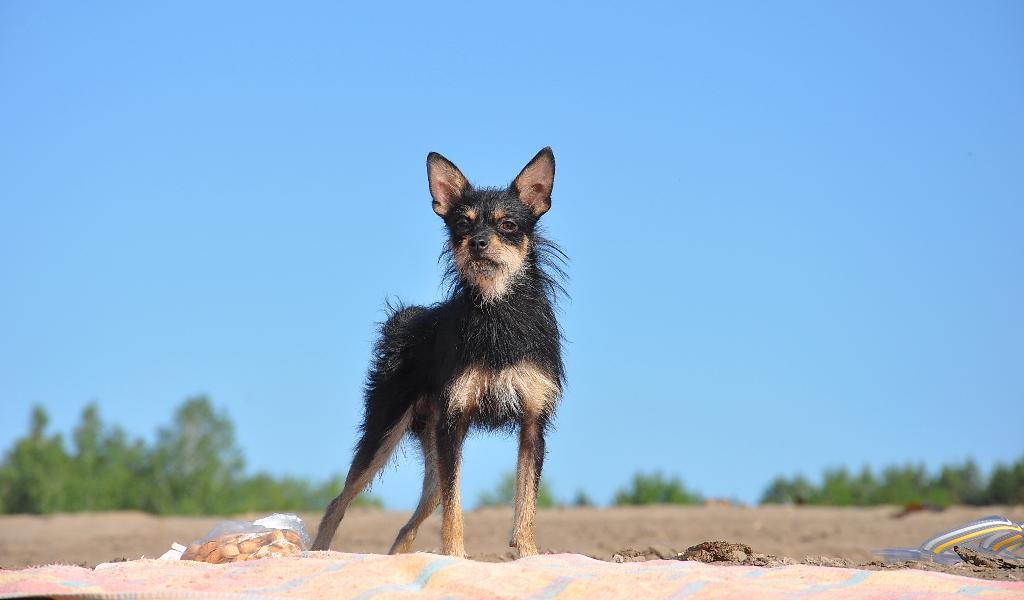
| Height | 20–30 cm |
| Weight | 2–4 kg |
| Lifespan | 12–15 years |
| FCI group | not FCI-recognized (primitive companion, RKF) |
| Origin | Russia |
Exact ratings
Common health issues
Nutrition
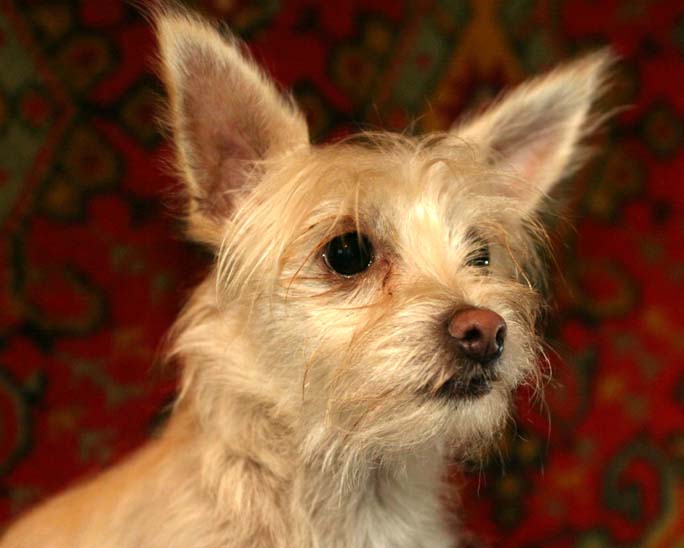
The Moscow Dragon is a unique phenomenon in the world of dog breeding. This dog features a very special coat: stiff hairs are sparsely distributed, creating the image of a prickly “dragon” with a characteristic crest running along its spine. This isn’t just a decorative lapdog, but a true personality with a big heart in a small body. Find out more on Tvaryny.
The Moscow Dragon: A Brief Overview and Breed Card
| Country of Origin | Russian Federation (Moscow) |
| Year of Origin | 1988 (start of selective breeding) |
| Breed Group | Toy dogs, companion dogs |
| Coat Type | Wire, sparse, with a “crest” or “mane” |
| Lifespan | 13-15 years (some live up to 17 years) |
| Height at Withers | 10-11 inches (25-28 cm) |
| Weight | 4.5-9 lbs (2-4 kg) |
History: From Street Dog to Selective Miracle
The history of this breed is a classic example of how a professional eye can spot a diamond in the rough. At the source of this young and extravagant breed stand ordinary yard dogs that roamed the streets of Moscow in the late 1980s. Targeted work began thanks to dog expert Zoya Kostina.
The breeder’s attention was drawn to the specific appearance of a stray female named Kari. Her coat was unlike the fur of usual lapdogs or terriers – it stood up on stiff guard hairs, creating a bizarre silhouette. Later, a male named Mikronom was found with analagous traits. In the late 80s and early 90s, several more dogs with a similar coat were discovered in the Moscow region, which allowed experts to speak of a specific phenotype that had formed naturally in the urban environment.
Interestingly, genetically these dogs carry great diversity, similar to how any mixed breed dog is formed, but with fixed unique coat mutations. Crossbreeding of the first found specimens allowed for the formation of a stable phenotype, which today is possessed by about a hundred purebred Moscow Dragons. Experts N. Karpysheva and L. Ivanova also took an active part in their breeding and standardization.
At the moment, the breed is still considered rare and “proprietary.” The low birth rate of Moscow Dragons (litters are often small) does not yet allow for a significant and rapid increase in the population. Breeding work is also being carried out in other cities, as the demand for exotic Moscow Dragons often exceeds the actual number of puppies. At the same time, mutts with similar coats can theoretically still be found on the streets, but without a pedigree, they are not considered representatives of the breed.
What the Moscow Dragon Looks Like: Detailed Description
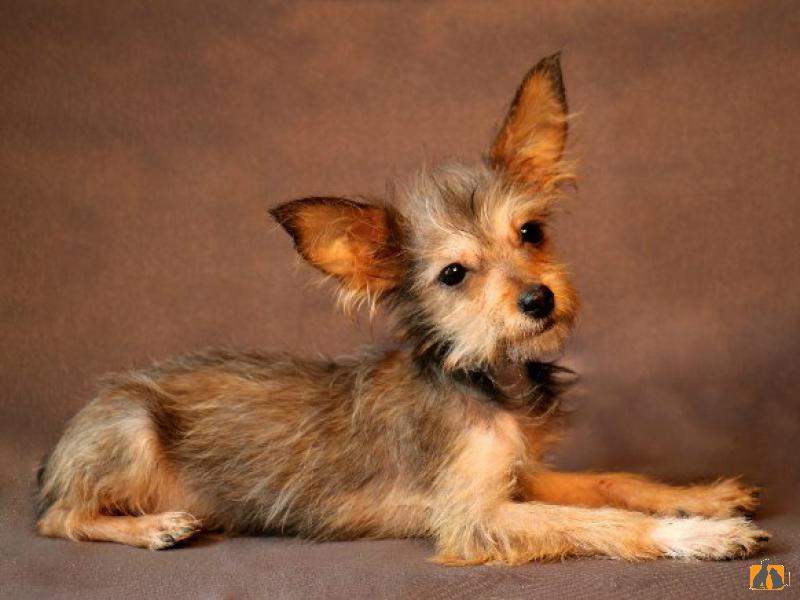
The appearance of this dog is its main trump card. Slender, dry, and delicate, with strands of hair sticking out in all directions – the Moscow Dragon always has a scruffy, slightly messy hairstyle, which is actually a breed trait. This is not a case where the dog needs to be brushed perfectly hair-to-hair.
Coat and Head Features
The coat of the “dragons” is hard and can feel like wire to the touch. It should not be too thick. The main feature is the furnishing hair on the head, forming bangs, a mustache, and a beard, as well as a crest along the spine. In this, they are somewhat reminiscent of the Affenpinscher, although their body structure is lighter.
- Head: Small, wedge-shaped, with a not-too-sharp transition from forehead to muzzle. A furrow between the eyes is desirable.
- Eyes: Dark, expressive, medium-sized, set wide apart. The look is intelligent and interested.
- Ears: Thin, mobile, can be erect or semi-erect. Long hair on the ears can create a “tassel” effect.
Body and Limbs
The body of the Moscow Dragon is compact, square, or slightly elongated in format. The back is straight and strong. The chest is moderately wide and deep. Limbs are dry, parallel, with small “cat-like” paws. The tail can be docked (leaving a few vertebrae) or of natural length, curled into a ring or sickle over the back. In this aspect, there is a certain resemblance to another Russian breed – the Long-haired Russian Toy, however, the “Dragon” looks more robust and “wild.”
Color Palette
The “parents” of the breed gave this dog diverse color options, making each representative unique. The standard allows:
- Red (all shades);
- Brown and chocolate;
- Sable and wolf (agouti);
- Black and black-and-tan;
- Blue and lilac (rare);
- Saddle pattern.
The standard allows for white markings in established places (chest, toes) but rejects the possibility of a spotted (piebald) color in a purebred Moscow Dragon. A characteristic look is also provided by the short undercoat, however, one can encounter “dragons” with long fluffy “insulation,” although the hard, sparse guard hair is considered classic.
Psychology and Character: Little Warrior with a Big Heart
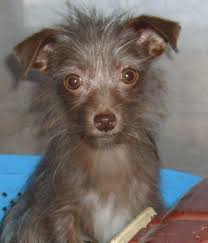
Do not be misled by the toy-like appearance. The Moscow Dragon is a smart and independent dog with a firm character. The street past of its ancestors has hardened its psyche, combining courage and balance. This is not a hysterical dog that trembles at a loud noise.
Such a dog will not bark without a reason, although when meeting strangers, it will remain wary and will undoubtedly notify the owner of an “intrusion.” It can conflict with other dogs, regardless of the different weight category. This is a typical Napoleon complex, common to many terriers and small pinschers. However, aggression is not pathological – it is rather a way of self-assertion.
In a large family with various pets, the Moscow Dragon can be accustomed to living together if introduced from childhood. This decorative dog becomes very devoted to its owner, sometimes choosing one “leader” whom it obeys implicitly. It loves interaction and becomes strongly attached to a person, handling long separations poorly. Due to good intelligence, training Moscow Dragons poses no difficulties. However, it should be started as early as possible to overcome innate wayward character traits.
Grooming and Hygiene Nuances
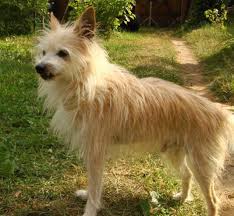
A purebred Moscow Dragon inhabits an apartment, takes baths, and cares for its hairstyle. But unlike Poodles or Yorkies, it doesn’t require hours of brushing sessions. Its coat is not prone to matting.
| Procedure | Frequency | Comment |
|---|---|---|
| Brushing | Once a week | Use a comb with sparse teeth or a natural bristle brush. |
| Bathing | As needed | When heavily soiled. Frequent washing can dry out the skin. |
| Trimming | Hygienic | Shortening hair around the anus and between paw pads. |
| Face grooming | Optional | Trimming the bangs and beard so the eyes are open. |
Owners of this room dog often find it necessary to shorten its mustache and bangs so that the coarse hairs do not interfere with vision and eating. However, dogs with a “natural” mess in their coat or minimal hairdressing are admitted to the show ring. The “Dragon” should look natural, a bit wild.
The owner only needs to regularly trim the pet’s claws (they do not always grind down due to the dog’s low weight) and clean its ears and teeth. The dog’s large, funny eyes should be gently wiped with lotion. For the hard coat of the Moscow Dragon, a special wire-coat dog shampoo is used, which foams well and texturizes the guard hair. The little one is bathed as needed – for example, if it gets very dirty on a walk in bad weather. Afterward, wrap it in a terry towel and dry the coat well. Overall, caring for a dog of this breed is within the power of an owner of any age, even a child under adult supervision.
Training and Socialization: How to Raise a Polite Dragon
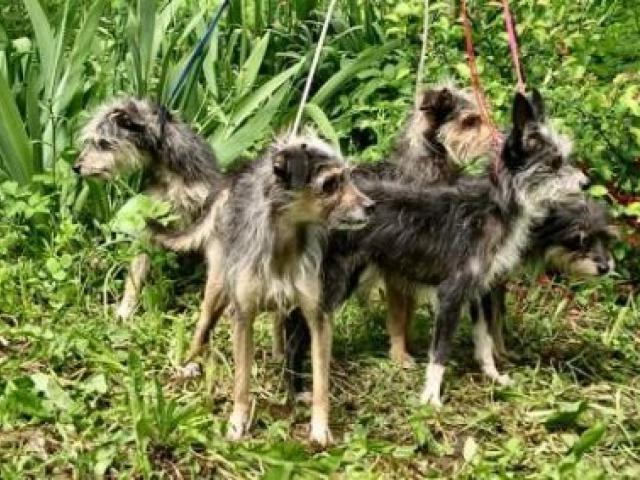
The balanced temperament and intelligence of the Moscow Dragon breed facilitate quality training. Such a pet is suitable for various types of training but also requires systematic upbringing. Its independent nature and fighting character can swap the roles of teacher and four-legged student. It is enough to neglect your own authority, and the dog will seize the initiative from the owner and become a household tyrant.
An important aspect is early socialization. Take the puppy outside, introduce it to friendly people, traffic sounds, and other dogs. If this is not done, natural wariness can develop into cowardice or unmotivated aggression.
Representatives of the breed are successfully involved in sports activities – mini-agility, freestyle (dog dancing), and junior handling, in which Moscow Dragons enthusiastically go for the win thanks to their agility and speed. Despite the indoor purpose of the breed, which is classified as decorative, Moscow Dragons should not be deprived of physical activity. Movement is life for this energetic creature.
Feeding: Key Recommendations
Health: Typical Diseases and Genetics
Pros and Cons of the Breed
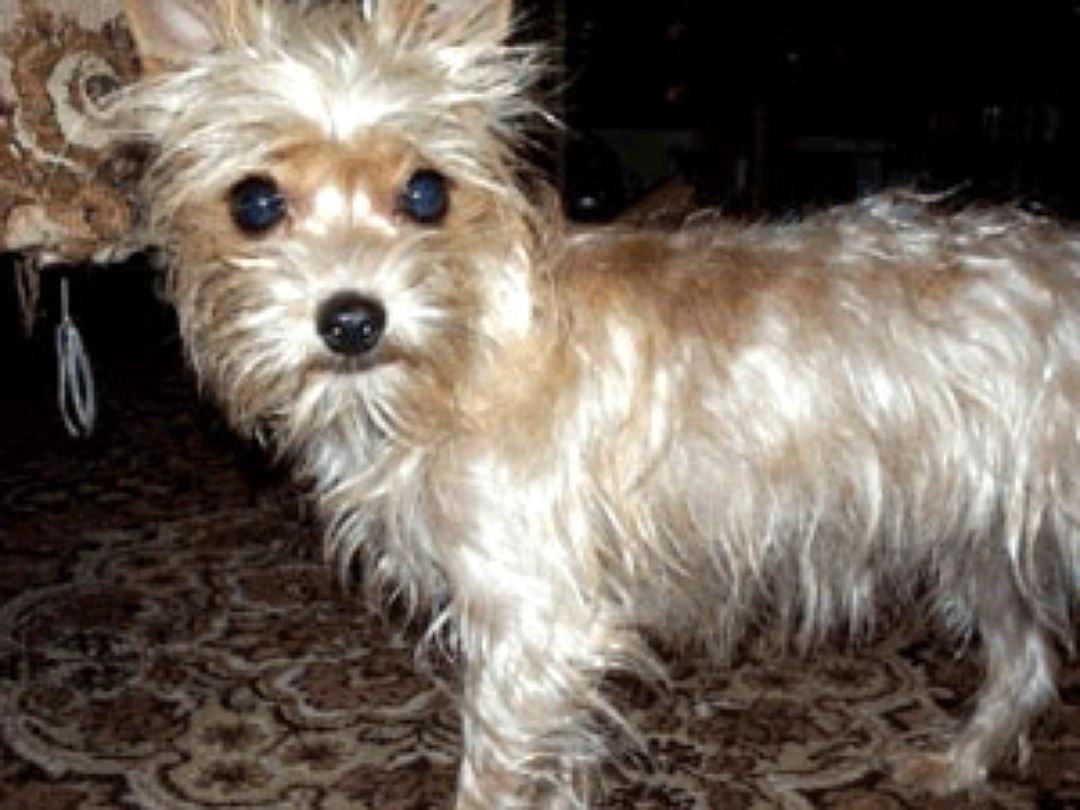
| Pros (+) | Cons (-) |
| Robust health and immunity | Tendency to dominate and “yappiness” |
| Original, unforgettable appearance | Need for early socialization |
| Compact size (convenient for travel) | Possible aggression towards other dogs |
| Devotion and high intelligence | Rarity of the breed (hard to find a puppy) |
| Simplicity in coat care |
Interesting Facts About the Breed
- Fact 1: The name “Dragon” appeared not only because of the crest on the back but also because of the fearless character, which does not correspond to the dog’s size at all.
- Fact 2: Some dog experts compare this breed to the Korean Sapsali dogs for their ability to drive away “evil spirits” (figuratively – strangers) and their shaggy coat, although their sizes are completely different.
- Fact 3: The hard coat of the Moscow Dragon practically does not get wet in light rain, working like armor.
- Fact 4: This is one of the few breeds where having a “mongrel” in the pedigree is not hidden but is considered a matter of pride and a source of genetic health.
Frequently Asked Questions (FAQ)
Do Moscow Dragons shed?
Yes, shedding is present, but thanks to the structure of the hard coat, it passes less noticeably than in smooth-haired dogs. Dead hair often remains on the dog, so it needs to be combed out.
Is this breed suitable for a family with children?
The Moscow Dragon can be a wonderful friend for a school-age child. For very small children, it can be dangerous only if the child hurts it – the dog might “fight back.” It is not a patient nanny, but an equal partner.
Where to buy a Moscow Dragon puppy?
Since the breed is young and not numerous, the main kennels are located in Russia. When buying, it is important to check the documents so as not to purchase an ordinary mutt under the guise of a purebred dog, although visually they may be similar.
- A stable temperament — not hysterical
- Compact, ideal for an apartment
- A devoted, sociable companion
- An unusual, recognizable “dragon” coat
- Very rare outside Russia
- Fragile — careful with small children
- Feels the cold in winter, needs clothing
- A young breed — the gene pool is limited
| Russian Toy | Chinese Crested (Powderpuff) | Affenpinscher | |
|---|---|---|---|
| Height | 20–28 cm | 23–33 cm | 25–30 cm |
| Energy | 3.5 | 3 | 3.5 |
| Apartment | 5 | 4.5 | 4 |
| Beginners | 3.5 | 3.5 | 3 |
Where does the name “dragon” come from?
Is the Moscow Dragon noisy?
Is the breed FCI-recognized?
RKF standard (primitive breeds) · breed clubs
For apartments · For kids · For beginners · Active · Smartest · Hypoallergenic · All rankings →