Group 1 · herding dogs · United States (not Australia, despite the name)
Australian Shepherd
A different-colored-eyed genius of the pastures: intelligent, devoted, energetic and always ready to work. The Australian Shepherd (Aussie) is a brilliant companion for active people, but its sharp mind and boundless energy demand daily tasks, or that energy turns to mischief.
Apartment · not suitableKidsCats · with caveatsOther dogsBeginners · with caveats
The Australian Shepherd (Aussie) is a devoted, energetic, and incredibly loyal friend for you and your family. This breed is known not only for its attractive appearance but also for its outstanding intelligence, reliability, and balanced temperament. These dogs are highly talented and can be excellent herders, agility and frisbee athletes, search dogs, and rescuers. Their sharp minds help them easily learn commands and perform tasks.
Australian Shepherds, with proper socialization, are never aggressive without cause. They can be wonderful companions for active families and attentive pals for children. They are quiet and calm indoors as long as they get enough physical and mental exercise. Outdoors, however, they transform into energetic and active explorers. Socialization and constant human contact are extremely important for them, as they cannot stand loneliness and boredom. Aussies should be trained with consistency and positive reinforcement, avoiding any harshness or cruelty. To maintain their excellent physical and mental shape, these dogs need daily long walks, games, and mental challenges. Discover more about these amazing animals and other breeds on Tvaryny.
Intelligent, active, devoted, hardworking, vigilant, great companion
Usage
Herding, dog sports (agility, obedience, frisbee), companion, search and rescue
Fun Facts About the Australian Shepherd
Not Australians: Despite their name, the Australian Shepherd was bred in the U.S., not Australia. They likely got the name from Basque shepherds who arrived in America from Australia, or from the Australian-origin sheep they herded.
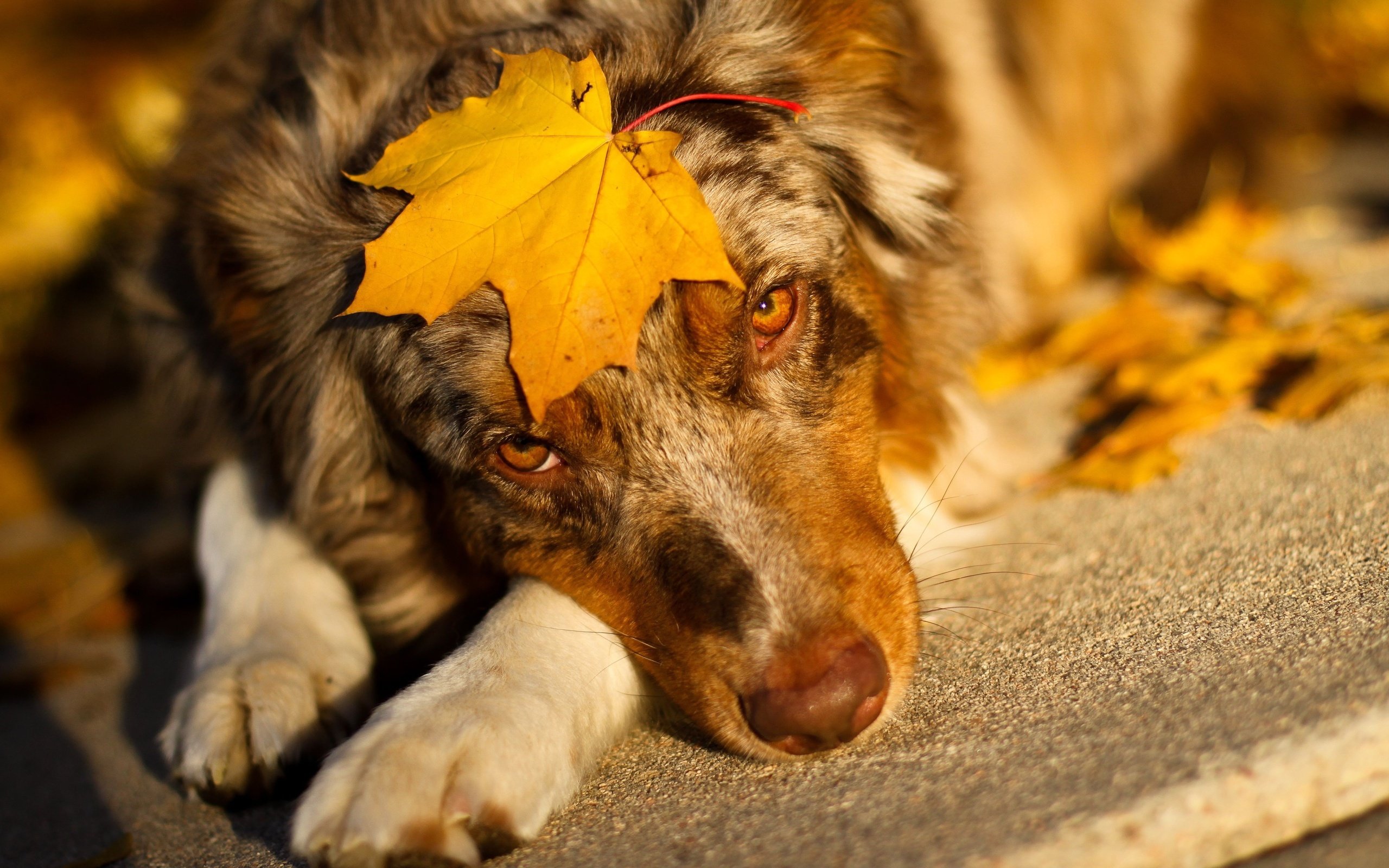
Different Colored Eyes: Heterochromia (different colored eyes) is quite common in this breed and is acceptable by the standard. One eye can be brown and the other blue, or one eye can have flecks of different colors (marbling).
"Velcro Dogs": Aussies are known for their strong attachment to their owners and often follow them everywhere, earning them the nickname "velcro dogs."
Rodeo Stars: Australian Shepherds were popular among cowboys and rodeo performers in America, where they not only herded cattle but also entertained the crowd with their tricks.
Natural Bobtails: Some Australian Shepherds are born with a naturally short tail (bobtail). This is a genetic trait.
Versatile Workers: Thanks to their intelligence, stamina, and trainability, Aussies are used not only as herders but also in search and rescue, as guide dogs, therapy dogs, and they excel in various dog sports. The Australian Kelpie, also an excellent herding dog, has very similar qualities. It is important to note that the Kuvasz breed is another great working dog, although they are much larger.
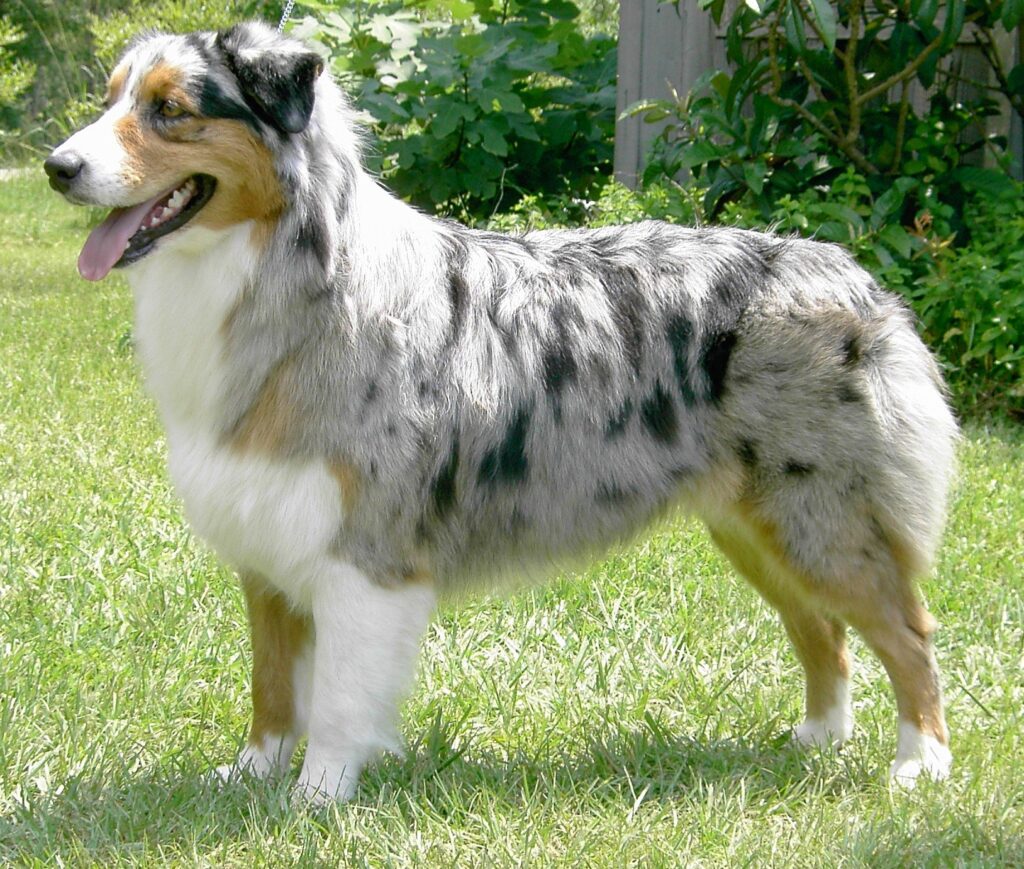
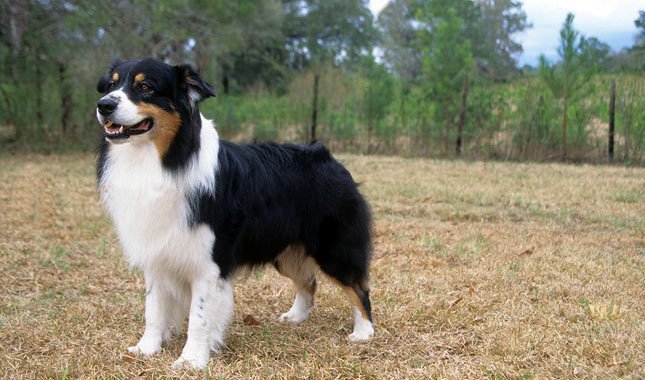
Four Main Colors: Although there are many variations, the standard recognizes four main colors: blue merle, red merle, black, and red, each of which can have white markings and/or copper points.
Drug Sensitivity: As mentioned, some Aussies have the MDR1 gene mutation, which makes them sensitive to certain medications. This is important to consider during veterinary treatment.
They Can "Smile": Some Australian Shepherds exhibit a behavior similar to a smile, raising their lips and showing their teeth as a sign of submission or greeting. This should not be confused with an aggressive snarl.
The Detailed History of the Australian Shepherd
Despite its name, the Australian Shepherd (often called "Aussie") has American roots. The breed's history is somewhat tangled, but the main theory connects its emergence to Basque herding dogs. Shepherds from the Pyrenees Mountains on the border of France and Spain emigrated to Australia in the 19th century, bringing their loyal, four-legged helpers with them. Some of these dogs may have been crossbred with other herding breeds already on the continent, such as different types of Collies or British Shepherds.
In the late 1800s and early 1900s, another wave of migration occurred, this time from Australia to the United States, especially during the California Gold Rush. Along with their Australian-origin sheep, these hardworking dogs also made their way to the U.S. It was in America that the breed received its modern name, "Australian Shepherd," likely due to its direct association with the Australian sheep they accompanied. In America, these dogs were highly valued for their outstanding working abilities, endurance, and knack for working in the diverse climates of the American West.
It's believed that to improve their working characteristics and adapt to local conditions, these dogs were bred with other herding breeds that already existed in the U.S. Possible ancestors include the Bernese Mountain Dog, Pyrenean Shepherd, and various Collie types, including the Border Collie and English Shepherd. American farmers and ranchers actively used Australian Shepherds to herd not only sheep but also cattle. Their versatility, strength, agility, and incredible loyalty made them extremely popular. The official breed club in the U.S., the Australian Shepherd Club of America (ASCA), was founded in 1957, and the American Kennel Club (AKC) recognized the breed in 1991. Today, the Australian Shepherd is not only a fantastic working dog but also a popular companion and a star in dog sports.
What an Australian Shepherd Looks Like: Detailed Appearance and Breed Standard
The Australian Shepherd is a medium-sized dog with balanced proportions, giving an impression of agility, strength, and stamina. Its body is slightly longer than it is tall at the withers. It's important for the dog to be sturdy and muscular, but without any signs of clumsiness or excessive bulk.
Head: The skull is flat or slightly rounded, with its length and width roughly equal to the length of the muzzle. The stop (transition from forehead to muzzle) is moderate and well-defined. The muzzle tapers toward the nose, with a rounded tip.
Eyes: Very expressive, almond-shaped, neither bulging nor sunken. Eye color can vary widely: brown (from light to dark), amber, or blue. Heterochromia (different colored eyes) and marbling (flecks of another color within the main iris color) are acceptable. The eye rims are typically black in blue merle and black dogs, and liver (brown) in red merle and red dogs.
Ears: Triangular, of medium size and thickness, set high on the head. When alert, they rise and point forward or to the side, like a "rose" ear. Fully erect or fully drooping ears are considered a serious fault. The hair on the head, ears, and front of the limbs should be short and smooth.
Nose: In blue merle and black dogs, the nose is black. In red merle and red dogs, the nose is liver (brown). Small pink spots are permissible in merle-colored dogs, but they should not exceed 25% of the total nose area in dogs older than one year (this is considered a serious fault).
Coat: The double coat is of medium length and texture, straight or slightly wavy, and weather-resistant. The undercoat is soft and dense, with its amount depending on the climate. On the head, ears, front of the forelegs, and below the hocks, the hair is short and smooth. The back of the forelegs and the "breeches" on the hind legs have moderate feathering. The mane and frill are more pronounced in males than in females. Atypical coat is a serious fault.
Color: Highly varied and one of the breed's signature features. The four main recognized colors are: blue merle, red merle, black, and red. All of these colors may have white markings or not, and/or with copper (tan) points or not. White can be present on the muzzle (as a blaze), neck (full or partial collar), chest, stomach, and limbs. However, white on the head should not dominate, and the eyes must be fully surrounded by color and pigment. Merle-colored dogs tend to get darker with age.
Tail: Traditionally, Australian Shepherds had their tails docked if they were longer than 4 inches. However, in many countries, docking is prohibited, so dogs with a natural long tail are becoming more common. There are also naturally short-tailed (bobtail) Australian Shepherds. A long tail should be well-plumed.
Important! If you don't plan to participate in dog shows with your pet, some minor deviations from the standard shouldn't be a deal-breaker for you. The most important things in an animal are its health, character, and loyalty!
Australian Shepherd Character: Temperament and Behavioral Traits
The Australian Shepherd is an extremely intelligent, energetic, and hardworking dog with a strong herding instinct. They are known for their devotion to their family and a strong desire to please their owner. This makes them relatively easy to train, but it also requires the owner to provide consistent attention and mental stimulation for the dog.
Intelligence and Trainability: Aussies are considered one of the smartest dog breeds. They quickly pick up new commands and tricks. Their minds need constant stimulation; otherwise, the dog might get bored and start finding its own entertainment, which owners don't always appreciate (like chewing furniture or barking excessively).
Energy and Need for Activity: This is a very active breed that requires significant daily physical exercise. A simple walk on a leash is not enough for them. They need running, games of frisbee or fetch, and participation in dog sports (agility, flyball, obedience). According to some sources, an Australian Shepherd can cover up to 40 miles a day. Without enough activity, they can become destructive or show signs of anxiety.
Herding Instinct: This instinct is very strong in them. They might try to "herd" family members, especially children, or other pets by gently nipping at their heels. This is not aggression but a working behavior that needs to be gently corrected from a young age if it's unwanted.
Devotion and Companionship: Aussies are very people-oriented and bond strongly with their family. They want to be full-fledged family members and participate in all activities. They don't handle loneliness well and can suffer from separation anxiety if left alone for too long. They are usually wary of strangers, which makes them good watchdogs, but not aggressive without a reason. Early socialization is crucial to form an appropriate reaction to strangers.
Relations with Children and Other Animals: With proper socialization from an early age, Australian Shepherds get along well with children, becoming wonderful playmates. However, due to their herding instinct, it's important to teach the dog not to "herd" the child and to teach the child how to behave correctly with the dog. With other pets, especially if they grew up together, Aussies usually find common ground. There can be some issues with dominance toward other dogs, so supervision and socialization are important.
Alertness and Protective Qualities: Australian Shepherds have a natural protective instinct and are alert watchdogs. They will definitely warn their owner about the approach of strangers or unusual sounds. At the same time, they are not prone to causeless barking if their needs for activity and attention are met.
Australian Shepherds crave their owner's approval and are willing to do a lot for praise. They are sensitive to a person's mood and are able to "de-escalate tense situations," calm, and comfort. These are dogs that require an experienced owner ready to dedicate a lot of time and energy to them.
Australian Shepherd Training and Socialization
Training and socialization for an Australian Shepherd are key aspects of raising a happy, balanced, and obedient dog. Thanks to their high intelligence and desire to please, Aussies are generally very trainable, but their energy and cleverness require a consistent and creative approach.
Key Training Principles:
Start Early: Begin socialization and basic training from the moment the puppy arrives in your home (usually at 8–12 weeks of age, after necessary vaccinations). Introduce the puppy to different people, sounds, places, and other animals in a controlled and positive environment.
Positive Reinforcement: Australian Shepherds respond best to methods based on positive reinforcement—praise, treats, toys. Avoid harsh methods, shouting, and physical punishment, as this can lead to fear, anxiety, or even aggression.
Consistency and Clarity: Be consistent with your commands and rules. All family members must follow the same rules so as not to confuse the dog. Commands should be clear and short.
Short and Interesting Sessions: Aussies are smart but can quickly get bored with monotonous repetition. Keep training sessions short (10–15 minutes) but frequent, and try to vary them with new exercises and games.
Mental Stimulation: In addition to physical exercise, Australian Shepherds need mental stimulation. Use interactive toys, dog puzzles, teach new tricks, and engage in scent work games. This will help direct their energy into a positive channel.
Socialization: This is very important for this breed. Provide the puppy with many positive experiences of interacting with different people (adults, children), other dogs (well-socialized and non-aggressive), and introductions to various situations (car rides, city walks, vet visits). This will help you raise a confident and well-balanced dog.
Correcting Herding Behavior: If herding instinct (nipping at heels) is unwanted, it must be gently but persistently corrected from a young age by redirecting the dog's attention to a toy or another activity.
Participation in Dog Sports: Agility, obedience, frisbee, flyball, and herding are great ways to provide an Aussie with the necessary physical and mental exercise, as well as strengthen the bond with the owner.
These herding dogs are very hardworking. It's a pleasure to train them. They cannot stand being idle or without attention. Otherwise, they will find something to occupy themselves with, and it's not always safe for your property. If you want to avoid damaged items, regularly train your dog. It will gladly carry out all your commands and whims, bring you slippers, or carry light bags from the store. Be patient, consistent, and loving, and you will raise a wonderful companion and loyal friend.
Pros and Cons of the Australian Shepherd Breed
The Australian Shepherd is a wonderful breed, but like any other, it has its advantages and disadvantages. It's important for potential owners to weigh all the pros and cons before getting such a dog.
Pros of the Australian Shepherd:
High Intelligence and Trainability: Aussies learn quickly and can master complex commands and tricks. They have a strong desire to please their owner, which makes training easier.
Loyalty and Companionship: They are very attached to their family, love spending time with people, and want to be part of all family activities.
Energy and Playfulness: A great companion for active people and families with children who love spending time outdoors.
Versatility: They are successfully used in various dog sports (agility, frisbee, obedience), herding, search and rescue, and as therapy dogs.
Attractive Appearance: Their beautiful coats with diverse colors and expressive eyes make them very appealing.
Good Watchdog Qualities: Alert and attentive, they will always warn you about the approach of strangers, but are not usually aggressive without cause.
Get Along Well with Children (with proper socialization): They can become wonderful friends and play partners for kids.
Cons of the Australian Shepherd:
High Need for Physical and Mental Exercise: They require daily long and intense walks, games, and training. Without this, they can become destructive, anxious, or noisy.
Not Suitable for Sedentary People or Those Who Spend a Lot of Time Away from Home: They don't handle loneliness well and can suffer from separation anxiety.
Strong Herding Instinct: They may try to "herd" children, animals, or even adults by nipping at their heels. This behavior requires correction from an early age.
Need for Early and Consistent Socialization: Without proper socialization, they can be overly wary of strangers or show dominance towards other dogs.
Shedding: They have a double coat that sheds quite a bit, especially seasonally. They require regular brushing.
Predisposition to Certain Hereditary Diseases: It's important to choose a puppy from responsible breeders who test their dogs.
Can Be "Too Smart": Their intelligence means they can easily "outsmart" an inexperienced owner or manipulate them. They require consistent and clever training.
Not for Novices: This breed is better suited for experienced dog owners who understand the needs of active and intelligent breeds.
Meticulous Grooming for the Australian Shepherd
The Australian Shepherd has a beautiful, medium-length double coat that requires regular, but not overly complicated, care. Proper grooming helps keep the coat healthy and clean, prevents matting, and reduces the amount of hair in your home, especially during seasonal shedding.
Brushing: This is the most important part of grooming. It's recommended to brush your Australian Shepherd 1–2 times a week using a slicker brush and a metal comb with varying tooth widths. This helps remove dead undercoat, dirt, and prevents mats from forming, especially behind the ears, on the "breeches," and on the tail. During seasonal shedding (usually in the spring and fall), you'll need to brush your dog more often, possibly daily.
Bathing: Australian Shepherds don't need to be bathed too often, as this can disrupt the natural oil balance of their skin and coat. Bathe your dog as needed, approximately once every 2–3 months, or if they get very dirty. Use a high-quality dog shampoo, preferably one that is suitable for double coats. After bathing, thoroughly rinse out the shampoo and conditioner (if you use it) and dry the coat well with a towel or a hair dryer on a low or medium setting.
Ear Care: Regularly check the ears for dirt, redness, or a foul odor, which can indicate an infection. Clean the ears with a special dog ear-cleaning solution as needed.
Nail Care: Trim the nails approximately once a month or as needed, if they aren't worn down naturally during walks. If you hear their nails clicking on the floor, it's time to trim them.
Dental Care: Regular teeth brushing with a special toothbrush and toothpaste for dogs will help prevent plaque, tartar buildup, and gum disease.
Clipping: Australian Shepherds usually don't need professional clipping. However, some owners may trim the hair on their paws (between the pads), around the ears, and under the tail for hygiene and a tidy appearance. It is strongly discouraged to shave an Australian Shepherd, as their double coat protects them from both cold and heat, as well as sunburn. Shaving can damage the coat's structure and disrupt their thermoregulation.
The best place for such an active herding dog to live is a suburban home with a large yard. If you want to keep such a dog in an apartment, remember that they need regular and intense physical activity. This breed is very playful and doesn't like to spend time alone; they always need human attention and shared activities.
Nutrition
Balanced Nutrition for the Australian Shepherd: Key Recommendations
Health and risks
Australian Shepherd Health: Typical Diseases, Genetic Predispositions, and Prevention
Frequently Asked Questions About the Australian Shepherd (FAQ) · 8
Is the Australian Shepherd suitable for apartment living? Yes, an Australian Shepherd can live in an apartment, BUT only if it is provided with daily, long (a minimum of 2–3 hours) and intense physical exercise, as well as sufficient mental stimulation. Without this, the dog will be unhappy and may become destructive or noisy. The ideal option is a private home with a fenced yard.
Do Australian Shepherds shed a lot? Yes, they have a double coat and shed quite noticeably, especially during seasonal shedding (spring and fall). Regular brushing (1–2 times a week, and daily during shedding season) will help control the amount of hair in your home.
Is it easy to train an Australian Shepherd? They are very smart and eager to please, which makes them relatively easy to train for experienced owners. However, their intelligence also means they can quickly get bored with monotony or try to "outsmart" their owner. They require a consistent, patient approach using positive reinforcement and a variety of tasks.
Do Australian Shepherds get along well with children? With proper socialization from an early age and teaching both the dog and the child the rules of interaction, Aussies can be wonderful companions for children. It's important to control their herding instinct (nipping at heels) and teach children to respect the dog's personal space.
Are Australian Shepherds aggressive? Australian Shepherds are not aggressive by nature, but rather alert and wary of strangers, which makes them good watchdogs. Aggression can be a result of improper training, insufficient socialization, fear, or genetic problems. It's important to choose a puppy from responsible breeders and pay a lot of attention to socialization.
How much physical exercise does an Australian Shepherd need? A lot. This is a high-energy breed. They need at least 2 hours of intense physical exercise per day, which includes running, active games, and training. Simple walks on a leash are not enough.
Can I leave an Australian Shepherd alone for a long time? They do not handle loneliness well and can suffer from separation anxiety if they are regularly left alone for extended periods (more than 4–5 hours). This can lead to destructive behavior or excessive barking.
What breeds are similar in temperament and needs to the Australian Shepherd? Breeds similar in energy level, intelligence, and need for a job include the Border Collie and Belgian Shepherds. You should also consider the Australian Kelpie.
Video About the Australian Shepherd Breed
FAQ
Is an Aussie suitable for an apartment?
Difficult — it is a working herder that needs hours of activity and mental tasks; cooped up without exercise it grows bored and mischievous.
What is the MDR1 mutation in the Aussie?
An inherited sensitivity to a range of drugs (some antiparasitics, anesthesia); it is important to know the dog’s status and to warn the vet.
Is the Aussie good with children?
Yes, in an active family — a devoted, playful companion; because of its herding instinct it may “herd” and nip, which is corrected with training.