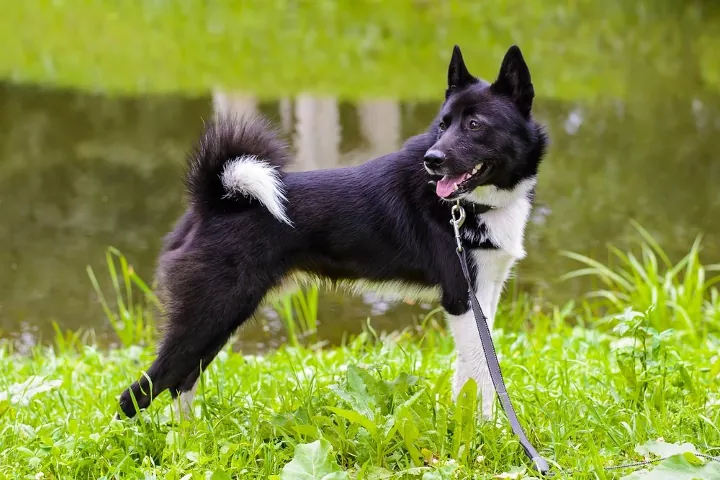
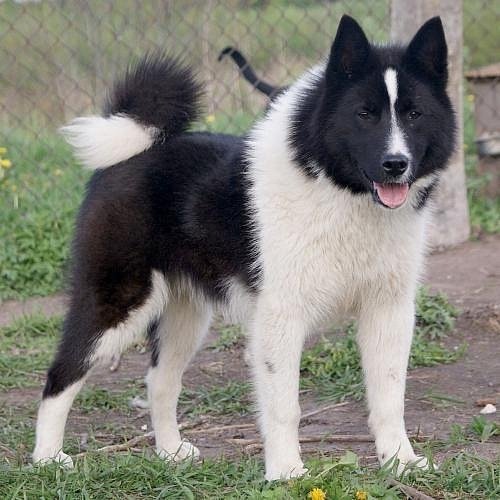
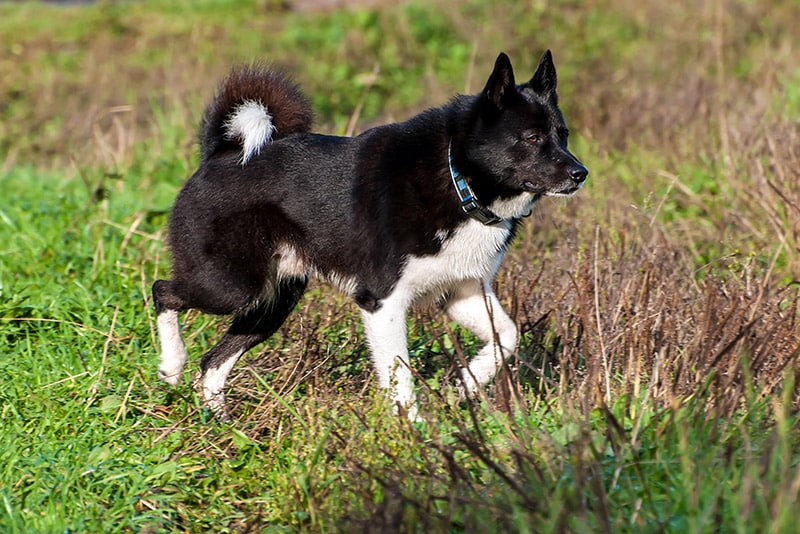
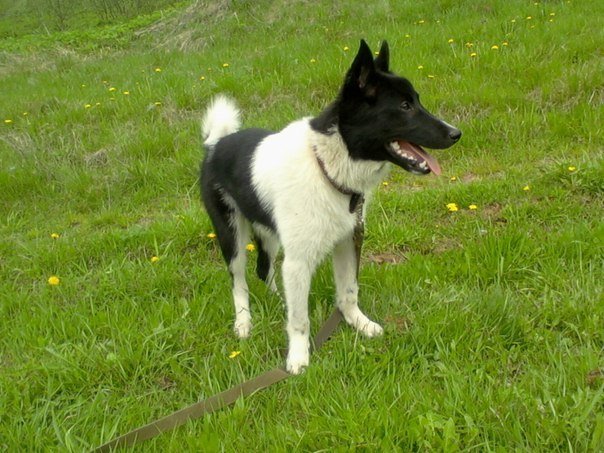
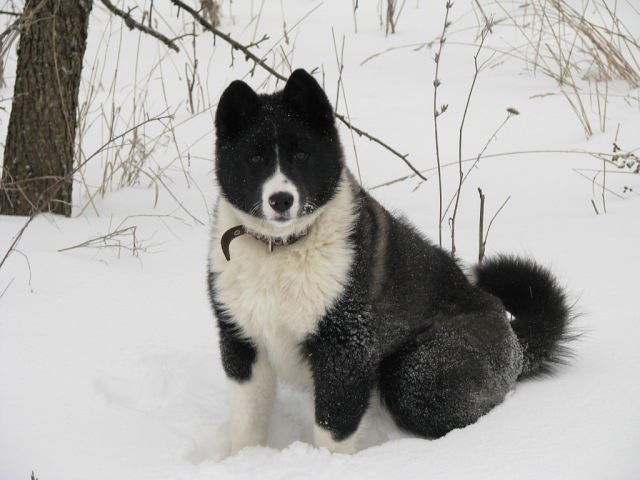
A black-and-white forest hunter of the Russian north — energetic, fearless and devoted: hardy, versatile, alert and wary of strangers. The Russo-European Laika is one of the youngest Russian hunting laikas; it works equally skillfully on bear, boar, fur game and bird, and at home becomes a devoted friend and an excellent watchdog with a ringing voice.
A very strong hunting instinct (dangerous to cats)
Loud — barks a lot (a working trait)
Not for an apartment or a novice
Wary of strangers, needs work
Size
ToySmallMediumLargeGiant
Compatibility
Apartment · not suitableKids · with caveatsCats · not suitableOther dogs · with caveatsBeginners · not suitable
The Russo-European Laika is not merely a dog; it is the embodiment of the hunting spirit, a trustworthy partner, and a faithful friend. As one of the youngest Russian hunting Laika breeds, it has won hunters' hearts with its versatility, endurance, and tireless energy. It works equally skillfully with large game like bear or wild boar, hunts fur-bearing animals flawlessly, and masterfully finds forest and waterfowl. However, it's essential to understand that the specific nature of its work differs in each individual case, so a future owner should decide the dog's main purpose beforehand. You can find more about the unique traits of this incredible breed next on Tvaryny.
These dogs are not only outstanding aids in taking game, but also excellent companions. They are limitlessly devoted to their family but approach strangers with natural caution, making them superb watchdogs that perform better than any alarm system. Their loud bark will always alert you to the presence of unfamiliar people. Their energetic and lively nature demands an active lifestyle, which is why this breed feels best outside the city, where there's plenty of space for movement and releasing energy.
Russo-European Laika Breed Snapshot
Russo-European Laika Breed Snapshot · 12
Breed Name
Russo-European Laika (Russo-European Laika)
Country of Origin
Russia (former USSR)
Time of Origin
1940s
FCI Recognition
Standard No. 304, Group 5 (Spitz and Primitive Types), Section 2 (Nordic Hunting Dogs)
Life Expectancy
12–15 years
Height at Withers (Males)
20.5–23 inches (52–58 cm)
Height at Withers (Females)
19.5–22 inches (50–56 cm)
Weight
40–50 pounds (18–23 kg)
Temperament
Energetic, bold, balanced, devoted, wary of strangers
Purpose
Versatile hunting dog, companion dog
Activity Level
Very High
Grooming Need
Low, increased during seasonal shedding
Interesting Facts About the Russo-European Laika
The black-and-white coloring, the breed's calling card, was specifically reinforced by the breeders. Such a contrasting dog is easily visible in the dense forest, which reduces the risk of accidental injury by the hunter.
Laikas have a unique way of hunting squirrels: they find it in the tree and begin to bark loudly, attracting the animal's attention and forcing it to move, which makes it visible to the hunter.
The voice is a working tool for the Laika. An experienced hunter can determine what kind of game the dog has found by the timbre, frequency, and loudness of its bark.
This breed, unlike many other hunting dogs, such as the specialized Norwegian Lundehund, is a true all-rounder capable of adapting to hunting diverse game.
Laikas are extremely people-oriented. When hunting, they constantly maintain visual or auditory contact with the owner, which distinguishes them from, for example, the more independent German Rough-Haired Pointer (Deutsch Stichelhaar).
The Breed's History
The history of the Russo-European Laika is relatively brief but compelling. This breed was purposefully developed in the mid-20th century by Soviet cynologists. The breeding work began in 1944 at the All-Union Research Institute of Hunting Economy and Fur Farming. The breeders' goal was to create a universal hunting dog with a strongly expressed black-and-white coat pattern, a stable build, and outstanding working qualities.
Aboriginal Laikas from the northern and central regions of the European part of Russia served as the foundation stock. Dogs from the Arkhangelsk, Vologda, Tver, Kostroma regions, as well as from Udmurtia and Karelia, contributed to the breed's formation. Arkhangelsk and Karelian Laikas had a particular influence. The progenitor of the modern breed is considered to be a male named Putik, born in 1946. His body type and working qualities became the blueprint.
The selective breeding work lasted about two decades, which is quite a short timeframe for establishing a new breed. The first provisional standard was adopted in 1949, and in 1952, the breed received official recognition and its current name. Its traits and ancestry are closely related to other Laikas, such as the West Siberian Laika and the East Siberian Laika, and shares common roots with the Karelian Bear Dog, evident in their appearance and hunting instincts.
The breed's popularity peaked in the 1960s-1970s. However, in the 1980s, due to a ban on squirrel hunting in the Moscow region, where a large population of these dogs was concentrated, their numbers began to decline. The economic crisis of the 1990s also forced hunters to switch to less demanding dogs. Fortunately, the breed is now gaining popularity again, not only in its homeland but also abroad, particularly in Scandinavian countries.
What the Russo-European Laika Looks Like: The Breed Standard
The Russo-European Laika is a medium-sized dog with a dry, powerful build and well-developed muscles. It looks compact, almost square, which grants it great maneuverability in the woods.
Head: Wedge-shaped, with a relatively broad skull. The transition from the forehead to the muzzle is smooth but noticeable. The muzzle is pointed and dry. Lips are tight-fitting.
Eyes: Small, oval-shaped, with an oblique set. Eye color is dark brown or brown. Their gaze is lively, intelligent, and expressive.
Ears: Pricked, small, triangular with sharp tips. They are very mobile, allowing the dog to accurately pinpoint the source of a sound.
Body: The withers are well-defined, especially in males. The back is straight, strong, and broad. The loin is short and muscular. The chest is deep and wide, providing ample room for the lungs. The belly is tucked up.
Limbs: Straight, parallel, and muscular. Paws are oval-shaped, gathered into a dense "ball," which protects them from injuries when running over rough terrain.
Tail: Set high, curled into a ring or sickle shape, and pressed against the back or thigh.
Coat: Straight, harsh, and dense with a soft, thick undercoat. On the neck and shoulders, the coat forms a lush collar. Hair is short on the head and ears. On the hindquarters, it forms "trousers." Such a coat reliably protects the dog from cold, heat, and insects.
Coloring: The most characteristic is black-and-white (piebald) or black with white markings. Completely black or white coloring is also acceptable. Speckling on a white background and red color are undesirable.
Laika Character and Temperament
Russo-European Laikas are the epitome of energy. They are incredibly active, quick, tireless, and always ready for action. Their temperament can be described as lively and balanced. They are brave but not reckless, and have a strongly expressed exploratory reaction - constantly analyzing their surroundings, listening, and sniffing.
This breed's main passion is hunting. The hunting instinct is deep in their blood. They are zealous, persistent, and tenacious when pursuing game. At the same time, they are very attached to their owner, viewing him as the pack leader and hunting partner. This loyalty is legendary. There are countless stories of Laikas saving their owners from wild animals or waiting for them for hours, despite the danger.
They treat their family members with love and tenderness. They generally get along well with children, especially if they grow up together, perceiving them as part of their "pack." However, they are wary and distrustful of strangers, always announcing their approach with a loud bark. Aggression toward people is not typical for them, but they will not hesitate to defend their territory and family.
Relationships with other animals can be complicated. Due to their strong hunting instinct, they view cats, rodents, and other small household pets as potential prey. Keeping them together is not recommended. They can coexist with other dogs, especially if raised together, but males may show dominance toward their relatives.
Pros and Cons of the Russo-European Laika Breed
Pros and Cons of the Russo-European Laika Breed · 6
Pros
Cons
✅ Universal Hunter: Works on all types of game, from squirrel to bear.
❌ Requires high physical activity: Not suitable for low-activity individuals.
✅ Devotion and loyaltyty: Highly attached to the owner and family.
❌ Not suitable for apartment life: Needs space and daily long walks in nature.
✅ Robust Health: Rarely suffers from hereditary diseases.
❌ Strong hunting instinct: May run away chasing prey; dangerous for small pets.
✅ High Intelligence: Learns easily if the right approach is found.
❌ Prone to Barking: Can be very noisy, which won't please the neighbors.
✅ Easy Grooming: Does not require complex coat care.
❌ Independent Nature: Can be stubborn, requires consistent training.
✅ Excellent Guardian: Always alerts to the approach of strangers.
❌ Not for Beginners: Requires an experienced owner who understands the specifics of hunting breeds.
Training and Socialization of the Russo-European Laika
The upbringing of a Laika must begin from the first days the puppy arrives home. Early socialization is extremely important. The puppy needs to be introduced to different people, sounds, places, and other calm dogs. This will help raise a balanced and self-assured dog.
Training must be consistent, patient, and fair. Laikas are very smart, but also independent and sometimes stubborn. Harshness and physical punishment are absolutely unacceptable - this can forever ruin the trust between the dog and its owner. The method of positive reinforcement works best. Basic obedience ("come," "sit," "down," "leave it") is mandatory. Special attention should be paid to the "come" command, as the dog may ignore it when caught up in the chase.
Specific hunting training, or "nataskivanie" (initial exposure to game), begins after mastering basic commands, usually at the age of 6–8 months. The dog is taken to the woods, familiarized with scents, and taught to follow a trail. Training sessions are held at special stations with captive game (squirrel, wild boar, bear). The goal of the training is to develop natural instincts, teach the dog to find the game, hold it by barking until the hunter arrives, and react correctly to a shot. It is vital that the dog does not tear or eat the prey. This is a complex process that requires knowledge and experience, so beginners should seek help from experienced hunters.
Care and Maintenance
Although many attempt to keep Russo-European Laikas in city apartments, this is not the best choice for the dog. The ideal conditions for it are a private home with a large, securely fenced enclosure and the opportunity for regular trips to the woods. These dogs need space and freedom. Confined within four walls, a Laika becomes unhappy, may start to chew on furniture, and bark incessantly.
Grooming: Coat care for a Laika is minimal. Its harsh coat with a dense undercoat only needs to be brushed 1–2 times a week with a metal comb. During seasonal shedding (spring and fall), the procedure will have to be performed daily to remove dead undercoat. The dog should be bathed rarely, only when heavily soiled, as frequent washing disrupts the skin's natural protective layer.
Physical Activity: This is a key aspect of maintenance. The Russo-European Laika needs a minimum of 2–3 hours of active exercise daily. These cannot be calm walks on the leash. The dog needs to run, explore the territory, preferably off-leash in a safe area. Ideal activities include long hikes in the woods, running alongside a bicycle, or swimming.
Claws and Ears: Regularly check the ears for dirt and inflammation. The claws of active dogs usually wear down by themselves, but if not, they must be trimmed. It is also important to check the paws for cuts and splinters after every walk in the woods.
Nutrition
Nutrition: What to Feed a Laika?
Health and risks
Health and Typical Diseases
Frequently Asked Questions About the Breed · 5
Is the Russo-European Laika suitable for a family with children?
Yes, provided correct training and socialization. They are patient with children from their "pack." However, any interaction between the dog and a small child must be supervised.
Can the Laika be kept in an apartment?
It is emphatically not recommended. This is a working dog that requires space, freedom, and enormous physical exertion. In an apartment, the dog will suffer, which will lead to behavioral problems.
Do Russo-European Laikas shed heavily?
Yes, they have a pronounced seasonal molt twice a year (spring and fall), during which they lose a large amount of undercoat. Daily brushing is required during this period.
Are they aggressive toward people?
No, aggression toward humans is not characteristic of this breed and is a disqualifying fault. They are wary of strangers but not aggressive without cause. Their job is to bark, not to attack.
Is it difficult to train them?
They are intelligent but independent. Training requires patience, consistency, and an understanding of the hunting dog's psychology. It can be challenging for a novice, so it is better to seek the help of specialists.
Video About the Breed
FAQ
What does the Russo-European Laika hunt?
It is an all-rounder: it works large game (bear, boar, elk), masterfully hunts fur game and finds forest and water birds; but the style of work differs, so it is worth settling on the main purpose.
Is the Laika a good watchdog?
Yes — it is boundlessly devoted to the family, wary of strangers and has a ringing bark, so it warns of approaching strangers better than an alarm.
Is the breed suitable for an apartment?
No — it is an energetic working hunter with a strong instinct; without space, work and an outlet for the instinct it grows bored and becomes uncontrollable.