

In brief: where dogs came from
- The dog (Canis familiaris) descends from an ancient, now-extinct population of grey wolf — not from modern wolves, jackals or coyotes.
- Domestication began roughly 15,000–40,000 years ago, before farming — making the dog the first animal humans tamed.
- The likeliest scenario is “self-domestication”: bolder wolves scavenged near human camps, the least aggressive were tolerated, and over generations they grew tamer.
- Genetics and behavior confirm the link to the wolf: dogs and wolves produce fertile offspring, and the wolf is closest to the dog in looks and habits.
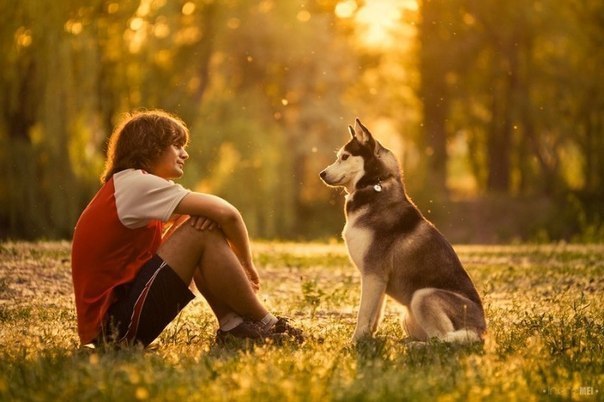
For thousands of years the dog has lived side by side with people — a loyal friend, helper and guardian. But where did it come from? How did a wild predator become an animal that sleeps in our homes? Let’s look at what modern science and old hypotheses say about the origin of the dog.
How long the dog has been with us
The dog was the first animal humans tamed, long before the cat, the horse or livestock. The process began in the late Paleolithic, when people were hunter-gatherers. Genetic studies put the range at roughly 15,000–40,000 years ago; the oldest undisputed dog remains (the Bonn-Oberkassel find in Germany) are about 14,000 years old. An exact date is hard to pin down — there were no written records, and an early dog barely differed from a wolf.
Where the dog comes from: the wolf, not the jackal
Today science gives a clear answer: the dog’s ancestor is the grey wolf (Canis lupus) — more precisely, an ancient population of it that is now extinct. So modern wolves aren’t the dog’s “grandparents” but rather its cousins from a common ancestor. The once-popular polyphyletic hypothesis (descent from wolf, jackal and coyote at once) has not held up to modern genetics: jackals and coyotes are not ancestors of the dog, even though they belong to the same genus, Canis.
| Hypothesis | The dog’s ancestor | Status today |
|---|---|---|
| Monophyletic | a single ancestor — the ancient wolf | the modern consensus (confirmed by DNA) |
| Polyphyletic | several ancestors — wolf, jackal, coyote | outdated, rejected by genetics |
| Early theories (18th–19th c.) | shepherd dog, jackal, Canis ferus | of historical interest (Buffon, Studer) |
Evidence of kinship with the wolf
The dog’s kinship with the wolf is proven from several angles:
- Behaviour. J. P. Scott of Ohio University identified 90 characteristic behavior traits in the dog, 71 of which are also found in wolves.
- Interbreeding. Dogs and wolves produce viable, fertile offspring — a sign of very close kinship.
- Genetics. DNA analysis places the dog on the same branch as the grey wolf, separate from the jackal and coyote.
The astonishing variety of dogs — from Chihuahua to Great Dane — doesn’t contradict a single ancestor: it is the result of a few thousand years of selective breeding by humans, not descent from different wild species.
How domestication happened
The most widely accepted modern version is “self-domestication”. Once people began living in camps and leaving food scraps, wolves came to them. Bolder, less aggressive individuals scavenged the leftovers, feared people less — and had a survival advantage. Over generations, such wolves grew ever tamer.
People soon noticed the benefits: a wolf has sharper hearing and smell, warned of danger with a growl and helped on the hunt. Those that showed no aggression weren’t driven off but kept around as helpers. “Friendly” wolves produced equally friendly pups — and selection for attachment to humans began. So the wild predator gradually became the domestic dog — a loyal friend.
A charming legend says that some ten thousand years ago a wolf came to a caveman’s fire of its own accord — and stayed forever. In reality it was a long shared story in which both sides won.
Frequently asked questions (FAQ)
What does the domestic dog descend from?
From an ancient, now-extinct population of grey wolf (Canis lupus). Modern wolves are not ancestors but close relatives of dogs from a common forebear. Jackals and coyotes are not ancestors of the dog.
When was the dog domesticated?
Roughly 15,000–40,000 years ago, back in hunter-gatherer times. It is the first animal humans tamed; the oldest undisputed dog remains are about 14,000 years old.
Does the dog descend from the wolf or the jackal?
From the wolf. The old polyphyletic theory of several ancestors (wolf, jackal, coyote) has been rejected by modern genetics — the dog’s DNA clearly points to the wolf line.
Why are dogs so different if they share one ancestor?
The huge variety of breeds is the result of several thousand years of selective breeding by humans for size, shape and temperament — not descent from different wild species.
Can dogs and wolves have offspring together?
Yes — they produce viable, fertile offspring, one confirmation of their very close kinship. But wolf-dog hybrids are hard to keep and are not recommended as pets.
So your pet is a direct descendant of the ancient wolf that, tens of thousands of years ago, chose life alongside humans. That shared history made the dog humanity’s most loyal friend — and it continues to this day, every day, in every home.