

| Weight | 3–6 kg |
| Lifespan | 12–18 years |
| Coat | short, glossy, spotted |
| Recognition | CFA · TICA · WCF |
| Origin | USA |
Exact ratings
- Hypertrophic cardiomyopathy (HCM)
- Polycystic kidney disease (PKD)
- Progressive retinal atrophy (PRA)
- Liver amyloidosis (from the Siamese-Abyssinian lines)
- Dental disease (gingivitis)
Quality food for active cats, with weight control. The short glossy coat only needs occasional wiping; the key is plenty of play, mental tasks and company, as it is a super-sociable cat that cannot bear solitude.
The Ocicat is an amazing domestic cat that captivates with its exotic spotted coat, which brings to mind a wild ocelot. Yet, it possesses a completely domestic, gentle, and loyal character. This man-made breed is the result of a deliberate selective breeding process that combined the grace of Abyssinian cats, the elegance of Siamese, and the robust build of American Shorthairs. The beautiful Ocicat is easy to care for, but it desperately needs its owner’s attention and presence. It’s a very smart, trainable cat that’s never shy about asking for an extra treat. Strong health (with proper care), an excellent rapport with children, and a deep devotion to its family make the Ocicat an ideal family companion. Its developed muscles and “wild” appearance are simply a facade for a friendly and sociable nature. Learn more at Tvaryny.
Ocicat: At a Glance
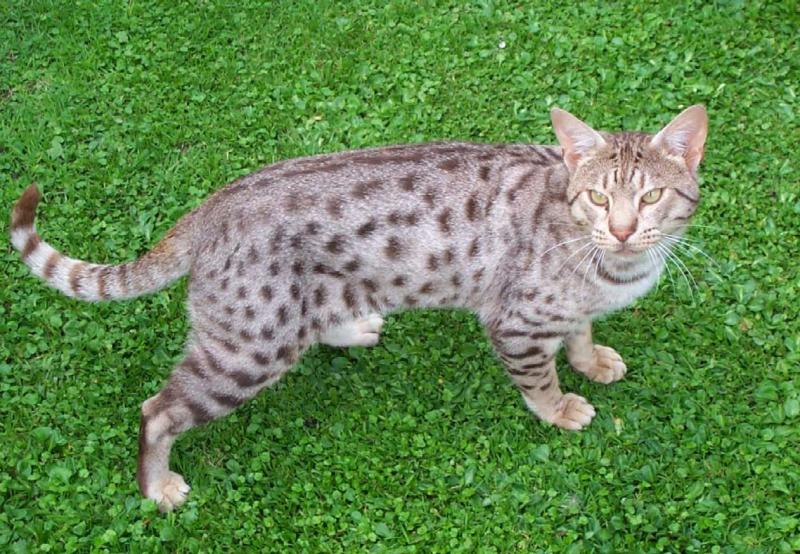
- Origin: United States
- Date of Origin: 1964
- CFA Recognition: 1987
- Lifespan: 12–18 years
- Size: Medium to Large
- Weight: Males 9–15 lbs, Females 7–11 lbs
- Temperament: Active, Sociable, Devoted, Intelligent, Playful
- Grooming: Minimal (weekly brushing)
- Child Compatibility: High
- Compatibility with Other Animals: High
The Detailed History of the Ocicat Breed
The Ocicat’s story doesn’t begin with a goal to create a “mini leopard,” but rather as an interesting breeding experiment. In 1964, American breeder Virginia Daly of Berkeley, Michigan, aimed to produce a Siamese cat with an Abyssinian-style agouti ticked point pattern. To achieve this, she crossed a champion Siamese cat with an Abyssinian cat.
The first generation of kittens resembled Abyssinians but carried the recessive Siamese color gene. When Daly bred a cat from that litter with a chocolate point Siamese, the result was beyond all expectations. Along with the desired agouti point kittens, a stunning kitten was born with an ivory coat and golden spots. Daly’s daughter named him Tonga and nicknamed him “Ocicat” because of his striking resemblance to the wild ocelot.
Initially, Tonga was neutered and sold as a pet. However, when the renowned geneticist Dr. Clyde Keeler heard about the unusual kitten, he expressed a desire to develop a domestic cat that mimicked the coat pattern of endangered wild spotted cats. This inspired Virginia Daly to repeat the cross and produce more spotted kittens.
Other breeders later joined the Ocicat breeding program and continued Daly’s work. To expand the gene pool and improve the breed’s type, the American Shorthair was added to the mix. It was this breed that gave Ocicats their muscular build, strong bone structure, and silver coat color. So, the modern Ocicat’s ancestors are three breeds: the Abyssinian (responsible for the ticking and certain colors), the Siamese (responsible for elegance, head and eye shape, and some colors), and the American Shorthair (responsible for their solid build, the silver gene, and additional colors).
The breed quickly gained popularity due to its unique look and wonderful personality. The Cat Fanciers’ Association (CFA) granted Ocicats registration status in 1966, but temporarily suspended it due to a low number of registered cats. The work on the breed continued, and in 1986, the Ocicat was readmitted for registration, and by 1987, it received full championship status with the CFA. Today, the Ocicat is recognized by all major cat registries worldwide.
What the Ocicat Looks Like: A Detailed Description
The Ocicat is a medium to large cat that impresses with its athletic build and wild appearance. Despite its exotic looks, there isn’t a single drop of wild cat blood in its veins. It is the result of successful selective breeding that combined traits from three domestic breeds.

The Ocicat’s body is powerful, with well-developed muscles and a strong frame, yet it remains graceful and elegant. The chest is deep and wide, and the back is straight with a slight rise to the hindquarters. The legs are medium in length and muscular, with compact, oval-shaped paws. The tail is long, tapering to a dark tip.
The head is a modified wedge shape with gentle contours. The muzzle is broad and well-defined, with a strong chin and jaw that give it a nearly square look from the front. The transition from the nose to the forehead is a gentle curve.
The ears are quite large and alert, set wide apart, continuing the lines of the head. Lynx tips at the end of the ears are desired.
The eyes are large, almond-shaped, and slightly slanted. They are set wide apart, at a distance of more than the width of one eye. Eye color can be any shade except blue, and it does not depend on the coat color. Rich shades are preferred.
The coat is short, sleek, and close-lying, with a satin sheen. It feels soft and silky to the touch. A characteristic feature of the breed is a distinct spotted tabby pattern on a ticked background. The spots should be well-defined and scattered across the entire body, including the belly. They can be of different shapes, but preference is given to thumbprint-shaped spots. There is a characteristic “M” pattern on the forehead, a “necklace” (one or more) on the neck, and rings on the legs and tail. The spots on the sides should be elongated, resembling a classic marbled pattern. If you’re interested in other unique spotted breeds, check out the Bengal cat or the Australian Mist, which also have fascinating patterns and histories.
The Ocicat is recognized in 12 main colors:
- Tawny: A warm brown or bronze background with black or dark brown spots.
- Chocolate: A warm ivory or pale bronze background with milk chocolate-colored spots.
- Cinnamon: A warm ivory background with reddish-brown (cinnamon) spots.
- Blue: A pale blue or light gray background with dark blue spots.
- Lavender: A pale beige or ivory background with lavender or light lilac spots.
- Fawn: A warm light beige background with warm light brown spots.
Each of these colors also has a Silver variation, where the background color is brightened to a silvery white, but the spots retain their primary color (e.g., black silver, chocolate silver, etc.).
Table: Ocicat Standard Parameters (CFA)
| Characteristic | Description |
|---|---|
| General Appearance | Medium to large size, athletic build, spotted coat |
| Head | Modified wedge, broad muzzle, strong chin |
| Ears | Large, alert, set wide apart; lynx tips desired |
| Eyes | Large, almond-shaped, slanted; any color except blue |
| Body | Strong, muscular; deep chest; straight back |
| Legs and Paws | Medium length, muscular; oval paws |
| Tail | Long, tapering to a dark tip |
| Coat | Short, sleek, dense, shiny |
| Pattern | Clear spots on a ticked background; “M” on the forehead; rings on the neck, legs, and tail |
| Weight | Males: 9–15 lbs; Females: 7–11 lbs |
Ocicat Personality: Temperament and Behavior
Despite its “wild” appearance, the Ocicat is an incredibly loyal, sociable, and affectionate domestic cat. Its personality is often compared to a dog’s due to its strong attachment to people and its trainability. Ocicats are not the type of cats that will be happy being left alone all day.
Key Ocicat personality traits:
- Sociability: Ocicats love to be the center of attention and participate in all family activities. They get along well with all family members, including children and other pets (dogs, other cats), especially if raised together. They often greet guests at the door and aren’t afraid of strangers.
- Devotion: These cats form a very strong bond with their owners and may follow them everywhere. They handle long periods of solitude poorly and can suffer from stress or boredom if left alone for extended periods. Therefore, an Ocicat is not the best choice for people who spend a lot of time away from home.
- Activity and Playfulness: Ocicats are energetic and curious cats. They love to play, run, jump, and explore every corner of their home. They need regular physical and mental exercise to stay happy and healthy. Interactive toys, scratching posts, cat trees, and games with their owner are essential. Many Ocicats love to play fetch and can even be leash-trained.
- Intelligence: These are very smart cats that easily learn various tricks, commands, and household rules. Their cleverness can be used for training through positive reinforcement (treats, praise). They quickly figure out how to open doors or cabinets, so it’s important to cat-proof your home.
- Voice: While not as “chatty” as their Siamese ancestors, Ocicats can be quite vocal when they want to get your attention, ask for food, or play. Their meow can be quite expressive.
- Affection: Despite their activity, Ocicats also love affection and physical contact. They will happily sit on their owner’s lap, purr, and demand to be petted. They are gentle and sensitive animals.
It’s important to understand that an Ocicat is not just a beautiful showpiece but an active family member who needs interaction, games, and attention. Their temperament makes them wonderful companions for active families who are ready to dedicate time to their pet. They are somewhat similar in temperament to active Bengals, but are generally considered more people-oriented and less prone to destructive behavior with proper training and attention. You can find more information about similar exotic-looking breeds like the Oriental Shorthair and the Mekong Bobtail on our site.
Ocicat Health: Typical Diseases and Prevention
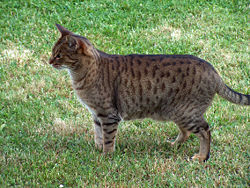
Ocicats are generally considered a healthy and hardy breed with a lifespan of 12 to 18 years. However, like many other purebred cats, they have a predisposition to certain genetic diseases inherited from their ancestors (Abyssinians, Siamese, and American Shorthairs).
Common health issues that may occur in Ocicats:
- Hypertrophic Cardiomyopathy (HCM): This is the most common heart disease in cats, characterized by a thickening of the heart muscle walls. HCM can lead to heart failure. While this disease can affect many breeds, the American Shorthair ancestors of Ocicats have a certain predisposition to it. Responsible breeders screen their breeding animals (with heart ultrasounds).
- Progressive Retinal Atrophy (PRA): This is a hereditary eye disease that leads to the gradual degeneration of retinal cells and, eventually, blindness. This disease is inherited from the Abyssinian line. Genetic tests are available to detect PRA carriers, which breeders should use to prevent the spread of the disease.
- Renal Amyloidosis: Another disease inherited from Abyssinians. It is characterized by the buildup of amyloid protein in the kidneys, leading to kidney failure. Diagnosis can be difficult, and there is no specific cure.
- Pyruvate Kinase Deficiency (PK Deficiency): This is a genetic blood disease that can cause anemia of varying severity. It is inherited from Abyssinians and Siamese. A DNA test is available to detect carriers.
- Gum and Tooth Disease (Gingivitis, Periodontitis): Ocicats may be prone to dental problems. Regular oral hygiene (teeth brushing, vet check-ups) is very important for prevention.
- Obesity: Due to their good appetite and love of food, Ocicats are prone to gaining excess weight, especially with insufficient activity. Obesity can lead to diabetes, joint, and heart problems.
Prevention and care for Ocicat health:
- Choose a Responsible Breeder: Buy a kitten only from a reputable breeder who tests their breeding animals for major genetic diseases (HCM, PRA, PK Deficiency) and can provide the relevant documents.
- Regular Vet Check-ups: Annual (or twice a year for older cats) visits to the vet for check-ups, vaccinations, and parasite prevention are mandatory.
- Balanced Diet: Feed your cat a high-quality food appropriate for its age and activity level. Control portion sizes to avoid obesity.
- Dental Care: Regularly brush your cat’s teeth with a special brush and paste.
- Active Lifestyle: Provide your Ocicat with plenty of opportunities for play and physical activity.
- Pay Attention to Changes: Monitor your cat’s behavior, appetite, and appearance. Any sudden changes require a vet consultation.
Common Ocicat Health Issues and Prevention
| Disease | Description | Prevention / Actions |
|---|---|---|
| Hypertrophic Cardiomyopathy (HCM) | Thickening of the heart walls | Breeder screening (heart ultrasound), regular check-ups with a cardiologist as needed |
| Progressive Retinal Atrophy (PRA) | Retinal degeneration, leads to blindness | Breeder genetic testing |
| Renal Amyloidosis | Protein buildup in the kidneys, kidney failure | Choosing a kitten from disease-free lines; regular urine and blood tests |
| Pyruvate Kinase Deficiency (PK Def) | Genetic anemia | Breeder genetic testing |
| Gum/Tooth Disease | Gingivitis, periodontitis | Regular teeth brushing, professional vet cleanings, check-ups |
| Obesity | Excess weight | Portion control, balanced diet, physical activity |
Ocicat Coat Care and Hygiene
Caring for an Ocicat is relatively easy thanks to its short, sleek coat with no dense undercoat. However, regular grooming will help keep it in excellent condition and strengthen your bond with your pet.
Grooming:
- Brushing: It’s enough to brush their coat once a week with a rubber brush or a special grooming glove. This helps remove dead hair, distributes the skin’s oils to give the coat a shine, and reduces the amount of hair in your home, especially during seasonal shedding (spring and fall).
- Polishing: After brushing, you can wipe the coat with a piece of suede or a soft cloth—this will enhance the Ocicat’s natural sheen.
- Bathing: Ocicats generally do a good job of keeping their coats clean themselves. You should only bathe them when necessary, for example, if the cat gets very dirty. Use a special cat-specific shampoo.
Hygiene Routines:
- Dental Care: This is a very important aspect of Ocicat care due to their predisposition to dental problems. Start training your kitten to accept teeth brushing from a young age. Use a veterinary-approved toothpaste and brush (or a soft baby toothbrush). Ideally, brush their teeth several times a week, or even daily. Regular vet check-ups will help catch problems early.
- Nail Trimming: Trim your cat’s nails approximately every 2-3 weeks using special cat nail clippers. This will protect your furniture and skin from scratches. If you’re unsure how to do it, ask a vet or a groomer to show you.
- Ear Cleaning: Regularly (once every week or two) check your Ocicat’s ears. If they are clean, you don’t need to do anything. If there is a small amount of dirt, gently wipe the inner surface of the ear flap with a cotton pad moistened with a special ear-cleaning solution for cats. Never use cotton swabs, as you could damage the eardrum. If you notice redness, a bad odor, or excessive discharge, consult a vet.
- Eyes: Ocicat eyes usually don’t need special care. If there is a small amount of discharge in the corners of the eyes, you can carefully remove it with a clean, damp cloth or cotton pad (using a separate one for each eye). For excessive discharge, redness, or cloudiness, consult a vet.
- Litter Box: Provide your cat with a clean, appropriately sized litter box. Ocicats are fastidious animals and may refuse to use a dirty litter box. Clean the box daily and completely change the litter according to the manufacturer’s instructions.
Ocicat Training and Socialization

Ocicats are one of the most trainable cat breeds. Their high intelligence, curiosity, and people-oriented nature make the training process fun and rewarding. They quickly learn household rules and can be taught many commands and tricks.
Key aspects of training and socialization:
- Positive Reinforcement: Ocicats respond wonderfully to training methods based on positive reinforcement. Use treats, praise, toys, and affection as rewards for good behavior or a completed command. Punishment and yelling are ineffective and can cause fear or anxiety in your cat.
- Early Socialization: It’s crucial to introduce an Ocicat kitten to various people, sounds, places, and other animals (if you have them or plan to) at an early age (before 12-16 weeks). This will help it grow into a confident, sociable, and well-adjusted adult cat.
- Teaching Commands and Tricks: Thanks to their cleverness, Ocicats can learn commands like “sit,” “give paw,” “fetch” (bringing a toy), and coming when called. Use short training sessions (5-10 minutes) to keep the cat engaged. Clicker training can also be very effective.
- Leash and Harness Training: Many Ocicats adapt well to walks on a leash. Start harness training at home, gradually increasing the time they wear it. Then, add the leash and let the cat get used to it. The first walks outside should be short and in a quiet, safe area.
- Intellectual Stimulation: To satisfy the Ocicat’s curious mind and prevent boredom, use interactive toys, cat puzzles, or hide treats. Rotate toys regularly to maintain their interest.
- Addressing Behavior Problems: If problems arise (e.g., scratching furniture), provide your cat with an acceptable alternative (several different types of scratching posts) and encourage its use. Redirect unwanted behavior to a game or other activity.
Remember that patience, consistency, and a positive attitude are the keys to successfully raising a smart and active Ocicat.
Ocicat Diet: Key Recommendations
Proper nutrition is the foundation of your Ocicat’s health, longevity, and well-being. These cats have a good appetite and a tendency to gain weight, so it’s important not only to provide a high-quality diet but also to control the amount of food they consume.
Main principles of feeding an Ocicat:
- High-Quality Protein: Like all cats, Ocicats are obligate carnivores, so the basis of their diet should be animal protein. Choose premium or super-premium dry or wet foods where meat (chicken, turkey, beef, fish) is listed as the first ingredient. Avoid foods with a high content of grains (corn, wheat) and artificial additives.
- Portion Control and Feeding Schedule: Due to their tendency for obesity, do not leave food out for free-feeding. Feed your Ocicat 2-3 times a day at set times, following the recommended daily amount specified on the food packaging or determined by a vet. The amount depends on the cat’s age, weight, activity level, and health status. Regularly weigh your pet to monitor its weight.
- Dry and Wet Food: A combination of dry and wet food is often an optimal option. Dry food helps clean teeth of plaque, while wet food provides additional hydration, which is important for preventing urinary tract diseases, and typically contains more protein and fewer carbs.
- Fresh Water: Ensure your cat has constant access to fresh, clean drinking water. The water bowl should be washed daily and the water changed regularly. Some cats prefer to drink from fountains, which can encourage them to consume more fluids.
- Natural Diet: If you decide to feed your Ocicat a raw or home-cooked diet, the meal plan must be carefully balanced by a veterinary nutritionist. It should include meat (frozen or heat-treated), organs, a small amount of vegetables, and essential vitamin and mineral supplements. An improperly balanced natural diet can lead to serious health problems.
- Treats: Treats can be used as a reward during training, but they should not make up more than 10% of the daily diet. Choose high-quality treats with high meat content and no harmful additives.
- Forbidden Foods: Never give your cat chocolate, onions, garlic, grapes, raisins, alcohol, caffeine, raw dough, bones (especially cooked chicken bones), or fatty table scraps.
Remember that nutritional needs can change with your cat’s age and health status. Always consult a veterinarian for the optimal diet for your Ocicat.
Pros and Cons of the Ocicat Breed
Like any breed, the Ocicat has its pros and cons. It’s important to weigh them before getting one to make sure it fits your lifestyle.
| Pros | Cons |
|---|---|
| Exotic Appearance: A beautiful spotted coat that resembles a wild cat. | Needs a lot of attention: Handles loneliness poorly, not suitable for very busy people. |
| Friendly and devoted personality: Forms a strong bond with its owners. | High activity level: Needs a lot of play and physical exercise, can be destructive if bored. |
| High intelligence: Easily learns commands and tricks. | Prone to genetic diseases: Requires careful selection of a breeder and attention to health. |
| Gets along well with children and other animals: A wonderful family companion. | Can be vocal: Uses its voice to get attention. |
| Easy coat care: Does not require frequent brushing. | Prone to obesity: Diet control is necessary. |
| Playful and active: Always ready to play, can be leash-trained. | High curiosity: May climb into hard-to-reach places or open cabinets. |
Interesting Facts about the Ocicat
- The name “Ocicat” is a combination of the words “ocelot” (a wild spotted cat) and “cat,” which aptly describes the breed’s appearance.
- Despite its “wild” appearance, the Ocicat is the only domestic spotted breed created solely by crossing domestic cats, without adding any wild bloodlines (unlike, for example, Bengals).
- The first Ocicat, named Tonga, born in 1964, was a happy accident from an attempt to breed a Siamese cat with an Abyssinian coloring.
- There are 12 officially recognized Ocicat colors, including tawny, chocolate, cinnamon, blue, lavender, fawn, and their silver variations.
- Ocicats are known for their “dog-like” personality traits: they are loyal, easily trained, love to play fetch, and can be walked on a leash.
- These cats are very athletic and agile; they are excellent jumpers and love to climb to high places.
- Ocicats often become therapy animals due to their gentle and sociable nature.
- The Ocicat’s ancestors are three breeds: the Abyssinian, Siamese, and American Shorthair. Each contributed to the modern Ocicat’s appearance and personality.
Frequent Questions about the Ocicat Breed (FAQ)
Are Ocicats aggressive?
Not at all. Despite their wild looks, Ocicats are known for their friendly, gentle, and devoted personalities. They are very people-oriented and do not exhibit aggression.
Do Ocicats shed a lot?
Ocicats have a short coat without a dense undercoat, so they shed moderately. Weekly brushing helps to control shedding and keep their coat in good condition.
Are Ocicats good for families with children?
Yes, Ocicats are considered one of the best cat breeds for families with children. They are patient, playful, and generally get along well with kids, especially if the children are taught to respect the animal.
Can Ocicats live in an apartment?
Yes, Ocicats can live comfortably in an apartment, provided they have enough space for games, physical activity (scratching posts, cat trees, toys), and mental stimulation. The most important thing for them is their owner’s attention.
Do Ocicats get along with other animals?
Generally, yes. Ocicats are very social and get along well with other cats and dogs, especially if they are introduced at an early age. However, due to their strong prey drive, small pets (rodents, birds) are best kept separate.
How much does an Ocicat kitten cost?
The cost of an Ocicat kitten from a responsible breeder can vary depending on its lineage, the kitten’s class (pet, breeder, show), and the region. The price is typically quite high due to the careful approach to breeding and genetic disease testing.
Do Ocicats require a lot of care?
Ocicat coat care is minimal (weekly brushing). However, they do require regular dental care, nail trimming, and ear cleaning as needed. Most of all, they need attention, interaction, and play with their owner.
- Extraordinarily sociable and “dog-like”
- Clever, playful, easy to train
- The short glossy coat needs almost no care
- A striking “wild” spotted look
- Cannot bear solitude — needs company
- Active, vocal, demanding of attention
- Needs play and mental tasks
- A tendency to hereditary diseases (amyloidosis, HCM)
| Bengal | Egyptian Mau | Abyssinian | |
|---|---|---|---|
| Weight | 4–7 kg | 3–6 kg | 3–5 kg |
| Energy | 5 | 4.5 | 4.5 |
| Apartment | 4 | 4.5 | 5 |
| Beginners | 2.5 | 3 | 3.5 |
Is the Ocicat a wild or a domestic breed?
What is the Ocicat's character?
Is the Ocicat suited to a family?
CFA / TICA / WCF standards (Ocicat)
For apartments · For kids · For beginners · Most affectionate · Quietest · Hypoallergenic · All rankings →