

| Height | 48–53 cm |
| Weight | 20–30 kg |
| Lifespan | 12–15 years |
| FCI group | 6 · scenthounds |
| Origin | Great Britain |
Exact ratings
- Generally a very healthy working breed
- Hip dysplasia
- Ear infections (long drop ears)
- Obesity with insufficient exercise
- Eye disease (rarer)
A balanced food for an active hound, with weight control. Check the long drop ears regularly; provide plenty of exercise, scent work and company — the breed copes poorly with solitude.
The very name of the breed, the Harrier, comes from the Old Norman French word “harier,” meaning “hunting dog” or “hound.” This definition perfectly describes the essence of these energetic and tireless animals, born to hunt in a pack. They possess an exceptional sense of smell, great stamina, and a loud, melodic voice. Thanks to their friendly and gentle nature, Harriers get along wonderfully with other dogs and children, but they don’t handle being left alone very well. At the same time, their innate independence and hunting instincts make them a bit challenging to train. In their native Great Britain, they are traditionally used for hunting hares and foxes. Outside of England and Ireland, this breed is quite rare, which makes them unique companions. To learn more about this amazing breed, read on at Tvaryny.
Harrier: Key Breed Information
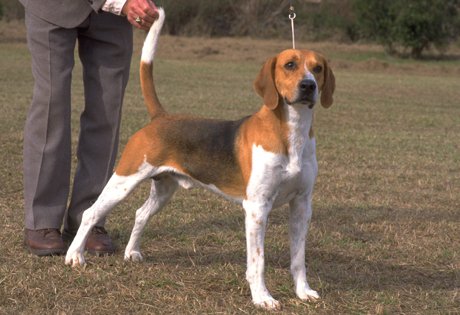
| Origin | Great Britain (England) |
| FCI Classification | Group 6 (Scent Hounds and Related Breeds), Section 1.2 (Medium-sized Hounds). With working trial. |
| Year of Breed Recognition | 1974 (official FCI recognition date) |
| Life Expectancy | 12-15 years |
| Height at Withers (according to FCI standard) | 48-50 cm (a deviation of 2 cm is permissible) |
| Weight | 20-27 kg |
| Temperament | Active, friendly, sociable, stubborn, independent |
| Usage | Hare and fox hunting, companion dog |
History of the Harrier Breed
The Harrier’s history is rooted in centuries past, and its exact origin is a subject of debate among dog experts. It’s believed that the breed was developed in southern England around the 13th century. The name “Harrier” first appears in historical records around 1260, when the first pack of these dogs was established in Penistone, England. Their primary purpose was hunting hares, which may have given the breed its name from the English word “hare.”
There are several theories about the ancestors of the modern Harrier. One of the most common versions claims they descended from a cross between old Southern Hounds, which were the ancestors of the modern Bloodhound, and smaller local hounds, possibly even the ancestors of the modern Beagle. Another theory suggests that Harriers are a smaller version of the English Foxhound, with whom they share a striking resemblance. It’s quite likely that the bloodlines of various hounds were used in the breed’s development to achieve the perfect combination of speed, stamina, and a keen sense of smell. Similar selective breeding methods were used to create breeds such as the Hygen Hound or the Swiss Hound.
For centuries, Harriers were an integral part of British hunting culture. They worked in large packs numbering up to 30-40 dogs, and their task was to track and pursue prey until it tired. This job required not only physical endurance but also the ability to work together as a team. Outside of Great Britain and Ireland, the breed never gained widespread popularity, remaining primarily a working dog for traditional hunting enthusiasts. There is a related French breed, the Beagle-Harrier, which was developed by crossing these two breeds to create a hound with optimal hunting qualities.
What a Harrier Looks Like: Standard and Appearance
The Harrier is a well-proportioned, strong, and muscular medium-sized hound, built for speed and endurance. It looks like a miniature Foxhound but is larger and stockier than a Beagle. Its appearance perfectly matches its working purpose.
- Head: Proportional to the body, of medium length. The skull is flat, with a moderate stop. The muzzle is pointed but not weak. The lips are slightly pendulous, covering powerful jaws with a perfect scissor bite.
- Eyes: Medium-sized, dark brown or hazel, with a lively and intelligent expression. The gaze is friendly and alert.
- Ears: Drooping, set quite high. They are V-shaped, of medium length, and lie close to the cheeks.
- Body: Strong, with a deep chest that provides ample room for the lungs. The back is straight and muscular. The loin is short and powerful.
- Tail: Set high, of medium length, carried gaily, slightly curved, but never curled over the back. It is well-covered with hair, giving it a brush-like appearance.
- Limbs: Straight, well-boned, and muscular, providing powerful drive and stamina when running. The feet are compact, well-knuckled, with thick pads.
- Coat: Short, dense, harsh to the touch, and glossy. It lies close to the body and provides excellent protection against bad weather during a hunt.
- Color: The most common coloring is the classic tricolor—a combination of black, white, and tan, usually with a black “saddle” on the back. Bicolor variants (e.g., white-and-tan, white-and-lemon) are also permitted. Any color typical for hounds is acceptable.
Harrier Character and Temperament
Harriers are known for their friendly and cheerful nature. They are typical pack dogs who instinctively crave the company of people and other animals. They are not prone to aggression and usually greet even strangers with joy, which makes them poor guard dogs but fantastic family pets.
Key Character Traits of the Harrier:
- Sociability: A Harrier loves to be the center of attention. He gets along well with children, as long as they treat him respectfully. This dog will fit perfectly into a family that already has other dogs, since the pack instinct is in his blood.
- Energy: This is a very active breed that requires a significant amount of physical exercise. If a Harrier doesn’t get enough activity, he can become restless, irritable, and start exhibiting destructive behavior.
- Independence and Stubbornness: Like most hounds, the Harrier was bred to make his own decisions while hunting. This trait can show up as stubbornness during training. He knows what he wants and may ignore commands if he finds them uninteresting.
- Strong Hunting Instinct: A Harrier’s nose is his primary sense organ. When he picks up an interesting scent, he can completely “switch off” from the world around him and run after the smell, ignoring all of his owner’s calls. This is why off-leash walks in unfenced areas are extremely dangerous.
- Vocal: Harriers have a loud and ringing voice that they enjoy using. They are prone to barking and howling, especially when they are bored, left alone, or hear sirens.
It’s important to understand that this is not a lap dog. His wonderful character is only revealed when his natural needs for movement and mental stimulation are met.
Pros and Cons of the Harrier Breed
| Pros | Cons |
|---|---|
| ✅ Extremely friendly and non-aggressive nature. | ❌ Requires a very high level of physical activity. |
| ✅ Gets along well with children and other dogs. | ❌ Prone to escaping if he catches an interesting scent. Needs a secure fence. |
| ✅ Health is generally robust, but no breed-wide list of hereditary diseases has been compiled — “not described” means “not studied”, not “not there”. | ❌ Can be stubborn and difficult to train due to his independence. |
| ✅ Low-maintenance coat. | ❌ Prone to barking and howling, especially when left alone. |
| ✅ Has a cheerful and lively temperament. | ❌ Not suitable for apartment living. |
| ✅ Rare breed that appeals to connoisseurs. | ❌ Strong hunting instinct, dangerous for small animals (cats, rodents). |
Care and Upkeep
Keeping a Harrier requires a responsible owner who understands the needs of the breed. This dog will feel best in a home with a large, securely fenced yard where he can run freely.
Physical Exercise
The Harrier’s key need is movement. He requires a minimum of 1-2 hours of intense physical exercise every day. This can include:
- Long walks or jogs.
- Playing with other dogs.
- Agility, coursing, or other dog sports.
- Swimming.
Insufficient activity quickly leads to weight gain, behavioral problems, and a general decline in the dog’s well-being.
Harrier Coat Care
Caring for the Harrier’s short, harsh coat is simple. It’s enough to brush him once a week with a rubber brush or grooming mitt to remove dead hair and distribute the skin’s natural oils. This will help keep the coat healthy and shiny. Bathe the dog only when necessary, as frequent bathing can disrupt the skin’s natural protective layer. It’s also important to regularly check and clean the ears to prevent infections and to trim the nails if they don’t wear down naturally.
Training and Socialization
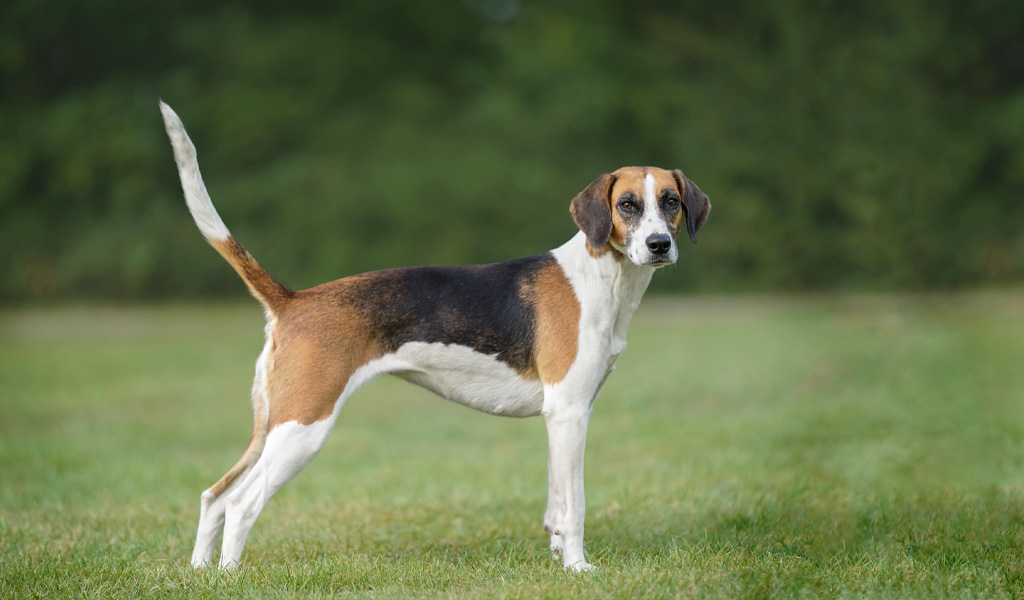
The independent hunting nature of Harriers requires a serious and consistent approach to training. Training this dog can be a real challenge for an inexperienced owner. You should be prepared for signs of stubbornness: the tendency to make independent decisions is a characteristic trait of all hounds.
Key Aspects of Training:
- Early Socialization: Introduce the puppy to different people, animals, sounds, and situations from a young age. This will help to raise a confident and well-balanced dog.
- Positive Reinforcement: Harriers respond well to training methods based on praise, treats, and games. Avoid harshness and physical punishment, as this can cause resistance and undermine the trust between you and the dog.
- Patience and Consistency: Be persistent. Training sessions should be short and interesting so that the dog doesn’t lose focus.
- The “Come!” Command: This is the most important and difficult command for any hound. Start practicing it from a young age in a safe place and always generously reward the dog for returning.
Because of their strong prey drive, you can never fully trust a Harrier off the leash in an open area. Even the most obedient dog can forget everything once he catches an interesting scent.
Health: Typical Diseases of the Harrier Breed
Health is generally robust, but no breed-wide list of hereditary diseases has been compiled — “not described” means “not studied”, not “not there”. This is because they have long been bred primarily as working dogs, where health and functionality were the priority. However, like any breed, they are prone to certain health issues.
- Hip Dysplasia: This is a common disease among medium to large breeds. It causes improper development of the joint, leading to arthritis and pain. It is important to choose a puppy from a responsible breeder who screens their dogs for dysplasia.
- Eye Diseases: Harriers sometimes suffer from problems such as cataracts or progressive retinal atrophy (PRA). Regular check-ups with a veterinary ophthalmologist will help detect problems at an early stage.
- Hypothyroidism: An underactive thyroid gland can lead to weight gain, lethargy, and skin problems. It is easily diagnosed with a blood test and can be managed with medication.
- Epilepsy: As with many other breeds, Harriers can suffer from idiopathic epilepsy, which manifests as seizures.
Regular preventive check-ups with a vet, a balanced diet, and sufficient physical activity are the key to a long and healthy life for your beloved pet.
Harrier Diet: Key Recommendations
The health of an active hunting dog largely depends on proper nutrition. A Harrier’s diet should be balanced and meet his high energy needs. The basis of the diet should be high-quality protein (meat, fish, offal), which is the building block for muscles. Carbohydrates (grains, vegetables) provide energy, and fats are a concentrated source of it.
The owner can choose one of two feeding types:
- Ready-made dry food: Choose premium or super-premium food for active medium-sized dogs. These are already balanced in terms of vitamins and minerals.
- Natural diet: Requires careful planning. The diet should consist of raw or cooked meat, grains (buckwheat, rice), vegetables, and fermented milk products. It is necessary to supplement with vitamin and mineral complexes as recommended by a vet.
It is important to monitor the dog’s weight. Harriers are prone to overeating and gaining excess weight, especially with insufficient activity, which puts additional strain on their joints. Feed your dog twice a day, adhering to the recommended portions, and do not leave food freely accessible. Ensure constant access to fresh drinking water.
Interesting Facts About the Harrier Breed
- The Harrier is one of the oldest hound breeds, with a history spanning over 800 years.
- In the US, the first pack of Harriers appeared as early as the colonial era.
- Despite its long history, the Harrier is one of the rarest breeds recognized by the American Kennel Club (AKC).
- The Harrier’s voice (its “bellowing bark”) is highly valued by hunters, as it allows them to easily track the pack’s location over a long distance.
Frequently Asked Questions About the Breed (FAQ)
| Is a Harrier suitable for apartment living? | Absolutely not. This breed needs space to move, ideally a private house with a large and securely fenced yard. In an apartment, the dog would suffer from a lack of activity. |
| How does a Harrier get along with cats and other small animals? | With caution. A Harrier has a very strong hunting instinct. If he grew up with a cat from a young age, they might become friends. However, he will most likely view unfamiliar cats and other small animals as prey. |
| Can a Harrier be left alone for a long time? | Not recommended. They are pack dogs that cope poorly with loneliness. They may start howling, barking, and destroying things out of boredom and anxiety. If you spend a lot of time away from home, this breed is not for you. |
| Do Harriers shed a lot? | Harriers shed moderately and seasonally. Regular brushing helps to keep this process under control and reduces the amount of hair in the house. |
| How much does a Harrier puppy cost? | Since the breed is rare, finding a puppy can be difficult, and the price can be quite high. |
Video about the Breed
- Friendly, splendid with children
- A hardy pack dog with a superb nose
- Friendly to other dogs
- Generally a very healthy breed
- Loud — a melodious voice on the trail
- Cannot bear solitude
- Self-reliant — somewhat hard to train
- A strong hunting instinct (dangerous to cats)
| Beagle | English Foxhound | Beagle-Harrier | |
|---|---|---|---|
| Height | 33–40 cm | 58–64 cm | 45–50 cm |
| Energy | 4 | 4.5 | 4.5 |
| Apartment | 3 | 1.5 | 2 |
| Beginners | 3.5 | 2.5 | 3 |
Where does the name "Harrier" come from?
Is the Harrier good for a family with children?
Is the Harrier easy to train?
FCI Standard No. 295 · Société Centrale Canine
For apartments · For kids · For beginners · Active · Smartest · Hypoallergenic · All rankings →