Group 6 (Scent Hounds and Related Breeds), Section 1.3 (Small Scent Hounds) · Great Britain
Beagle
A tireless nose on four legs: friendly, cheerful, a wonderful family dog and a companion for children. The challenges — a loud voice (it howls and “sings”), an insatiable appetite with a tendency to obesity, and a strong scent instinct that pulls it along a trail.
Apartment · with caveatsKidsCats · with caveatsOther dogsBeginners
Intelligent hunters and wonderful companions that are easy to care for and, despite some stubbornness, can be successfully trained. Members of the Beagle breed are a true bundle of energy and cheerfulness. They crave a lot of social interaction, are quick to connect, and have a hard time with loneliness. While they get along great with kids and other dogs, their strong hunting instinct makes them less than ideal companions for smaller pets. It's precisely because of this instinct that Beagles are prone to bolting, and their insatiable appetite makes them vulnerable to obesity. For a comprehensive look at this amazing breed, including its pros, cons, and tips on how to care for them, read more about it on Tvaryny.
The Beagle is a breed that has won the hearts of millions of people around the world with its friendly nature, cute looks, and boundless energy. These dogs, originating from Great Britain, have a rich history as hunting hounds, but today they are increasingly becoming cherished family members. Their keen sense of smell, second only to the Bloodhound, makes them not only excellent hunters but also indispensable helpers in search services.
Quick Beagle Breed Overview
Quick Beagle Breed Overview · 8
Origin
Great Britain
Year of First Mention
First mentions of similar dogs date back to 400 BC, modern standard – 1884
Life Expectancy
12–15 years
Height at Withers
13–16 inches
Weight
20–24 lbs (males), 18–22 lbs (females)
FCI Group
Group 6 (Scent Hounds and Related Breeds), Section 1.3 (Small Scent Hounds)
Temperament
Cheerful, inquisitive, friendly, sometimes stubborn
Purpose
Hunting small game (hares, rabbits), companion dog, search service
How Does a Beagle Differ from Similar Breeds?
Beagles are sometimes confused with other hound breeds, especially Bassets. However, there are key differences. For example, unlike the Basset Hound, a Beagle has more proportionate and longer limbs, less wrinkled skin, and a lighter build. They are sometimes compared to less common breeds, such as the Basset Artésien Normand or the Drever, but the Beagle is distinguished by its characteristic head shape and more compact size.
Interesting Facts about the Beagle Breed
The Super-Sniffer: A Beagle's nose has about 220 million olfactory receptors (humans only have 5 million). This makes them indispensable for search work. At US airports, there is even a special unit called the "Beagle Brigade" that sniffs out contraband.
The World's Most Famous Beagle: The character from the popular "Peanuts" comic strip – the dog Snoopy – is a representative of this very breed.
Presidential Favorites: US President Lyndon B. Johnson was a big fan of Beagles. He had several dogs of this breed, named Him, Her, and Edgar.
Variety of Voices: Beagles are known for their vocalization. They produce three different types of sounds: a standard bark, a prolonged howl (used for hunting), and a special sound, something between a bark and a howl, that they make when they see their prey.
The White Tail Tip: This trait is not just for looks but a functional feature. It was specifically developed by breeders so that hunters could easily see the dog in tall grass during a hunt.
The History of the Beagle Breed
The history of Beagles is deeply rooted in antiquity. There is evidence that small hounds, similar to modern Beagles, were used for hunting rabbits as far back as the 5th century BC in Ancient Greece. However, Great Britain is considered the homeland of the breed in its modern form. The name "Beagle" likely comes from the French word "begueule", which means "tinned throat" and refers to their tendency for a melodious baying.
The very popular Beagle breed emerged as a result of crossing various European hounds, including the Talbot Hound (a now extinct breed), the North Country Beagle, and the Southern Hound. Over the centuries, the breed developed, and during the reign of Queen Elizabeth I, there were so-called "Pocket Beagles" that were so small they could fit in a hunter's jacket pocket. The modern Beagle type was established in the mid-19th century thanks to the efforts of Reverend Philip Honeywood, who laid the foundation for the breed's standardization.
The Beagle's original purpose was hunting hares and rabbits on foot, where hunters could follow the pack of dogs without horses. The Beagle belongs to the hound group, just like its larger and smaller relatives, such as the elegant Harrier or the easy-going Basset Hound. Their proven working qualities, combined with their small size and exceptional nose, led to Beagles being used in search services at airports and customs to detect prohibited substances. Today, members of this breed enjoy immense popularity as family pets worldwide, especially in the US and Canada.
What a Beagle Looks Like: Standard and Appearance
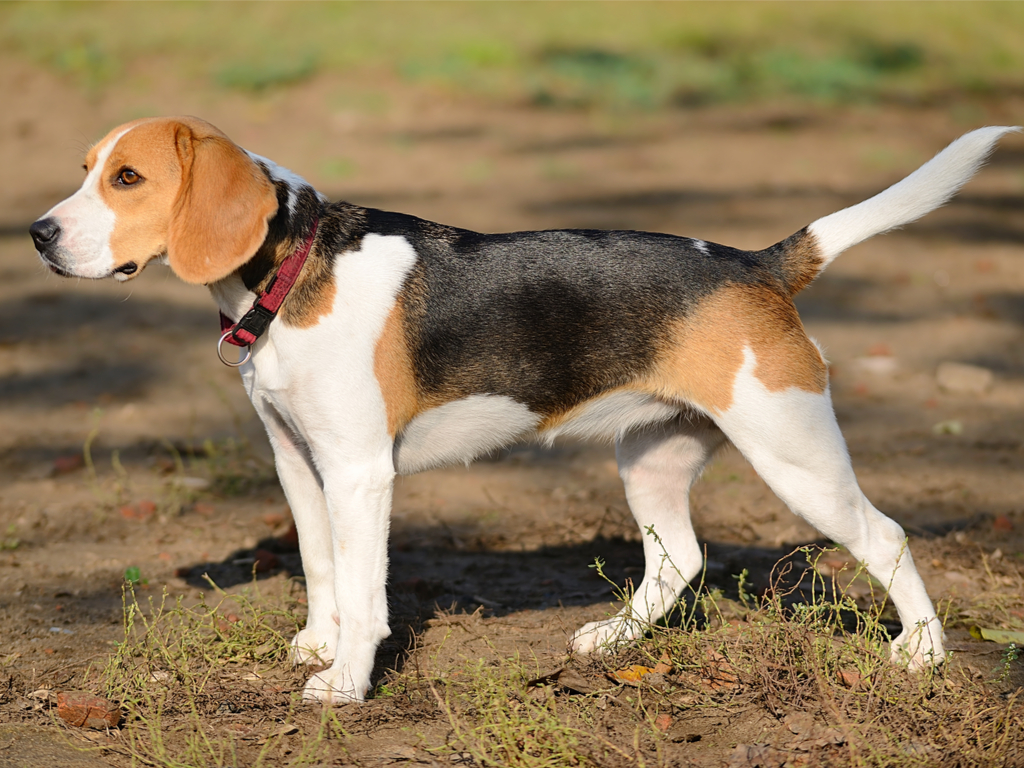
The Beagle is a strong, sturdy dog with a compact, muscular build that gives an impression of strength and endurance without being coarse. Its expression is full of good-naturedness and curiosity.
Head: The skull is slightly domed, with a distinct stop (the transition from the forehead to the muzzle). The muzzle is not pointed. The lips are a little pendulous, the so-called "flews."
Ears: This is one of the most characteristic features of the breed. They are long, low-set, with rounded tips. If pulled forward, they should reach almost to the tip of the nose. Velvety to the touch, they lie close to the cheeks.
Eyes: Large, hazel or dark brown in color, set wide apart. The expression is always soft, pleading, and a little sad, which is an integral part of the Beagle's charm.
Body: Strong and muscular, with a straight top line and a deep chest, which provides enough room for the lungs. The belly is moderately tucked up.
Tail: Thick at the base, of medium length, set high. The dog carries it gaily, usually slightly curved, but never curled over the back. An important feature – the tip of the tail is always white. This trait was specifically bred so that hunters could see the dog in tall grass.
Limbs: Short, straight, and strong, with tightly-knit, "cat-like" paws and firm pads, which allows them to run for a long time over rough terrain.
Coat and Color: The coat is short, dense, and weather-resistant. The most common color is the classic tricolor (black, tan, and white), but the standard permits any recognized hound color. Bicolors (tan and white, lemon and white) are also frequently seen.
Beagle Character: Temperament and Behavior
Intelligent and highly emotional, Beagles form strong attachments to their family and anyone who gives them attention. Their character is a blend of a cheerful disposition, boundless curiosity, and a hunter's stubbornness. These are dogs that are always "on the sunny side of life."
Friendliness: Beagles are exceptionally friendly to both people and other dogs. They are not aggressive and don't make good guard dogs, as they are ready to happily greet any stranger. They get along well with children, especially young ones, thanks to their patience and playful nature. A cheerful and kind hound will not cause problems with other four-legged relatives on the street.
Hunting Instinct: This is a key trait that defines their behavior. When on an interesting scent, a Beagle can forget everything in the world, including their owner's commands. This is why it is not recommended to let them off-leash in unfenced areas. Their nose is their main sense organ, and it often directs their actions. They can spend hours exploring a territory, following scents. Due to this strong instinct, cohabitation with small animals (cats, rodents, birds) can be problematic. The Basset Artésien Normand, for example, shares a similar hunting drive.
Need for Socialisation: Beagles are pack animals. They handle loneliness poorly and can suffer from separation anxiety, which manifests as destructive behavior and incessant barking or howling. You should not leave a loyal Beagle companion at home alone for long periods without proper preparation.
Stubbornness: Although Beagles are intelligent, their independent hunter's nature is often perceived as stubbornness. They were bred for making independent decisions during a hunt, so they may ignore commands if they find something else more interesting. Possible manifestations of their stubbornness can be overcome with patient and consistent training.
Beagle Breed Pros and Cons
Before getting a Beagle, it's important to weigh all the "pros" and "cons" to understand if this breed is right for you and your lifestyle.
Beagle Breed Pros and Cons · 6
Pros
Cons
✅ Friendly and gentle nature. Ideal for families with children and other dogs.
❌ Prone to escaping. Their strong hunting instinct makes them run after a scent.
✅ Small size. Convenient for keeping in an apartment or a house.
❌ Loud and prone to howling. Can cause problems with neighbors.
✅ Low maintenance. The short coat doesn't require complex grooming.
❌ Stubborn to train. Requires patience and consistency.
✅ High energy level. A wonderful companion for active people.
❌ Prone to obesity. They have an insatiable appetite and need controlled feeding.
✅ High intelligence and quick wits.
❌ Handles loneliness poorly. Can exhibit destructive behavior.
✅ Robust health.
❌ Sheds heavily. Requires regular brushing.
Beagle Training and Socialization
Training an energetic Beagle requires patience, consistency, and a positive approach. Due to their strong hunting instinct and some stubbornness, their training can be a challenge, but it is a perfectly achievable task. Early socialization is key. Training can begin as early as two months of age.
The system of positive reinforcement works best. Praise your Beagle for successes and reward them with treats, but remember their calorie count. Sessions should be short and interesting so that the dog doesn't lose focus. The most difficult command for a Beagle is "Come!", as their sense of smell always wins out over the desire to obey. This command should be practiced in a safe, fenced-in area.
Provide this hunter with daily physical and mental exercise. Long walks, jogging, games of "find the object," or snuffle mats will help channel their boisterous energy in the right direction and prevent destructive behavior.
Beagle Care and Maintenance
Caring for a Beagle isn't overly complicated but requires regularity and attention to some of the breed's peculiarities.
Coat Care
The Beagle's short coat doesn't need trimming, but it does shed quite a lot, especially seasonally. To reduce the amount of hair in the house and maintain your pet's healthy skin, it's enough to brush them once a week with a stiff brush or a rubber glove. A Beagle should be bathed as needed, usually no more than a few times a year, using a mild dog shampoo to avoid damaging the skin's natural protective layer. After walks, check your pet's coat for ticks and other external parasites.
Ear Care
This is one of the most important aspects of Beagle care. Their long, floppy ears are poorly ventilated, creating an ideal environment for the growth of bacteria and fungi. Check their ears weekly for redness, dirt, or a bad smell. Clean them regularly with a special lotion recommended by a vet. Never use cotton swabs, as they can damage the ear canal.
Other Hygiene Procedures
Trim the dog's claws as they grow, usually every 3–4 weeks. If you hear their claws clicking on the floor, it's time to trim them. It's also important to monitor their oral hygiene by regularly brushing their teeth with a special dog toothpaste to prevent tartar buildup.
Nutrition
Beagle Nutrition: Key Recommendations
Health and risks
Beagle Health: Typical Ailments and Prevention
Frequently Asked Questions about the Breed (FAQ) · 5
Do Beagles Bark a Lot? Yes, Beagles are quite "vocal." They are prone not only to barking but also to howling, especially when they are bored, lonely, or have caught an interesting scent. This is an important factor to consider if you live in an apartment with thin walls.
Are Beagles Suitable for Apartment Life? Yes, thanks to their small size, a Beagle can live in an apartment, but with one important condition: they need daily, long, and active walks (a minimum of 1.5–2 hours per day). Without sufficient physical and mental stimulation, they can become destructive.
Do Beagles Get Along with Cats and Other Animals? They usually get along brilliantly with other dogs. With cats and other small animals, the situation is more complex. If a Beagle grew up with a cat from a young age, they can become friends. However, their hunting instinct can be triggered by unfamiliar cats or rodents, so supervision is needed.
Do Beagles Shed a Lot? Yes, despite their short coat, they shed quite noticeably, especially in the spring and fall. Regular brushing helps to control this process.
Can you Leave a Beagle at Home Alone All Day? It is not recommended. Beagles are social dogs who suffer from loneliness. If you are forced to leave the dog for a long time, you should arrange for someone to visit them, or provide them with a large number of toys and puzzles to prevent separation anxiety.
Video about the Breed
FAQ
Do Beagles bark a lot?
Yes — it is a hound with a loud voice: a Beagle not only barks but also howls and “sings”, especially when bored or left alone.
Is a Beagle hard to keep in an apartment?
Possible with enough exercise and attention to the voice. The biggest challenge is boredom, which leads to howling and damage.
Why does a Beagle always want to eat?
High food motivation is “built in” to the breed. Handy for training, but it demands strict portion control against obesity.