

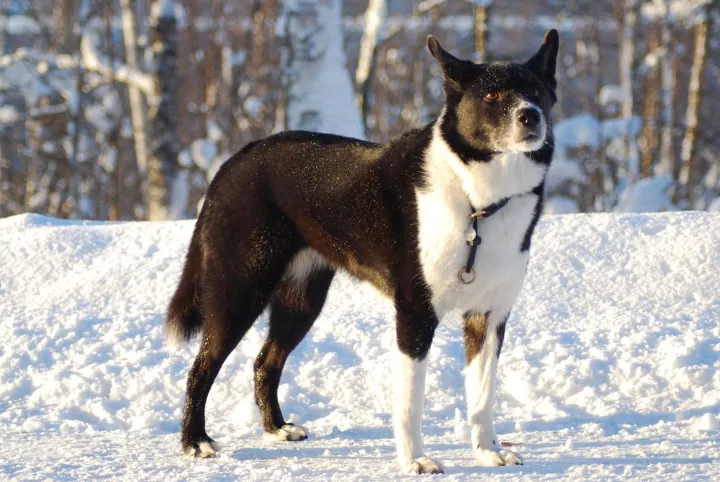
| Height | 49–60 cm |
| Weight | 17–28 kg |
| Lifespan | 11–13 years |
| FCI group | 5 · spitz |
| Origin | Finland |
Exact ratings
- Hip dysplasia
- Cataracts and eye disease
- Progressive retinal atrophy (PRA)
- Generally a healthy working breed
- Injuries on the hunt
Quality protein for an active breed, with weight control. Generally robust health; the dense coat holds warmth well, protect from overheating in summer.
The Karelian Bear Dog (Karjalankarhukoira) is more than just a pet; it’s the very embodiment of primal strength, courage, and hunting fervor. This black-and-white Spitz, hailing from the northern forests of Finland and Karelia, has earned a reputation as a fearless hunter of large game, capable of taking on a bear, moose, or wild boar on its own. Its independent nature, sharp mind, and boundless loyalty to its owner make it a unique companion, but only for an experienced individual who understands and respects its character. This breed is not for a city apartment or a tranquil, sedentary lifestyle; its natural element is space, activity, and work. To learn more about the intricacies of this amazing dog’s character and history, check out more on Tvaryny.
Karelian Bear Dogs are pack animals that recognize only one leader: their owner, whom they respect and obey without question. At the same time, they can be quite aggressive towards other dogs and wary of strangers, which makes early socialization absolutely crucial. Without proper physical and mental stimulation, their powerful energy can find a destructive outlet, leading to property damage and behavioral issues. This is a dog for active people, hunters, and those living in rural areas who are ready to dedicate the time to its training and provide it with a fulfilling life.
Karelian Bear Dog: A Brief Breed Overview
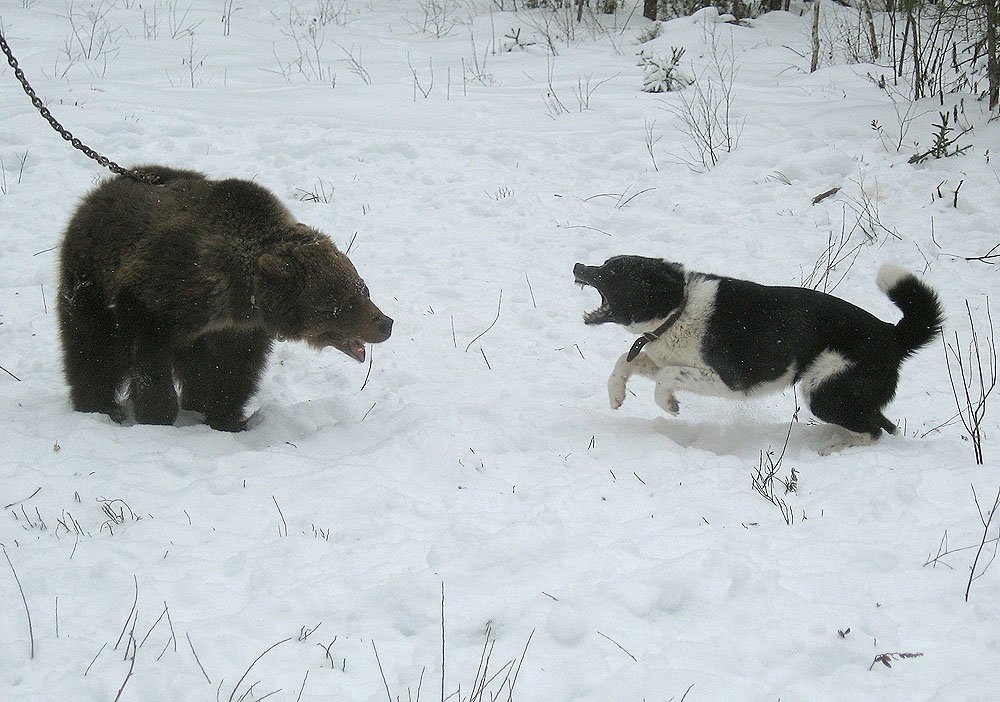
| Breed Name | Karelian Bear Dog (Karjalankarhukoira) |
| Country of Origin | Finland (historic region of Karelia) |
| FCI Classification | Group 5 (Spitz and Primitive Types), Section 2 (Nordic Hunting Dogs). Standard No. 48. |
| Purpose | Large game hunting dog (bear, moose, wild boar), guard dog. |
| Lifespan | 10–13 years |
| Height at Withers (males) | 54–60 cm |
| Height at Withers (females) | 49–55 cm |
| Weight | 20–28 kg (males are typically heavier) |
| Character | Bold, persistent, independent, loyal, somewhat aggressive towards other dogs. |
| Color | Black, often with a dull or brownish tinge, with clear white markings. |
| Grooming Needs | Low |
| Activity Needs | Very high |
| Suitable for an Apartment | No, absolutely not recommended. |
| Relationships with Children | Good within their family but requires supervision. |
| Trainability | Medium, requires an experienced owner with a firm hand. |
History of the Karelian Bear Dog
The history of the Karelian Bear Dog is rooted in ancient times, when hunting tribes lived in the lands of modern Finland and Karelia. Their loyal companions were robust and resilient Spitz-type dogs, used for hunting fur-bearing animals and large game. It is believed that the breed’s direct ancestors were the “Komi dogs” or Zyryan Laikas, who have long inhabited the northeast of Europe. Archaeological finds, including excavations in the Lake Ladoga region, confirm that dogs of a similar type existed in this region as early as the Viking Age.
Deliberate breeding of the Karelian Bear Dog only began in the early 20th century. Finnish cynologists took an interest in the local black-and-white hunting dogs, which were distinguished by their exceptional bravery and working qualities. In 1934, the first kennel was established, and selective breeding began to reinforce the best traits. The first dogs were registered with the Finnish Kennel Club in 1935 under the name “Karjalankarhukoira.”
The Second World War dealt a devastating blow to the breed. The Winter War (1939–1940) and subsequent military actions led to the loss of the main breeding area, the Karelian Isthmus. A huge number of dogs perished, and enthusiasts were forced to evacuate the surviving animals deeper into Finland. After the war, the population numbered only about 40 individuals, and the breed was on the brink of complete extinction. Thanks to the monumental efforts of Finnish breeders, the breed was saved. They gathered the best remaining specimens and developed a recovery program. In 1945, the first official standard was approved, and the breed received its modern name. The Karelian Bear Dog quickly gained popularity among hunters in the Scandinavian countries and later throughout the world as a reliable and fearless assistant.
Standard and Appearance
The Karelian Bear Dog is a robust, medium-sized dog with a slightly elongated frame, a well-developed bone structure, and strong musculature. It gives an impression of strength and endurance, and its appearance fully corresponds to its working purpose.
Head and Muzzle
The head is wedge-shaped when viewed from the front. The forehead is broad and slightly rounded. The stop (transition from forehead to muzzle) is smooth but noticeable. The muzzle is deep and powerful, tapering smoothly towards the nose but not pointed. The nose bridge is straight. The nose is large and black. The lips are thin and tight. It has a scissors bite and strong jaws.
Eyes and Ears
The eyes are small, slightly oval, and predominantly dark brown. Their expression is lively, bold, and at times even severe. The ears are erect, medium-sized, and set quite high. The tips of the ears are slightly rounded. They are very mobile and react sensitively to any sounds.
Body and Limbs
The neck is muscular and of medium length, with a slight arch. The withers are well-defined. The back is straight, strong, and muscular. The loins are short and powerful. The chest is deep and spacious, extending down to about the elbows. The belly is slightly tucked up. The limbs are strong, straight, and parallel. The paws are firm, tightly-knuckled, and round. The hind paws are slightly longer and flatter than the front ones.
Tail, Coat and Color
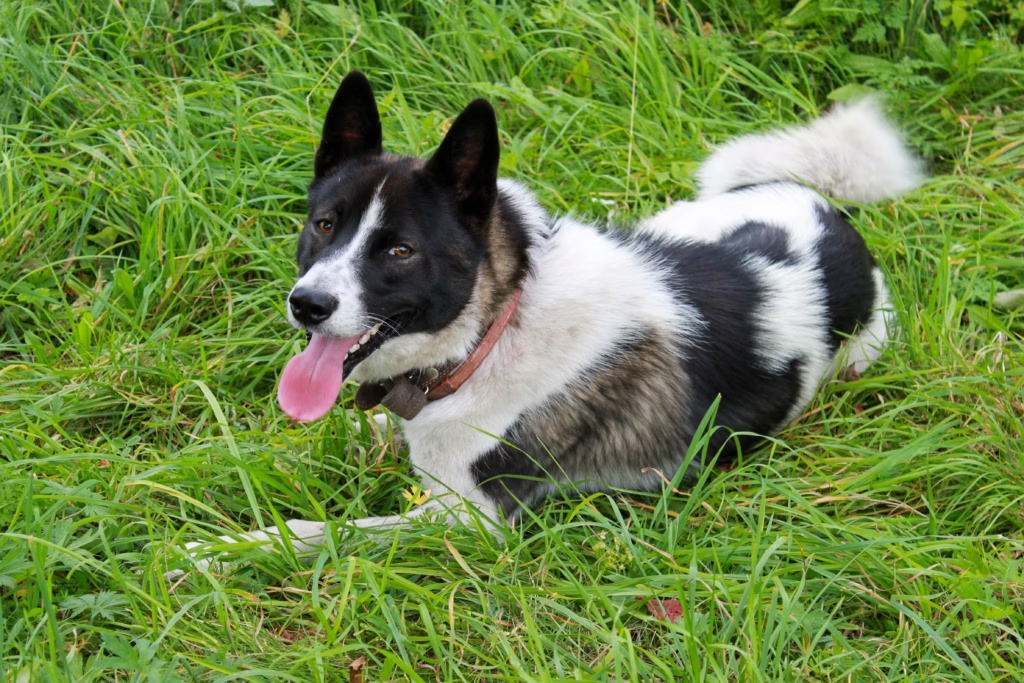
The tail is set high, of medium length, curled into a ring, and held close to the back or hip. A naturally short tail (bobtail) is also permitted by the standard, although preference is given to dogs with a normal tail. The coat is double: a harsh and straight outer coat and a dense, soft undercoat. The hair is longer on the neck, back, and back of the thighs, forming a “ruff” and “breeches.”
The classic coloration is black with clearly defined white markings on the head, neck, chest, belly, and limbs. The black color may have a brownish or dull tinge. Ideally, the white color should make up about 30% of the total body area. An all-white coat or one with a large predominance of white is considered a fault.
| Parameter | Description According to FCI Standard No. 48 |
|---|---|
| General Appearance | A medium-sized dog of robust build, slightly longer than it is tall at the withers. |
| Proportions | The body length slightly exceeds the height at the withers. The chest depth is approximately half of the height at the withers. |
| Eyes | Small, predominantly dark brown. The gaze is alert and bold. |
| Bite | Scissors bite, with a complete dental formula. |
| Movement | Light, free, and energetic. Easily transitions from a trot to a gallop. |
| Faults | Light build, narrow muzzle, large or low-set ears, straight tail, wavy coat, an excessive amount of white color. |
| Disqualifying Faults | Aggressiveness or shyness, overshot or undershot jaw, floppy ears, non-standard coloration. |
Character and Temperament
The Karelian Bear Dog’s character is a blend of primal instincts and deep affection for its “pack.” This is an extremely brave, determined, and somewhat stubborn dog with a highly developed hunting instinct. It shows no fear of animals significantly larger than itself and is prepared to pursue prey relentlessly. Its reactions are lightning-fast, and its senses are incredibly sharp.
- Relationship with the Owner: For its owner, the Karelian is a faithful and devoted friend. It chooses one person as the “pack leader” and obeys them, eager to please. It is also affectionate and friendly with other family members but always knows who’s in charge. This breed is not prone to excessive displays of affection, but it shows its love through loyalty and a readiness to protect.
- Attitude Towards Strangers: It is highly suspicious of strangers. It will not show unwarranted aggression but will always remain on alert. This makes it an excellent watchdog that will loudly bark to warn of anyone approaching.
- Interaction with Other Animals: This is arguably the most challenging aspect of its character. Karelian Bear Dogs are very aggressive towards other dogs, especially those of the same sex. They have a strong instinct for dominance and do not tolerate competition in their territory. Their aggression towards other dogs can be as serious as that of some fighting breeds, such as Bull Terriers, but its nature is different. Unlike terriers such as the American Staffordshire Terrier, whose aggression was historically cultivated for dog fighting, the Karelian’s aggression is aimed at protecting its territory and establishing a hierarchy. It will perceive any other small animal (cat, rabbit, chicken) as potential prey. Co-existing with other pets is only possible if the puppy grew up with them from a young age.
- Independence and Intelligence: This is a very intelligent dog, capable of making its own decisions. This quality is priceless when hunting but can manifest as stubbornness in daily life. It won’t blindly follow a command if it doesn’t see the point of it.
Pros and Cons of the Breed
Before getting such a serious dog, you need to realistically assess all its advantages and disadvantages. This breed is not suitable for everyone.
| Pros | Cons |
|---|---|
| ✅ Exceptional hunting qualities: One of the best dogs for hunting large game. | ❌ Not for novices: Requires an experienced owner with a strong character. |
| ✅ Loyalty to the family: Immensely devoted to its owner and will protect its family. | ❌ Aggression towards other dogs: Prone to dominance and fights with other dogs. |
| ✅ Robust health: the absence of described hereditary disease is not the absence of risk — breeding animals are screened all the same. | ❌ Not suitable for an apartment: Requires space, a kennel setup, and freedom. |
| ✅ Excellent watchdog: Will always warn of danger and is wary of strangers. | ❌ High activity needs: Requires daily intense exercise. |
| ✅ Low maintenance: The coat doesn’t require complex grooming and is practically odorless. | ❌ Strong hunting instinct: May run away when chasing prey; dangerous to small animals. |
| ✅ High endurance: Capable of working in the most difficult weather conditions. | ❌ Prone to independence and stubbornness: May ignore commands if it doesn’t see the point. |
Care and Upkeep
The Karelian Bear Dog is a breed that is completely unsuited for life in a city apartment. Confined spaces, short walks on a leash, and a lack of “work” will have a detrimental effect on its psyche and health. The ideal conditions for it are a house in the country with a large, securely fenced-in area and a spacious kennel.
Physical Exercise
This dog needs daily, long, and intense physical exercise. This is not just a walk in the park. It needs to be able to run off-leash (in a safe place), accompany its owner on bicycle rides, and swim. The best activity for it, of course, is hunting. If the dog doesn’t get enough exercise, it becomes unmanageable and may start destroying things in the house.
Grooming and Coat Care
Caring for a Karelian’s coat is surprisingly simple. Its harsh outer coat has dirt-repellent properties, so it almost always looks clean. The dog has virtually no typical “doggy” odor.
- Brushing: It is sufficient to brush the dog once a week to remove dead hair.
- Shedding: They shed twice a year, in spring and fall. During this period, the undercoat falls out in clumps, so the dog needs to be brushed daily.
- Bathing: It should be bathed as rarely as possible, only when heavily soiled, as frequent washing disrupts the skin’s natural protective layer.
It is also important to regularly check the ears and eyes, cleaning them as needed. The claws usually wear down naturally with sufficient activity, but if they don’t, they need to be trimmed. Particular attention should be paid to tick prevention, especially in the warmer months, as these dogs spend a lot of time in forests and fields.
Feeding: What to Feed a Karelian Bear Dog?
Karelian Bear Dogs are quite undemanding when it comes to food and, as a rule, are not prone to overeating. They eat exactly as much as they need to maintain their energy. However, the diet must be high-calorie and balanced, especially during periods of intense exercise and in cold weather.
Natural Feeding
The basis of a natural diet (around 50-70%) should be raw meat and offal. The best options are:
- Meat: Lean beef, poultry (without tubular bones), lamb.
- Offal: Tripe, heart, liver, kidneys are a source of vitamins and minerals.
- Grains: Buckwheat, rice, oats (about 20% of the diet). These should be cooked in water or meat broth.
- Vegetables and fruits: Carrots, pumpkin, zucchini, apples (raw and grated).
- Fermented dairy products: Low-fat cottage cheese, kefir.
It is strictly forbidden to give your dog sweets, smoked or fried foods, flour products, potatoes, tubular bones, and human table scraps. Salt and spices can spoil its unique sense of smell.
Commercial Foods
If you choose a dry food, it should be a high-quality product of at least a super-premium class for active medium-sized dogs. During periods of high activity (for example, the hunting season), it’s worth switching to specialized high-energy diets.
Training and Socialization
Raising a Karelian Bear Dog is a task for an experienced, confident person. This breed lives by the laws of the pack, so the owner must become the undisputed leader from day one. The dog must clearly understand what is and isn’t allowed. Any attempts by it to dominate should be gently but firmly suppressed.
Early socialization is critically important. From puppyhood, it should be introduced to different people, sounds, places, and, most importantly, to calm, well-behaved dogs under strict supervision. This will help reduce its innate aggression towards other canines. However, even a well-socialized Karelian is unlikely to become the life and soul of a dog park.
Training should be based on consistency, firmness, and positive reinforcement. Physical punishment is absolutely unacceptable — it can provoke aggression or break the dog’s trust. Their working style in the forest and their ability to make independent decisions are similar to other northern hunting dogs, such as the Russo-European Laika. Karelians are very intelligent and learn quickly, but because of their stubbornness, they may refuse to perform a command if they don’t see the point. They don’t need to be specially taught to hunt or guard — these instincts are in their blood. The owner’s main task is to teach the dog obedience and to control its powerful energy. Their bark is loud and persistent, though less sharp than that of their relative, the Finnish Spitz, which is used for bird hunting.
Health and Common Diseases
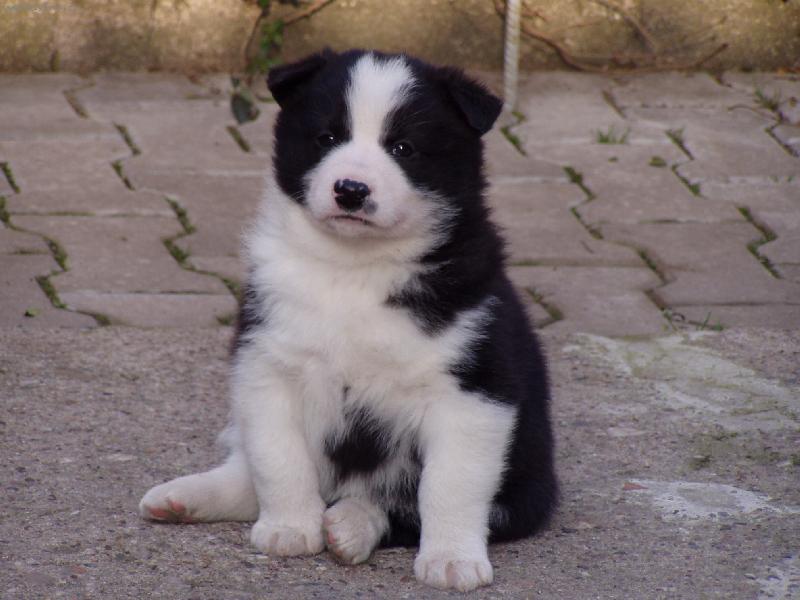
The Karelian Bear Dog is one of the healthiest breeds. Thanks to strict natural selection and the absence of excessive selective “fads,” they have maintained a robust immune system and extraordinary resilience. Genetic diseases, which are the bane of many other breeds, are practically non-existent in them. Their average lifespan is 10-13 years.
However, this doesn’t mean they never get sick. Like any active dog, the Karelian is prone to injuries: cuts, sprains, and bites from wild animals during hunts. Also, although rarely, hip dysplasia may be diagnosed. The foundation of their health is proper care, a balanced diet, high physical activity, and timely prevention:
- Vaccination: Regular vaccinations according to a schedule set by a vet.
- Parasite Control: Timely treatment for fleas, ticks, and worms.
- Veterinary Check-ups: Preventive visits to the vet at least once a year.
Interesting Facts About the Karelian Bear Dog
- A National Treasure: In Finland, the Karelian Bear Dog is considered a national treasure and a source of pride.
- The “Silent Hunter”: Unlike many Laikas, the Karelian pursues prey silently and only vocalizes (barks) when it has cornered and “held” the animal, waiting for the hunter to arrive.
- Service in National Parks: In the U.S. and Canada, these dogs are used in national parks (such as Yosemite and Glacier) to deter grizzly and black bears from tourist areas and campgrounds, which helps to avoid conflicts between people and wild animals.
- Different Tail Types: Although the ring tail is encouraged by the standard, approximately 10-15% of puppies are born with a naturally short tail (bobtail), which is also acceptable.
- An Unmatched Sense of Smell: Their sense of smell is so keen that they can detect large game from a great distance, making them indispensable for hunting.
Frequently Asked Questions (FAQ)
Is the Karelian Bear Dog suitable for life in an apartment?
No, absolutely not. This breed needs space, freedom to move, and the opportunity to expend its energy daily. Keeping it in an apartment will lead to serious behavioral problems and animal suffering.
Do they get along with children?
Karelians are usually patient and gentle with children they grew up with in their own family. However, they are not “nannies” and will not tolerate rough handling. Any interaction between the dog and a small child should be strictly supervised.
Can you keep two Karelian Bear Dogs together?
This is very difficult. Two males are almost guaranteed to fight for dominance. Two females can also be in conflict. The most peaceful option is a male-female pair, but even then, issues can arise. One dog or a well-established pair is usually taken for hunting.
How much does a Karelian Bear Dog puppy cost?
This is a relatively rare breed. The cost of a puppy from working parents with a good pedigree can be substantial. A cheap puppy sold without papers almost always costs more in the end: the screening the parents never had shows up later at the vet.
Do they shed a lot?
Yes, they have intense seasonal shedding twice a year (spring and fall) when their dense undercoat falls out in large quantities. During this period, they should be brushed daily. At other times, shedding is moderate.
Video About the Breed
- Generally robust health
- A brave, hardy hunter
- Devoted to its master
- Resistant to hard frost
- A very strong hunting instinct
- Independent — not for a novice
- Gets on poorly with animals
- Inclined to bark, needs space
| Finnish Spitz | Norwegian Elkhound | Jämthund | |
|---|---|---|---|
| Height | 39–50 cm | 49–53 cm | 52–65 cm |
| Energy | 4 | 4 | 4 |
| Apartment | 2.5 | 2.5 | 2 |
| Beginners | 2.5 | 2.5 | 2 |
What does the Karelian Bear Dog hunt?
Is this breed suitable for a novice?
Does the Karelian Bear Dog get on with other animals?
FCI Standard No. 48 · The Kennel Club
For apartments · For kids · For beginners · Active · Smartest · Hypoallergenic · All rankings →