

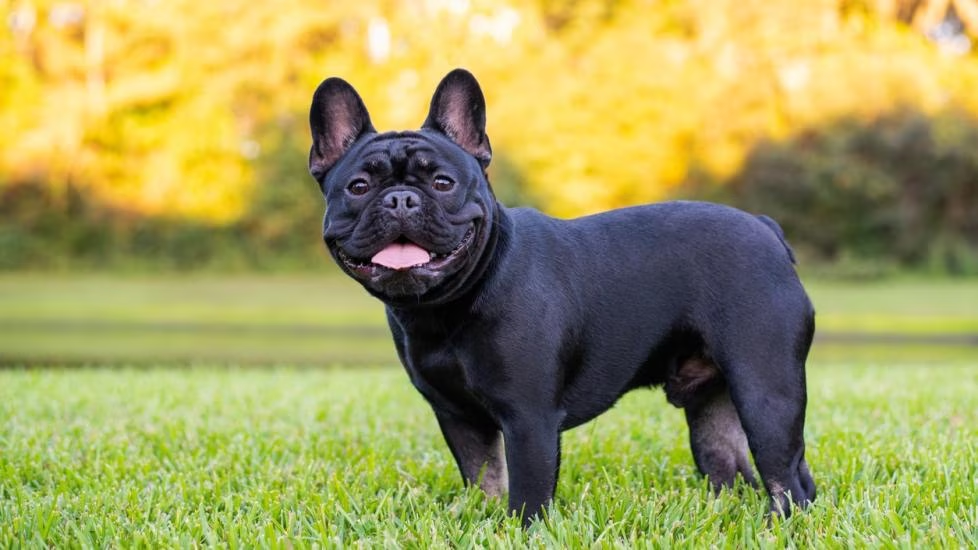
| Height | 27–35 cm |
| Weight | 8–14 kg |
| Lifespan | 10–12 years |
| FCI group | 9 · toy dogs |
| Origin | France |
Exact ratings
Common health issues
Nutrition
The French Bulldog is the ideal dog for city apartment dwellers. It doesn’t require hours of jogging, rarely barks without cause, and fits compactly on any sofa. However, a future owner should be aware of the physiological nuances of brachycephalic breeds (dogs with short muzzles). You can find out more about this at Tvaryny.
French Bulldog: A Brief Overview and Breed Characteristics
| Characteristic | Description |
|---|---|
| Country of Origin | France (though roots are English) |
| FCI Group | Group 9 (Companion and Toy Dogs), Section 11 (Small Molossian type Dogs) |
| Year of Recognition | Standard approved in the 19th century, first mentioned in 1898 (FCI) |
| Life Expectancy | 10-12 years (with proper care) |
| Height at Withers | Males: 11-14 in; Females: 9.5-12.5 in |
| Weight | Males: 20-31 lbs; Females: 17.5-28.5 lbs |
| Coat Type | Short-haired, smooth, no undercoat |
History of the Breed: From Fighter to Aristocrat
Paradoxically, French Bulldogs, considered a national treasure of France, actually have English roots. The historical ties of this breed lead back to powerful and uncompromising ancestors. If you look at the family tree, you can see a clear connection to another famous breed – the English Bulldog, which was significantly more massive and used for bull-baiting.
In the mid-19th century in England, during the Industrial Revolution, lace makers from Nottingham began emigrating en masse to France in search of a better life. They took their little bulldogs (Toy Bulldogs) with them, which were popular among the working class at the time as excellent ratters and companions. It was these “toy” bulldogs, crossbreeding with local French breeds (likely terriers and Pugs), that gave rise to the modern look of the “Frenchie.”
Initially, these dogs were favorites of ordinary people, coachmen, and merchants at the Les Halles market in Paris. However, thanks to their charisma and unusual appearance, they quickly climbed the social ladder. By the end of the 19th century, the French Bulldog had become a favorite of bohemians, artists, and the aristocracy. It is known that there was even a French Bulldog on board the legendary “Titanic,” insured for a huge sum.
What a French Bulldog Looks Like: Detailed Appearance Description
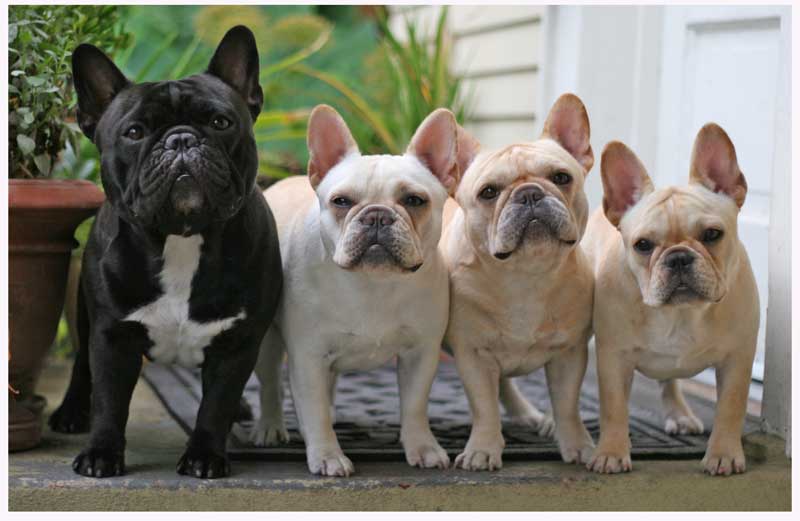
The appearance of this dog is a mix of the comic and the monumental. The ears of a French Bulldog resemble the locators of a bat, which is one of the main distinguishing features of the breed. Interestingly, for a long time, there were disputes between European and American cynologists regarding the ear shape: it was the Americans who insisted on upright “bat ears,” while in Europe, the “rose ear” was permitted.
The compact, sturdy physique points to powerful strength hidden in a small size. This is a “compact format” dog – the bone structure is heavy, and the muscles are voluminous. Many inexperienced owners confuse this breed with other molossers. For instance, the Pug, although similiar in muzzle format, has a completely different body and tail structure, while the Boston Terrier is leggier and more elegant.
Head and Muzzle Features
The massive head with a short muzzle and split nose charms with the intelligent gaze of its expressive round eyes. The skull is broad, almost flat between the ears. The skin on the head forms symmetrical folds and wrinkles that give the dog a “pensive” look.
- Jaws: Powerful, square. The lower jaw protrudes (undershot), but teeth should not be visible when the mouth is closed.
- Eyes: Dark, wide-set, placed low. The expression is lively and attentive.
- Neck: Short, slightly arched, without dewlap, very muscular.
Body and Limbs
The back of a French Bulldog has a specific shape: it is broad at the shoulders and tapers toward the pelvis. The spine often forms an arch (the so-called “roach back”), which is the norm for the breed. A notable external feature of French Bulldogs is the short, naturally docked-looking tail with characteristic kinks. It is set low and is never carried above the backline.
These are short-haired dogs with a shiny, thick coat. The fur is pleasant to the touch and has no undercoat, making the dog vulnerable to the cold. The standard recognizes several main color types:
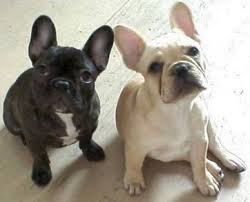
- Brindle: A mixture of black and reddish hairs; small white markings are allowed.
- Fawn: From light brown to reddish (“red”), with or without a black mask.
- Pied: A white background with brindle or fawn patches.
Character: Temprament and Behavior
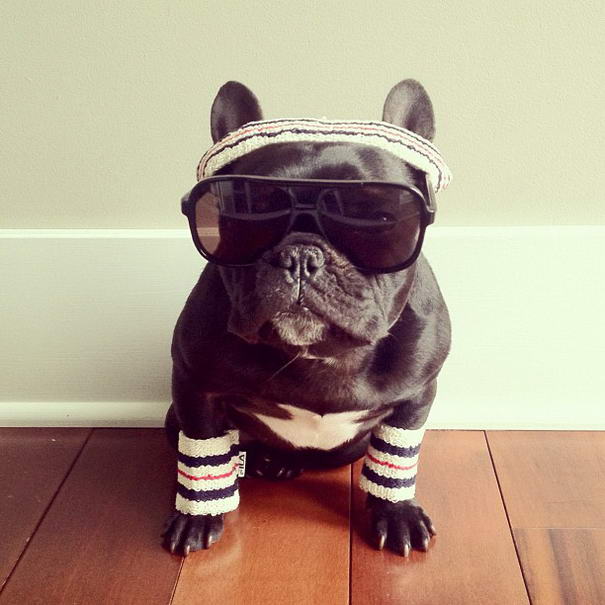
The phlegmatic gaze of the French Bulldog matches its balanced nature – it is impossible to force this intelligent dog to do something with brute force; you can only negotiate with them. They are known for their boundless loyalty. These are classic “velcro dogs” that will follow you to the bathroom, the kitchen, and try to squeeze into your armchair, even if there is no room. In terms of emotional attachment, they can really only be compared to the King Charles Spaniel, which also cannot imagine life without a human.
The serious nature of this usually obedient pet does not allow it to be capricious often, but it can behave stubbornly. If a bulldog decides the walk is over, it might simply sit in the middle of the street and turn into an immovable statue. While generally equally friendly to strangers, the French Bulldog is always ready to defend its owner from an attacker. Despite their small stature, the spirit of a true fighter lives within them, and they will not hesitate to throw themselves at an enemy that significantly outsizes them.
Relationships with Children and Animals
Frenchies adore kids and are willing to tolerate their antics, but, as with any dog, play should take place under adult supervision. They usually get along well with other animals if they have been socialized from childhood. However, unneutered males may show dominant aggression toward other males.
Health: Typical Diseases and Prevention
Pros and Cons of the Breed
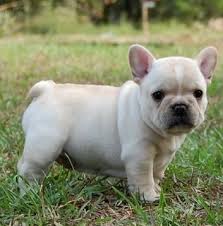
| Pros | Cons |
|---|---|
| Compact size, ideal for an apartment. | Prone to many genetic diseases. |
| Rarely barks, doesn’t disturb neighbors. | Snoring and making various noises (a plus for some). |
| Minimal coat care. | Prone to flatulence (gas). |
| Very cheerful and people-oriented character. | Poor thermoregulation (risk of heatstroke). |
| Does not require heavy physical exertion. | Stubbornness in training. |
How to Care for a French Bulldog?
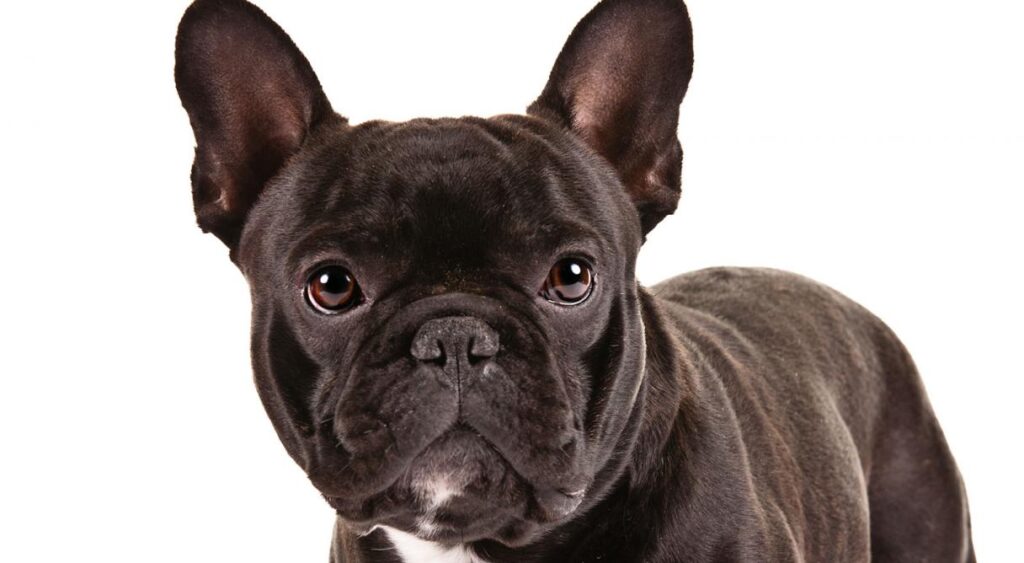
A French Bulldog cannot be kept in an outdoor kennel, as it needs close contact and interaction with its owner, as well as temperature comfort. Settling in your home, such a little one will not bring much hair, but may bring a specific smell if you do not look after the skin folds. Infrequently brushing its short coat with a rubber glove will act more like a massage for the dog, which it will enjoy very much.
Hygiene of Folds and Ears
The most important ritual is wiping the fold under the eyes and around the nose. Moisture and dirt accumulate there, causing irritation. Use special lotions or chlorhexidine, then wipe the skin dry. Sulfur and dirt accumulate in the bulldog’s large “bat” ears, promoting inflammation – so clean them regularly. But do not poke deep into the ear canal with cotton swabs.
French Bulldogs love to bathe, but you should not do this often so as not to wash away the skin’s protective layer. It is also important to know that due to their heavy heads, most bulldogs cannot swim and sink like a stone. Be vigilant near bodies of water.
Training and Socialization
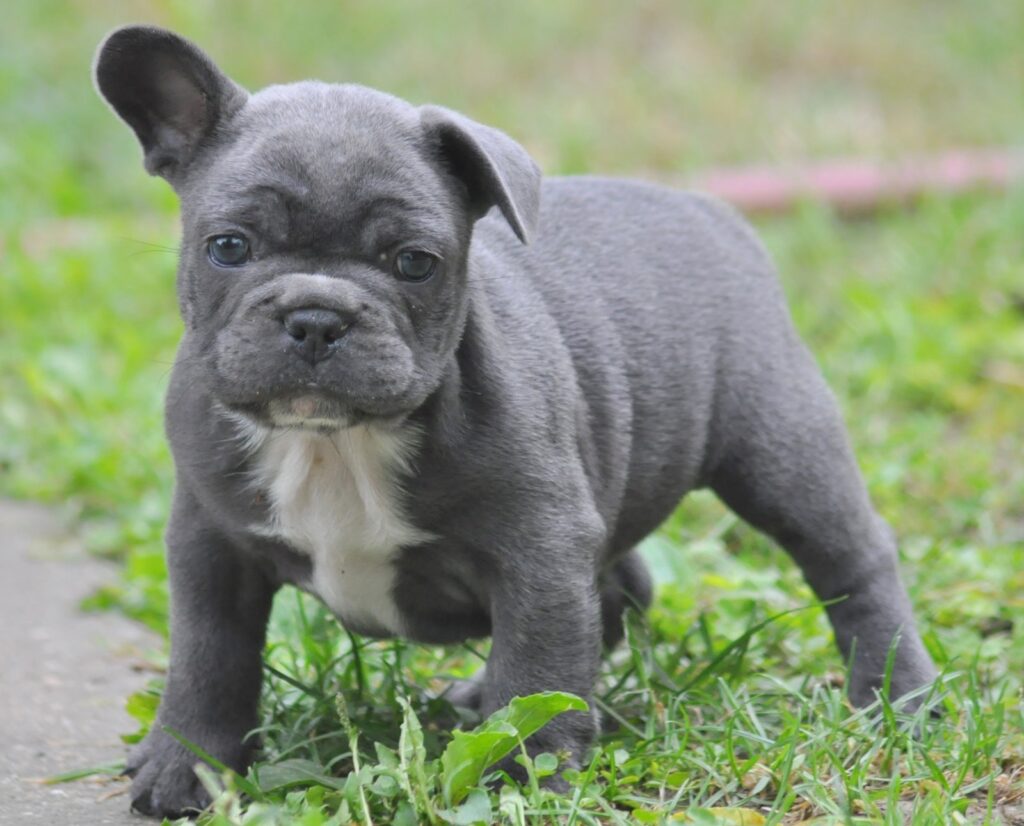
Training a French Bulldog needs to be started independently at a young age. Given the sensitive nature of these pets, you cannot shout at them – it is better to resort to calm and patient methods. The positive reinforcement method (treats and praise) works best with them.
The intelligent and diligent bulldog quickly absorbs new knowledge but can switch to “I can’t hear you” mode if it gets bored. It needs regular training and periodic repetition of learned commands. Pay special attention to the “Come” command, because if a Frenchie gets fascinated by something on the street, it might ignore the owner.
Diet: Key Recommendations
Interesting Facts About the Breed

- Celebrity Pets: Leonardo DiCaprio, Lady Gaga, Dwayne “The Rock” Johnson, and many other stars have chosen this very breed.
- Frog-Dogs: When a French Bulldog lies with its hind legs stretched back, it resembles a little frog. This is the breed’s trademark pose.
- Not for Natural Birth: Due to the large head of the puppies and the narrow pelvis of the females, most French Bulldogs are born via Cesarean section (over 80% of cases).
Frequently Asked Questions (FAQ)
Do French Bulldogs snore loudly? Yes, almost all representatives of the breed snore in their sleep, and sometimes even when awake due to the structure of the nasopharynx. If the snoring becomes too loud or the dog is gasping for air, this is a reason to consult a vet.
Can they be left alone at home for a long time? No, they tolerate loneliness poorly. If you work 12 hours a day and no one is home, this breed will not suit you – the dog may fall into depression or start destroying things.
Is it true that French Bulldogs don’t shed? This is a common myth. Although they have short hair, shedding does occur, especially intensively during seasonal periods (spring and fall). Their short and stiff hairs can get stuck in furniture upholstery and clothes, from where they are sometimes harder to remove than long hair. This breed is not considered hypoallergenic.
Do they drool? Yes, it happens, although not as much as with “big” bulldogs or mastiffs. Salivation usually increases after eating, drinking, during physical activity, or when the dog is waiting for a treat. This is connected to the structure of their lips (flews), which do not fit tightly against the jaw.
Why do they have such a short tail? Is it cut? No, French Bulldogs’ tails are not docked (cut). This is their natural genetic feature. Puppies are born with short tails, which often have characteristic broken shapes or knots. A long tail is considered a serious fault in the breed (disqualification).
Video About the Breed
- Ideal for an apartment, quiet
- An affectionate, playful companion
- Minimal exercise needs
- Gets on well with everyone
- Brachycephalic — BOAS, overheating
- Spinal problems (hemivertebrae / IVDD)
- Skin-fold dermatitis
- Often cesarean only
| Pug | Boston Terrier | English Bulldog | |
|---|---|---|---|
| Height | 25–33 cm | 38–43 cm | 31–40 cm |
| Energy | 2.5 | 3.5 | 2 |
| Apartment | 5 | 5 | 5 |
| Beginners | 4.5 | 4 | 4 |
Why do French Bulldogs suffer so much ill health?
Can the French Bulldog give birth on its own?
Is the French Bulldog suitable for an apartment?
FCI Standard No. 101 · RVC VetCompass
For apartments · For kids · For beginners · Active · Smartest · Hypoallergenic · All rankings →