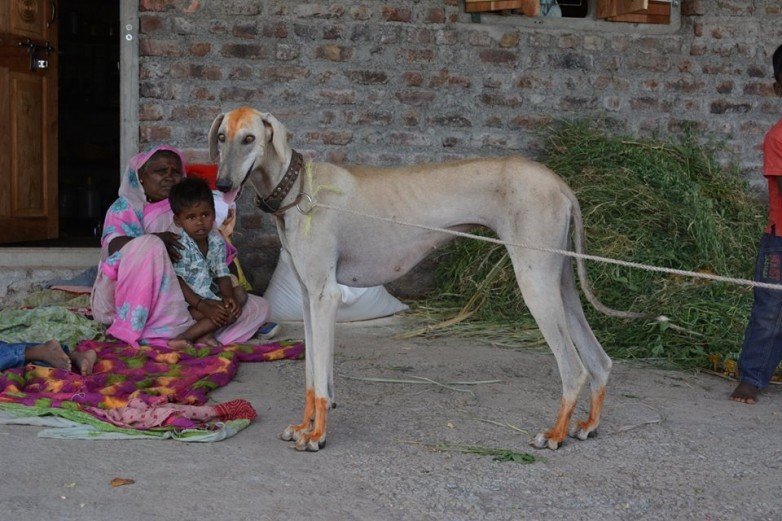
not FCI-recognized (Indian sighthound) · India (Karnataka state, Deccan Plateau)
Mudhol Hound (Caravan Hound)
An elegant sighthound of India’s caravans — a hardy runner of the hot plains: independent, devoted, watchful and tireless. The Caravan Hound (Mudhol Hound) is an ancient Indian sighthound bred as both hunter and guardian; it combines graceful speed with a watchdog’s vigilance and needs space, exercise and an experienced owner.
Apartment · with caveatsKids · with caveatsCats · not suitableOther dogsBeginners · with caveats
The Mudhol Hound, or Caravan Hound, is one of the oldest dog breeds in India. For centuries, it remained a "hidden gem" of the East, but today it is starting to attract the attention of dog experts worldwide. The Caravan Hound, also known as the Mudhol Hound (named after the town of Mudhol on the Deccan Plateau), is the embodiment of grace, speed, and uncompromising loyalty. Although the breed has not yet gained widespread recognition from major international federations like the FCI, it boasts a stable population and respect in its homeland. Learn more on Tvaryny.
Mudhol Hound (Caravan Hound): A brief breed overview
Mudhol Hound (Caravan Hound): A brief breed overview · 7
On postage stamps: In 2005, India Post released a series of stamps dedicated to four local dog breeds: the Himalayan Sheepdog, Rampur Hound, Rajapalayam, and, of course, the Mudhol Hound. This testifies to the recognition of the breed as a national treasure.
Secret vision: Like other sighthounds, they have a field of view of about 270 degrees (humans have only 180). This allows them to spot movement "out of the corner of their eye" at a great distance.
Shivaji's Dog: There is a legend that in the 17th century, Mudhol Hounds were used in the armies of Chhatrapati Shivaji. Their task was to warn of the enemy's approach and attack the opponent's horses, creating chaos in the cavalry.
Two names - one breed: Locals often call these dogs "Karwani," which means "those who go with the caravan." The name "Mudhol" is more formal and linked to the royal family that patronized it.
History of the breed: From Persian caravans to the Indian Army
The Mudhol Hound has served both Indian nobility and commoners for centuries, becoming an integral part of the Deccan region's cultural heritage. The history of this breed is a fascinating mix of migration, warfare, and selective breeding aimed at survival.
It is believed that the ancestors of these dogs arrived on the Indian subcontinent over two and a half thousand years ago, accompanying settlers from Central Asia and Persia. Traders, mercenaries, and conquerors brought their faithful companions - "Tazi" type sighthounds - with them. Mixing with local aboriginal breeds, as well as likely with ancient lines that gave rise to the Greyhound, resulted in a unique phenotype.
The breed received the name "Caravan Hound" (Karwani) due to its functional purpose: these dogs accompanied caravans, running alongside horses and camels. They performed a dual role: by day they hunted small game (hares, gazelles), providing food for travelers, and by night they transformed into fierce guards, protecting the camp from predators and thieves.
Royal patronage
A special role in shaping the modern look of the breed was played by Shrimant Rajasaheb Malojirao Ghorpade of the Mudhol State (modern-day Karnataka). He was an avid admirer of these dogs and, in the early 20th century, put considerable effort into popularizing them. It is said that he gifted a pair of puppies to King George V during his visit to India, introducing them as the "Hounds of Mudhol." Thus, the breed's second name - Mudhol Hound - was solidified.
It is interesting to compare their history with other regional breeds. For instance, in northern India, the Rampur Greyhound developed; although similar in type, it had slightly different tasks and formation conditions. If we delve deeper into genetics, we can find common roots with such an ancient breed as the Afghan Aboriginal Hound, from which the Mudhol inherited its stamina and independence.
Modern status and army service
The Mudhol Hound is not merely a relic of the past. It is the first Indian breed to be officially inducted into the Indian Army. Thanks to their keen eyesight, ability to work in extreme heat, and incredible speed, several individuals were selected for training in the Remount Veterinary Corps. They are used for border protection and detecting intruders, where their vigilance is valued no less than the strength of service shepherds.
Appearance of the Caravan Hound: The anatomy of speed
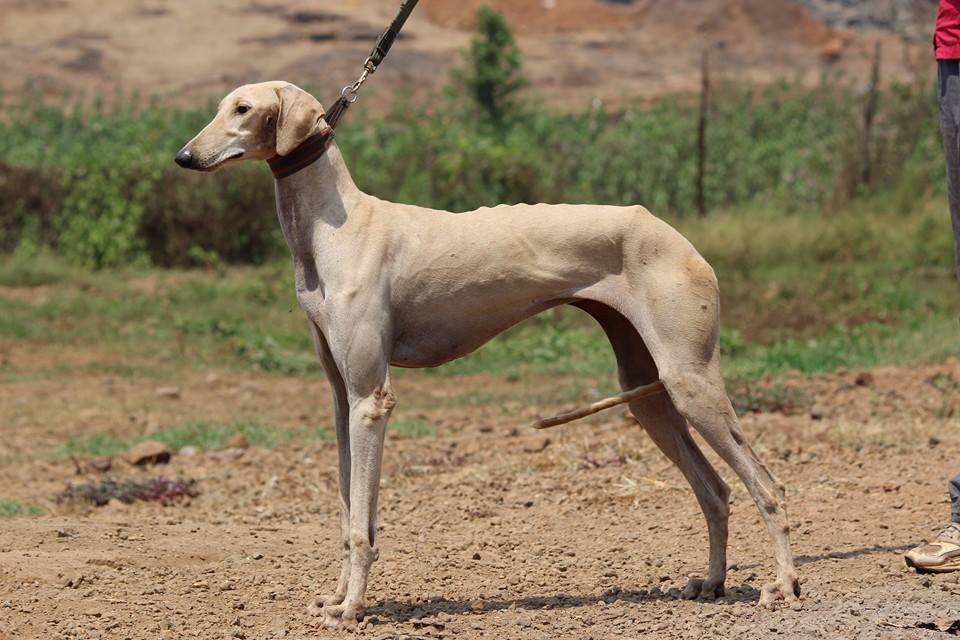
The Caravan Hound is a classic representative of the sighthound group. It is a tall, lean, and extremely muscular dog. Its appearance is a triumph of function over decoration.
Head: Long, narrow, and wedge-shaped. The skull is flat, with a poorly defined stop (transition from forehead to muzzle), ensuring excellent aerodynamics. The jaws are powerful and capable of a strong grip.
Eyes: Large, oval-shaped, ranging in color from dark hazel to amber. The expression is intelligent and piercing - the so-called "look through" gaze typical of hunters.
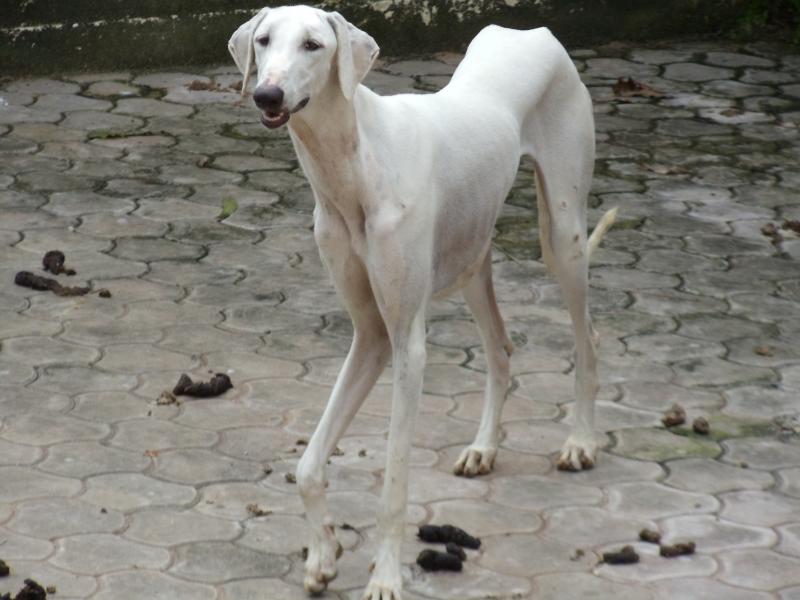
Ears: Medium-sized, triangular, hanging, and set close to the skull. In a state of excitement, they may rise slightly on the cartilage.
Body: A deep chest provides ample lung volume for prolonged running. The abdomen is heavily tucked up, and the loin is muscular and slightly arched.
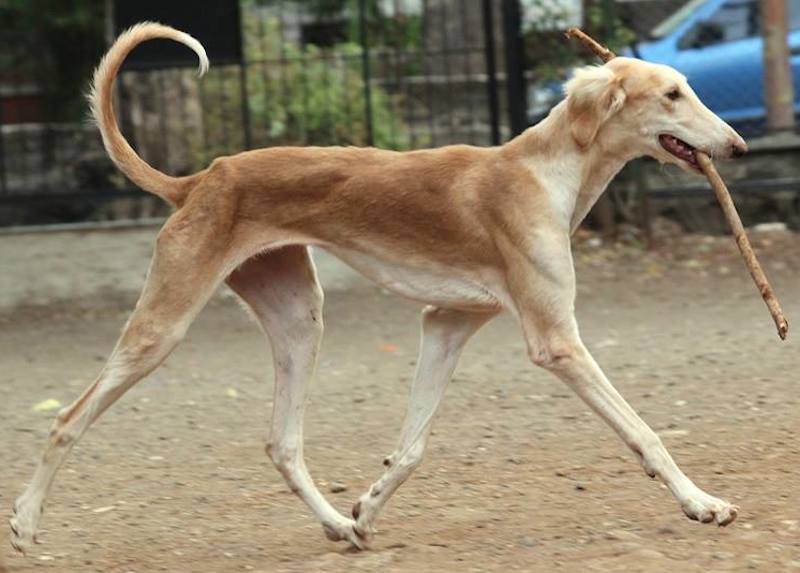
Limbs: Long, straight, with dry muscles. The feet are oval with arched toes ("hare foot"), allowing them to absorb shock when running on the hard ground of the Deccan Plateau.
Tail: Low set, long, and strong at the base. Carried low when at rest, it rises when excited but does not curl over the back. The tip is often curved into a hook or ring.
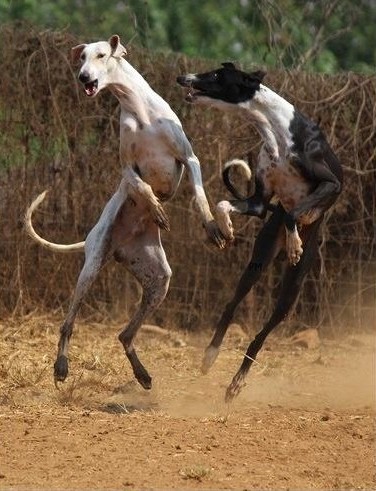
The coat of the Caravan Hound comes in two types: smooth (very short, dense) and silky (with slight feathering on the ears, legs, and tail). The color can be extremely varied: black, white, gray, beige (fawn), brindle, or spotted. This variety of markings makes each representative of the breed visually unique.
Character: An independent warrior in an aristocrat's body
The temperament of the Mudhol Hound combines feline independence with canine loyalty. These dogs possess a reserved character, which does not diminish their courage in critical situations. This is not a dog that will joyfully jump on every passerby, wagging its tail. The Caravan Hound makes a clear distinction between "friend" and "foe."
Attitude towards family and strangers
With strangers, the dog behaves coldly, aloofly, and sometimes suspiciously. It is not impressed by the company of outsiders and will not allow itself to be petted by just anyone. If you are looking for a companion dog for crowded parties, the Mudhol is not your option.
However, its "own" family is a sanctuary for this four-legged protector. Here, it will display tenderness and devotion, albeit without excessive obtrusiveness. This is a one-person dog: it chooses a leader and obeys primarily them. The Mudhol Hound requires communication and respect. It gets along well with older children who understand the animal's personal space, but may not tolerate roughness from toddlers.
Guarding and hunting qualities
Unlike many Western sighthounds that have lost their guarding instinct, the Caravan Hound remains a serious protector. It can rush at a jackal or even a leopard without hesitation if they threaten the flock or the owner. In this aspect, its fearlessness is comparable to the Kangal Shepherd Dog, although their weight categories are entirely different.
Their hunting instinct (prey drive) is extraordinarily high. Anything that runs is perceived as prey. This links them to other working breeds with strong instincts, such as the rare Spanish herder Can de Palleiro, although their working methods differ. The Mudhol relies on sight and speed, attacking with lightning speed and often killing prey with a single snap.
Training and socialization
A large, strong, and intelligent dog presents a challenge for a handler. This breed was bred for independent work, so its representatives are used to relying on their own decisions rather than waiting for a command. The Caravan Hound works in a pack, so its owner must establish themselves as a true leader, but a fair one, not a tyrant.
Early socialization: From puppyhood (starting at 2–3 months), the dog should see as many different people and animals as possible, hear city sounds, and ride in a car. This helps reduce natural suspicion and aggression.
Training methods: Only positive reinforcement. Harsh methods, yelling, or physical punishment will make the Mudhol withdrawn or dangerously aggressive. They are very sensitive to tone of voice.
Patience: They may ignore the "come" command if they see something more interesting. This isn't stupidity; it is the hunter's priority. Recall training must be daily and take place in an enclosed area.
Training for a Caravan Hound is not just about commands; it is a condition for good mental well-being. Without sufficient physical and mental stimulation, the dog gets bored and may start destroying property in the house.
Pros and cons of the breed
Pros and cons of the breed · 6
Pros (+)
Cons (-)
Exotic, elegant appearance
Requires significant physical exertion
Health is generally robust, but no breed-wide list of hereditary diseases has been compiled — “not described” means “not studied”, not “not there”.
Not suitable for beginners
Excellent guarding qualities
Strongly developed hunting instinct (risk to cats)
No specific "doggy" smell
Tolerates cold and damp poorly
Devotion and loyalty to family
Independent, stubborn character (difficult to train)
Rarely barks without cause
Distrustful of strangers, can be aggressive
Care and maintenance
Walks and activity
The Mudhol Hound thrives on spacious estates but not in a cramped city apartment. This active pet needs to be walked frequently and very actively. A simple stroll on a leash is not enough here - the dog needs to be given the opportunity to run freely in an enclosed area (coursing, chasing a mechanical lure). The instinct to chase will call it after the first animal it meets: a cat, a squirrel, or even a small dog.
Important: If the target is locked on, the owner will not be able to stop the four-legged hunter with a command. The Mudhol's speed reaches 35–40 mph, so catching it is impossible. Therefore, a reliable fence at least 6 feet high around the yard is not a whim, but a vital necessity.
Hygiene and coat
The need for close supervision outdoors is compensated by simple care at home. The Caravan Hound sheds moderately throughout the year. Loose hair will not create problems if you go over the dog's body once a week with a rubber mitt or soft brush. This also improves blood circulation in the skin.
You should not bathe them too often, so the coat does not lose its natural protective oils. The Mudhol's skin is prone to dryness, so use only special mild shampoos. Pay particular attention to the ears (clean once a week) and claws (they grow quickly and require regular trimming if not worn down naturally).
Nutrition
Nutrition: Fuel for an athlete
Health and risks
Health: Typical diseases and prevention
Frequently Asked Questions (FAQ) · 4
Is this dog suitable for an apartment? Categorically not recommended. They need space to run. A Mudhol can only live in an apartment provided there are hours of active walking every day, otherwise, it will destroy the home out of boredom.
How do they treat children? They are patient with children of their own family and protect them. However, they do not like familiarity. Leaving the dog alone with very small children who might pull its ear or tail is not allowed.
Is it difficult to buy a Caravan Hound puppy? Outside of India - yes, very difficult. The main population is concentrated in the state of Karnataka. Export of dogs exists, but it is limited. Furthermore, one must carefully check documents so as not to buy a mixed breed.
Do they bark a lot? No, these are fairly quiet dogs. They only voice themselves in the event of a real threat or when they have spotted prey (though they more often pursue silently). This is an ideal option for those who dislike constant noise.
Video about the breed
FAQ
How does the Caravan Hound differ from the Rampur Hound?
They are two related Indian sighthounds; the Mudhol (Caravan) comes from the Deccan and is a touch leaner, the Rampur from northern India. Both are fast, hardy and independent.
Does the breed get along with cats?
Usually poorly — the chase instinct is very strong; living with cats and small animals is problematic.
Is the Caravan Hound also a guardian?
Yes — unlike many sighthounds it is watchful and wary of strangers, so historically it served both as a hunter and as a guardian of camps (caravans).