

| Height | 36–41 cm |
| Weight | 11–17 kg |
| Lifespan | 12–14 years |
| FCI group | 3 · terriers |
| Origin | Great Britain |
Exact ratings
Common health issues
Nutrition
The Staffordshire Bull Terrier, often lovingly called the “Staffie,” is a breed that embodies an astonishing paradox: the formidable appearance of a fighter combined with an incredibly loving heart. If you’re considering getting such a dog, you’re on the right path to finding one of the most loyal four-legged friends for yourself and your family. These dogs are unparalleled companions who adore children and are ready to participate in family games for hours. Contrary to stereotypes, a well-trained Staffie is not aggressive towards people and is usually tolerant of other animals if they’ve undergone early socialization. You can read more about all aspects of this unique breed on Tvaryny.
These dogs are always ready to defend their owner; their vigilance and innate bravery make them excellent guardians who will promptly warn of approaching strangers. Yet, they are not prone to unprovoked aggression towards unfamiliar people, unless there’s an obvious threat. Courage, reliability, and boundless devotion — these are the key traits that characterize this incredible dog.
Staffordshire Bull Terrier: Key Breed Characteristics
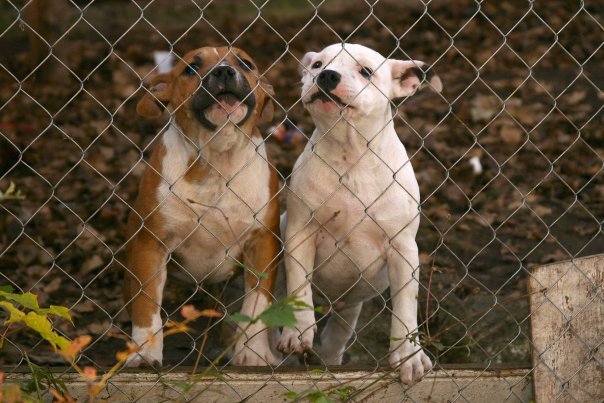
| Parameter | Characteristic |
| Origin | Great Britain (Staffordshire county) |
| FCI Classification | Group 3 (Terriers), Section 3 (Bull Type Terriers) |
| Life Span | 12-14 years |
| Height at Withers | 14-16 inches (35.5 – 40.5 cm) |
| Weight | Males: 28-37 pounds (12.7 – 17 kg), Females: 24-34 pounds (11 – 15.4 kg) |
| Temperament | Loyal, brave, intelligent, gentle, reliable, active |
| Relationship with Children | Excellent, earned the nickname “nanny dog” |
| Relationship with Other Animals | Requires early and thorough socialization |
| Energy Level | High |
| Grooming Needs | Low |
| Drooling Tendency | Low |
| Barking Tendency | Medium |
| Purpose | Companion, family dog |
History of the Staffordshire Bull Terrier
The history of the Staffordshire Bull Terrier dates back to the 19th century, rooted in the industrial regions of England, particularly Staffordshire, from which it derives its name. This breed is a direct descendant of the Old English Bulldogs and various terriers. The primary purpose of creating such dogs, then known as “bull-and-terrier,” was for participation in blood sports like bull-baiting and dog fights. For these brutal pastimes, a dog was needed that combined the strength, tenacity, and powerful jaw of a bulldog with the agility, speed, and unwavering spirit (gameness) of a terrier.
When blood sports were officially banned in Great Britain in 1835, dog fighting unfortunately continued clandestinely. It was during this period that the breed began to form as a distinct type. Miners and factory workers in Staffordshire valued these dogs not only for their fighting qualities but also for their incredible loyalty to the family and gentle nature with children. In the harsh living conditions of that era, the Staffie was often not just a companion but also a reliable home guardian. Over time, the emphasis in breeding began to shift from aggression towards other dogs to a stable temperament and human-centric disposition.
A significant figure in the breed’s history was James Hinks, who, in the mid-19th century, began crossing bull-and-terriers with other breeds, such as the now-extinct White English Terrier. This led to the emergence of the Bull Terrier with its distinctive egg-shaped head. However, enthusiasts of the “old” type of dog preserved it, and in 1935, the breed was officially recognized by The Kennel Club as the “Staffordshire Bull Terrier.” This marked a turning point, ultimately transforming the former fighter into a show dog and beloved family pet. Its close relative, imported to the USA, developed somewhat differently and was later recognized as the American Staffordshire Terrier, which is taller and heavier than its English cousin.
What a Staffordshire Bull Terrier Looks Like: Standard and Appearance Description
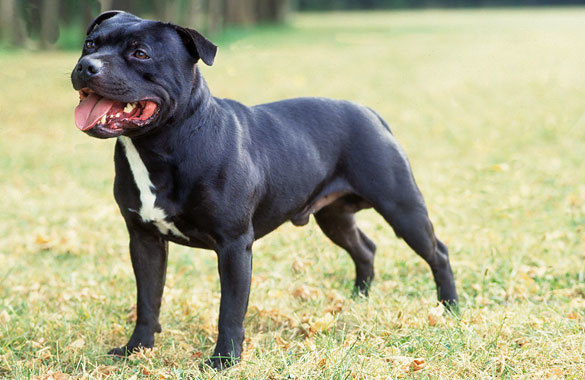
The Staffordshire Bull Terrier is a smooth-coated, proportionally built medium-sized dog that impresses with its strength and muscularity. Despite its relatively small stature, it gives the impression of extraordinary power and athleticism. Its appearance should harmoniously combine the characteristics of a bulldog and a terrier.
- Head: Short, deep, with a broad skull. Very pronounced cheek muscles (zygomatic arches), a distinct stop. The muzzle is short, and the nose must be black.
- Eyes: Usually dark, but may harmonize with the coat color. Round in shape, medium-sized, set straight. The eye rims are dark.
- Ears: Rose-shaped or semi-prick, neither large nor heavy. Fully dropped or erect ears are considered a serious fault.
- Jaws and Teeth: Lips are tight. Jaws are very strong. The bite is correct and scissor-like, meaning the upper teeth closely overlap the lower ones.
- Body: Compact, with a level topline. The chest is deep and broad, with well-sprung ribs, indicating powerful lungs. The dog is very muscular.
- Limbs: Forelegs are straight, with strong bone, set wide apart. Hind legs are muscular, with well-angulated hocks, providing powerful drive.
- Tail: Medium length, set low, tapering to a point. The dog carries it fairly low. The tail should not curl.
- Coat: Short, smooth, and close-fitting to the body.
Staffordshire Bull Terrier Coat Colors
The breed standard allows for a variety of coat colors:
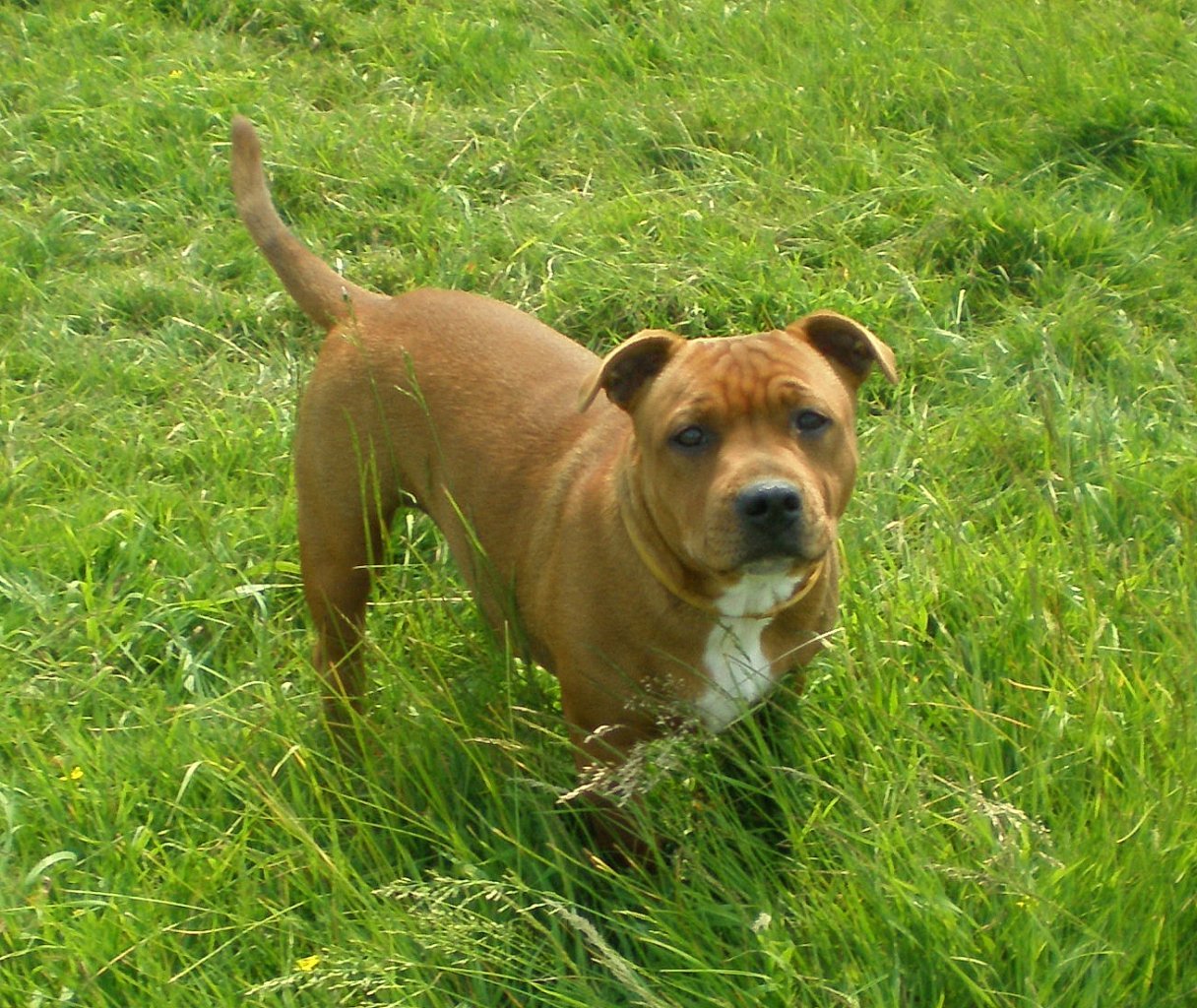
- Red
- Fawn
- White
- Black
- Blue (gray)
- Brindle (any of the listed colors with brindle markings)
Any of these colors may be combined with white markings. However, “black and tan” or liver (brown) colorations are highly undesirable according to the standard.
Character: Temperament and Behavior of the Staffie
The Staffordshire Bull Terrier’s character is its main asset and the reason why the breed has captured the hearts of millions worldwide. Despite its fighting past, the modern Staffie is primarily a companion dog. Its temperament can be described as brave, intelligent, and extremely loving.
Devotion to Family: Staffies deeply bond with their people and strive to be a full-fledged member of the family. They cope poorly with solitude and can suffer from separation anxiety if left alone for too long. This breed truly thrives at the center of attention and family events.
Attitude Towards Children: In the UK, the Staffordshire Bull Terrier earned the nickname “nanny dog” for its wonderfully patient and gentle attitude towards children. They adore playing with them and can become an excellent friend to a child. It’s important to remember that any dog, regardless of breed, should be supervised by adults during play with small children.
Socialization and Other Animals: Due to their genetic heritage, some Staffies may display dominance or aggression towards other dogs, especially those of the same sex. Therefore, early and comprehensive socialization is absolutely essential. A puppy needs to be introduced to various people (adults, children), other animals (under strict control), new places, sounds, and situations. This will help raise a confident, well-balanced, and non-aggressive dog. Attending group obedience classes will be beneficial for both the dog and the owner.
Pros and Cons of the Staffordshire Bull Terrier Breed
Before getting a Staffie, it’s crucial to weigh all the pros and cons. This breed isn’t suitable for everyone, and a potential owner must be prepared for its unique characteristics.
| Pros | Cons |
|---|---|
| Boundless love for family. They are one of the most devoted companions, adoring to be close to their owner. | Prone to separation anxiety. Copes poorly with solitude and may exhibit destructive behavior when left alone. |
| Excellent with children. Very patient and gentle, making them a wonderful family dog. | Potential aggression towards other animals. Requires intensive early socialization for peaceful coexistence with other dogs. |
| High intelligence and eagerness to please. Easy to train if the right approach is found (positive reinforcement). | Stubbornness. Like many terriers, they can be stubborn, requiring consistent and patient training. |
| Robust health. Generally a healthy breed with a small number of genetic diseases. | Prone to skin allergies. Often suffers from allergies to food or environmental factors. |
| Low grooming requirements. Short coat needs minimal complicated care. | High energy level. Requires daily active walks and mental stimulation. |
| Compact size. Well-suited for apartment living, provided sufficient exercise. | Strong prey drive. May chase cats and other small animals. |
| Brave protector. Always ready to defend its family, though not aggressive without reason. | Negative stereotypes. Owners often face prejudice from others. |
Staffordshire Bull Terrier Health: Typical Diseases and Prevention
Caring for a Staffordshire Bull Terrier
Grooming and Coat Care
Caring for a Staffordshire Bull Terrier is quite straightforward thanks to its short coat. Weekly brushing with a rubber brush or grooming mitt will help remove dead hairs and keep the coat in good condition. Shedding is moderate, usually increasing seasonally. Bathe your dog as needed, but not too often, to avoid drying out the skin. Use only quality dog shampoos, preferably hypoallergenic. After a walk in muddy weather, it’s sufficient to wipe paws and belly with a damp towel.
Physical Exercise and Activity
Staffies are an energetic breed that requires regular physical exercise to maintain good fitness and mental health. An adult dog needs a minimum of 1-1.5 hours of activity per day. This can include long walks, runs, playing with a ball or frisbee. They also love sports like agility, weight pulling, or coursing. It’s important to remember that due to their brachycephalic muzzle structure, Staffies are prone to overheating, so in hot weather, training should be moved to early morning or late evening. Unlike scent hounds, such as the Small Swiss Hound Rough-Haired or the Small Swiss Hound Smooth-Haired, which are bred for long pursuits of prey, Staffies require short, intense bursts of activity.
Living Conditions
Staffordshire Bull Terriers adapt perfectly to apartment living, provided they receive enough attention and physical exercise. Their compact size and short coat make them convenient for urban environments. However, the ideal condition for them would be a private house with a securely fenced yard where they can play safely. Important: A Staffie is not suitable for living on a chain or in a kennel. This is a human-oriented dog, and it should live indoors, alongside its family.
Training and Socialization
Training a Staffordshire Bull Terrier is an exciting but responsible process. These dogs are very intelligent and eager to please their owner, but their inherent stubbornness requires patience and consistency. The method of positive reinforcement works best — praise, treats, and toys. Harshness and physical punishment can lead to a loss of trust and aggression.
Socialization is a key aspect of upbringing. It should begin from the very first days the puppy arrives home. Introduce it to various people (adults, children), other animals (under strict control), new places, sounds, and situations. This will help raise a confident, well-balanced, and non-aggressive dog. Attending group obedience classes will be beneficial for both the dog and the owner.
Due to their strength and potential dominance, Staffies require an owner who can be their leader — calm, confident, and consistent. A well-trained Staffordshire Bull Terrier is an obedient and manageable companion, the pride of its owner.
Staffordshire Bull Terrier Nutrition: Key Recommendations
Interesting Facts About the Breed
- The only breed with the description “totally reliable”: In the breed standard of the British Kennel Club, the Staffie’s temperament is described as “traditionally of indomitable courage and tenacity. Highly intelligent and affectionate, especially with children. Brave, fearless and totally reliable.” No other breed has such a formulation.
- War Heroes: The most famous Staffordshire Bull Terrier is a dog named Sergeant Stubby, a hero of World War I who served in the American army. Although his breed was not officially registered, his description and photographs most closely match that of a Staffie. He warned of gas attacks, found wounded soldiers, and even captured a German spy.
- Popularity in the UK: The Staffordshire Bull Terrier is one of the most popular breeds in its homeland, consistently ranking in the top 10. Britons value them for their excellent companion character.
- “Staffie Smile”: Many owners note their dogs’ unique ability to “smile,” baring their teeth in moments of joy and excitement. This looks very charming and is a characteristic feature of the breed.
Frequently Asked Questions About the Staffordshire Bull Terrier (FAQ)
Are Staffordshire Bull Terriers dangerous to people?
No. With proper upbringing and socialization, the Staffordshire Bull Terrier is one of the gentlest and most devoted breeds to humans. Aggression towards people is absolutely atypical for them. Problems can arise due to irresponsible owners, rather than due to the characteristics of the breed.
Is a Staffie suitable for an inexperienced owner?
A Staffie can be a first dog, but only if the owner is willing to learn, be consistent, and dedicate a lot of time to training and socialization. Novice owners are strongly recommended to take a training course with a professional dog trainer.
Do Staffies get along well with cats?
This depends on the individual temperament of the dog and whether they grew up together. Many Staffies live peacefully with cats if they were properly introduced at an early age. However, their strong prey drive can become a problem, so introductions and cohabitation should take place under strict control.
Do they bark a lot?
Staffies are not a “barky” breed. They will voice their opinion when necessary – warning of guests or suspicious sounds – but unprovoked barking is not typical for them.
What is the difference between a Staffordshire Bull Terrier and a Pitbull?
These are two different, though related, breeds. The American Pit Bull Terrier (not recognized by the FCI) is usually taller, more athletic, and has a more varied body structure. The Staffordshire Bull Terrier is an officially recognized breed with a clear standard; it is more compact, stockier, and has a characteristic broad head with a short muzzle.
Video about the Breed
- Boundlessly affectionate toward the family
- Wonderful, patient with children
- Muscular and hardy
- Short, simple care
- Possible dog aggression — needs socialization
- A strong, tenacious character
- Stubborn in training
- Sensitive to heat and cold
| Am Staff | Bull Terrier | French Bulldog | |
|---|---|---|---|
| Height | 43–48 cm | 45–55 cm | 27–35 cm |
| Energy | 4 | 4 | 2.5 |
| Apartment | 3 | 3 | 4 |
| Beginners | 2.5 | 2.5 | 3.5 |
Is the Staffordshire Bull Terrier aggressive?
Is the Staffie good with children?
Is the Staffie hard to care for?
FCI Standard No. 76 · The Kennel Club
For apartments · For kids · For beginners · Active · Smartest · Hypoallergenic · All rankings →