

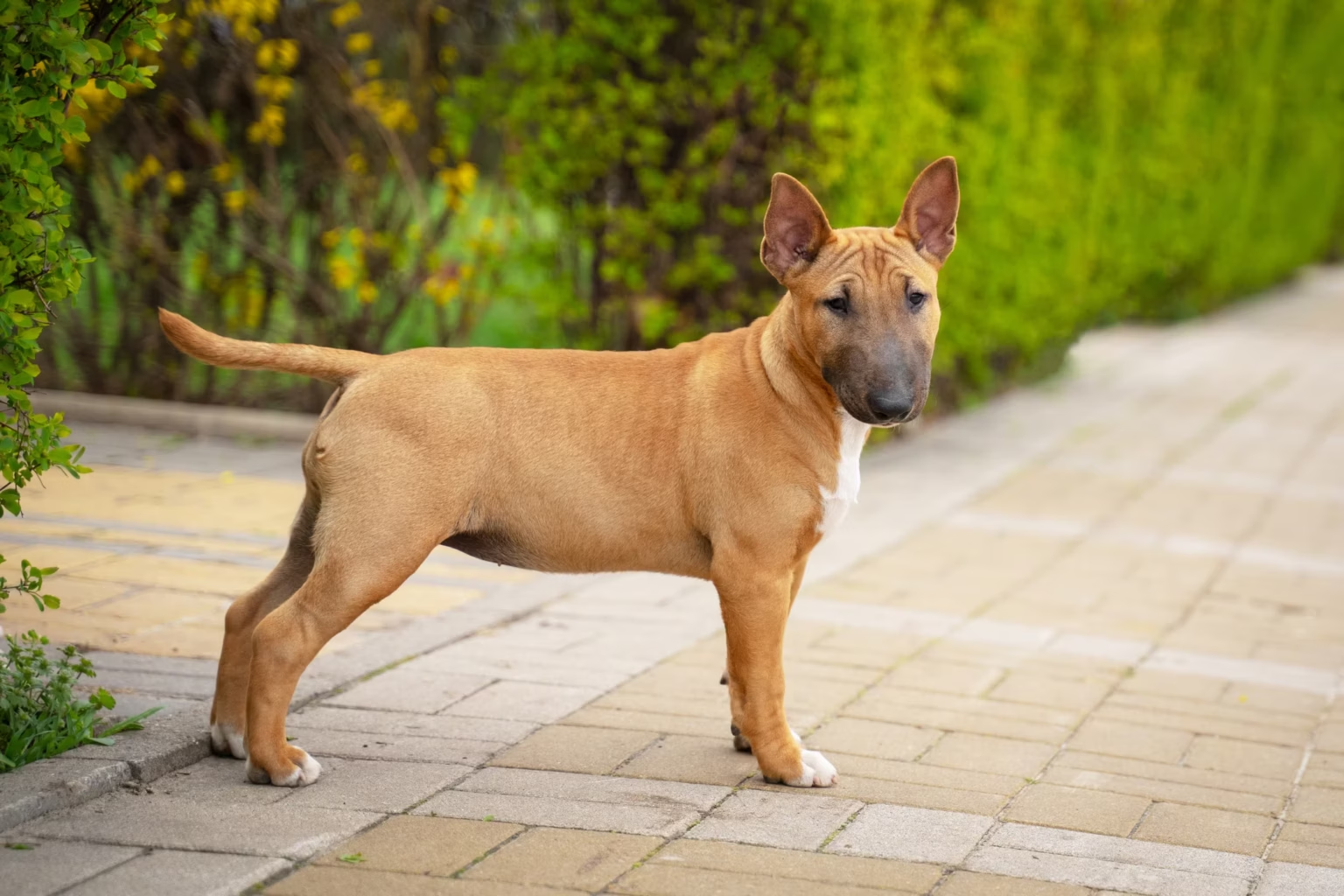
| Height | 25–35 cm |
| Weight | 8–15 kg |
| Lifespan | 11–14 years |
| FCI group | 3 · terriers |
| Origin | Great Britain |
Exact ratings
Common health issues
Nutrition
The Miniature Bull Terrier, affectionately known as the “mini-bull,” is more than just a smaller version of its standard relative; it’s a distinct breed with a unique personality and energy. This dog is an ideal fit for apartment living, provided the owner is committed to giving it ample attention and ensuring regular, active walks. A key advantage of the breed is its incredible devotion. These dogs literally live for their owners, eager to tag along everywhere and be part of all family activities. They thrive on being the center of attention, offering endless love and positive vibes in return. If you’re looking for more than just a pet – a true companion and family member – the mini-bull might be your perfect match. You can discover more about this on Tvaryny.
These dogs are well-known for their playful and somewhat clownish demeanor. You’ll never have a dull moment with them, as their unpredictable antics and amusing mischief can cheer up anyone. They get along splendidly with children, becoming tireless playmates. However, it’s important to remember that behind their charming appearance lies a true terrier – brave, occasionally stubborn, and highly energetic. They require daily physical and mental stimulation; otherwise, unspent energy can lead to destructive behavior at home.
A Quick Look at the Miniature Bull Terrier Breed
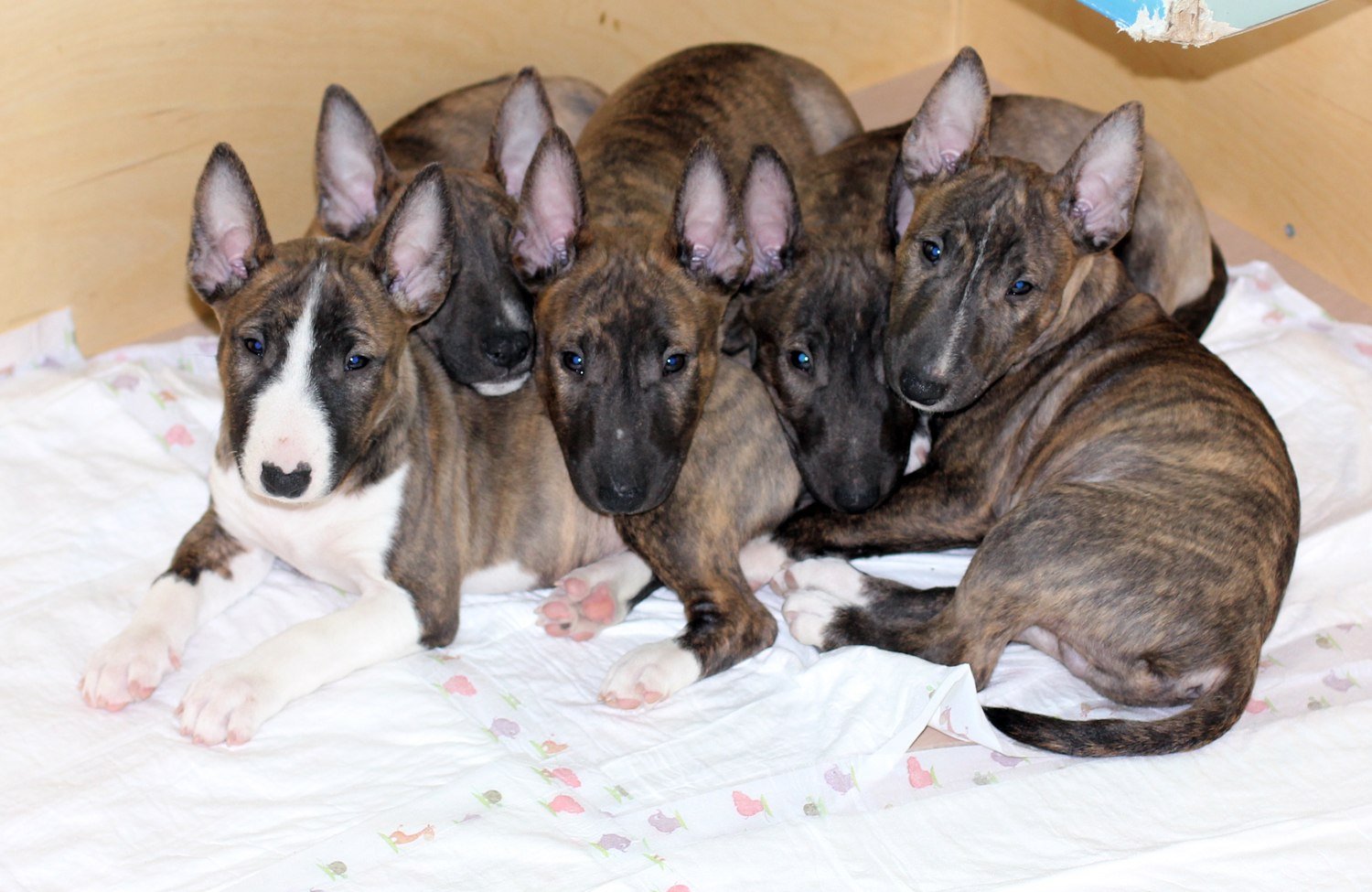
| Breed Name | Miniature Bull Terrier |
| Country of Origin | Great Britain |
| Period of Origin | 19th Century (officially recognized in 20th Century) |
| FCI Group | Group 3 (Terriers), Section 3 (Bull-type Terriers) |
| Lifespan | 11-14 years |
| Height at Withers | 10-14 inches (25-35.5 cm) (important for the dog to be proportionate) |
| Weight | 20-35 pounds (9-16 kg) (depends on height and build) |
| Temperament | Brave, energetic, playful, devoted, stubborn |
| Physical Exercise Needs | High |
| Trainability | Medium (requires patience and consistency) |
| Attitude Towards Children | Very good, patient |
| Attitude Towards Other Animals | Requires early socialization, can be confrontational |
History of the Miniature Bull Terrier’s Origins
The history of the Miniature Bull Terrier is closely intertwined with its larger counterpart, the Standard Bull Terrier. In the mid-19th century in England, James Hinks, a renowned breeder, aimed to create a “white cavalier” – a dog that combined the strength and courage of a bulldog with the intelligence and agility of a terrier. This led to the creation of the Bull Terrier, which quickly gained popularity. However, smaller-sized puppies occasionally appeared in its litters. Initially, these were considered an undesirable deviation, but over time, these “mini-versions” garnered their own enthusiasts.
Enthusiasts decided to develop this lineage as a separate breed. To solidify their smaller stature, Fox Terrier and Jack Russell Terrier bloodlines were introduced into the breeding program. This successfully reduced their size but, unfortunately, led to certain health and conformation issues, including traits atypical for a Bull Terrier (such as overly fine bones or an apple-shaped head). Breeders worked tirelessly to restore the breed’s classic “bull” appearance in miniature, while simultaneously ensuring robust health.
For a long time, Miniature and Standard Bull Terriers were shown together in rings, separated only by weight. However, in 1938, the Miniature Bull Terrier Club was founded in England, and in 1939, the breed received official recognition from The Kennel Club. The American Kennel Club (AKC) recognized the breed much later, only in 1991. Today, the primary criterion distinguishing the Miniature Bull Terrier from the Standard is its height at the withers, which must not exceed 14 inches (35.5 cm).
What the Miniature Bull Terrier Looks Like: Breed Standard
The Miniature Bull Terrier is a dog of robust, muscular, and well-balanced build. It projects an athletic image, brimming with strength and energy, despite its smaller size. Every feature of its appearance highlights its power and active nature.
- Head: The breed’s most distinctive feature. It’s long, strong, with a unique egg-shaped form, free from harsh projections. When viewed from the front, it appears full. The profile curves smoothly downward from the top of the skull to the tip of the nose.
- Eyes: Narrow, triangular in shape, set obliquely. They are as dark as possible, almost black, giving the dog a penetrating and intelligent gaze.
- Ears: Small, thin, and set close together. The dog carries them erect, contributing to an alert expression.
- Body: Very muscular, with a short, strong back. The chest is broad and deep, and the ribs are well-sprung, creating a “barrel-chested” impression.
- Tail: Short, set low, thick at the base, and tapering to a fine point. The dog carries it horizontally.
- Limbs: Straight, parallel, with strong bone structure and well-developed musculature. The paws are compact, “cat-like,” with well-arched toes.
- Coat and Color: The coat is short, harsh to the touch, lies close to the skin, and has a healthy sheen. Colors come in two main types: white (colored markings on the head are permissible) and colored (brindle, red, tricolor, black-brindle). Blue and liver colors are undesirable.
Comparison of Miniature and Standard Bull Terriers
| Characteristic | Miniature Bull Terrier | Standard Bull Terrier |
|---|---|---|
| Height at Withers | Does not exceed 14 inches (35.5 cm) | No restrictions (typically 21-22 inches / 53-56 cm) |
| Weight | 20-35 pounds (9-16 kg) | 49-84 pounds (22-38 kg) |
| Primary Purpose | Companion | Companion, formerly – fighting dog |
| Space Requirements | Adapts well to apartment living | Private house with a yard desirable |
| Health Predisposition | Specific ailments: PLL, patellar luxation | Specific ailments: heart and kidney problems, deafness |
Character: A Big Personality in a Small Body
The Miniature Bull Terrier’s temperament is an explosive cocktail of playfulness, devotion, stubbornness, and boundless courage. They are well-balanced, disciplined, and obedient dogs, but only with proper upbringing. Their stubbornness is a legendary trait of all terriers, and the mini-bull is no exception. At the same time, they are incredibly sensitive and eager to please their owner, to whom they become deeply attached.
These dogs are friendly towards people and typically happy to meet guests. Their protective instinct is well-developed, and they will fearlessly defend their family, regardless of their size. They don’t realize they’re small and are ready to confront any perceived threat. Mini-bulls are perpetual “engines” who adore active games, running, and outdoor adventures. They absolutely need an outlet for their energy.
When it comes to interactions with other animals, a special approach is necessary. Early and proper socialization is crucial. Due to their “fighting” past and strong instinct, they can be confrontational with other dogs, especially of the same sex. They don’t seek fights, but they will never back down if provoked. Therefore, introductions to other animals must be done with extreme caution and under strict supervision. A similar situation applies to cats or other small pets – their hunting instinct can take over. For example, while a Staffordshire Bull Terrier can also be strong-willed, some breeds like the Small Swiss Hound Rough-Haired are generally known for a more laid-back approach with other animals.
Pros and Cons of the Miniature Bull Terrier Breed
Before bringing such a charismatic yet demanding dog into your home, it’s essential to weigh all the pros and cons.
| ✅ Pros | ❌ Cons |
|---|---|
| Compact size: Ideal for apartment living. | Tendency towards stubbornness: Requires an experienced and patient owner. |
| Boundless family loyalty: Will become a true friend and companion. | High energy level: Needs daily long and active walks. |
| Love for children: A wonderful and patient playmate. | Possible aggression toward other animals: Very early and thorough socialization is essential. |
| Playful and cheerful character: Never a dull moment with them. | Predisposition to hereditary diseases: Requires careful puppy selection and regular vet check-ups. |
| Simple coat care: Doesn’t require complex grooming routines. | Does not tolerate solitude: Can suffer from separation anxiety and destructive behavior. |
| Good guardian: Brave and always ready to defend its territory. | Predisposition to skin allergies: Requires quality nutrition and skin care. |
Miniature Bull Terrier Health: Typical Ailments
Care and Maintenance of the Breed
Caring for a mini-bull is relatively straightforward, but there are a few important aspects.
Grooming: The short, harsh coat doesn’t require complex grooming. It’s enough to brush it once a week with a rubber brush or glove to remove dead hairs. Shedding occurs twice a year, during which time brushing can be more frequent. Frequent washing is not recommended. It’s better to use dry shampoo or wipe the coat with a damp towel.
Hygiene: Regularly check and clean their ears to prevent infections. Monitor the condition of their eyes. Brush their teeth 2-3 times a week with a special dog toothpaste. Trim their claws every 3-4 weeks if they don’t wear down naturally.
Living Conditions: Mini-bulls thrive in an apartment, but they need their own space – a bed located away from drafts and heating units. Due to their short coat, they do not tolerate cold well, so warm clothing will be needed for winter walks. In summer, especially white dogs, can suffer from sunburn, so avoid prolonged exposure to direct sunlight during the hottest hours.
Training and Socialization of the Mini-Bull
Training a Miniature Bull Terrier is a challenge that demands patience, consistency, and a sense of humor. Despite their high intelligence and excellent memory, their stubbornness and independence can complicate the process. Harsh methods and physical punishment are absolutely impermissible with this breed – you will only receive aggression in return. The best approach is positive reinforcement: praise, treats, and toys. Training sessions should be short, engaging, and varied, so the dog doesn’t lose interest.
The owner must establish clear rules and boundaries from the first day the puppy arrives home. The dog needs to understand that the human is the boss, but this relationship should be built on trust and respect, not fear. It’s a partnership where the human is the leader.
Early socialization is the most critical aspect of upbringing. From puppyhood, introduce the dog to various people, sounds, places, and other animals (making sure they are well-behaved and calm). This will help raise a well-balanced and self-assured dog, rather than a timid aggressor. Remember that some character traits, such as the desire to dominate other dogs, are innate and can only be managed, not completely eradicated. This is not a breed you can carelessly let off-leash in a dog park, like, for instance, a friendly Small Swiss Hound Rough-Haired.
Feeding the Miniature Bull Terrier
Interesting Facts About the Breed
- “Gladiator of the Dog World”: Thanks to their muscular build and fearlessness, Bull Terriers are often referred to as gladiators.
- The Target Dog: The famous dog Bullseye has been the mascot of the American retail chain Target since 1999. While a Standard Bull Terrier, its popularity extends to the miniature version as well.
- Unique Head: The Miniature Bull Terrier is the only dog breed with an egg-shaped head, devoid of a pronounced “stop” (the transition from forehead to muzzle).
- Sense of Humor: Mini-bull owners unanimously affirm that these dogs possess an excellent sense of humor and frequently put on “performances” to entertain the family.
- Companion Breed: Unlike their ancestors, such as the Staffordshire Bull Terrier, which were used in fights, the Miniature Bull Terrier was created and developed exclusively as a companion dog.
Frequently Asked Questions About the Breed (FAQ)
Is the Miniature Bull Terrier suitable for a novice owner?
This is a challenging breed for an inexperienced owner due to its stubbornness and need for proper socialization. A novice can manage, but only if they are willing to learn, be consistent, and possibly seek help from a dog trainer.
Do they shed a lot?
Shedding is moderate, intensifying seasonally in spring and fall. Regular brushing helps to keep it under control.
Can they live with other animals?
Yes, but only if they have grown up together from puppyhood. Introducing an adult mini-bull to other animals requires great caution and supervision. Relationships with other dogs of the same sex can be particularly challenging.
How much exercise do they need?
A minimum of 1-1.5 hours of active exercise per day. This can include long walks, running, and playing with a ball. Beyond physical activity, mental stimulation is also important (scent games, learning commands).
Can they be left alone at home?
They do not cope well with solitude and can suffer from separation anxiety, which manifests as destructive behavior and barking. The dog needs to be gradually accustomed to being left alone, starting with short periods.
Video About the Breed
- Boundlessly devoted, people-oriented
- Playful, comical, full of energy
- Compact — suits an apartment
- Brave, with a strong character
- Strong-willed, stubborn — needs a firm hand
- Can be scrappy with other dogs
- A hunting instinct (careful with small pets)
- Cannot bear being alone
| Bull Terrier (Standard) | Staffordshire Bull Terrier | Boston Terrier | |
|---|---|---|---|
| Height | 45–55 cm | 35–41 cm | 23–38 cm |
| Energy | 4 | 4 | 3.5 |
| Apartment | 3 | 3.5 | 4.5 |
| Beginners | 2.5 | 3 | 3.5 |
Is the Miniature Bull Terrier suitable for an apartment?
Is it just a shrunken Bull Terrier?
Is the Miniature Bull Terrier healthy?
FCI Standard No. 359 · The Kennel Club
For apartments · For kids · For beginners · Active · Smartest · Hypoallergenic · All rankings →