

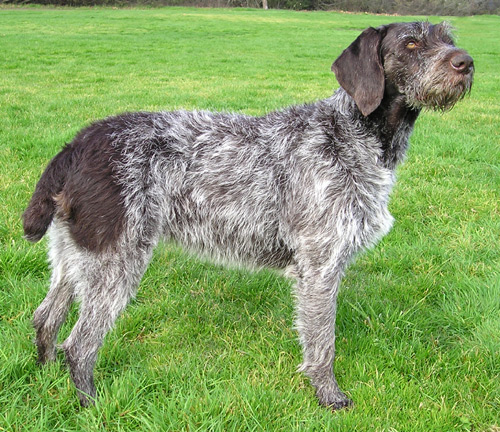
| Height | 57–68 cm |
| Weight | 27–32 kg |
| Lifespan | 14–16 years |
| FCI group | 7 · pointing dogs |
| Origin | Germany |
Exact ratings
Common health issues
Nutrition
The German Wirehaired Pointer (Deutsch Drahthaar / Stichelhaar) is much more than just a dog; it’s a true all-purpose hunting companion, embodying German practicality and a commitment to excellence. Its name, which literally translates as ‘wire hair’ (drahthaar), perfectly describes the breed’s key feature – a harsh, wiry coat that protects it from inclement weather and thorny brush. This noble, intelliegent, and fiercely loyal animal, when properly trained, becomes not only an indispensable helper in the field but also a wonderful family companion and reliable guard. We’ll dive deep into the care, temperament, and history of this amazing breed next on Tvaryny.
The Drahthaar’s appearance exudes strength and resilience: an athletic build, an attentive gaze from intelligent eyes, and the characteristic ‘beard’ on its muzzle create the image of a serious and self-assured dog. The breed’s popularity is fueled by its incredible versatility, as the Drahthaar works equally well in the field, forest, and water, tracking and retrieving game. This is a dog for **active people** who are ready to dedicate time to its training and ensure the necessary level of physical exercise.
History and Origin of the German Wirehaired Pointer
The history of the German Wirehaired Pointer is inextricably linked to the goal of German cynologists and hunters in the late 19th century to create an ideal all-purpose pointing dog. The objective was ambitious: to produce a dog that could work effectively in any terrain – from fields and woods to marshes – and in all weather conditions, while also serving as a reliable guard, not just a hunter.
Work on establishing the breed began in Germany in the late 1800s. The foundation stock included the best representatives of existing rough-haired breeds. The guiding principle of selection was the maxim “from performance to type,” meaning working qualities took precedence over conformation (external appearance). Several key breeds contributed to the Drahthaar’s development:
- Pudelpointer: The Drahthaar inherited its love for water and retrieving ability from this breed.
- Griffon Korthals: This breed passed on the Drahthaar’s characteristic harsh coat and superb hunting qualities.
- German Shorthaired Pointer (Kurzhaar): Blood from the GSP was introduced to improve speed, scenting ability, and ‘point’.
Through careful selection and cross-breeding, the cynologists succeeded in creating a dog with a robust nervous system, exceptional working qualities, and a coat that protected against any bad weather. In 1902, the “Verein Deutsch-Drahthaar” (VDD) society was founded, which still oversees the breed’s development and purity today. The first breed standard was approved in 1870, but official recognition and widespread popularity followed later. Today, the German Wirehaired Pointer is one of the most popular hunting breeds globally, particularly in Europe and North America.
What the German Wirehaired Pointer Looks Like: The Breed Standard
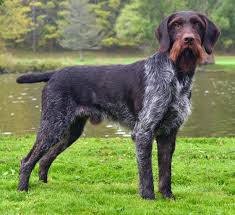
The German Wirehaired Pointer is a noble-looking dog, medium to large in size, with an intelligent and energetic expression. Its physical appearance entirely matches its purpose – to be a durable and effective hunter. The breed standard clearly describes all key characteristics.
General Appearance and Proportions: This is a strongly built dog, almost square in its body frame. The body length may slightly exceed the height at the withers, but by no more than 3 cm. The Drahthaar’s gait is flowing, energetic, and far-reaching, attesting to its strength and stamina.
Head and Muzzle: The head is proportional to the body, with a pronounced stop. The skull is broad and slightly rounded. The muzzle is long, broad, and powerful. Characteristic features are the thick eyebrows, which protect the eyes, as well as the whiskers and beard, giving it a severe yet wise appearance. Lips are tight and pigmented to match the coat color. The eyes are oval, medium-sized, dark in color, with a lively and intelligent expression. The ears are medium-sized, set high, broad, rounded at the tips, and lie close to the head.
Coat and Coloring: The most important trait of the breed is its coat. It must be wiry, harsh, and lie close to the body. The length of the outer coat hair is between 2 and 4 cm. Under the harsh topcoat lies a dense, waterproof undercoat, which protects the dog well from cold and moisture, but becomes significantly sparser in summer. The coat should not be too long or soft, as this impairs its protective properties.
The breed standard permits several coloring options:
- Liver Roan (braunschimmel): Liver (brown) patches on a white or gray background, often with ticking.
- Black Roan (schwarzschimmel): Black patches on a white or gray background.
- Solid Liver: May have a small white chest patch or be without one.
- White/Gray Roan (hellschimmel): Light gray background with or without small dark patches.
Size and Weight: These are quite large dogs, requiring adequate space for keeping. The main parameters are shown in the table below.
| Parameter | Males | Females |
|---|---|---|
| Height at Withers | 24 – 27 inches (61 – 68 cm) | 22 – 25 inches (57 – 64 cm) |
| Weight | 60 – 70 lbs (27 – 32 kg) | 60 – 70 lbs (27 – 32 kg – typically slightly lighter than males) |
Character, Temperament, and Behavior of the German Wirehaired Pointer
The German Wirehaired Pointer is a breed with a strong and balanced character. He is intelligent, brave, sometimes stubborn, but always devoted to his owner. He is not a lap dog but an energetic worker who needs tasks for both mind and body. His temperament can be described as a mix of a hunter’s seriousness and a companion’s playfulness.
Relationships with Family and Children: With proper socialisation, Drahthaars get along great with the family. They become very attached to their people and can be gentle and patient with children. However, due to their strength and high energy, it is important to teach children how to interact correctly with the dog, and games should always take place under adult supervision. A Drahthaar will not tolerate rough handling and may ‘put in its place’ a child who oversteps the mark. He sees himself as a full member of the pack and demands appropriate respect.
Guard and Hunting Instincts: This is a dog with a vividly expressed protective instinct. He is always on alert, distrustful of strangers, and ready to defend his territory and family. His loud bark effectively deters unwanted guests. At the same time, unwarranted aggression is not characteristic of the breed, but early socialisation is key to forming an adequate reaction to outsiders.
The hunting instinct is in the Drahthaar’s blood. He has an incredible desire to work and to please his owner. This applies not only to hunting but to any other activity. On walks in the woods or fields, he will constantly sniff out things, explore, and may chase small animals. Therefore, it is important to teach him the ‘come’ command from a young age and never let him off the leash in dangerous areas.
Compatibility with Other Animals: Relationships with other animals can be tricky. If a Drahthaar puppy grows up with a cat or another dog, they will most likely become friends. However, an adult Drahthaar may perceive strange cats, squirrels, and other small animals as prey. With other dogs, they may try to dominate, especially males. Early and correct socialisation helps smooth out these character traits.
Care and Maintenance of the German Wirehaired Pointer
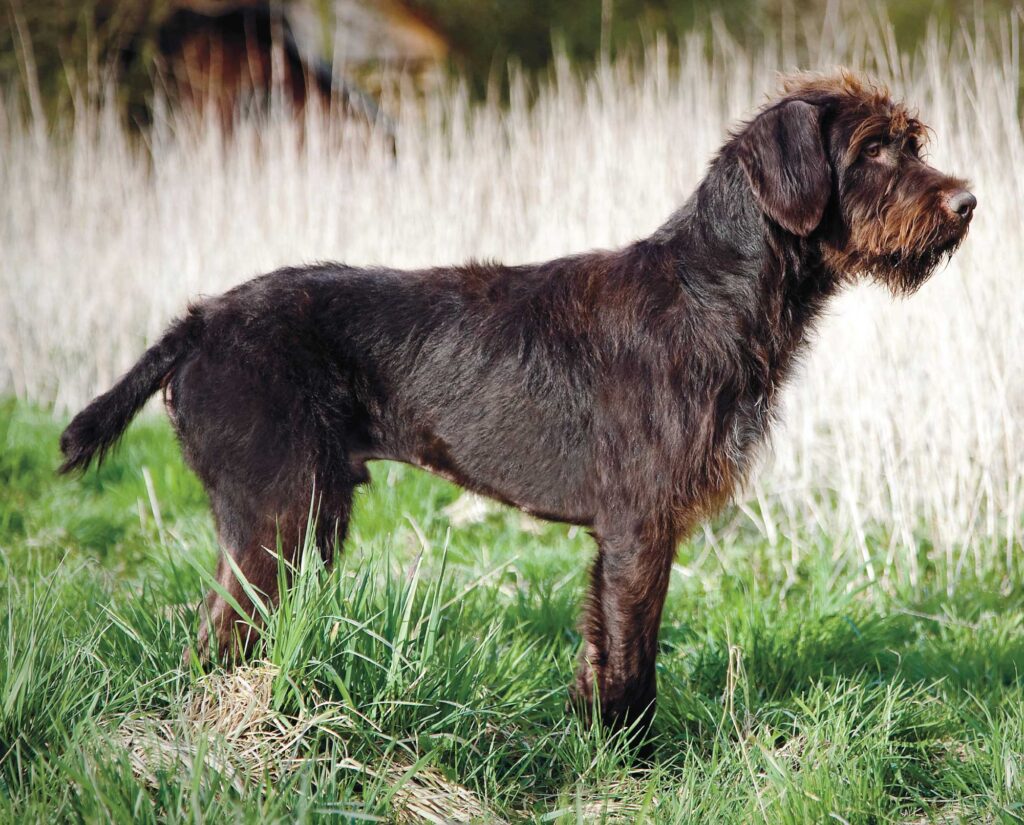
Caring for the German Wirehaired Pointer is not overly complicated but requires regularity and an understanding of the breed’s needs. The main focus should be on coat care and providing a sufficient level of physical activity.
Living Conditions: Life in a small city apartment is categorically unsuitable for the Drahthaar. This is a dog created for space and movement. The ideal place for him would be a house with a large, securely fenced yard where he can run freely. Kennel keeping is possible provided there is a heated dog house and daily long walks and interaction with the owner. Keeping such a dog chained up is a crime against its nature, which can lead to psychological problems and aggression.
Coat Care: The Drahthaar’s harsh coat does not require daily brushing, but it shouldn’t be ignored either. The main procedures are:
- Brushing: It is enough to brush the dog 1-2 times a week with a specialized brush or metal comb to remove dead hair and dirt. During seasonal shedding, this needs to be done more frequently.
- Stripping (Hand-Stripping): Twice a year (usually spring and fall), the Drahthaar’s coat requires stripping – the plucking of the dead outer coat hair. This procedure helps maintain the correct coat structure and its protective properties. Clipping the Drahthaar with electric clippers is not recommended, as it makes the coat soft, dull, and unable to protect against bad weather.
- Bathing: The dog should only be bathed when absolutely necessary, as frequent washing removes the natural protective layer. Usually, it’s enough to simply rinse the paws and belly with clean water after a walk.
Physical Exercise: This is one of the key needs of the breed. A Drahthaar requires a minimum of 1.5-2 hours of active exercise daily. This cannot be monotonous walking on a leash. The dog needs running, playing, swimming, as well as mental stimulation. Excellent forms of activity for the Drahthaar include:
- Long walks or runs in the park or countryside.
- Swimming (most Drahthaars adore water).
- Retrieving games (balls, frisbees).
- Engaging in dog sports: agility, coursing, bikejoring.
Insufficient exercise can lead to destructive behavior at home: the dog will chew things, bark, and ruin furniture out of boredom and excess energy.
Training and Upbringing
Training the German Wirehaired Pointer is an engaging, yet simultaneously responsible process. They are very intelligent and quickly grasp new information, but their innate stubbornness and independence demand patience, consistency, and firmness from the owner. Puppy training should begin from the first days it arrives home.
Key Training Principles:
- Early Socialization: Introduce the puppy to different people, sounds, places, and other animals (under control). This will help raise a balanced and self-assured dog.
- Consistency and Firmness: Establish clear rules and always stick to them. A Drahthaar will quickly figure out where he can bend the rules and will exploit it. The owner must be the leader – calm, fair, but unyielding.
- Positive Reinforcement: Drahthaars respond best to praise, treats, and games. Use these methods to encourage correct behavior. Physical punishment and shouting are unacceptable – they can cause fear, aggression, and undermine the dog’s trust.
- Mental Stimulation: In addition to physical exercise, the Drahthaar also needs mental challenges. Teach new commands, use puzzle toys, and engage in search games.
Particular attention should be paid to teaching the ‘come’ command and leash-walking, as hunting instincts can cause the dog to ignore your calls. If you plan to use the Drahthaar for hunting, it is recommended to attend specialist field training courses.
Nutrition of the German Wirehaired Pointer
Health and Typical Breed Illnesses
Pros and Cons of the German Wirehaired Pointer Breed
Before getting such a serious dog as the German Wirehaired Pointer, it is important to soberly assess all its advantages and disadvantages.
| Pros | Cons |
|---|---|
| All-purpose gundog. Works excellently on all game, in the field, forest, and water. | Requires very high physical exercise. Not suitable for low-activity people. |
| Loyal and loving companion. Becomes very attached to its family. | Unsuitable for life in an apartment. Requires space and its own territory. |
| Excellent guard dog. Always vigilant and distrustful of strangers. | Tendency towards dominance. Requires a strong and confident owner-leader. |
| High intelligence. Learns easily if the right approach is found. | Can be stubborn and independent. Training requires patience. |
| Low maintenance coat. The coat does not require complicated grooming, apart from periodic stripping. | Strong hunting instinct. May chase small animals, requires control. |
| Robust health and stamina. | Can be unfriendly to strange dogs and other animals. Requires early socialisation. |
Comparison with Other Pointers
The Drahthaar is often compared with other popular pointing breeds. Compared to the German Shorthaired Pointer (GSP), the Drahthaar has a harsher coat, which offers better protection in thick cover and cold water. It is considered more versatile and tenacious with game. Conversely, breeds such as the Hungarian Shorthaired Vizsla or the Bracco Italiano (Italian Pointer) generally have a softer temperament and are more focused on people, though they are less versatile and protective than the Drahthaar. There is also an externally similar breed, the Bohemian Wirehaired Pointing Griffon (Český Fousek), which is a versatile pointing dog that also belongs to the rough-haired pointing group.
| Breed | Coat Type | Main Working Qualities | Temperament |
|---|---|---|---|
| German Wirehaired Pointer | Harsh, wiry | All-purpose: Field, forest, water. Tracking on blood scent. | Balanced, brave, stubborn, excellent guard. |
| German Shorthaired Pointer | Short, smooth | Predominantly field work, high speed, elegant point. | Energetic, friendly, more human-oriented. |
| Hungarian Vizsla | Short, smooth | All-purpose, but sensitive to cold. Very close bond with the hunter. | Very gentle, sensitive, strongly attached to the owner. |
| Pudelpointer | Harsh, medium length | Water work specialist, retriever. | Intelligent, easily trained, playful. |
Interesting Facts about the German Wirehaired Pointer
- The name “Drahthaar” comes from two German words: “draht” (wire) and “haar” (hair).
- In its home country, Germany, to gain approval for breeding, a Drahthaar must pass rigorous working tests that confirm its hunting abilities.
- The Drahthaar’s beard and whiskers are not just for show. They protect the dog’s muzzle from injury when hunting in thick brush and reeds.
- Despite their stern appearance, Drahthaars can be very comical and playful, especially when young.
- This breed has become one of the most popular hunting breeds in the USA due to its incredible versatility.
Frequently Asked Questions about the Breed (FAQ)
Is the German Wirehaired Pointer suitable for an inexperienced owner?
No, this breed is not recommended for novice owners. The Drahthaar requires an experienced, confident owner who can be a leader to him, providing the right upbringing, socialisation, and sufficient physical and mental stimulation. His stubbornness and dominance can become a serious problem for an inexperienced person.
Does the German Wirehaired Pointer shed a lot?
Shedding in Drahthaars is moderate. They have seasonal molts in spring and fall when the undercoat actively renews itself. Regular brushing and timely stripping significantly reduce the amount of hair in the home. The Drahthaar is definitely not a hypoallergenic breed.
Can a Drahthaar be just a companion dog, not a hunter?
Yes, it can, but with one important condition: you must provide him with an adequate substitute for hunting. This means daily long and active walks, games, swimming, engaging in dog sports (agility, coursing), and constant mental challenges. If the Drahthaar’s energy does not find an outlet, he will become unruly and may start damaging things in the house. This is a dog bred for work, and he will only be happy when he has a purpose.
How much does a German Wirehaired Pointer puppy cost?
The price for a German Wirehaired Pointer puppy can vary significantly. It depends on the parents’ lineage, their hunting/show titles, and the kennel’s reputation. Looking for the cheapest option isn’t worth it, as it can lead to high vet bills down the road. Expect a wait: established breeders have their litters spoken for well in advance.
Video about the Breed
- A versatile working hunter
- Very clever and trainable
- Hardy, long-lived
- A water-repellent wiry coat
- An enormous need for exercise and work
- A strong hunting instinct
- Without a workload — destruction
- Wary of strangers
| German Shorthaired Pointer | Weimaraner | Italian Spinone | |
|---|---|---|---|
| Height | 53–64 cm | 57–70 cm | 56–70 cm |
| Energy | 5 | 5 | 4 |
| Apartment | 2 | 2 | 3 |
| Beginners | 2.5 | 2.5 | 3 |
How does the Wirehaired differ from the Shorthaired?
Is the Wirehaired suitable for a novice?
How long does the German Wirehaired Pointer live?
FCI Standard No. 98 · The Kennel Club
For apartments · For kids · For beginners · Active · Smartest · Hypoallergenic · All rankings →