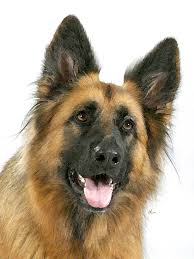
The benchmark service dog: clever, devoted, boundlessly trainable — No. 1 in police, army and security. It needs work for mind and body, early socialisation and a consistent owner; without exercise it gets bored and can become anxious.
Apartment · with caveatsKidsCats · with caveatsOther dogs · with caveatsBeginners · with caveats
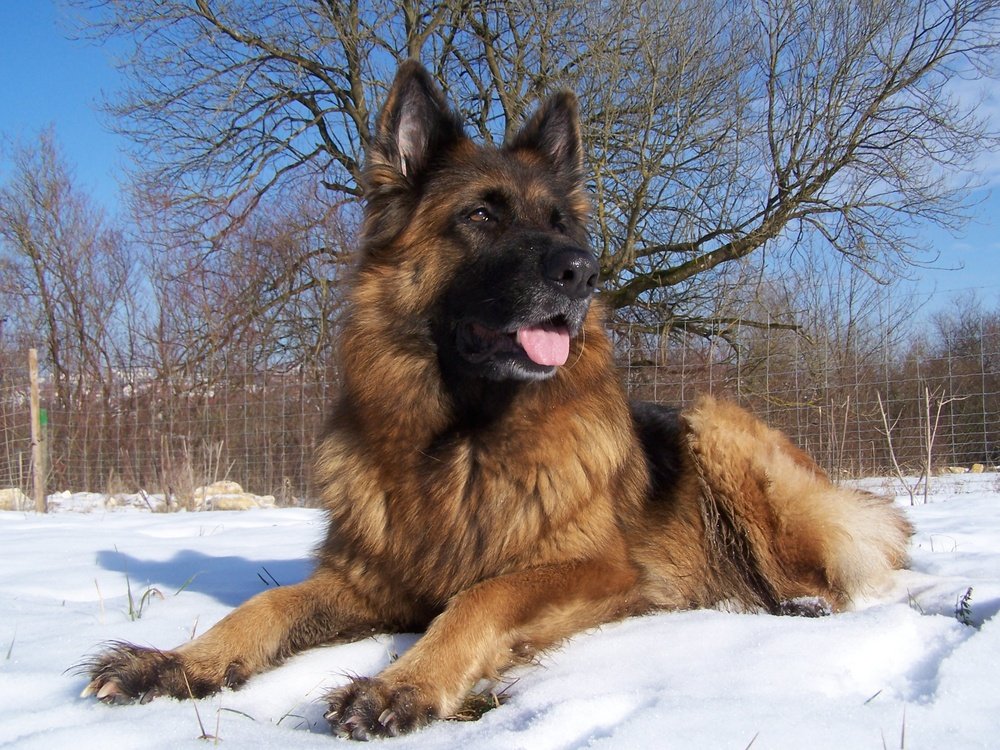
The Long-Haired German Shepherd (Deutscher Schäferhund Langstockhaar) is a variety of the world-renowned breed that captivates with its luxurious coat while retaining all the finest qualities of the classic German Shepherd: intelligence, loyalty, and versatility. Although the long coat was once considered a deviation from the standard, today these dogs have won the hearts of many enthusiasts and gained official recognition. They command attention not only with their striking appearance, particularly the thick tufts of fur at the base of their ears and a magnificent, bushy tail, but also with their well-balanced temperament. In this detailed guide, we'll delve deeper into the unique characteristics of the Long-Haired German Shepherd, right here on Tvaryny.
Like their short-haired relatives, Long-Haired German Shepherds are among the most intelligent dogs, demonstrating exceptional abilities in training and performing a wide range of tasks. Their elegance is combined with strength and stamina, making them not only wonderful companions but also reliable working dogs. While long-haired puppies can be born to short-haired German Shepherd parents, this variety has its own unique traits, especially concerning grooming, which potential owners should be aware of.
Long-Haired German Shepherd: General Description and Key Characteristics
The Long-Haired German Shepherd is a medium-sized dog with a strong, muscular build, a slightly elongated body, and a distinctive long, thick coat. It radiates confidence, nobility, and alertness. The main characteristics of the breed are presented in the table below:
Long-Haired German Shepherd: General Description and Key Characterist… · 14
Characteristic
Description
Official Name
Deutscher Schäferhund Langstockhaar (Long-Haired German Shepherd with Undercoat)
Origin
Germany
FCI Recognition of the Long-Haired Variety
2010–2011 (as a separate coat variation within the breed)
Founder of the Breed (German Shepherd overall)
Max von Stephanitz
Lifespan
9–13 years (on average)
Height at the withers (as per FCI Standard No. 166)
Males: 60–65 cm; Females: 55–60 cm
Weight (as per FCI Standard No. 166)
Males: 30–40 kg; Females: 22–32 kg
Coat Type
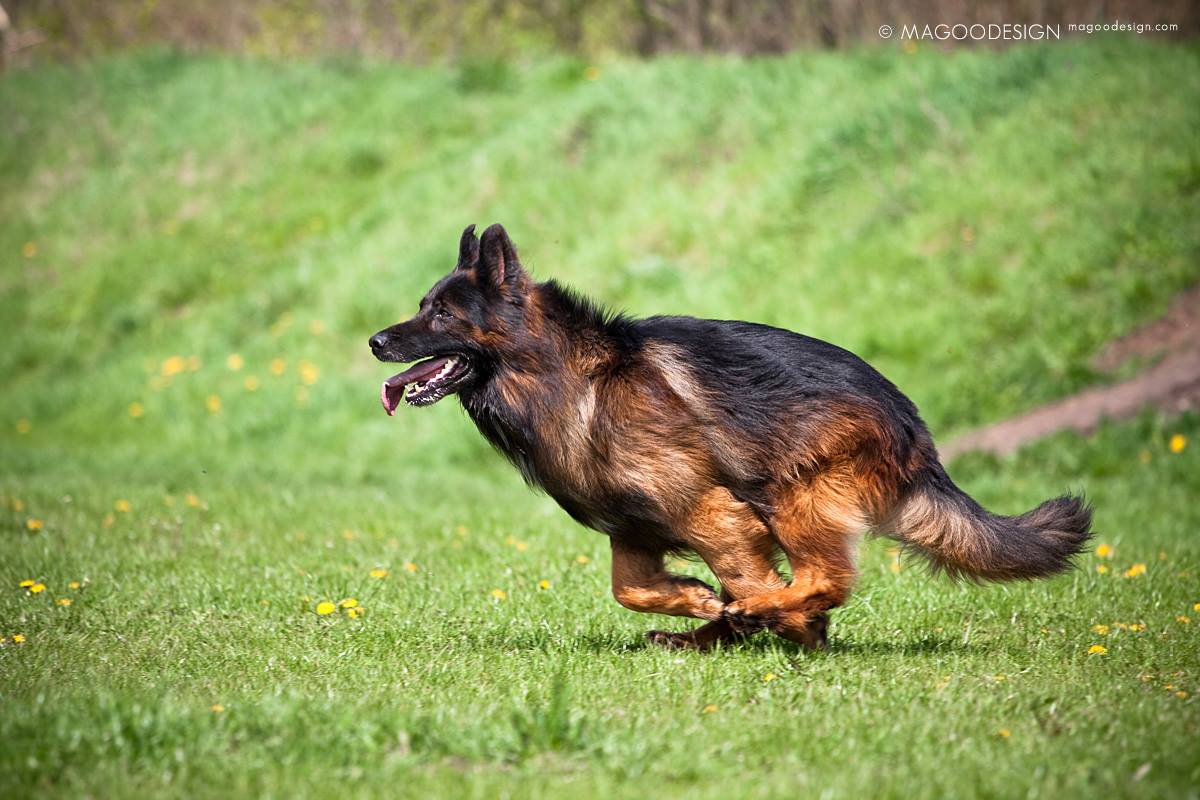
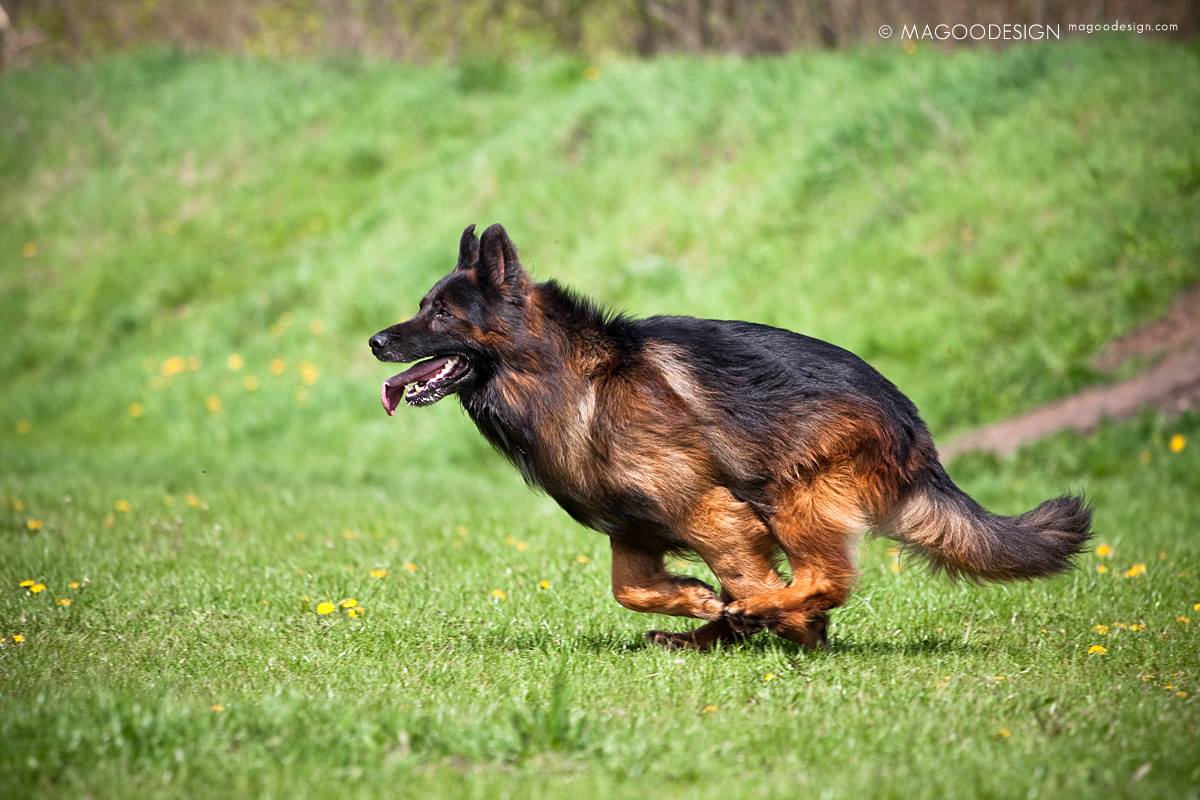
Long, softer than the short-haired variety, with a well-developed undercoat. Features characteristic 'feathering' on the ears and legs, a 'mane' on the neck, lush 'trousers', and a bushy tail.
Main Colours
Black and tan (with markings from fawn to reddish-brown), solid black, sable grey, sable red.
Temperament
Well-balanced, self-assured, brave, vigilant, loyal, easy to train, with a pronounced protective instinct. Can be slightly gentler and more sensitive than the short-haired version, but the standard requires an identical temperament.
Use
Working dog (police, military, security, search and rescue), herding dog, guide dog, sports dog (Schutzhund/IPO, agility, obedience), companion dog, show dog.
Activity Level
High (requires regular and intensive physical and mental exercise)
Trainability
Very high
Grooming Needs
High (due to the long coat)
Interesting Facts about the Long-Haired German Shepherd
The Long-Hair Gene: The long coat in German Shepherds is caused by a recessive gene. This means that two short-haired parents who both carry the gene can produce long-haired puppies.
"Forbidden Fruit": For a long time, long-haired shepherds were not officially recognised and were considered a "breeding fault" in many countries, despite their popularity among enthusiasts.
Two Types of Long Coat: It is important to distinguish between "Langstockhaar mit Unterwolle" (long stock hair with undercoat), which is recognised by the FCI, and "Langhaar" (simply long hair without a proper undercoat), which is still considered undesirable due to its reduced protective function.
Visual Difference: Besides the obvious length of the coat, long-haired individuals often appear somewhat more substantial and "fluffier" than their short-haired counterparts, even though their skeletal structure is the same.
Popularity in the Show Ring: Following their official recognition, Long-Haired German Shepherds have become very popular at dog shows thanks to their spectacular appearance.
Temperature Sensitivity: Although the undercoat provides good insulation, the very dense, long coat can make them more sensitive to hot weather compared to the short-haired variety.
History of the Long-Haired German Shepherd
The history of the Long-Haired German Shepherd is closely intertwined with that of the classic, short-haired German Shepherd. The breed's founder is considered to be Captain Max von Stephanitz, who, at the end of the 19th century, set out to create the ideal German working dog. He selected the best examples of local herding dogs in Germany, focusing on their working abilities, intelligence, and stamina. The first registered German Shepherd was Horand von Grafrath in 1899, the same year the German Shepherd Dog Club (SV) was founded.
From the very beginning, puppies with longer coats periodically appeared in German Shepherd litters. This was a natural manifestation of genetic diversity. However, for a long time, the breed standard, which was primarily focused on working qualities and practicality, considered a long coat an undesirable trait, and sometimes even a fault. It was believed that an overly long coat could hinder a dog during work, collect dirt, become waterlogged, and take longer to dry, which was impractical for working dogs often operating in harsh weather conditions. Consequently, long-haired individuals were often excluded from breeding programmes.
Despite the official stance, many breed enthusiasts valued Long-Haired German Shepherds for their striking appearance and often noted their somewhat softer and calmer temperament, although this was not a universally acknowledged fact. Enthusiasts continued to breed these long-coated dogs, and over time, their popularity grew, especially as companion animals and show participants.
A turning point came in 2010–2011 when the Fédération Cynologique Internationale (FCI) officially recognised the Long-Haired German Shepherd (Langstockhaar mit Unterwolle – long stock hair with undercoat) as a separate coat variation within the German Shepherd breed standard. This was a major victory for supporters of the long-haired variety. A key condition for recognition was the presence of a well-developed undercoat, as dogs with very long, soft coats without an undercoat (the so-called "Langhaar") still do not meet the standard due to the lower practicality and protective properties of such a coat. Thus, the modern Long-Haired German Shepherd is not just a dog with a long coat, but an animal that meets the strict requirements of the standard, just like its short-haired relative.
Appearance and Standard of the Long-Haired German Shepherd
In general, the Long-Haired German Shepherd adheres to the same criteria of the FCI Standard No. 166 as the short-haired version, with the exception of the coat description. It is a medium-sized, strong, muscular dog with harmonious proportions and a noble posture.
General Appearance and Proportions: Like the short-haired variety, the long-haired version is a slightly elongated dog, where the body length exceeds the height at the withers by about 10–17%. The height at the withers for males is 60–65 cm, and for females, it is 55–60 cm. The corresponding weight is 30–40 kg for males and 22–32 kg for females.
Head, Eyes, Ears: A wedge-shaped head, proportional to the body. The eyes are almond-shaped and as dark as possible, giving the dog an intelligent and confident expression. The ears are medium-sized, erect, set high, and face forward.
Body and Limbs: A strong body with a straight topline, well-developed withers, and a slightly sloping croup. The limbs are strong, muscular, and correctly angulated, which provides the breed's characteristic far-reaching and enduring trot.
Coat (Langstockhaar mit Unterwolle): This is the key difference. The Long-Haired German Shepherd has a long, thick, and soft topcoat that is not overly silky and lies close to the body, along with a well-developed, dense undercoat. The presence of an undercoat is mandatory. The coat forms a characteristic:
"Mane" on the neck, which can be quite lush.
"Feathering" (longer hair) on the back of the ears and the back of the forelegs (from the elbow to the pastern).
Lush "trousers" or "breeches" on the hindquarters.
A very thick and bushy tail that reaches at least to the hock, with the hair hanging down.
The hair on the head, the inner surface of the ears, the front of the limbs, and the paws is shorter. The coat should not be excessively long, curly, wavy, or form a parting down the back. A coat that is too soft, silky, or cottony, as well as a lack of undercoat, are considered faults.
Colour: The permissible colours are the same as for the short-haired variety:
Black and Tan: With markings ranging from rich reddish-brown to fawn. A black "saddle" covers the back, sides, and the top of the tail. A black mask on the muzzle is mandatory.
Black: Solid black colouring. Small white markings on the chest are permissible but undesirable.
Sable (Grey or Red): Each guard hair has alternating light and dark bands. A black mask is mandatory.
A white coat is not recognised by the FCI standard for the German Shepherd; white-coloured dogs belong to a separate breed – the White Swiss Shepherd Dog.
Character and Temperament of the Long-Haired German Shepherd
According to the FCI standard, the character and temperament of the Long-Haired German Shepherd should be the same as that of the short-haired variety. This means the dog should be well-balanced, with a strong nervous system, self-assured, completely natural, alert, and obedient. It must display courage, a fighting instinct, and hardiness to be suitable for the role of a companion, guard, protector, working, or herding dog.
However, there is a view among owners and some breeders that Long-Haired German Shepherds can be somewhat gentler, calmer, and more sensitive than their short-haired counterparts, especially those from show lines. They may be more family-oriented and less prone to dominance, although this is not a universally accepted rule and depends heavily on the specific breeding line and individual upbringing. In any case, they are exceptionally intelligent and devoted dogs that form a strong bond with their family.
Intelligence and Trainability: A high level of intelligence allows them to quickly learn commands and complex skills. They are eager to please their owner and derive satisfaction from mental work.
Loyalty: Extremely loyal to their family and ready to defend them.
Courage and Confidence: They should not be timid or aggressive without reason.
Protective Instinct: Natural guardians, but they require proper socialisation to express these qualities appropriately.
Energy: Like all German Shepherds, the long-haired variety needs significant physical and mental exercise. They need a "job" or active pursuits to be happy. This is similar to the needs of other active pastoral breeds, such as the Mudi, which also thrive when given tasks to complete.
Sociability: They usually get along well with children in their family if properly socialised. They can coexist with other animals, especially if raised together, but supervision is necessary.
It is important to remember that the Long-Haired German Shepherd is a serious dog that requires an experienced and responsible owner, one who is prepared to devote time to its upbringing, training, socialisation, and providing the necessary exercise. If left without attention and activity, it can develop undesirable behavioural traits.
Training, Upbringing, and Socialisation of the Long-Haired German Shepherd
The principles of training, upbringing, and socialisation for a Long-Haired German Shepherd are generally no different from those applied to its short-haired relatives. These are exceptionally intelligent dogs who are eager to please their owner and have great potential for learning.
Early Socialisation: This is critically important for developing a well-balanced and confident dog. From puppyhood, introduce it to various people, sounds, places, and other animals (under supervision).
Positive Reinforcement: They respond best to methods based on praise, treats, and play-based motivation. Avoid harshness and punishment.
Consistency and Patience: Be consistent with your commands and patient during training.
Mental Stimulation: Due to their high intelligence, they need regular mental workouts: learning new commands, tricks, puzzle toys, and participating in dog sports (obedience, agility, scent work).
Training Classes: It is highly recommended to complete at least a basic obedience course under the guidance of an experienced instructor. For those planning more serious work or sports, specialised programmes are available.
Trying to instil "film-dog" qualities in your pet on your own is unlikely to succeed without the right experience. Turning to a professional can help unlock your dog's potential and build a harmonious relationship.
Pros and Cons of the Long-Haired German Shepherd
Pros and Cons of the Long-Haired German Shepherd · 7
Pros
Cons
Striking Appearance: A luxurious long coat makes them very attractive.
Very High Grooming Requirements: Needs daily or frequent brushing to prevent mats and maintain coat health.
High Intelligence and Trainability: One of the smartest dog breeds, easy to train.
Intense Shedding: Sheds heavily, especially seasonally, leaving a lot of fur.
Devotion and Loyalty: Very attached to their family, excellent companions.
Prone to Certain Genetic Diseases: Like the short-haired variety, they are at risk of dysplasia, DM, etc.
Versatility: Can excel as working dogs, guardians, and athletes.
High Need for Physical and Mental Exercise: Requires a great deal of activity and stimulation.
Generally Good-Natured (with proper upbringing): Well-balanced, brave, and good with children.
Can be prone to skin problems due to the long coat if grooming is inadequate.
Excellent Protective Qualities.
Requires an experienced owner, especially to unlock their working potential.
More sensitive to heat than the short-haired variety.
Grooming the Long-Haired German Shepherd's Coat
Caring for the luxurious coat of a Long-Haired German Shepherd is one of the most important and demanding aspects of keeping this breed. Without regular and proper grooming, the coat can become matted, which causes discomfort for the dog, skin irritation, and can lead to dermatological problems. Similarly thorough care is characteristic of other long-haired pastoral breeds, such as the Tervuren.
Brushing Frequency: A Long-Haired German Shepherd needs to be brushed at least 3–4 times a week, and ideally, daily or every other day, especially during periods of heavy shedding (spring and autumn). This helps to remove the dead undercoat, prevent mats from forming, and distribute natural skin oils throughout the coat, giving it a healthy shine.
Grooming Tools:
Slicker Brush: Good for detangling small knots and removing dead hair.
Comb with metal teeth of varying density: For combing through and checking for any remaining mats after brushing.
Undercoat Rake or De-shedding Tool: Very effective for removing large amounts of dead undercoat during shedding seasons. Use with care to avoid damaging the topcoat and skin.
Mat Splitter (Dematting tool): For safely removing mats that cannot be brushed out.
Blunt-ended Scissors: For trimming the fur around the paw pads and in intimate areas for hygiene purposes.
Brushing Technique: Brush the coat layer by layer, starting from the skin and moving in the direction of hair growth. Pay special attention to areas where mats form most often: behind the ears, on the neck ("mane"), under the armpits, on the "trousers," and on the tail.
Bathing: You should only bathe a Long-Haired German Shepherd when necessary, typically once every few months, or if the dog gets very dirty. Frequent bathing can dry out the skin and coat. Use high-quality shampoos and conditioners specifically designed for long-haired dogs. Rinse all products thoroughly and dry the coat well with a towel and a hairdryer (on a low or medium heat setting) to avoid chilling and the development of skin problems due to moisture.
Shedding: Be prepared for a significant amount of hair in your home, especially during seasonal sheds. Regular brushing will help to minimise this issue.
Professional Grooming: If you are not confident in your abilities or lack the time, you can periodically visit a professional groomer who can help keep your pet's coat in perfect condition.
In addition to coat care, don't forget about the regular cleaning of ears, eyes, teeth, and nail trimming, just as you would for any other dog.
Nutrition
Feeding the Long-Haired German Shepherd: Key Recommendations
Health and risks
Health of the Long-Haired German Shepherd: Common Diseases and Prevention
Frequently Asked Questions about the Long-Haired German Shepherd (FAQ)
Is it harder to care for a Long-Haired German Shepherd than a short-haired one? Yes, significantly harder. The long coat requires regular, almost daily brushing to prevent mats and maintain skin health. The short-haired variety requires less intensive grooming.
Do Long-Haired German Shepherds shed more than short-haired ones? Both varieties shed heavily, especially seasonally. The volume of hair may seem greater in the long-haired variety due to the length of individual hairs, but the intensity of undercoat shedding is similar. The main difference lies in the need for more thorough brushing of the long coat.
Does the character of a Long-Haired German Shepherd differ from a short-haired one? The official breed standard requires the same temperament for both varieties. However, some owners and breeders note that long-haired individuals can be slightly gentler, calmer, and more sensitive. This is not a rule and depends on the breeding line and individual characteristics.
Do Long-Haired German Shepherds get cold in winter? Thanks to their thick, long coat and well-developed undercoat, they tolerate cold weather well, provided the coat is dry and well-maintained. A wet, matted coat loses its insulating properties.
Can you clip a Long-Haired German Shepherd? Clipping is generally not recommended as it can disrupt the natural structure of the coat and its protective qualities. A hygienic trim around the paws, ears, and in intimate areas is acceptable. If a significant reduction in coat length is necessary (e.g., for medical reasons or severe matting), it is best to consult a professional groomer who understands the breed's specific needs.
Video About the Breed
FAQ
Is the German Shepherd suited to a flat?
It can live in a flat given serious exercise (1.5–2+ hours of activity and mental work a day), but it is more comfortable in a house with a yard.
Do German Shepherds shed?
Very much — they are “year-round shedders” with seasonal peaks. Regular brushing is needed, or hair will be everywhere.
From what age should you train?
Socialisation and basic commands — from 8–10 weeks. The breed loves learning and picks things up fast, so start early and consistently.