

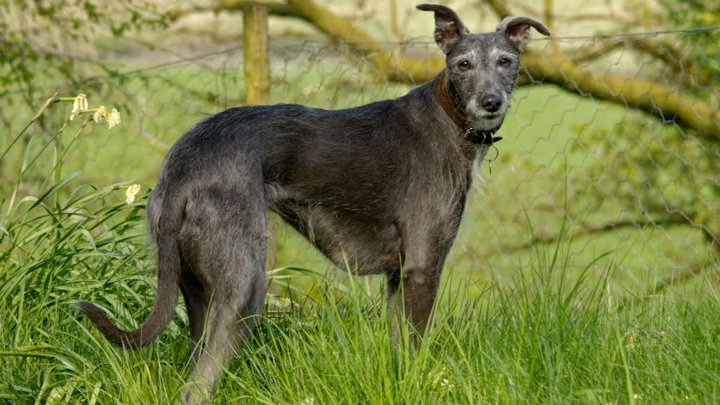
| Height | 55–70 cm |
| Weight | 15–30 kg |
| Lifespan | 12–15 years |
| FCI group | not a breed (a cross type) |
| Origin | Great Britain / Ireland |
Exact ratings
- Generally robust thanks to hybrid vigour
- Anaesthetic sensitivity (sighthound heritage)
- Gastric torsion (deep chest)
- Injuries while running
- Poor cold tolerance
A quality diet suited to size and activity and weight control. Thin skin and a short coat — protect it from cold; provide regular safe runs.
The Lurcher isn’t merely a dog; it is a living history of rebellion, ingenuity, and incredible speed. This is a unique type of canine that is technically not a distinct breed but commands a more loyal army of fans than many recognised show champions. Born in the shadow of the law, raised by vagabonds and poachers, today it has transformed into the favourite of active families and a star of sporting competitions. It is a hybrid breed of hunting dog that has helped the common people of Ireland and Great Britain survive for three centuries. Lurchers were acquired for hunting game and poaching, but their deep souls were eventually appreciated. Learn more on Tvaryny.
The Lurcher: A Brief Overview and Profile
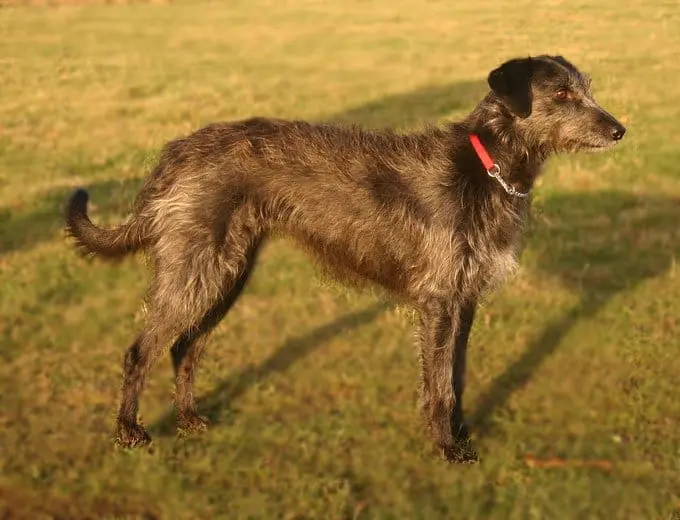
| Characteristic | Data |
| Country of Origin | Ireland, Great Britain |
| Type | Crossbreed (Sighthound x Working Dog) |
| First Mentioned | 1698 |
| Purpose | Hunting, coursing, companion |
| Life Expectancy | 12-15 years |
| Height at Withers | 55-76 cm (depends on the cross) |
| Weight | 27-32 kg (variable) |
| FCI Classification | Not recognised (designer/working type) |
History of Origin: A Dog Born of Prohibition
The history of the Lurcher is a gripping detective tale. The name itself comes from the old French word “lecher” or the English verb “to lurch”, which means “to hide”, “to prowl”, or “to be a petty thief”. And this perfectly describes their original purpose.
It all began in the Middle Ages and was cemented during the Tudor era. The English authorities, protecting the interests of the nobility, passed strict laws forbidding commoners (peasants, tenants, travelling Gypsies) from owning purebred sighthounds. It was believed that such a noble dog as the Greyhound could only belong to the elite, while a commoner with a sighthound was viewed as a potential poacher who would hunt the King’s deer.
But people needed to eat. Rabbits and hares were the main source of meat for the poor. To circumvent the law, people resorted to trickery. They crossed the forbidden sighthounds with other working dogs – sheepdogs (Collies) or Terriers. The result exceeded all expectations:
- The dog gained the speed of a sighthound, sufficient to catch a hare.
- From its working ancestor, it inherited endurance, intelligence, and cunning.
- Outwardly, it did not look like a “royal” sighthound, so inspectors could not confiscate the animal.
Thus appeared the Lurcher – a quiet, effective, and deadly assistant to the poacher. Gypsies (Roma people) played a key role in shaping the breed, selecting only the smartest and fastest dogs. Today, the Lurcher is no longer an outcast but a national treasure, although official kennel clubs still refuse to recognise it due to its genetic diversity.
Appearance and the Anatomy of Speed
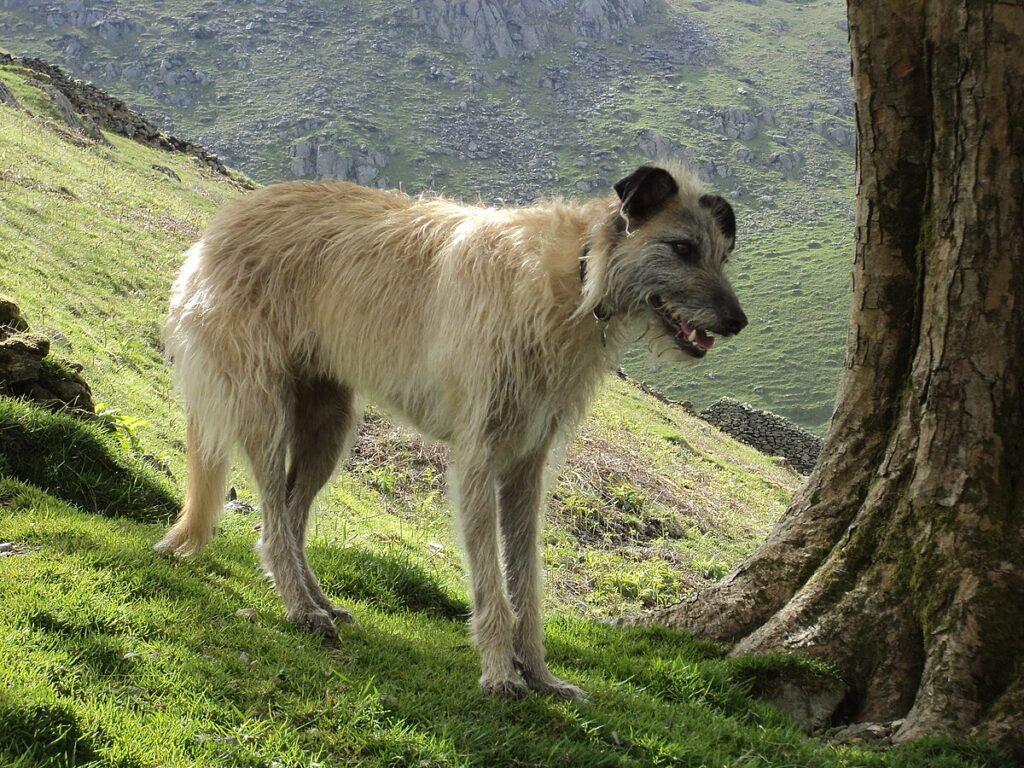
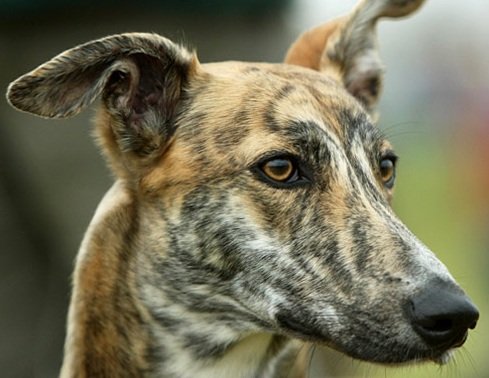
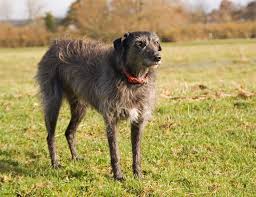
Describing a “standard” Lurcher is impossible because no standard exists. Their appearance depends entirely on which breeds were used in the crossing (the so-called “mix”). However, there are common traits that allow one to unmistakably identify this athlete in a crowd.
In size and build, Lurchers resemble sighthounds, though they often look a bit “rougher” and more robust. Representatives of the breed have a deep and narrow chest (volume for the lungs), a powerful loin, and long, dry limbs. A small head with a narrow muzzle is crowned by high-set ears. These can be erect, semi-erect, or folded back (“rose ears”), just like a Greyhound’s.
Coat Types:
- Smooth: Similar to large Whippets or Greyhounds. The coat is short and close-fitting. They are less protected against bad weather.
- Rough/Broken: The classic “Gypsy” type. They have a “wiry” coat, often with a beard and whiskers inherited from Terriers or Deerhounds. Such a coat offers excellent protection against thorns in the forest and rain.
The Lurcher’s gaze is a seperate topic entirely. It is attentive, penetrating, with a characteristic “spark”. In moments of calm, their eyes can express universal sorrow, but show the dog a toy, and they instantly light up with excitement.
Genetic Cocktail: Main Varieties of Lurchers
Since the Lurcher is a type rather than a closed breed, the variations can be endless. However, in the professional environment, several main “mixes” are distinguished, each with its own character and working traits.
| Mix Type | Component Breeds | Features |
| Collie Lurcher | Border Collie or Collie + Greyhound | The smartest type. High speed is combined with incredible trainability and agility. Excellent in dog sports. |
| Terrier Lurcher | Terrier (e.g. Bedlington Terrier) + Whippet | Smaller in size but with an “iron” character. They have a rough coat, are very game, and can work small quarry in burrows. |
| Bull Lurcher | Staffordshire Bull Terrier + Greyhound | Powerful, muscular dogs. Used for hunting larger prey. They require an experienced owner due to their great physical strength. |
| Saluki Lurcher | Saluki + Greyhound/Collie | The kings of endurance. If the Greyhound is a sprinter, the infusion of Saluki blood allows the dog to chase prey over long distances. |
Character and Temperament: Two Sides of the Same Coin
Lurcher owners often joke that their dogs have an off switch. At home, this is a “couch potato” that can sleep 18 hours a day, sometimes in the funniest poses – legs in the air (known as “roaching”). They are affectionate, gentle, love tactile contact, and often consider themselves lap dogs, trying to settle on their owner’s knees despite their size.
But step outside, and “predator mode” engages. In its primal version, the Lurcher must display the nature of a sighthound: reacting to movement instantly. If you are looking for a dog that will walk to heel without a lead and ignore cats, the Lurcher will be a challenge. They treat strangers with reserve, without aggression, but also without the familiarity typical of Labradors.
Relationships with Children and Other Animals
Lurchers historically lived in large families and packs, so they are generally wonderful with children. They are patient and not prone to dominance. They get on well with other dogs (especially those of their own size). However, small animals (cats, rabbits, small dogs) may be perceived as prey. This is not aggression; it is instinct. Although, if a Lurcher has grown up with a cat, it will likely sleep hugging it, but will almost certainly try to chase a strange cat on the street.
Health and Typical Issues
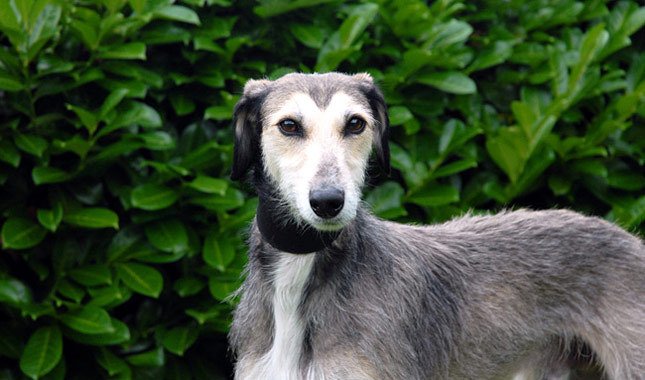
Thanks to a phenomenon known as “heterosis” (hybrid vigour), Lurchers are significantly healthier than their purebred parents. Genetic defects characteristic of inbreeding occur less frequently in them. However, the specific anatomy of the sighthound leaves its mark.
- Sensitivity to Anaesthesia: This is a critically important point! Like the Whippet, the Lurcher has a low percentage of body fat. Standard doses of anaesthetic can be fatal. The vet must know the protocols for sighthounds.
- Gastric Torsion (Bloat): The deep chest creates a risk of the stomach twisting. This is a dangerous condition requiring immediate surgery.
- Paw Injuries: Due to high speeds and thin skin, Lurchers often get cuts, sprained ligaments, and broken toes while running.
- Osteosarcoma: Unfortunately, like many large dogs, they can be prone to bone cancer.
Care and Maintenance Features
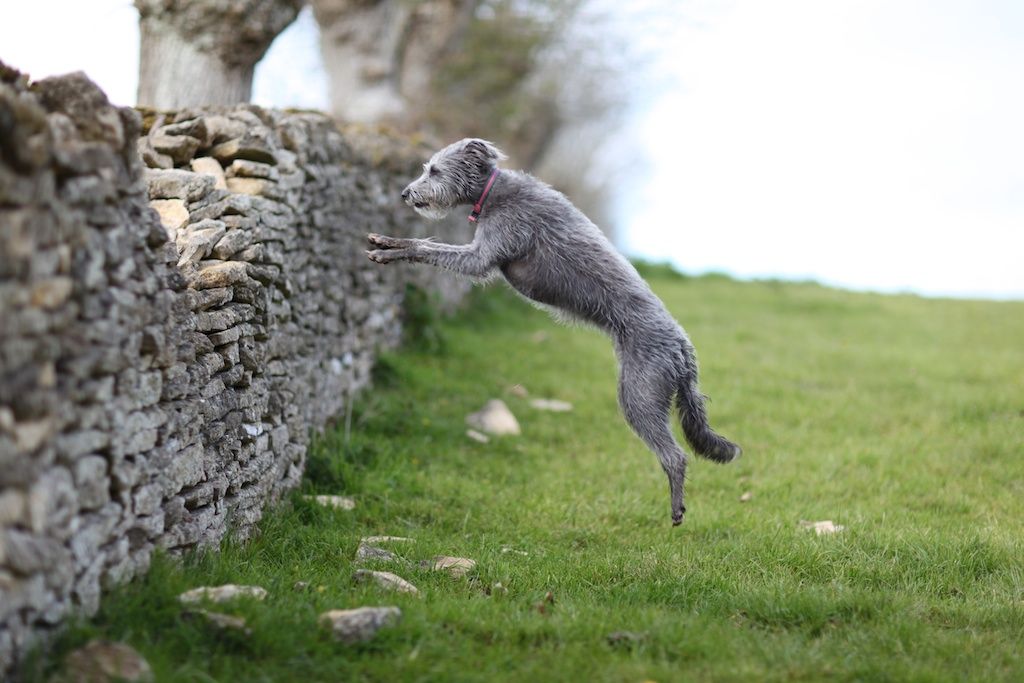
A Lurcher is not suitable for living in a kennel or an outdoor enclosure. This is a companion dog that needs a warm home and a soft sofa. Their thin coat and lack of fat make them vulnerable to cold and heat.
Wardrobe – Not a Luxury, but a Necessity
If you get a Lurcher, prepare to buy clothes. In winter, they vitally need warm coats that cover the belly, and in autumn – raincoats. In their love for warmth, they resemble the Italian Greyhound, only on a much larger scale. If the flat is cool, the dog may sleep under the duvet.
Physical Exercise
The myth that they need to run for hours is not entirely true. They need an “explosion”. Two walks of 40-60 minutes with the opportunity for free running in a safe area is the ideal. Lurchers will gladly run after a mechanical lure (coursing) or simply a ball. But remember: do not let them off the lead near roads!
Training: How to Negotiate with an Intellectual
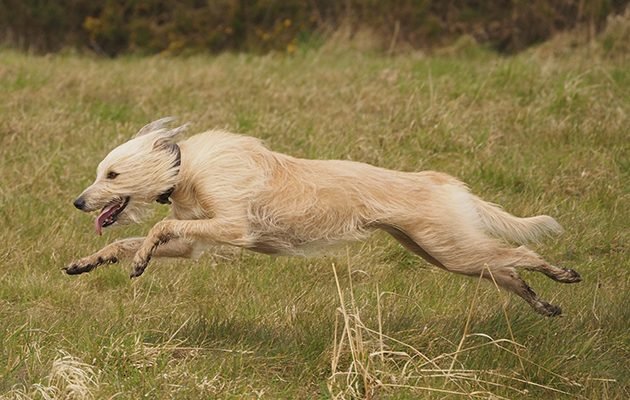
The intelligence with which nature has endowed Lurchers does not always promise an easy life for the trainer. This is not a service shepherd dog waiting for an order. A Lurcher thinks. And sometimes it thinks that your “Come here!” command is less interesting than the squirrel in the tree.
Key Principles of Upbringing:
- Early Socialisation: Introduce the puppy to the whole world to overcome natural caution.
- Positivity Only: Harsh methods will make a Lurcher fearful or withdrawn. They are very sensitive to intonation.
- Working with Instinct: You will never completely remove the desire to chase. Even a Forest Dachshund (Schwarzwald Bracke) that works by scent switches focus easier than a Lurcher that has sighted a target. Train an “emergency stop”, but always insure the dog with a lead in dangerous zones.
Nutrition: Fuel for the Rocket
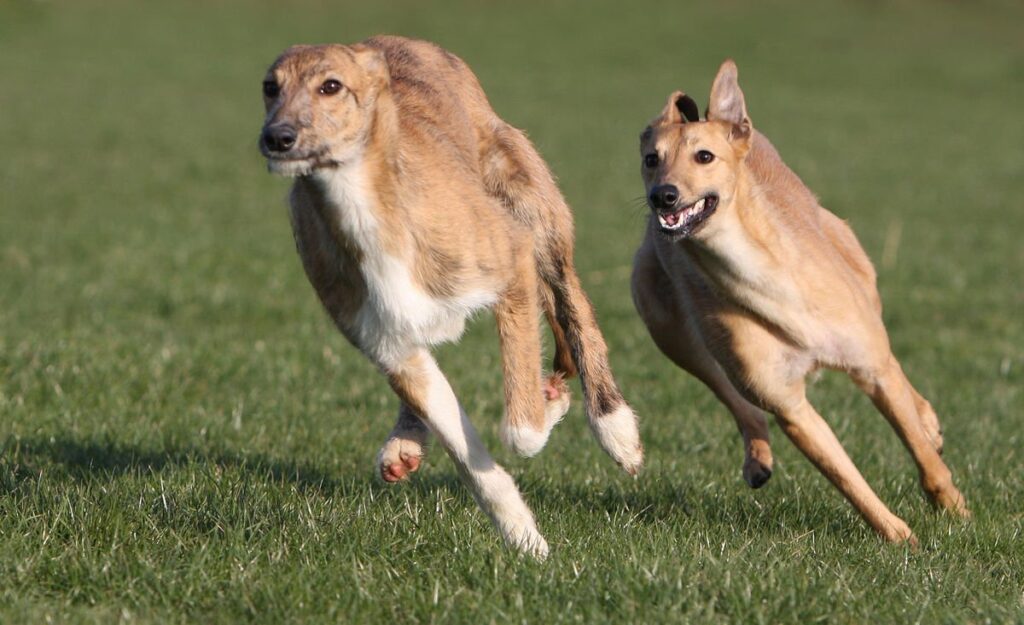
It does not befit a Gypsy dog to be picky about food, but the modern Lurcher has a high metabolism. They need a quality high-protein diet. It is important to monitor their condition: in a healthy Lurcher, the last two ribs should be visible during movement, but the spine should not protrude.
Rule No. 1: Never feed the dog immediately before or immediately after active running! This is the main prevention against gastric torsion. The interval should be at least 1 hour.
Pros and Cons of the Breed
| Pros (+) | Cons (-) |
| Quiet at home, rarely barks without cause. | Strong hunting instinct (risk of running away). |
| Affectionate, family-oriented. | Not suitable for outdoor living. |
| Robust health (hybrid vigour). | Might “hunt” the neighbours’ cats. |
| Coat requires little maintenance. | Needs a fenced area for running. |
| Unique, inimitable appearance. | Difficult to find a breeder (not officially recognised). |
Interesting Facts About Lurchers
- Film Stars: In Guy Ritchie’s film “Snatch”, the dog around whom many plot lines revolve is famously a Lurcher.
- Cloning: The first dog cloned in South Korea (Snuppy) was an Afghan Hound, but Lurchers often become an object of interest for geneticists due to their unique combination of speed and intelligece genes.
- Odourless: Owners note that even a wet Lurcher has almost no specific “doggy” smell, making them pleasant housemates.
Frequently Asked Questions (FAQ)
Is a Lurcher suitable for a flat?
Yes, provided there are regular walks. They are very compact when resting and do not take up much space, unlike shepherds that constantly patrol the perimeter.
How much does a puppy cost?
The price varies greatly. The useful question is what you are paying for rather than how much: registration, health-tested parents, a litter reared to the proper age and vaccinated, and the breeder’s support afterwards. A suspiciously cheap offer usually means one of those is missing. In Ukraine, they are a rarity, so the price is negotiable.
Do they shed?
It depends on the coat type. Smooth-haired ones shed moderately, while rough-haired ones require stripping (hand-plucking), but shed less. Interestingly, their temperament sometimes correlates with coat type – rough-haired ones are often a bit more “cheeky”.
Video About the Breed
- Quiet and calm at home
- Fast, hardy, clever
- A gentle and devoted companion
- Often healthier thanks to hybrid vigour
- A strong prey drive (dangerous for cats)
- Needs daily runs
- Traits are unpredictable — depend on the cross
- Thin skin, feels the cold in winter
| Whippet | Greyhound | Eurohound | |
|---|---|---|---|
| Height | 44–51 cm | 68–76 cm | 50–68 cm |
| Energy | 3.5 | 3.5 | 5 |
| Apartment | 4.5 | 4 | 2 |
| Beginners | 4 | 3.5 | 2 |
Is the Lurcher a breed?
Is the Lurcher suitable for a flat?
Can a Lurcher live with cats?
British–Irish cross type · sighthound breeding tradition
For apartments · For kids · For beginners · Active · Smartest · Hypoallergenic · All rankings →