

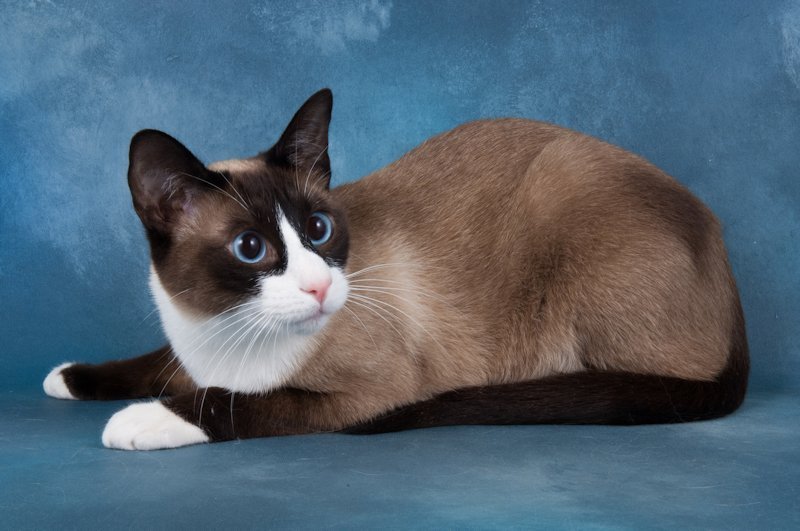
| Weight | 3.5–5.5 kg |
| Lifespan | 12–16 years |
| Coat | short, close-lying (point with white) |
| Recognition | TICA · WCF |
| Origin | USA |
Exact ratings
- Liver amyloidosis (as in Siamese cats)
- Hypertrophic cardiomyopathy (HCM)
- Dental disease (gingivitis)
- Squint and tail kink (cosmetic, less often)
- Generally healthy with responsible breeding
Quality food for active cats, with weight control. The short coat only needs occasional brushing; the key is plenty of attention, play and company, as it is a people-dependent breed that cannot bear solitude.
The Snowshoe is a relatively new breed of domestic cat, purposefully developed in the United States of America. They have a knack for instantly capturing hearts with their rather striking appearance – a charming blend of Siamese elegance combined with distinctive white “boots” on their paws, which, of course, gave the breed its name; find out more on Tvaryny. These felines are exceptionally affectionate, intelligent, and people-oriented, thriving on companionship and not coping well with solitude. Snowshoes are renowned for their playfulness, inquisitive nature, and often, a surprising fondness for water and bathtime fun. They generally get on splendidly with children and other household pets, making them ideal family companions. Despite their energetic disposition, Snowshoes are not high-maintenance; they typically boast robust health and are not particularly fussy eaters. Their considerable intelligence and agility mean they can learn tricks with ease and may even master the art of opening cupboard doors in pursuit of treats or a bit of adventure.
Snowshoe: A Brief Breed Overview
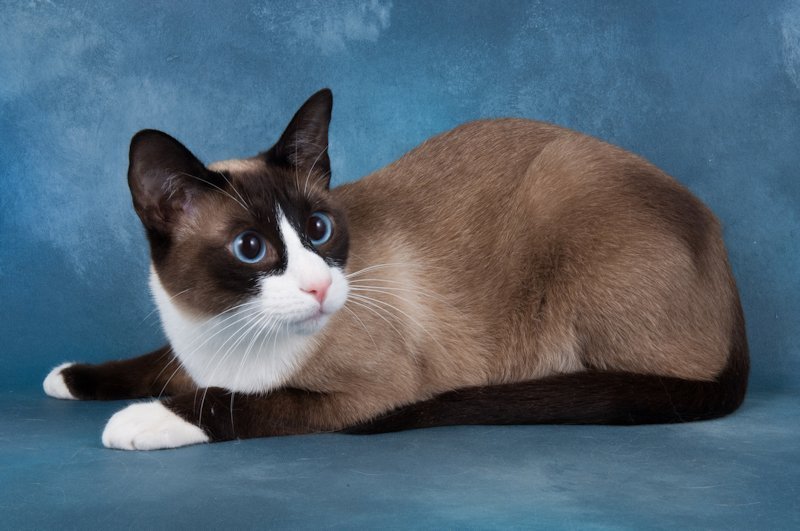
- Origin: United States of America (Philadelphia)
- Time of Origin: 1960s
- TICA Recognition: 1983 (Full Recognition)
- CFA Recognition: 1994 (Champion Status)
- Lifespan: 12-15 years (sometimes longer)
- Weight: Females: 2.5-4.5 kg (approx. 5.5-10 lbs), Males: 4-5.5 kg (approx. 9-12 lbs)
- Temperament: Affectionate, intelligent, playful, social, vocal (but quieter than Siamese)
- Grooming: Minimal (shorthaired)
- Activity Level: Moderately high
Detailed History of the Snowshoe Breed
The story of the Snowshoe breed began rather serendipitously in the 1960s in Philadelphia, USA. Dorothy Hinds-Daugherty, a breeder of Siamese cats, is credited as the founder of the breed. One day, a litter from her Siamese queen included three kittens with an unusual trait – white “socks” on their paws. This feature, though considered a fault in purebred Siamese, so captivated Dorothy that she decided to try and establish it as a new characteristic.
To create this new breed, Dorothy began crossing Siamese cats (carriers of the colourpoint gene and desired elegance) with American Shorthair cats, particularly bicolour individuals. The American Shorthairs were intended to introduce the white spotting gene responsible for the “boots” and to add a more substantial, sturdy build. The primary goal was to produce a cat with the seal point Siamese colouring, blue eyes, and four white paws.
Initially, progress was slow, and interest in the new breed was low. Dorothy even temporarily discontinued her breeding programme. However, her work was taken up by another enthusiast, Vikki Olander. It was Vikki who, in 1977, drafted the first breed standard for the Snowshoe and dedicated considerable effort to popularising the breed and achieving official recognition.
Achieving consistency in passing on the desired traits (especially symmetrical white markings) proved challenging due to a combination of recessive genes and genes with incomplete dominance. Nevertheless, thanks to the perseverance of breeders, the breed gradually gained popularity. The International Cat Association (TICA) granted the Snowshoe experimental status in 1974, with full recognition and eligibility for championship competition following in 1983. The Cat Fanciers’ Association (CFA) recognised the breed later, granting it champion status in 1994. In Europe, to broaden the gene pool, European Shorthairs and Thai cats were also sometimes included in breeding programmes.
Today, the Snowshoe is a recognised, albeit not exceedingly common, breed, valued for its unique combination of beauty, intelligence, and an exceptionally friendly nature.
What Does a Snowshoe Look Like? A Detailed Description of Appearance

The Snowshoe is a medium-sized cat that combines the sturdiness of the American Shorthair with the elegance of the Siamese. The body is well-balanced and athletic, of a “semi-foreign” type – not as elongated as a Siamese, but not cobby either. Musculature is well-developed but not coarse. The back may be slightly arched. The overall impression is one of strength and agility. This unique blend sets them apart from other striking breeds such as the exotic Serengeti cat or the wild-looking Savannah cat.
Key physical characteristics of the Snowshoe:
- Head: Shaped like a broad, modified wedge with soft contours, sometimes described as “apple-shaped.” High cheekbones. The muzzle is of medium length, neither pointed nor square. The chin is firm.
- Ears: Medium to large, broad at the base, with slightly rounded tips. They continue the wedge line of the head.
- Eyes: Always blue in colour; any other colour is a disqualifying fault. They are large, oval or walnut-shaped, and set slightly slanted. The gaze is expressive and intelligent.
- Body: Medium length, sturdy, muscular, yet graceful. The chest is broad.
- Limbs and Paws: Legs are proportionate to the body, not overly slender. Paws are oval and medium-sized. The most characteristic feature is the white “boots.” Ideally, the white on the front paws should extend to the ankle (“mittens”), and on the hind paws to the hock (“boots”). However, symmetry and clarity of markings are the most challenging aspects of breeding, so considerable variation is permissible: from barely noticeable white toes to high “stockings.”
- Tail: Medium thickness at the base, gradually tapering to the tip. Length is proportionate to the body.
- Coat: Short, smooth, and glossy, lying close to the body. It has minimal or no undercoat, making it feel resilient but not plush to the touch.
- Colour and Pattern: Snowshoes have a colourpoint pattern inherited from their Siamese ancestors. This means the main body colour is lighter, while the face, ears, paws, and tail (the points) are darker. Recognised point colours are seal point (dark brown) and blue point (grey-blue). The body is usually an ivory or pale fawn shade, which darkens with age.
Key white markings (as per the standard):
- Face: An inverted white “V” shape on the face is mandatory. It should start on the bridge of the nose and widen downwards, covering the nose leather and whisker pads. An ideal “V” is symmetrical.
- Paws: White “boots” on all four paws. As mentioned, their height and symmetry can vary, but the complete absence of white on one or more paws is a fault.
- Other white markings: Small white patches on the chest or belly are permissible.
It is important to note that Snowshoe kittens are born completely white. The points and white markings begin to appear gradually during the first few weeks of life, with the final colouring developing by 1-2 years of age.
Main Physical Characteristics of the Snowshoe
| Characteristic | Description |
| Size | Medium |
| Weight | Females: 2.5-4.5 kg (approx. 5.5-10 lbs), Males: 4-5.5 kg (approx. 9-12 lbs) |
| Body Type | Moderate (Semi-Foreign), athletic, well-balanced |
| Head | Modified wedge, high cheekbones, soft contours |
| Eyes | Large, oval/walnut-shaped, blue only |
| Ears | Medium to large, broad at base, slightly rounded |
| Coat | Short, smooth, dense, glossy, minimal undercoat |
| Colouring | Colourpoint (Seal, Blue) with white markings |
| White Markings | Inverted “V” on face, white “boots” on paws (height varies) |
| Tail | Medium length, tapers to tip |
| Lifespan | 12–15+ years |
The Snowshoe Character: Temperament and Behaviour
The Snowshoe is a true treasure for those seeking not just a beautiful cat, but an exceptionally companionable and loving friend. Their character is often described as the perfect balance between playful energy and gentle affection. They inherited intelligence and inquisitiveness from their Siamese ancestors but usually possess a softer, more melodious voice and a somewhat calmer disposition than their more vociferous relatives.
Key character traits of the Snowshoe:
- People-oriented: These are cats that adore being close to their humans. They will follow you from room to room, “help” with all your tasks, greet you at the door, and sleep nearby. Snowshoes form strong bonds with their families and require daily attention and interaction.
- Dislike solitude: Leaving a Snowshoe alone for extended periods is not a good idea. They can become lonely, bored, anxious, or even destructive. If you spend a lot of time away from home, a Snowshoe might not be the right fit, or you should consider getting them a companion – another cat or a dog.
- Sociable: They generally get on well with children (provided the child treats them respectfully) and other household pets, including dogs. Early socialisation helps to foster amicable relationships.
- Playful and active: Snowshoes retain their playful nature well into adulthood. They enjoy interactive games, chasing toys, climbing cat trees, and exploring every nook and cranny. Many of them love a game of fetch.
- Intelligent and clever: These are very smart cats. They learn quickly, easily grasp house rules (and just as easily find ways around them!). Don’t be surprised if your Snowshoe learns to open doors, cupboards, or even taps. Their minds need stimulation through games and puzzles.
- Vocal: Snowshoes enjoy a “chat,” but their voice is typically softer and more melodious than that of a Siamese. They use a wide range of sounds to communicate with their people, whether making requests, offering greetings, or simply commenting on events.
- Fondness for water: Unlike most cats, many Snowshoes show a remarkable interest in water. They might play with a running tap, dabble in their water bowl, or even try to join you in the shower or bath.
- Inquisitive: They need to know everything and poke their noses into everything. Any new item in the house will be thoroughly investigated. They also love to observe proceedings from a height, so cat trees or access to shelves will be duly appreciated.
Overall, the Snowshoe is an active, intelligent, and incredibly devoted companion that will become a fully-fledged member of the family. Their affectionate nature and need for interaction make them an excellent choice for people prepared to dedicate plenty of time and attention to their feline friend.
Snowshoe Health: Common Conditions and Prevention
No one has studied this small breed systematically, so no list of hereditary diseases exists for it — that is a gap in the data, not evidence of health. Ask the breeder for the parents’ test results. This is partly due to their origin from outcrossing two different breeds, which promotes genetic diversity and reduces the risk of inheriting specific conditions common in purebred lines.
However, like any breed, they are not immune to common feline ailments and some potential issues that can be passed down from their parent breeds:
- Cosmetic defects: Due to their Siamese ancestry, Snowshoes may occasionally exhibit traits such as a slight squint (strabismus) or tail kinks. Usually, these features do not affect the cat’s health and are merely cosmetic faults that do not meet the breed standard for showing.
- Dental problems: Like many other cats, Snowshoes can be prone to gum disease (gingivitis) and tartar build-up. Regular oral hygiene is important for prevention.
- General feline diseases: Snowshoes are susceptible to the same illnesses as other domestic cats, including viral infections (calicivirus, rhinotracheitis, panleukopenia), bacterial infections, urinary tract and kidney problems (especially in older age), and obesity if not fed correctly or if they lack sufficient activity.
Prevention is key to a long and healthy life for your Snowshoe:
- Regular veterinary check-ups: Annual visits to the vet for an examination and vaccinations are essential. For older cats (over 7-8 years), check-ups twice a year are recommended.
- Vaccinations: Adhering to the vaccination schedule will protect your pet from dangerous infectious diseases.
- Parasite prevention: Regular treatment for fleas, ticks, and worms according to your vet’s recommendations.
- Balanced diet: Feeding high-quality food appropriate for the cat’s age and activity level will help maintain an optimal weight and prevent many health problems.
- Dental care: Regular brushing with a cat-specific toothbrush and toothpaste, as well as using dental treats or foods, can help prevent gum and tooth problems.
- Creating a safe environment: Making your home safe from potential hazards (toxic plants, chemicals, small objects that can be swallowed).
With proper care and attention to their health, your Snowshoe cat can live a long and happy life, delighting you with their company for 12-15 years, and sometimes even longer.
Preventative Healthcare for Snowshoes
| Procedure | Recommended Frequency | Purpose |
|---|---|---|
| Veterinary Check-up | Annually (up to 7 years), Twice a year (after 7 years) | General health assessment, early detection of problems |
| Vaccination | As per vet-recommended schedule | Protection against major infectious diseases |
| Deworming | Every 3–6 months (depending on risk of infection) | Prevention and treatment of internal parasites |
| Flea and Tick Treatment | Monthly or as per product instructions | Prevention of external parasites and the diseases they carry |
| Dental Care (Brushing) | Several times a week (ideally daily) | Prevention of tartar, gingivitis, periodontitis |
| Weight Management | Ongoing | Prevention of obesity and related diseases (diabetes, arthritis) |
Caring for a Snowshoe Cat
Caring for a Snowshoe is not complicated, which is another advantage of this breed. Their short coat, robust health, and sociable nature make them relatively low-maintenance pets. However, some aspects require regular attention.
Grooming a Snowshoe’s Coat
A Snowshoe’s coat is short, smooth, and has almost no undercoat. This means they shed significantly less than longhaired breeds or those with a dense undercoat. However, regular grooming is still beneficial:
- Brushing: Brushing your cat 1-2 times a week is usually sufficient to remove dead hairs, distribute skin oils throughout the coat (which adds shine), and prevent mats (though these are rare for them). A rubber grooming mitt or a soft bristle brush is suitable for this. Many cats find this a pleasant, massage-like experience.
- Bathing: Snowshoes only need bathing when necessary (e.g., if they get particularly dirty). Given their potential fondness for water, bathing might be less of an ordeal than with other breeds. Use a cat-specific shampoo.
Hygiene Procedures
- Dental Care: As mentioned, Snowshoes are prone to dental problems. Regular tooth brushing (several times a week) with a cat-specific toothpaste and brush is the best preventative measure. If you accustom your kitten to this procedure from a young age, it will become routine.
- Nail Care: Trim their claws every 2-3 weeks using special cat nail clippers to prevent them from becoming ingrown and to reduce damage to furniture. Be sure to provide a scratching post (or preferably several of different types) for them to maintain their claws.
- Ear Care: Regularly (once a week or every two weeks) inspect their ears for dirt, redness, or any unpleasant odour. Clean the ears only when necessary, using a special ear cleaning solution for cats and a cotton pad or gauze. Never use cotton buds (Q-tips), as this could damage the eardrum.
- Eye Care: Snowshoe eyes generally do not require special care. If minor discharge appears in the corners of the eyes, it can be gently wiped away with a soft cloth or cotton pad moistened with warm, boiled water or a special eye lotion. If the discharge is heavy, purulent, or the eyes are red, consult your vet.
Creating a Comfortable Environment
As Snowshoes are very sociable and active, it’s important to provide them with a suitable environment:
- Attention and Interaction: This is the most crucial aspect of their care. Dedicate time each day for play, cuddles, and conversation with your cat.
- Toys and Entertainment: Provide a variety of toys: balls, toy mice, feather wands, interactive toys, and puzzle feeders to stimulate their minds and satisfy their need for activity.
- Climbing and Resting Spots: Snowshoes love heights. A cat tree, shelves, or access to a windowsill will be much appreciated. Also, set up cosy spots for sleeping and resting.
- Litter Tray Cleanliness: Snowshoes, like most cats, are very clean. Clean the litter tray regularly (ideally daily) to avoid any unpleasant surprises outside of it.
Training and Socialising Your Snowshoe
Thanks to their high intelligence and desire to interact with people, Snowshoes are quite amenable to training. They quickly understand what is expected of them, especially if training is conducted in a playful manner with positive reinforcement.
- Teaching Commands and Tricks: Snowshoes can be taught simple commands (“sit,” “come”), to fetch toys, give a paw, and even walk on a harness and lead. Use positive reinforcement methods – treats, praise, play. Training sessions should be short (5-10 minutes) and regular to keep the cat engaged.
- Harness and Lead Training: If you plan to take your cat for walks, start accustoming them to a harness and lead as early as possible. Gradually increase the time they wear the harness indoors before venturing outside.
- Behaviour Correction: Instead of punishing unwanted behaviour (such as scratching furniture), redirect the cat’s attention to acceptable objects (a scratching post) and praise correct actions. Provide enough stimulation to prevent boredom, which is often the cause of problematic behaviour.
- Early Socialisation: It’s crucial to introduce Snowshoe kittens to various people, sounds, situations, and other animals (if they are present or planned) at an early age (before 4 months). This will help them grow into confident, calm, and friendly cats that adapt easily to changes.
Remember, a Snowshoe’s cleverness can be a double-edged sword: they will quickly learn not only tricks but also how to manipulate you or open forbidden cupboards. Consistency and patience are key when raising this intelligent breed.
Feeding Your Snowshoe: Key Recommendations
Snowshoes are generally not overly fussy eaters, but to maintain their health, energy, and good looks, it’s important to provide them with a high-quality, balanced diet.
- Choosing Food: The best choice is a high-quality commercial cat food (dry or wet) of premium, super-premium, or holistic grade. Select food appropriate for the cat’s age (kitten, adult, senior) and activity level. Pay attention to the ingredients list: the first ingredient should be a meat source (chicken, turkey, fish, beef), not cereals or by-products of unspecified origin.
- Dry or Wet Food: Both types have their advantages. Dry food is convenient to store and helps clean teeth by reducing plaque. Wet food contains more moisture, which is important for preventing urinary tract issues, and is usually more palatable to cats in terms of taste and smell. Many owners opt for mixed feeding.
- Natural Diet: If you choose a natural diet (e.g., raw or home-cooked), the ration must be carefully balanced by a veterinary nutritionist to avoid nutrient deficiencies or excesses. It should include meat (cooked or previously frozen), offal, a small amount of vegetables, and sources of calcium and vitamins. Feeding human table scraps is strictly forbidden.
- Feeding Frequency: Kittens are fed 3-4 times a day, while adult cats are typically fed twice a day (morning and evening). It’s important to follow the feeding guidelines on the food packaging and adjust portions based on your cat’s weight and activity to prevent weight gain.
- Access to Water: Your cat must always have access to fresh, clean drinking water. It’s best to place the water bowl away from the food bowl. Some Snowshoes enjoy drinking running water, so a cat water fountain can be a good investment.
- Foods to Avoid:
- Milk: Most adult cats are lactose intolerant, so milk can cause digestive upset. If you want to offer a dairy product, a small amount of plain, unsweetened yoghurt or kefir is a better option.
- Raw freshwater fish: Can contain parasites and an enzyme called thiaminase, which destroys vitamin B1.
- Fatty meats, poultry skin, bones: Can cause digestive problems or pancreatitis, and bones can injure the oesophagus or intestines.
- Chocolate, onions, garlic, grapes, raisins: These are toxic to cats.
- Changing Food: If you decide to change your cat’s food, do so gradually over 7-10 days, increasing the proportion of new food and decreasing the old food daily to avoid digestive upsets.
A proper diet is the foundation of your Snowshoe’s health and longevity.
Pros and Cons of the Snowshoe Breed
Before getting a Snowshoe cat, it’s wise to weigh all the “pros” and “cons” to ensure this breed matches your lifestyle and expectations.
Pros:
- Extremely affectionate and devoted: Deeply love their owners and crave closeness.
- Highly intelligent: Easy to train, clever, and understand human moods.
- Playful and active personality: Remain energetic and enjoy games throughout their lives.
- Good with children and other pets: With proper socialisation, they make wonderful family pets.
- Low-maintenance coat: Short fur requires minimal brushing.
- Unique and attractive appearance: A blend of Siamese grace and white “boots.”
- Relatively quieter voice than Siamese: More melodious and less insistent meow.
- Robust health: no one has studied this breed systematically, so no list of hereditary diseases exists for it — that is a gap in the data, not evidence of health.
Cons:
- Very demanding of attention: Do not tolerate loneliness well and can suffer from separation anxiety.
- Vocal nature: Although quieter than Siamese, they still enjoy “chatting.”
- Resourcefulness: Can learn to open doors and cupboards, requiring extra safety measures.
- Difficulty in breeding to standard: Achieving the perfect pattern of white markings is challenging, making show-quality cats rare and expensive.
- Need for activity and stimulation: If bored, they may exhibit destructive behaviour.
- Prone to curiosity: Can get into mischief exploring forbidden places.
Comparing Snowshoes with Ancestral and Similar Breeds
To better understand the uniqueness of the Snowshoe, it’s helpful to compare them with the breeds involved in their creation (the Siamese cat and American Shorthair) and with a breed known for similar white “socks” (like the Birman cat).
| Feature | Snowshoe | Siamese Cat | American Shorthair | Birman Cat |
|---|---|---|---|---|
| Origin | USA (1960s) | Thailand (Siam) | USA (from Europe) | Burma/France |
| Body Type | Moderate (Semi-Foreign), athletic | Oriental (slender, long, tubular) | Sturdy, cobby, muscular | Semi-longhaired, sturdy but not cobby |
| Coat | Short, smooth, dense | Short, fine, close-lying | Short, dense, somewhat harsh | Semi-long, silky, no undercoat |
| Head | Modified wedge, “apple-shaped” | Long wedge, straight profile | Round, broad muzzle | Round, broad, “Roman” nose |
| Eyes | Blue, large, oval/walnut-shaped | Blue, almond-shaped, slanted | Large, round, colour varies with coat | Blue, almost round, deep set |
| White “Socks” | Mandatory, height and symmetry vary, white “V” on face | Absent | Absent (except in bicolour patterns) | Mandatory, symmetrical white “gloves” on front paws and “laces/gauntlets” on hind paws |
| Voice | Melodious, medium volume | Loud, distinctive, specific timbre | Quiet | Quiet |
| Temperament | Affectionate, intelligent, playful, social, needs lots of attention | Demanding, highly intelligent, vocal, devoted to one person | Calm, gentle, easy-going, independent | Gentle, calm, playful, not overly demanding |
Interesting Facts About the Snowshoe Breed
- Accidental Origin: The breed emerged not from a deliberate breeding programme, but from a spontaneous mutation in a litter of Siamese kittens.
- Breed Name: “Snowshoe” directly refers to the cats’ characteristic white paws, resembling little snowshoes.
- Unique Markings: The pattern of white markings (the “V” on the face and the height of the “boots”) is unique to each Snowshoe cat, like human fingerprints.
- Born White: Snowshoe kittens are born entirely white. Their dark points and white markings only begin to appear after a few days or weeks.
- Water Lovers: Many Snowshoes exhibit an uncharacteristic feline fondness for water: they might play with a running tap, venture into a sink full of water, or even attempt to swim.
- “Clever Cloggs”: Their intelligence and curiosity often lead them to independently open doors, cupboards, and drawers in search of food or entertainment. (Note: “Clever clogs” is a British idiom for a smart person/animal).
- Challenging to Breed: Producing kittens that perfectly match the breed standard for white markings is very difficult due to the complex genetics of white spotting inheritance.
Frequently Asked Questions About the Snowshoe Breed (FAQ)
Do Snowshoe cats shed a lot?
No, Snowshoes are moderate shedders. Their short coat has very little undercoat, so the amount of fur they lose is significantly less than many other breeds. Regular brushing (1-2 times a week) helps to keep shedding under control.
Are Snowshoe cats noisy?
They are more talkative than the average cat and enjoy communicating with their owners using a variety of sounds. However, their voice is generally softer and more melodious than that of their Siamese ancestors, and not as loud or insistent.
Are Snowshoes suitable for flat living?
Yes, Snowshoes adapt well to living in a flat (apartment) provided they are given enough attention, toys for activity, and places to climb (like a cat tree). Their need for human company is more important than the size of their home.
How long do Snowshoe cats live?
With proper care and nutrition, Snowshoes typically live for 12-15 years, and some individuals can reach 18-20 years of age.
Do Snowshoes require special care?
No, they do not require special care. The main aspects of their care include regular brushing, standard hygiene procedures (claws, ears, teeth), a quality diet, annual vet visits, and, most importantly, plenty of love and attention from their owner.
Do Snowshoes get along well with children?
Yes, Snowshoes are usually very patient and playful with children, especially if they grow up together. It’s important to teach children to respect the cat’s personal space and handle them gently.
Can Snowshoes be left alone for long periods?
No, this is highly inadvisable. Snowshoes are very social cats who suffer from loneliness. If you spend a lot of time away from home, this breed may not be suitable for you, or you should consider getting a second pet as a companion.
- Affectionate, “dog-like”, devoted
- Clever, easy to train, playful
- Striking white “snowshoes” and blue eyes
- Quieter than the Siamese, loves water
- Cannot bear solitude — needs company
- Vocal and demanding of attention
- A limited gene pool (a rare breed)
- A tendency to the hereditary diseases of the Siamese
| Siamese Cat | Ragdoll | American Shorthair | |
|---|---|---|---|
| Weight | 3–5 kg | 4.5–9 kg | 3.5–7 kg |
| Energy | 4.5 | 3 | 3.5 |
| Apartment | 5 | 5 | 5 |
| Beginners | 3 | 4.5 | 4.5 |
Where do the Snowshoe's white “boots” come from?
Is the Snowshoe noisy?
Can the Snowshoe be left alone?
TICA / WCF standards (Snowshoe)
For apartments · For kids · For beginners · Most affectionate · Quietest · Hypoallergenic · All rankings →