

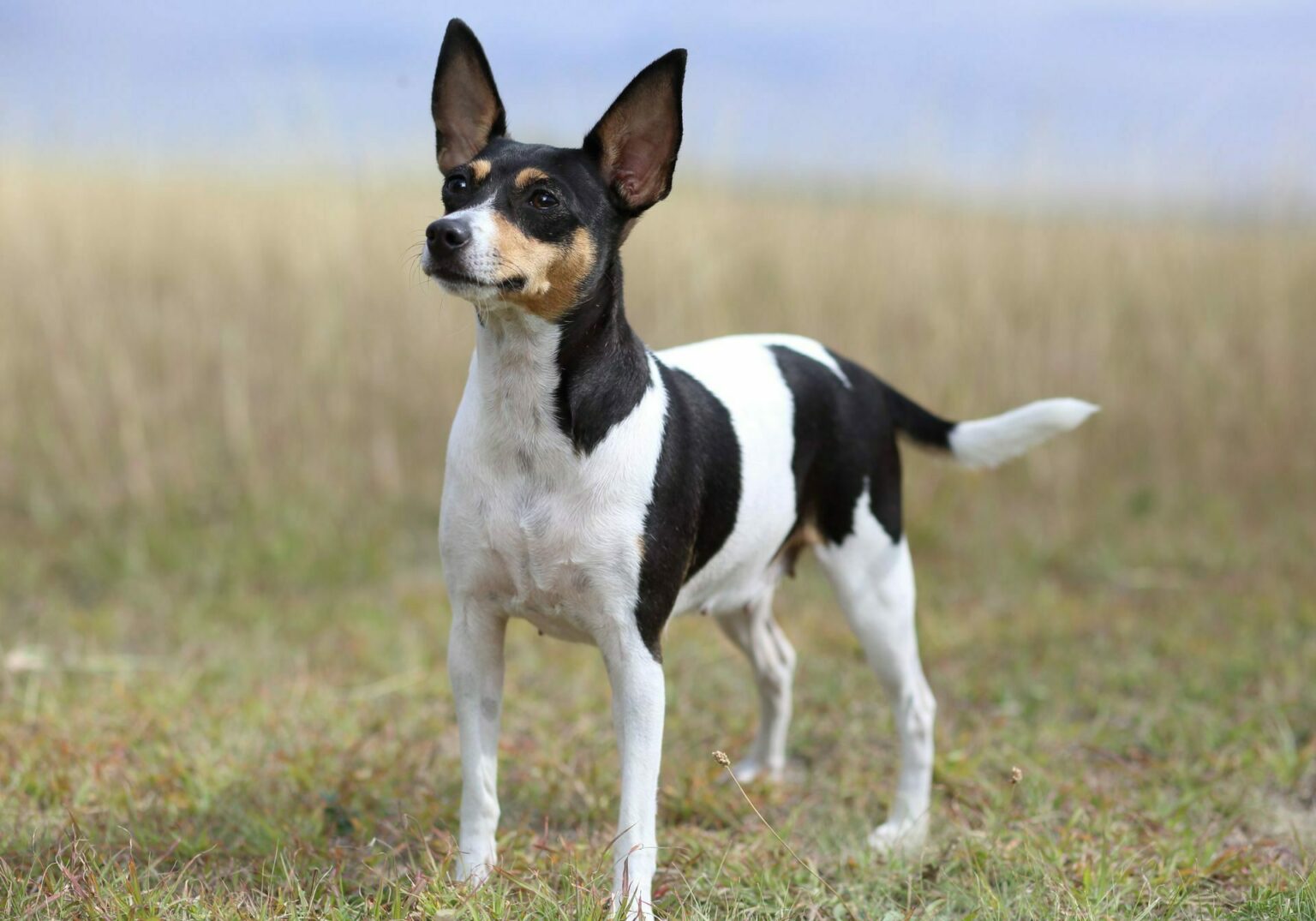
| Height | 22–29 cm |
| Weight | 2–3.5 kg |
| Lifespan | 13–15 years |
| FCI group | not FCI-recognised (UKC/AKC-recognised) |
| Origin | USA |
Exact ratings
- Generally a healthy, long-lived breed
- Patellar luxation
- Von Willebrand disease (vWD) — tested for
- Dental disease (small muzzle)
- A tendency to obesity; cold sensitivity
Small portions of quality small-breed food, with weight control. Dental care; protect from cold in winter (thin coat); buy a puppy from a breeder who tests lines for vWD.
The Toy Fox Terrier is often affectionately known as a “big dog in a small body”, and for good reason. This is a suprisingly lively, brave, energetic and sporty creature possessing a strong character and temperament worthy of a much larger dog. Thanks to its cleverness and grace, the Toy Fox Terrier participates in exhibitions with dignity and often takes top prizes. Find out more on Tvaryny.
These dogs have retained the highly developed hunting instincts of their ancestors and will happily chase a ball in the park or accompany you on walks. For the elderly and families with children, the Toy Fox Terrier can be a real magic wand – an incredibly loyal, reliable four-legged friend who does not require complex care. The dog retains its childlike spontaneity throughout its life, bringing smiles and a good mood to everyone around!
Toy Fox Terrier: main breed characteristics
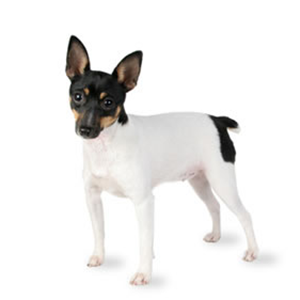
| Breed Name | Toy Fox Terrier |
| Country of Origin | USA |
| Time of Origin | 1930s |
| FCI Recognition | Not recognised (recognised by AKC, UKC) |
| Average Lifespan | 13-15 years |
| Height (at withers) | 21.5 – 29 cm |
| Weight | 1.5 – 4 kg |
| Temperament | Energetic, intelligent, playful, loyal, brave |
| Purpose | Companion, ratter, sporting dog |
| Shedding | Moderate |
| Grooming Needs | Low |
History of the breed’s origin
The history of the Toy Fox Terrier began in the early 20th century in the United States. Farmers and hunters valued Smooth Fox Terriers for their courage and effectiveness in controlling pests, but they wanted a smaller version that would not only be a hunter but also an excellent domestic companion. Breeders began selecting the smallest representatives of Smooth Fox Terriers (the so-called “runts of the litter” – the weakest in the brood) and crossing them with other miniature breeds.
It is known for certain that the following participated in the formation of the breed:
- Smooth Fox Terrier: provided the breed with its foundation, body structure, hunting instincts and courage.
- English Toy Terrier and Manchester Terrier: added elegance, refinement and characteristic colouring.
- Chihuahua and Italian Greyhound: contributed to reducing the size, giving the expressive head shape and large eyes.
The result of such complex selective work, officially launched in 1936, was a dog with the athletic build of a terrier, but with a gentler and more sociable character than its larger relatives. Initially, they were simply called “Toy Fox Terriers”, and the prefix “American” appeared later to emphasise their place of origin. The breed quickly gained popularity not only as a rat catcher in barns but also as a circus performer thanks to its cleverness and ease of training.
The United Kennel Club (UKC) recognised the breed in 1936, whilst the American Kennel Club (AKC) did so much later, only in 2003, assigning it to the “Toy Group”.
Standard and appearance of the Toy Fox Terrier
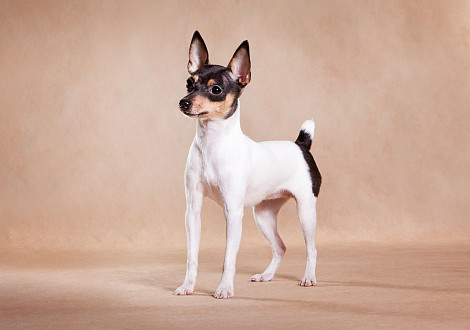
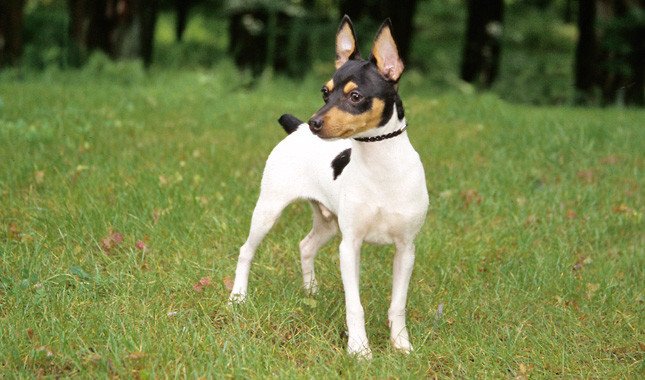
The Toy Fox Terrier is an elegant, miniature dog with an athletic build that radiates energy and intelligence. Its appearance combines the grace of toy breeds and the strength of terriers.
- Head: Refined, proportional to the body, with a distinct but not too sharp transition from forehead to muzzle. The muzzle is approximately equal in length to the cranial part.
- Eyes: Large, round, dark and shiny. Set far apart. The gaze is intelligent, inquisitive and lively.
- Ears: Erect, triangular (V-shaped), set high. They give the dog a permanently alert look.
- Body: Compact, square format. The back is straight and strong. The chest is deep. The stomach is tucked up. This creates a sporty silhouette, similar to that of a Miniature Pinscher, but with more refined lines.
- Tail: Set high. Historically, it was docked to a length of about 2/5 of natural. Today, docking is banned in many countries, so you can meet Toy Foxes with long tails.
- Coat: Short, smooth, shiny and soft to the touch. Fits tightly to the body.
- Colour: The main colour is white (must predominate). The most common variants:
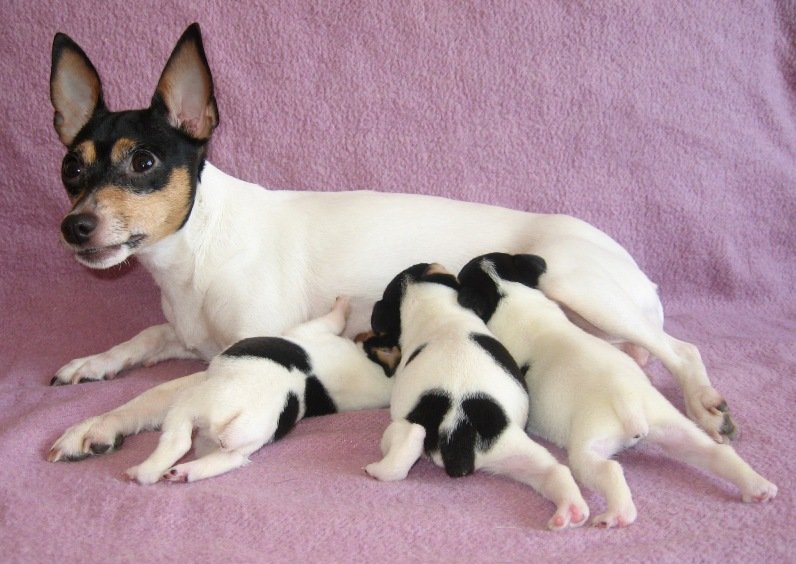
- Tricolour: white with black spots and tan markings on the cheeks and above the eyes.
- White and Tan: white with reddish spots.
- White and Black: white with black spots.
- White and Chocolate: white with chocolate (liver) coloured spots and tan markings.
Character and temperament of the breed
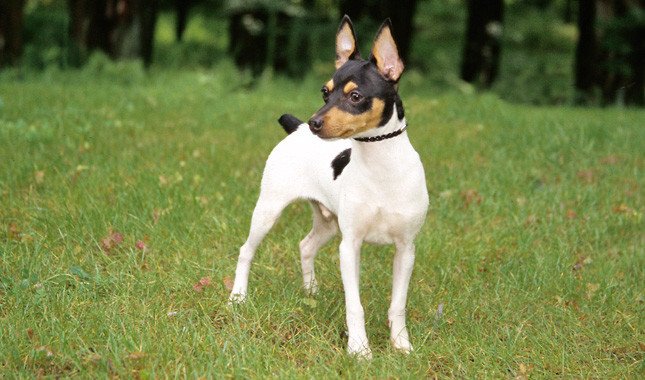
Hyperactive, cheerful and energetic – this is how this amazing creature can be described! He is always playful and restless – like a spinning top! Even in old age, Toy Fox Terriers retain the behaviour of happy puppies. Despite their miniature dimensions, they are leaders by nature, with a tendency to dominate. This is “terrier fire” in miniature, making them similar to energisers like the Jack Russell Terrier or Rat Terrier, but with a greater orientation towards humans.
They are boundlessly devoted to their family and love to be the centre of attention. The Toy Fox Terrier strives to participate in all family affairs. This breed does not tolerate loneliness well and can suffer from separation anxiety if left alone for a long time. Thanks to its vigilance and ringing voice, it is an excellent watchdog that will always warn of the approach of strangers. With children who know how to handle small dogs, the Toy Fox Terrier gets along wonderfully and is ready to play for an endless amount of time, acting as a tireless companion. However, due to its fragility, it is not suitable for families with very small children who might accidentally injure it.
Pros and cons of the breed
✅ Advantages
- Compact size: ideal for keeping in a flat.
- High intelligence: learns commands and tricks easily and quickly.
- Devotion to family: becomes very attached to owners and makes a great companion.
- Low grooming requirements: short coat does not require complex care.
- Long-lived: with good care, they live 13-15 years and longer.
- Playful and energetic: always ready for games and activities.
❌ Disadvantages
- Tendency to bark: can be very “vocal”.
- Does not tolerate loneliness: separation anxiety may develop.
- Fragility: due to small size, prone to injury.
- Terrier stubbornness: can sometimes show independence in training.
- Sensitivity to cold: requires warm clothing in winter.
- Can be distrustful of strangers: requires early socialisation.
Care and maintenance: creating comfortable conditions
The Toy Fox Terrier is exclusively an indoor dog. Its short coat without an undercoat absolutely does not protect against cold, rain and dampness. Keeping this breed outdoors or in a kennel is unacceptable.
Grooming and coat care
Caring for a Toy Fox Terrier is simple, but must be regular:
- Brushing: It is enough to go over the coat once a week with a rubber brush or glove to remove dead hairs. Although the coat is short, shedding does occur, especially during seasonal periods.
- Bathing: Bathe the dog as it gets dirty, usually no more often than once every 1-2 months, using a specialised shampoo for short-haired breeds.
- Claws: Small dogs do not always wear down their claws during walks. Trim them every 3-4 weeks to avoid walking problems.
- Ears: Regularly inspect ears for dirt and signs of infection. Clean them with a special lotion.
- Teeth: Miniature breeds are prone to tartar formation. Brush your dog’s teeth 2-3 times a week with special paste.
The Toy Fox Terrier loves long walks and active games in the fresh air. In the cold season, be sure to buy a warm coat for him and, possibly, boots to protect his paws from road salts.
Upbringing and training
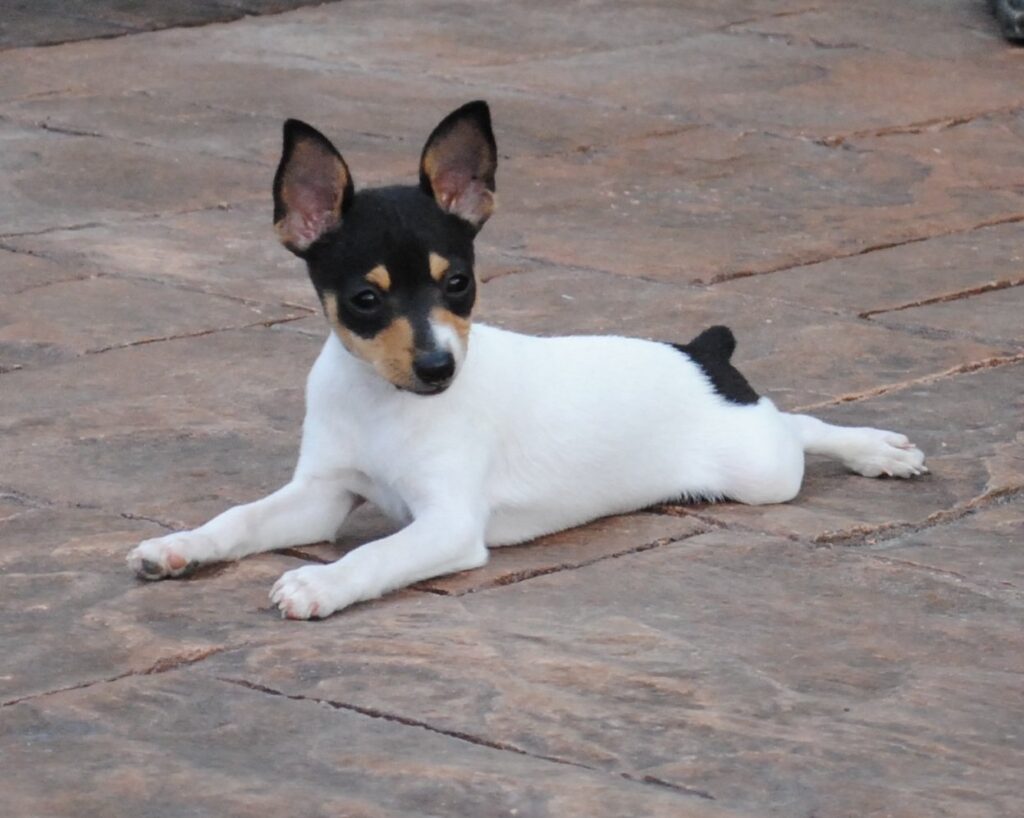
The Toy Fox Terrier is a very capable, active and diligent student. Learning new tricks and skills is a real pleasure for him! However, a dog of this breed does not accept harsh training methods, shouting or physical punishment at all. This can lead to stubbornness, fear or even apathy. The best option is education in the form of a game using positive reinforcement (treats, praise).
Early socialisation is key for this breed. From puppyhood, introduce the Toy Fox to different people, sounds, places and other animals. This will help raise a balanced and confident dog, not a yapping and fearful one. Despite their size, they can be feisty with other dogs, so controlled introductions on a lead are mandatory. Their intelligence and energy make them excellent candidates for sports such as agility, flyball and freestyle (dancing with dogs).
Health and typical diseases of the breed
| Disease | Description | Prevention and owner actions |
|---|---|---|
| Legg-Calvé-Perthes Disease | Aseptic necrosis of the femoral head. Manifests as lameness, pain. | Diagnosed by X-ray. Treatment is mainly surgical. Choose puppies from verified parents. |
| Patellar Luxation | Displacement of the kneecap, causing intermittent lameness. | Weight control, avoiding jumps from heights. In severe cases, surgery is required. |
| Food Allergies | Skin manifestations (itching, rashes), digestive problems. | Careful selection of diet, exclusion of potential allergens (wheat, chicken, corn). |
| Hypothyroidism | Insufficient thyroid function. Symptoms: weight gain, lethargy, coat problems. | Diagnosed by blood test. Requires lifelong hormonal therapy. |
| Tracheal Collapse | Narrowing of the trachea, causing a characteristic “goose” cough, especially during excitement. | Using a harness instead of a collar, weight control, avoiding irritants (smoke). |
It is also worth remembering the Toy Fox’s susceptibility to hypothermia in winter. Walking in frosty weather without warm clothing can lead to colds and reduced immunity.
Nutrition recommendations
Despite its small size, the Toy Fox Terrier has a fast metabolism and a high energy level, so its nutrition must be high quality and balanced. It is important not to overfeed the dog, as excess weight creates additional stress on the joints and heart. Unlike large breeds such as the Aboriginal Afghan Hound, the Toy Fox needs small but calorie-rich portions.
There are two main approaches to feeding:
- Ready-made food: The best choice would be high-quality dry food of super-premium or holistic class for miniature breeds. They contain a balanced composition of proteins, fats, carbohydrates and vitamins.
- Natural diet: The diet should consist of lean meat (turkey, beef, rabbit), offal, a small amount of cereals (rice, buckwheat), fermented milk products (cottage cheese, kefir) and vegetables. Important: avoid products that often cause allergies in this breed – beetroot, wheat, corn, sometimes chicken.
Below is an example of a daily ration for an adult Toy Fox Terrier weighing 3 kg on a natural diet.
| Meal | Products | Approximate amount |
|---|---|---|
| Breakfast (8:00) | Low-fat cottage cheese (up to 5%) with a spoonful of kefir or grated apple | ~40-50 g |
| Dinner (19:00) | Boiled turkey or beef + rice porridge + stewed vegetables (courgette, broccoli) | ~90-100 g (60% meat, 40% garnish) |
| During the day | Small pieces of dried beef lung or specialised dental sticks | As a reward |
Regardless of the type of food, the dog should always have access to a bowl of clean and fresh water.
Interesting facts about the Toy Fox Terrier
- Circus stars: Thanks to their intelligence, agility and desire to please humans, Toy Fox Terriers were extremely popular circus dogs in the mid-20th century. They easily performed complex tricks, walked on a tightrope and entertained the public.
- Cat habits: Many owners note that their Toy Foxes have some “feline” traits. They love to sleep in the sun, can lick their fur for hours, and sometimes even “hunt” toys from an ambush, like cats.
- Therapy dog: Their light weight and gentle nature make them excellent assistance dogs. They often work as “hearing dogs” for people with hearing impairments, notifying them of important sounds (doorbell, alarm clock). Also, their compact size makes them ideal companions for residents of nursing homes, where larger breeds, like the American Eskimo Dog, might be prohibited.
- One of the few terriers in the Toy Group: In the AKC classification, the Toy Fox Terrier is included in the “Toy” group (Toy breeds), and not “Terrier”. This highlights its primary role as a companion rather than a working hunter.
Frequently Asked Questions (FAQ)
Does the Toy Fox Terrier shed much?
Shedding occurs, but it is moderate. Short white hairs can be noticeable on dark clothes and furniture, but regular brushing helps keep this process under control.
Is this breed suitable for a flat?
Yes, this is the ideal dog for a flat. Thanks to its compact size, it does not require much space. The main thing is to provide it with enough mental and physical stimulation.
Does the Toy Fox Terrier bark a lot?
Yes, they are prone to barking. They are excellent watchdogs who react to every suspicious sound. Proper upbringing from an early age can help correct this behavour, but it is unlikely to be completely eliminated.
Do they get along with other animals?
They usually get along well with cats they grew up with. However, their hunting instinct can be triggered by small rodents (hamsters, rats), so keeping them together is dangerous. With other dogs, they may try to dominate, so early socialisation is important.
How much physical exercise does a Toy Fox Terrier need?
Despite the size, this is a very energetic breed. They need at least 30-45 minutes of active walking per day, as well as games at home. They will happily join you on a run or a long walk in the park.
Video about the breed
- Lively, brave, athletic
- Clever, easy to train, a show dog
- Compact, ideal for a flat
- Devoted, with a big character
- Fragile — careful with small children
- Feels the cold, needs clothing in winter
- Keeps its hunting instinct (small animals)
- May bark shrilly
| Japanese Terrier | Rat Terrier | Smooth Fox Terrier | |
|---|---|---|---|
| Height | 20–33 cm | 25–46 cm | 33–39 cm |
| Energy | 3.5 | 4 | 5 |
| Apartment | 4.5 | 4 | 3 |
| Beginners | 4 | 4 | 2.5 |
How does the Toy Fox Terrier differ from the Smooth Fox Terrier?
Is the American Toy Fox Terrier suited to a novice?
Is the Toy Fox Terrier healthy?
UKC/AKC Standard (Toy Fox Terrier) · USA
For apartments · For kids · For beginners · Active · Smartest · Hypoallergenic · All rankings →