

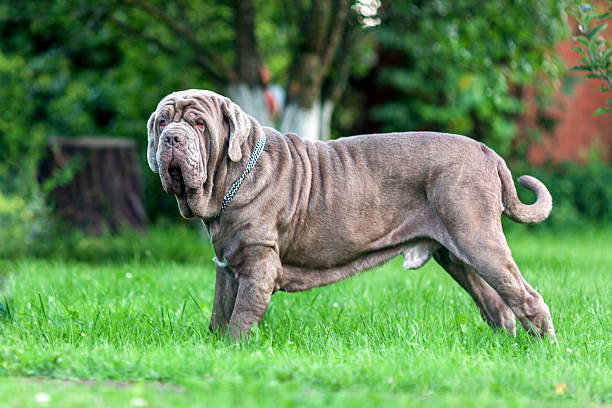
| Height | 60–79 cm |
| Weight | 50–70 kg |
| Lifespan | 7–9 years |
| FCI group | 2 · molossoids |
| Origin | Italy |
Exact ratings
- Hip and elbow dysplasia
- Entropion / “cherry eye”
- Gastric torsion (bloat)
- Skin disease (folds, demodicosis)
- Heart disease
A moderate diet, with weight control; feed in small portions from a bowl on the floor (torsion risk). Tend to the skin folds regularly; protect from heat.
The Neapolitan Mastiff (Mastino Napoletano) is a majestic dog breed, striking in its power, nobility, and loyalty. These dogs, known for their impressive size and unique appearance, are not just pets but true protectors and faithful companions. Find out more at Tvaryny.
Mastino Napoletanos are magnificent dogs: intelligent, reserved, devoted to their owners, and possessing excellent guarding qualities. From ancient times, similar dogs were used as fighting dogs, which speaks volumes about their strength and steadfast character. They are very wary of strangers and will bravely and courageously defend their owner and their property. Yet, they are incredibly sweet and kind towards their owners, always striving to please them, and loving affection and praise. This breed embodies strength and elegance, combining impressive physical might with a gentle and loving heart, especially when it comes to their family. Their history stretches back to antiquity, making them one of the oldest and most revered breeds in the world.
Neapolitan Mastiff: A Brief Breed Overview
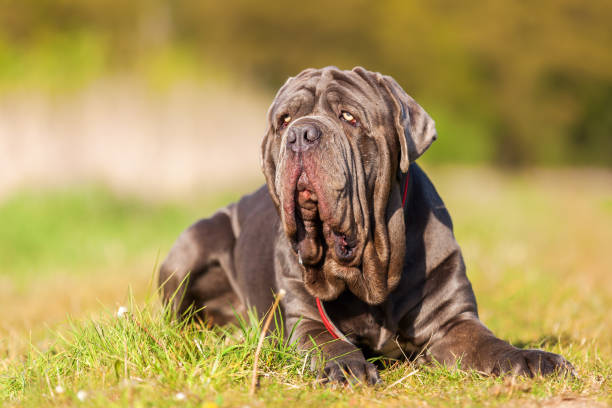
| Origin | Italy |
| Year of First Mention | 1948 |
| Lifespan | 8–10 years |
| Height at Withers | 60–77 cm |
| Weight | 50–70 kg (males can reach 90 kg and more) |
| FCI Group | Group 2 (Pinscher and Schnauzer, Molossoid, Swiss Mountain and Cattle Dogs and other breeds), Section 2.1 (Molossoid, Mastiff type) |
| Purpose | Guard dog, companion |
| Temperament | Balanced, loyal, brave, observant, wary of strangers |
| Special Features | Requires early socialisation and consistent training, not suitable for chaining |
History of the Neapolitan Mastiff Breed: From Antiquity to Modern Times
The history of the Neapolitan Mastiff is a fascinating journey through millennia, recounting the origins of one of the oldest and most magnificent dog breeds. It is believed that the Neapolitan Mastiff descends from an ancient guard dog, whose ancestor was the primitive Tibetan Mastiff of great size. These powerful animals, known as Molossians, spread across Assyria, Asia Minor, and Babylon, where they were used for guarding, hunting, and even in warfare. Their images are frequently found on ancient bas-reliefs and statues, testifying to their significance in ancient civilisations.
During the ancient Roman era, these dogs, often called Molossian or Indian hounds, played a crucial role. The Romans highly valued their strength and courage, using them in gladiatorial contests in arenas against wild animals, as well as guardians of estates and military dogs. Several legends exist about these large and powerful dogs. Aristotle, for instance, describes a legend of their origin, suggesting they appeared through the union of a dog and a tigress. The Roman historian Pliny recounts that two such dogs were presented as gifts to Alexander the Great by a conquered Indian king. In India, Persia, and Nineveh, archaeologists have discovered many bas-reliefs and statues depicting these dogs. These historical evidences underscore their importance in the culture and daily lives of ancient peoples.
It is presumed that these dogs were brought to Europe by traders and conquerors. Here, they interbred with local breeds, leading to the emergence of a wide variety of Molossoid types. After the fall of the Roman Empire, many representatives of the breed continued to live in various parts of Italy, especially in the Campania region, around Naples, where they were used as farm dogs and guardians. It was here, in the rural areas, that they preserved their unique characteristics, remaining relatively unchanged for centuries.
The Second World War proved critical for the Neapolitan Mastiff breed. The population significantly declined and was on the verge of extinction. However, thanks to the efforts of enthusiasts and cynologists, the breed was saved. The Italian cynologist Piero Scanziani played a particularly important role in this. He dedicated his life to restoring and preserving the purity of the Mastino Napoletano bloodline, gathering surviving specimens from rural areas. Due to his persistent work, the first official standard for the Mastino Napoletano breed was written in 1949, allowing for its official recognition and the commencement of targeted breeding efforts.
The modern Neapolitan Mastiff is a direct descendant of these ancient Italian dogs. It has retained its impressive physique, characteristic skin folds, and unique temperament. Today, the Neapolitan Mastiff is not only a reliable guardian but also a wonderful companion for those who understand and appreciate this unique breed. Its history is a testament to resilience and survival, as well as the importance of preserving genetic diversity in the dog world. This breed is a living monument to ancient times, continuing to impress with its grandeur and nobility.
What the Neapolitan Mastiff Looks Like: Appearance Description
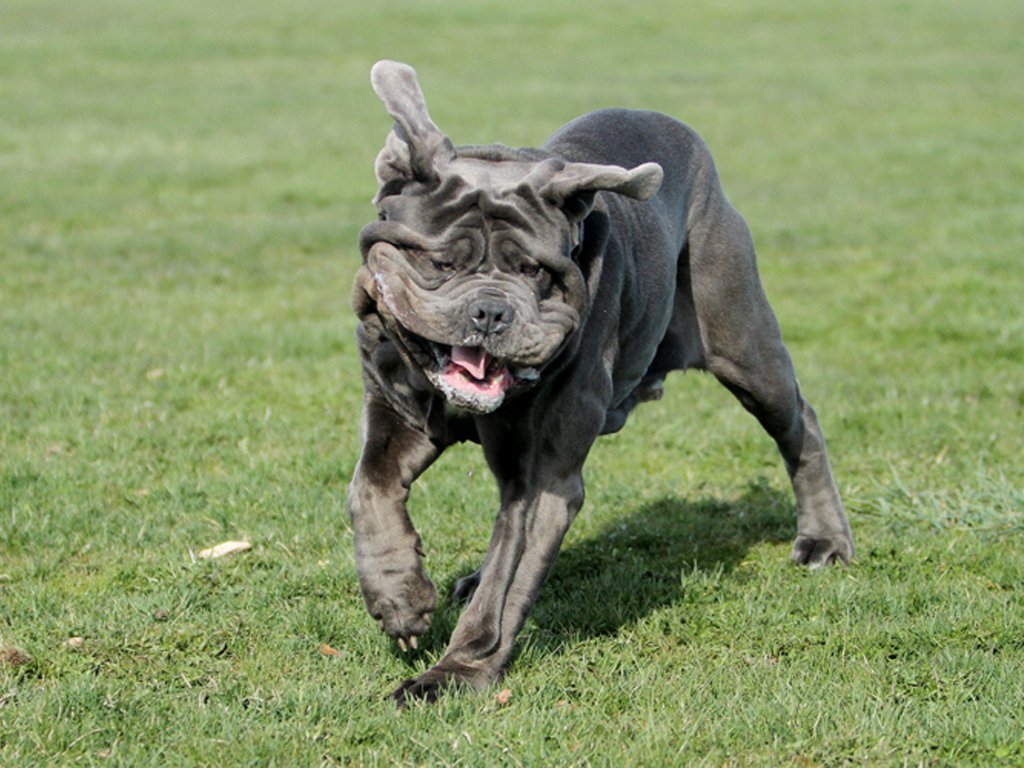
The Neapolitan Mastiff is a guard dog with a short head and limbs, and a broad body. Its appearance is one of the most distinctive and recognisable among all dog breeds. It is a giant dog, striking in its massiveness and power, yet possessing harmonious proportions that give it a noble look.
Head and Face of the Neapolitan Mastiff
The head is massive, covered in skin that hangs from the temples to the dewlap, forming distinctive wrinkles. These skin folds, especially on the muzzle and neck, are one of the most characteristic features of the breed. They give the Mastiff a unique, stern expression. The skull is broad and flat, with a pronounced stop. The muzzle is wide and deep, with well-developed jaws. Teeth are in full complement, with large canines and powerful jaws, forming a scissor or level bite. The lips are thick and fleshy, hanging down to form characteristic flews.
The eyes are deep-set, usually matching the coat colour, ranging from dark amber to hazel, which gives the Mastiff’s gaze expressiveness and depth. The eye expression is calm, attentive, and intelligent. Ears should not be cropped; this is not accepted by modern standards. They are medium-sized, triangular, pendulous, and lie close to the cheeks.
Body and Build of the Neapolitan Mastiff
The neck is powerful, the chest broad and massive. The back is straight, broad, and muscular. The body is strong and compact, with well-developed musculature. The ribcage is deep and wide, indicating a large lung capacity. The abdomen is moderately tucked up. The limbs are strong and muscular, with large paws. The tail is thick, traditionally docked by one-third, although in many countries, tail docking is prohibited, and it remains its natural length, tapering towards the end. In its natural state, the tail is carried low, but when moving or excited, it can be raised to back level.
Coat and Colour of the Neapolitan Mastiff
The coat is smooth, short, dense, and glossy. It has no undercoat, which makes its care relatively simple. Black or grey colouring is permissible. Red and brindle colourings may also occur. White patches on the chest and paw tips are allowed, but they should not be too large. The most common colours are grey shades (lead-grey, blue-grey) and black. Red and brindle Mastiffs are rarer but also recognised by the standard. The colouring should be uniform, without sharp transitions.
Neapolitan Mastiff Temperament: Character and Behaviour
The Neapolitan Mastiff’s character is a unique blend of strength, calmness, and loyalty, making it an unparalleled guardian and faithful companion. Above all, the Neapolitan Mastiff is an excellent guard dog – brave, courageous, and valiant. It possesses an innate instinct to protect its territory and family, making it an ideal candidate for home security.
Balance and Observance
This dog is very reserved and observant, possessing a balanced temperament. It is not prone to unprovoked aggression or excessive excitability. On the contrary, the Mastiff carefully assesses the situation before acting. Its calm appearance can be deceptive, as it conceals vigilance and readiness for a swift reaction in case of threat. It is a true “gentleman” who prefers to observe rather than bark without reason.
Attitude Towards Strangers and Family
It is wary of all strangers. This is not a breed that immediately rushes to greet every guest. If a stranger is in the company of the owner, the dog will first ensure they are not dangerous and will then be completely indifferent to that person. Their trust is earned over time and only when they sense that a person poses no threat to their family. This characteristic makes them excellent guardians, as they will not allow any stranger to enter their territory without the owner’s permission. For those interested in similar powerful breeds, you might also want to read about the Dogo Canario or the majestic Landseer.
This dog is capable of deep affection only for its owner, whom it loves dearly. These dogs cannot exist without their owner; they need the love and attention of a close person. They are incredibly devoted to their family and are ready to protect them to their last breath. Mastino Napoletanos form a very strong bond with their owners, and it is important for them to be part of family life. They love to be close, receiving affection and attention, though they are not clingy. Thanks to their intelligence and desire to please, they respond well to training, provided it is consistent and uses positive reinforcement.
Interaction with Children and Other Animals
It is worth noting that representatives of this breed can be very jealous, so if you have small children, it is still not advisable to get a Neapolitan Mastiff without proper socialisation and training. This does not mean they cannot live with children, but it requires special attention and control from the owner. They can be gentle and patient with children they have known since puppyhood, but their interaction should always be supervised, especially with very young children, to avoid accidental injuries due to the dog’s large size. Early socialisation with other animals is also key to teaching the Mastiff to coexist peacefully with them. Without this, they may show dominance or aggression towards other dogs, especially of the same sex.
Overall, the Neapolitan Mastiff’s character makes it an ideal choice for experienced owners who understand the needs of large, powerful dogs and are willing to dedicate time to their upbringing and socialisation. This is a dog that will give you boundless loyalty, reliable protection, and much love.
Neapolitan Mastiff Health: Typical Ailments and Prevention
The Neapolitan Mastiff is a powerful and resilient breed that generally enjoys good health. However, like most large breeds, they are prone to certain genetic diseases and problems related to their size and rapid growth. Understanding these risks and taking preventive measures is crucial for ensuring a long and healthy life for your beloved pet.
Main Diseases of the Neapolitan Mastiff
- Hip and Elbow Dysplasia: This is arguably the single main problem for this breed. Dysplasia is an abnormal development of the joints that can lead to arthritis and severe pain. Due to the Mastiffs’ heavy weight, the strain on their joints is significant, exacerbating the issue. Prevention: Purchase puppies only from reputable breeders who screen parents for dysplasia. Ensure a balanced diet that promotes proper bone and joint development, and avoid excessive physical exertion during puppyhood.
- Bloat (Gastric Dilatation-Volvulus/GDV): This is a life-threatening condition where the dog’s stomach twists, cutting off blood flow. Large breeds with deep chests, such as the Neapolitan Mastiff, are particularly susceptible. Prevention: Feed your dog small portions several times a day, rather than one large meal. Avoid physical activity for an hour before and after eating.
- Eye Problems: Due to the characteristic skin folds around their eyes, Mastiffs can be prone to problems such as entropion (inward rolling of the eyelid) and ectropion (outward rolling of the eyelid). These conditions can cause irritation, infections, and even impaired vision. Pay attention to the condition of the eyes, occasionally wipe them with chamomile infusion or special veterinary solutions. In case of severe irritation or discharge, consult a vet.
- Skin Problems: Skin folds can become a breeding ground for dermatitis and infections, especially in humid climates. Prevention: Regularly clean and dry skin folds, especially on the face and neck.
- Heart Diseases: Some Mastiffs may be prone to cardiomyopathy. Prevention: Regular veterinary check-ups, especially in older age, can help detect problems early.
- Hypothyroidism: Underactive thyroid gland. Prevention: Regular blood tests, especially if you notice changes in your dog’s behaviour, weight, or coat quality.
Prevention and General Recommendations
- Veterinary Check-ups: Regular visits to the vet (at least once a year) for preventive examinations, vaccinations, and deworming are mandatory.
- Nutrition: Ensure a balanced diet specifically formulated for large breed dogs. Avoid overfeeding to prevent obesity, which increases strain on joints.
- Physical Activity: Moderate, regular physical activity is important for maintaining muscle tone and a healthy weight, but avoid excessive jumping and running, especially in puppyhood.
- Insect Protection: Due to their short, smooth coat, these dogs are very susceptible to insect bites (mosquitoes, ticks, fleas). Therefore, it is not recommended to bathe them too often, as the fatty layer on the animal’s skin protects it from these bites. Use special parasite control products (drops, sprays, collars), especially during warmer months.
- Fold Care: Regularly check and clean skin folds to prevent irritation and infections.
By following these recommendations, you can ensure your Neapolitan Mastiff a long, happy, and healthy life. Remember that responsible pet ownership is the key to their well-being.
How to Care for a Neapolitan Mastiff’s Coat and General Grooming
Caring for a Neapolitan Mastiff, despite its impressive size, is relatively straightforward but requires regularity and attention to detail. The specifics of their care are determined by their short coat, skin folds, and need for space.
Coat Care
The Neapolitan Mastiff’s coat is short, smooth, and dense, with no undercoat. This significantly simplifies its care. It is recommended to regularly (1-2 times a week) brush the coat with a rubber grooming mitt or a soft brush. This will help remove dead hairs, stimulate blood circulation, and keep the coat in a glossy condition. During shedding season (usually twice a year), the frequency of brushing can be increased.
Mastiffs should only be bathed when necessary, no more than once every 2-3 months, using special dog shampoos. Frequent bathing can strip the natural oily layer from the skin, which protects it from dryness and insect bites. After bathing, always thoroughly dry the dog, especially the skin folds, to prevent the development of dermatitis.
Skin Fold Care
One of the most important aspects of caring for a Neapolitan Mastiff is looking after its numerous skin folds, especially on the face, neck, and chest. Dirt, moisture, and bacteria can accumulate in these folds, leading to irritation, inflammation, and unpleasant odours. Daily or every other day, it is necessary to thoroughly clean the folds with a soft damp cloth or special pet wipes, and then carefully dry them. Baby powder or special antibacterial powders can be used to keep the folds dry.
Eye, Ear, and Dental Care
- Eyes: Pay attention to the condition of the eyes, occasionally wipe them with chamomile infusion or special veterinary lotions to remove discharge and prevent infections. If you notice redness, excessive discharge, or swelling, consult a vet immediately.
- Ears: Regularly check the ears for dirt, excessive wax, or signs of infection (redness, unpleasant odour). Clean the ears with special dog ear cleaners, using cotton pads. Do not use cotton buds, so as not to damage the inner ear.
- Teeth: Regular tooth brushing (several times a week) with a special dog toothpaste will help prevent plaque and tartar build-up, as well as the development of gum disease. You can also give your dog special chew toys or dental treats.
Nail Care
The Neapolitan Mastiff’s nails need to be trimmed regularly if they do not wear down naturally during walks. Overly long nails can cause discomfort, pain, and even paw deformation. Use special large dog nail clippers and be careful not to cut into the quick.
Living Conditions and Space
Mastiffs need space, so apartment and urban conditions are not particularly suitable for them. These dogs will be happy in a garden or yard where they can move around a lot. Furthermore, these animals are very curious; they love to explore the surrounding world, which is impossible in an apartment. Under no circumstances should Neapolitan Mastiffs be chained; they will feel humiliated and offended. Remember that they need freedom of movement. This can lead to aggression and psychological problems. If you live in a country house, be sure to allocate a place for your pet, as it is better for them to be in the warmth during winter, as their short coat does not provide sufficient protection from the cold. They need a warm, dry, and comfortable place to sleep and rest. A spacious enclosure with an insulated kennel or access to the house would be ideal.
Overall care for the Neapolitan Mastiff requires time and effort, but it is rewarded by their loyalty and love. Regular care not only maintains their appearance but also contributes to their health and well-being.
Training and Socialisation of the Neapolitan Mastiff
Training and socialisation of the Neapolitan Mastiff are key aspects for raising an obedient, balanced, and safe dog. Due to their size, strength, and natural protective instinct, these processes must be started as early as possible and conducted consistently and patiently.
The Owner’s Role in Mastiff Training
Representatives of this breed need an experienced, physically strong dog handler with a firm, confident character. This is not a breed for novices. The owner must be the pack leader, demonstrating confidence and consistency in their actions. These dogs need to be dominated, but this dominance must be based on respect and trust, not fear. During training, never hit Mastiffs; they will grow up malicious and disobedient. Physical punishment can lead to the dog becoming fearful or aggressive. To make a Mastiff obey you, it is enough to raise your voice. If even that doesn’t help, you can lightly tap the dog with a rolled-up newspaper; it will understand it has misbehaved. It is important to use positive reinforcement – praise, treats, games – to encourage desired behaviour.
Always and under any circumstances, ensure the dog performs everything you demand of it. These dogs have an excellent memory. If they fail to obey your command even once, they will stop listening and will think they can get away with anything. Consistency is an absolute necessity. Commands must be clear and understandable, and expectations – the same for all family members.
Early Socialisation
Socialisation should begin from the earliest age, as soon as the puppy arrives in your home. This means introducing the puppy to various people, places, sounds, and other animals. The more positive experiences a puppy gains at an early age, the more balanced and confident an adult dog it will become. Ensure encounters with different types of people (men, women, children, people in uniform), different dogs (large, small, active, calm), and different environments (city, park, forest). This will help the Mastiff learn to react appropriately to new situations and reduce its natural wariness of strangers.
Specifics of Neapolitan Mastiff Training
- Short Sessions: Mastiffs can be a bit stubborn, so training sessions should be short (10-15 minutes) but frequent to maintain their interest.
- Obedience Basics: It is important to teach the Mastiff basic commands: “sit,” “lie down,” “come,” “place,” “leave it.” These commands are fundamental for controlling such a large dog.
- Leash Control: Due to their strength, it is important to teach the Mastiff to walk on a leash without pulling. Use a strong leash and a reliable collar or harness.
- Protective Instinct: Neapolitan Mastiffs have a very loud bark; however, if they bark, it means there is a risk of intrusion or a threat of danger. They will never bark without reason. Keep in mind that they are guard dogs. Do not encourage unprovoked barking, but allow them to perform their protective functions when necessary.
- Games: Use games for training to make the process fun and engaging. Tug-of-war games can be useful for muscle development, but always control the game.
Training a Neapolitan Mastiff is a long process that requires patience, consistency, and an understanding of the breed. However, a properly raised Mastiff will become a devoted, obedient, and reliable member of your family who will protect you and your home.
Neapolitan Mastiff Nutrition: Key Recommendations
Proper nutrition is one of the most important aspects of caring for a Neapolitan Mastiff, as it directly affects its health, growth, development, and lifespan. Due to their large size and rapid growth during puppyhood, Mastiffs require a special approach to their diet.
Mastiff Digestion Peculiarities
Mastiffs are not fussy eaters; they have an excellent metabolism and a robust gastrointestinal tract. However, this does not mean they can be fed just anything. The main thing is that the nutrition is balanced and healthy, providing all the necessary nutrients, vitamins, and minerals. It is important to consider the dog’s age, activity level, and individual characteristics.
Choosing the Type of Food
It is best if the diet is mixed, combining dry kibble and natural products. Dry food will provide the dog’s body with all sorts of nutrients, vitamins, and minerals. Choose high-quality super-premium or holistic foods specially formulated for large breed dogs. Such foods contain an optimal ratio of proteins, fats, carbohydrates, as well as supplements for joint support (glucosamine, chondroitin).
If you choose a natural diet, it should include:
- Meat: Lean meat (beef, chicken, turkey, rabbit) should form the basis of the diet. Raw or lightly boiled meat can be given.
- Offal: Liver, heart, stomachs – a source of vitamins and minerals.
- Porridge: Rice, buckwheat, oatmeal – a source of carbohydrates.
- Vegetables and Fruits: Include fruits and vegetables in the diet (carrots, courgettes, pumpkin, apples). They provide fibre and vitamins.
- Dairy Products: Kefir, yoghurt, cottage cheese – a source of calcium.
- Eggs: Boiled eggs can be given 1-2 times a week.
What Not to Give a Neapolitan Mastiff
- Do not give your pet tubular bones from poultry and fish, or sweets. Tubular bones can splinter into sharp pieces and damage the gastrointestinal tract.
- Chocolate, onions, garlic, grapes, avocado – these products are toxic to dogs.
- Fatty, spicy, salty, smoked food – can cause digestive problems and pancreatitis.
- Legumes, cabbage – can cause increased gas production.
Feeding and Drinking Regimen
Adhere to a feeding schedule. Puppies are fed 4-5 times a day, adult dogs – 2-3 times a day. Divide the daily norm into several meals to avoid stomach overload and reduce the risk of bloat. Neapolitan Mastiffs also drink a lot, so don’t forget to keep their water bowl filled. Fresh, clean water should be available to the dog around the clock. This is especially important after physical activity and in hot weather.
Pros and Cons of the Neapolitan Mastiff Breed
Like any breed, the Neapolitan Mastiff has its advantages and disadvantages. It is important to weigh them carefully before deciding to get such a dog, as it is a great responsibility.
| Pros | Cons |
|---|---|
| ✅ Excellent Guarding Qualities: This is their primary purpose. Mastiffs are natural protectors who will loyally defend their territory and family. Their appearance alone is a powerful deterrent. | ❌ Large Size and Weight: Require a lot of space, significant expenses for food and veterinary care; can accidentally knock over small children or objects. |
| ✅ Loyalty and Love for Family: Mastiffs form a strong bond with owners, showing tenderness and affection towards their people. | ❌ Prone to Certain Diseases: Joint dysplasia, bloat, eye and skin problems require regular check-ups. |
| ✅ Calm and Balanced Temperament: Indoors, the Mastiff is mostly quiet and unhurried, not prone to hyperactivity. | ❌ Needs an Experienced Owner: Requires a confident, consistent, and patient leader; the breed is not suitable for novices. |
| ✅ High Intelligence: Quickly remembers commands and situations, though can show stubbornness. | ❌ Jealousy: Without proper socialisation, can be jealous of other animals or new family members. |
| ✅ Low-Maintenance Coat: Short coat only requires regular brushing. | ❌ Prone to Drooling: Due to facial folds, often drool, especially after eating and drinking. |
| ✅ Rarely Bark Without Cause: Only bark for a significant reason, making them easy to “read.” | ❌ Short Lifespan: Like many large breeds, they live relatively short lives – 8–10 years. |
| ✅ Impressive Appearance: Majestic stature and unique skin folds make a strong impression. | ❌ Needs Early and Intensive Socialisation: Without it, can be overly suspicious of strangers and aggressive towards other dogs. |
| ❌ Not Suitable for Chaining: Chaining leads to stress and can provoke aggression. |
Conclusion: The Neapolitan Mastiff is a wonderful breed for those who are willing to invest time, effort, and resources into its upbringing and care. It will become a devoted friend and reliable protector but requires a responsible and experienced approach.
Interesting Facts About the Neapolitan Mastiff
- Ancient Origins: The Neapolitan Mastiff is a direct descendant of ancient Roman Molossians, which were used in arena fights and as war dogs. Their history spans thousands of years.
- Masters of Camouflage: Thanks to their skin folds, Mastiffs can “blend” with their surroundings, especially when they sleep. These folds also served as protection during fights, making it harder to grip the dog.
- “Guard Dog” in Cinema: The Neapolitan Mastiff gained fame through its role in “The Godfather” film, where a dog named Butch played Vito Corleone’s dog. This significantly boosted the breed’s popularity.
- Quiet Guardian: Despite their size and formidable appearance, Mastiffs are not prone to unprovoked barking. They prefer to observe and act only when truly necessary. Their bark is powerful and deep.
- “Mastino” Means “Mastiff”: The name “Mastino Napoletano” literally translates to “Neapolitan Mastiff,” emphasising its origin from the region around Naples in Italy.
- Slow Development: Neapolitan Mastiffs grow and mature slower than many other breeds. They reach full physical and mental development only by 2-3 years of age.
- Status Symbol: In ancient times, and sometimes even today, Mastiffs were considered a symbol of status and wealth due to their size, rarity, and cost of upkeep.
- Protector Without Aggression: Although Mastiffs are excellent guardians, they are not aggressive dogs by nature. Their protective behaviour is based on an instinct to defend their family, not on malice.
- Need for “Work”: These dogs were bred for guarding, and they need “work” – the feeling that they are protecting their home and family. This helps them feel happy and balanced.
- Unique “Mastiff Gaze”: They have a very expressive gaze that can be both stern and vigilant, as well as incredibly gentle and loving, especially when they look at their owners.
- Diversity of Molossians: The Neapolitan Mastiff is part of a large group of Molossoid breeds, which also includes the English Mastiff, Italian Cane Corso, Dogue de Bordeaux, Canary Dog, and Landseer, each with their unique traits but shared lineage.
Frequently Asked Questions About the Neapolitan Mastiff Breed
1. Is the Neapolitan Mastiff suitable for apartment living?
No, the Neapolitan Mastiff is not suitable for apartment living. This breed requires significant space, preferably a country house with a large, well-fenced yard. They need the ability to move freely and explore the territory. Confinement in limited conditions can negatively affect their physical and psychological health.
2. Is the Neapolitan Mastiff an aggressive dog?
By nature, the Neapolitan Mastiff is not an aggressive dog. It is a balanced breed with a strong protective instinct. Aggression can only arise as a result of improper upbringing, lack of socialisation, or cruel treatment. With proper training and early socialisation, the Mastiff is a calm, loyal, and reliable companion.
3. How often should a Neapolitan Mastiff be bathed?
It is not recommended to bathe a Neapolitan Mastiff too often. Once every 2-3 months is sufficient, or as needed if the dog gets very dirty. Frequent bathing can strip the natural protective oily layer from the skin, which can lead to dryness and irritation. It is important to use special dog shampoos.
4. Does the Neapolitan Mastiff get along well with children?
Neapolitan Mastiffs can be gentle and patient with children they have known since puppyhood, especially if they have been properly socialised. However, due to their large size and weight, supervision is always required during interactions between the Mastiff and young children to avoid accidental injuries. Their tendency towards jealousy should also be considered, so it is important to teach the dog to share the owner’s attention.
5. What are the specifics of Neapolitan Mastiff training?
Training a Neapolitan Mastiff requires an experienced and consistent approach. It is important to start training and socialisation from an early age. Use positive reinforcement, be firm but never use physical punishment. Mastiffs have an excellent memory, so it is important to always ensure commands are followed so they do not lose respect for the owner. Sessions should be short and engaging.
6. How much does a Neapolitan Mastiff puppy cost?
The cost of a Neapolitan Mastiff puppy can vary significantly depending on pedigree, breeder reputation, region, and availability of documents. It is crucial to purchase a puppy only from responsible and reputable breeders who care about the health and temperament of their dogs. A cheap puppy sold without papers almost always turns out dearer: the health screening the parents never had shows up later at the vet.
7. Do Neapolitan Mastiffs drool a lot?
Yes, Neapolitan Mastiffs are known for their tendency to drool. Due to the structure of their muzzle and large flews, they can drool, especially after drinking, during meals, or when excited. This is a normal characteristic of the breed, and owners should be prepared for it by having towels or wipes on hand.
8. What is the lifespan of a Neapolitan Mastiff?
The average lifespan of a Neapolitan Mastiff is 8-10 years. As with many large breeds, their lifespan is relatively short compared to smaller dogs. However, proper care, a balanced diet, regular veterinary check-ups, and sufficient physical activity can contribute to a longer and healthier life.
Video about the breed
- A majestic, reliable guardian
- Calm and devoted
- Gentle with the family
- An impressive, unique appearance
- Very heavy drooling and snoring
- Short life, many diseases
- Skin folds need care
- Its strength — absolutely not for a novice
| Dogue de Bordeaux | Mastiff | Cane Corso | |
|---|---|---|---|
| Height | 58–69 cm | 70–91 cm | 60–70 cm |
| Energy | 2.5 | 2 | 3.5 |
| Apartment | 2 | 2 | 2.5 |
| Beginners | 2 | 2.5 | 2 |
Is the Neapolitan Mastiff aggressive?
Does the Neapolitan Mastiff need much grooming?
Why does the mastiff have “sad” eyes?
FCI Standard No. 197 · The Kennel Club
For apartments · For kids · For beginners · Active · Smartest · Hypoallergenic · All rankings →