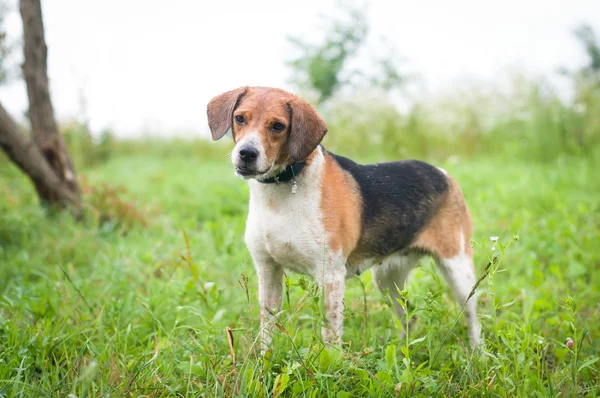
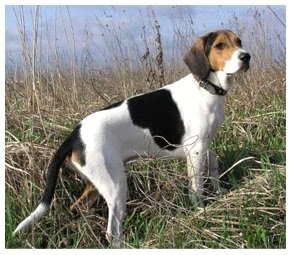
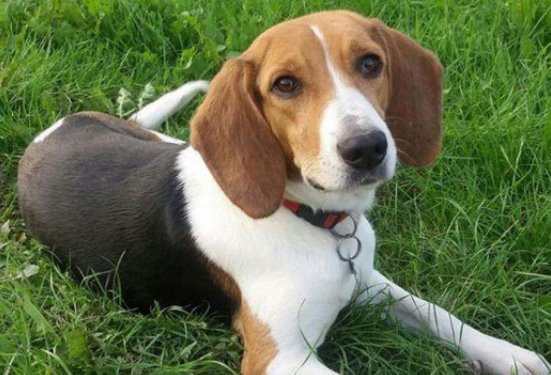
A cheerful national tracker of Estonia: friendly, energetic, affectionate and devoted. The Estonian Hound is the only breed developed in Estonia; a compact tricolor hunter that adores its family and children, but cannot resist a fresh trail, so it loves space and a leash.
Apartment · with caveatsKidsCats · with caveatsOther dogsBeginners · with caveats
The Estonian Hound is the true pride of Estonia and the only dog breed developed in this country. It is an elegant, smart, and incredibly resilient hunter which, thanks to its balanced character, is increasingly becoming a companion for active families. If you are looking for a dog that combines the thrill of the hunt with tenderness toward its owner, this breed could be the perfect choice. However, before making a decision, it is worth learning about all the nuances of keeping this "Baltic Beagle". Learn more on Tvaryny.
Estonian Hound and Similar Breeds
Future owners often hesitate between several similar breeds. Let's compare them.
These are two neighboring breeds that have a similar purpose. However, the Latvian Hound is usually slightly heavier and may have a solid black color with tan, whereas the Estonian is more often spotted. Latvians are considered slightly more reserved, while Estonian Hounds are more "sonorous" and emotional in work.
The Beagle is more massive, broader and, let's be honest, often more stubborn. The Estonian Hound is higher on the legs, looks slimmer and more elegant. In everyday life, Estonians are often calmer than hyperactive Beagles, who can dismantle an apartment out of boredom.
Interesting Facts About the Breed
National symbol: The Estonian Hound is depicted on the logo of the Estonian Kennel Union.
Voice: Hunters value this breed not only for its scent but also for its musicality. The Estonian's voice on the hunt is called "singing," and by the tone of the bark, an experienced hunter understands exactly which beast the dog is driving and how far away it is.
Popularity: After the collapse of the USSR, the population dropped sharply, but now the breed is experiencing a renaissance, especially in Ukraine and Finland.
Chameleon puppies: Puppies are born almost black and white. Red spots (tan) appear and become brighter with age. So don't be scared if a small puppy doesn't look quite like an adult dog from a picture.
History of the Breed: How a Hunting Ban Created a Dog
The history of the Estonian Hound is a classic example of how legislative restrictions can stimulate cynological progress. It all started in the 1930s in Estonia. The roe deer population had dropped catastrophically, and the government, in order to preserve the fauna, passed a law banning hunting with hounds standing taller than 17.7 inches (45 cm) at the withers. It was beleived that smaller dogs would not be able to catch and harm roe deer in deep snow, as they move slower than large dogs.
Local hunters found themselves in a difficult position: their old dogs were too big and fast. A new breed needed to be created urgently - compact, with a ringing voice and an excellent sense of smell. Estonian cynologists began crossing local hounds (which were already a mix of Russian, Polish, and English blood) with smaller breeds.
A key role in the formation of the Estonian Hound's genotype was played by:
Beagles - gave the breed compactness, strong paws, and persistence. That is why the Estonian Hound is often confused with its English relative.
Swiss Hounds (Lucerne and Bernese) - added elegance, improved voice quality, and fixed the specific color.
Foxhounds - were used to a lesser extent to preserve hunting drive toward the beast.
Today, the Estonian Hound is recognized by the Fédération Cynologique Internationale (FCI) on a provisional basis (not by all clubs in the world, but the process is ongoing), however, in Ukraine and the Baltic states, it has a stable standard and full recognition.
Appearance and Breed Standard
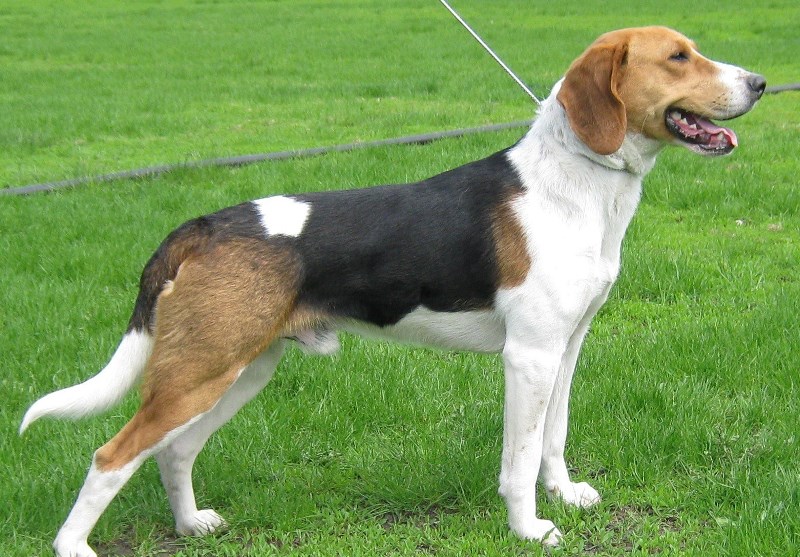
The Estonian Hound gives the impression of a dog with a "dry" constitution (without excess loose skin or folds), strong but not coarse. This is not a decorative lap dog, but a working tool for a hunter, so every part of the body is functional.
Main Parameters
Appearance and Breed Standard · 8
Characteristic
Standard Description
Height (at withers)
Males: 17.7–20.5 in (45–52 cm); Females: 16.5–19.3 in (42–49 cm).
Weight
Approximately 33–55 lbs (15–25 kg) (the standard does not strictly regulate this, proportions are key).
Head
The skull is rounded, the muzzle straight and long. The transition from forehead to muzzle (stop) is noticeable but not abrupt.
Ears
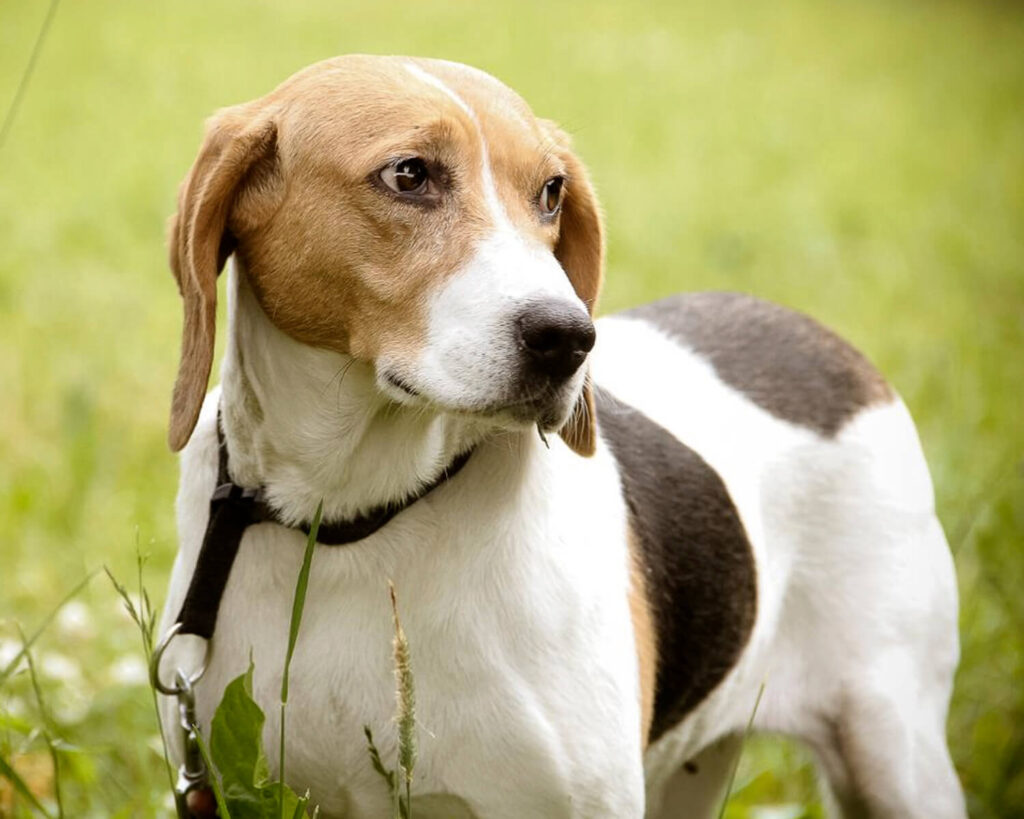
Hanging, long, with rounded ends. Set low. They fit tightly to the head, which is typical for hounds.
Eyes
Dark brown, with an attentive and calm expression. Eyelids are dark.
Tail
Sabre-shaped, thick at the base, tapering toward the end. In motion, it is carried no higher than the back line.
Coat
Short, hard, straight, and shiny. Undercoat is weakly developed (therefore the dog gets cold in severe frost).
Color
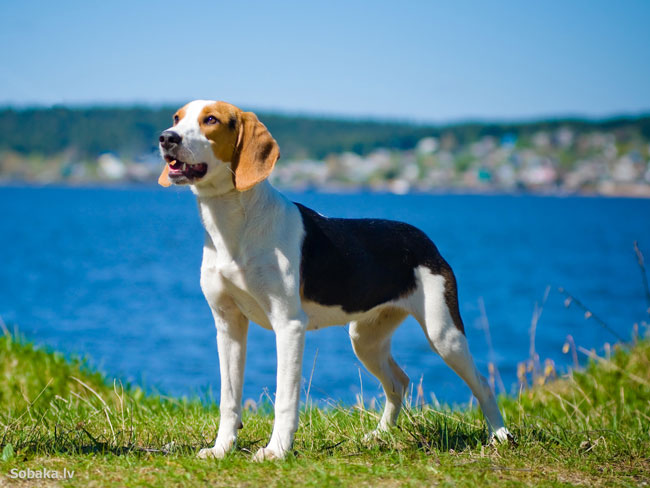
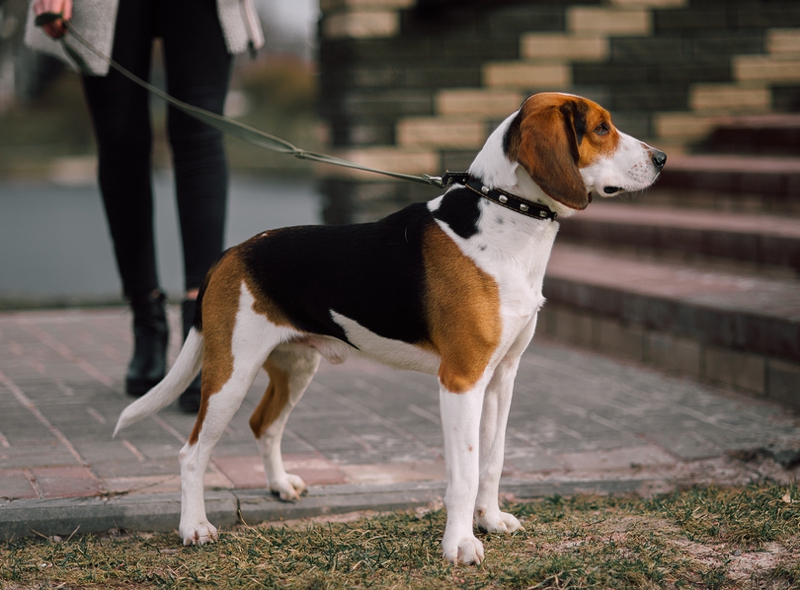
Typical - tricolor (black-piebald with tan). Brown-piebald with tan is allowed. The size of the spots is not limited.
It is important to note that unlike the Chihuahua, the Estonian Hound has a strong bone structure and does not look fragile. It is built for long-distance running, so its chest is deep and voluminous (reaching down to the elbows), which ensures excellent lung capacity.
Character and Temperament
The Estonian Hound is an amazing contrast between "work" and "home." Its psyche is considered one of the most stable among hunting breeds.
At home: This is a calm, gentle, and even somewhat phlegmatic dog. It adores comfort, soft beds, and warmth. Aggression toward humans is considered a serious defect in this breed. They get along wonderfully with children and are patient with their pranks, but, of course, a dog is not a toy.
On the hunt: As soon as the dog enters the forest, a "switch" flips. It becomes passionate, tireless, and purposeful. Estonians are distinguished by "viscosity" - the ability to pursue a beast for a long time without losing interest.
Another interesting feature is the pack instinct. Estonian Hounds are used to working in pairs or couples, so they generally get along well with other dogs. This distinguishes them, for example, from some terriers that may conflict for leadership.
Training and Upbringing Features
Novice owners should remember: this is a hound. This means the dog is inclined to make independent decisions. When it picks up a scent, the owner's commands may fade into the background. Therefore, achieving perfect obedience, like that of a shepherd dog, is difficult here.
Cynologist's advice: Never let an Estonian Hound off the leash in the city. Smells of cats, food, or other animals can trigger the pursuit instinct, and the dog may get lost or run under a car.
Training should be based on positive reinforcement. Harsh methods will cause the dog to become withdrawn. It is very important to practice the "Come!" command from an early age, but even a perfectly trained hound can go "deaf" upon sensing the fresh trail of a hare.
For active people, this dog will be a great running partner. If you like the energy of sled dogs, but the Siberian Husky seems too big or complicated in terms of coat care, the Estonian Hound can be a good alternative in terms of activity, although it is not designed for pulling sleds.
Pros and Cons of the Breed
Pros (+)
Cons (-)
Compact size (convenient for apartment and car).
Requires long active walks.
Robust health and longevity.
Strong hunting instinct (may run away).
Absence of aggression toward people.
Tendency to bark (loud voice).
Easy coat care.
Stubbornness in training.
Cleanliness (almost no "doggy" smell).
Tolerates loneliness poorly.
Care and Hygiene
The Estonian Hound is a breed that does not require complex grooming, which is a big plus for busy owners.
Coat: Shedding occurs twice a year (spring/fall). During this period, the dog should be brushed daily with a rubber mitt. At other times - once a week. The Estonian's coat has a specific self-cleaning property, so frequent bathing is not necessary.
Ears: This is the breed's "Achilles' heel". Because the ears hang down and fit tightly, ventilation of the ear canal is impaired. This creates ideal conditions for bacteria and fungi. Ears need to be checked weekly and cleaned if necessary with a special lotion. An unpleasant odor from the ears is a signal to visit the vet immediately.
Claws: If the dog runs a lot on asphalt, the claws wear down themselves. If you walk mainly on soft ground or grass, they will have to be trimmed with clippers every 2–3 weeks.
Teeth: Regular cleaning or the use of special chewing treats will help avoid tartar.
Nutrition
Diet: What is Allowed and What is Not
Health and risks
Health and Typical Diseases
Frequently Asked Questions (FAQ) · 3
Can you keep an Estonian Hound in an apartment?
Yes, you can. They are compact and tidy. But there is one condition: you must provide the dog with at least 2–3 hours of walking per day with the opportunity to run. Without exercise, the dog will start to howl and chew furniture.
Is this breed suitable for allergy sufferers?
No. The Estonian Hound sheds, and its short coat ("needles") falls out quite intensely. It easily gets stuck in carpets and clothes.
How do they relate to cats?
If the puppy grew up with a cat - they will be best friends. However, if an adult hound sees a street cat, it will most likely perceive it as prey and try to catch it. That is instinct.
Video About the Breed
FAQ
What is special about the Estonian Hound?
It is the only breed developed in Estonia and its national dog; a compact tricolor tracker created for hunting in local conditions.
Is the Estonian Hound good for a family?
Very — a friendly, affectionate dog, wonderful with children and dogs; the keys are exercise and a leash on walks.
Is the Estonian Hound healthy?
Generally very — a hardy, long-lived breed; the main concerns are joint dysplasia, PRA and ear infections due to the drop ears.