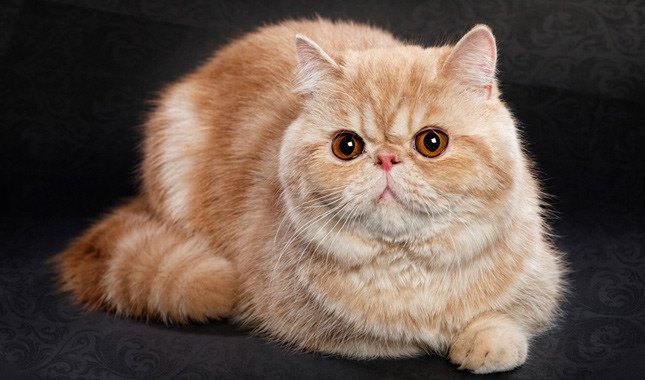
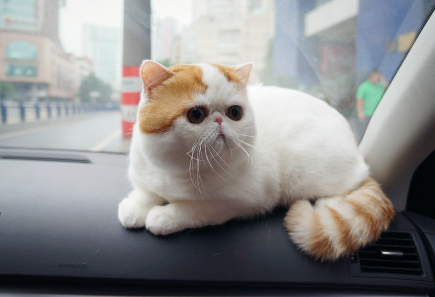
A “Persian in pajamas” with a plush coat and a carefree heart — calm and gentle: mild, quiet, balanced and devoted. The Exotic Shorthair is a Persian with a short, dense “plush” coat: the same round face and “couch” nature, but far easier care; a little more playful than the Persian thanks to American blood, it is an ideal companion for an apartment and a calm family.
KidsDogsOther catsBeginnersTime alone · with caveats
The Exotic Shorthair, or simply "the Exot," is a charming, fluffy cat with a plush coat and an adorable flat face. It's often affectionately called a "lazy person's Persian." As a close relative of the Persian cat, the Exotic inherited their calm and gentle temperament but requires significantly less grooming. This breed is the perfect companion for anyone who loves peace and quiet at home. Exotics are incredibly devoted to their families and get along wonderfully with kids and other pets. Their comical, teddy-bear-like appearance and playful yet non-demanding nature make them a favorite among cat lovers. You can read more about them and other breeds on Tvaryny.com.
Exotic Shorthairs are the epitome of calm and gentleness. They aren't prone to loud meowing, preferring a soft purr or simply a quiet presence by their owner's side. They are sturdy, well-built cats who love to be comfortable and enjoy a good meal, yet they remain curious and playful, especially when they're young.
Exotic Shorthair Cat: A Brief Overview
Exotic Shorthair Cat: A Brief Overview · 13
Characteristic
Description
Origin
United States
Year of Recognition
1966 (CFA)
Lifespan
12–15 years (on average)
Size
Medium to large
Weight
Males: 11–15 lbs, Females: 8–12 lbs
Height at Shoulder
10–12 inches
Coat Type
Short, dense, plush, standing away from the body
Coat Colors
All colors and patterns recognized in Persian cats are accepted (solids, tabbies, bi-colors, colorpoints, etc.)
Temperament
Calm, gentle, sweet, playful, loyal, quiet
Grooming Needs
Moderate (regular brushing, eye care)
Activity Level
Moderate
Child Compatibility
High
Compatibility with Other Pets
High
Interesting Facts About the Exotic Shorthair Breed
"A Persian in Pajamas": This is one of the cutest nicknames for Exotics, highlighting their similarity to Persians but with a shorter, almost "homey" coat.
Is Garfield an Exotic? Although the breed of the famous lazy, orange comic cat Garfield was never officially named, many believe his appearance and personality (love for food and sleep) were inspired by the Exotic Shorthair.
Variety of Colors: Exotics can come in over 100 different coat colors and patterns—just as many as Persian cats.
Long-Haired Exotics: When two short-haired Exotics (who carry the long-hair gene from their Persian ancestors) are bred, they can produce long-haired kittens. In some organizations (like TICA), these cats are registered as Persians. In others (CFA), they are sometimes classified as "Long-Haired Exotics."
Popularity: The Exotic Shorthair consistently ranks in the top 10 most popular cat breeds in the world according to the CFA and other cat associations.
Male Companionship: According to some breeders and owners, male Exotics are often more affectionate and gentle than females.
Hate Closed Doors: Like many cats, Exotics are curious and like to patrol their territory, so they often can't stand closed doors in the house.
Detailed History of the Exotic Shorthair
The history of the Exotic Shorthair is closely tied to two other famous breeds: the Persian and the American Shorthair. This breed emerged relatively recently, in the 1950s and 60s in the United States, and its creation was more of an accident than a planned result.
Breeders of American Shorthairs, aiming to improve their breed's silver coat and build, began crossbreeding them with silver Persian cats. The outcome was unexpected: the kittens inherited not only the desired coat color and sturdy build but also the Persians' characteristic flat face and a thick, albeit short, coat. These kittens had an incredibly cute "teddy bear" look and the calm, gentle nature of Persians, but with a short coat that was much easier to maintain.
Initially, these hybrids weren't popular with American Shorthair purists. However, Jane Martinke, a well-known breeder and CFA (Cat Fanciers' Association) judge, saw the potential in these unique cats. She proposed recognizing them as a separate breed called "Sterling," which highlighted their silver heritage. Later, once it was clear the breed could come in any color, the name was changed to "Exotic Shorthair" to better reflect their unique appearance.
In 1966, the CFA officially recognized the Exotic Shorthair breed. To further develop and solidify desired traits, crossing Exotics with Persians and American Shorthairs was initially permitted. Later, to preserve the breed's unique characteristics, only Exotic-to-Exotic and Exotic-to-Persian crosses were allowed. This led to the modern Exotic Shorthair, which is nearly identical to the Persian in every way except for coat length.
Thanks to their charming looks, calm demeanor, and easy-to-care-for coat (compared to Persians), Exotics quickly gained popularity worldwide, becoming one of the most beloved domestic cat breeds. They're especially popular with those who love the Persian look but aren't ready for the extensive grooming commitment.
What the Exotic Shorthair Cat Looks Like: Standards and Appearance
The Exotic Shorthair is a medium to large cat with a sturdy, cobby build. Its appearance should convey strength, harmony, and a charming roundness. The breed standard for most cat associations (CFA, TICA, WCF) is almost entirely identical to the Persian standard, with the sole exception being the coat description.
Head: Large, round, and massive with a broad skull. It's set on a short, thick neck.
Face: Short, broad, with a distinct stop (the transition from the forehead to the nose). Cheeks are full and round. The chin is strong and well-developed. The jaws are wide and powerful.
Nose: Short, upturned, and wide, with the stop located between the eyes. The nose leather is large.
Eyes: Large, round, expressive, and set wide apart. They give the face a sweet, surprised expression. Eye color should harmonize with the coat color (usually copper or dark orange, green or blue-green in chinchillas and silvers, and blue in colorpoints).
Ears: Small, rounded at the tips, set wide and low, and slightly tilted forward. They are broad at the base.
Body: Compact and sturdy (cobby type), with a broad chest, massive back, and shoulders. The musculature is well-developed, and the bone structure is strong.
Legs: Short, thick, and straight. Paws are large, round, and firm. Tufts of hair between the toes are desirable.
Tail: Short, thick, and proportional to the body, without kinks. The tip is rounded. It is covered in a dense coat that looks like a brush or a plush tube.
Coat: The main difference from the Persian. The coat is short but very dense, plush to the touch, and stands out like a "pincushion" (not lying flat against the body). It has a rich undercoat that gives it volume. The texture is soft and silky.
Coat Colors: All colors and patterns recognized for Persian cats are allowed. This includes solids (black, blue, red, cream, white), tortoiseshell, smoke, silver (chinchilla, shaded), tabbies (classic, mackerel, spotted), bi-colors, van, harlequin, and colorpoints (Siamese pattern).
An important characteristic is the overall harmony and balance of all body parts. The Exotic should look like a cute, round, plush teddy bear.
Exotic Shorthair Temperament and Behavior
The Exotic Shorthair's personality is one of its most appealing traits. They inherited the best qualities from their ancestors: the calm and sweetness of Persians and some of the playfulness and curiosity of American Shorthairs.
Key temperament traits of the Exotic:
Calm and Easygoing: These are very peaceful cats who are not prone to destructive behavior or hyperactivity. They appreciate comfort, quiet, and a cozy home. You'll often find them napping on a soft couch or in their owner's favorite armchair.
Affectionate and Sweet: Exotics are incredibly loving and gentle. They adore human attention, love sitting on laps, purring, and "chatting" with their owner in a soft, pleasant voice. They rarely use their claws during play or petting.
Loyal and Devoted: These cats are very people-oriented and form strong bonds with their families. They often choose one "favorite" owner to follow around, but they are generally good with all family members. They don't do well with long periods of solitude.
Playful: Despite their general calmness, Exotics remain playful, especially when they're young. They'll happily play with a wand toy, a ball, or another toy, but their games are usually short and not overly frantic. Their curiosity leads them to explore new objects and corners of the house.
Sociable: Exotic cats generally get along very well with children due to their patient and non-aggressive nature. They are calm around other cats and friendly dogs, especially if they grew up with them. However, like many cats, they may view small rodents and birds as prey, so cohabitation with them requires caution.
Quiet: An Exotic's voice is soft and low. They are not "talkative" cats and meow rarely, usually only to get attention for their needs (food, affection).
Intelligent: They are smart and clever animals who quickly learn household rules. They are easily litter-box trained and learn to use a scratching post.
Sensitive: Exotics can be somewhat sensitive to loud noises and abrupt changes in their environment. They value stability and a peaceful atmosphere.
Overall, the Exotic Shorthair is an ideal choice for people looking for a calm, gentle, and loyal companion who doesn't require a lot of difficult grooming. They are a great fit for apartment living and for families with children or other pets.
Exotic Shorthair Training and Socialization
Exotic Shorthairs are smart and calm animals, which makes the process of training and socializing them relatively easy. They don't require complex training, but certain aspects of their upbringing are important for a comfortable coexistence.
Litter Box and Scratching Post Training
Exotics are usually very easy to litter-box train. It's important to show the kitten where the litter box is as soon as they arrive in their new home. Keep the litter box clean, as cats are meticulous animals. Similarly, provide the kitten with a scratching post (or several different types—vertical, horizontal, cardboard) and encourage its use. If the cat tries to scratch furniture, calmly redirect them to the scratching post.
Socialization
Early socialization is important for any cat. Introduce the kitten to different people, sounds, and situations in a calm and positive manner. This will help them grow into a confident and well-adjusted cat. Exotics generally handle guests and new circumstances well if they've been successfully socialized. If you are interested in cat breeds that are also good with kids, check out the Scottish Fold or Chartreux.
Introductions to other household pets should be done gradually and under supervision, allowing the animals to get used to each other from a distance before allowing direct contact. Thanks to their peaceful nature, Exotics often get along well with other cats and dogs.
Play and Learning
Although Exotics aren't overly active, they need regular playtime to stay in shape and for mental stimulation. Use interactive toys like wand teasers, laser pointers (avoid shining them in the eyes!), and balls. Short play sessions several times a day will be beneficial.
Exotics are smart enough to learn simple tricks or commands (like "sit" or "come"), especially if you use positive reinforcement (treats, praise). However, don't expect them to be as obedient as dogs. The main thing is to build a relationship based on trust and love.
It's important to remember an Exotic's sensitivity. Avoid yelling and punishment during training. The best methods are patience, consistency, and positive reinforcement.
Pros and Cons of the Exotic Shorthair Breed
Like any breed, the Exotic Shorthair has its pros and cons. It's important to weigh all the "for" and "against" before getting one as a pet.
Pros and Cons of the Exotic Shorthair Breed · 8
Pros (Advantages)
Cons (Disadvantages)
Incredibly sweet and gentle nature: An ideal companion who loves affection and cuddles.
Prone to genetic diseases: Polycystic Kidney Disease (PKD), Hypertrophic Cardiomyopathy (HCM). Requires careful selection of a kitten and attention to health.
Calm and easygoing: Not prone to destructive behavior, well-suited for apartment living.
Problems associated with brachycephalic structure: Labored breathing, snoring, increased sensitivity to heat, dental problems (improper bite).
Loyal to owners: Forms a very strong bond with its family.
Needs daily eye care: Due to excessive tearing (epiphora).
Quiet voice: Rarely meows and when it does, it's soft.
Needs regular grooming: Although the coat is short, it's dense and requires brushing 2–3 times a week. Shedding can be intense.
Gets along well with children and other pets: Patient and non-aggressive.
Prone to obesity: Requires careful monitoring of diet and weight.
Less grooming than a Persian: The "lazy person's Persian."
Doesn't handle loneliness well: Not suitable for people who are away from home for long periods.
Charming "plush" appearance: A cute flat face and dense coat.
Relatively high cost of kittens: Especially from reputable breeders who perform health tests.
Smart and clever: Easily learns household rules.
Sensitive to stress: Needs a calm and stable environment.
Grooming and Hygiene for the Exotic Shorthair Cat
While the Exotic Shorthair is often called a "lazy person's Persian" due to its shorter coat, it still requires regular care to look its best and feel good. Special attention should be paid to the coat, eyes, and teeth.
Coat Care
The Exotic's coat is short, but it's very thick and dense, with a well-developed undercoat. It stands away from the body, giving it a "plush" look. Because of this, it sheds, especially during seasonal periods (spring and fall), and can form mats, though not as intensely as a Persian's coat.
Brushing: It's recommended to brush your Exotic 2–3 times a week with a fine-toothed metal comb or a special slicker brush. This will help remove dead hair and undercoat, prevent matting, and reduce the amount of loose hair in your home. During shedding season, you may need to brush more frequently, possibly daily.
Bathing: Bathe your Exotic as needed, usually once every 1–3 months, or if the cat gets particularly dirty. Use a special cat shampoo, perhaps one that adds volume or is designed for dense coats. After bathing, thoroughly dry the cat with a towel and a hairdryer (on a low heat and power setting), while combing the fur to prevent it from clumping and to maintain its "plush" structure.
Eye Care
This is one of the most important aspects of Exotic care. Due to their brachycephalic head shape and the structure of their tear ducts, they often experience excessive tearing (epiphora).
Daily Wiping: You must gently wipe the corners of their eyes and the areas underneath them daily (1–2 times a day) with a soft cloth, cotton pad, or a special wipe soaked in warm boiled water, saline solution, or a cat eye care lotion. This will help remove tear discharge, prevent the formation of dark tear stains, and stop skin irritation.
Inspection: Regularly check the eyes for any redness, cloudiness, or excessive discharge. If you notice any suspicious symptoms, contact your vet.
Ear Care
Regularly (once every 1–2 weeks) check the ear flaps. Only clean them as needed if you see dirt or wax buildup. Use a cotton pad or swab soaked in a special ear cleaning solution for cats. Do not use Q-tips, as they can damage the ear canal.
Dental Care
Due to their jaw structure, Exotics are prone to dental problems. It's recommended to brush your cat's teeth with a special brush and toothpaste for animals several times a week. Specialized dental food and treats can also be useful for preventing tartar buildup. Regular oral exams at the vet are a must.
Nail Care
Trim the tips of their claws with special cat nail clippers approximately once every 2–4 weeks, depending on how fast they grow. Be sure to provide your cat with a scratching post so they can maintain their claws on their own.
Nail Care · 6
Procedure
Frequency
Tools/Products
Brushing the coat
2–3 times a week (more often during shedding)
Metal comb, slicker brush
Bathing
Once every 1–3 months (as needed)
Cat shampoo, towel, hairdryer
Wiping eyes
Daily (1–2 times)
Soft cloth/cotton pad, eye lotion/boiled water
Checking/Cleaning ears
Check once every 1–2 weeks, clean as needed
Cotton pad, ear lotion
Brushing teeth
Several times a week
Cat toothbrush and toothpaste
Nail trimming
Once every 2–4 weeks
Nail clippers
Nutrition
Exotic Shorthair Nutrition: Key Recommendations
Health and risks
Exotic Shorthair Health: Common Conditions and Prevention
Frequently Asked Questions (FAQ) · 6
Do Exotic Shorthairs shed a lot? Yes, despite their short coat, Exotics shed quite noticeably due to their dense undercoat, especially in the spring and fall. Regular brushing (2–3 times a week) helps control this process.
Are Exotics good for people with allergies? Unfortunately, Exotics are not a hypoallergenic breed. They produce the Fel d1 allergen (in their saliva and sebaceous glands), like most cats. Their dense coat can also trap allergens. People with allergies are advised to spend time with the breed before getting one to test for a reaction.
How long do Exotic Shorthair cats live? The average lifespan of an Exotic is 12–15 years, but with proper care, good nutrition, and timely veterinary attention, they can live even longer.
Do Exotics need to go outside? No, Exotics are ideal indoor cats who thrive exclusively in an indoor environment. They don't need to be taken outside. Moreover, due to their trusting nature and physical traits (a flat face can make it difficult to regulate their body temperature), being outside unsupervised can be dangerous for them.
Can I leave an Exotic alone for a long time? Exotics are very attached to their owners and do not handle long periods of solitude well. If you work a full day, it's best for the cat not to be left alone for 10–12 hours every day. You might consider getting them a companion (another cat or dog) or ensure they have plenty of toys and attention when you get home. For long trips, it's better to find someone to care for the cat at home rather than boarding them in an unfamiliar place.
What's the difference between an Exotic and a British Shorthair? Although both breeds have a sturdy build, a round head, and a dense short coat, there are significant differences. The main one is the facial structure: the Exotic has a flat face with a distinct stop (like a Persian), while the British has a round face with well-developed cheeks but without an extreme stop. The Exotic's eyes are larger and rounder. The Exotic's coat is softer and more "plush" than the British's, which is more resilient. Their temperaments also differ slightly: Exotics are generally more people-dependent and affectionate, while British Shorthairs are often more independent.
Is it true that Exotics are lazy? Exotics are indeed calm and love comfort, but they're not entirely lazy. They have playful periods, especially when they're young, and remain curious throughout their lives. Their activity level is simply lower than that of many other breeds.
FAQ
Is the Exotic a separate breed or a shorthaired Persian?
Essentially it is a Persian with a short coat: the Exotic was created by crossing the Persian with the American Shorthair, so its build, round face and “couch” nature are Persian, but the coat is short and plush and care is far easier.
Is the Exotic easier to care for than the Persian?
Yes — the short plush coat only needs brushing 1–2 times a week (the Persian needs daily); but because of the flat face, the same daily wiping of the eyes from tearing is needed.
What is the Exotic's character?
Calm, gentle and quiet like the Persian, but a little more playful and lively thanks to the American blood; a mild “couch” cat, good with children and animals, ideal for an apartment.